Education in the
  2.0 Bazaar
      IADAT-e2009

    Pablo Garaizar Sagarminaga
     garaizar@eside.deusto.es
        University of Deusto
Outline

●   Background
●   Two opposing points of view
●   Education 2.0: a positive experience
●   Problems
●   Solutions
●   Conclusions
Background
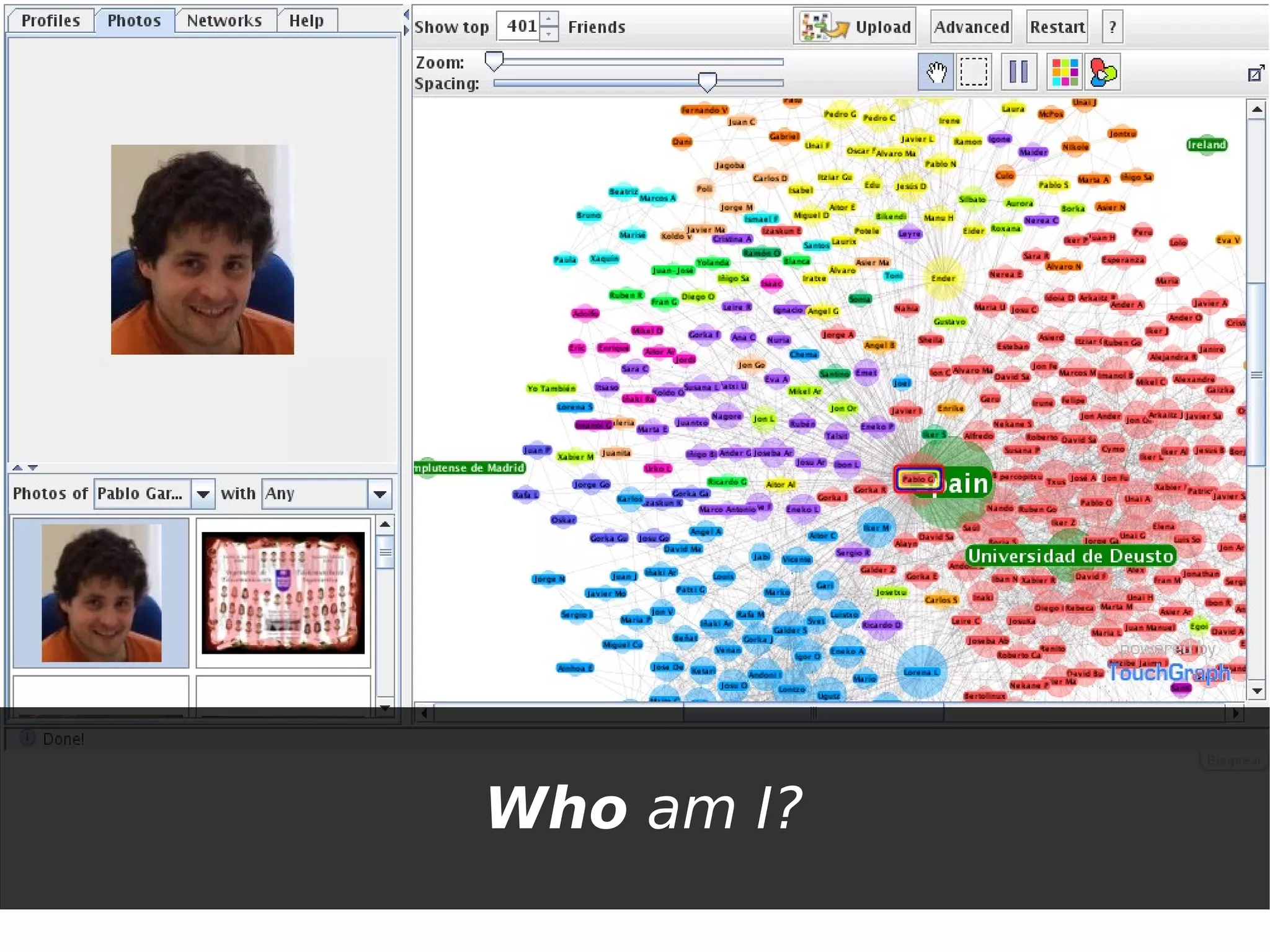
Who am I?
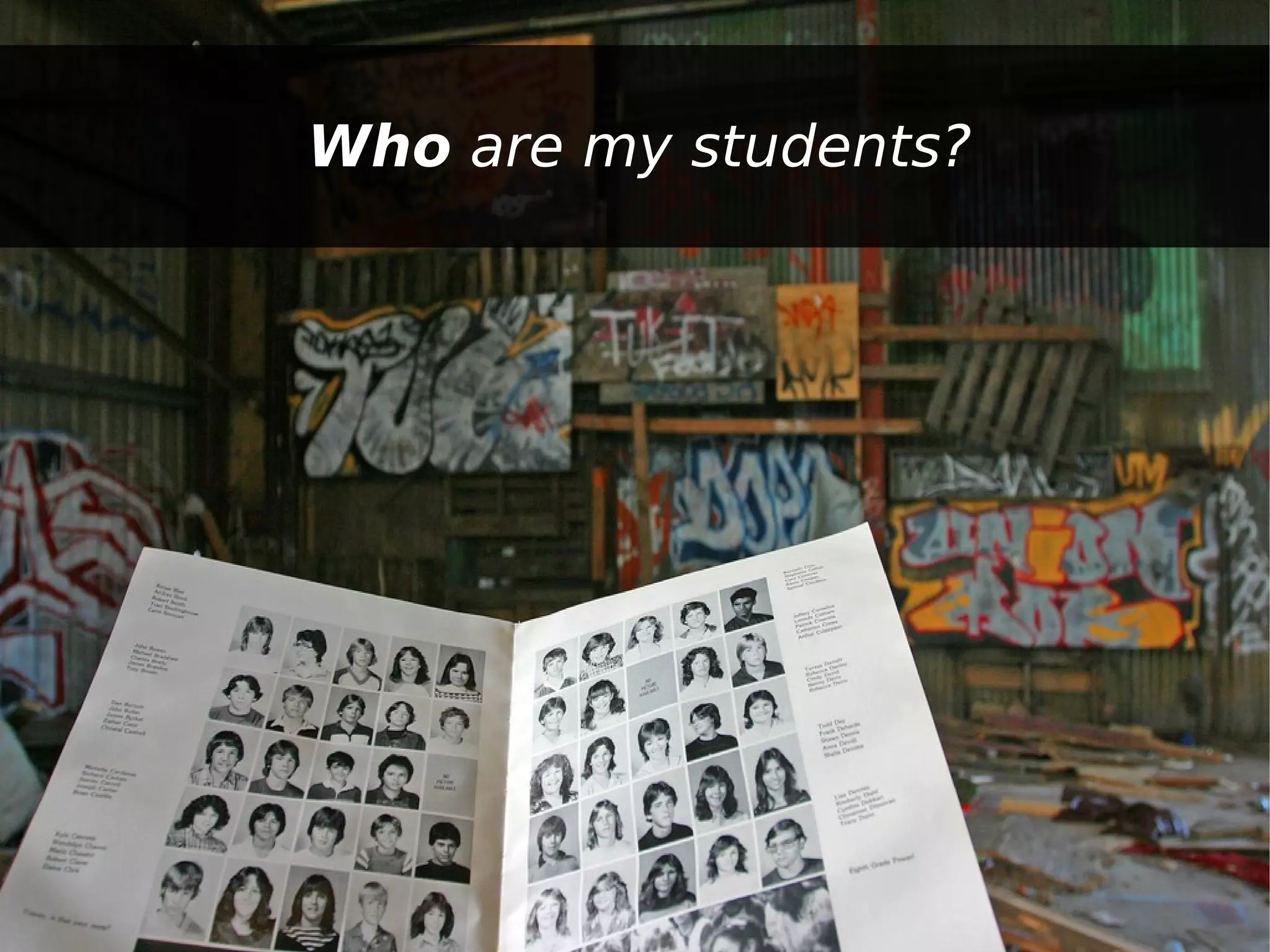
Who are my students?
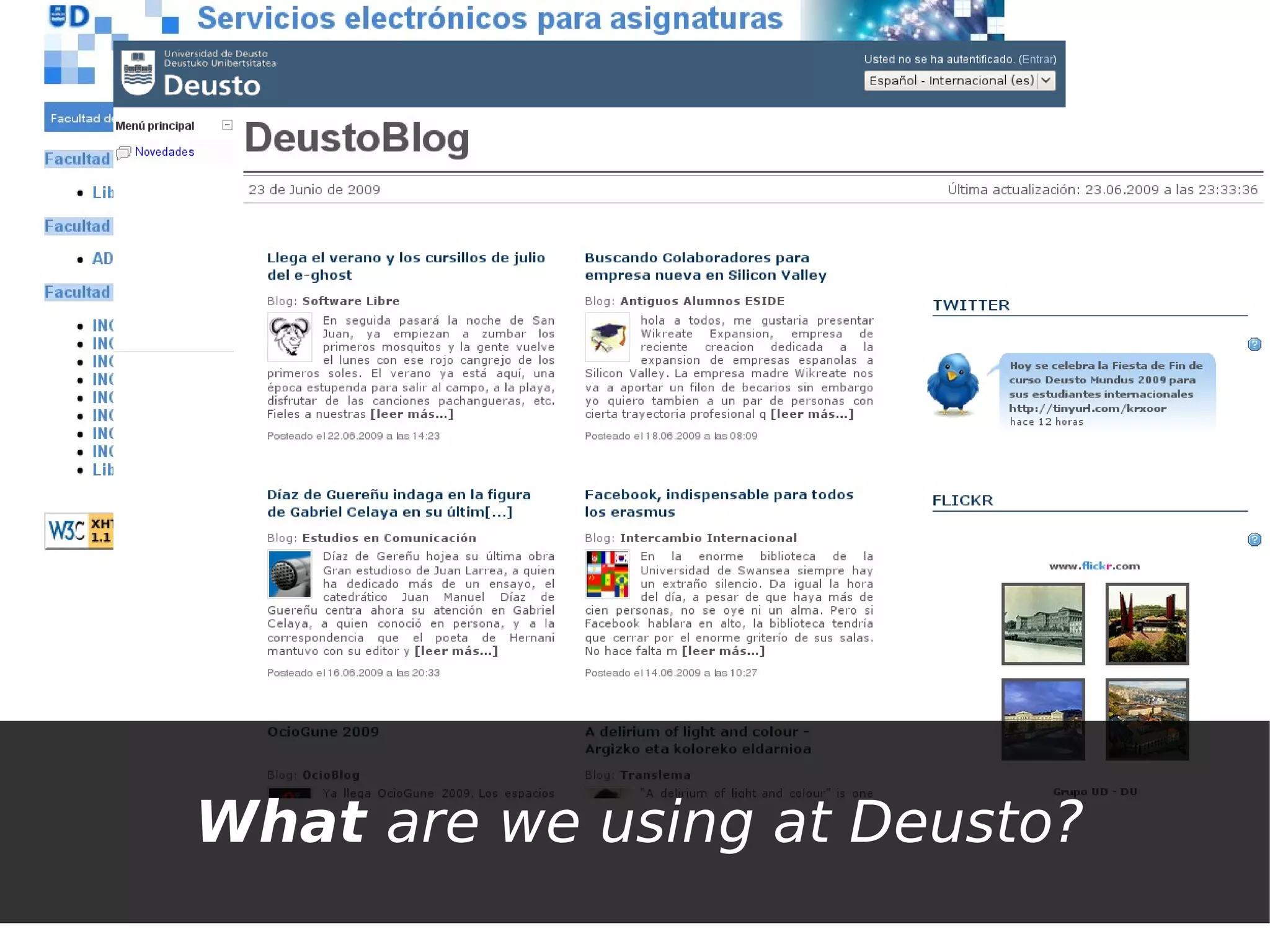
What are we using at Deusto?
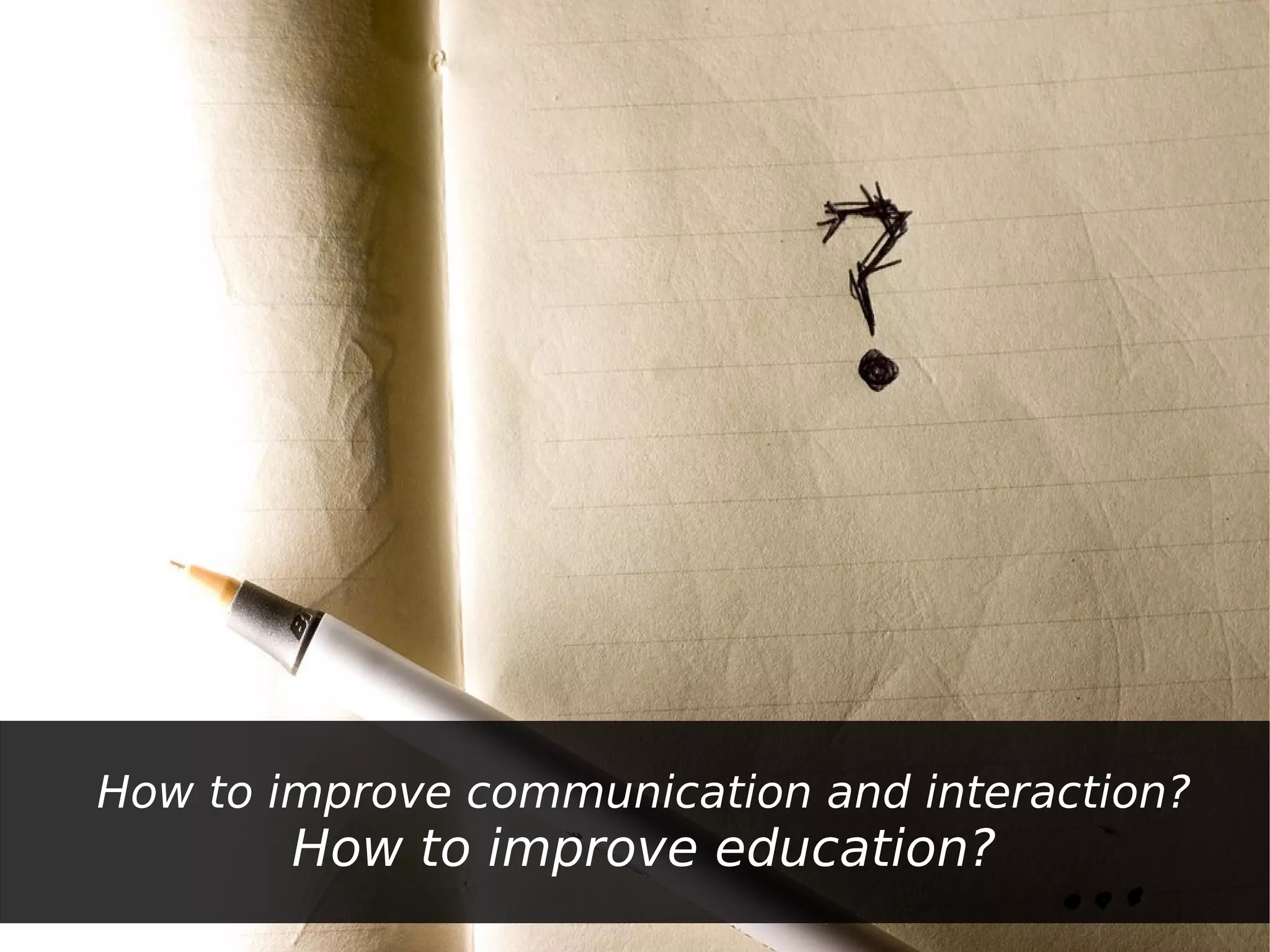
How to improve communication and interaction?
        How to improve education?
Two opposing points
      of view
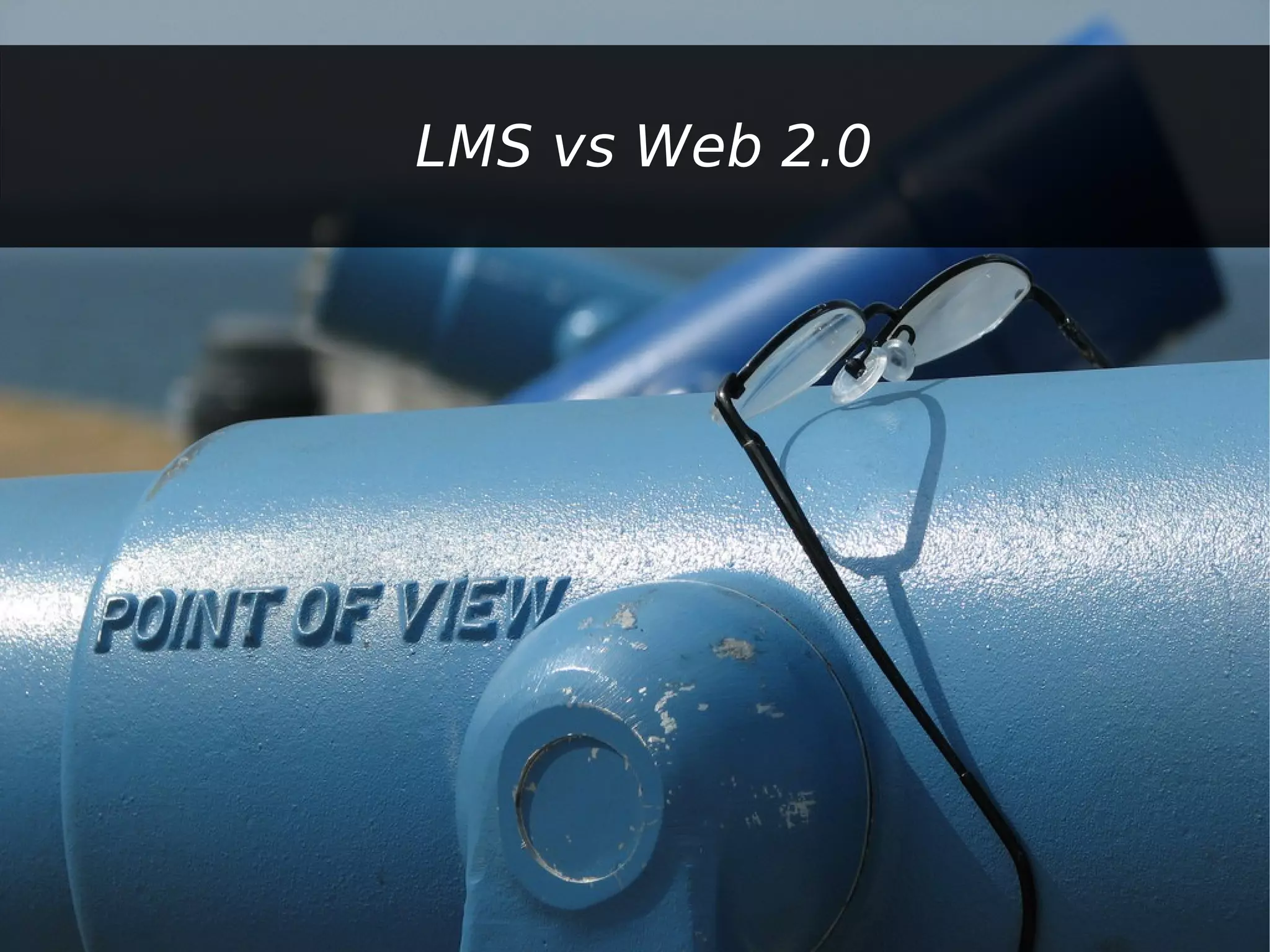
LMS vs Web 2.0
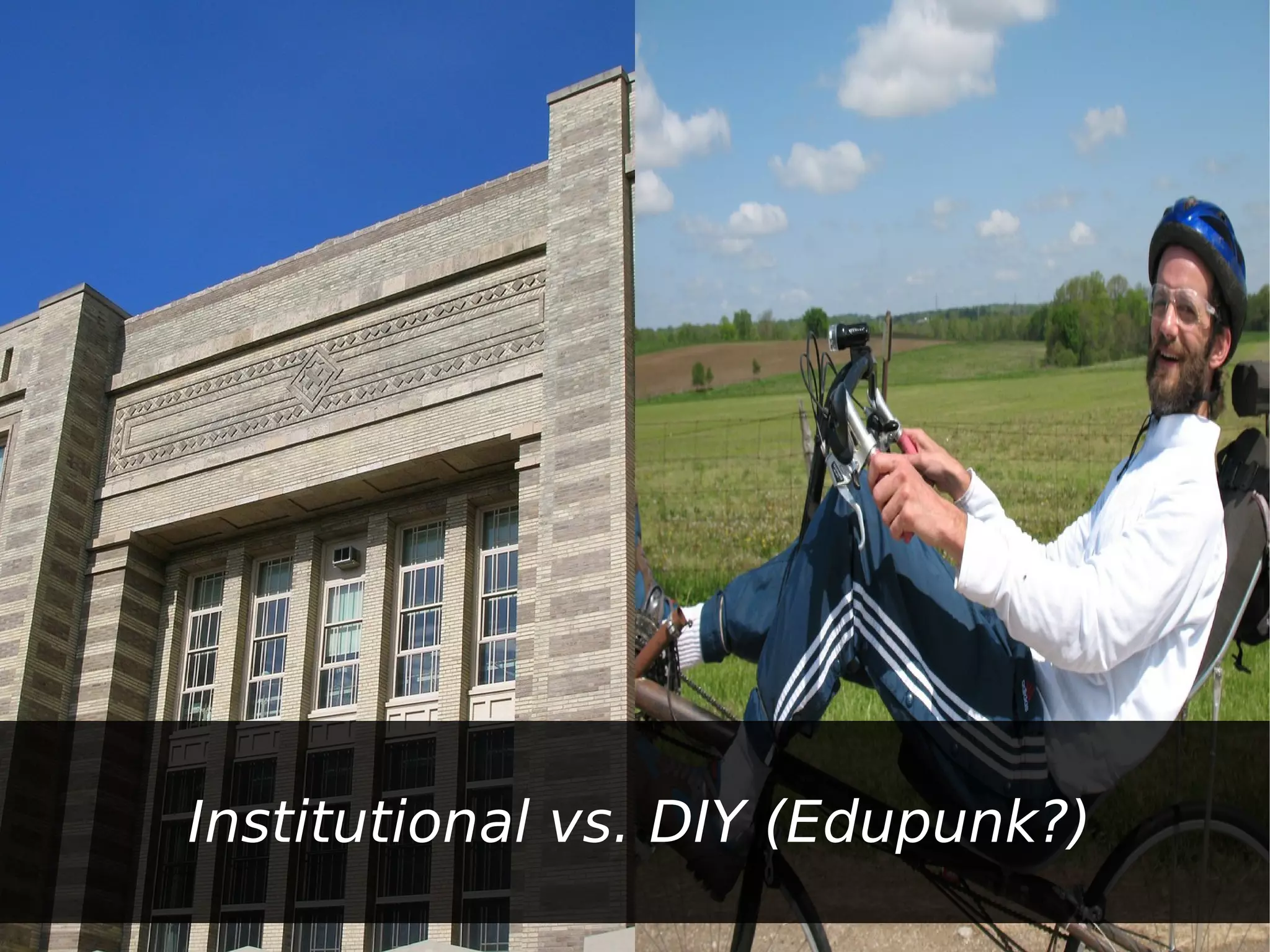
Institutional vs. DIY (Edupunk?)
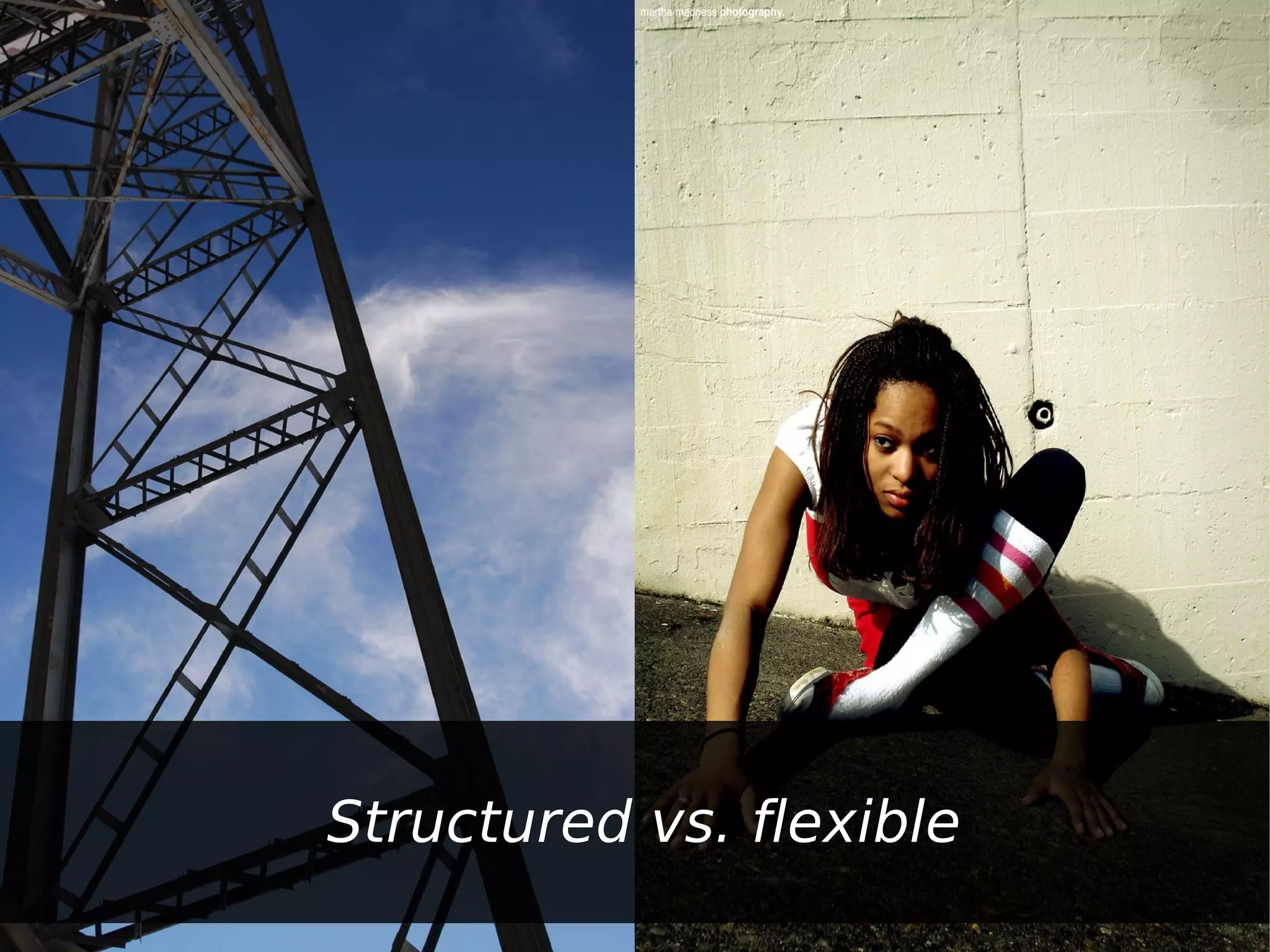
Structured vs. flexible
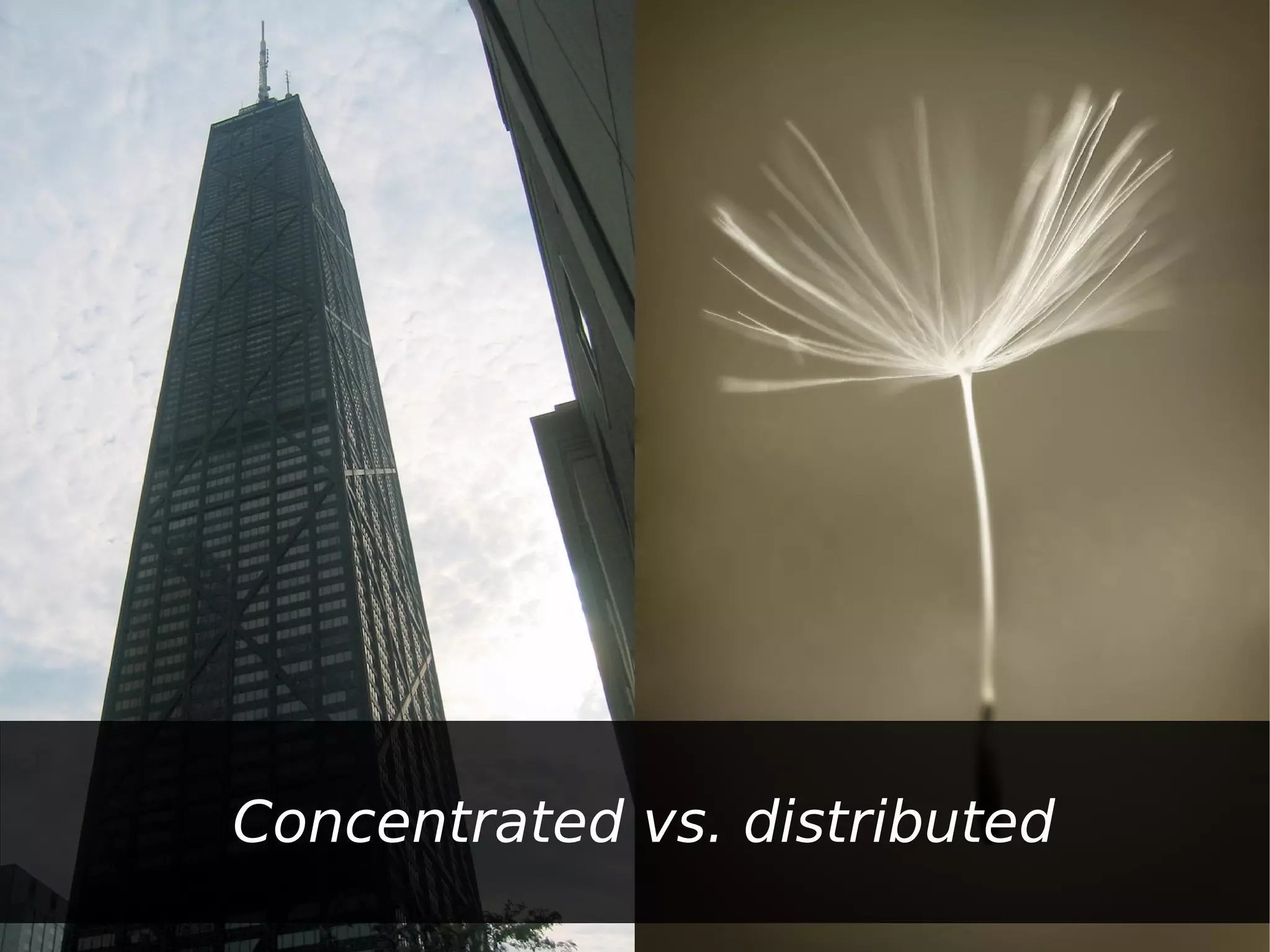
Concentrated vs. distributed
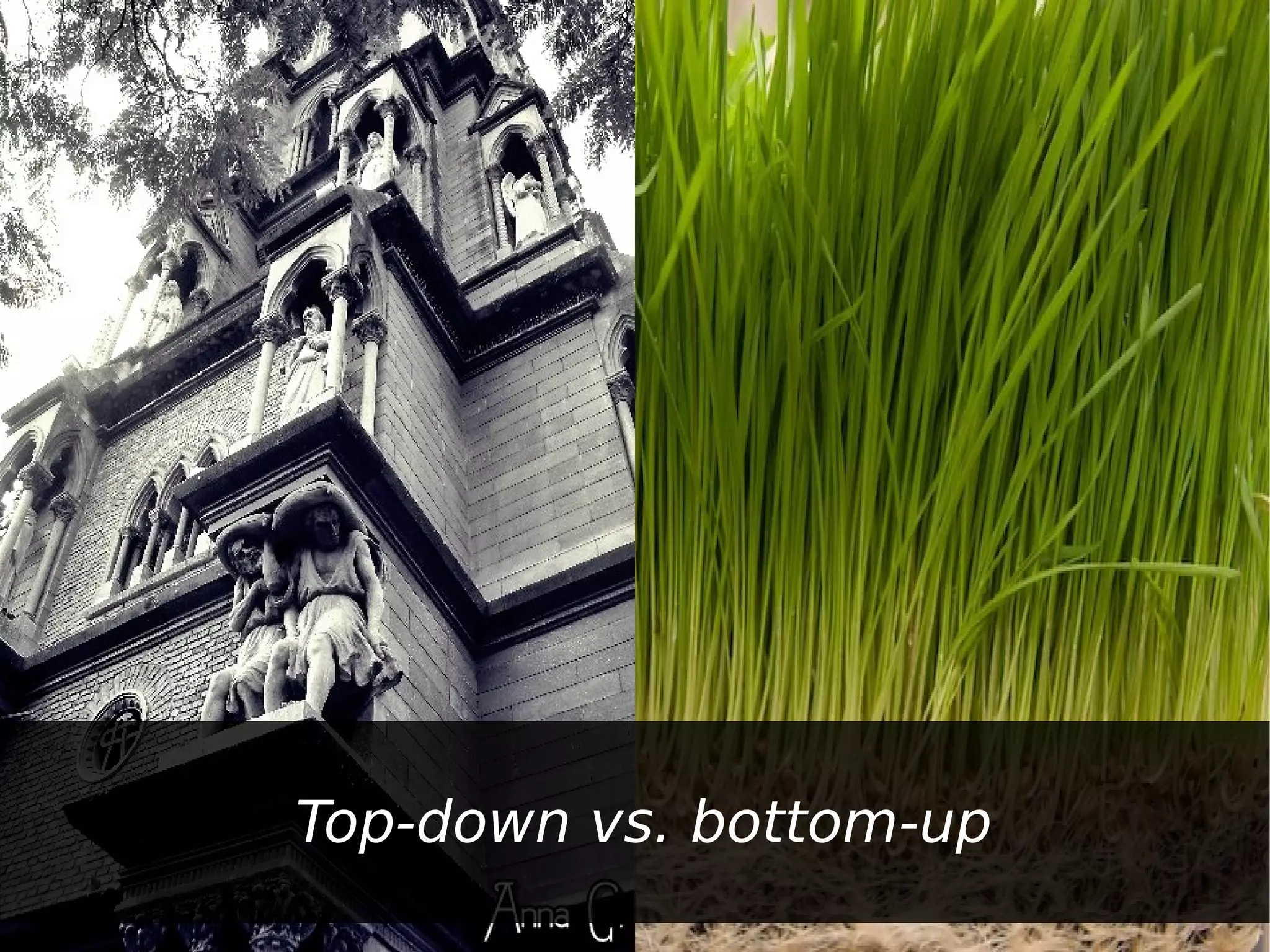
Top-down vs. bottom-up
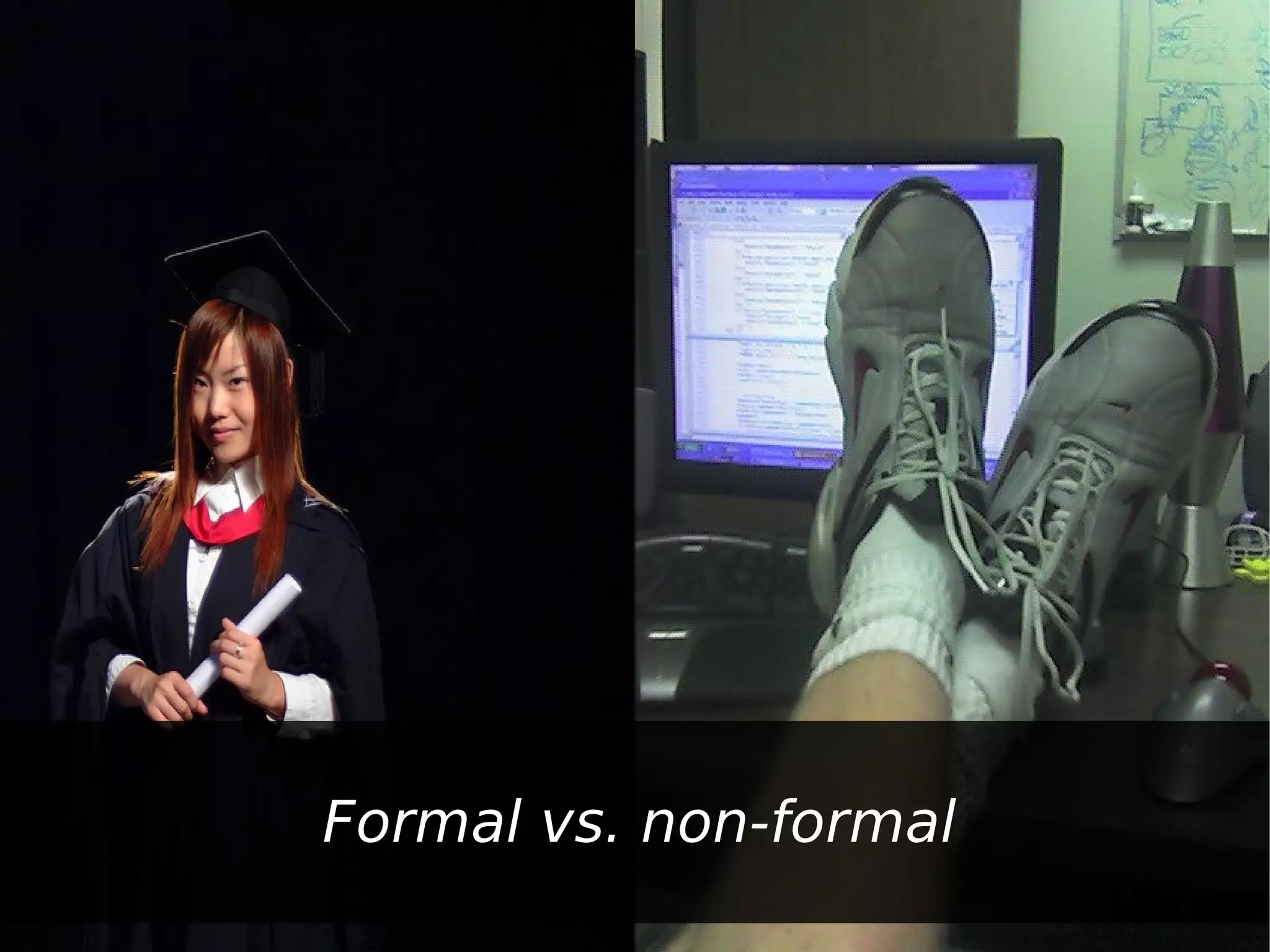
Formal vs. non-formal
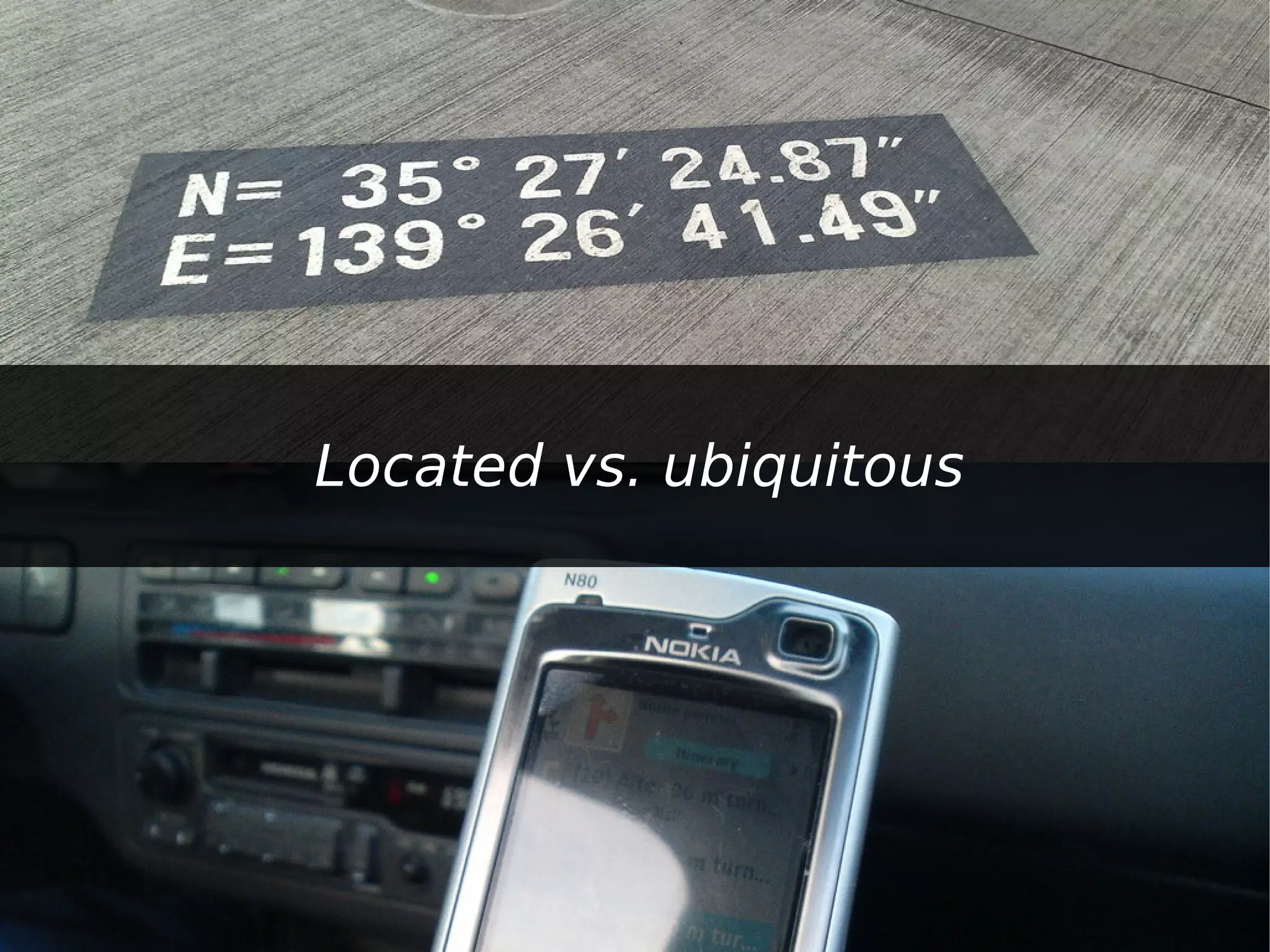
Located vs. ubiquitous
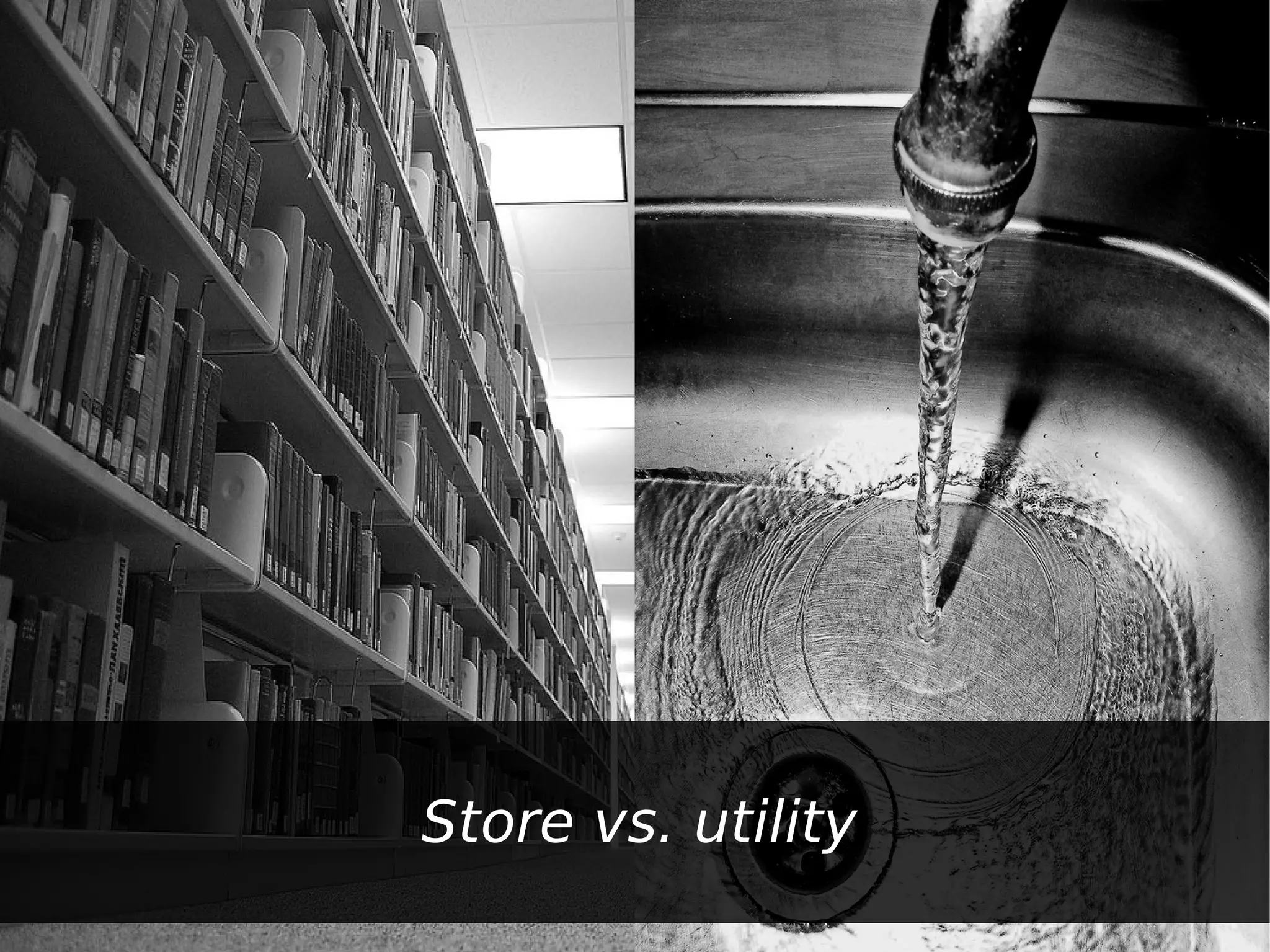
Store vs. utility
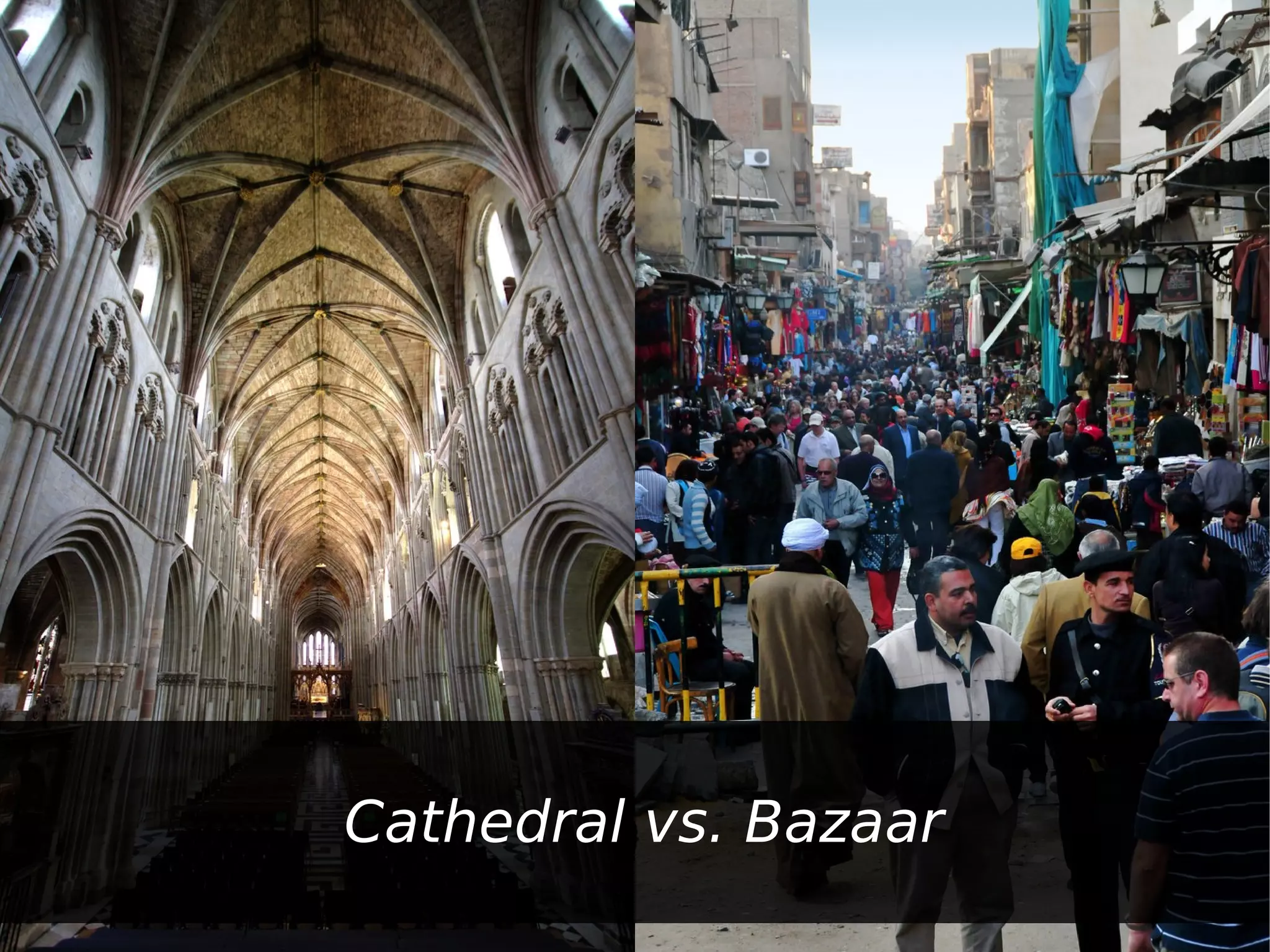
Cathedral vs. Bazaar
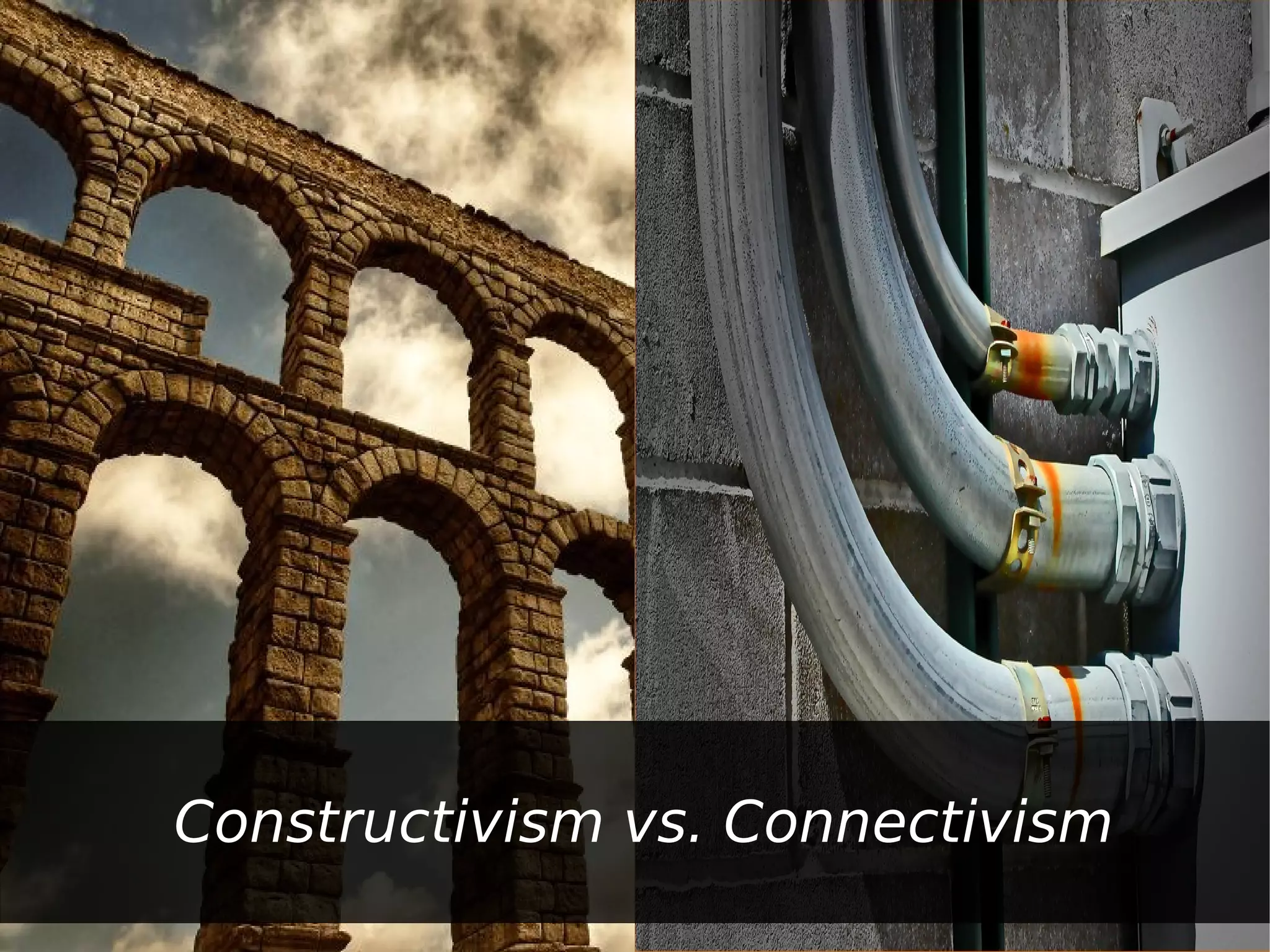
Constructivism vs. Connectivism
Should I stay
or should I go?

       The Clash, 1981
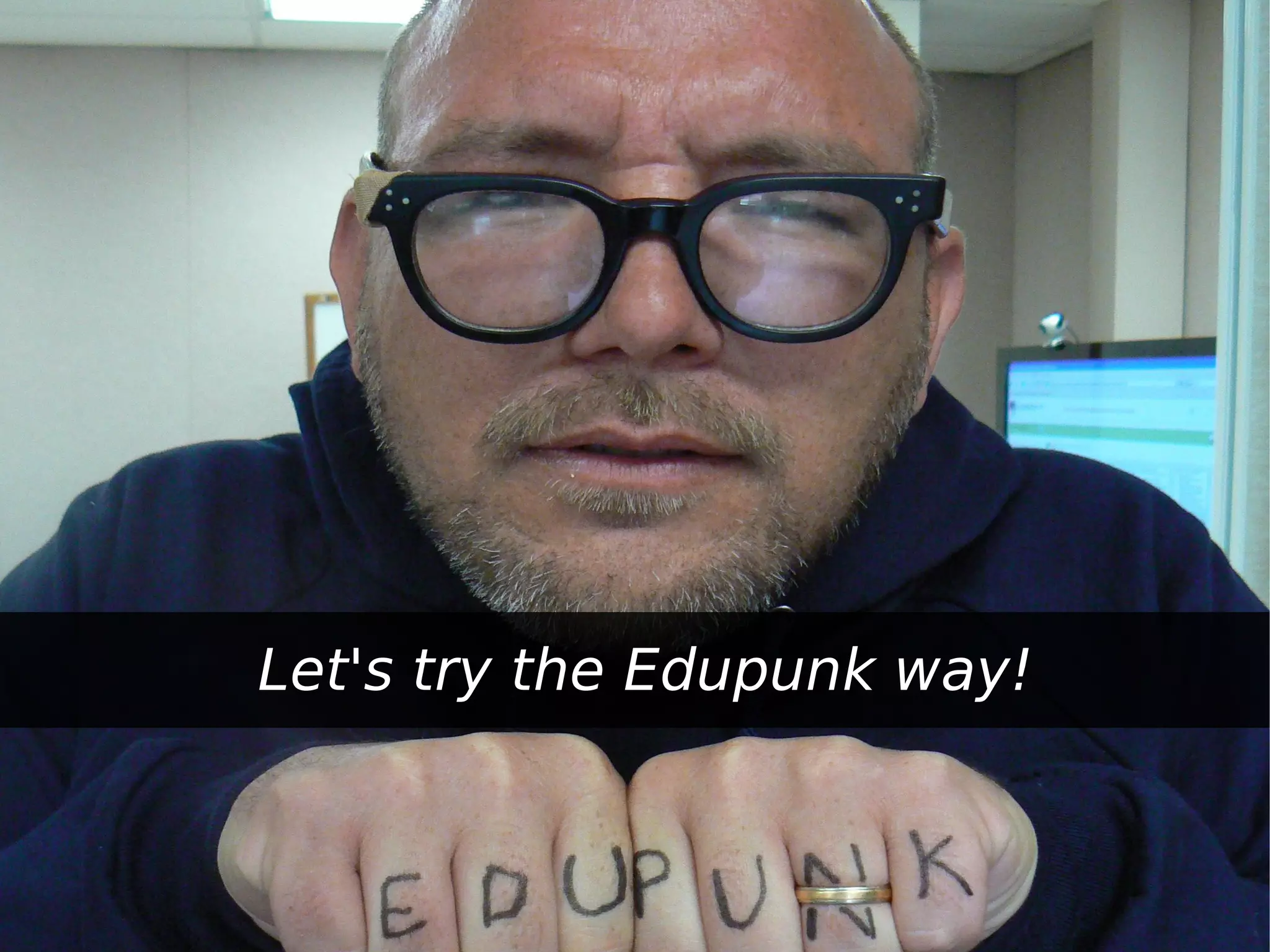
Let's try the Edupunk way!
Education 2.0: a
positive experience
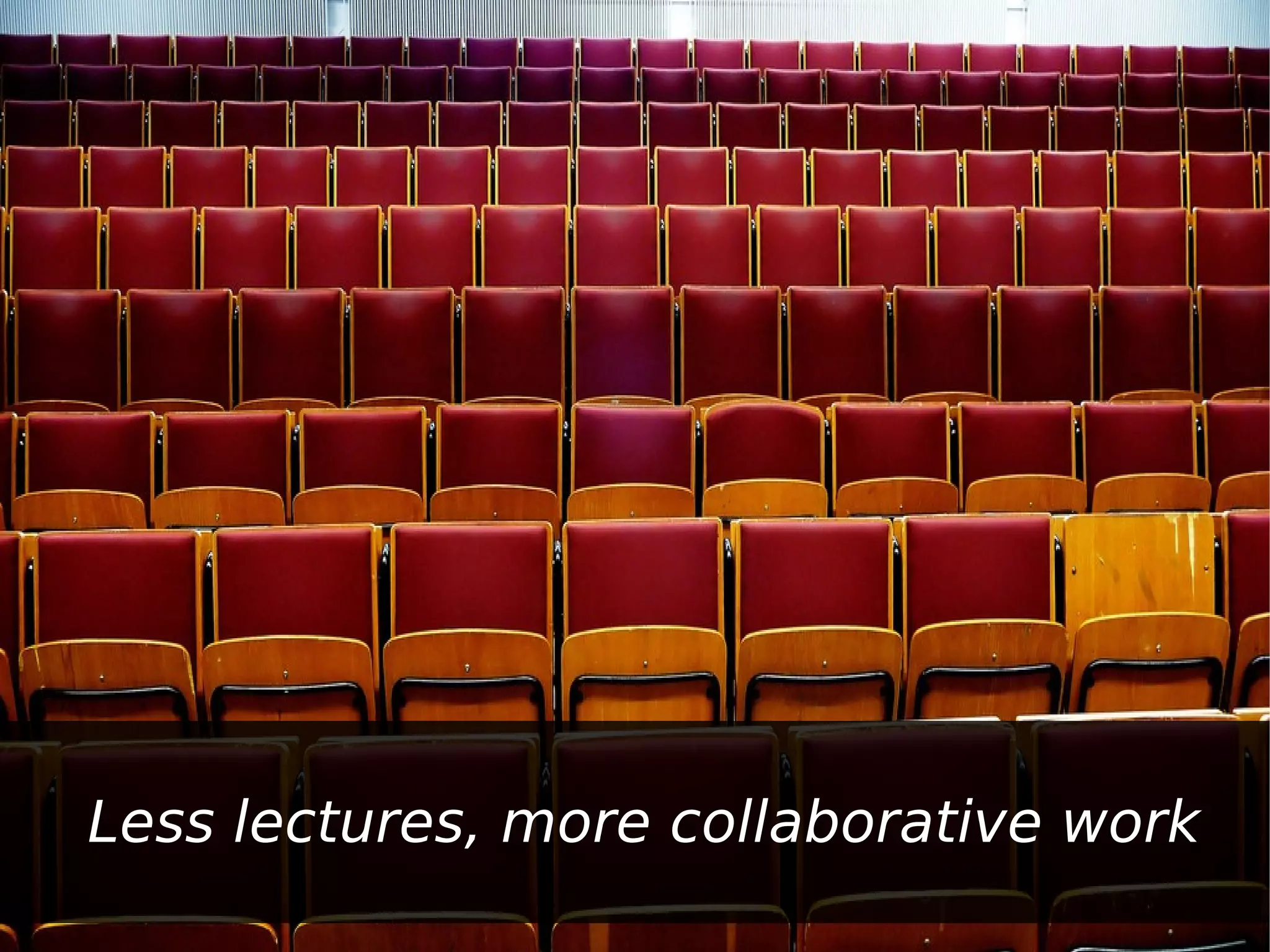
Less lectures, more collaborative work
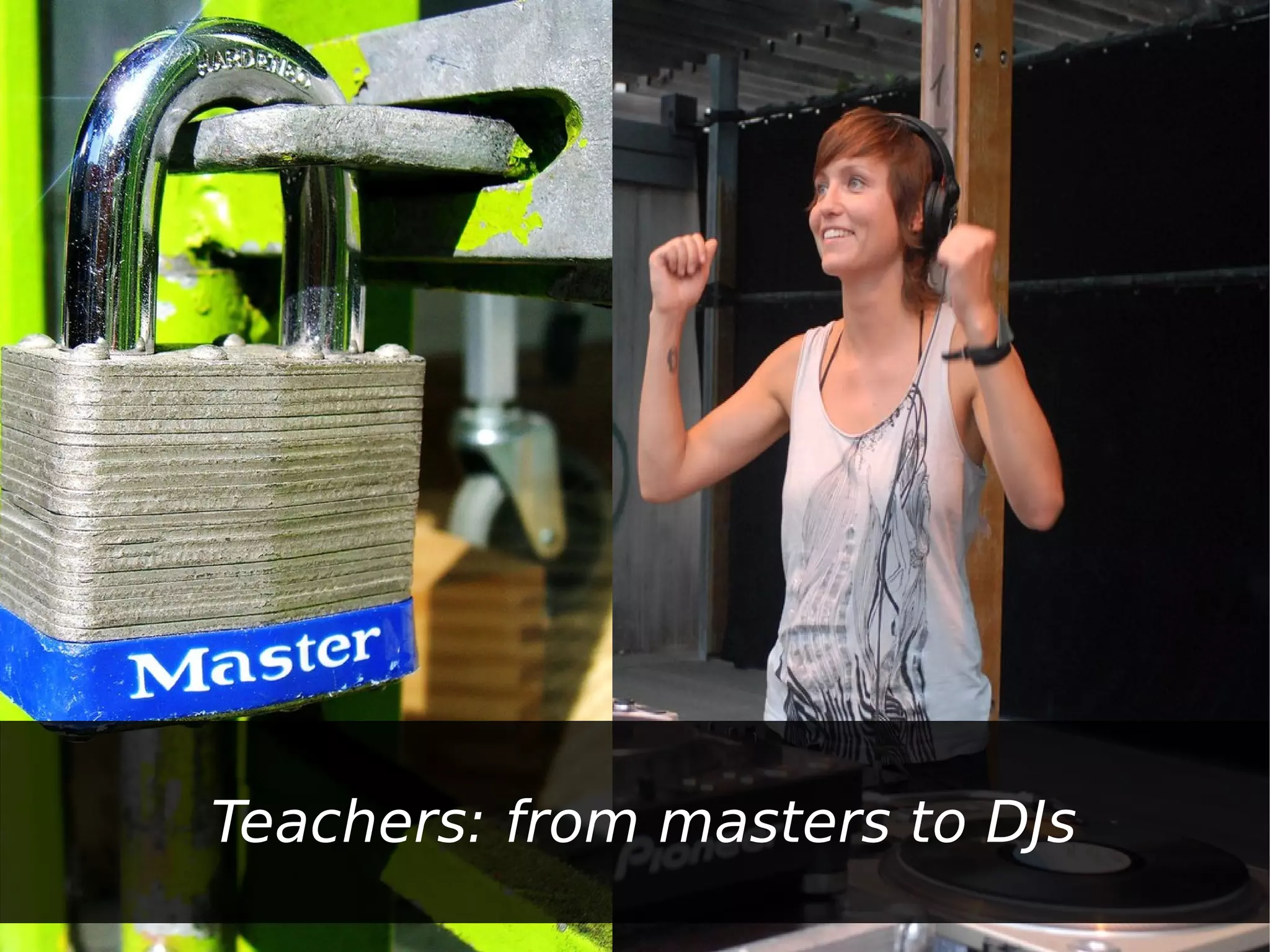
Teachers: from masters to DJs
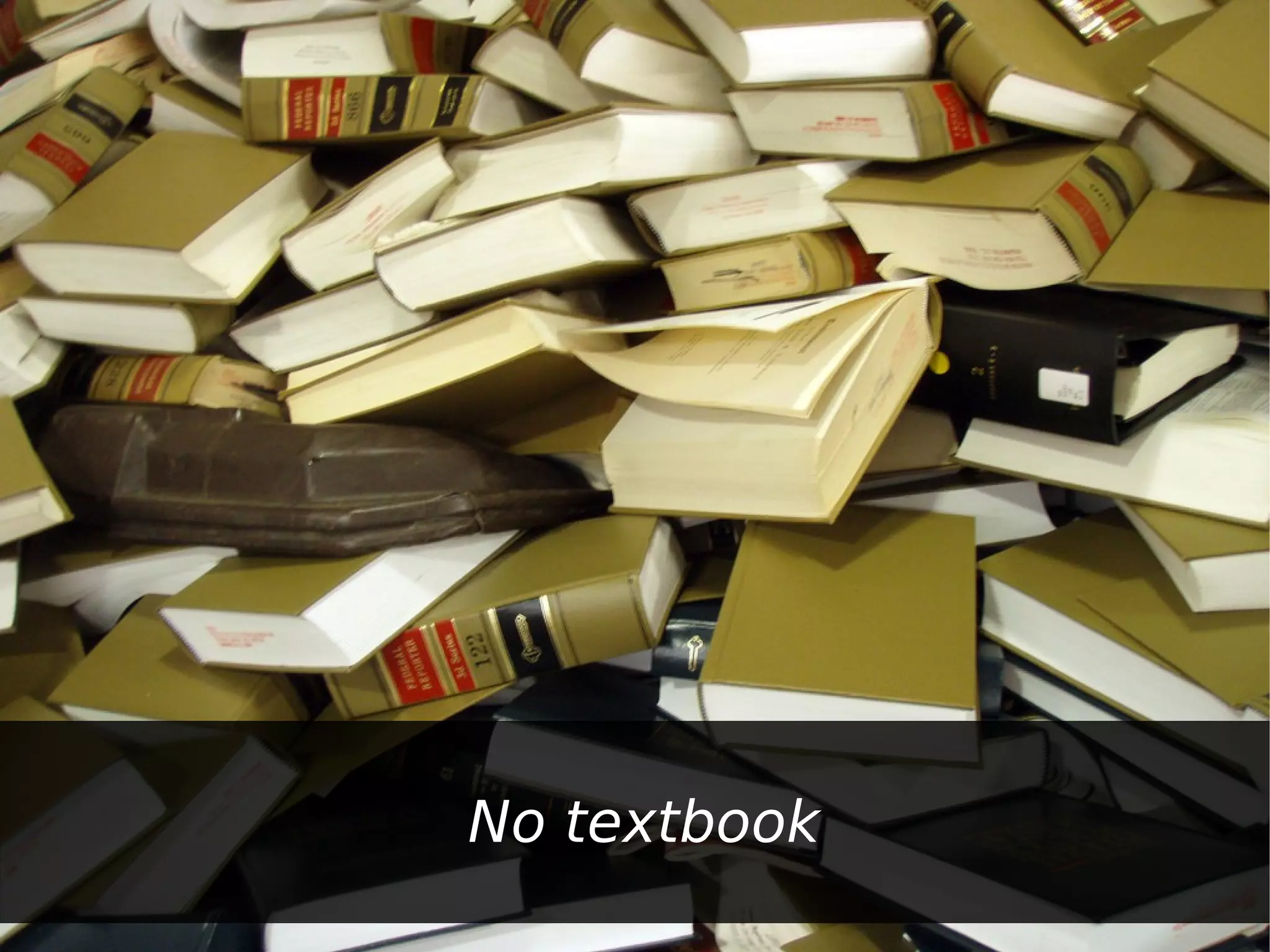
No textbook
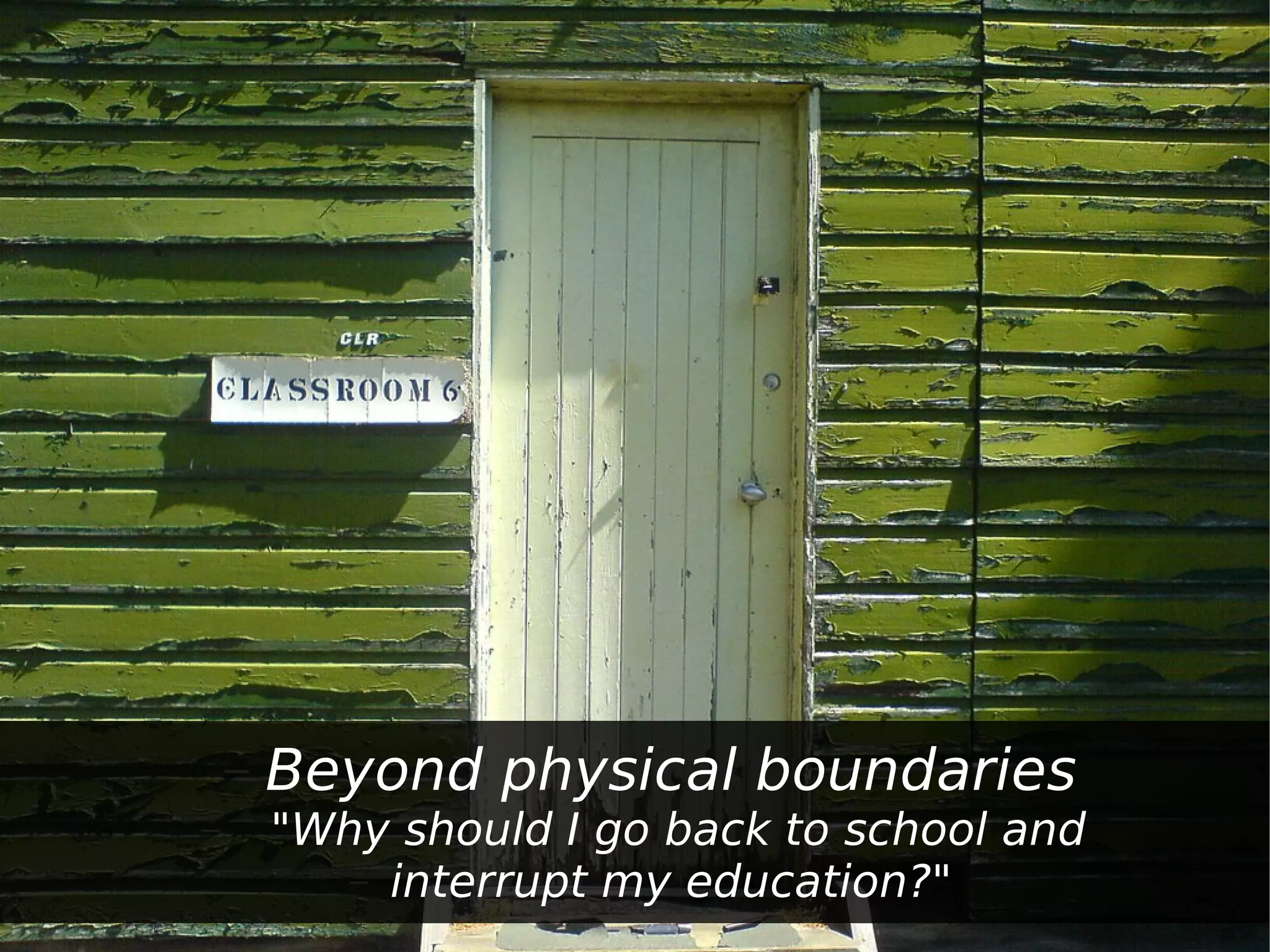
–   Beyond physical boundaries
–       "Why should I go back to school and
           – interrupt my education?"
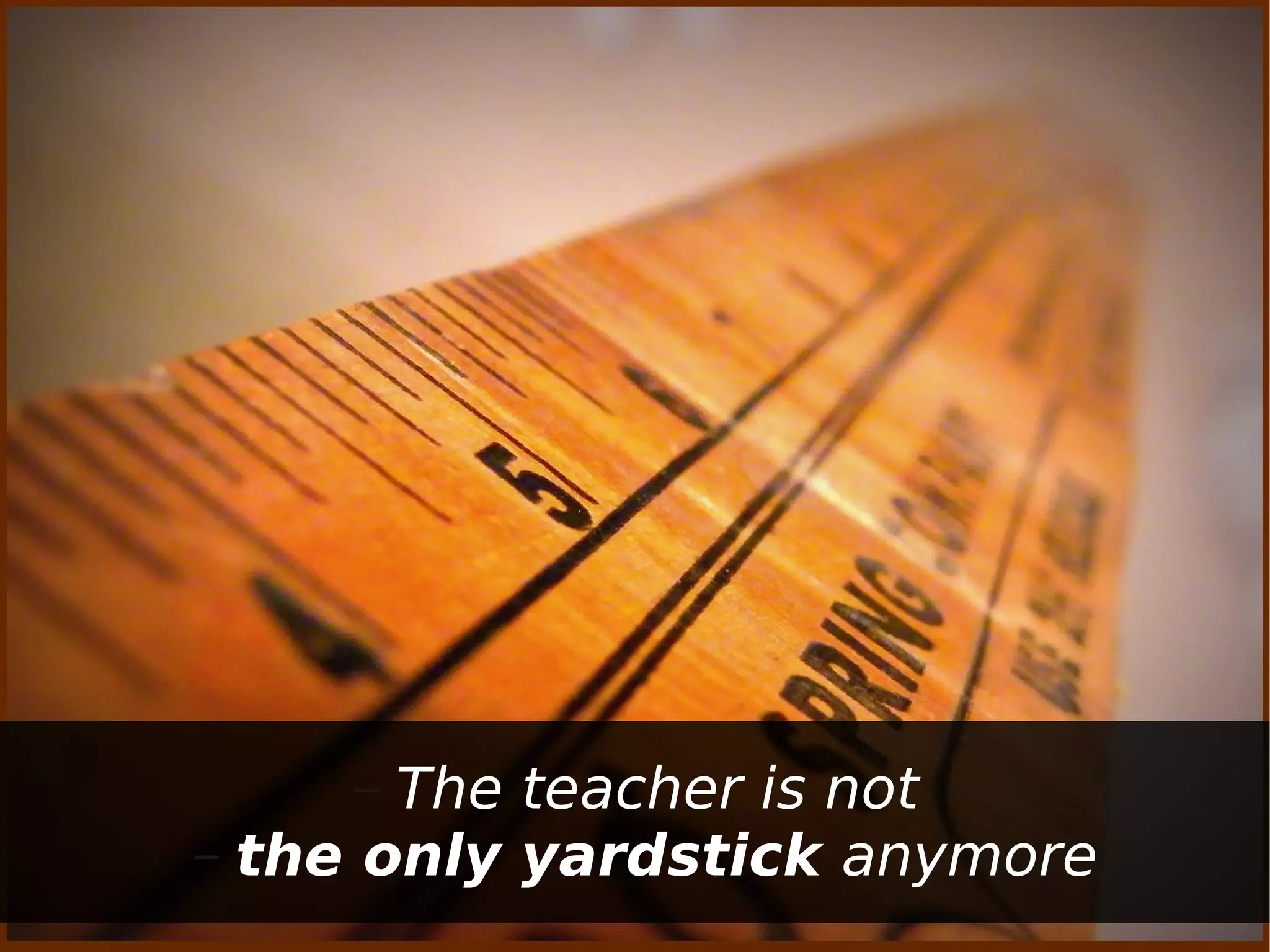
–  The teacher is not
– the only yardstick anymore
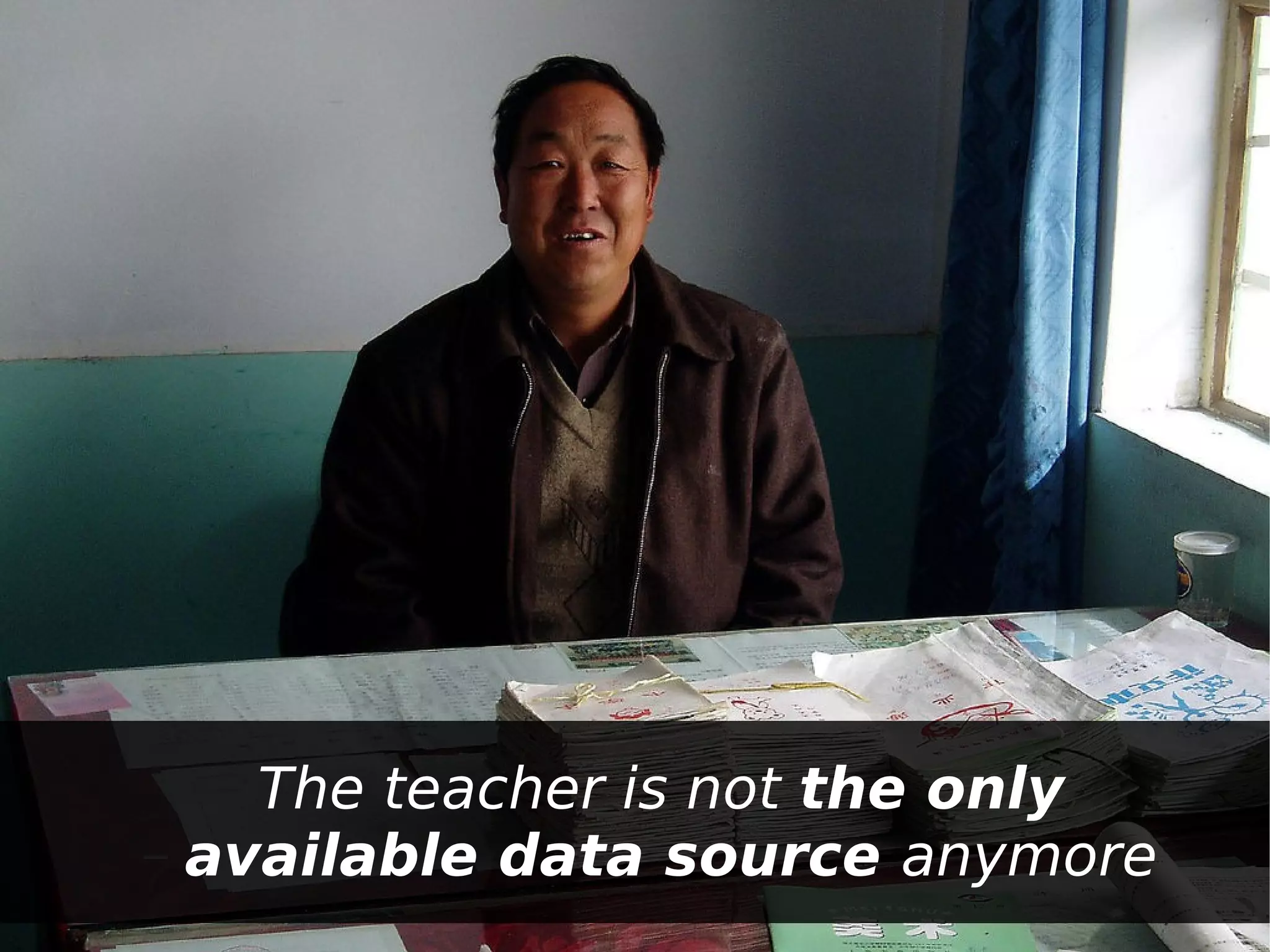
– The teacher is not the only
– available data source anymore
–   Microblogging & Desktop widgets =
         – real-time participation
Problems
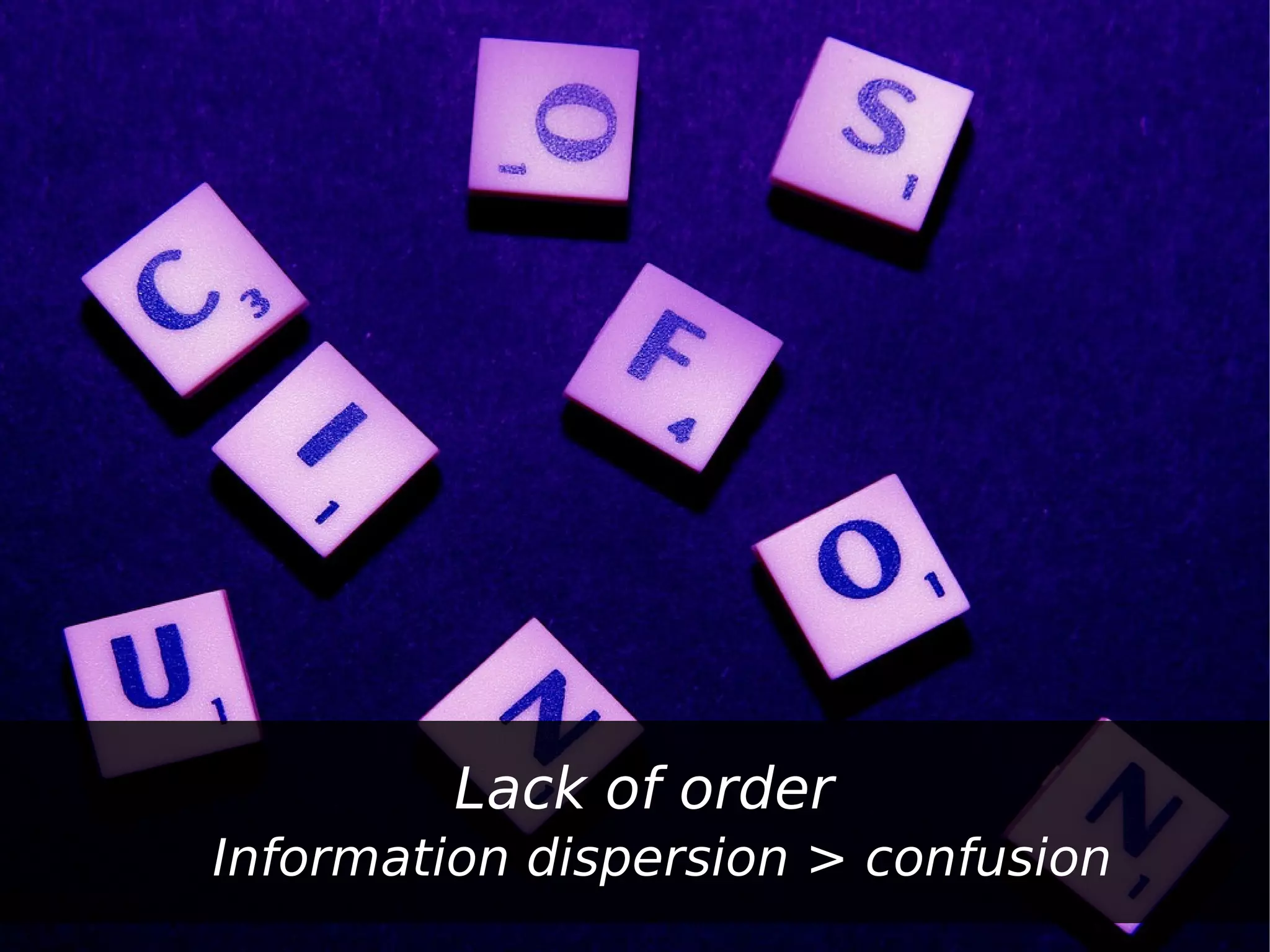
Lack of order
Information dispersion > confusion
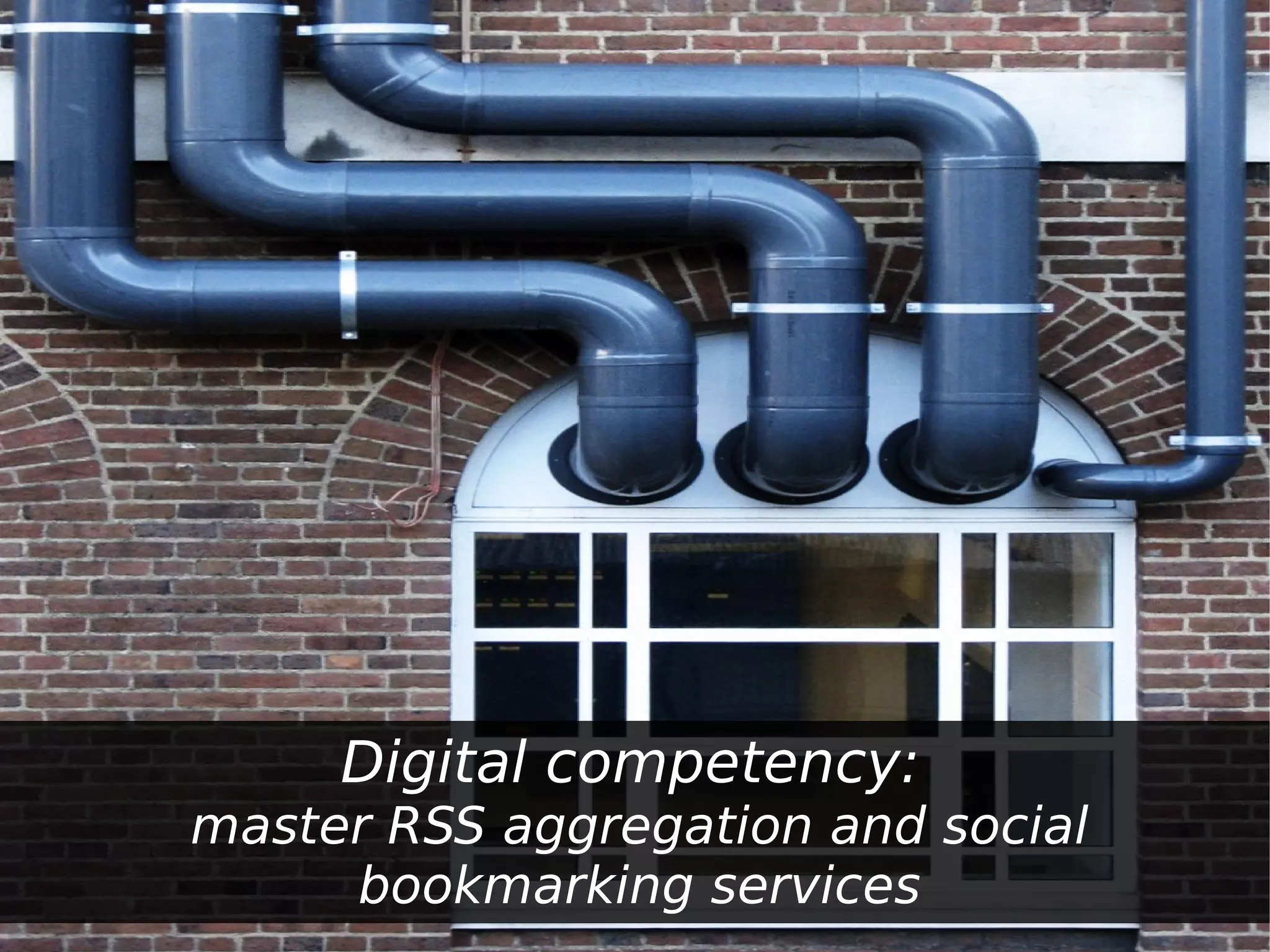
Digital competency:
master RSS aggregation and social
     bookmarking services
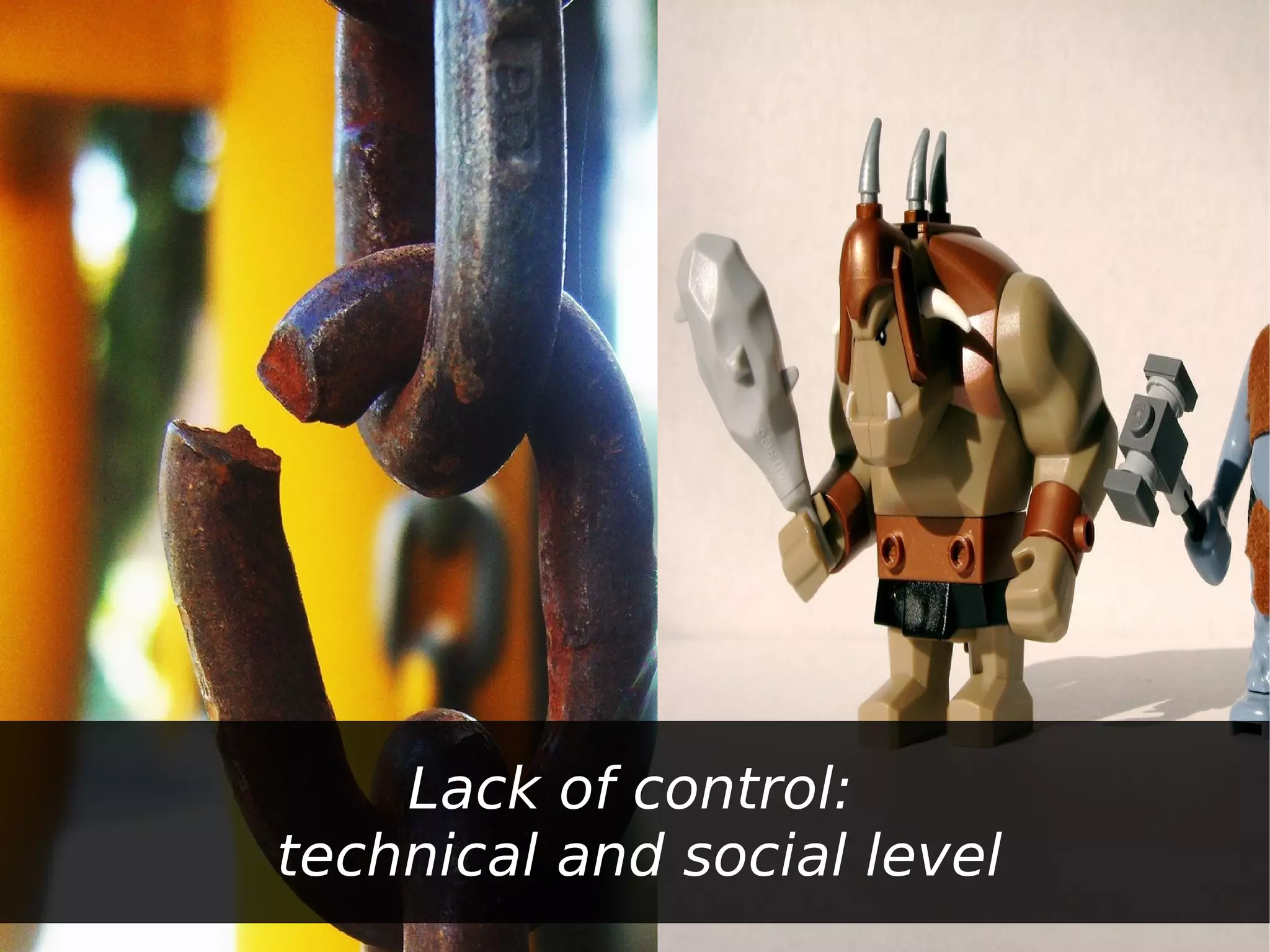
Lack of control:
technical and social level
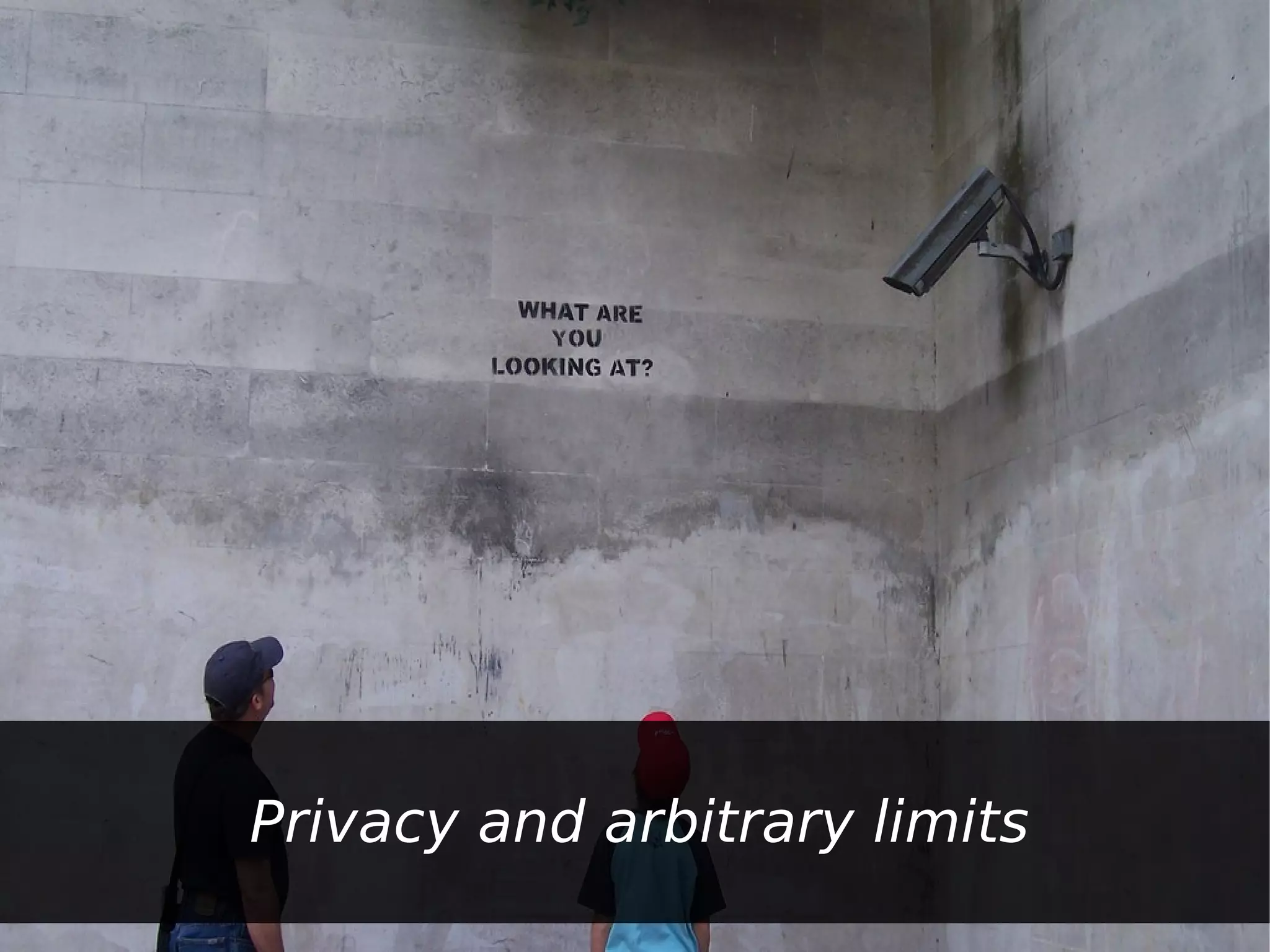
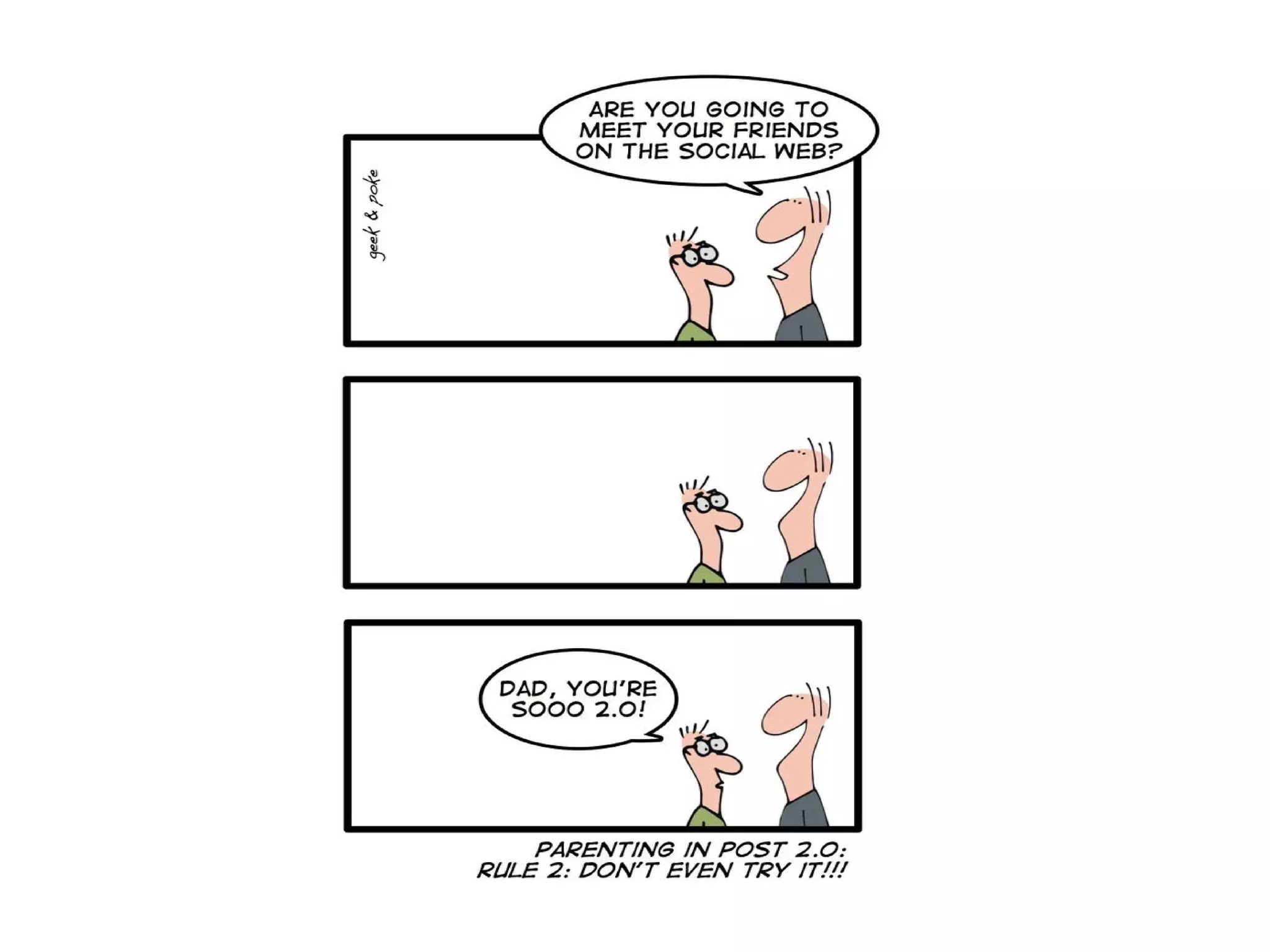
Privacy and arbitrary limits
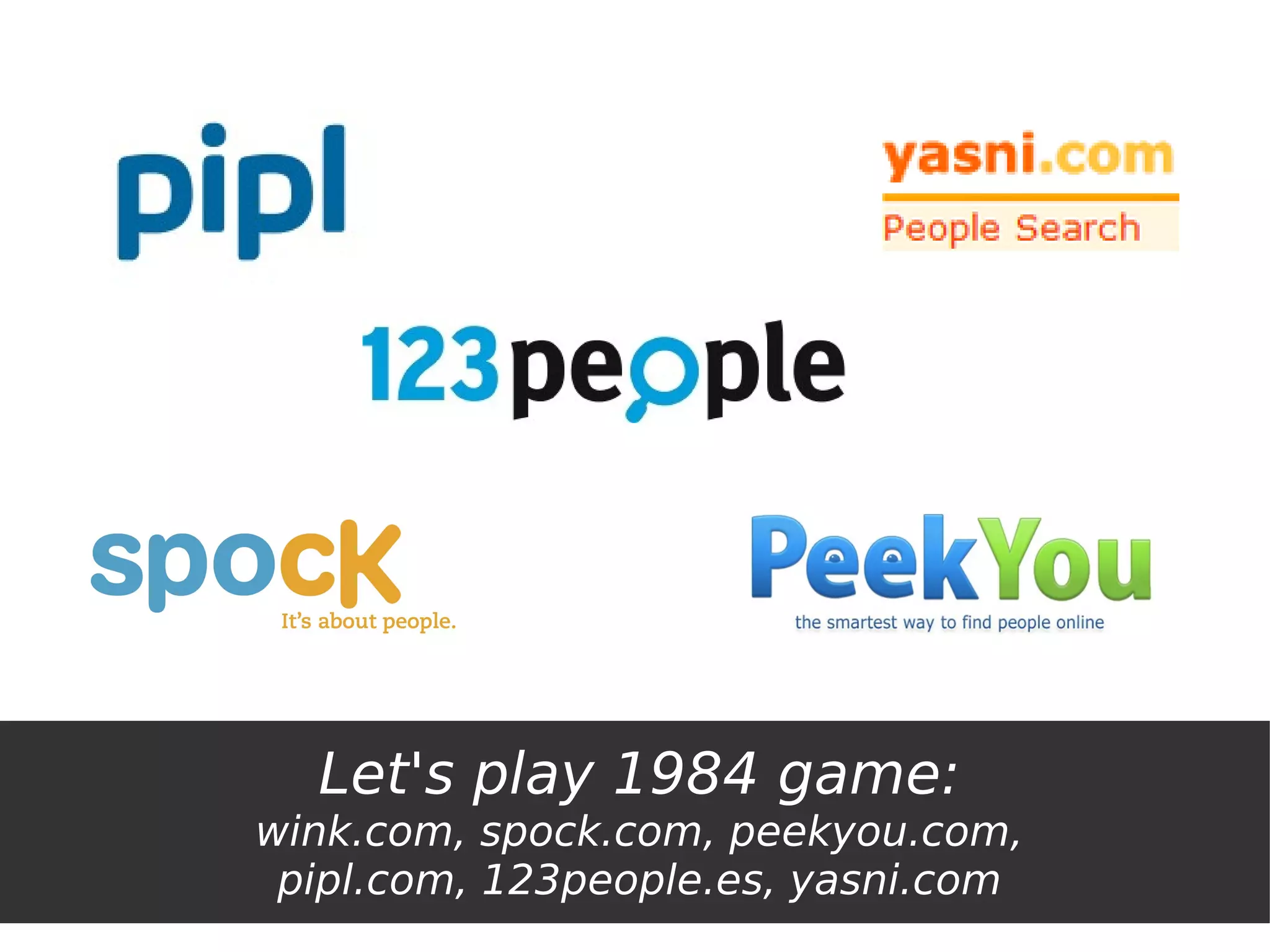
Let's play 1984 game:
wink.com, spock.com, peekyou.com,
 pipl.com, 123people.es, yasni.com
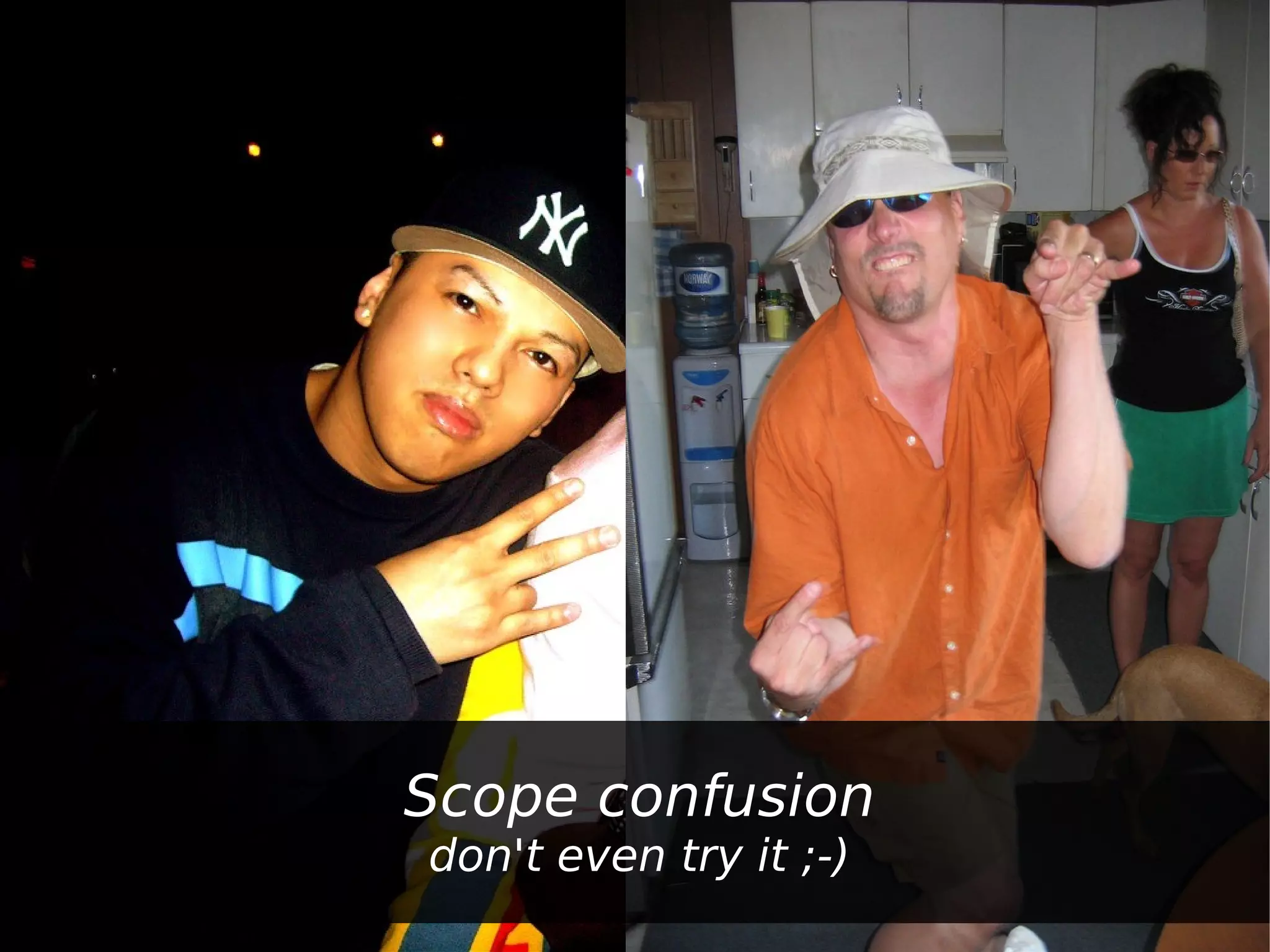
Scope confusion
don't even try it ;-)
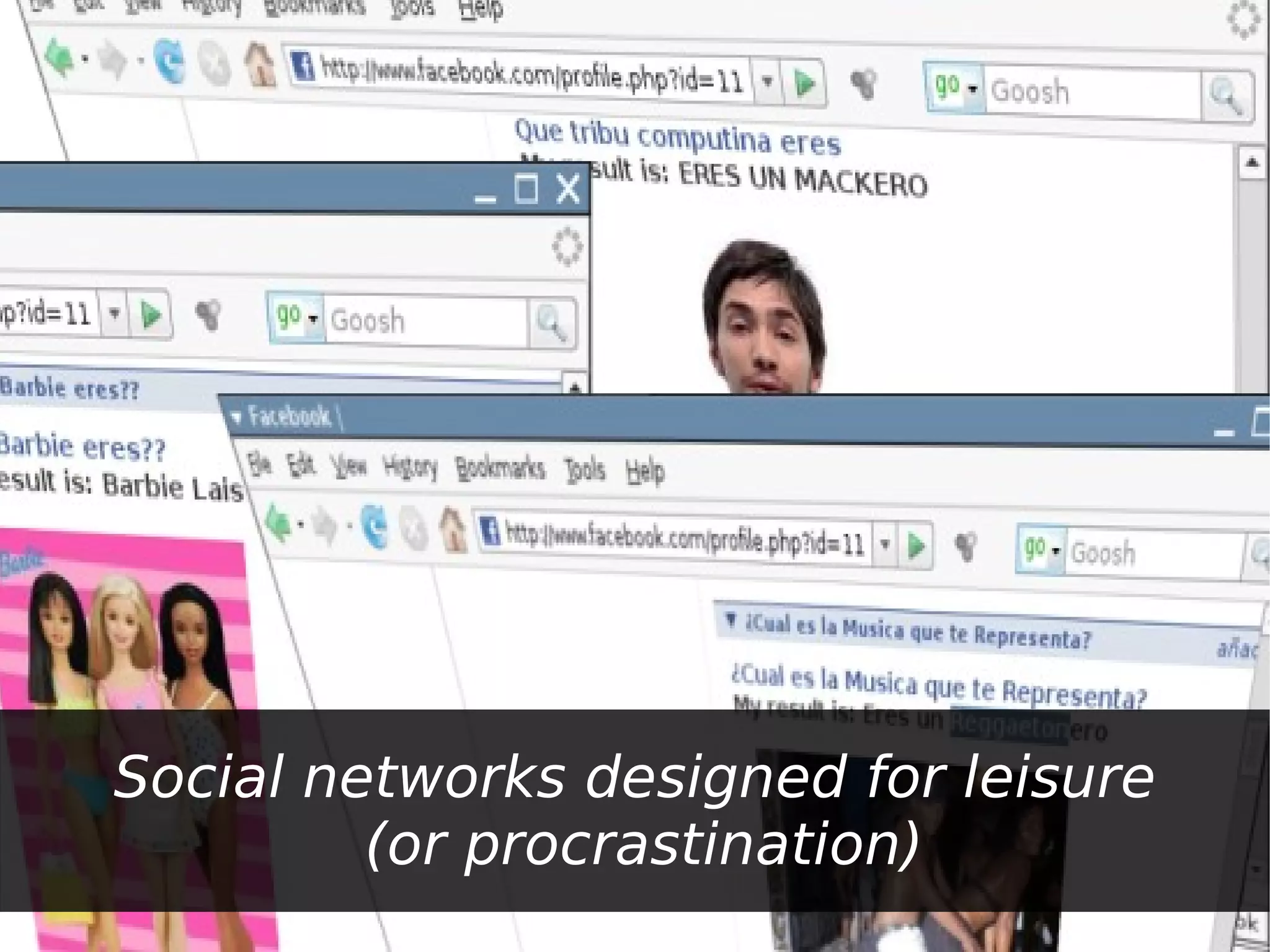
Social networks designed for leisure
         (or procrastination)
Solutions
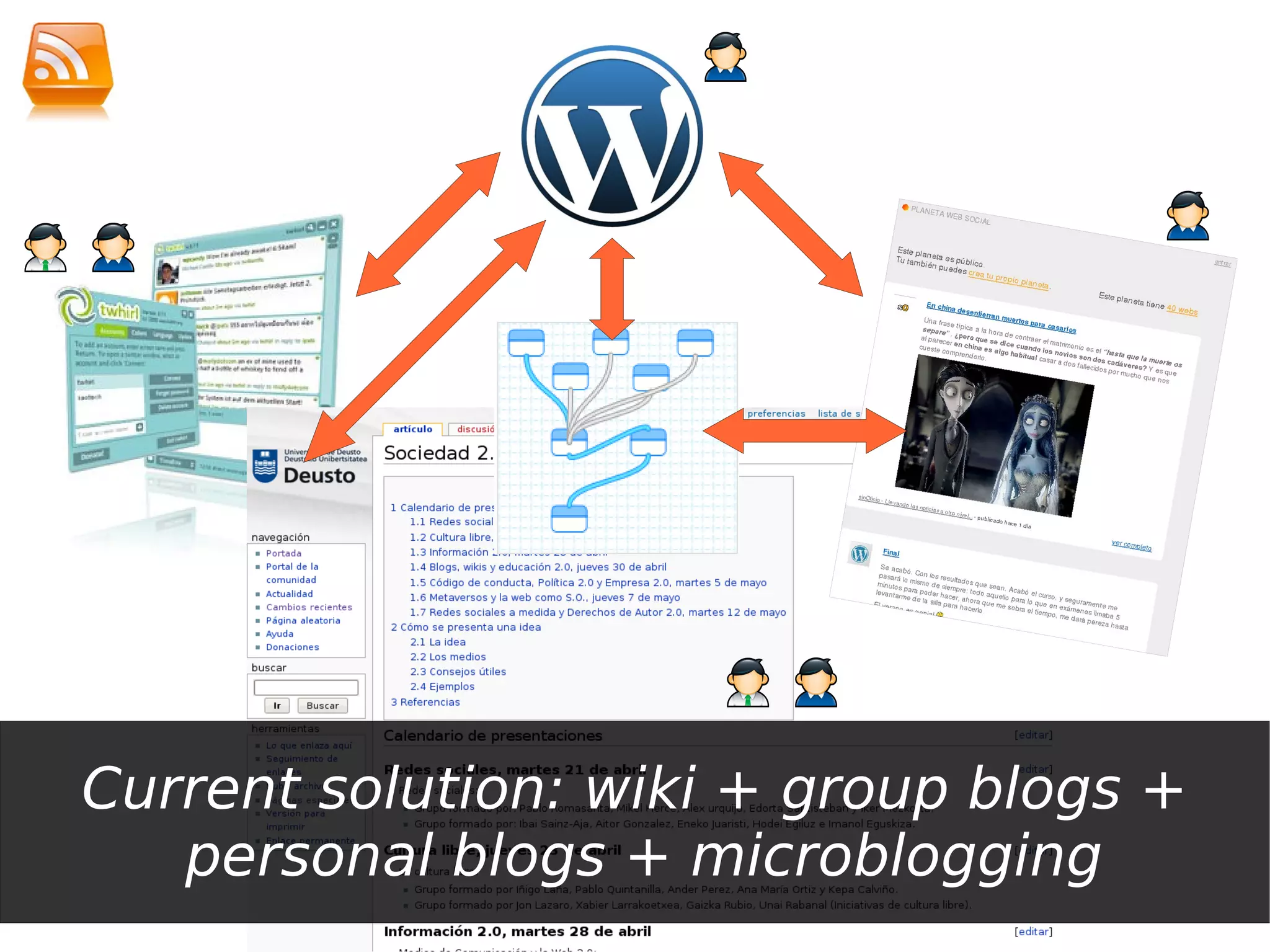
Current solution: wiki + group blogs +
   personal blogs + microblogging
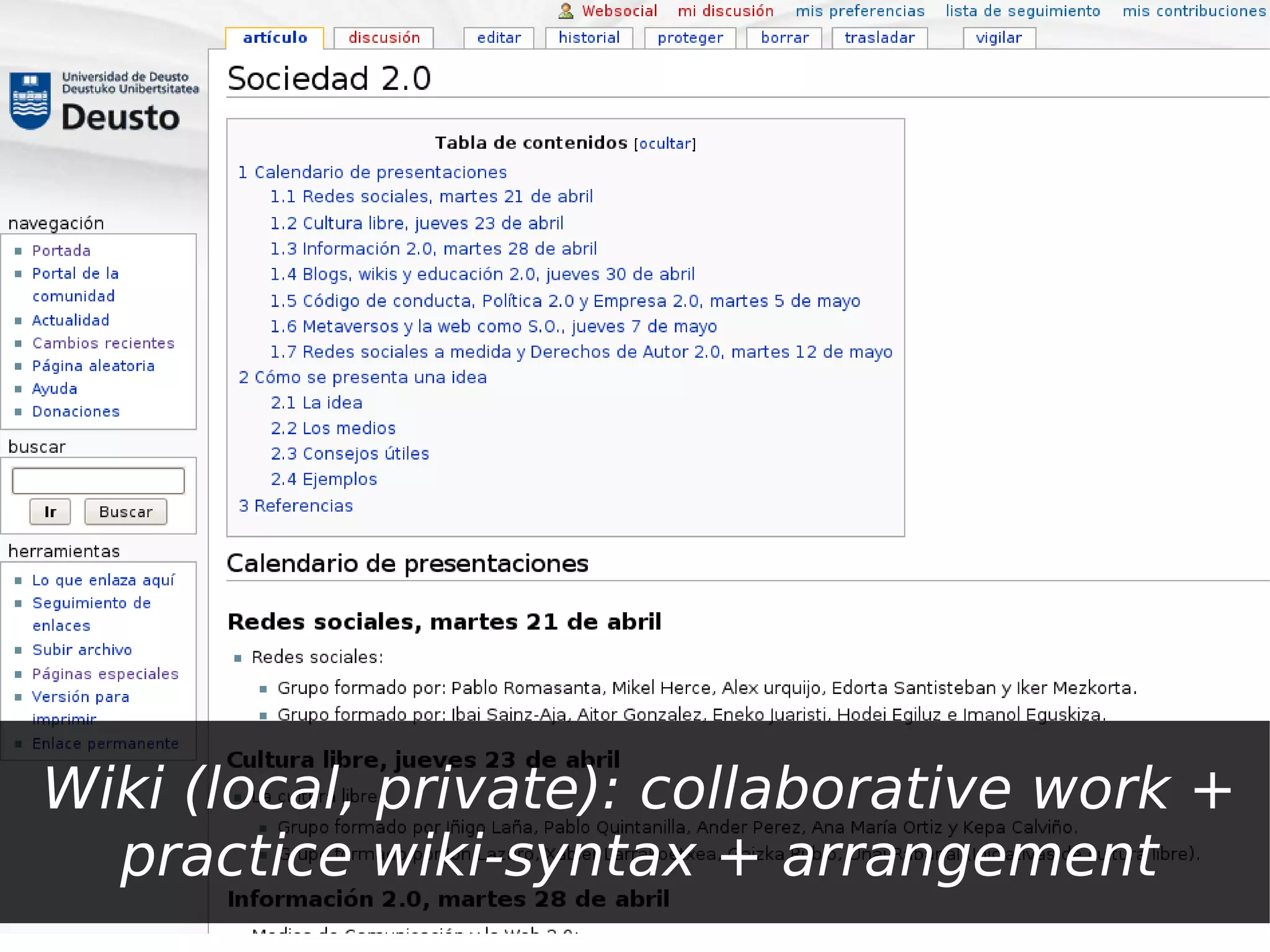
Wiki (local, private): collaborative work +
  practice wiki-syntax + arrangement
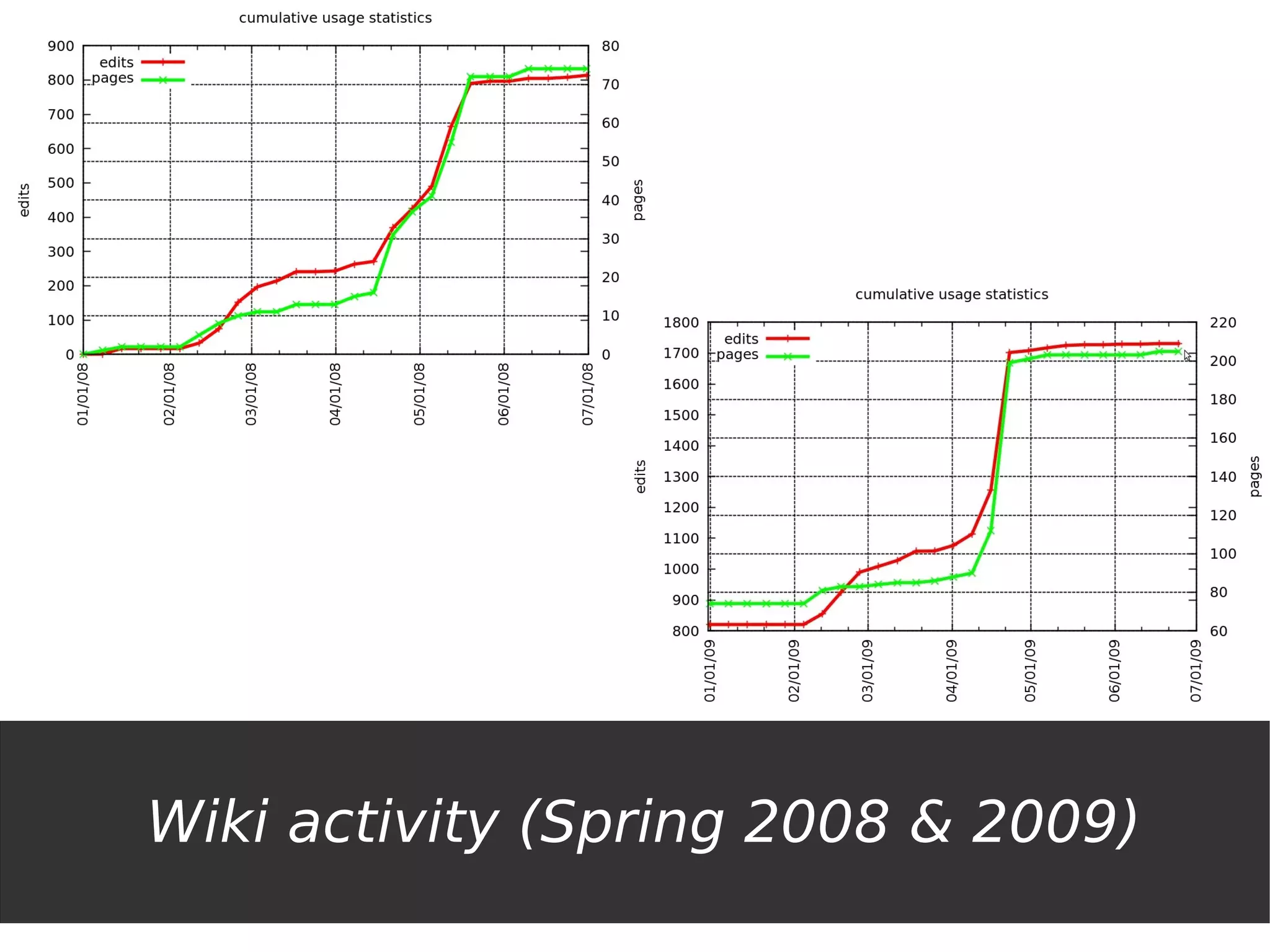
Wiki activity (Spring 2008 & 2009)
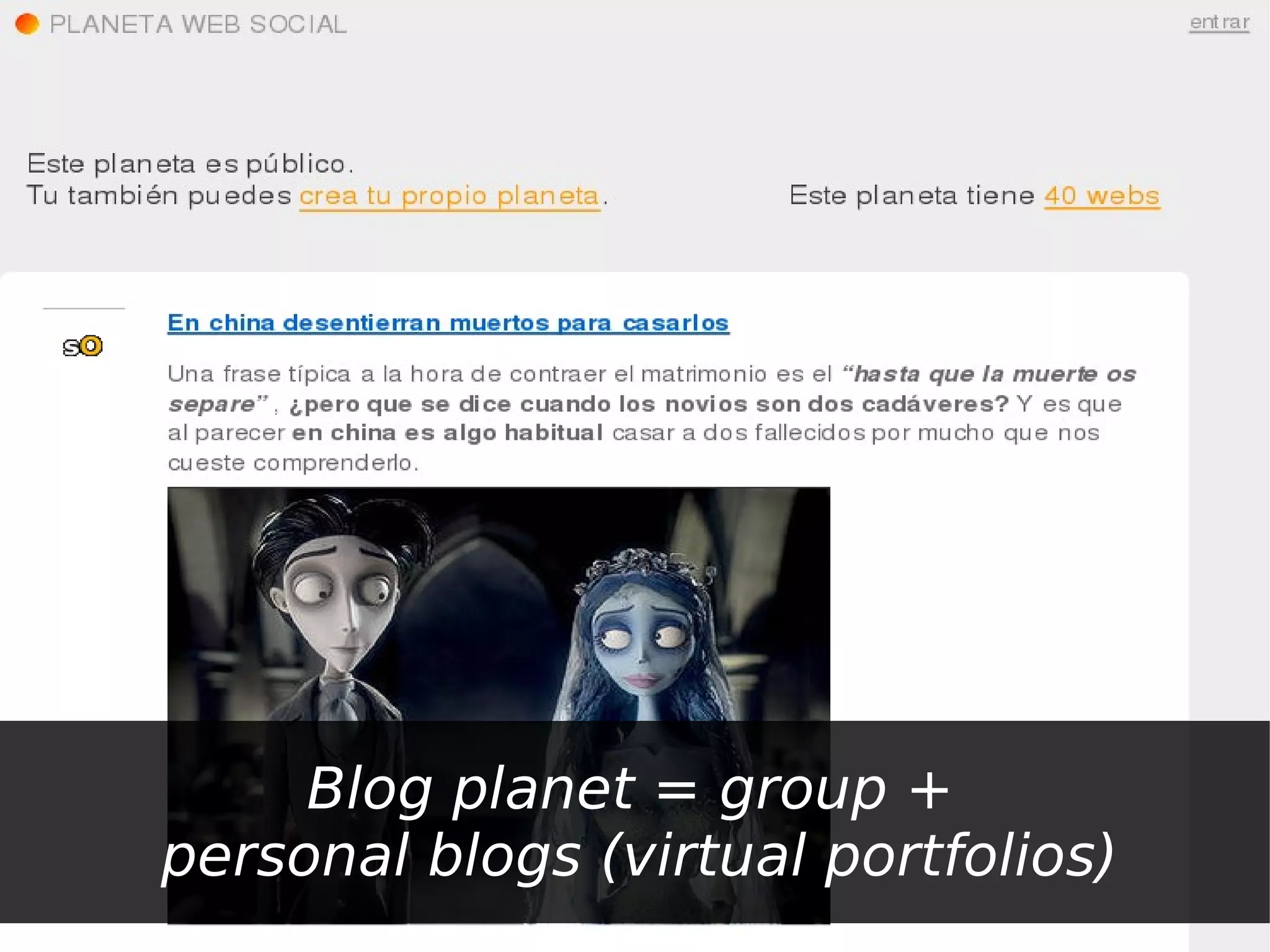
Blog planet = group +
personal blogs (virtual portfolios)
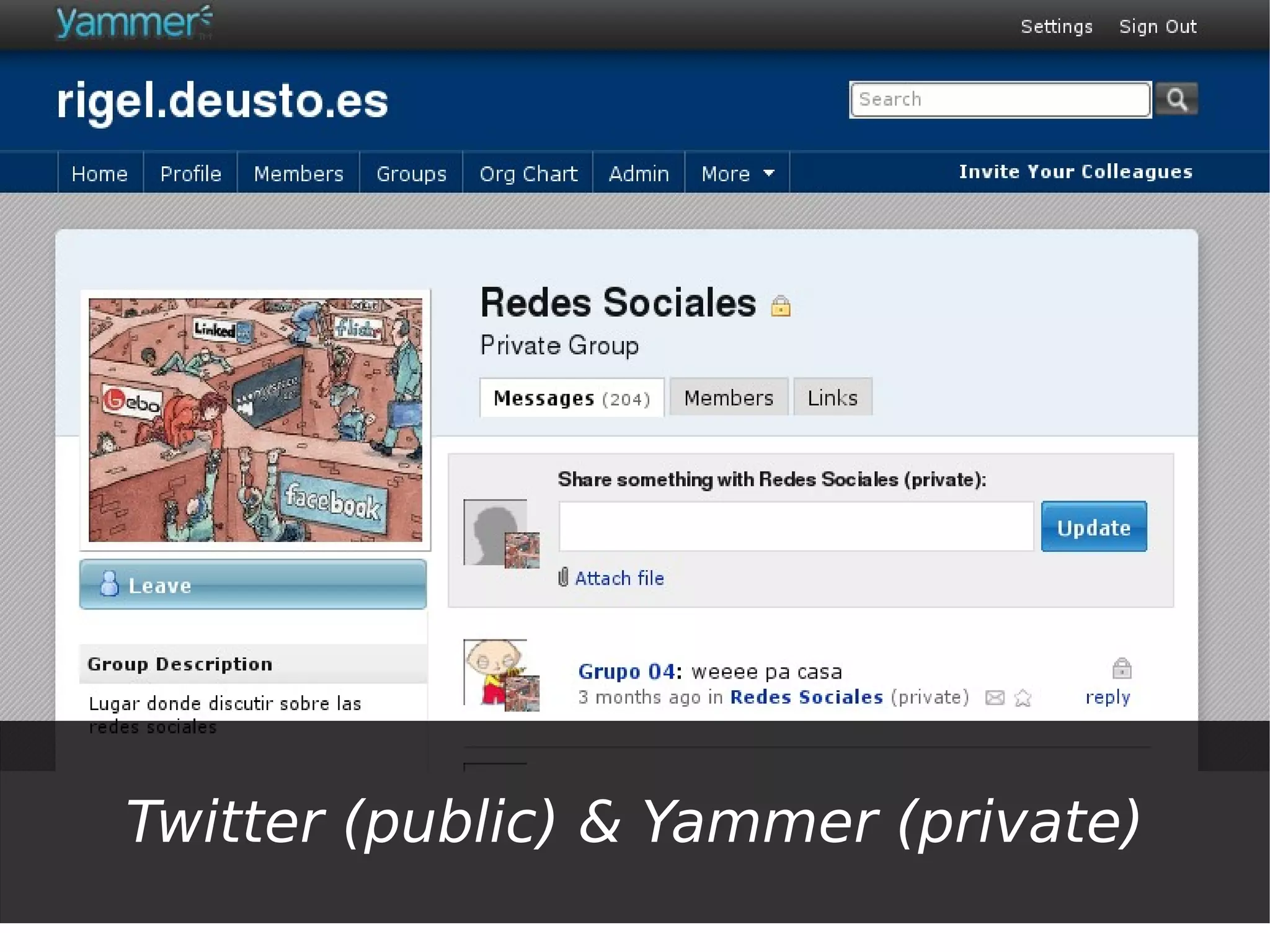
Twitter (public) & Yammer (private)
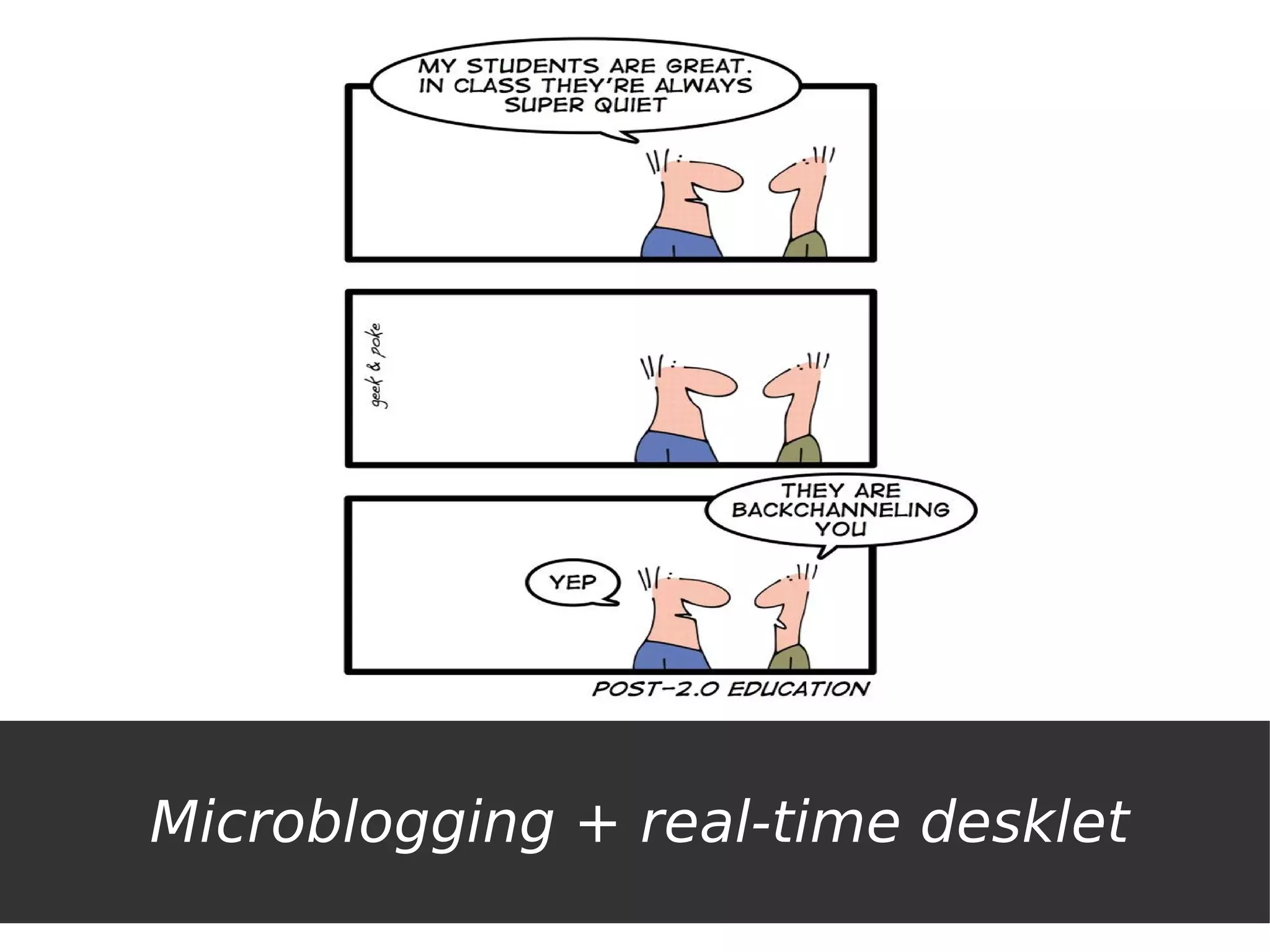
Microblogging + real-time desklet
Future plans
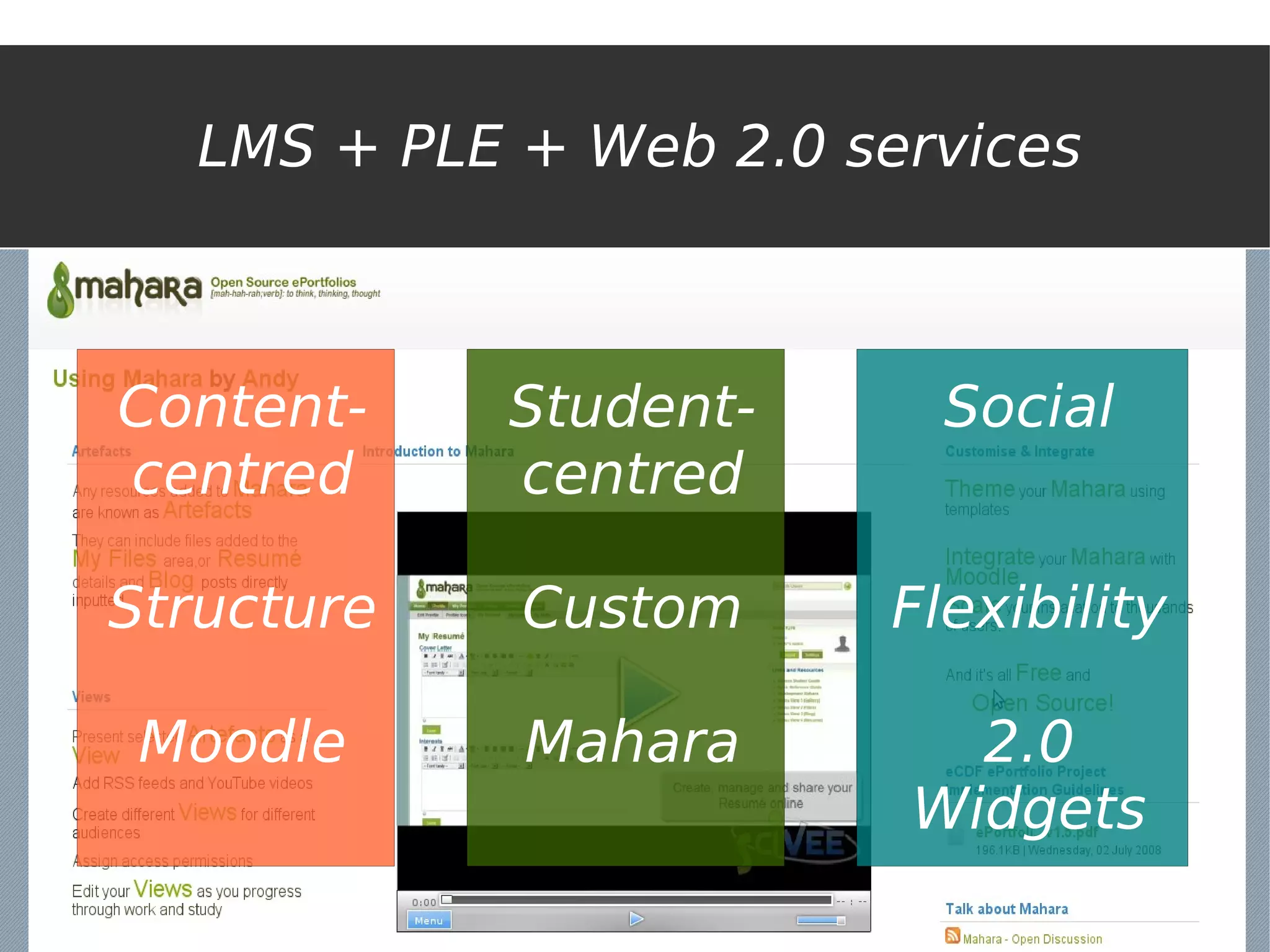
LMS + PLE + Web 2.0 services


Content-    Student-     Social
centred     centred

Structure   Custom     Flexibility

 Moodle     Mahara        2.0
                        Widgets
Conclusions
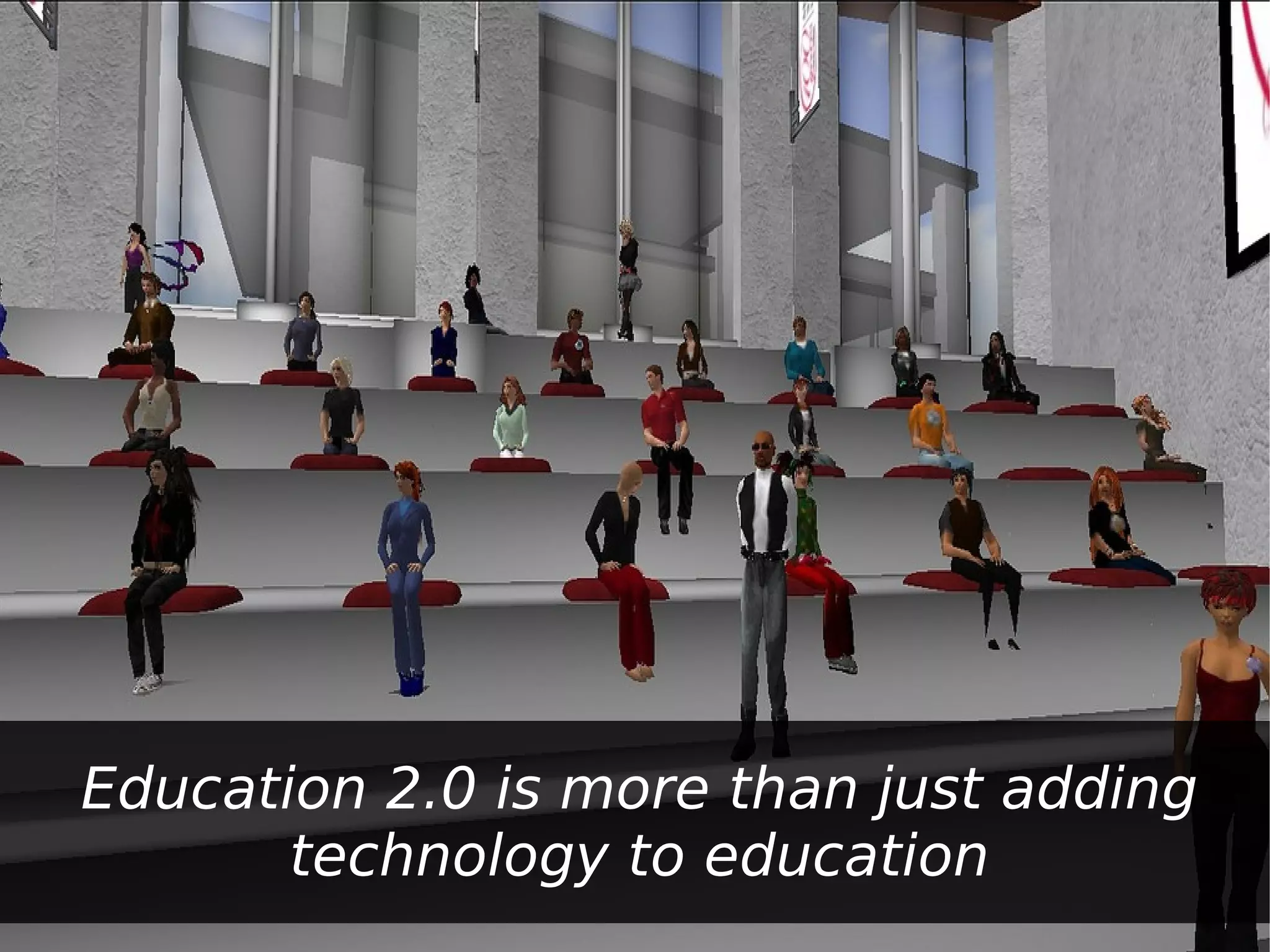
Education 2.0 is more than just adding
       technology to education
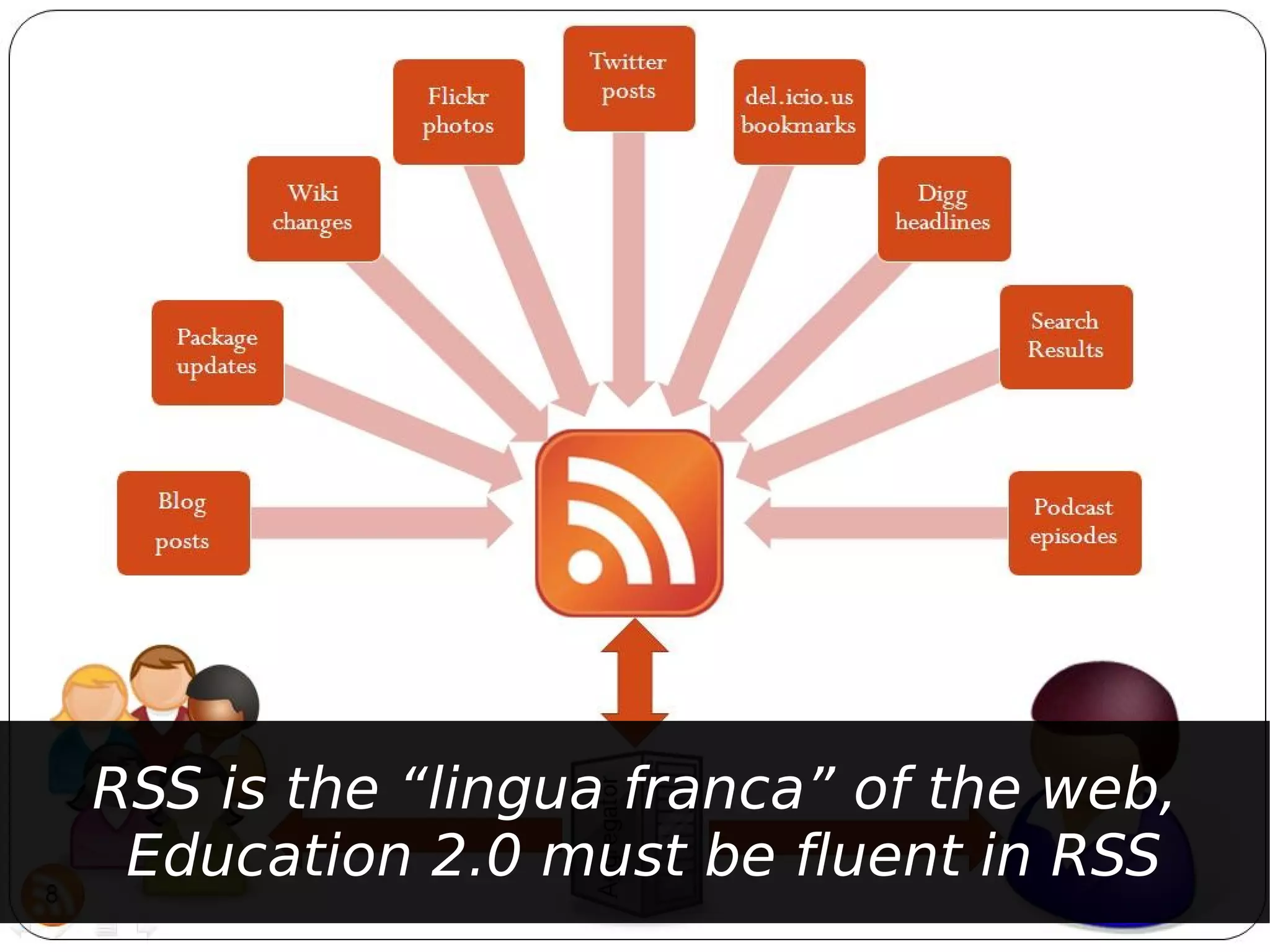
RSS is the “lingua franca” of the web,
 Education 2.0 must be fluent in RSS
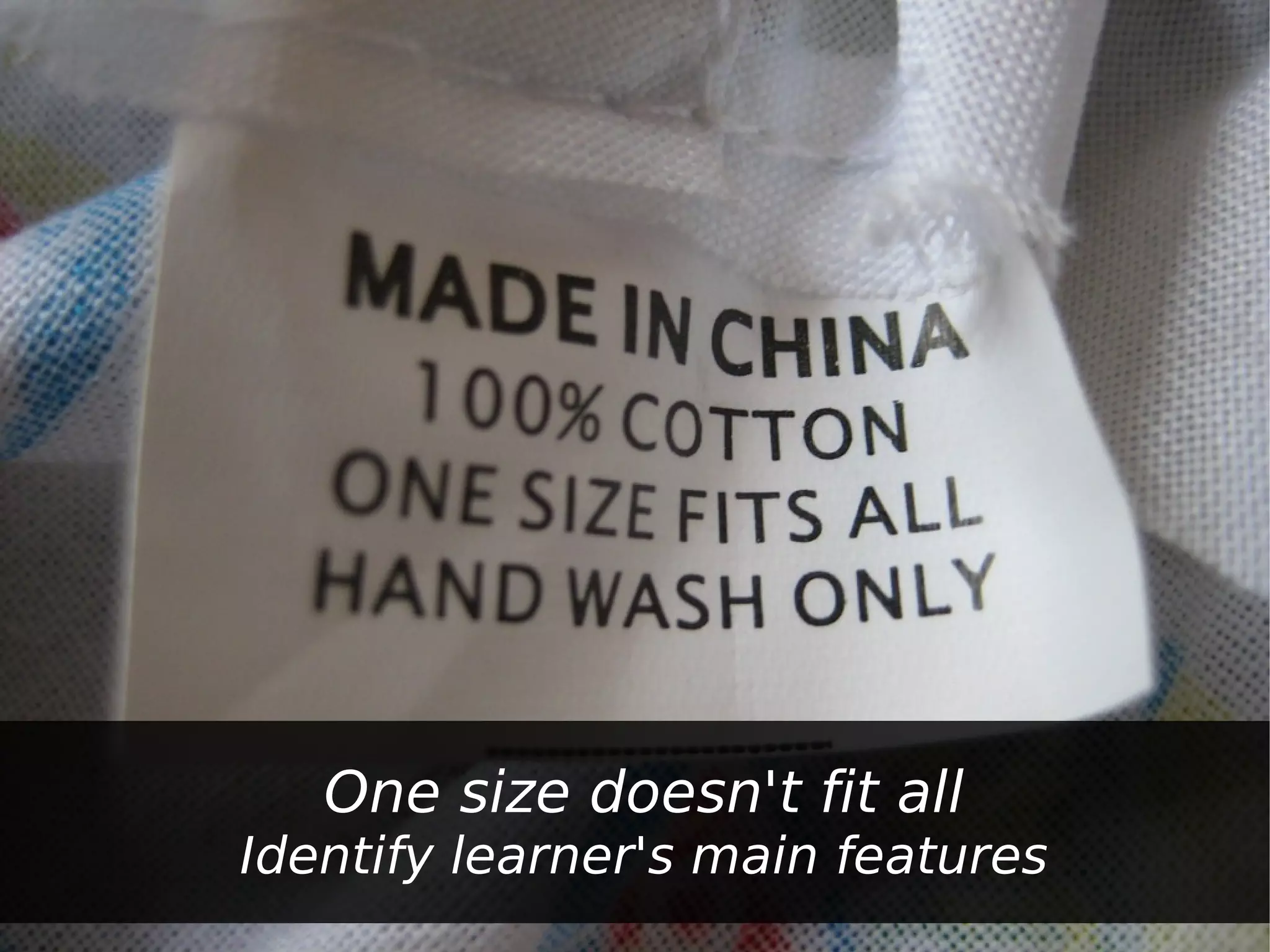
One size doesn't fit all
Identify learner's main features
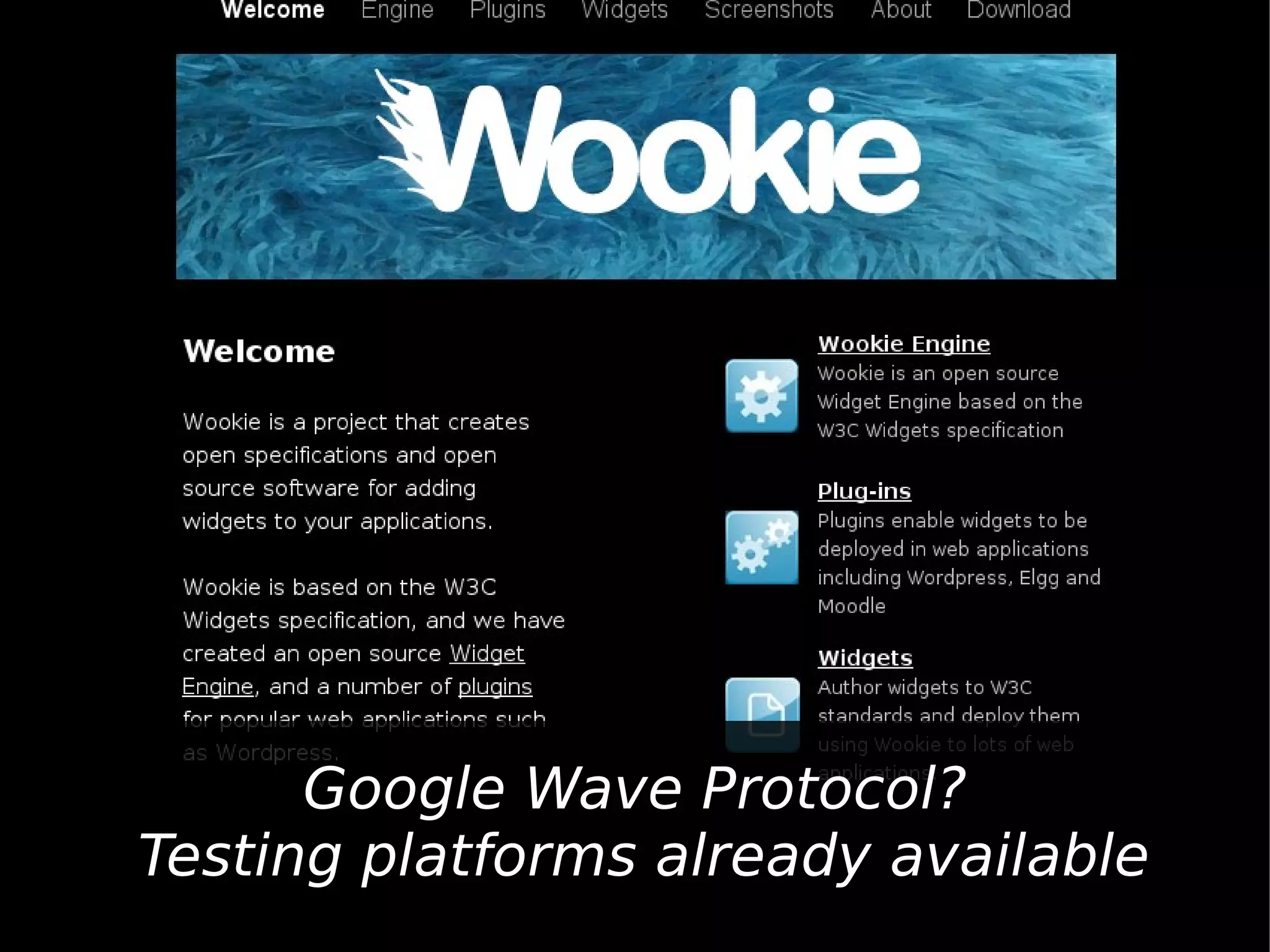
Google Wave Protocol?
Testing platforms already available
Thank you for your
    attention
Questions?
References
●   Coates, H., James, R., Baldwin, G., "A critical examination of the effects of Learning
    Management Systems on university teaching and learning", Tertiary Education and
    Management 11, Springer, 2005, pp. 19–36.
●   Hiltz, S.R., Turoff, M.. "Education goes digital: the evolution of online learning and the revolution
    in higher education", Communications of the ACM , Volume 48 Issue 10, October 2005.
●   O'Reilly, T., "What is Web 2.0—Design Patterns and Business Models for the Next Generation of
    Software", O'Reilly Media, 2005.
●   Broom, J., "The Glass Bees", 2008, URL: http://bavatuesdays.com/the-glass-bees/.
●   Bush, M.D., Mott, J.D., "The Transformation of Learning with Technology. Learner-Centricity,
    Content and Tool Malleability and Network Effects", Educational technology: The magazine for
    managers of change in education, ISSN 0013-1962, Vol. 49, N. 2, 2009, pp. 3-20.
●   Gatto, J.T., "Why Schools Don’t Educate", Nexus June-July, pp. 13-16 & p. 81.
●   Jones, V., Jo, J.H., "Ubiquitous learning environment: An adaptive teaching system using
    ubiquitous technology", Beyond the comfort zone: Proceedings of the 21st ASCILITE Conference,
    Perth, 5-8 December 2004, pp. 468-474.
●   Yang, S.J.H., "Context Aware Ubiquitous Learning Environments for Peer-to-Peer Collaborative
    Learning", Educational Technology & Society, 9 (1), 2006, pp. 188-201.
●   Eraut, M., "Informal learning in the workplace", Studies in Continuing Education, Vol. 26, No. 2,
    July 2004, University of Sussex, UK.
References
●   Lamb, B., "The urgency of an open education: emotions, cheap, reuse and radical-based
    learning content syndication", Simposio Educación Expandida (ZEMOS98, 11a edición), Seville
    (Spain), 2009.
●   Downes, S., "New Technology Supporting Informal Learning", Challenges 2009, Braga, Portugal,
    2009.
●   Raymond, E.S., "The Cathedral and the Bazaar", in The Cathedral and the Bazaar: Musings On
    Linux and Open Source by an Accidental Revolutionary. Sebastopol: O'Reilly Publishing, 1999.
●   Peters, S.G., "Do You Know Enough About Me to Teach Me?: A Student's Perspective", King
    Lindsay Printing Corp., 2006.
●   Lessig, L., "Remix: Making Art and Commerce Thrive in the Hybrid Economy", Penguin Press,
    New York, 2008.
●   McLuhan, M., & Leonard, G. B., "The future of education: The class of 1989". Look, February 21,
    1967, pp. 23-24.
●   Surowiecki, J., "The Wisdom of Crowds: Why the Many Are Smarter Than the Few and How
    Collective Wisdom Shapes Business, Economies, Societies and Nations". Doubleday Books,
    2004.
●   Alexander, B., "Web 2.0: A New Wave of Innovation for Teaching and Learning?", EDUCAUSE
    Review, vol. 41, no. 2 March/April 2006, pp: 32-44.
●   Poetter, T.S., "Voices of inquiry in teacher education", Lawrence Erlbaum Associates Publishers,
    Mahwah, NJ, 1997, pp. 75-82.
References
●   Levin, J.A., "Organizing educational network interactions: Steps towards a theory of network-
    based learning environments", American Educational Research Association Annual Meeting. San
    Francisco, 1995.
●   Villa, A., "Marco Pedagógico de la Universidad de Deusto", University of Deusto, Bilbao (Spain),
    2001.
All images are property of their
   own owners*, content is licensed
   under a Creative Commons by-sa
              3.0 license


   * Iñigo Alonso, Creative Commons, Geek & Poke, Twhirl, Yammer, Planetaki, Wordpress,
  Google, Yahoo!, Eleaf (Flickr), marthamadnesspdx (Flickr), roland (Flickr), teflon (Flickr),
   yaourdon (Flickr), slworking (Flickr), davidwilsonclarke (Flickr), wallyg (Flickr), lulupine
 (Flickr), p-doodle (Flickr), cuellar (Flickr), maxblack (Flickr), markstos (Flickr), pray (Flickr),
vrider (Flickr), patux (Flickr), cpentecost (Flickr), darwinbell (Flickr), angusf (Flickr), identity-
    chrisis (Flickr), jcolman (Flickr), doctabu (Flickr), ivanomak (Flickr), mzaluska (Flickr),
lady_lush (Flickr), pmorgan (Flickr), daquellamanera (Flickr), dunechaser (Flickr), lissalou66
        (Flickr), yuki80 (Flickr), zenia (Flickr), whereismyshame (Flickr), foreby (Flickr)

Education in the 2.0 Bazaar - IADAT e-2009

  • 1.
    Education in the 2.0 Bazaar IADAT-e2009 Pablo Garaizar Sagarminaga garaizar@eside.deusto.es University of Deusto
  • 2.
    Outline ● Background ● Two opposing points of view ● Education 2.0: a positive experience ● Problems ● Solutions ● Conclusions
  • 3.
  • 4.
  • 5.
    Who are mystudents?
  • 6.
    What are weusing at Deusto?
  • 7.
    How to improvecommunication and interaction? How to improve education?
  • 8.
  • 9.
  • 10.
  • 11.
  • 12.
  • 13.
  • 14.
  • 15.
  • 16.
  • 17.
  • 18.
  • 19.
    Should I stay orshould I go? The Clash, 1981
  • 20.
    Let's try theEdupunk way!
  • 21.
  • 22.
    Less lectures, morecollaborative work
  • 23.
  • 24.
  • 25.
    Beyond physical boundaries – "Why should I go back to school and – interrupt my education?"
  • 26.
    – Theteacher is not – the only yardstick anymore
  • 27.
    – The teacheris not the only – available data source anymore
  • 28.
    Microblogging & Desktop widgets = – real-time participation
  • 29.
  • 30.
    Lack of order Informationdispersion > confusion
  • 31.
    Digital competency: master RSSaggregation and social bookmarking services
  • 32.
  • 33.
  • 34.
    Let's play 1984game: wink.com, spock.com, peekyou.com, pipl.com, 123people.es, yasni.com
  • 35.
  • 37.
    Social networks designedfor leisure (or procrastination)
  • 38.
  • 39.
    Current solution: wiki+ group blogs + personal blogs + microblogging
  • 40.
    Wiki (local, private):collaborative work + practice wiki-syntax + arrangement
  • 41.
  • 42.
    Blog planet =group + personal blogs (virtual portfolios)
  • 43.
    Twitter (public) &Yammer (private)
  • 44.
  • 45.
  • 46.
    LMS + PLE+ Web 2.0 services Content- Student- Social centred centred Structure Custom Flexibility Moodle Mahara 2.0 Widgets
  • 47.
  • 48.
    Education 2.0 ismore than just adding technology to education
  • 49.
    RSS is the“lingua franca” of the web, Education 2.0 must be fluent in RSS
  • 50.
    One size doesn'tfit all Identify learner's main features
  • 51.
    Google Wave Protocol? Testingplatforms already available
  • 52.
    Thank you foryour attention
  • 53.
  • 54.
    References ● Coates, H., James, R., Baldwin, G., "A critical examination of the effects of Learning Management Systems on university teaching and learning", Tertiary Education and Management 11, Springer, 2005, pp. 19–36. ● Hiltz, S.R., Turoff, M.. "Education goes digital: the evolution of online learning and the revolution in higher education", Communications of the ACM , Volume 48 Issue 10, October 2005. ● O'Reilly, T., "What is Web 2.0—Design Patterns and Business Models for the Next Generation of Software", O'Reilly Media, 2005. ● Broom, J., "The Glass Bees", 2008, URL: http://bavatuesdays.com/the-glass-bees/. ● Bush, M.D., Mott, J.D., "The Transformation of Learning with Technology. Learner-Centricity, Content and Tool Malleability and Network Effects", Educational technology: The magazine for managers of change in education, ISSN 0013-1962, Vol. 49, N. 2, 2009, pp. 3-20. ● Gatto, J.T., "Why Schools Don’t Educate", Nexus June-July, pp. 13-16 & p. 81. ● Jones, V., Jo, J.H., "Ubiquitous learning environment: An adaptive teaching system using ubiquitous technology", Beyond the comfort zone: Proceedings of the 21st ASCILITE Conference, Perth, 5-8 December 2004, pp. 468-474. ● Yang, S.J.H., "Context Aware Ubiquitous Learning Environments for Peer-to-Peer Collaborative Learning", Educational Technology & Society, 9 (1), 2006, pp. 188-201. ● Eraut, M., "Informal learning in the workplace", Studies in Continuing Education, Vol. 26, No. 2, July 2004, University of Sussex, UK.
  • 55.
    References ● Lamb, B., "The urgency of an open education: emotions, cheap, reuse and radical-based learning content syndication", Simposio Educación Expandida (ZEMOS98, 11a edición), Seville (Spain), 2009. ● Downes, S., "New Technology Supporting Informal Learning", Challenges 2009, Braga, Portugal, 2009. ● Raymond, E.S., "The Cathedral and the Bazaar", in The Cathedral and the Bazaar: Musings On Linux and Open Source by an Accidental Revolutionary. Sebastopol: O'Reilly Publishing, 1999. ● Peters, S.G., "Do You Know Enough About Me to Teach Me?: A Student's Perspective", King Lindsay Printing Corp., 2006. ● Lessig, L., "Remix: Making Art and Commerce Thrive in the Hybrid Economy", Penguin Press, New York, 2008. ● McLuhan, M., & Leonard, G. B., "The future of education: The class of 1989". Look, February 21, 1967, pp. 23-24. ● Surowiecki, J., "The Wisdom of Crowds: Why the Many Are Smarter Than the Few and How Collective Wisdom Shapes Business, Economies, Societies and Nations". Doubleday Books, 2004. ● Alexander, B., "Web 2.0: A New Wave of Innovation for Teaching and Learning?", EDUCAUSE Review, vol. 41, no. 2 March/April 2006, pp: 32-44. ● Poetter, T.S., "Voices of inquiry in teacher education", Lawrence Erlbaum Associates Publishers, Mahwah, NJ, 1997, pp. 75-82.
  • 56.
    References ● Levin, J.A., "Organizing educational network interactions: Steps towards a theory of network- based learning environments", American Educational Research Association Annual Meeting. San Francisco, 1995. ● Villa, A., "Marco Pedagógico de la Universidad de Deusto", University of Deusto, Bilbao (Spain), 2001.
  • 57.
    All images areproperty of their own owners*, content is licensed under a Creative Commons by-sa 3.0 license * Iñigo Alonso, Creative Commons, Geek & Poke, Twhirl, Yammer, Planetaki, Wordpress, Google, Yahoo!, Eleaf (Flickr), marthamadnesspdx (Flickr), roland (Flickr), teflon (Flickr), yaourdon (Flickr), slworking (Flickr), davidwilsonclarke (Flickr), wallyg (Flickr), lulupine (Flickr), p-doodle (Flickr), cuellar (Flickr), maxblack (Flickr), markstos (Flickr), pray (Flickr), vrider (Flickr), patux (Flickr), cpentecost (Flickr), darwinbell (Flickr), angusf (Flickr), identity- chrisis (Flickr), jcolman (Flickr), doctabu (Flickr), ivanomak (Flickr), mzaluska (Flickr), lady_lush (Flickr), pmorgan (Flickr), daquellamanera (Flickr), dunechaser (Flickr), lissalou66 (Flickr), yuki80 (Flickr), zenia (Flickr), whereismyshame (Flickr), foreby (Flickr)