FORMULATION OF
PROBLEM STATEMENT
& OBJECTIVES
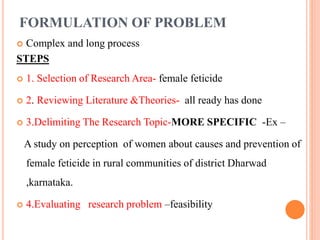
FORMULATION OF PROBLEM
 Complex and long process
STEPS
 1. Selection of Research Area- female feticide
 2. Reviewing Literature &Theories- all ready has done
 3.Delimiting The Research Topic-MORE SPECIFIC -Ex –
A study on perception of women about causes and prevention of
female feticide in rural communities of district Dharwad
,karnataka.
 4.Evaluating research problem –feasibility
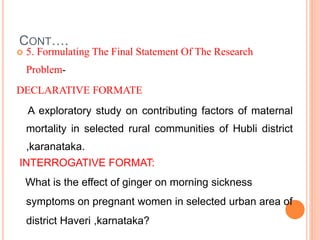
CONT….
 5. Formulating The Final Statement Of The Research
Problem-
DECLARATIVE FORMATE
A exploratory study on contributing factors of maternal
mortality in selected rural communities of Hubli district
,karanataka.
INTERROGATIVE FORMAT:
What is the effect of ginger on morning sickness
symptoms on pregnant women in selected urban area of
district Haveri ,karnataka?
GUIDELINES FOR EVALUATION
OF A RESEARCH PROBLEMS
 SUBSTANTIVE ISSUES –significance, purpose, models or theories
,experience in topic area
 METHODOLOGICAL ISSUES- variables ,population, design ,setting
,time, place.
 STYLISTIC ISSUES –complete ,concise, clear statement.
 ETHICAL ISSUES – human subjects, risk
 PRACTICAL ISSUES- scope ,man ,money, material ,permission .etc
WELL –FORMULATED RESEARCH
PROBLEM(DECLARATIVE)
A descriptive study on the prevalence of pin site infection among
patients with external skeletal fixation admitted in orthopedic
wards of SDM Hospital Dharwad Karnataka.
RESEARCH PROBLEM COMPONENTS
Design :Descriptive
Variable(s): Prevalence of pin site infection
Population: patients with external skeletal fixation
Setting : Orthopedic wards of SDM Hospital Dharwad Karnataka
 “A Study To Evaluate The Effectiveness Of Motivational
Interviewing On Relapse Prevention Strategies Among Patients With
Alcohol Dependent Syndrome (ADS) In Selected De- Addiction
Centres of Dharwad District Karnataka.”
Design :
Variable(s):
Population:
Setting :
FORMULATION OF RESEARCH
OBJECTIVES
MEANING OF RESEARCH OBJECTIVES
 Research objectives are the results sought by the
researcher at the end of the research process ,i.e what the
researcher will be able to achieve at the research study.
CHARACTERISTICS OF RESEARCH
OBJECTIVES - SMART
 S- SPECIFIC
 M – MEASURABLE
 A- ACHIEVABLE
 R – RELEVANT .REALISTIC
 T- TIME BOUND, TARGETABLE
NEED OF RESEARCH OBJECTIVES
 Focus –clearly
 Avoid –unwanted information
 Organize
 Directions
TYPES OF RESEARCH OBJECTIVES
 Two types
1. General objectives- --broad goals to achieved .
2. Specific objectives- --for short and narrow in
focus
 A quasi experimental study on the the effect of ginger on
morning sickness symptoms among on pregnant women in
selected urban area of district Haveri ,karnataka.
 General objectives- broad goals to achieved .
 To assess the effects of ginger on morning sickness among
pregnant women.
 Specific objectives- for short and narrow in focus.
 To compare the severity of morning sickness symptoms
among primi gravida and multi gravida pregnant women.
METHODS OF STATING OBJECTIVES
GUIDELINES
 Briefly &concisely.
 Logical sequence
 They are realistic considering local conditions
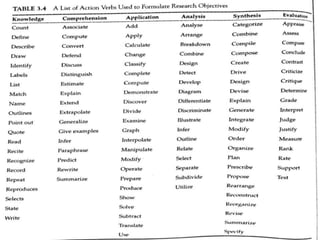
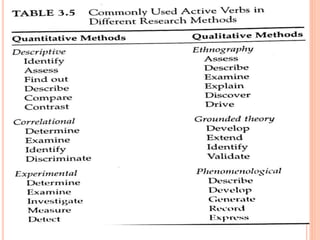
 Use action verbs that are specific enough to be
evaluated.
CONT…….
“A STUDY TO DETERMINE THE IMPACT OF SOCIAL
NETWORKING SITES ON MENTAL HEALTH OF FEMALE
ADOLESCENTS IN SMPU COLLEGE, DHARWAD.”
 OBJECTIVES:
 To assess the use of social networking sites
among Female adolescents.
 To determine the mental health status of female adolescents
using social networking sites scale.
 To correlate between impact of social networking sites
and mental health problems among female adolescents
Thesis 1:
Eg: “A study to assess the effectiveness of structural teaching
programme on knowledge of smoking and its hazards
among college teens”
Objectives:
 To pre-test the level of awareness of smoking and its hazards
among college teens
 To test the association between aspects of smoking and its
hazards and selected socio-demographic variables among teens.
 To prepare and impact health education of smoking and its
hazards.
 To determine the relationship between degree of awareness
Thank u

2.FORMULATION OF RESEARCH STATEMENT &OBJECTIVES.pptx

  • 1.
  • 2.
    FORMULATION OF PROBLEM Complex and long process STEPS  1. Selection of Research Area- female feticide  2. Reviewing Literature &Theories- all ready has done  3.Delimiting The Research Topic-MORE SPECIFIC -Ex – A study on perception of women about causes and prevention of female feticide in rural communities of district Dharwad ,karnataka.  4.Evaluating research problem –feasibility
  • 3.
    CONT….  5. FormulatingThe Final Statement Of The Research Problem- DECLARATIVE FORMATE A exploratory study on contributing factors of maternal mortality in selected rural communities of Hubli district ,karanataka. INTERROGATIVE FORMAT: What is the effect of ginger on morning sickness symptoms on pregnant women in selected urban area of district Haveri ,karnataka?
  • 4.
    GUIDELINES FOR EVALUATION OFA RESEARCH PROBLEMS  SUBSTANTIVE ISSUES –significance, purpose, models or theories ,experience in topic area  METHODOLOGICAL ISSUES- variables ,population, design ,setting ,time, place.  STYLISTIC ISSUES –complete ,concise, clear statement.  ETHICAL ISSUES – human subjects, risk  PRACTICAL ISSUES- scope ,man ,money, material ,permission .etc
  • 5.
    WELL –FORMULATED RESEARCH PROBLEM(DECLARATIVE) Adescriptive study on the prevalence of pin site infection among patients with external skeletal fixation admitted in orthopedic wards of SDM Hospital Dharwad Karnataka. RESEARCH PROBLEM COMPONENTS Design :Descriptive Variable(s): Prevalence of pin site infection Population: patients with external skeletal fixation Setting : Orthopedic wards of SDM Hospital Dharwad Karnataka
  • 6.
     “A StudyTo Evaluate The Effectiveness Of Motivational Interviewing On Relapse Prevention Strategies Among Patients With Alcohol Dependent Syndrome (ADS) In Selected De- Addiction Centres of Dharwad District Karnataka.” Design : Variable(s): Population: Setting :
  • 7.
  • 8.
    MEANING OF RESEARCHOBJECTIVES  Research objectives are the results sought by the researcher at the end of the research process ,i.e what the researcher will be able to achieve at the research study.
  • 9.
    CHARACTERISTICS OF RESEARCH OBJECTIVES- SMART  S- SPECIFIC  M – MEASURABLE  A- ACHIEVABLE  R – RELEVANT .REALISTIC  T- TIME BOUND, TARGETABLE
  • 10.
    NEED OF RESEARCHOBJECTIVES  Focus –clearly  Avoid –unwanted information  Organize  Directions
  • 11.
    TYPES OF RESEARCHOBJECTIVES  Two types 1. General objectives- --broad goals to achieved . 2. Specific objectives- --for short and narrow in focus
  • 12.
     A quasiexperimental study on the the effect of ginger on morning sickness symptoms among on pregnant women in selected urban area of district Haveri ,karnataka.  General objectives- broad goals to achieved .  To assess the effects of ginger on morning sickness among pregnant women.  Specific objectives- for short and narrow in focus.  To compare the severity of morning sickness symptoms among primi gravida and multi gravida pregnant women.
  • 13.
    METHODS OF STATINGOBJECTIVES GUIDELINES  Briefly &concisely.  Logical sequence  They are realistic considering local conditions  Use action verbs that are specific enough to be evaluated. CONT…….
  • 14.
    “A STUDY TODETERMINE THE IMPACT OF SOCIAL NETWORKING SITES ON MENTAL HEALTH OF FEMALE ADOLESCENTS IN SMPU COLLEGE, DHARWAD.”  OBJECTIVES:  To assess the use of social networking sites among Female adolescents.  To determine the mental health status of female adolescents using social networking sites scale.  To correlate between impact of social networking sites and mental health problems among female adolescents
  • 15.
    Thesis 1: Eg: “Astudy to assess the effectiveness of structural teaching programme on knowledge of smoking and its hazards among college teens” Objectives:  To pre-test the level of awareness of smoking and its hazards among college teens  To test the association between aspects of smoking and its hazards and selected socio-demographic variables among teens.  To prepare and impact health education of smoking and its hazards.  To determine the relationship between degree of awareness
  • 18.