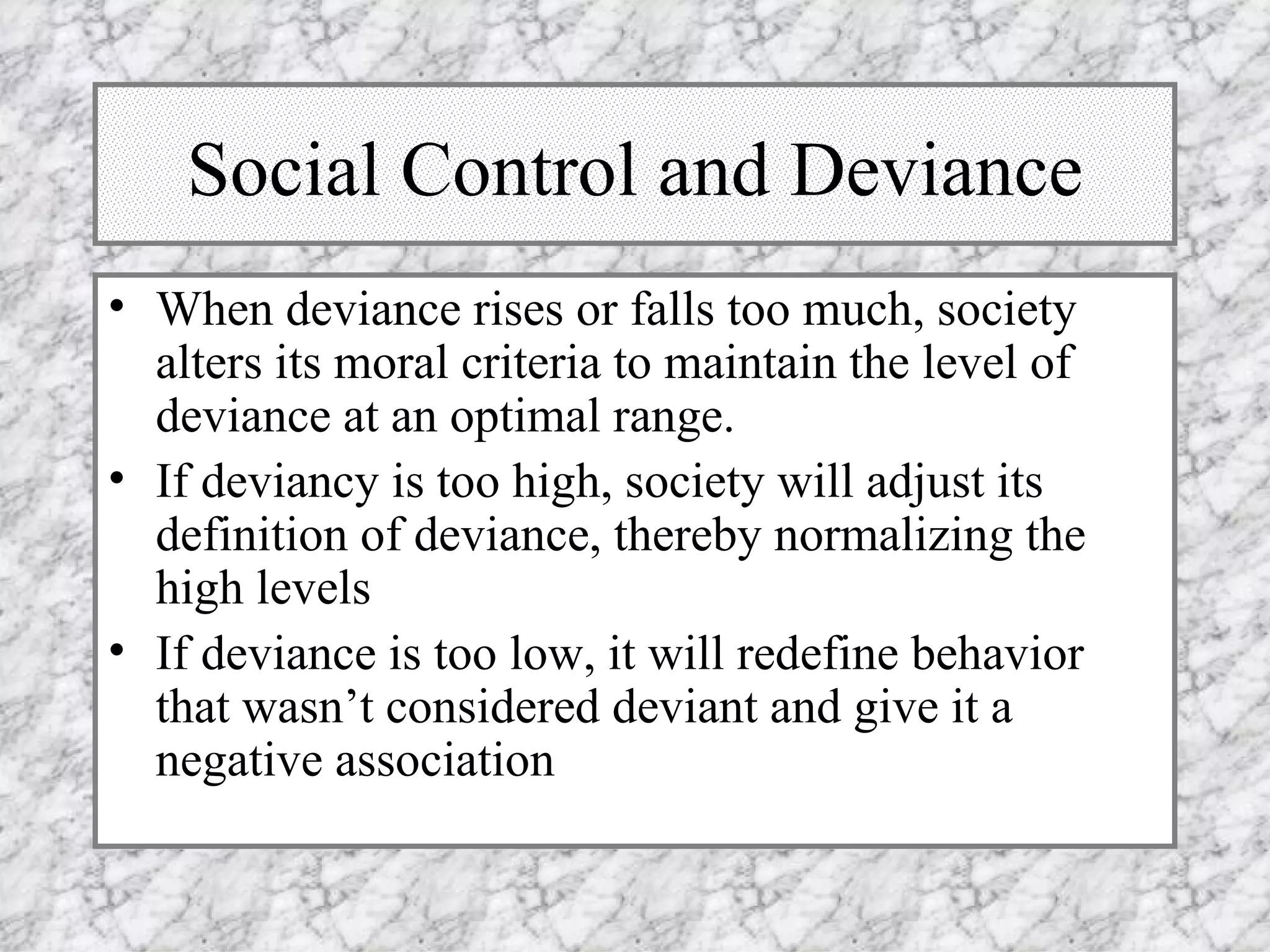
Social Control and Deviance When deviance rises or falls too much, society alters its moral criteria to maintain the level of deviance at an optimal range. If deviancy is too high, society will adjust its definition of deviance, thereby normalizing the high levels If deviance is too low, it will redefine behavior that wasn’t considered deviant and give it a negative association
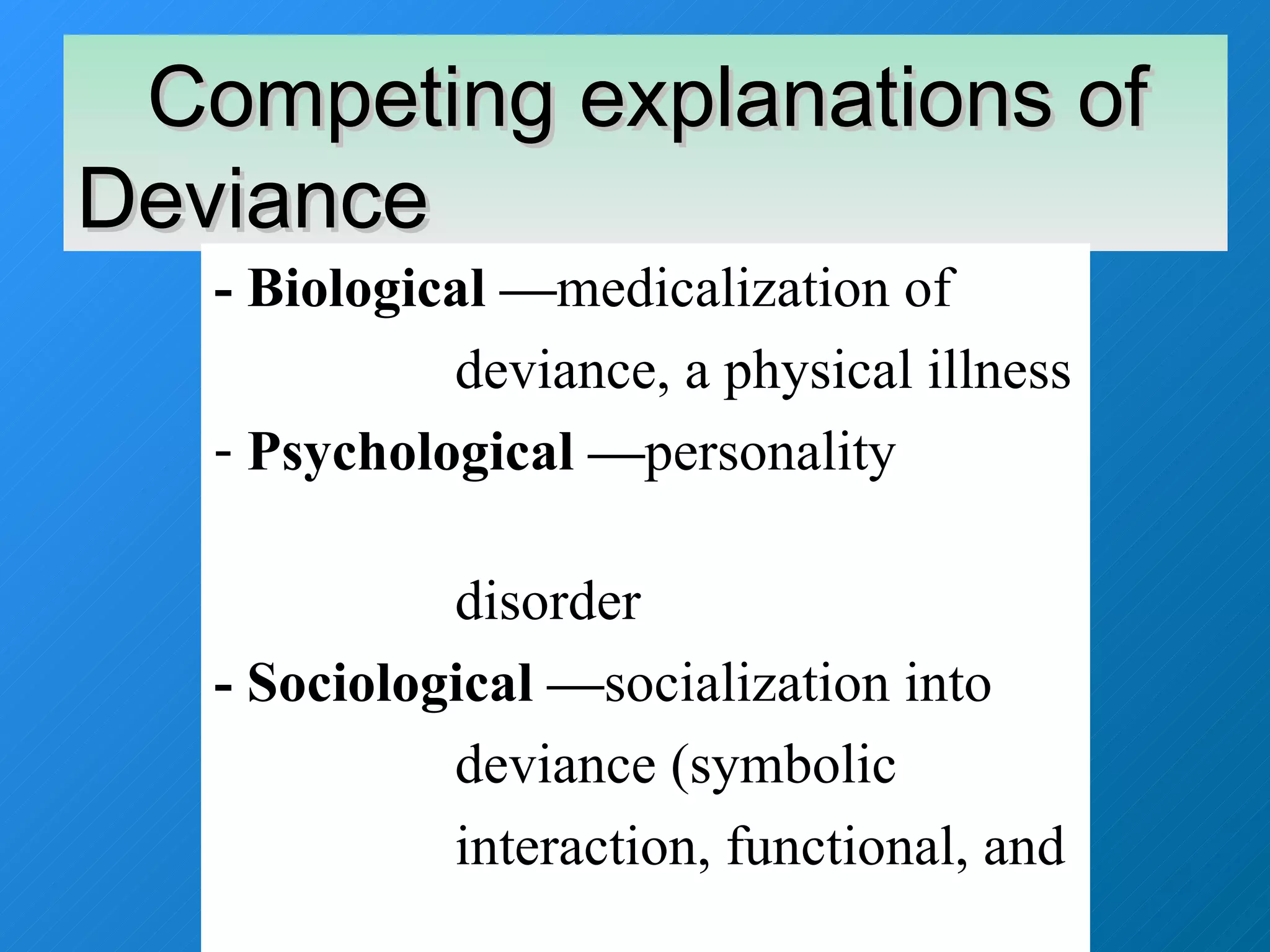
Competing explanations of Deviance - Biological — medicalization of deviance, a physical illness Psychological — personality  disorder - Sociological — socialization into deviance (symbolic  interaction, functional, and  conflict perspectives)
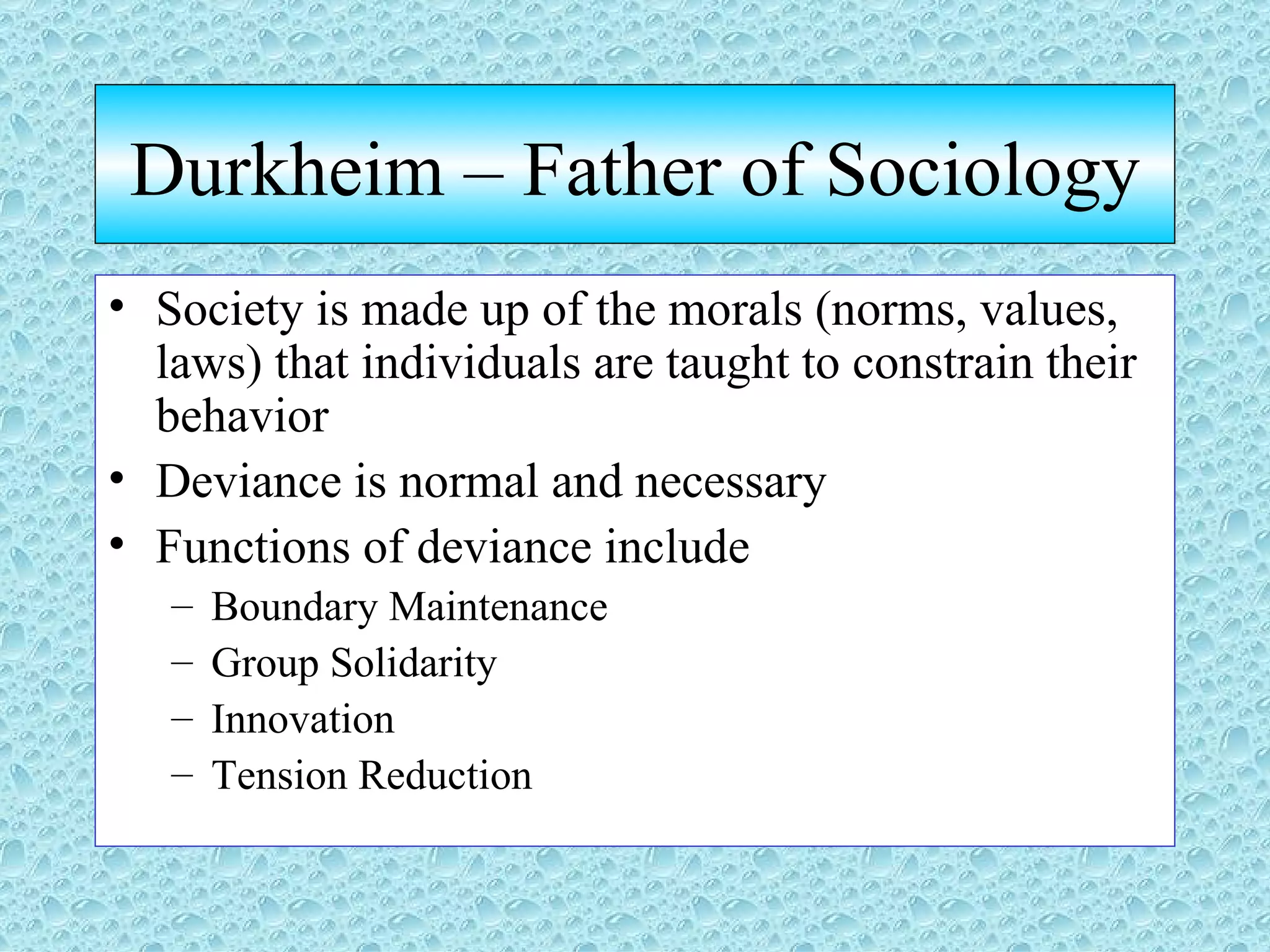
Durkheim – Father of Sociology Society is made up of the morals (norms, values, laws) that individuals are taught to constrain their behavior Deviance is normal and necessary Functions of deviance include Boundary Maintenance Group Solidarity Innovation Tension Reduction
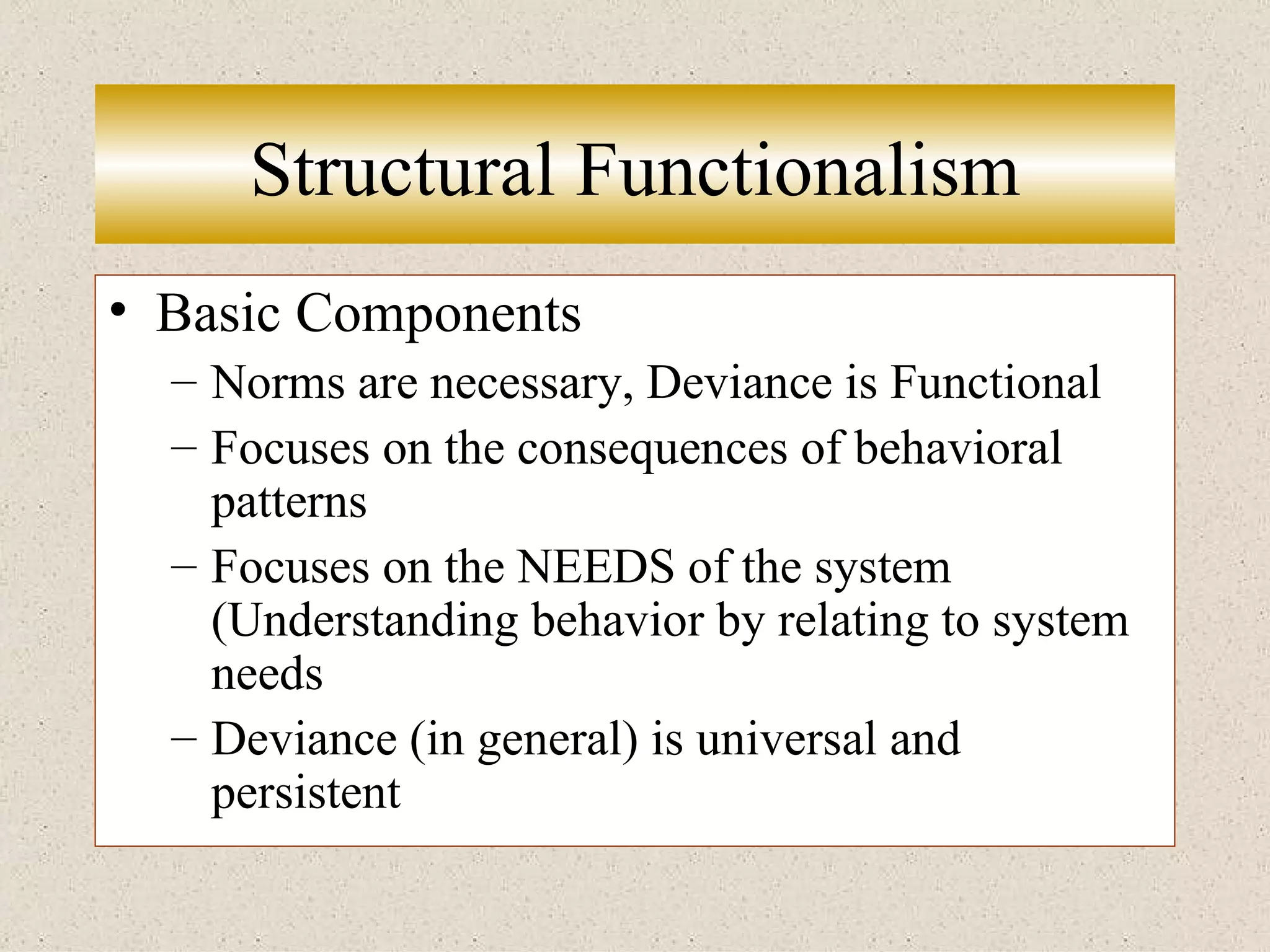
Structural Functionalism Basic Components Norms are necessary, Deviance is Functional Focuses on the consequences of behavioral patterns Focuses on the NEEDS of the system (Understanding behavior by relating to system needs Deviance (in general) is universal and persistent
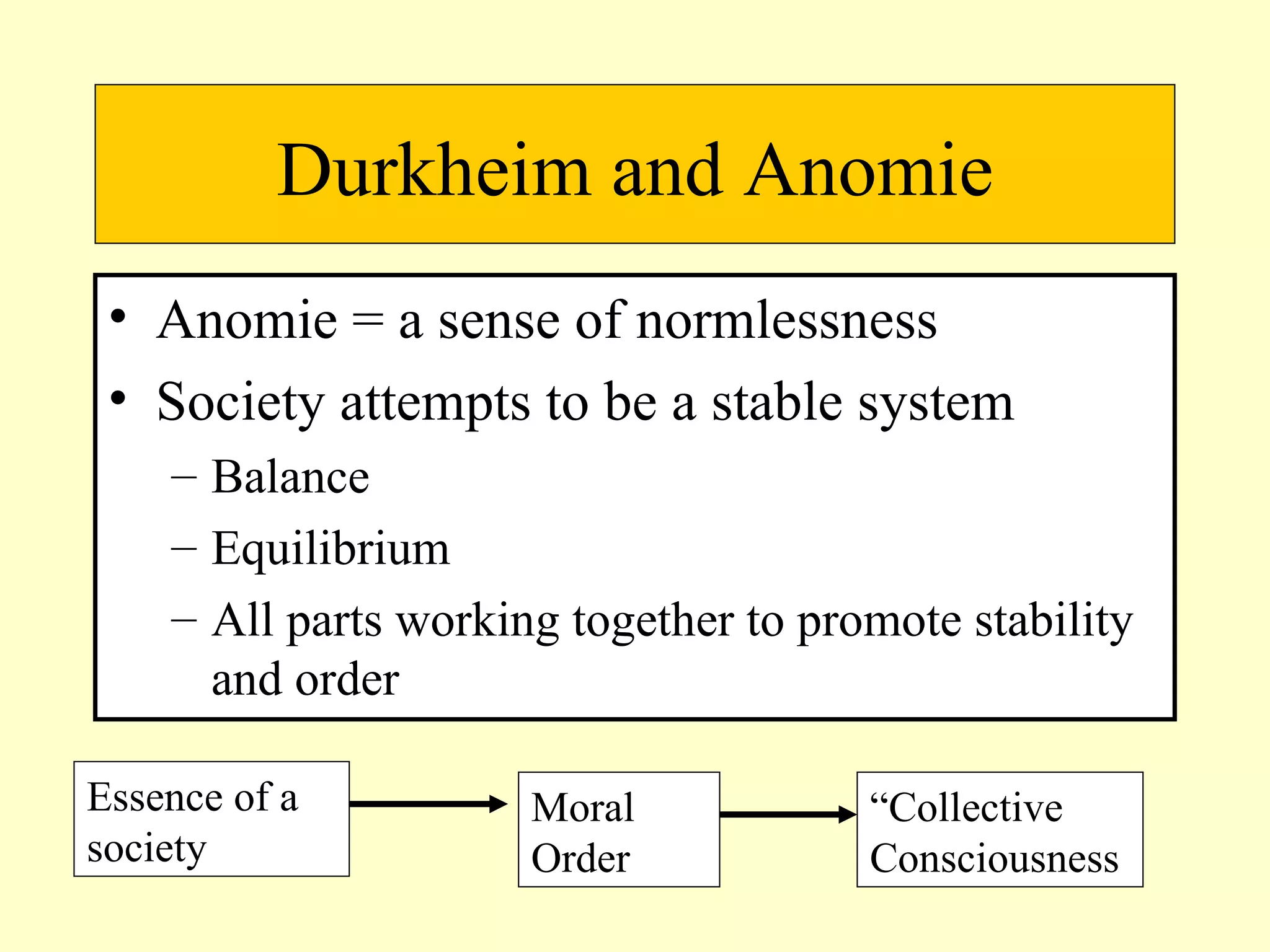
Durkheim and Anomie Anomie = a sense of normlessness Society attempts to be a stable system Balance Equilibrium All parts working together to promote stability and order Essence of a society  Moral Order “ Collective Consciousness
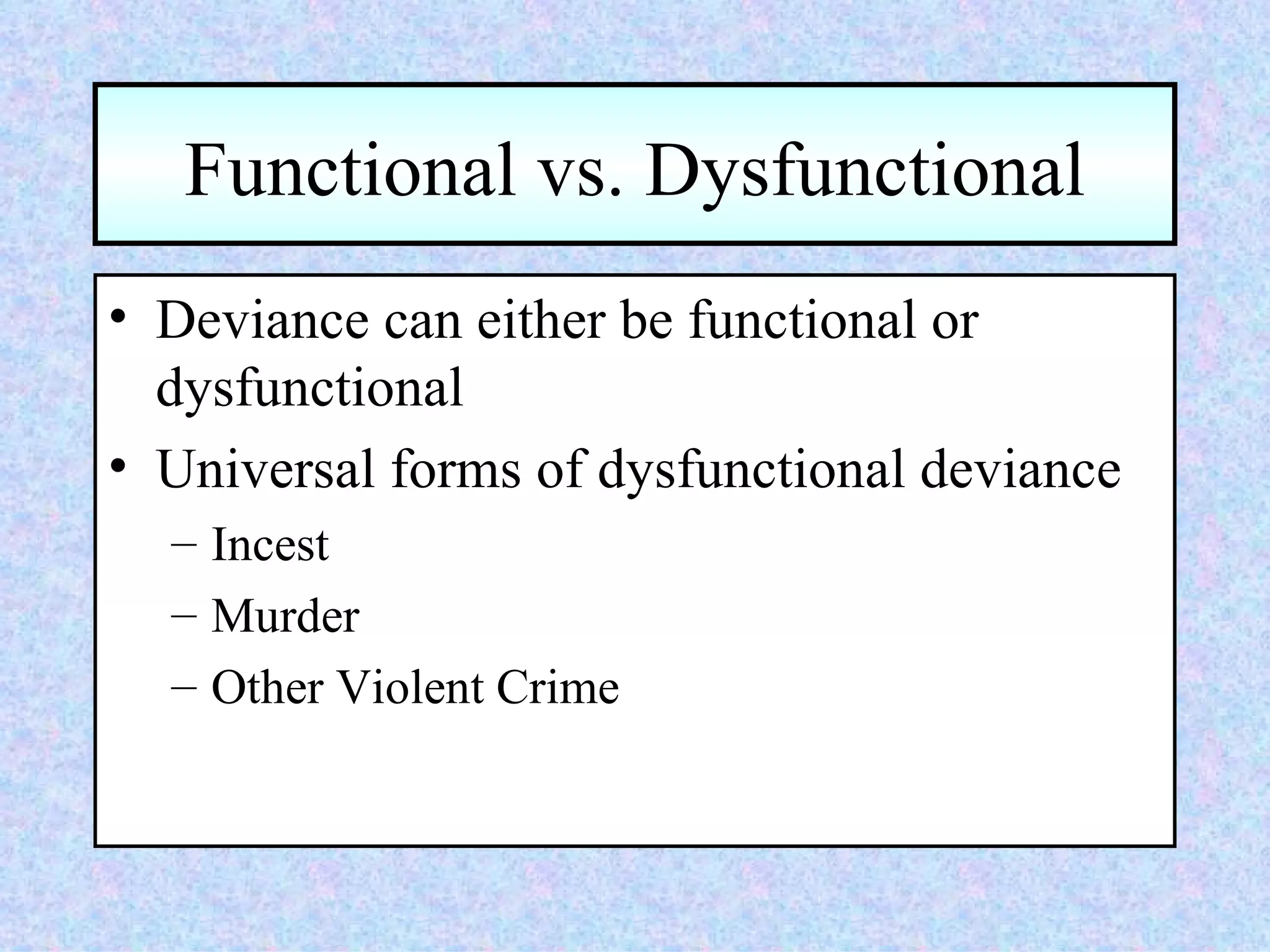
Functional vs. Dysfunctional Deviance can either be functional or dysfunctional Universal forms of dysfunctional deviance Incest Murder Other Violent Crime
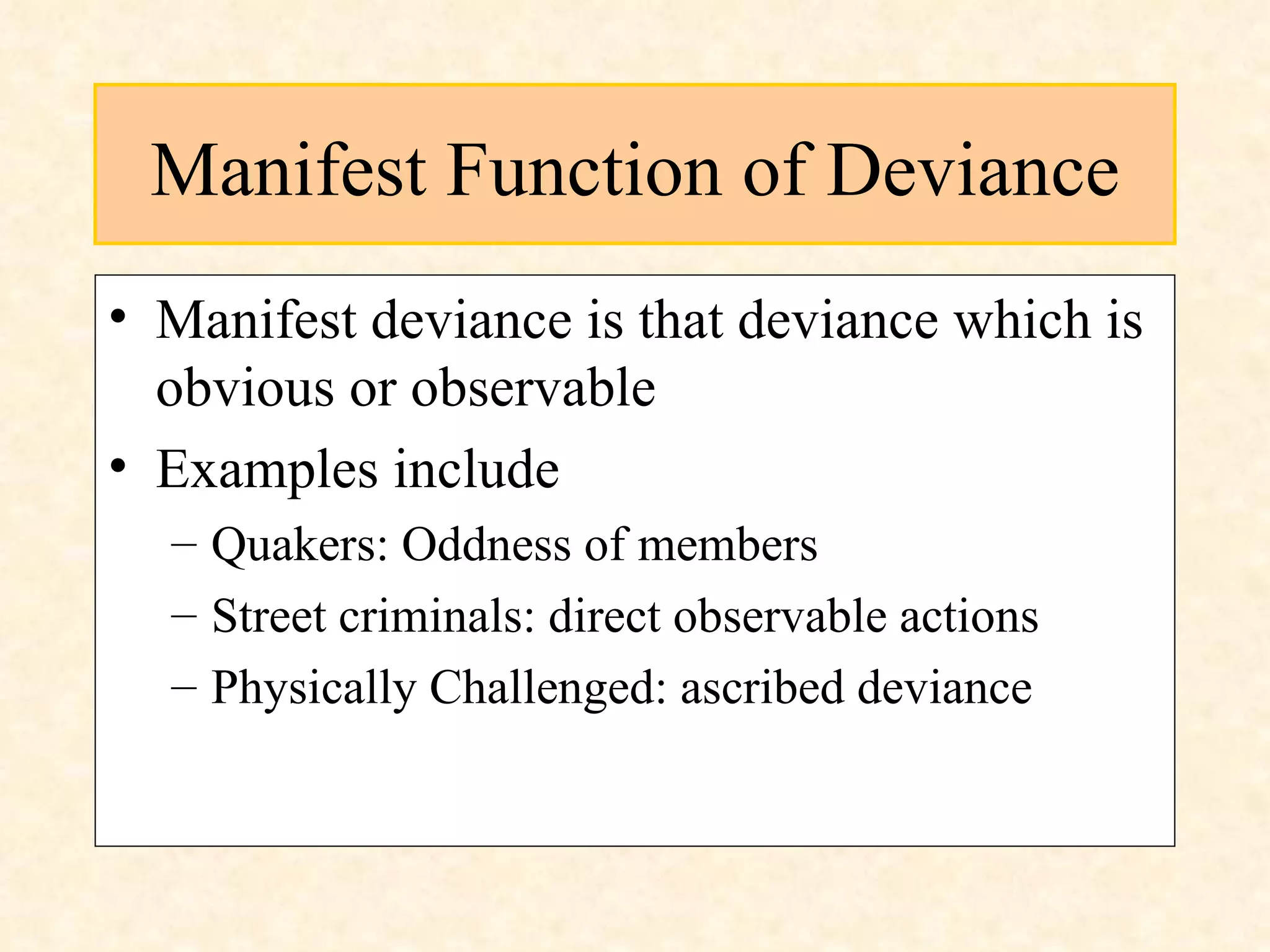
Manifest Function of Deviance Manifest deviance is that deviance which is obvious or observable Examples include Quakers: Oddness of members Street criminals: direct observable actions Physically Challenged: ascribed deviance
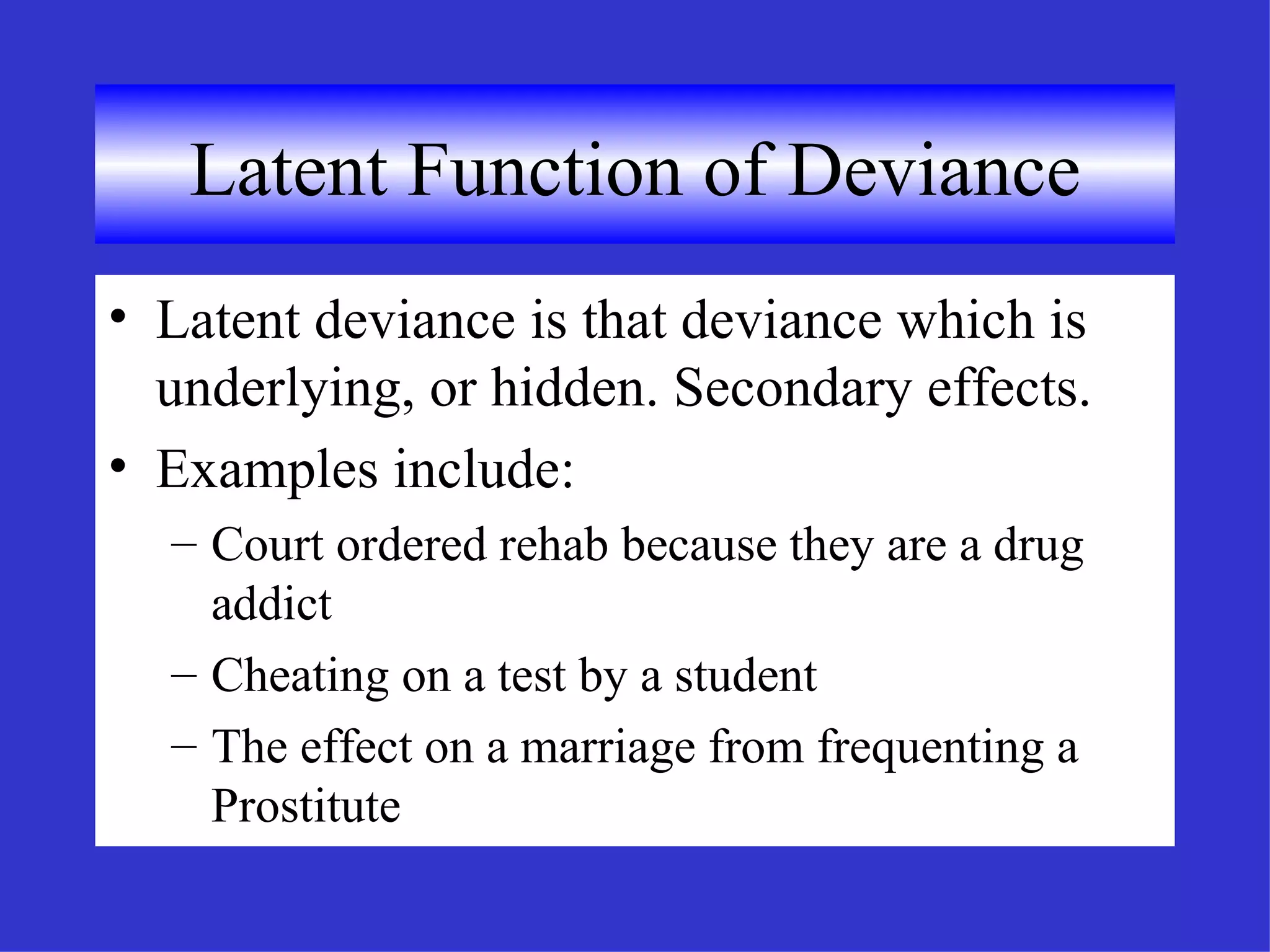
Latent Function of Deviance Latent deviance is that deviance which is underlying, or hidden. Secondary effects. Examples include: Court ordered rehab because they are a drug addict Cheating on a test by a student The effect on a marriage from frequenting a Prostitute

2b

  • 1.
    Social Control andDeviance When deviance rises or falls too much, society alters its moral criteria to maintain the level of deviance at an optimal range. If deviancy is too high, society will adjust its definition of deviance, thereby normalizing the high levels If deviance is too low, it will redefine behavior that wasn’t considered deviant and give it a negative association
  • 2.
    Competing explanations ofDeviance - Biological — medicalization of deviance, a physical illness Psychological — personality disorder - Sociological — socialization into deviance (symbolic interaction, functional, and conflict perspectives)
  • 3.
    Durkheim – Fatherof Sociology Society is made up of the morals (norms, values, laws) that individuals are taught to constrain their behavior Deviance is normal and necessary Functions of deviance include Boundary Maintenance Group Solidarity Innovation Tension Reduction
  • 4.
    Structural Functionalism BasicComponents Norms are necessary, Deviance is Functional Focuses on the consequences of behavioral patterns Focuses on the NEEDS of the system (Understanding behavior by relating to system needs Deviance (in general) is universal and persistent
  • 5.
    Durkheim and AnomieAnomie = a sense of normlessness Society attempts to be a stable system Balance Equilibrium All parts working together to promote stability and order Essence of a society Moral Order “ Collective Consciousness
  • 6.
    Functional vs. DysfunctionalDeviance can either be functional or dysfunctional Universal forms of dysfunctional deviance Incest Murder Other Violent Crime
  • 7.
    Manifest Function ofDeviance Manifest deviance is that deviance which is obvious or observable Examples include Quakers: Oddness of members Street criminals: direct observable actions Physically Challenged: ascribed deviance
  • 8.
    Latent Function ofDeviance Latent deviance is that deviance which is underlying, or hidden. Secondary effects. Examples include: Court ordered rehab because they are a drug addict Cheating on a test by a student The effect on a marriage from frequenting a Prostitute