Warm Up Imagine that you have a baseball and a small packet of ketchup. If you squeeze the ketchup packet, how would it change? If you squeeze the baseball, how would it change? What would these results tell you about the properties of solids and liquids? The Shape of the packet would change No noticeable change in shape Solids don’t change shape under normal conditions.
2-5 States of Matter Objectives Describe  the five states of matter. Classify  materials as solids, liquids, or gases. Explain  the behavior of gases, liquids, and solids, using kinetic theory.
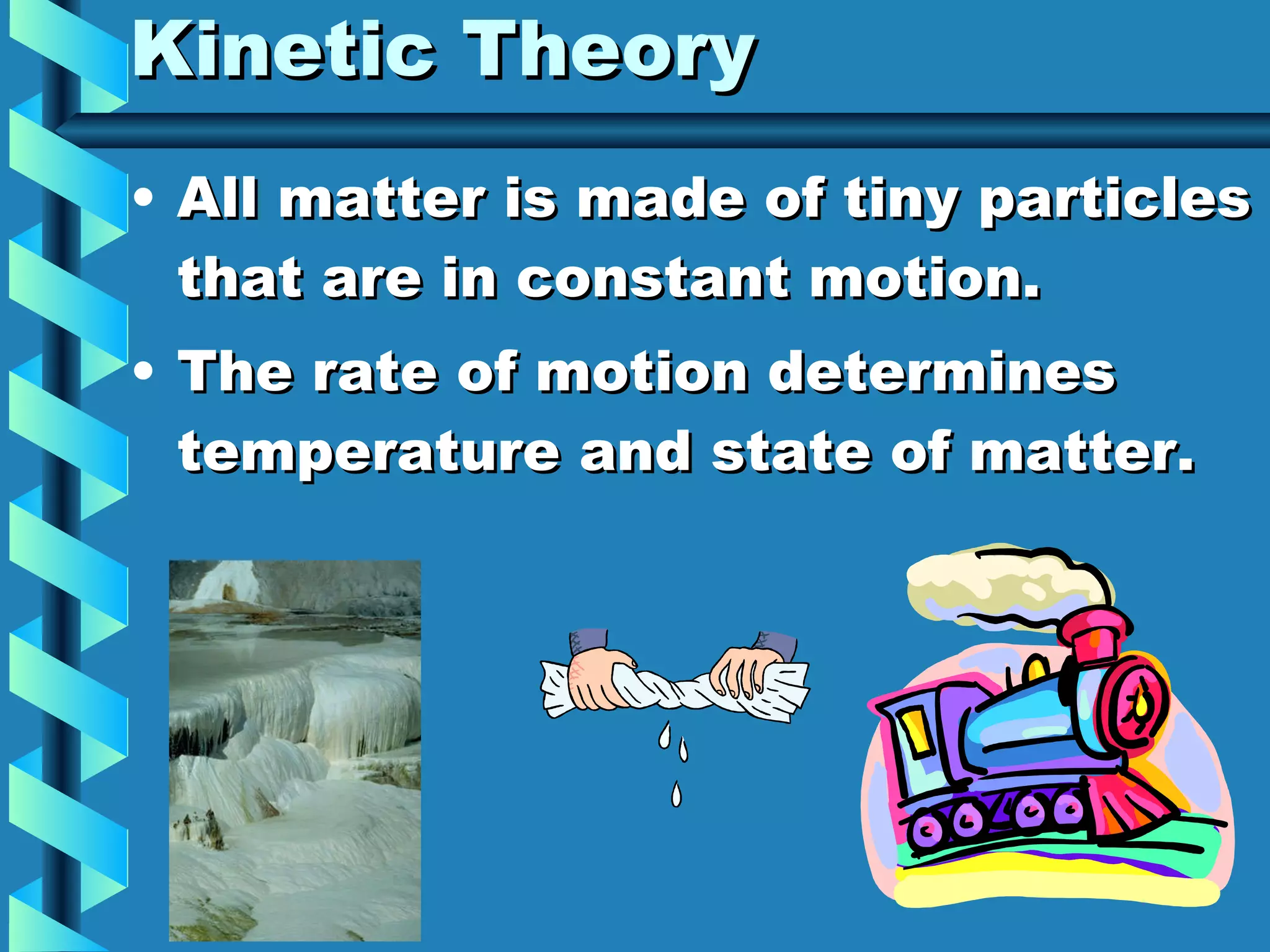
Kinetic Theory All matter is made of tiny particles that are in constant motion. The rate of motion determines temperature and state of matter.
Thermal Expansion When matter is heated, it tends to expand. Added heat is converted into kinetic energy of the particles… the particles move faster and farther apart…the chunk of matter expands. The particles do not expand, the piece of matter does!
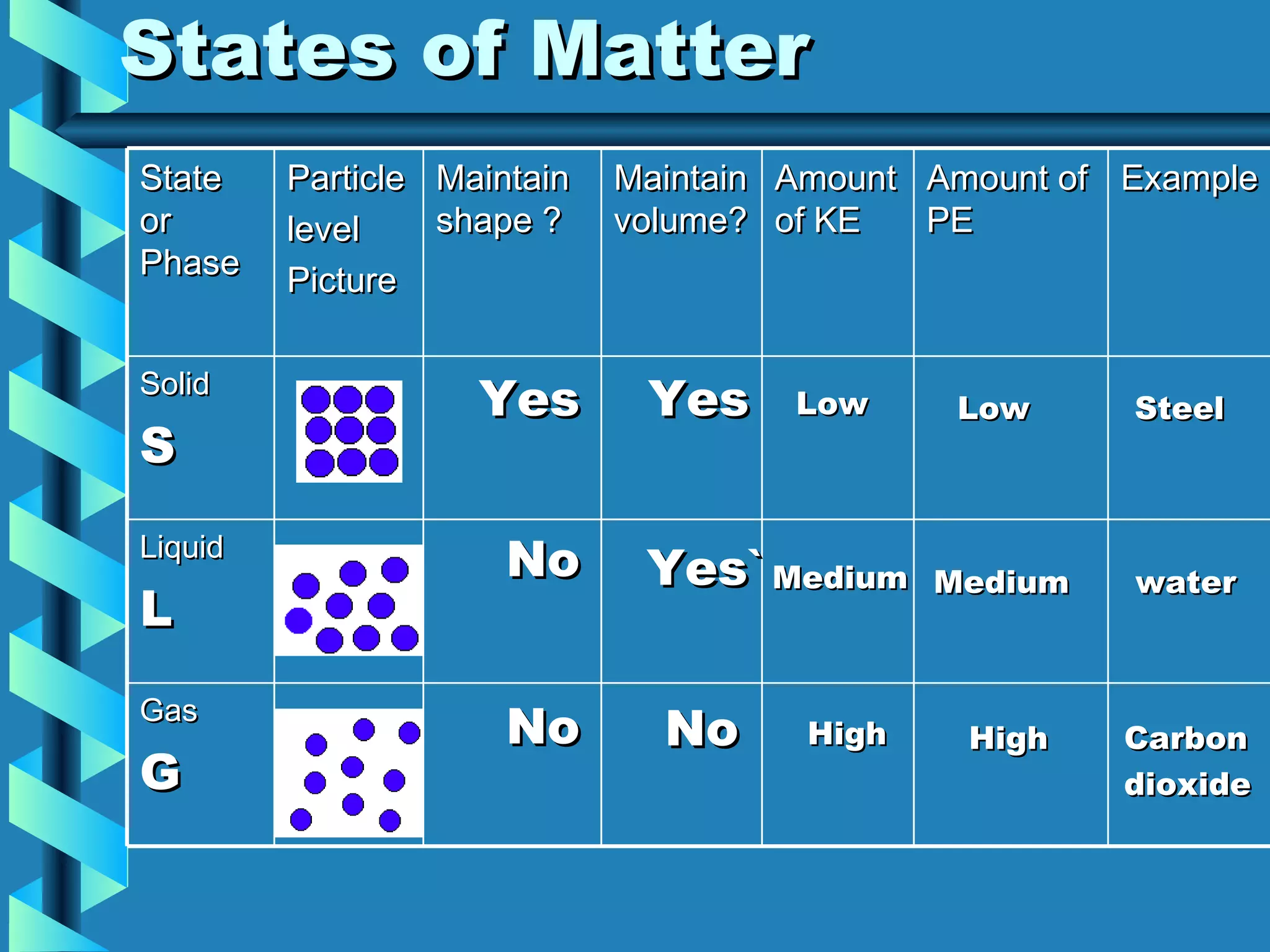
States of Matter Yes No No Yes Yes` No Low Medium High Low Medium High Steel water Carbon  dioxide State or Phase Particle  level  Picture Maintain shape ? Maintain volume? Amount of KE Amount of PE Example Solid S Liquid L Gas G
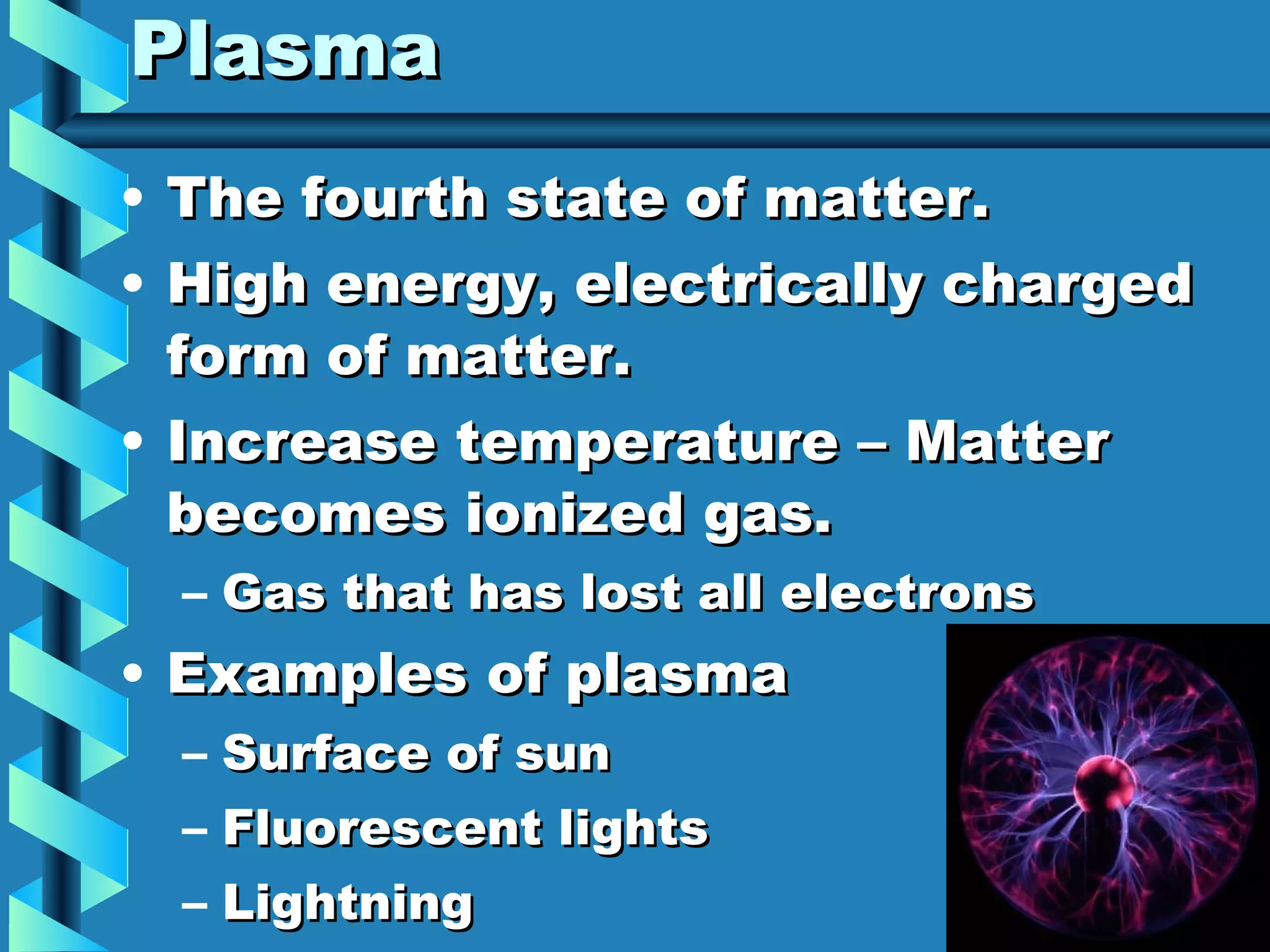
Plasma The fourth state of matter. High energy, electrically charged form of matter. Increase temperature – Matter becomes ionized gas. Gas that has lost all electrons Examples of plasma Surface of sun Fluorescent lights Lightning Neon signs
2-5 Review How can materials be classified? Solids, Liquids or Gases? By whether the material’s shape and volume are definite or variable. What is the Kinetic theory of matter? All particles of matter are in constant motion. What has a definite shape? What has a definite volume?

2-6 Phases Of Matter

  • 1.
    Warm Up Imaginethat you have a baseball and a small packet of ketchup. If you squeeze the ketchup packet, how would it change? If you squeeze the baseball, how would it change? What would these results tell you about the properties of solids and liquids? The Shape of the packet would change No noticeable change in shape Solids don’t change shape under normal conditions.
  • 2.
    2-5 States ofMatter Objectives Describe the five states of matter. Classify materials as solids, liquids, or gases. Explain the behavior of gases, liquids, and solids, using kinetic theory.
  • 3.
    Kinetic Theory Allmatter is made of tiny particles that are in constant motion. The rate of motion determines temperature and state of matter.
  • 4.
    Thermal Expansion Whenmatter is heated, it tends to expand. Added heat is converted into kinetic energy of the particles… the particles move faster and farther apart…the chunk of matter expands. The particles do not expand, the piece of matter does!
  • 5.
    States of MatterYes No No Yes Yes` No Low Medium High Low Medium High Steel water Carbon dioxide State or Phase Particle level Picture Maintain shape ? Maintain volume? Amount of KE Amount of PE Example Solid S Liquid L Gas G
  • 6.
    Plasma The fourthstate of matter. High energy, electrically charged form of matter. Increase temperature – Matter becomes ionized gas. Gas that has lost all electrons Examples of plasma Surface of sun Fluorescent lights Lightning Neon signs
  • 7.
    2-5 Review Howcan materials be classified? Solids, Liquids or Gases? By whether the material’s shape and volume are definite or variable. What is the Kinetic theory of matter? All particles of matter are in constant motion. What has a definite shape? What has a definite volume?