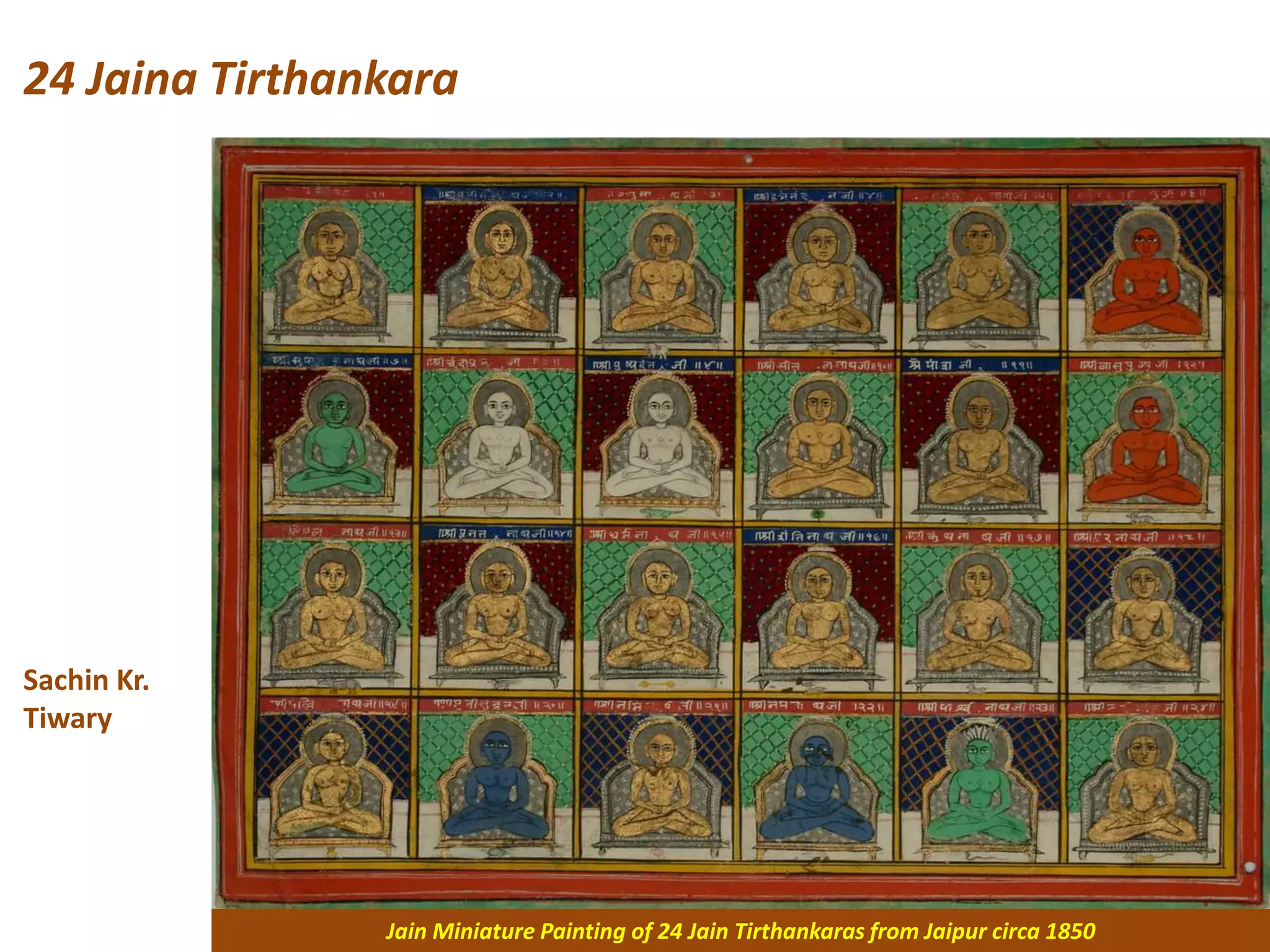
24 Jaina Tirthankara
Sachin Kr.
Tiwary
Jain Miniature Painting of 24 Jain Tirthankaras from Jaipur circa 1850
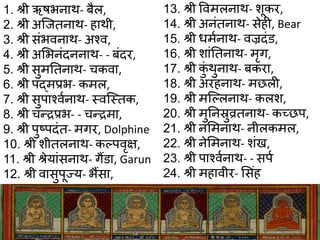
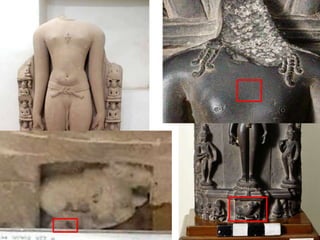
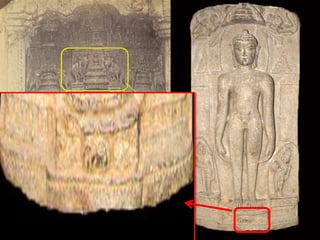
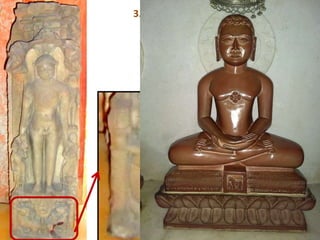
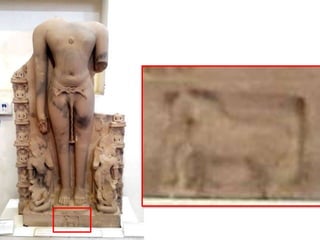
1. श्री ऋषभनाथ- बैल,
2. श्री अजितनाथ- हाथी,
3. श्री संभवनाथ- अश्व,
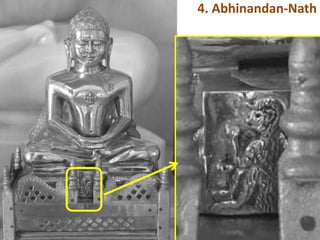
4. श्री अभभनंदननाथ- - बंदर,
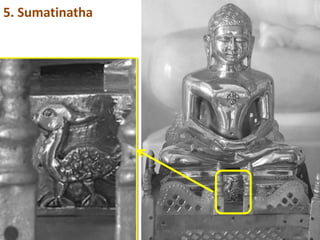
5. श्री सुमततनाथ- चकवा,
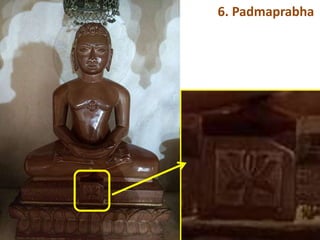
6. श्री पद्मप्रभ- कमल,
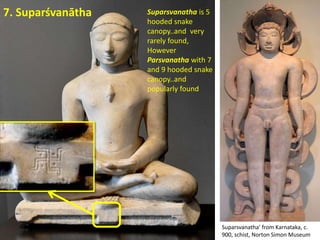
7. श्री सुपाश्ववनाथ- स्वजस्तक,
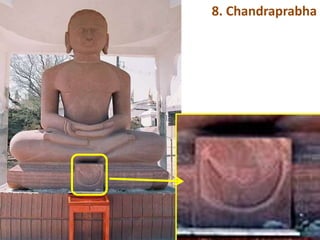
8. श्री चन्द्रप्रभ- - चन्द्रमा,
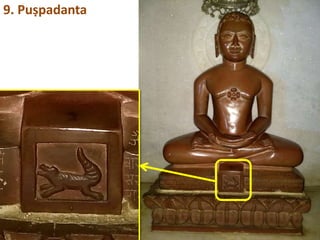
9. श्री पुष्पदंत- मगर, Dolphine
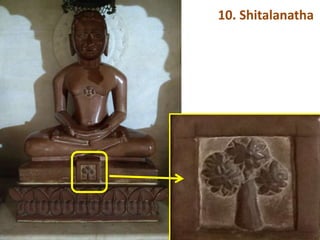
10. श्री शीतलनाथ- कल्पवृक्ष,
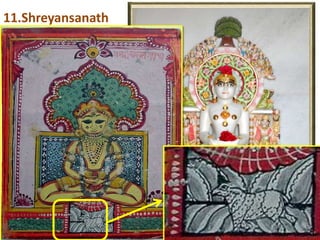
11. श्री श्रेयांसनाथ- गैंडा, Garun
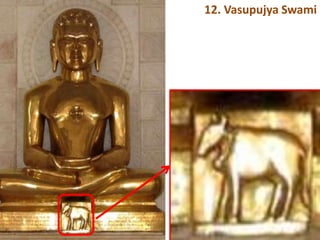
12. श्री वासुपूज्य- भैंसा,
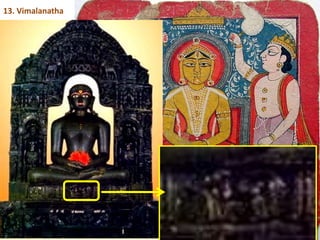
13. श्री ववमलनाथ- शूकर,
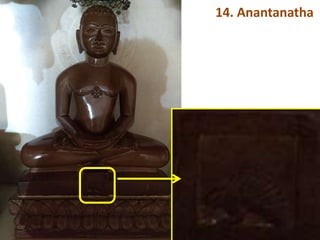
14. श्री अनंतनाथ- सेही, Bear
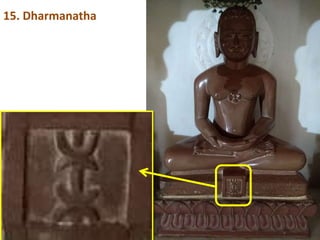
15. श्री धमवनाथ- वज्रदंड,
16. श्री शांततनाथ- मृग,
17. श्री कुं थुनाथ- बकरा,
18. श्री अरहनाथ- मछली,
19. श्री मजल्लनाथ- कलश,
20. श्री मुतनस्रुव्रतनाथ- कच्छप,
21. श्री नभमनाथ- नीलकमल,
22. श्री नेभमनाथ- शंख,
23. श्री पाश्ववनाथ- - सपव
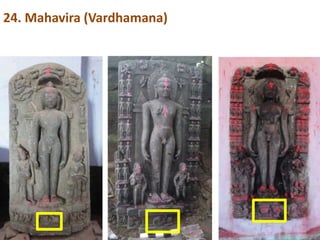
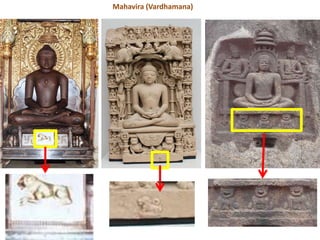
24. श्री महावीर- भसंह
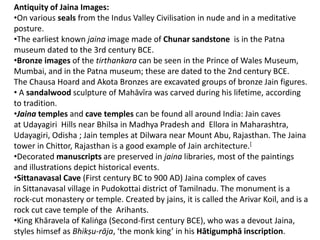
Antiquity of Jaina Images:
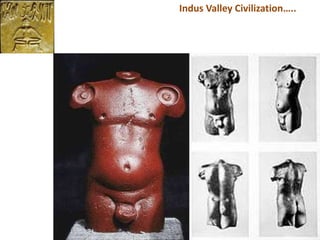
•On various seals from the Indus Valley Civilisation in nude and in a meditative
posture.
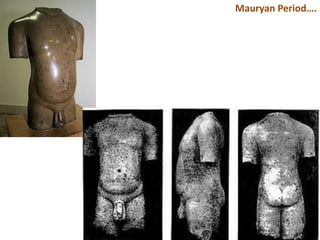
•The earliest known jaina image made of Chunar sandstone is in the Patna
museum dated to the 3rd century BCE.
•Bronze images of the tirthankara can be seen in the Prince of Wales Museum,
Mumbai, and in the Patna museum; these are dated to the 2nd century BCE.
The Chausa Hoard and Akota Bronzes are excavated groups of bronze Jain figures.
• A sandalwood sculpture of Mahāvīra was carved during his lifetime, according
to tradition.
•Jaina temples and cave temples can be found all around India: Jain caves
at Udayagiri Hills near Bhilsa in Madhya Pradesh and Ellora in Maharashtra,
Udayagiri, Odisha ; Jain temples at Dilwara near Mount Abu, Rajasthan. The Jaina
tower in Chittor, Rajasthan is a good example of Jain architecture.[
•Decorated manuscripts are preserved in jaina libraries, most of the paintings
and illustrations depict historical events.
•Sittanavasal Cave (First century BC to 900 AD) Jaina complex of caves
in Sittanavasal village in Pudokottai district of Tamilnadu. The monument is a
rock-cut monastery or temple. Created by jains, it is called the Arivar Koil, and is a
rock cut cave temple of the Arihants.
•King Khāravela of Kaliṅga (Second-first century BCE), who was a devout Jaina,
styles himsef as Bhikṣu-rāja, ‘the monk king’ in his Hātigumphā inscription.
Indus Valley Civilization…..
Mauryan Period….
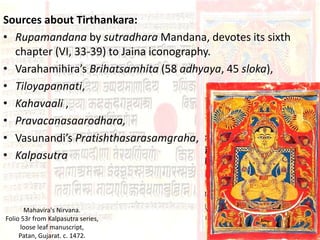
Sources about Tirthankara:
• Rupamandana by sutradhara Mandana, devotes its sixth
chapter (VI, 33-39) to Jaina iconography.
• Varahamihira’s Brihatsamhita (58 adhyaya, 45 sloka),
• Tiloyapannati,
• Kahavaali ,
• Pravacanasaarodhara,
• Vasunandi’s Pratishthasarasamgraha,
• Kalpasutra
Mahavira's Nirvana.
Folio 53r from Kalpasutra series,
loose leaf manuscript,
Patan, Gujarat. c. 1472.
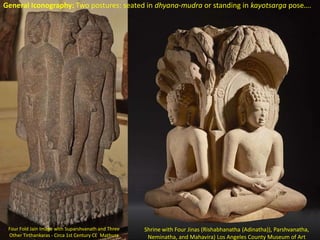
Four Fold Jain Image with Suparshvanath and Three
Other Tirthankaras - Circa 1st Century CE Mathura
Shrine with Four Jinas (Rishabhanatha (Adinatha)), Parshvanatha,
Neminatha, and Mahavira) Los Angeles County Museum of Art
General Iconography: Two postures: seated in dhyana-mudra or standing in kayotsarga pose….
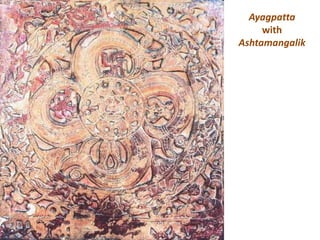
Ayagpatta
with
Ashtamangalik
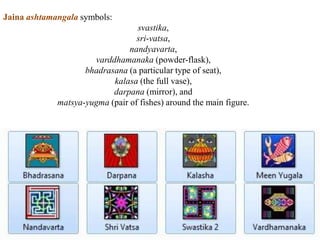
Jaina ashtamangala symbols:
svastika,
sri-vatsa,
nandyavarta,
varddhamanaka (powder-flask),
bhadrasana (a particular type of seat),
kalasa (the full vase),
darpana (mirror), and
matsya-yugma (pair of fishes) around the main figure.
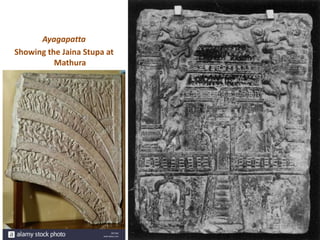
Ayagapatta
Showing the Jaina Stupa at
Mathura
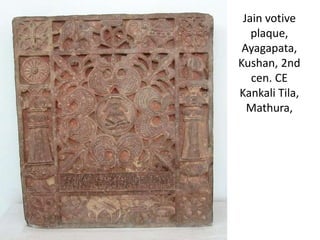
Jain votive
plaque,
Ayagapata,
Kushan, 2nd
cen. CE
Kankali Tila,
Mathura,
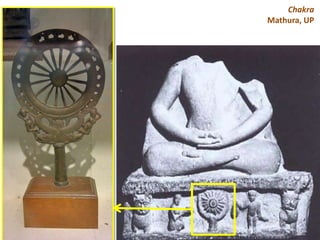
Chakra
Mathura, UP
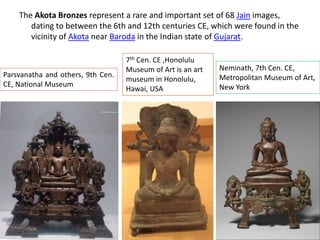
The Akota Bronzes represent a rare and important set of 68 Jain images,
dating to between the 6th and 12th centuries CE, which were found in the
vicinity of Akota near Baroda in the Indian state of Gujarat.
Parsvanatha and others, 9th Cen.
CE, National Museum
7th Cen. CE ,Honolulu
Museum of Art is an art
museum in Honolulu,
Hawai, USA
Neminath, 7th Cen. CE,
Metropolitan Museum of Art,
New York
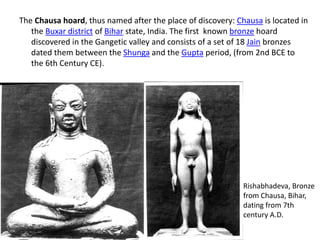
The Chausa hoard, thus named after the place of discovery: Chausa is located in
the Buxar district of Bihar state, India. The first known bronze hoard
discovered in the Gangetic valley and consists of a set of 18 Jain bronzes
dated them between the Shunga and the Gupta period, (from 2nd BCE to
the 6th Century CE).
Rishabhadeva, Bronze
from Chausa, Bihar,
dating from 7th
century A.D.
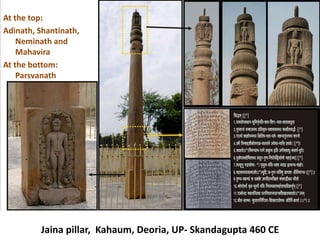
Jaina pillar, Kahaum, Deoria, UP- Skandagupta 460 CE
At the top:
Adinath, Shantinath,
Neminath and
Mahavira
At the bottom:
Parsvanath
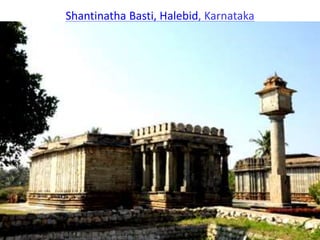
Shantinatha Basti, Halebid, Karnataka
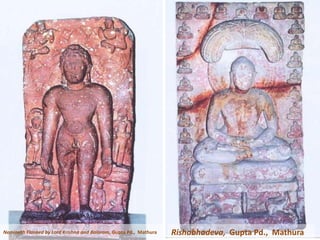
Rishabhadeva, Gupta Pd., MathuraNeminath Flanked by Lord Krishna and Balaram, Gupta Pd., Mathura
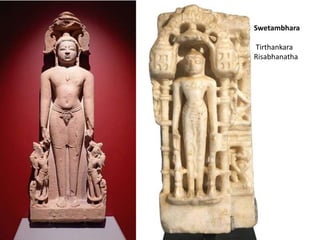
Swetambhara
Tirthankara
Risabhanatha
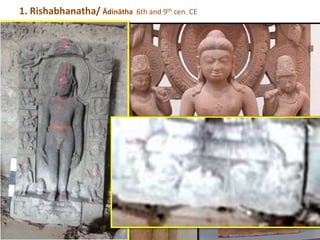
1. Rishabhanatha/ Ādinātha 6th and 9th cen. CE
2. Ajitnatha,
11th cen. CE
3. Sambhavanatha, Gwalior Fort Museum
4. Abhinandan-Nath
5. Sumatinatha
6. Padmaprabha
7. Suparśvanātha
Suparsvanatha' from Karnataka, c.
900, schist, Norton Simon Museum
Suparsvanatha is 5
hooded snake
canopy..and very
rarely found,
However
Parsvanatha with 7
and 9 hooded snake
canopy..and
popularly found
8. Chandraprabha
9. Puṣpadanta
10. Shitalanatha
11.Shreyansanath
12. Vasupujya Swami
13. Vimalanatha
14. Anantanatha
15. Dharmanatha
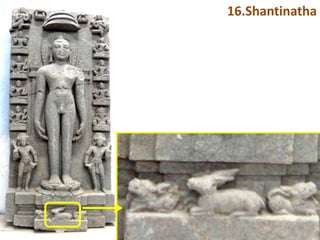
16.Shantinatha
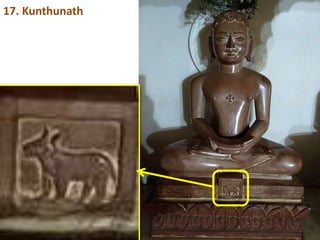
17. Kunthunath
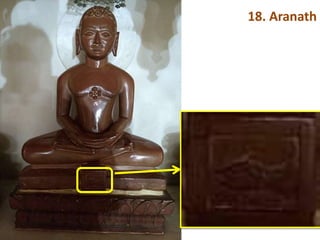
18. Aranath
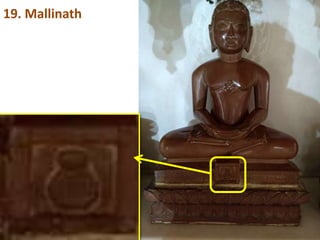
19. Mallinath
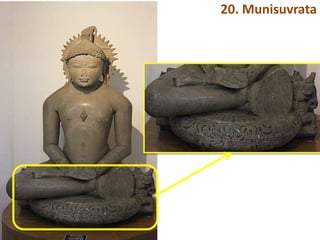
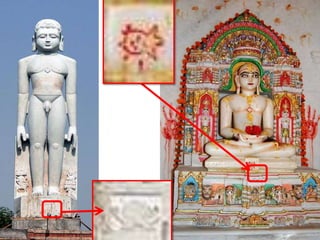
20. Munisuvrata
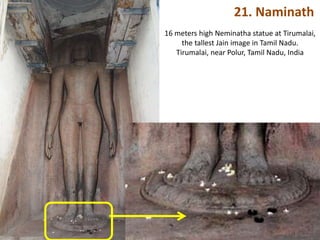
21. Naminath
16 meters high Neminatha statue at Tirumalai,
the tallest Jain image in Tamil Nadu.
Tirumalai, near Polur, Tamil Nadu, India
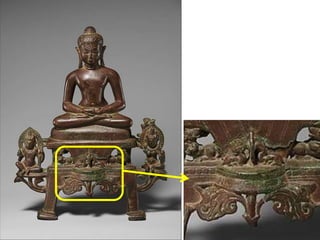
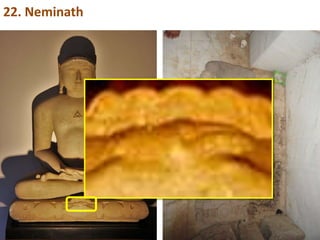
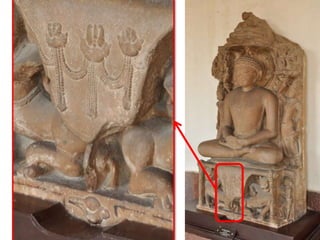
22. Neminath
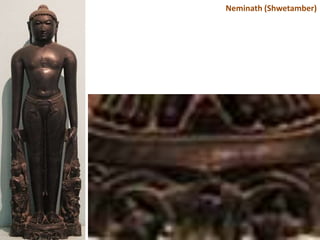
Neminath (Shwetamber)
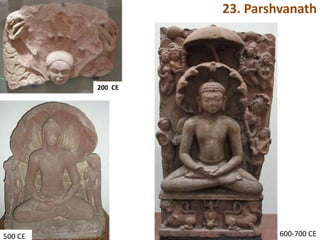
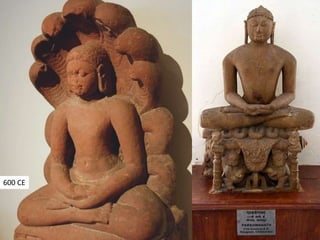
23. Parshvanath
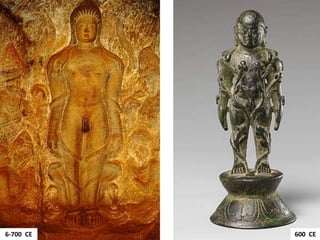
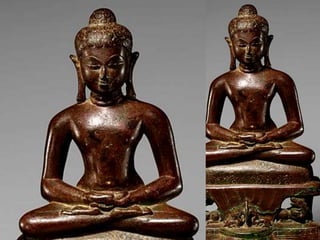
600-700 CE
200 CE
500 CE
600 CE
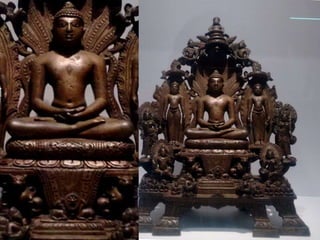
24. Mahavira (Vardhamana)
Mahavira (Vardhamana)
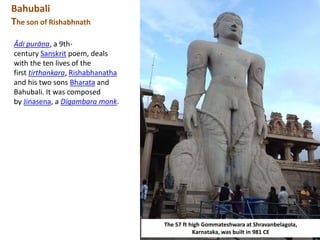
Bahubali
The son of Rishabhnath
The 57 ft high Gommateshwara at Shravanbelagola,
Karnataka, was built in 981 CE
Ādi purāṇa, a 9th-
century Sanskrit poem, deals
with the ten lives of the
first tirthankara, Rishabhanatha
and his two sons Bharata and
Bahubali. It was composed
by Jinasena, a Digambara monk.
600 CE6-700 CE
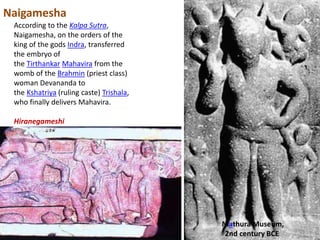
Naigamesha
According to the Kalpa Sutra,
Naigamesha, on the orders of the
king of the gods Indra, transferred
the embryo of
the Tirthankar Mahavira from the
womb of the Brahmin (priest class)
woman Devananda to
the Kshatriya (ruling caste) Trishala,
who finally delivers Mahavira.
Hiranegameshi
Mathura Museum,
2nd century BCE
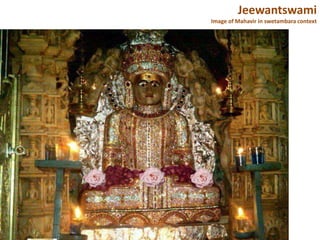
Jeewantswami
Image of Mahavir in swetambara context
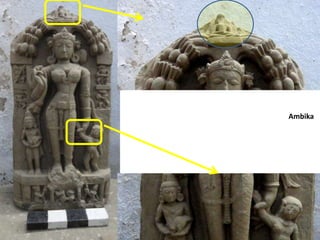
Ambika
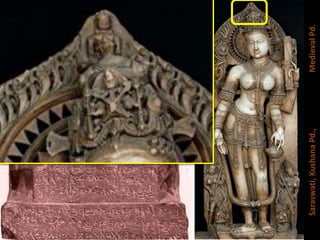
Saraswati,KushanaPd.,MedievalPd.
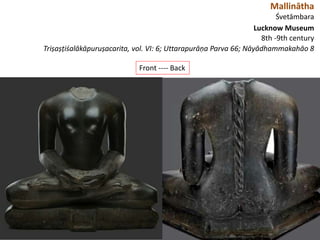
Mallinātha
Śvetāmbara
Lucknow Museum
8th -9th century
Triṣaṣṭiśalākāpuruṣacarita, vol. VI: 6; Uttarapurāṇa Parva 66; Nāyādhammakahāo 8
Front ---- Back
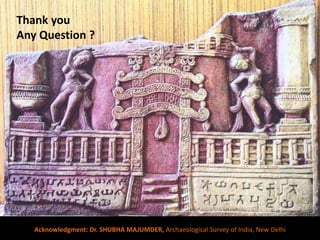
Acknowledgment: Dr. SHUBHA MAJUMDER, Archaeological Survey of India, New Delhi
Thank you
Any Question ?

24 Jaina Teerthankar- Iconography

  • 1.
    24 Jaina Tirthankara SachinKr. Tiwary Jain Miniature Painting of 24 Jain Tirthankaras from Jaipur circa 1850
  • 2.
    1. श्री ऋषभनाथ-बैल, 2. श्री अजितनाथ- हाथी, 3. श्री संभवनाथ- अश्व, 4. श्री अभभनंदननाथ- - बंदर, 5. श्री सुमततनाथ- चकवा, 6. श्री पद्मप्रभ- कमल, 7. श्री सुपाश्ववनाथ- स्वजस्तक, 8. श्री चन्द्रप्रभ- - चन्द्रमा, 9. श्री पुष्पदंत- मगर, Dolphine 10. श्री शीतलनाथ- कल्पवृक्ष, 11. श्री श्रेयांसनाथ- गैंडा, Garun 12. श्री वासुपूज्य- भैंसा, 13. श्री ववमलनाथ- शूकर, 14. श्री अनंतनाथ- सेही, Bear 15. श्री धमवनाथ- वज्रदंड, 16. श्री शांततनाथ- मृग, 17. श्री कुं थुनाथ- बकरा, 18. श्री अरहनाथ- मछली, 19. श्री मजल्लनाथ- कलश, 20. श्री मुतनस्रुव्रतनाथ- कच्छप, 21. श्री नभमनाथ- नीलकमल, 22. श्री नेभमनाथ- शंख, 23. श्री पाश्ववनाथ- - सपव 24. श्री महावीर- भसंह
  • 3.
    Antiquity of JainaImages: •On various seals from the Indus Valley Civilisation in nude and in a meditative posture. •The earliest known jaina image made of Chunar sandstone is in the Patna museum dated to the 3rd century BCE. •Bronze images of the tirthankara can be seen in the Prince of Wales Museum, Mumbai, and in the Patna museum; these are dated to the 2nd century BCE. The Chausa Hoard and Akota Bronzes are excavated groups of bronze Jain figures. • A sandalwood sculpture of Mahāvīra was carved during his lifetime, according to tradition. •Jaina temples and cave temples can be found all around India: Jain caves at Udayagiri Hills near Bhilsa in Madhya Pradesh and Ellora in Maharashtra, Udayagiri, Odisha ; Jain temples at Dilwara near Mount Abu, Rajasthan. The Jaina tower in Chittor, Rajasthan is a good example of Jain architecture.[ •Decorated manuscripts are preserved in jaina libraries, most of the paintings and illustrations depict historical events. •Sittanavasal Cave (First century BC to 900 AD) Jaina complex of caves in Sittanavasal village in Pudokottai district of Tamilnadu. The monument is a rock-cut monastery or temple. Created by jains, it is called the Arivar Koil, and is a rock cut cave temple of the Arihants. •King Khāravela of Kaliṅga (Second-first century BCE), who was a devout Jaina, styles himsef as Bhikṣu-rāja, ‘the monk king’ in his Hātigumphā inscription.
  • 4.
  • 5.
  • 6.
    Sources about Tirthankara: •Rupamandana by sutradhara Mandana, devotes its sixth chapter (VI, 33-39) to Jaina iconography. • Varahamihira’s Brihatsamhita (58 adhyaya, 45 sloka), • Tiloyapannati, • Kahavaali , • Pravacanasaarodhara, • Vasunandi’s Pratishthasarasamgraha, • Kalpasutra Mahavira's Nirvana. Folio 53r from Kalpasutra series, loose leaf manuscript, Patan, Gujarat. c. 1472.
  • 7.
    Four Fold JainImage with Suparshvanath and Three Other Tirthankaras - Circa 1st Century CE Mathura Shrine with Four Jinas (Rishabhanatha (Adinatha)), Parshvanatha, Neminatha, and Mahavira) Los Angeles County Museum of Art General Iconography: Two postures: seated in dhyana-mudra or standing in kayotsarga pose….
  • 8.
  • 9.
    Jaina ashtamangala symbols: svastika, sri-vatsa, nandyavarta, varddhamanaka(powder-flask), bhadrasana (a particular type of seat), kalasa (the full vase), darpana (mirror), and matsya-yugma (pair of fishes) around the main figure.
  • 10.
  • 11.
  • 12.
  • 13.
    The Akota Bronzesrepresent a rare and important set of 68 Jain images, dating to between the 6th and 12th centuries CE, which were found in the vicinity of Akota near Baroda in the Indian state of Gujarat. Parsvanatha and others, 9th Cen. CE, National Museum 7th Cen. CE ,Honolulu Museum of Art is an art museum in Honolulu, Hawai, USA Neminath, 7th Cen. CE, Metropolitan Museum of Art, New York
  • 14.
    The Chausa hoard,thus named after the place of discovery: Chausa is located in the Buxar district of Bihar state, India. The first known bronze hoard discovered in the Gangetic valley and consists of a set of 18 Jain bronzes dated them between the Shunga and the Gupta period, (from 2nd BCE to the 6th Century CE). Rishabhadeva, Bronze from Chausa, Bihar, dating from 7th century A.D.
  • 15.
    Jaina pillar, Kahaum,Deoria, UP- Skandagupta 460 CE At the top: Adinath, Shantinath, Neminath and Mahavira At the bottom: Parsvanath
  • 16.
  • 17.
    Rishabhadeva, Gupta Pd.,MathuraNeminath Flanked by Lord Krishna and Balaram, Gupta Pd., Mathura
  • 19.
  • 20.
    1. Rishabhanatha/ Ādinātha6th and 9th cen. CE
  • 22.
  • 23.
  • 25.
  • 26.
  • 27.
  • 28.
    7. Suparśvanātha Suparsvanatha' fromKarnataka, c. 900, schist, Norton Simon Museum Suparsvanatha is 5 hooded snake canopy..and very rarely found, However Parsvanatha with 7 and 9 hooded snake canopy..and popularly found
  • 29.
  • 30.
  • 31.
  • 32.
  • 33.
  • 34.
  • 35.
  • 36.
  • 37.
  • 38.
  • 39.
  • 40.
  • 41.
  • 43.
    21. Naminath 16 metershigh Neminatha statue at Tirumalai, the tallest Jain image in Tamil Nadu. Tirumalai, near Polur, Tamil Nadu, India
  • 45.
  • 47.
  • 48.
  • 49.
  • 50.
  • 51.
  • 52.
    Bahubali The son ofRishabhnath The 57 ft high Gommateshwara at Shravanbelagola, Karnataka, was built in 981 CE Ādi purāṇa, a 9th- century Sanskrit poem, deals with the ten lives of the first tirthankara, Rishabhanatha and his two sons Bharata and Bahubali. It was composed by Jinasena, a Digambara monk.
  • 53.
  • 54.
    Naigamesha According to theKalpa Sutra, Naigamesha, on the orders of the king of the gods Indra, transferred the embryo of the Tirthankar Mahavira from the womb of the Brahmin (priest class) woman Devananda to the Kshatriya (ruling caste) Trishala, who finally delivers Mahavira. Hiranegameshi Mathura Museum, 2nd century BCE
  • 55.
    Jeewantswami Image of Mahavirin swetambara context
  • 56.
  • 57.
  • 60.
    Mallinātha Śvetāmbara Lucknow Museum 8th -9thcentury Triṣaṣṭiśalākāpuruṣacarita, vol. VI: 6; Uttarapurāṇa Parva 66; Nāyādhammakahāo 8 Front ---- Back
  • 61.
    Acknowledgment: Dr. SHUBHAMAJUMDER, Archaeological Survey of India, New Delhi Thank you Any Question ?