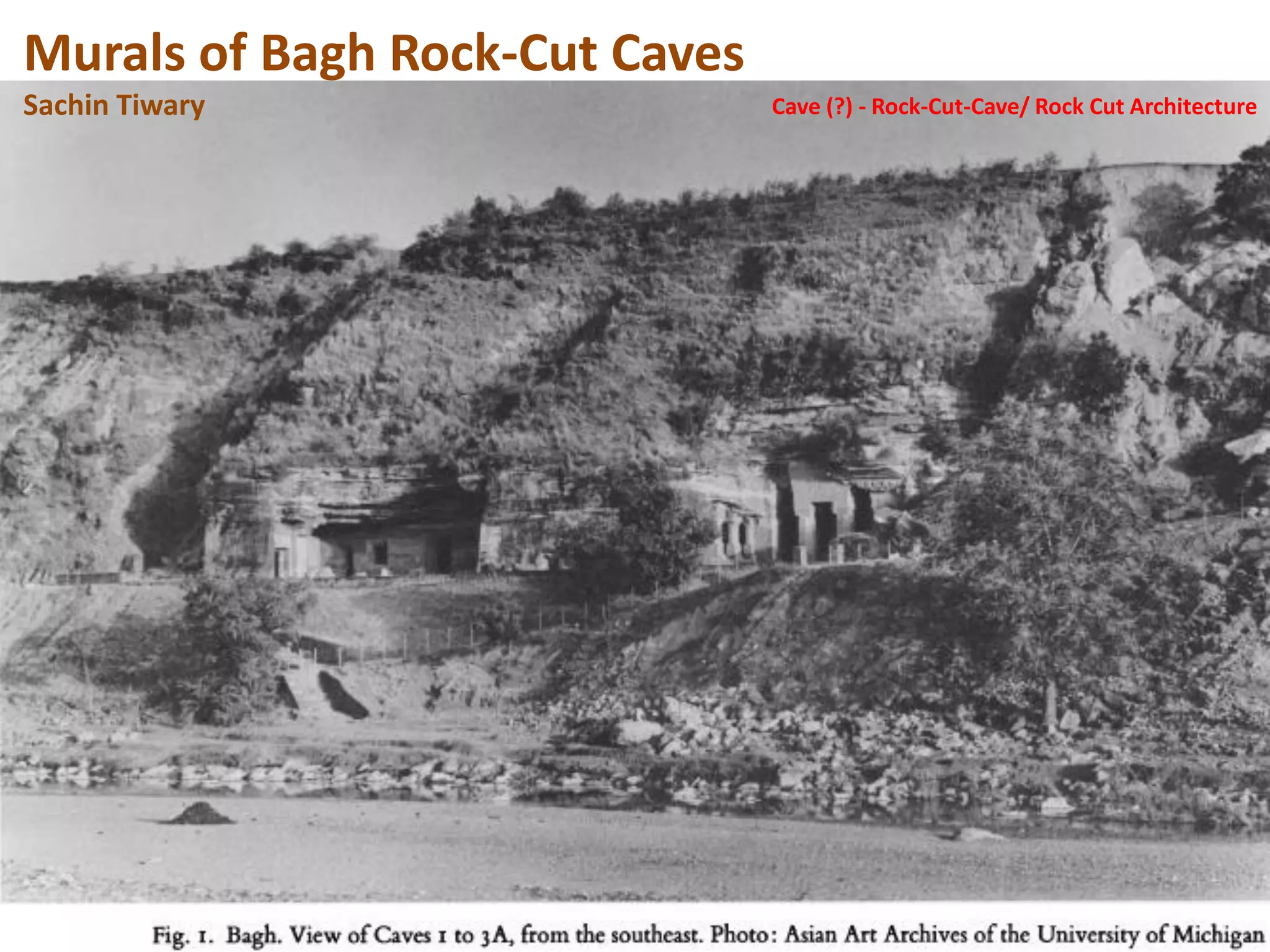
Murals of Bagh Rock-Cut Caves
Sachin Tiwary Cave (?) - Rock-Cut-Cave/ Rock Cut Architecture
Location
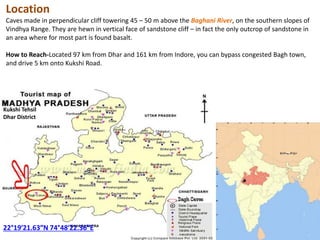
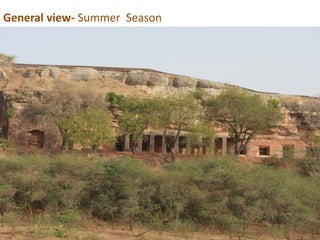
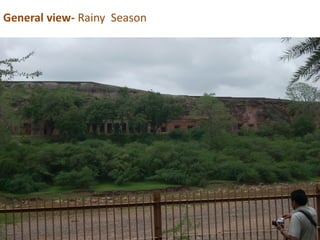
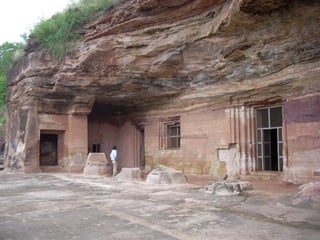
Caves made in perpendicular cliff towering 45 – 50 m above the Baghani River, on the southern slopes of
Vindhya Range. They are hewn in vertical face of sandstone cliff – in fact the only outcrop of sandstone in
an area where for most part is found basalt.
How to Reach-Located 97 km from Dhar and 161 km from Indore, you can bypass congested Bagh town,
and drive 5 km onto Kukshi Road.
22°19′21.63″N 74°48′22.36″E
Kukshi Tehsil
Dhar District
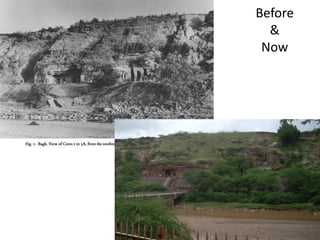
Before
&
Now
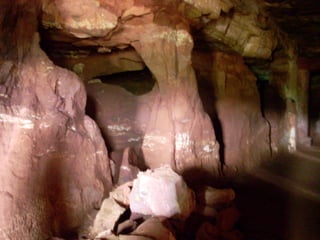
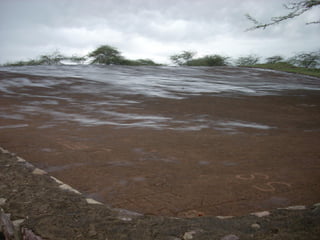
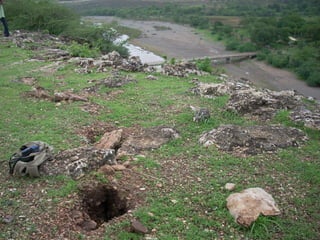
General view- Summer Season
General view- Rainy Season
Research
• Discovery-
– 1818 by Lt. Dajerfield (Literary Society of Bombay, Vol. II)
– 1854 by Dr. E. Imbey (Royal Asiatic Society, Mumbai)
– 1907-1908 by Col. C.E.Luard (Antiquity, Vol. XXXIX, 1909)
– 1923 by A.K. Haldar an article in Burlington Magazine
– 1925 by M.C. Dey – “Bagh as oasis in the middle of desert”.
a calm, pleasant place in the middle of some where busy and unpleasant
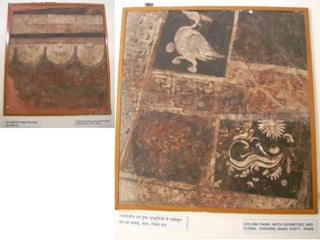
Copied- By M.D.Garde prepare copy of images which were displayed in Gujari
Mahal Museum of Gwalior city and their copies are also on display in British
Museum, London.
• Nomenclature-
– Still tigers lived here, among the locals they became known as Tiger (Bagh)
Caves.
– Baghini River.
– Nearest Village name is Bagh.
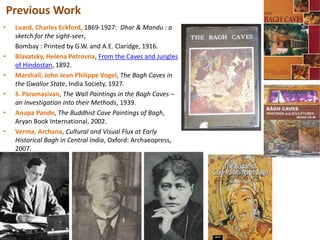
Previous Work
• Luard, Charles Eckford, 1869-1927: Dhar & Mandu : a
sketch for the sight-seer,
Bombay : Printed by G.W. and A.E. Claridge, 1916.
• Blavatsky, Helena Petrovna, From the Caves and Jungles
of Hindostan, 1892.
• Marshall, John Jean Philippe Vogel, The Bagh Caves in
the Gwalior State, India Society, 1927.
• S. Paramasivan, The Wall Paintings in the Bagh Caves –
an Investigation into their Methods, 1939.
• Anupa Pande, The Buddhist Cave Paintings of Bagh,
Aryan Book International, 2002.
• Verma, Archana, Cultural and Visual Flux at Early
Historical Bagh in Central India, Oxford: Archaeopress,
2007.
About Caves
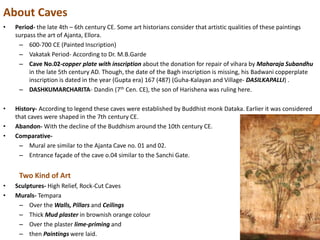
• Period- the late 4th – 6th century CE. Some art historians consider that artistic qualities of these paintings
surpass the art of Ajanta, Ellora.
– 600-700 CE (Painted Inscription)
– Vakatak Period- According to Dr. M.B.Garde
– Cave No.02-copper plate with inscription about the donation for repair of vihara by Maharaja Subandhu
in the late 5th century AD. Though, the date of the Bagh inscription is missing, his Badwani copperplate
inscription is dated in the year (Gupta era) 167 (487) (Guha-Kalayan and Village- DASILKAPALLI) .
– DASHKUMARCHARITA- Dandin (7th Cen. CE), the son of Harishena was ruling here.
• History- According to legend these caves were established by Buddhist monk Dataka. Earlier it was considered
that caves were shaped in the 7th century CE.
• Abandon- With the decline of the Buddhism around the 10th century CE.
• Comparative-
– Mural are similar to the Ajanta Cave no. 01 and 02.
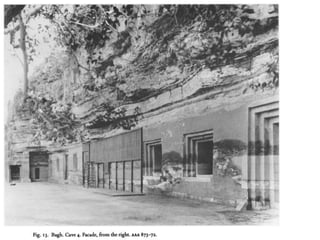
– Entrance façade of the cave o.04 similar to the Sanchi Gate.
Two Kind of Art
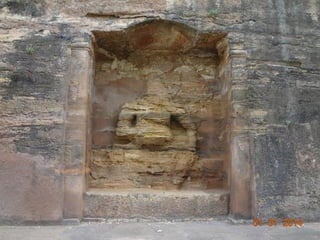
• Sculptures- High Relief, Rock-Cut Caves
• Murals- Tempara
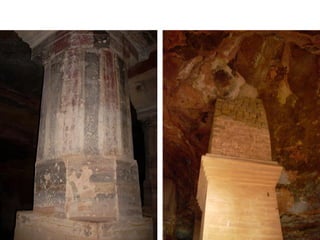
– Over the Walls, Pillars and Ceilings
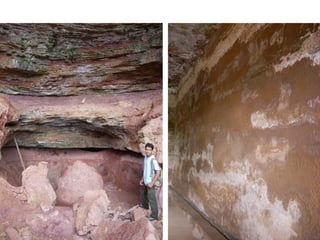
– Thick Mud plaster in brownish orange colour
– Over the plaster lime-priming and
– then Paintings were laid.
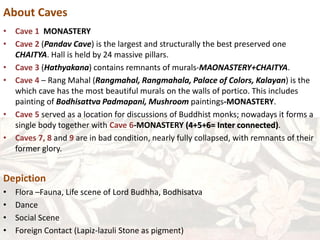
About Caves
• Cave 1 MONASTERY
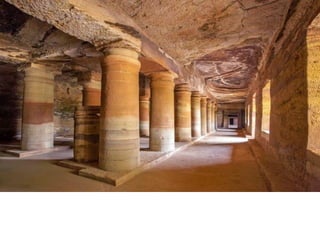
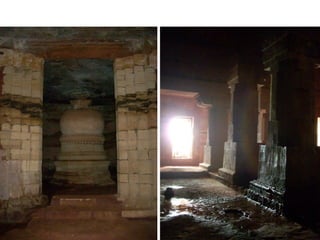
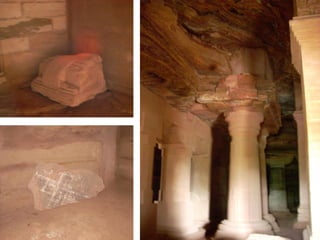
• Cave 2 (Pandav Cave) is the largest and structurally the best preserved one
CHAITYA. Hall is held by 24 massive pillars.
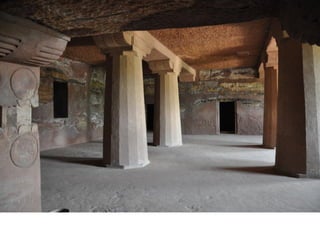
• Cave 3 (Hathyakana) contains remnants of murals-MAONASTERY+CHAITYA.
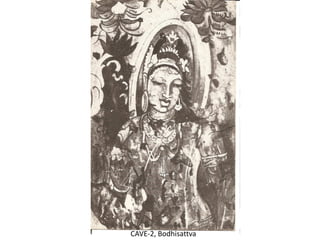
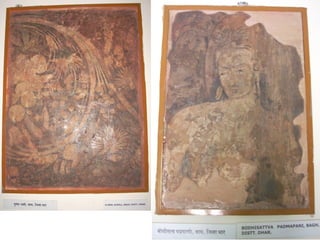
• Cave 4 – Rang Mahal (Rangmahal, Rangmahala, Palace of Colors, Kalayan) is the
which cave has the most beautiful murals on the walls of portico. This includes
painting of Bodhisattva Padmapani, Mushroom paintings-MONASTERY.
• Cave 5 served as a location for discussions of Buddhist monks; nowadays it forms a
single body together with Cave 6-MONASTERY (4+5+6= Inter connected).
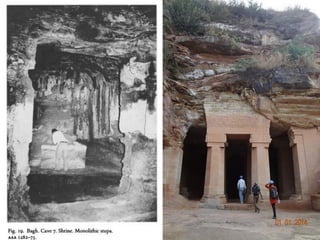
• Caves 7, 8 and 9 are in bad condition, nearly fully collapsed, with remnants of their
former glory.
Depiction
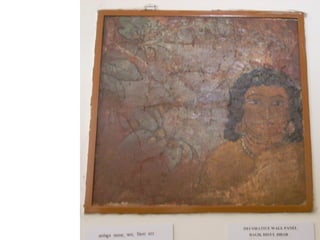
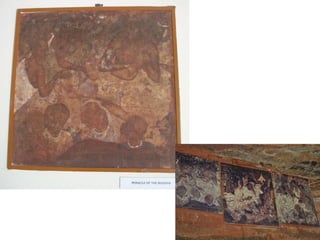
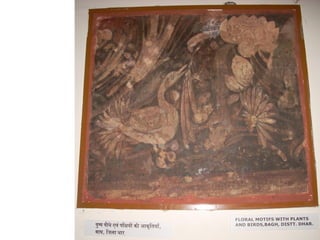
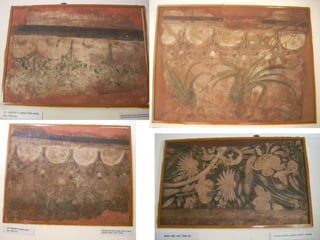
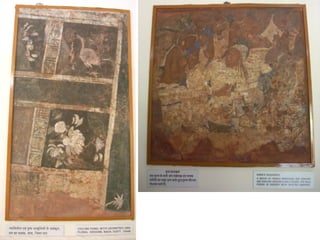
• Flora –Fauna, Life scene of Lord Budhha, Bodhisatva
• Dance
• Social Scene
• Foreign Contact (Lapiz-lazuli Stone as pigment)
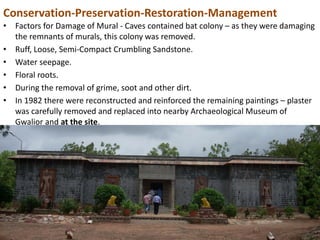
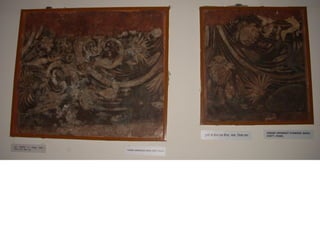
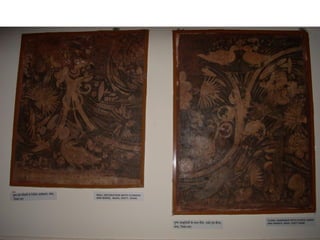
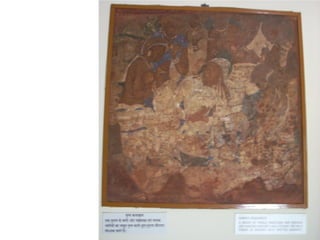
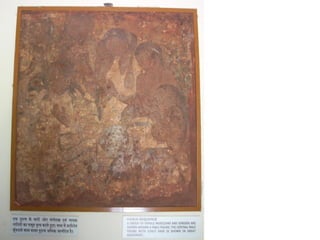
Conservation-Preservation-Restoration-Management
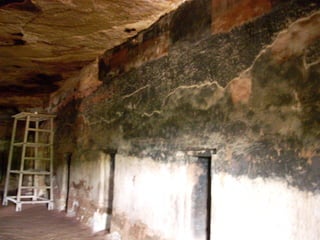
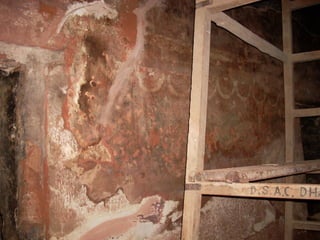
• Factors for Damage of Mural - Caves contained bat colony – as they were damaging
the remnants of murals, this colony was removed.
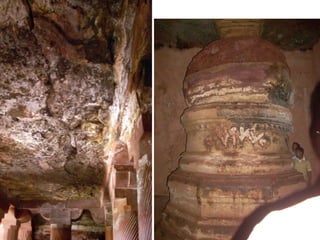
• Ruff, Loose, Semi-Compact Crumbling Sandstone.
• Water seepage.
• Floral roots.
• During the removal of grime, soot and other dirt.
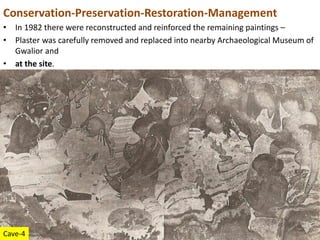
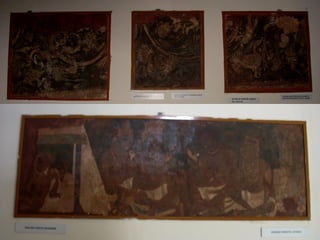
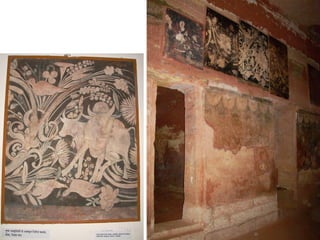
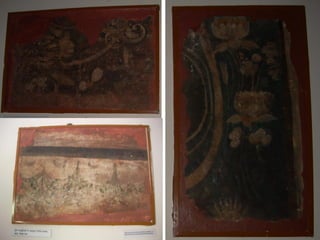
• In 1982 there were reconstructed and reinforced the remaining paintings – plaster
was carefully removed and replaced into nearby Archaeological Museum of
Gwalior and at the site.
Conservation-Preservation-Restoration-Management
• In 1982 there were reconstructed and reinforced the remaining paintings –
• Plaster was carefully removed and replaced into nearby Archaeological Museum of
Gwalior and
• at the site.
Cave-4
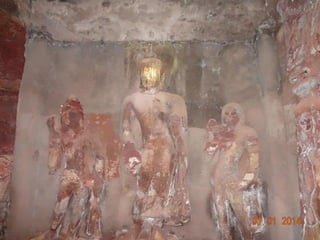
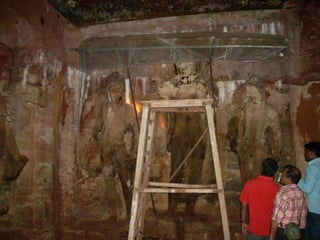
CAVE-2, Bodhisattva
Thank you ……
Any Question ?

Bagh Caves (Mural, Sculptures, Conservation Issues)

  • 1.
    Murals of BaghRock-Cut Caves Sachin Tiwary Cave (?) - Rock-Cut-Cave/ Rock Cut Architecture
  • 2.
    Location Caves made inperpendicular cliff towering 45 – 50 m above the Baghani River, on the southern slopes of Vindhya Range. They are hewn in vertical face of sandstone cliff – in fact the only outcrop of sandstone in an area where for most part is found basalt. How to Reach-Located 97 km from Dhar and 161 km from Indore, you can bypass congested Bagh town, and drive 5 km onto Kukshi Road. 22°19′21.63″N 74°48′22.36″E Kukshi Tehsil Dhar District
  • 3.
  • 4.
  • 5.
  • 6.
    Research • Discovery- – 1818by Lt. Dajerfield (Literary Society of Bombay, Vol. II) – 1854 by Dr. E. Imbey (Royal Asiatic Society, Mumbai) – 1907-1908 by Col. C.E.Luard (Antiquity, Vol. XXXIX, 1909) – 1923 by A.K. Haldar an article in Burlington Magazine – 1925 by M.C. Dey – “Bagh as oasis in the middle of desert”. a calm, pleasant place in the middle of some where busy and unpleasant Copied- By M.D.Garde prepare copy of images which were displayed in Gujari Mahal Museum of Gwalior city and their copies are also on display in British Museum, London. • Nomenclature- – Still tigers lived here, among the locals they became known as Tiger (Bagh) Caves. – Baghini River. – Nearest Village name is Bagh.
  • 7.
    Previous Work • Luard,Charles Eckford, 1869-1927: Dhar & Mandu : a sketch for the sight-seer, Bombay : Printed by G.W. and A.E. Claridge, 1916. • Blavatsky, Helena Petrovna, From the Caves and Jungles of Hindostan, 1892. • Marshall, John Jean Philippe Vogel, The Bagh Caves in the Gwalior State, India Society, 1927. • S. Paramasivan, The Wall Paintings in the Bagh Caves – an Investigation into their Methods, 1939. • Anupa Pande, The Buddhist Cave Paintings of Bagh, Aryan Book International, 2002. • Verma, Archana, Cultural and Visual Flux at Early Historical Bagh in Central India, Oxford: Archaeopress, 2007.
  • 8.
    About Caves • Period-the late 4th – 6th century CE. Some art historians consider that artistic qualities of these paintings surpass the art of Ajanta, Ellora. – 600-700 CE (Painted Inscription) – Vakatak Period- According to Dr. M.B.Garde – Cave No.02-copper plate with inscription about the donation for repair of vihara by Maharaja Subandhu in the late 5th century AD. Though, the date of the Bagh inscription is missing, his Badwani copperplate inscription is dated in the year (Gupta era) 167 (487) (Guha-Kalayan and Village- DASILKAPALLI) . – DASHKUMARCHARITA- Dandin (7th Cen. CE), the son of Harishena was ruling here. • History- According to legend these caves were established by Buddhist monk Dataka. Earlier it was considered that caves were shaped in the 7th century CE. • Abandon- With the decline of the Buddhism around the 10th century CE. • Comparative- – Mural are similar to the Ajanta Cave no. 01 and 02. – Entrance façade of the cave o.04 similar to the Sanchi Gate. Two Kind of Art • Sculptures- High Relief, Rock-Cut Caves • Murals- Tempara – Over the Walls, Pillars and Ceilings – Thick Mud plaster in brownish orange colour – Over the plaster lime-priming and – then Paintings were laid.
  • 11.
    About Caves • Cave1 MONASTERY • Cave 2 (Pandav Cave) is the largest and structurally the best preserved one CHAITYA. Hall is held by 24 massive pillars. • Cave 3 (Hathyakana) contains remnants of murals-MAONASTERY+CHAITYA. • Cave 4 – Rang Mahal (Rangmahal, Rangmahala, Palace of Colors, Kalayan) is the which cave has the most beautiful murals on the walls of portico. This includes painting of Bodhisattva Padmapani, Mushroom paintings-MONASTERY. • Cave 5 served as a location for discussions of Buddhist monks; nowadays it forms a single body together with Cave 6-MONASTERY (4+5+6= Inter connected). • Caves 7, 8 and 9 are in bad condition, nearly fully collapsed, with remnants of their former glory. Depiction • Flora –Fauna, Life scene of Lord Budhha, Bodhisatva • Dance • Social Scene • Foreign Contact (Lapiz-lazuli Stone as pigment)
  • 16.
    Conservation-Preservation-Restoration-Management • Factors forDamage of Mural - Caves contained bat colony – as they were damaging the remnants of murals, this colony was removed. • Ruff, Loose, Semi-Compact Crumbling Sandstone. • Water seepage. • Floral roots. • During the removal of grime, soot and other dirt. • In 1982 there were reconstructed and reinforced the remaining paintings – plaster was carefully removed and replaced into nearby Archaeological Museum of Gwalior and at the site.
  • 29.
    Conservation-Preservation-Restoration-Management • In 1982there were reconstructed and reinforced the remaining paintings – • Plaster was carefully removed and replaced into nearby Archaeological Museum of Gwalior and • at the site. Cave-4
  • 30.
  • 45.