Carrying and Transporting an Injured Person
• Transporting an injured person to a safer place requires great
care. A first aider must undergo proper training. When doing this,
a first aider must consider the following factors:
Weight and height of the victim.
Status of the victim (conscious or unconscious).
Environment (safe, floor is smooth, narrow or wide).
Special need considerations (injuries of the victims).
GENERAL PRINCIPLES
Reassure the casualty
and explain to him
what you are
planning to do
Seek for assistance
No more than one
leader should be
there to guide the
team.
Do not try to move a
seriously injured
victim alone when
assistance is
available.
CONT..
Maintain proper body
mechanics while moving the
victim.
1
Take immediate action to
transport the casualty to the
nearest health care agency.
2
Before transporting consider
the nature and severity of
injury, first aid already
provided, number of
assistants available and the
distance and route to be
covered
3
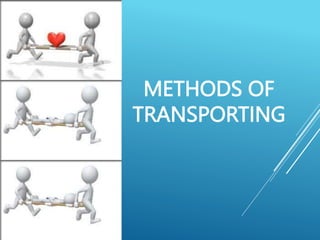
METHODS OF
TRANSPORTING
WHEN ONLY ONE
FIRST AIDER IS
AVAILABLE AND
THE CASUALTY IS
WITH MINOR
INJURIES.
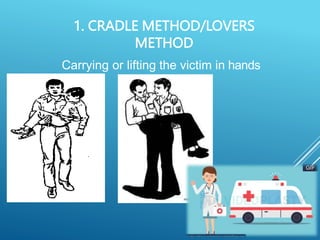
1. CRADLE METHOD/LOVERS
METHOD
Carrying or lifting the victim in hands
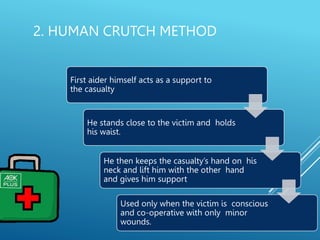
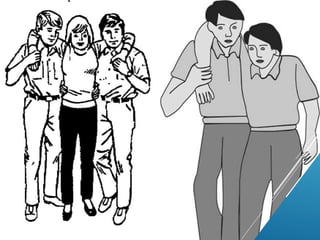
2. HUMAN CRUTCH METHOD
First aider himself acts as a support to
the casualty
He stands close to the victim and holds
his waist.
He then keeps the casualty’s hand on his
neck and lift him with the other hand
and gives him support
Used only when the victim is conscious
and co-operative with only minor
wounds.
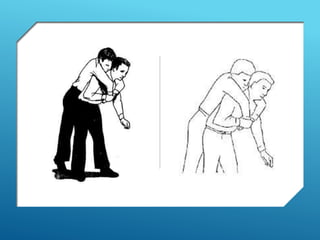
PACK STRAP
CARRY
when the victim is smaller than the
first aider
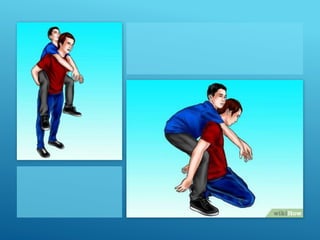
Piggy back method
 Help the casualty to sit on a
chair or on a high place.
Bend before him and tell him
to fold his legs around your
waist and hands around the
shoulders.
 Slowly lift him and rise from
the sitting position,
maintaining body mechanics.
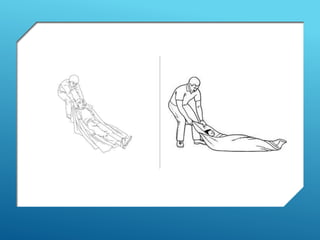
BLANKET DRAG
The blanket drag can be used to move
a person who, due to the severity of
the injury, should not be lifted or
carried by one person alone.
Place the casualty in the supine
position on a blanket and pull the
blanket along the floor.
Always pull the casualty head first,
with the head and shoulders slightly
raised so that the head will not bump
against the floor.
WHEN TWO HELPERS
ARE AVAILABLE AND
THE CASUALTY IS
WITH MAJOR
DANGER…
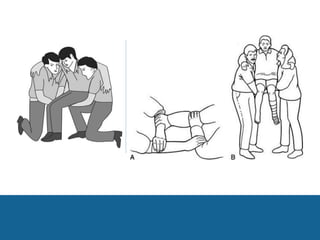
FOUR HANDED SEAT
Both persons should stand behind the
casualty facing each other.
Now catch each other’s wrist ie. right
wrist with left wrist of other person and
vice versa.
After forming the seat, ask the casualty
to sit on it with both hands on the
shoulders and neck of each first aider.
Both should now take slow steps.
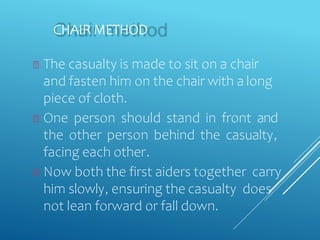
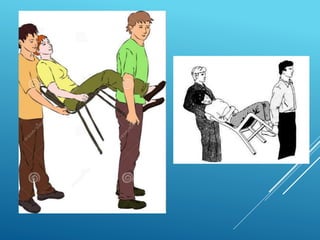
CHAIR METHOD
The casualty is made to sit on a chair
and fasten him on the chair with a long
piece of cloth.
One person should stand in front and
the other person behind the casualty,
facing each other.
Now both the first aiders together carry
him slowly, ensuring the casualty does
not lean forward or fall down.
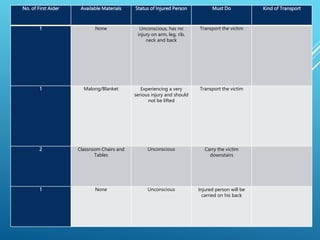
No. of First Aider Available Materials Status of Injured Person Must Do Kind of Transport
1 None Unconscious, has no
injury on arm, leg, rib,
neck and back
Transport the victim
1 Malong/Blanket Experiencing a very
serious injury and should
not be lifted
Transport the victim
2 Classroom Chairs and
Tables
Unconscious Carry the victim
downstairs
1 None Unconscious Injured person will be
carried on his back
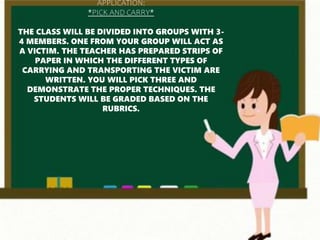
APPLICATION:
*PICK AND CARRY*
THE CLASS WILL BE DIVIDED INTO GROUPS WITH 3-
4 MEMBERS. ONE FROM YOUR GROUP WILL ACT AS
A VICTIM. THE TEACHER HAS PREPARED STRIPS OF
PAPER IN WHICH THE DIFFERENT TYPES OF
CARRYING AND TRANSPORTING THE VICTIM ARE
WRITTEN. YOU WILL PICK THREE AND
DEMONSTRATE THE PROPER TECHNIQUES. THE
STUDENTS WILL BE GRADED BASED ON THE
RUBRICS.
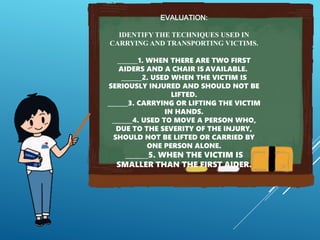
EVALUATION:
IDENTIFY THE TECHNIQUES USED IN
CARRYING AND TRANSPORTING VICTIMS.
_______1. WHEN THERE ARE TWO FIRST
AIDERS AND A CHAIR IS AVAILABLE.
_______2. USED WHEN THE VICTIM IS
SERIOUSLY INJURED AND SHOULD NOT BE
LIFTED.
_______3. CARRYING OR LIFTING THE VICTIM
IN HANDS.
_______4. USED TO MOVE A PERSON WHO,
DUE TO THE SEVERITY OF THE INJURY,
SHOULD NOT BE LIFTED OR CARRIED BY
ONE PERSON ALONE.
_______5. WHEN THE VICTIM IS
SMALLER THAN THE FIRST AIDER.
MAPEH 9 Demo.pptx

MAPEH 9 Demo.pptx

  • 2.
    Carrying and Transportingan Injured Person • Transporting an injured person to a safer place requires great care. A first aider must undergo proper training. When doing this, a first aider must consider the following factors: Weight and height of the victim. Status of the victim (conscious or unconscious). Environment (safe, floor is smooth, narrow or wide). Special need considerations (injuries of the victims).
  • 3.
    GENERAL PRINCIPLES Reassure thecasualty and explain to him what you are planning to do Seek for assistance No more than one leader should be there to guide the team. Do not try to move a seriously injured victim alone when assistance is available.
  • 4.
    CONT.. Maintain proper body mechanicswhile moving the victim. 1 Take immediate action to transport the casualty to the nearest health care agency. 2 Before transporting consider the nature and severity of injury, first aid already provided, number of assistants available and the distance and route to be covered 3
  • 5.
  • 6.
    WHEN ONLY ONE FIRSTAIDER IS AVAILABLE AND THE CASUALTY IS WITH MINOR INJURIES.
  • 8.
    1. CRADLE METHOD/LOVERS METHOD Carryingor lifting the victim in hands
  • 9.
    2. HUMAN CRUTCHMETHOD First aider himself acts as a support to the casualty He stands close to the victim and holds his waist. He then keeps the casualty’s hand on his neck and lift him with the other hand and gives him support Used only when the victim is conscious and co-operative with only minor wounds.
  • 11.
    PACK STRAP CARRY when thevictim is smaller than the first aider
  • 13.
    Piggy back method Help the casualty to sit on a chair or on a high place. Bend before him and tell him to fold his legs around your waist and hands around the shoulders.  Slowly lift him and rise from the sitting position, maintaining body mechanics.
  • 15.
    BLANKET DRAG The blanketdrag can be used to move a person who, due to the severity of the injury, should not be lifted or carried by one person alone. Place the casualty in the supine position on a blanket and pull the blanket along the floor. Always pull the casualty head first, with the head and shoulders slightly raised so that the head will not bump against the floor.
  • 17.
    WHEN TWO HELPERS AREAVAILABLE AND THE CASUALTY IS WITH MAJOR DANGER…
  • 19.
    FOUR HANDED SEAT Bothpersons should stand behind the casualty facing each other. Now catch each other’s wrist ie. right wrist with left wrist of other person and vice versa. After forming the seat, ask the casualty to sit on it with both hands on the shoulders and neck of each first aider. Both should now take slow steps.
  • 21.
    CHAIR METHOD The casualtyis made to sit on a chair and fasten him on the chair with a long piece of cloth. One person should stand in front and the other person behind the casualty, facing each other. Now both the first aiders together carry him slowly, ensuring the casualty does not lean forward or fall down.
  • 23.
    No. of FirstAider Available Materials Status of Injured Person Must Do Kind of Transport 1 None Unconscious, has no injury on arm, leg, rib, neck and back Transport the victim 1 Malong/Blanket Experiencing a very serious injury and should not be lifted Transport the victim 2 Classroom Chairs and Tables Unconscious Carry the victim downstairs 1 None Unconscious Injured person will be carried on his back
  • 24.
    APPLICATION: *PICK AND CARRY* THECLASS WILL BE DIVIDED INTO GROUPS WITH 3- 4 MEMBERS. ONE FROM YOUR GROUP WILL ACT AS A VICTIM. THE TEACHER HAS PREPARED STRIPS OF PAPER IN WHICH THE DIFFERENT TYPES OF CARRYING AND TRANSPORTING THE VICTIM ARE WRITTEN. YOU WILL PICK THREE AND DEMONSTRATE THE PROPER TECHNIQUES. THE STUDENTS WILL BE GRADED BASED ON THE RUBRICS.
  • 25.
    EVALUATION: IDENTIFY THE TECHNIQUESUSED IN CARRYING AND TRANSPORTING VICTIMS. _______1. WHEN THERE ARE TWO FIRST AIDERS AND A CHAIR IS AVAILABLE. _______2. USED WHEN THE VICTIM IS SERIOUSLY INJURED AND SHOULD NOT BE LIFTED. _______3. CARRYING OR LIFTING THE VICTIM IN HANDS. _______4. USED TO MOVE A PERSON WHO, DUE TO THE SEVERITY OF THE INJURY, SHOULD NOT BE LIFTED OR CARRIED BY ONE PERSON ALONE. _______5. WHEN THE VICTIM IS SMALLER THAN THE FIRST AIDER.