2-2 argument from religious experience
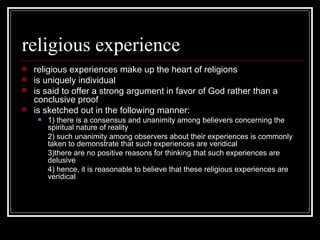
religious experience religious experiences make up the heart of religions is uniquely individual is said to offer a strong argument in favor of God rather than a conclusive proof is sketched out in the following manner: 1) there is a consensus and unanimity among believers concerning the spiritual nature of reality 2) such unanimity among observers about their experiences is commonly taken to demonstrate that such experiences are veridical 3)there are no positive reasons for thinking that such experiences are delusive 4) hence, it is reasonable to believe that these religious experiences are veridical
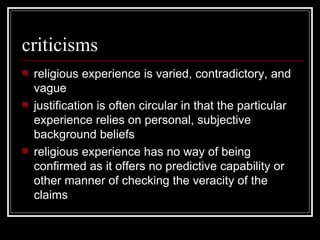
criticisms religious experience is varied, contradictory, and vague justification is often circular in that the particular experience relies on personal, subjective background beliefs religious experience has no way of being confirmed as it offers no predictive capability or other manner of checking the veracity of the claims
religious experience is varied there are any number of various religious experiences with nothing in common other than their supposed “religiousness” there doesn’t even appear to be any sort of consensus about the basic attributes of the god or being in question
religious experience is circular the experiences we are most likely to see as genuine are those that meet up with our expectations of what god is we are most likely to believe experiences are veridical when they conform with background beliefs that are more central within our noetic structure alternative explanations are immediately apparent when seen through an alternative worldview mere agreement is insufficient for justification
inability to confirm those things that offer up the ability to make accurate predictions are those that we generally find veridical an inability to make accurate predictions is generally accepted as evidence the explanation in question is in some way faulty
final word on personal nature it looks like religious experiences hold sway only for those persons who have actually had the experiences “ no authority emanates from them which should make it a duty for those who stand outside of them to accept their revelations uncritically.” (william james) is there good reason for those individuals who  have  had such experiences to believe they are veridical?  if the experience wasn’t religious, would one’s singular experience in the face of some widely-accepted alternative explanation be sufficient for acceptance even by that individual?

2-2

  • 1.
    2-2 argument fromreligious experience
  • 2.
    religious experience religiousexperiences make up the heart of religions is uniquely individual is said to offer a strong argument in favor of God rather than a conclusive proof is sketched out in the following manner: 1) there is a consensus and unanimity among believers concerning the spiritual nature of reality 2) such unanimity among observers about their experiences is commonly taken to demonstrate that such experiences are veridical 3)there are no positive reasons for thinking that such experiences are delusive 4) hence, it is reasonable to believe that these religious experiences are veridical
  • 3.
    criticisms religious experienceis varied, contradictory, and vague justification is often circular in that the particular experience relies on personal, subjective background beliefs religious experience has no way of being confirmed as it offers no predictive capability or other manner of checking the veracity of the claims
  • 4.
    religious experience isvaried there are any number of various religious experiences with nothing in common other than their supposed “religiousness” there doesn’t even appear to be any sort of consensus about the basic attributes of the god or being in question
  • 5.
    religious experience iscircular the experiences we are most likely to see as genuine are those that meet up with our expectations of what god is we are most likely to believe experiences are veridical when they conform with background beliefs that are more central within our noetic structure alternative explanations are immediately apparent when seen through an alternative worldview mere agreement is insufficient for justification
  • 6.
    inability to confirmthose things that offer up the ability to make accurate predictions are those that we generally find veridical an inability to make accurate predictions is generally accepted as evidence the explanation in question is in some way faulty
  • 7.
    final word onpersonal nature it looks like religious experiences hold sway only for those persons who have actually had the experiences “ no authority emanates from them which should make it a duty for those who stand outside of them to accept their revelations uncritically.” (william james) is there good reason for those individuals who have had such experiences to believe they are veridical? if the experience wasn’t religious, would one’s singular experience in the face of some widely-accepted alternative explanation be sufficient for acceptance even by that individual?