Granada Community
Coalitions to Prevent
Road Injury
ANGELA CHIEH, JANA FORD, JANAKI KHER, YU-AN YANG,
VIDUSHI SINHA
Global Problem
90% of the world's fatalities on the roads occur in low- and middle-income
countries, even though these countries have approximately 54% of the world's
vehicles
Nicaraguan Problem
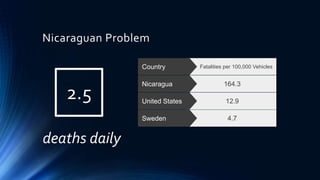
2.5
deaths daily
Sweden 4.7
Nicaragua 164.3
United States 12.9
Country Fatalities per 100,000 Vehicles
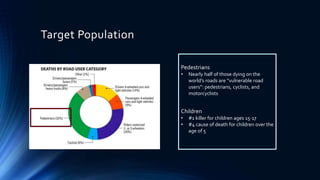
Target Population
Pedestrians
• Nearly half of those dying on the
world’s roads are “vulnerable road
users”: pedestrians, cyclists, and
motorcyclists
Children
• #1 killer for children ages 15-17
• #4 cause of death for children over the
age of 5
Safe Communities Model
“All human beings have an equal right to health and safety”
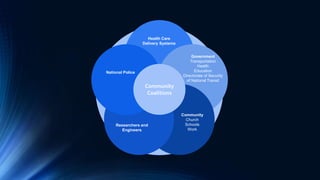
Health Care
Delivery Systems
Government
Transportation
Health
Education
Directorate of Security
of National Transit
Community
Church
Schools
Work
Researchers and
Engineers
National Police
Community
Coalitions
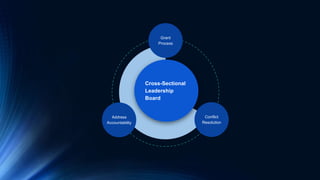
Cross-Sectional
Leadership
Board
Grant
Process
Address
Accountability
Conflict
Resolution
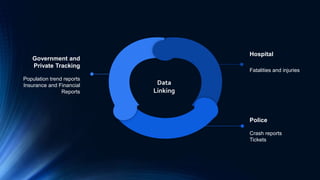
Police
Crash reports
Tickets
Hospital
Fatalities and injuries
Government and
Private Tracking
Population trend reports
Insurance and Financial
Reports
Data
Linking
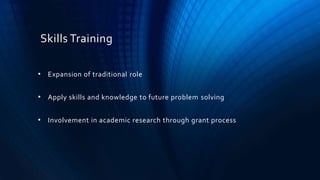
• Expansion of traditional role
• Apply skills and knowledge to future problem solving
• Involvement in academic research through grant process
Skills Training
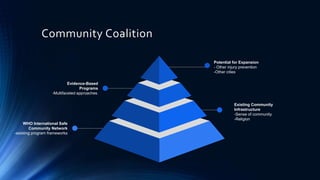
Community Coalition
Existing Community
Infrastructure
-Sense of community
-Religion
WHO International Safe
Community Network
-existing program frameworks
Potential for Expansion
- Other injury prevention
-Other cities
Evidence-Based
Programs
-Multifaceted approaches.
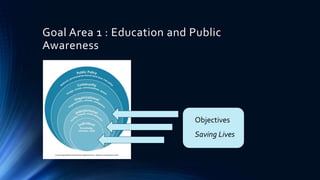
Goal Area 1 : Education and Public
Awareness
Objectives
Saving Lives
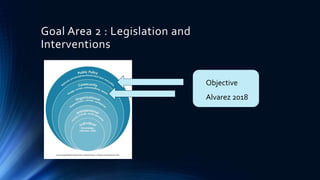
Goal Area 2 : Legislation and
Interventions
Objective
Alvarez 2018
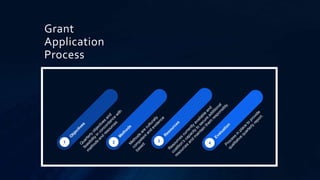
Grant
Application
Process
1 2 3
4
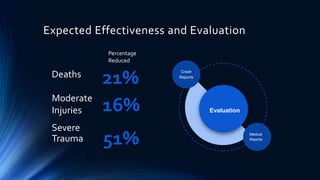
Expected Effectiveness and Evaluation
Severe
Trauma
Evaluation
Crash
Reports
Medical
Reports
Deaths
21%
Moderate
Injuries 16%
51%
Percentage
Reduced
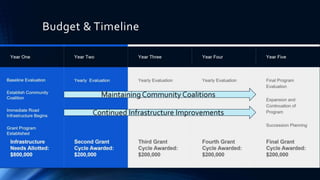
Budget & Timeline
15/05/2018
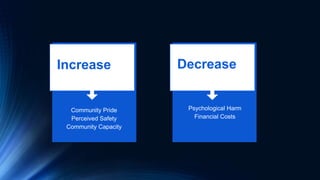
Increase
Community Pride
Perceived Safety
Community Capacity
Decrease
Psychological Harm
Financial Costs
Sustainability and Scalability
Lorem ipsum
tempus
Lorem ipsum congue tempus
Lorem ipsum
tempus
Lorem ipsum congue
tempus
Lorem ipsum
tempus
Lorem ipsum congue tempus
Lorem ipsum
tempus
Lorem ipsum congue
tempus
Lorem ipsum
tempus
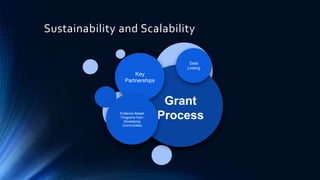
Grant
Process
Key
Partnerships
Evidence Based
Programs from
Developing
Communities
Data
Linking
Future Outlook
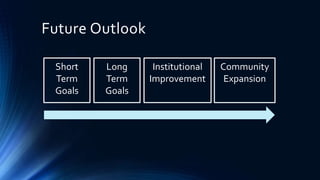
Short
Term
Goals
Long
Term
Goals
Institutional
Improvement
Community
Expansion
Improving Road Safety through
Community Coalitions
Appendix
Community Coalitions
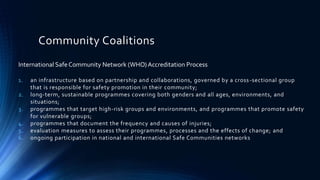
International SafeCommunity Network (WHO) Accreditation Process
1. an infrastructure based on partnership and collaborations, governed by a cross-sectional group
that is responsible for safety promotion in their community;
2. long-term, sustainable programmes covering both genders and all ages, environments, and
situations;
3. programmes that target high-risk groups and environments, and programmes that promote safety
for vulnerable groups;
4. programmes that document the frequency and causes of injuries;
5. evaluation measures to assess their programmes, processes and the effects of change; and
6. ongoing participation in national and international Safe Communities networks
Goal Areas and the Evidence Based
Programs
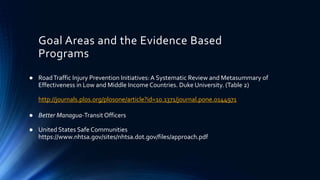
● RoadTraffic Injury Prevention Initiatives:A Systematic Review and Metasummary of
Effectiveness in Low and Middle Income Countries. Duke University. (Table 2)
http://journals.plos.org/plosone/article?id=10.1371/journal.pone.0144971
● Better Managua-Transit Officers
● United States Safe Communities
https://www.nhtsa.gov/sites/nhtsa.dot.gov/files/approach.pdf
Scalability
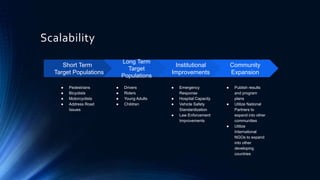
Short Term
Target Populations
● Pedestrians
● Bicyclists
● Motorcyclists
● Address Road
Issues
Long Term
Target
Populations
● Drivers
● Riders
● Young Adults
● Children
Institutional
Improvements
● Emergency
Response
● Hospital Capacity
● Vehicle Safety
Standardization
● Law Enforcement
Improvements
Community
Expansion
● Publish results
and program
plans
● Utilize National
Partners to
expand into other
communities
● Utilize
International
NGOs to expand
into other
developing
countries
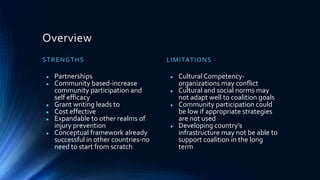
Overview
STRENGTHS
● Partnerships
● Community based-increase
community participation and
self efficacy
● Grant writing leads to
● Cost effective
● Expandable to other realms of
injury prevention
● Conceptual framework already
successful in other countries-no
need to start from scratch
LIMITATIONS
● Cultural Competency-
organizations may conflict
● Cultural and social norms may
not adapt well to coalition goals
● Community participation could
be low if appropriate strategies
are not used
● Developing country’s
infrastructure may not be able to
support coalition in the long
term

2018 UAB Case Competition (1st place Team): Team 9

  • 1.
    Granada Community Coalitions toPrevent Road Injury ANGELA CHIEH, JANA FORD, JANAKI KHER, YU-AN YANG, VIDUSHI SINHA
  • 5.
    Global Problem 90% ofthe world's fatalities on the roads occur in low- and middle-income countries, even though these countries have approximately 54% of the world's vehicles
  • 6.
    Nicaraguan Problem 2.5 deaths daily Sweden4.7 Nicaragua 164.3 United States 12.9 Country Fatalities per 100,000 Vehicles
  • 7.
    Target Population Pedestrians • Nearlyhalf of those dying on the world’s roads are “vulnerable road users”: pedestrians, cyclists, and motorcyclists Children • #1 killer for children ages 15-17 • #4 cause of death for children over the age of 5
  • 8.
    Safe Communities Model “Allhuman beings have an equal right to health and safety”
  • 9.
    Health Care Delivery Systems Government Transportation Health Education Directorateof Security of National Transit Community Church Schools Work Researchers and Engineers National Police Community Coalitions
  • 10.
  • 11.
    Police Crash reports Tickets Hospital Fatalities andinjuries Government and Private Tracking Population trend reports Insurance and Financial Reports Data Linking
  • 12.
    • Expansion oftraditional role • Apply skills and knowledge to future problem solving • Involvement in academic research through grant process Skills Training
  • 13.
    Community Coalition Existing Community Infrastructure -Senseof community -Religion WHO International Safe Community Network -existing program frameworks Potential for Expansion - Other injury prevention -Other cities Evidence-Based Programs -Multifaceted approaches.
  • 14.
    Goal Area 1: Education and Public Awareness Objectives Saving Lives
  • 15.
    Goal Area 2: Legislation and Interventions Objective Alvarez 2018
  • 16.
  • 17.
    Expected Effectiveness andEvaluation Severe Trauma Evaluation Crash Reports Medical Reports Deaths 21% Moderate Injuries 16% 51% Percentage Reduced
  • 18.
  • 19.
  • 20.
    Increase Community Pride Perceived Safety CommunityCapacity Decrease Psychological Harm Financial Costs
  • 21.
    Sustainability and Scalability Loremipsum tempus Lorem ipsum congue tempus Lorem ipsum tempus Lorem ipsum congue tempus Lorem ipsum tempus Lorem ipsum congue tempus Lorem ipsum tempus Lorem ipsum congue tempus Lorem ipsum tempus Grant Process Key Partnerships Evidence Based Programs from Developing Communities Data Linking
  • 22.
  • 23.
    Improving Road Safetythrough Community Coalitions
  • 24.
  • 25.
    Community Coalitions International SafeCommunityNetwork (WHO) Accreditation Process 1. an infrastructure based on partnership and collaborations, governed by a cross-sectional group that is responsible for safety promotion in their community; 2. long-term, sustainable programmes covering both genders and all ages, environments, and situations; 3. programmes that target high-risk groups and environments, and programmes that promote safety for vulnerable groups; 4. programmes that document the frequency and causes of injuries; 5. evaluation measures to assess their programmes, processes and the effects of change; and 6. ongoing participation in national and international Safe Communities networks
  • 26.
    Goal Areas andthe Evidence Based Programs ● RoadTraffic Injury Prevention Initiatives:A Systematic Review and Metasummary of Effectiveness in Low and Middle Income Countries. Duke University. (Table 2) http://journals.plos.org/plosone/article?id=10.1371/journal.pone.0144971 ● Better Managua-Transit Officers ● United States Safe Communities https://www.nhtsa.gov/sites/nhtsa.dot.gov/files/approach.pdf
  • 27.
    Scalability Short Term Target Populations ●Pedestrians ● Bicyclists ● Motorcyclists ● Address Road Issues Long Term Target Populations ● Drivers ● Riders ● Young Adults ● Children Institutional Improvements ● Emergency Response ● Hospital Capacity ● Vehicle Safety Standardization ● Law Enforcement Improvements Community Expansion ● Publish results and program plans ● Utilize National Partners to expand into other communities ● Utilize International NGOs to expand into other developing countries
  • 28.
    Overview STRENGTHS ● Partnerships ● Communitybased-increase community participation and self efficacy ● Grant writing leads to ● Cost effective ● Expandable to other realms of injury prevention ● Conceptual framework already successful in other countries-no need to start from scratch LIMITATIONS ● Cultural Competency- organizations may conflict ● Cultural and social norms may not adapt well to coalition goals ● Community participation could be low if appropriate strategies are not used ● Developing country’s infrastructure may not be able to support coalition in the long term

Editor's Notes

  • #3  Nicaragua is the the largest country in the Central American isthmus. With its beaches, architectural wonders, serene islands, and ecotourism, Nicaragua brings in around a million travelers annually. It is known as the “land of lakes and volcanoes,” and adventurers from far and wide seek solace and challenge among the nation’s terrain.
  • #4 However, for locals, life in Nicaragua paints a different story. As a result of poor regulation and infrastructure, transportation in Nicaragua can be a nightmare. Nicaragua is a leading country in number of traffic-related injuries.
  • #5 4 MINUTES This is the amount of time it takes for us to pop a bag of popcorn. It is the period of time during which one child, globally, dies due to a traffic related accident. Clearly, this very preventable cause of death needs to be addressed.
  • #6 Road traffic incidents are a global problem that disproportionately affect middle and low income countries. WHO has new resolution to decrease by 2030
  • #7 On average, 2.5 people in Nicaragua die as a result of accidents on the road every day. This translates to over 4% of total deaths. While the US and Sweden see fewer than 15 deaths per 100,000 vehicles, Nicaragua, reports 164.3 fatalities. Multiple factors have exacerbated the situation in Nicaragua. Some of the leading causes of road traffic accidents include Poor infrastructure, speeding, driving or walking under the influence, violating traffic laws, motorization, and rapid urbanizations.
  • #8 Our target populations are pedestrians and children because traffic fatalities have a high proportionate mortality in these groups. Pedestrians, of course, haven proven to be vulnerable road users and have high rates of fatality, as compared to drivers and passengers. Children have the highest proportionate mortality rate of all. Traffic accidents are the #1 killer for children ages 15-17, and #4 cause of death for children over the age of 5
  • #9 The Manifesto for Safe Communities states that "All human beings have an equal right to health and safety" The Safe Communities concept was introduced as a policy initiative during the First World Conference on Accident and Injury Prevention held in Stockholm, Sweden in September 1989. It was the response to a successful community approach to the problem of injury in Sweden in 1974. The project resulted in a 23% decrease in total population injury rates. As a result of this success, the safe community model was offically adopted by WHO and is used frequently in Public Health systems. It’s a community based intervention based on collaboration and partnership to bring about behavior change.
  • #10 Our proposed solution will use Community Coalitions based off of the Safe Community Model as the infrastructure to support our goals. These coalitions will contain partnerships with many entities, most notably health care delivery systems, National Police, the Nicaraguan Government, and community and professional groups listed above. Creating partnerships that span across the community has been shown to spread ownership of projects and delivery systems. This empowers the whole community by sharing successes and sharing challenges. We will also partner with existing campaigns to increase resources and manpower.
  • #11 The coalitions will have an overarching leadership board with representatives from each major partnership and other stakeholders (which include funding sources) .The leadership board will choose what projects to fund through the coalition grant program we will establish. Groups will be able to requisition funding for projects that address our goal areas. This leadership board will address conflict and ethical issues that may arise. For example, risks can include funding not properly used, and to combat this, there will be accountability tracked through financial evaluation measurements analyzed through this board. Yearly funding is contingent on measures of program success. Conflict between partnerships may also arise, and the board will be the ultimate decider of those cases.
  • #12 A major aspect of this coalition will involve data linking and information dissemination. The coalition, through its partnerships, will establish data linkage between police, hospitals, and government tracking systems already in place. This will allow complete data on effects of traffic incidents and determination of the locations of highest volume, and trends on fatality and injury behavior. From data linking, the coalition will be able to identify problems with community relevancy. The community will get to choose what they want addressed. Evaluation will also be more effective and not as expensive if data is linked. The feasibility of this depends on the infrastructure of current data systems and how easily/costly it is to link data. Data linking can benefit other areas outside the realm of traffic accident prevention as well, so it is a worthy investment
  • #13 Finally, through this coalition, skills training can occur for those who participate. Involving community partners expands each participant's role in traffic safety beyond their traditional role, increasing awareness of the problem as whole instead of what they see traditionally. Members can also apply skills and knowledge gained to future problem solving, empowering the community and increasing self efficacy of all involved.
  • #14 This framework is feasible. The basis of our coalition is the Safe Community Network. The WHO wants to expand this model into developing countries and will support our implementation process. There is increasing new evidence that these models can be adapted to developing countries like Thailand and Peru. We also build off of the unique Nicaraguan sense of community, especially large religious community, so we can use that to involve more people and build stronger relationships. Evidenced-Based, multifaceted approaches have been demonstrated to be more successful in developing countries. The program is also sustainable and has the potential to expand to other injury prevention goals, as has happened in aforementioned countries.
  • #15 We set up 2 goals for our plan using the social ecological model. This model considers the complex interplay between individual, community, and societal factors. It allows us to understand all the factors in each layer and set up our goals. Our first goal area is to improve public awareness to the road safety issue. In this part, we try to address it in the areas of individual, interpersonal and organization level. In Nicaragua, they have a school education program, called Saving Lives, which is a national government program implemented in partnership with other community entities. We will continue these efforts and fill the gaps of the implementation.
  • #16 Our goal area two is Legislative Support. In this part, we are trying to address pedestrian awareness and safety by expanding programs using legislation to supplement existing interventions. We will keep working with the existing program, Alvarez 2018, the Department of Road Engineering reviewed and coordinated with the City Hall of Managua on the installation of traffic lights at various intersections. Other installations, such as speed bump, pedestrian bridges, and community capacity building will also be included.
  • #17 We will use an informal grant application process to empower community coalitions to achieve their own objectives that support the programs overarching goals. From the start of our program we will support existing community groups who express interest and competency in achieving community efforts. Groups can propose their personal objectives, their plans for achieving these objectives, resources available to them, and quarterly evaluation. The grant application process will allow community groups to be directly involved without having an outside organization pushing regulations or processes upon them. The grant applications will also enable groups to become self-sustainable as they will be proper trained to apply for grants from international and national organizations. Objectives: Quarterly objectives and feasibility will these be according to their methods and resources Methods: Their methods are culturally competent and evidence based. Resources: What resources exist and what is the capacity of the group to secure more resources and maintain them responsibly Evaluation: Does the coalition have a process in place to provide us a qualitative quarterly report?
  • #18 Our evaluation measures include fatality rate, number and severity of injuries, and police tickets related to DUI,speeding, and seat belts. From Duke, researchers evaluated multiple education programs in developing nations and reported substantial decreases in deaths, injuries, and trauma demonstrated by the percentages seen here. With successful implementation of our program we plan to either reach or surpass these goals.
  • #19 During year 1, 40% of our budget will be used to improve road infrastructure where immediate dangerous road hazards are addressed including potholes, poor illumination, and proper signage.We understand that people are dying right now. To remedy this problems, we have allocted a large portion of our budget to immediately improve infrastructure 10% of our funds are designated towards operations which will go to establishing and maintaining the community coalition and implementation of the data linking process between emergency services, police, and government tracking services throughout the five year timespan. As we build alliances with coalitions they will collaborate on implementation programs and help further customize any community features. The remaining 50% will go towards creation and implementation of the grant application process where grants will be awarded on a needs basis with an estimated target of $200,000 allocation each year. The Evaluations of previously mentioned measures will be conducted and necessary modifications will be made on a yearly basis. Year 5 will include final evaluation of program and formation of a succession plan to insure its expansion and continuation of the program into other major cities in Nicaragua like Managua where injuries from road traffic accidents are highly prevalent.
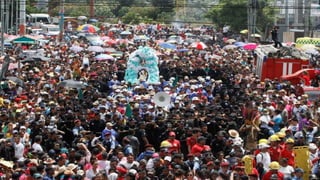
  • #20 In response to the UNICEF grant, we will work with local community partners to prioritize child pedestrian safety. We’ve developed a program that will be conducted during la celebracion de santo domingo – the celebration of saint dominic- which occurs in August, in the city of Managua. This event is a religious and cultural event that honors Patron Saint Dominc. This is an extremely traffic heavy time of the year already, and the festival brings together thousands of people. In addition, we will set up first response tents as an immediate effort to relieve injuries during this holiday season. We will work with local hospitals to train healthcare professionals on emergency medical protocol. We will also deliver safety helmets to children who do not have them, in order to 1) raise awareness of road safety and 2) better equip children to avoid injury in the future.
  • #21 We expect our program to cause significant economic and social changes in the city of Granada. Currently, in Nicaragua, approximately 5% of the GDP is hijacked from the consequences of traffic accidents. After our program, we expect to see a decrease in this proportion creating the opportunity for investments in areas such as healthcare, education, and public safety. Not only does the capacity of our community increase, but important psychological factors such as community pride and perceived safety increase as well. And the factors have tangible effects on productivity and health. We expect to see a decrease in financial burden on the individual, family, and community level as a result of our program. These financial resources can be reinvested in education, nutrition, and entrepreneurship.
  • #22 Our program is sustainable and scalable for many reasons, but mostly because of the training and practice we provide to the community coalitions. We provide skills training and require them to apply for grants and report qualitatively to our office quarterly. before. These coalitions are designed to become independent and will have the ability to live beyond our support through national international grant programs. We set up key community partnerships in the areas that can expand to include larger national and international groups. We also set up a robust data linking system that can be used not only for our own evaluation purposes but may also provide a valuable service other community interest groups. Finally our intervention programs are created from evidence based programs implemented in developing countries. A meta-analysis by Duke University determined these to be effective.
  • #23 Our program is designed for sustainability and scalability. Through the skills training and resources provided to our coalitions they will be able to move forward to tackle long term issues concerning other target populations such as young adults and mini buses. Institutional improvements are also sorely needed in the areas of emergency medicine response, hospital capacity to care for trauma, vehicle and child safety regulation, and law enforcement effectiveness. Finally, we plan to publish our methods and results for other communities to use as a resource. We hope with the success of our coalitions, the Nicaraguan government, other local municipalities, and developing countries will recognize the effectiveness of this program and implement it in their own domains.
  • #24 In We focus on the most vulnerable populations in Nicaragua, children and pedestrians. When you think past the numbers, children and pedestrians are not only vulnerable to traffic injuries but are likely also the populations most vulnerable to malnutrition, disease, and disparity. We will be able to reduce the burden on this intensely vulnerable population by saving approximately 200 lives per year. And the price for saving that life- only $10,000. Our model works because it is evidence based, it involves the community intensely, and the program is designed to become independent from us within five years. We believe our model is so well planned in fact that these coalitions will be empowered to take on additional traffic injury issues or replicated to address other major public health problems.
  • #27 931 deaths per year from 2013 from WHO and we expect a 20% decrease it this which about 200.
  • #28 We are also supported by the WHO Safe Community Network. While we focus on our short term goals of improving roads especially in high traffic areas now
  • #29 Strengths: Partners: ALTO, Ministry of Health, Ministry of Safety, Ministry of Education Limitations: Cultural Competence