Megan Richard, Morgan Rozek, Alex Plazas, & Kane Agan
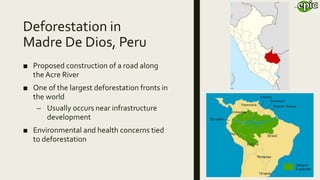
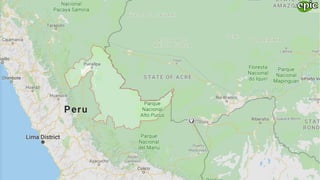
Deforestation in
Madre De Dios, Peru
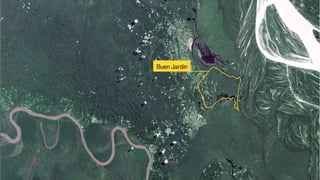
■ Proposed construction of a road along
the Acre River
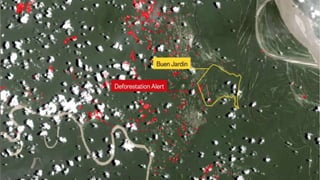
■ One of the largest deforestation fronts in
the world
– Usually occurs near infrastructure
development
■ Environmental and health concerns tied
to deforestation
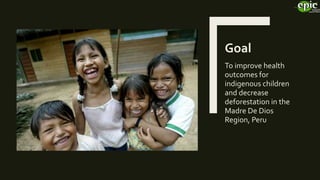
Goal
To improve health
outcomes for
indigenous children
and decrease
deforestation in the
Madre De Dios
Region, Peru
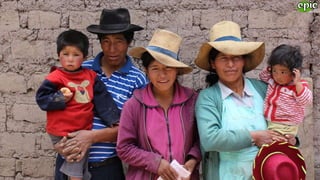
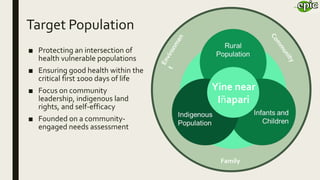
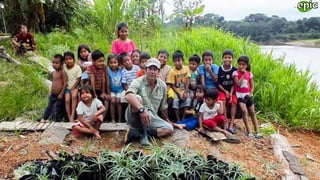
Family
Yine near
Iñapari
Target Population
■ Protecting an intersection of
health vulnerable populations
■ Ensuring good health within the
critical first 1000 days of life
■ Focus on community
leadership, indigenous land
rights, and self-efficacy
■ Founded on a community-
engaged needs assessment
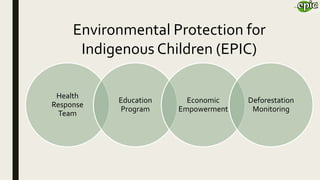
Health
Response
Team
Education
Program
Economic
Empowerment
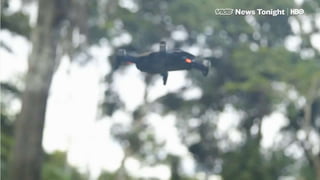
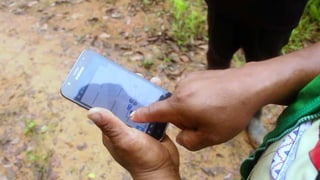
Deforestation
Monitoring
Environmental Protection for
Indigenous Children (EPIC)
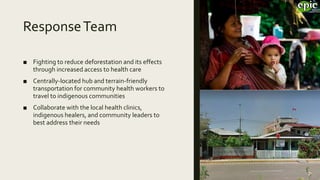
ResponseTeam
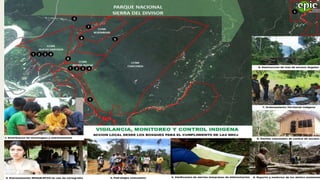
■ Fighting to reduce deforestation and its effects
through increased access to health care
■ Centrally-located hub and terrain-friendly
transportation for community health workers to
travel to indigenous communities
■ Collaborate with the local health clinics,
indigenous healers, and community leaders to
best address their needs
Services Provided
■ Supply and teach Oral RehydrationTherapy
■ VitaminA and Zinc oral supplements
■ Appropriate antibiotics and oxygen
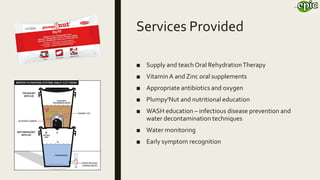
■ Plumpy'Nut and nutritional education
■ WASH education – infectious disease prevention and
water decontamination techniques
■ Water monitoring
■ Early symptom recognition
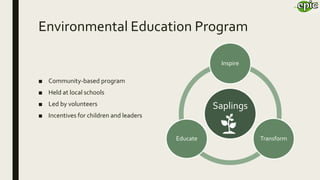
Environmental Education Program
Saplings
Inspire
TransformEducate
■ Community-based program
■ Held at local schools
■ Led by volunteers
■ Incentives for children and leaders
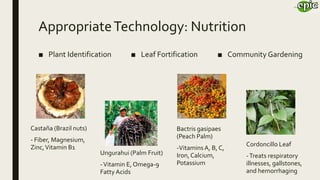
AppropriateTechnology: Nutrition
■ Plant Identification ■ Leaf Fortification ■ Community Gardening
Castaña (Brazil nuts)
- Fiber, Magnesium,
Zinc,Vitamin B1
Ungurahui (Palm Fruit)
-Vitamin E, Omega-9
Fatty Acids
Bactris gasipaes
(Peach Palm)
-VitaminsA, B, C,
Iron,Calcium,
Potassium
Cordoncillo Leaf
-Treats respiratory
illnesses, gallstones,
and hemorrhaging
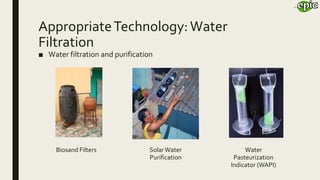
AppropriateTechnology:Water
Filtration
■ Water filtration and purification
Biosand Filters SolarWater
Purification
Water
Pasteurization
Indicator (WAPI)
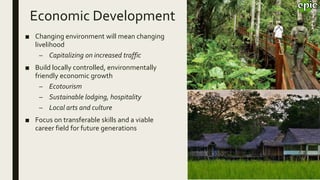
Economic Development
■ Changing environment will mean changing
livelihood
– Capitalizing on increased traffic
■ Build locally controlled, environmentally
friendly economic growth
– Ecotourism
– Sustainable lodging, hospitality
– Local arts and culture
■ Focus on transferable skills and a viable
career field for future generations
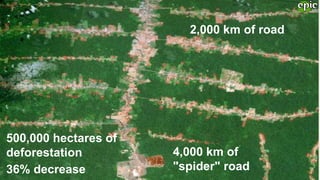
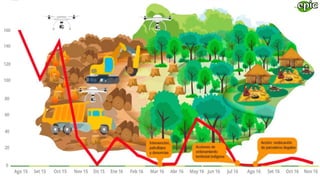
500,000 hectares of
deforestation 4,000 km of
"spider" road
2,000 km of road
36% decrease
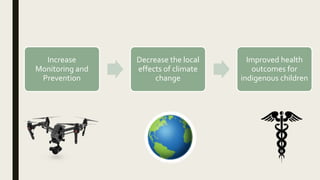
Increase
Monitoring and
Prevention
Decrease the local
effects of climate
change
Improved health
outcomes for
indigenous children
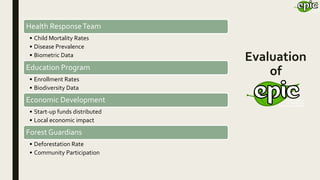
Evaluation
of
Health ResponseTeam
• Child Mortality Rates
• Disease Prevalence
• Biometric Data
Education Program
• Enrollment Rates
• Biodiversity Data
Economic Development
• Start-up funds distributed
• Local economic impact
Forest Guardians
• Deforestation Rate
• Community Participation
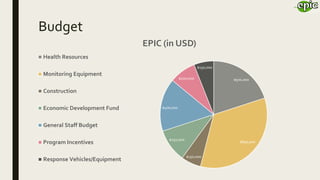
Budget
$500,000
$850,000
$150,000
$250,000
$400,000
$200,000
$150,000
EPIC (in USD)
Health Resources
Monitoring Equipment
Construction
Economic Development Fund
General Staff Budget
Program Incentives
Response Vehicles/Equipment
Key Partners
■ Indigenous
Community
■ Rainforest
Foundation
■ Peruvian
Government
■ Mass Design Group
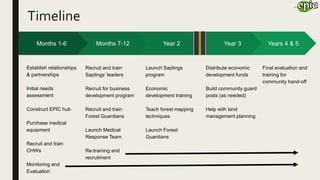
Timeline
Months 1-6
Establish relationships
& partnerships
Initial needs
assessment
Construct EPIC hub
Purchase medical
equipment
Recruit and train
CHWs
Monitoring and
Evaluation
Months 7-12
Recruit and train
Saplings’ leaders
Recruit for business
development program
Recruit and train
Forest Guardians
Launch Medical
Response Team
Re-training and
recruitment
Year 2
Launch Saplings
program
Economic
development training
Teach forest mapping
techniques
Launch Forest
Guardians
Year 3
Distribute economic
development funds
Build community guard
posts (as needed)
Help with land
management planning
Years 4 & 5
Final evaluation and
training for
community hand-off
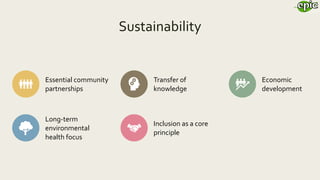
Sustainability
Essential community
partnerships
Transfer of
knowledge
Economic
development
Long-term
environmental
health focus
Inclusion as a core
principle
Narative
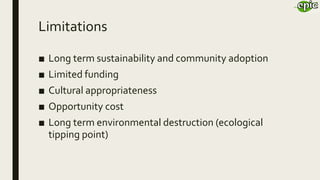
Limitations
■ Long term sustainability and community adoption
■ Limited funding
■ Cultural appropriateness
■ Opportunity cost
■ Long term environmental destruction (ecological
tipping point)
2019 Statewide Case Competition (1st place Team)

2019 Statewide Case Competition (1st place Team)

Editor's Notes

  • #6 “When it comes to environmental destruction and its resulting health disparities, indigenous communities are impacted first and worst. This project is
  • #8 How to get the building built