Teacher Education
and Mobile
Learning Technologies
SchoolNet South Africa
GDE - 8th February 2016
History of
SchoolNet
• Who are we and
• where do we come from?
Learning
Technologies
• Some SchoolNet
Experiences of models
Current
Developments
• South African
and International
frameworks
Overview of presentation
beginnings….
• 19 years experience of using technology in education
Non-Profit NGO
• “Creating communities of teachers and learners using ICT to enhance
teaching and learning”
SchoolNet Mission
• SchoolNet grew from volunteer provincial teacher organisations
Networking teachers
believes in ………….
• the most effective way of changing existing pedagogies
Innovative technologies
• Creativity and Innovation - Critical Thinking and Problem Solving - Communication and Collaboration
21st Century learning
• Principals, SMTs, teachers and district officials own the process of systemic change using
technology effectively – through change leadership and peer support
Sustainability
• Not allowing technology to dictate but rather following teachers’ needs
Focusing on teaching and learning
SchoolNet experiences - of mobile learning
ICT4RED – 6 500 learners, 350 teachers, 16 officials
Learning Gains through Play in the Primary – 2 provinces
SchoolNet’s A Journey with Tablets
Intel Teach: Tablets in the Classroom 2015
Individual school projects – Touchable Earth
CSIR – Meraka
Cofimvaba,
Eastern Cape
Arthur Mfebe
learners carry their
tablets to and
from school
Learning Gains through Play – positive findings
“If children do not learn the way
we teach, then we must teach the
way they learn” Ignacio Estrada
A one day course
teachers explore teaching strategies for
student centred tablet-based learning,
tablet management techniques in the
classroom.
collaborative models for teaching and
learning in a mobile environment.
Introduction to Tablets in the Classroom 2015
Individual School Projects
‘Using computers to learn - NOT
learning to use computers’
Inqolayolwazi Primary KZN
Lakeview Full Service Primary – Soweto
Peermont schools project
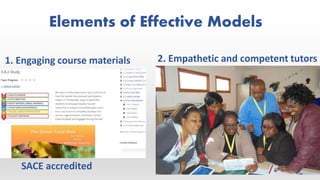
Elements of Effective Models
1. Engaging course materials 2. Empathetic and competent tutors
SACE accredited
Elements of Effective Models
3. Change Leadership
including district officials
4. Sustainability – champions and
communities of practice, peer support
Policy revisions 2016 – including TPACK and SAMR
UNESCO Teacher Competency
Framework
Professional Development Guidelines
for learning with Technologies 2016
In Summary
• Teaching and learning are top considerations – not hard or software
• Ensure balance between spending on technology and on training
• Innovative technologies force a change in pedagogies
• Give teachers a new zest for teaching
• Main focus is learner attainment – digital skills are just a by product
• Learners can be fast-tracked, using technologies effectively
• Promoting learner-centredness – leading to learner-driven activities
• Ensure sustainability by empowering champions and PLCs
Thank you
Janet Thomson
@JanetThomson and @SchoolNetSA
Janet Thomson
Janet@schoolnet.org.za
www.schoolnet.org.za

2016.02.08.gde

  • 1.
    Teacher Education and Mobile LearningTechnologies SchoolNet South Africa GDE - 8th February 2016
  • 2.
    History of SchoolNet • Whoare we and • where do we come from? Learning Technologies • Some SchoolNet Experiences of models Current Developments • South African and International frameworks Overview of presentation
  • 3.
    beginnings…. • 19 yearsexperience of using technology in education Non-Profit NGO • “Creating communities of teachers and learners using ICT to enhance teaching and learning” SchoolNet Mission • SchoolNet grew from volunteer provincial teacher organisations Networking teachers
  • 5.
    believes in …………. •the most effective way of changing existing pedagogies Innovative technologies • Creativity and Innovation - Critical Thinking and Problem Solving - Communication and Collaboration 21st Century learning • Principals, SMTs, teachers and district officials own the process of systemic change using technology effectively – through change leadership and peer support Sustainability • Not allowing technology to dictate but rather following teachers’ needs Focusing on teaching and learning
  • 6.
    SchoolNet experiences -of mobile learning ICT4RED – 6 500 learners, 350 teachers, 16 officials Learning Gains through Play in the Primary – 2 provinces SchoolNet’s A Journey with Tablets Intel Teach: Tablets in the Classroom 2015 Individual school projects – Touchable Earth
  • 7.
    CSIR – Meraka Cofimvaba, EasternCape Arthur Mfebe learners carry their tablets to and from school
  • 8.
    Learning Gains throughPlay – positive findings “If children do not learn the way we teach, then we must teach the way they learn” Ignacio Estrada
  • 10.
    A one daycourse teachers explore teaching strategies for student centred tablet-based learning, tablet management techniques in the classroom. collaborative models for teaching and learning in a mobile environment. Introduction to Tablets in the Classroom 2015
  • 11.
    Individual School Projects ‘Usingcomputers to learn - NOT learning to use computers’ Inqolayolwazi Primary KZN Lakeview Full Service Primary – Soweto Peermont schools project
  • 12.
    Elements of EffectiveModels 1. Engaging course materials 2. Empathetic and competent tutors SACE accredited
  • 13.
    Elements of EffectiveModels 3. Change Leadership including district officials 4. Sustainability – champions and communities of practice, peer support
  • 14.
    Policy revisions 2016– including TPACK and SAMR UNESCO Teacher Competency Framework Professional Development Guidelines for learning with Technologies 2016
  • 15.
    In Summary • Teachingand learning are top considerations – not hard or software • Ensure balance between spending on technology and on training • Innovative technologies force a change in pedagogies • Give teachers a new zest for teaching • Main focus is learner attainment – digital skills are just a by product • Learners can be fast-tracked, using technologies effectively • Promoting learner-centredness – leading to learner-driven activities • Ensure sustainability by empowering champions and PLCs
  • 16.
    Thank you Janet Thomson @JanetThomsonand @SchoolNetSA Janet Thomson Janet@schoolnet.org.za www.schoolnet.org.za

Editor's Notes

  • #5 Current partners – we also work with PDE’s and HEIs and run conferences
  • #8 Arthur Mfebe G12 learners carry their tablets to and from school
  • #9 Tested literacies of numeracy, visual literacy, oral communication, gross and fine motor coordination - control schools baseline far ahead as were the more well resourced schools – but now the two most disadvantaged schools have made the most gains. The playing field has been levelled !! Amazing link between cognitive development and motor development – if a courageous and innovative funder were available - we WOULD LOVE TO REPLICATE IN GAUTENG – even prepared to share funding because we believe in this learning technology as a game changer for levelling learning deficits in disadvantaged schools
  • #10 Designed by SchoolNet for all types of tablets – different logins for different devices - in response to poor courses being conducted in WCED in 2014 - but still focused on the capabilities / affordances of the tablet for teaching
  • #11 New course launched in 2015 - training of trainers this week in Gauteng from US Intel trainer
  • #12 Inqolayolwazi – Swedish Lutheran Church Isibongo – Touchable Earth digital Atlas project Peermont - we only did the evaluations of that project – not the training
  • #15 Provincial education departments will have responsibility for implementing the new guidelines – PTDIs DTDCs and PLCs All our courses were mapped to these two frameworks but in future will be mapped to SAMR and TPACK and the new guidelines - very focused on pedagogy and finally moving away from the technology focus
  • #16 Cliff face of a summary – and how not to design materials 