• Most of your students can read.
Why write stories?Why write stories?
Our students don’t read themOur students don’t read them
• Most of them will read something
that interests them.
• Focus on whatFocus on what’s new’s new
• Appeal to readersAppeal to readers’emotions’emotions
• Include facts & figuresInclude facts & figures
Become storytellersBecome storytellers
Types of Alternative CopyTypes of Alternative Copy
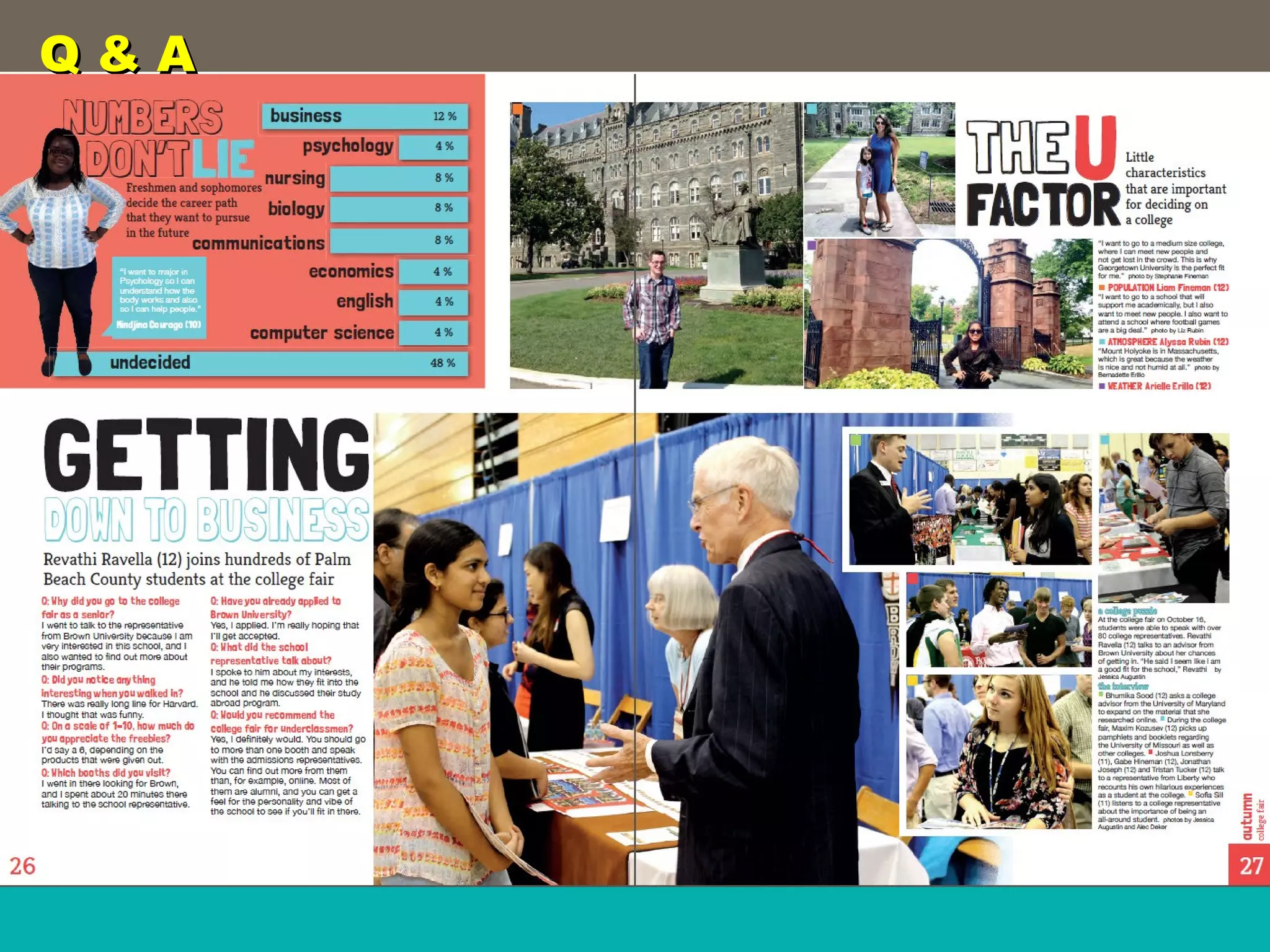
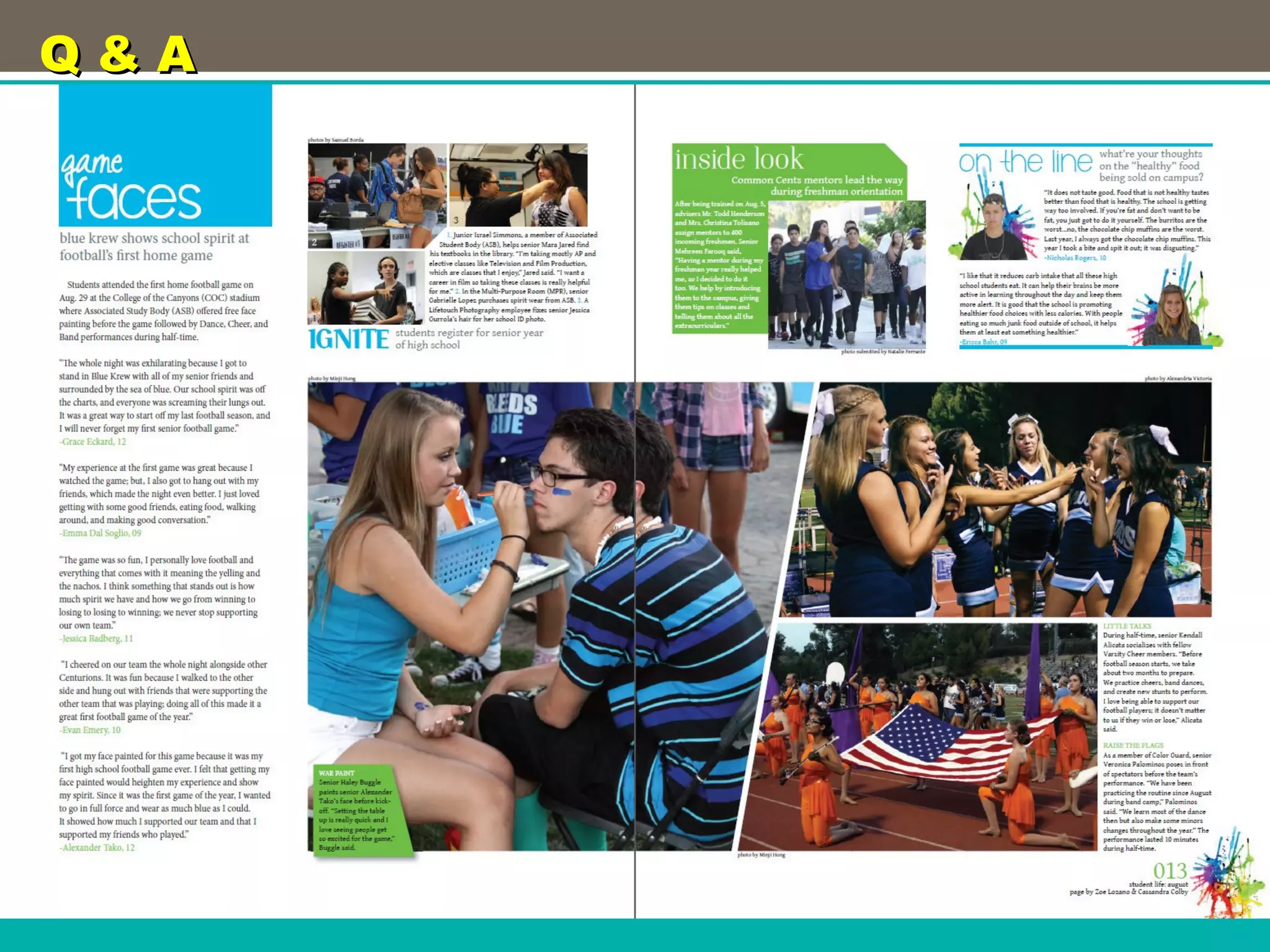
Q & AQ & A
• Find a person with a story to tell.Find a person with a story to tell.
• Frame questions so there is a beginning,Frame questions so there is a beginning,
a middle and an end to the story.a middle and an end to the story.
• These are not random questions.These are not random questions.
The goal is to capture the person’s story.The goal is to capture the person’s story.
Q & AQ & A
Q & AQ & A
Types of Alternative CopyTypes of Alternative Copy
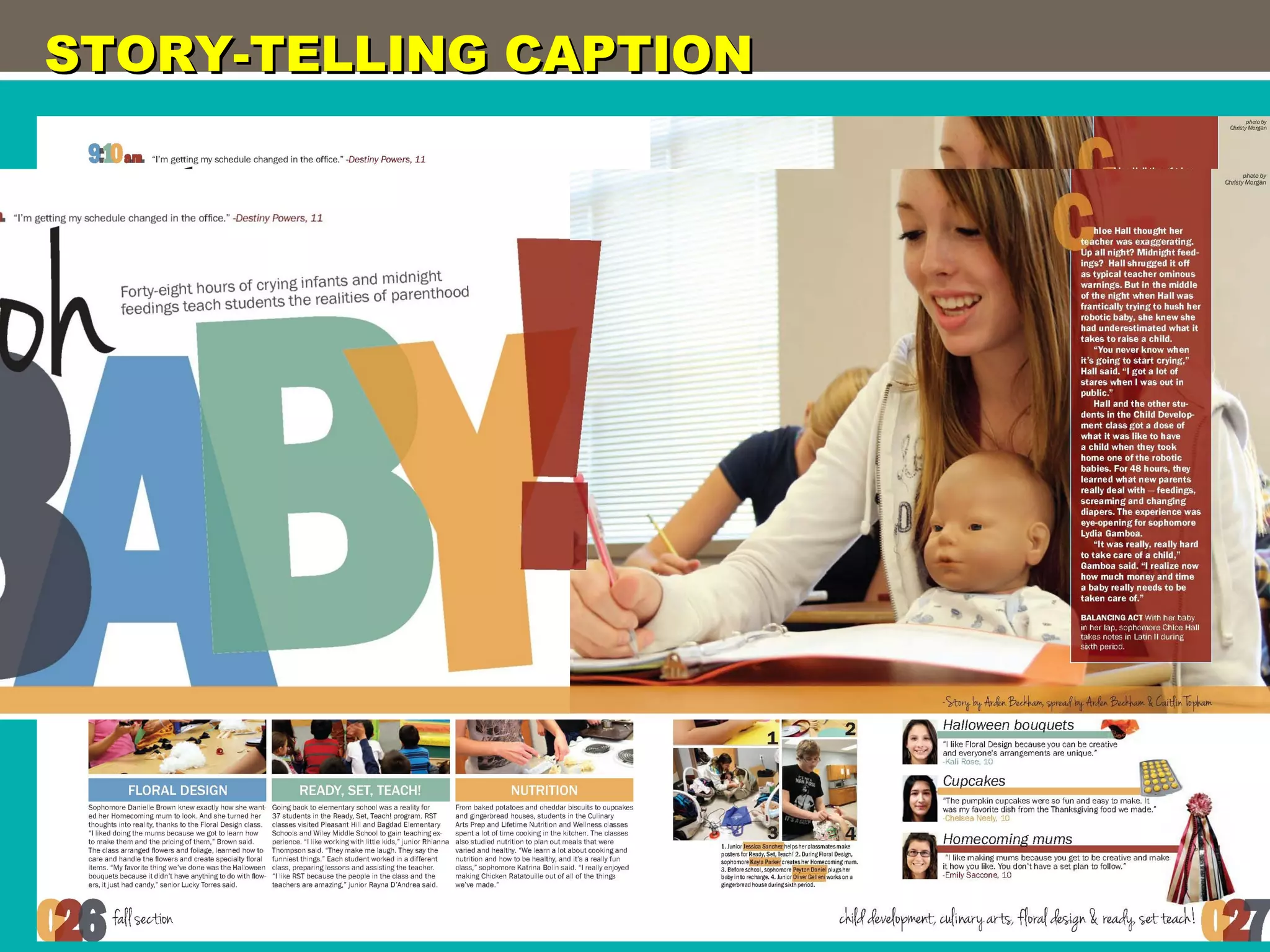
Story-telling CaptionStory-telling Caption
• Select a picture that will fascinate theSelect a picture that will fascinate the
readers.readers.
• Tell them more. Write a short featureTell them more. Write a short feature
story or relate an anecdotal, first-personstory or relate an anecdotal, first-person
account.account.
STORY-TELLING CAPTIONSTORY-TELLING CAPTION
Types of Alternative CopyTypes of Alternative Copy
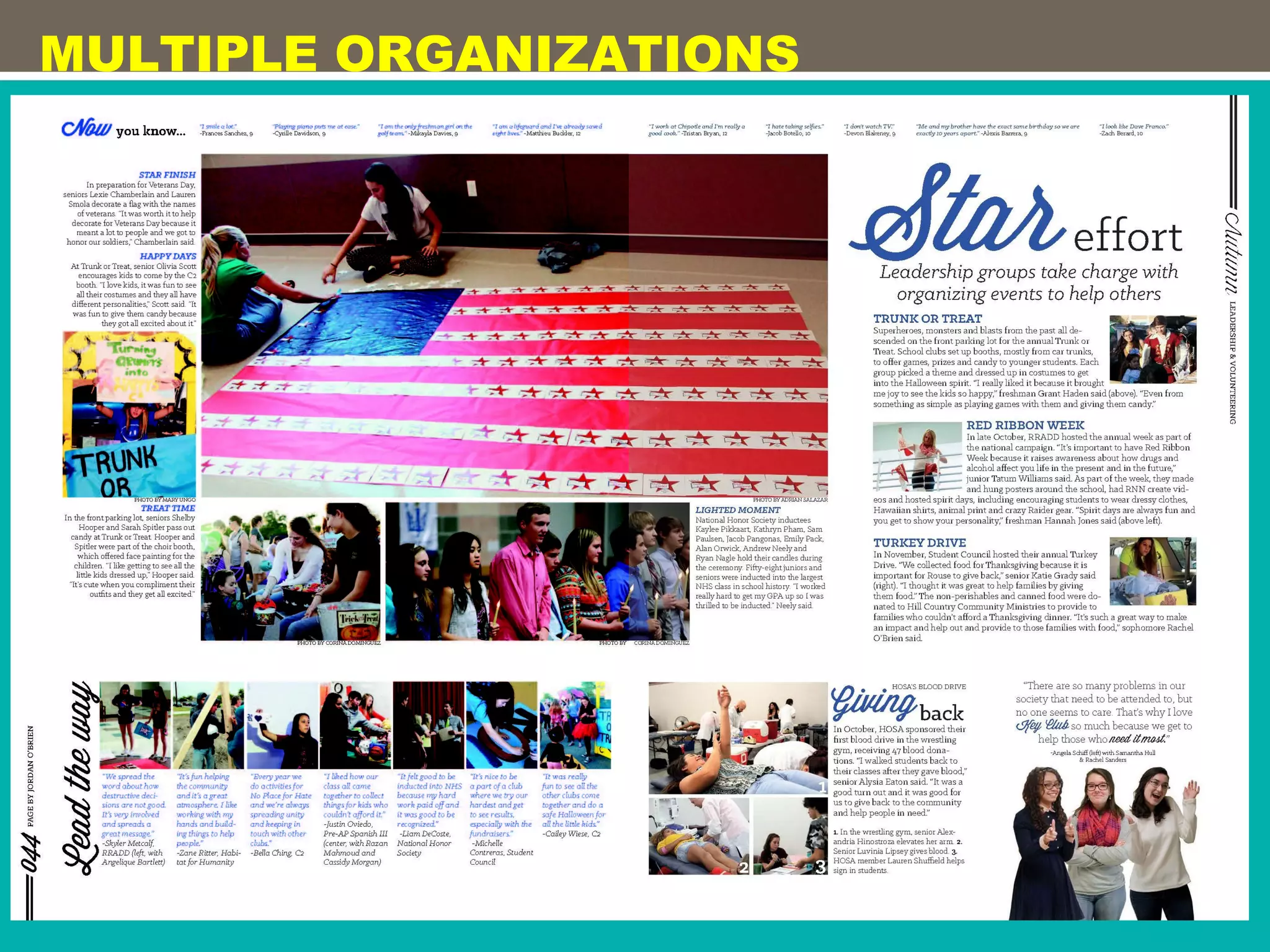
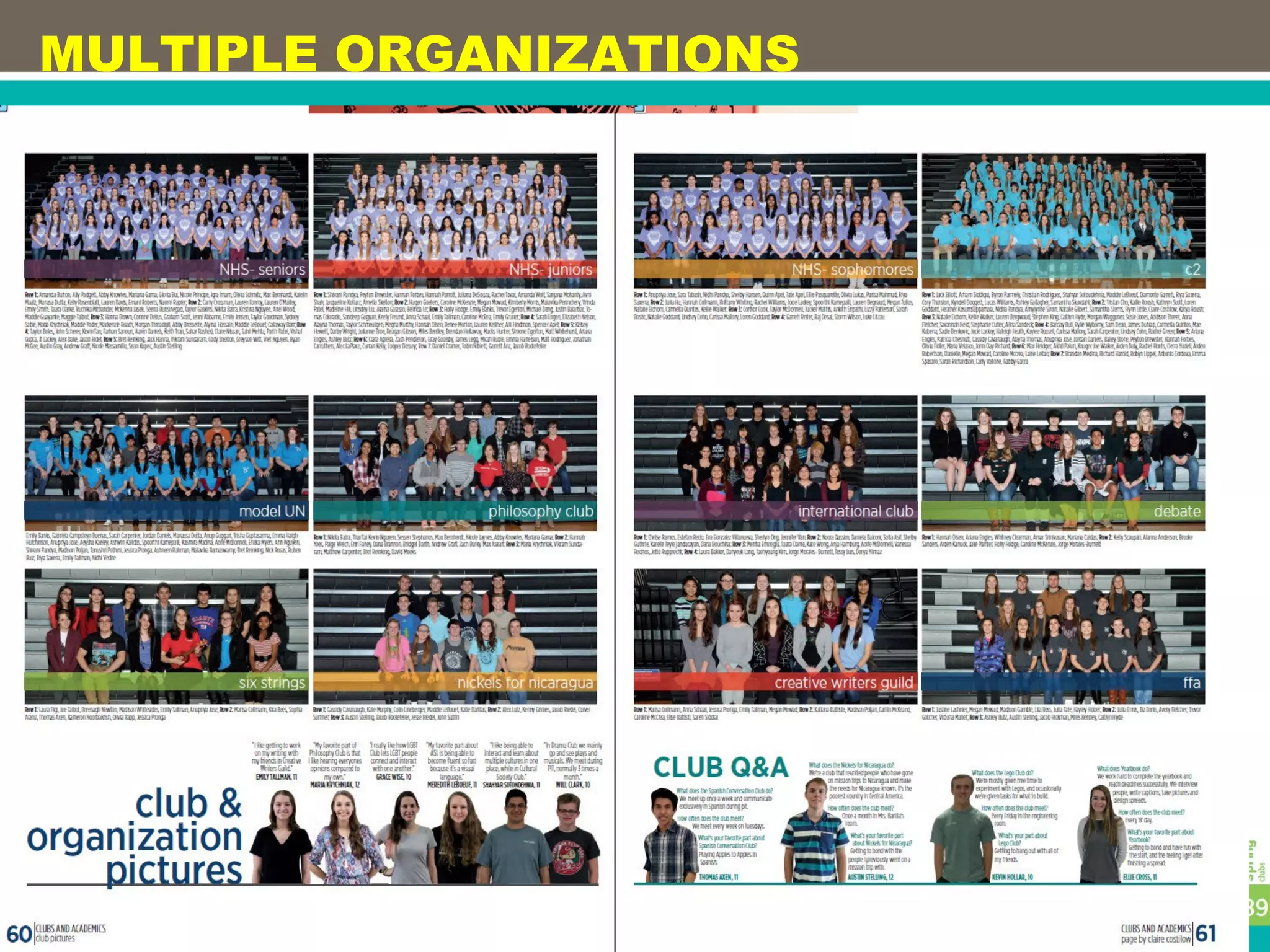
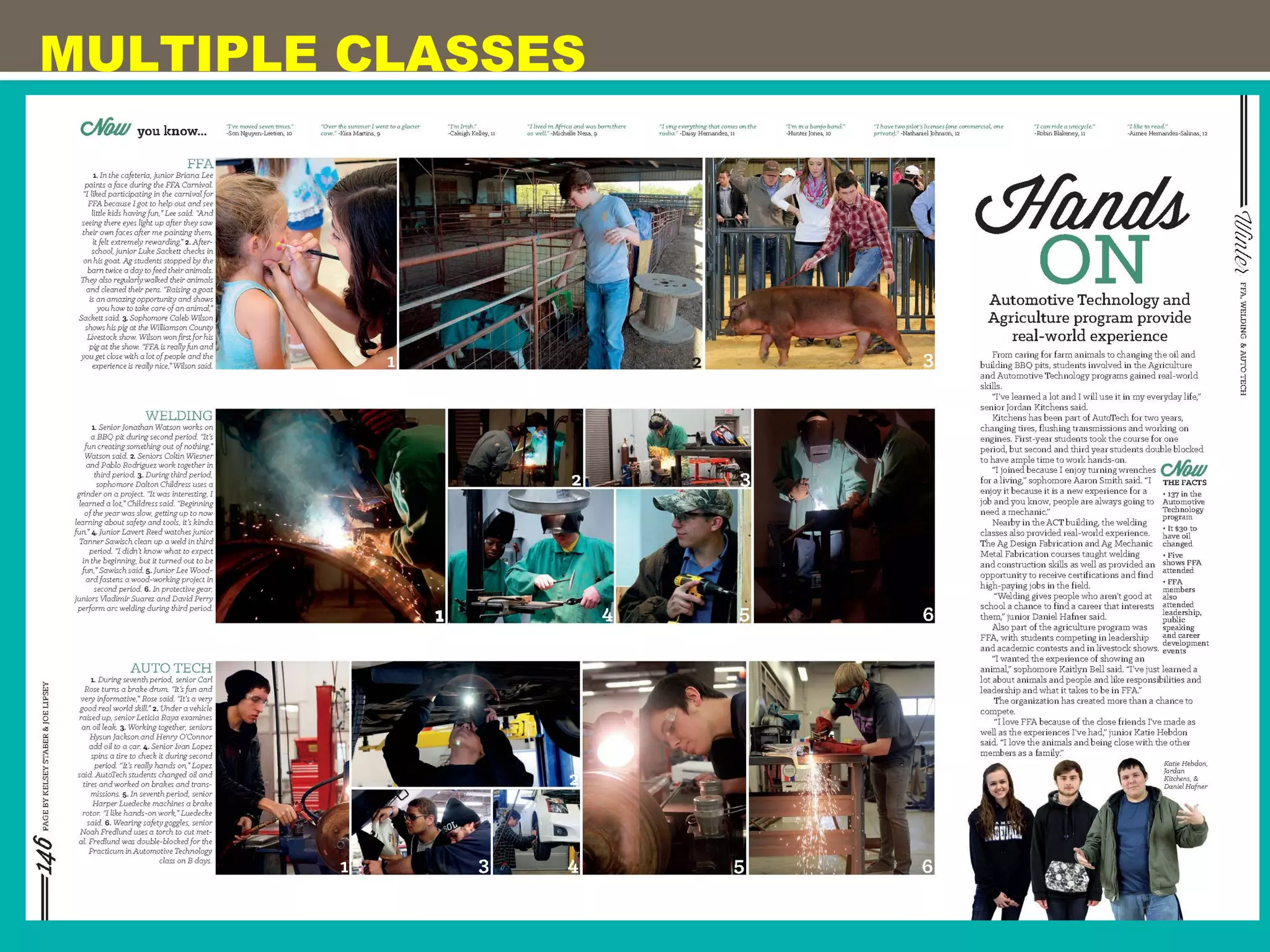
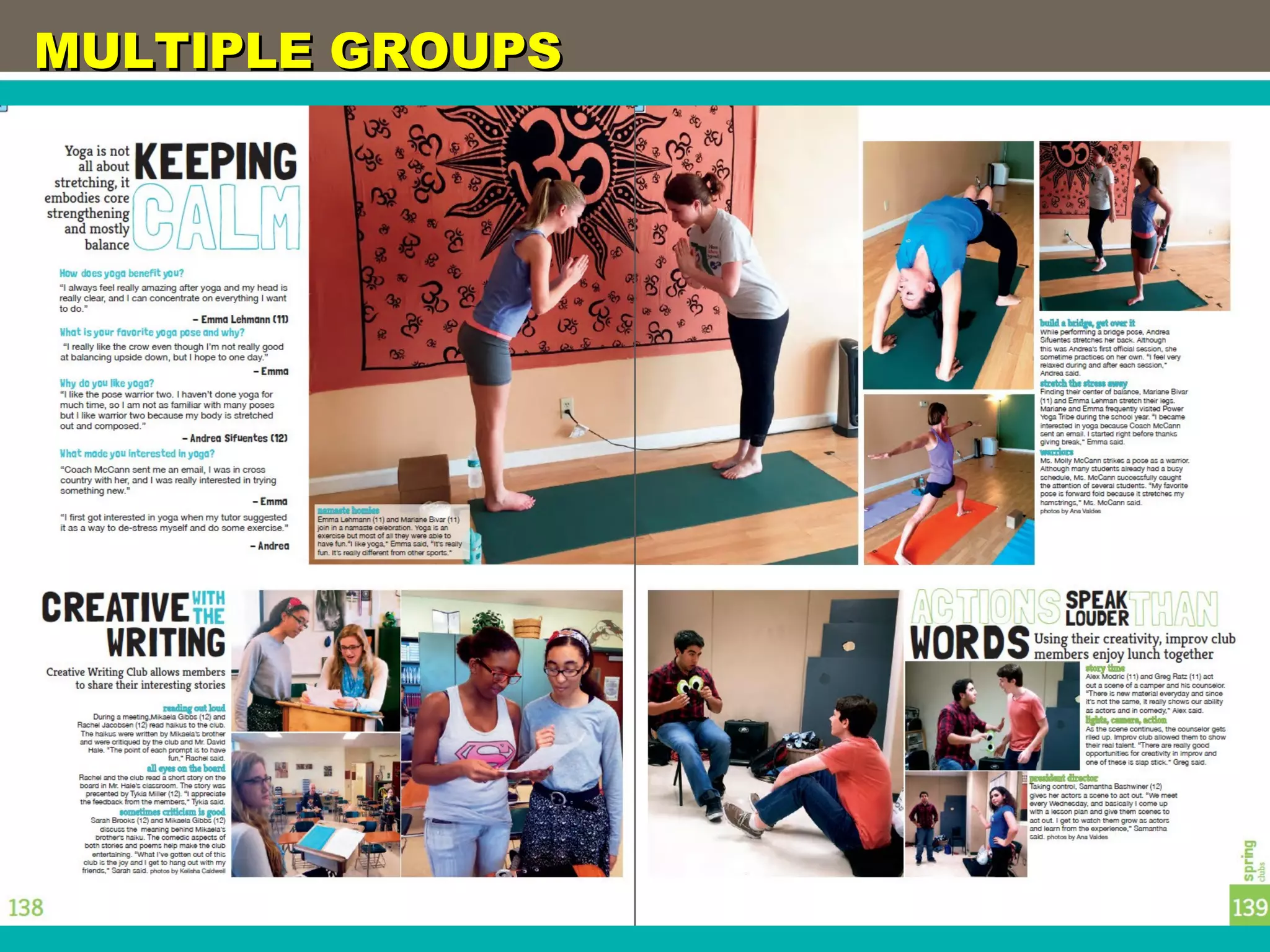
MultiplesMultiples
• When there are too many things toWhen there are too many things to
cover and too few pages to cover them,cover and too few pages to cover them,
run multiple sports, clubs and classes onrun multiple sports, clubs and classes on
one spread.one spread.
• Write 3-5 sentences for each one &Write 3-5 sentences for each one &
include a GREAT quote.include a GREAT quote.
MULTIPLE ORGANIZATIONS
MULTIPLE CLASSES
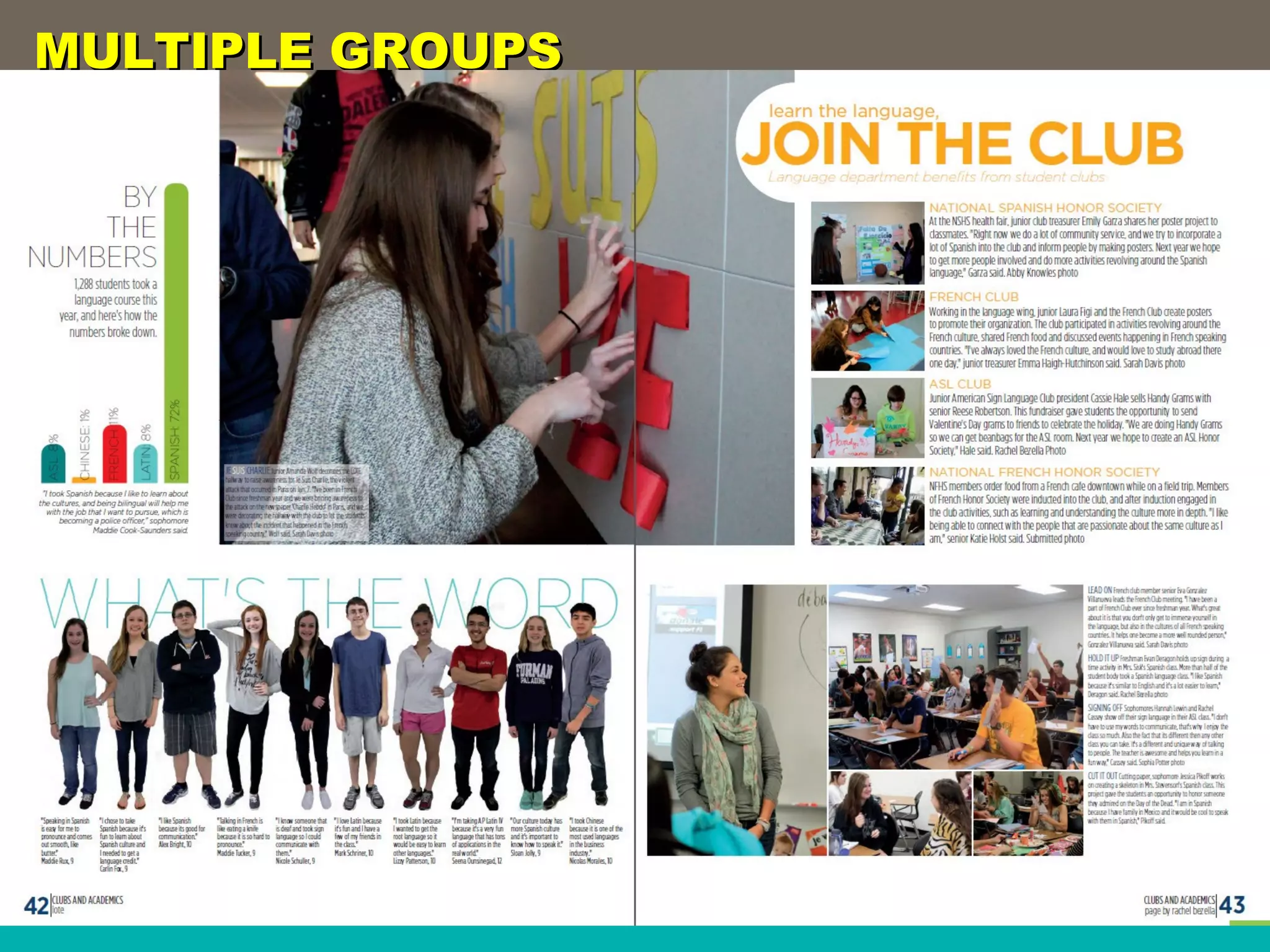
MULTIPLE GROUPSMULTIPLE GROUPS
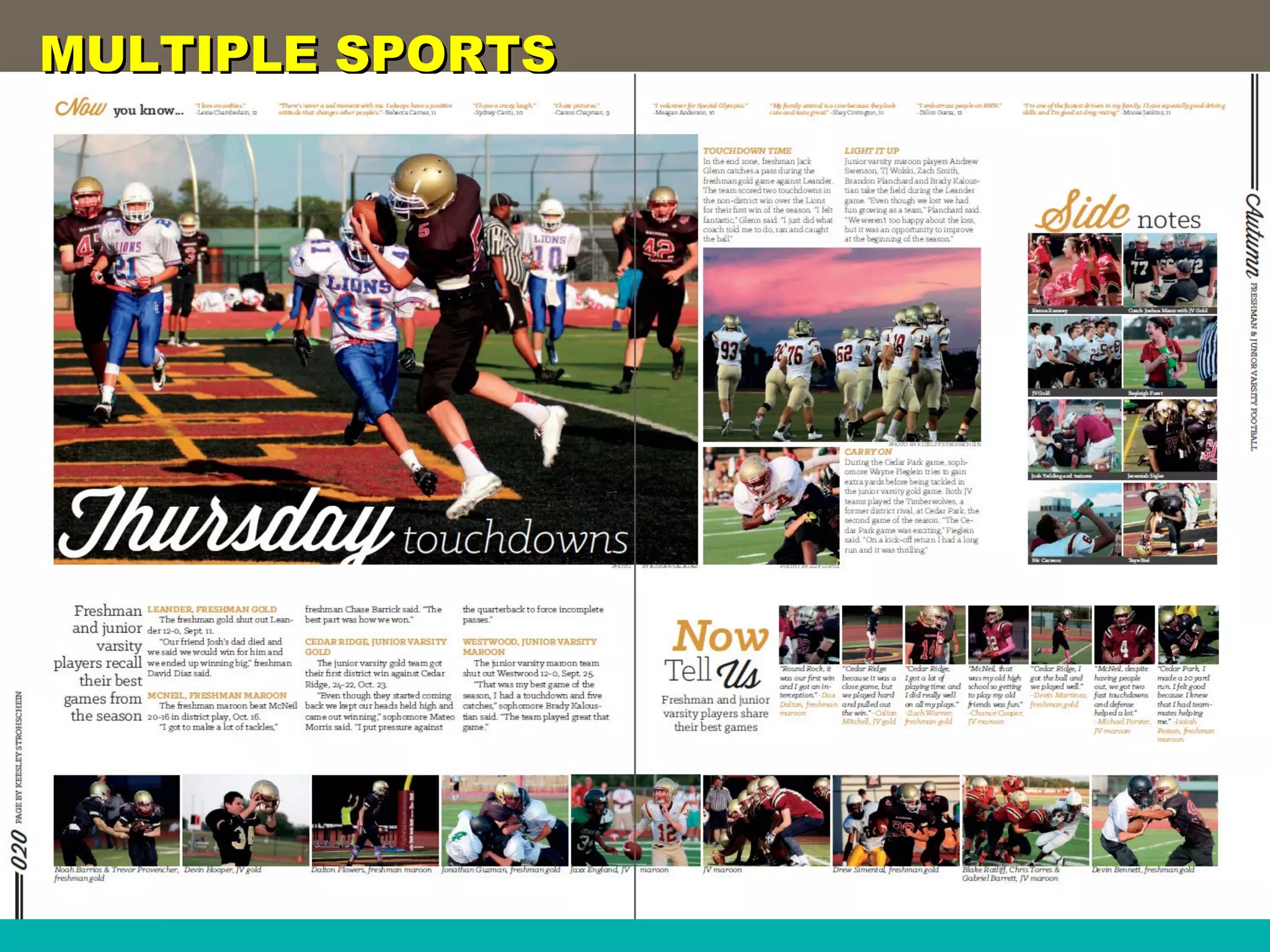
MULTIPLE SPORTSMULTIPLE SPORTS
Types of Alternative CopyTypes of Alternative Copy
QuotesQuotes
• If 12 witnesses see the same event,If 12 witnesses see the same event,
each one will offer a unique perspective.each one will offer a unique perspective.
• Include quotes from a wide variety ofInclude quotes from a wide variety of
students.students.
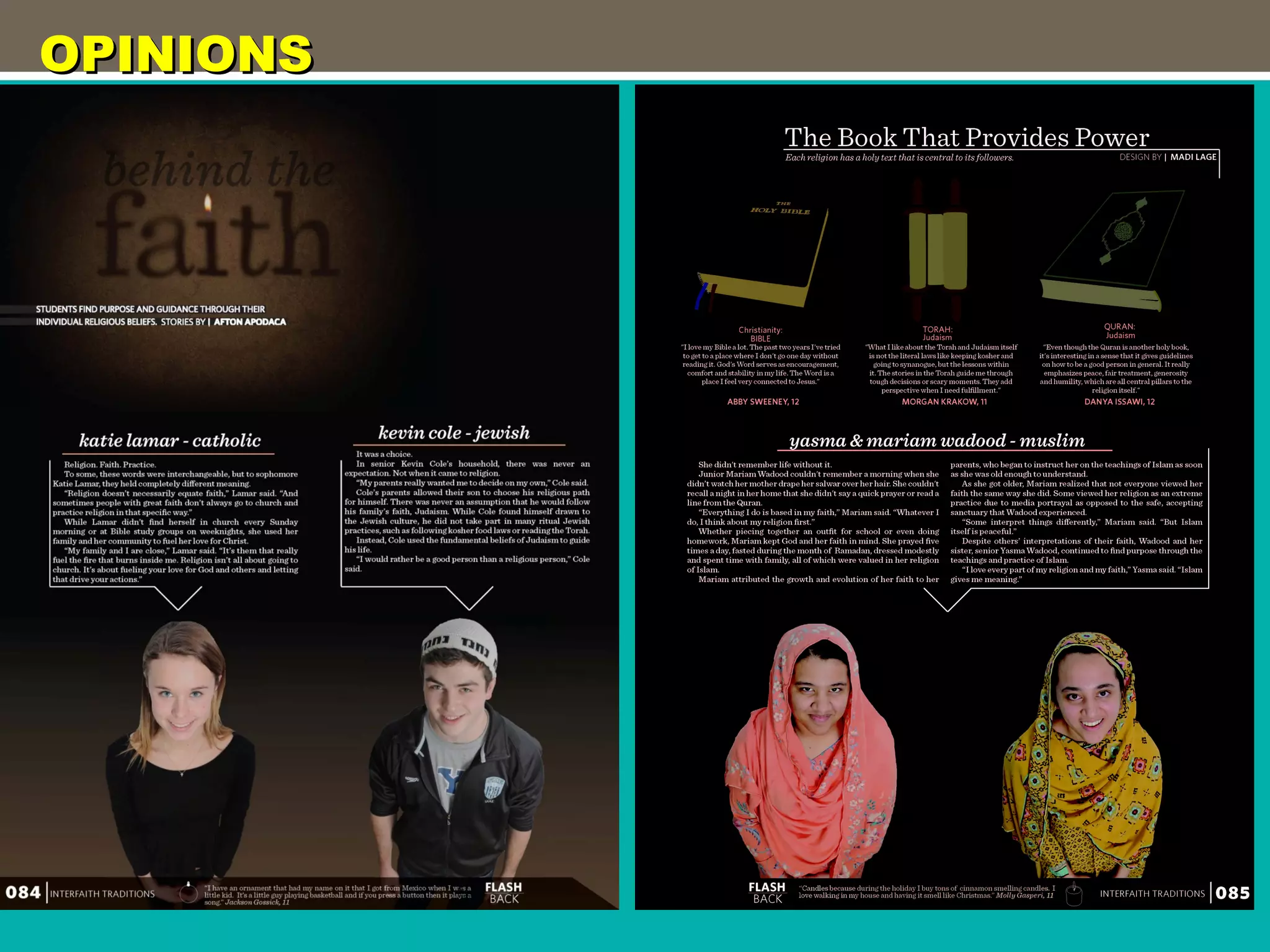
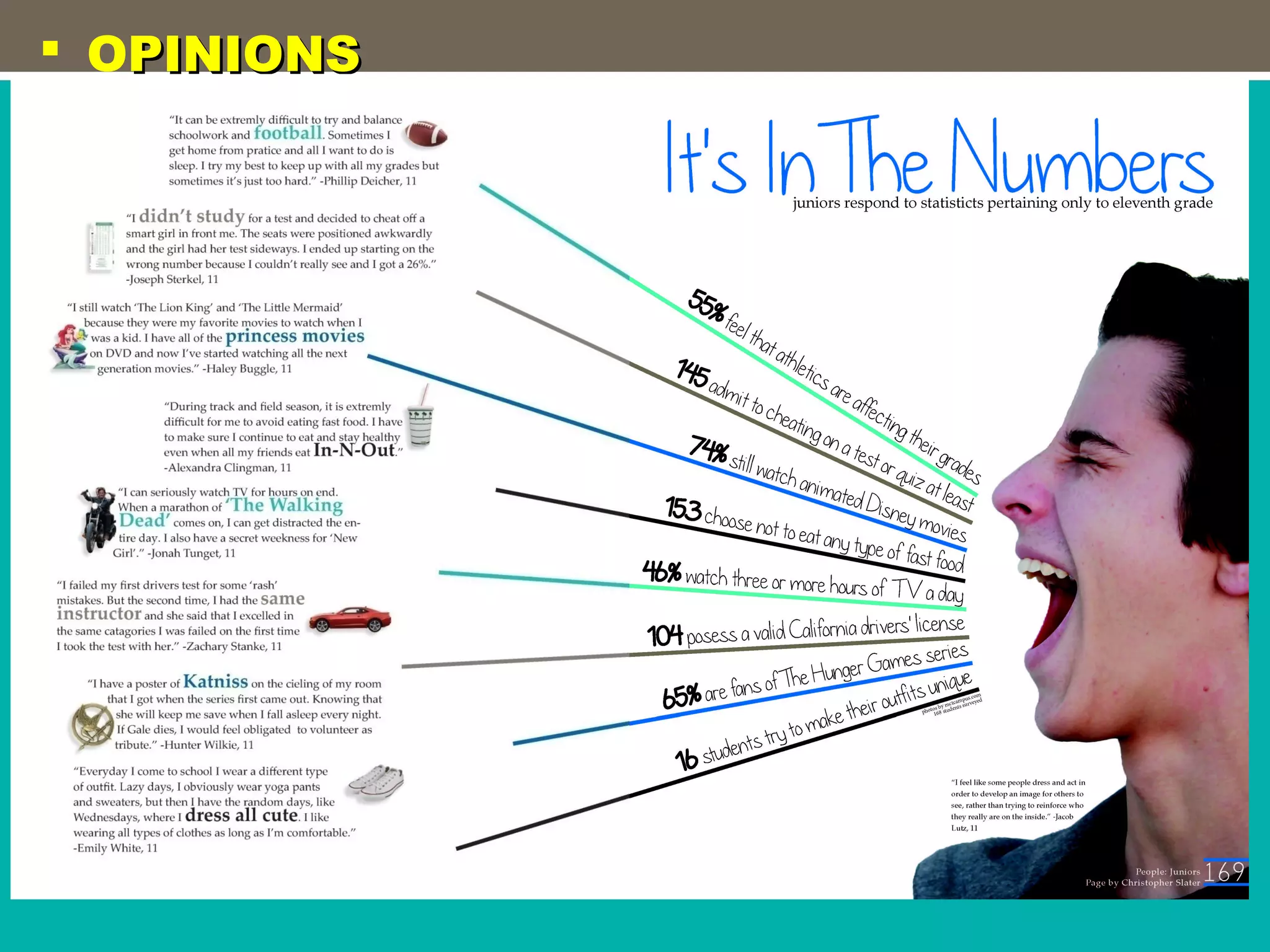
OPINIONSOPINIONS
 OPINIONSPINIONS
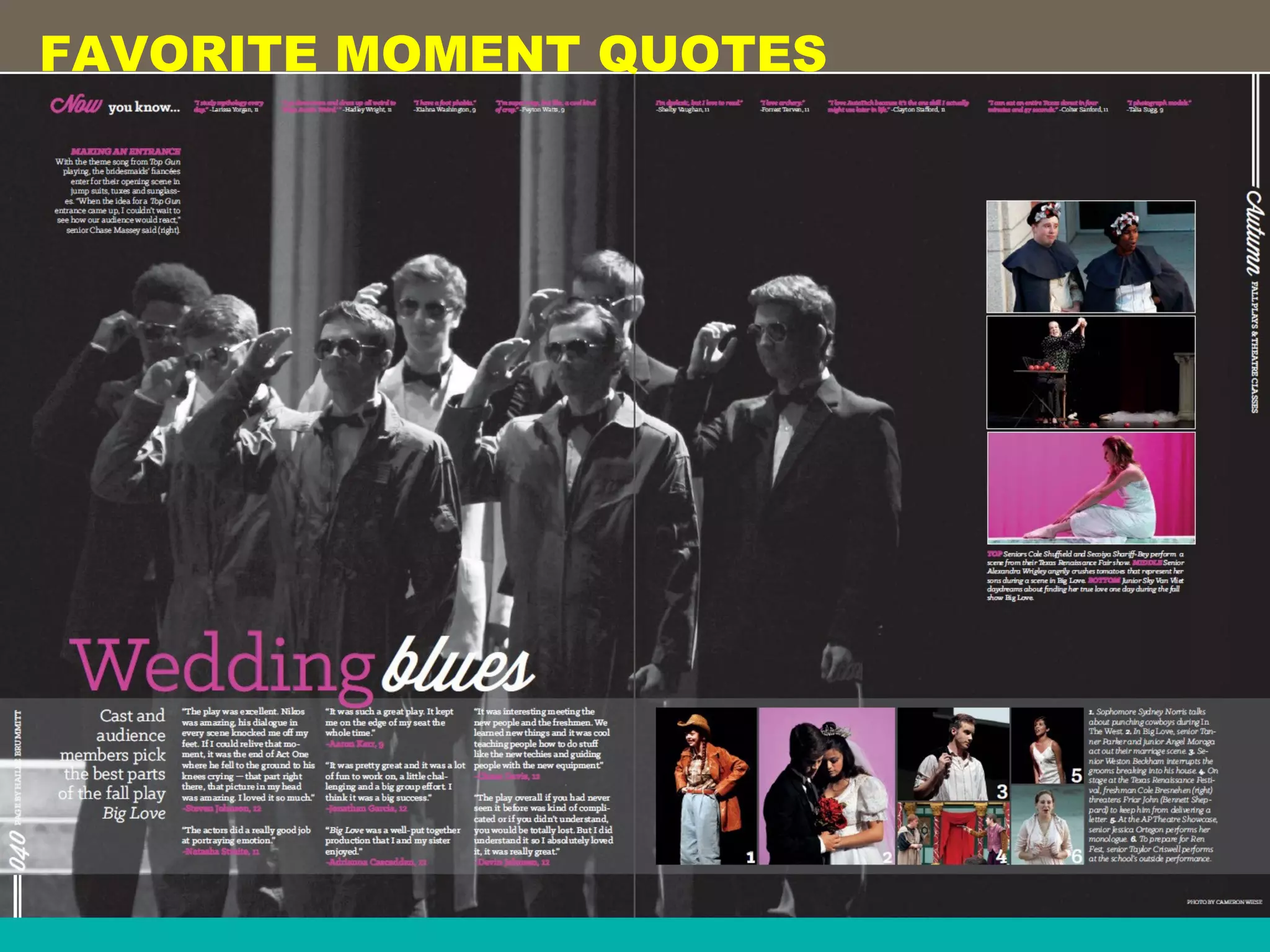
FAVORITE MOMENT QUOTES
Types of Alternative CopyTypes of Alternative Copy
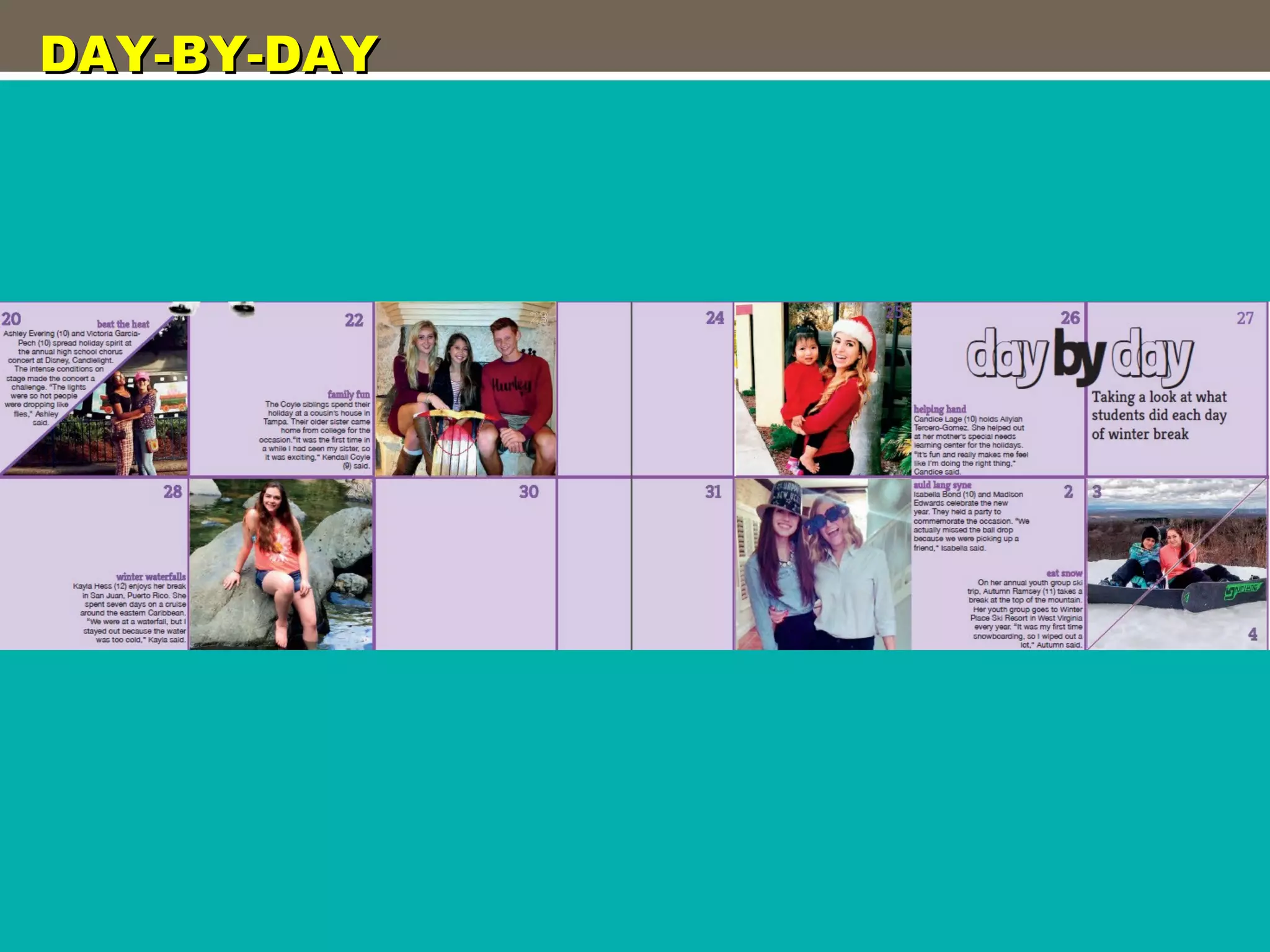
Day-by-dayDay-by-day
• This format provides a calendar-likeThis format provides a calendar-like
progression.progression.
• Include quotes from a wide variety ofInclude quotes from a wide variety of
students.students.
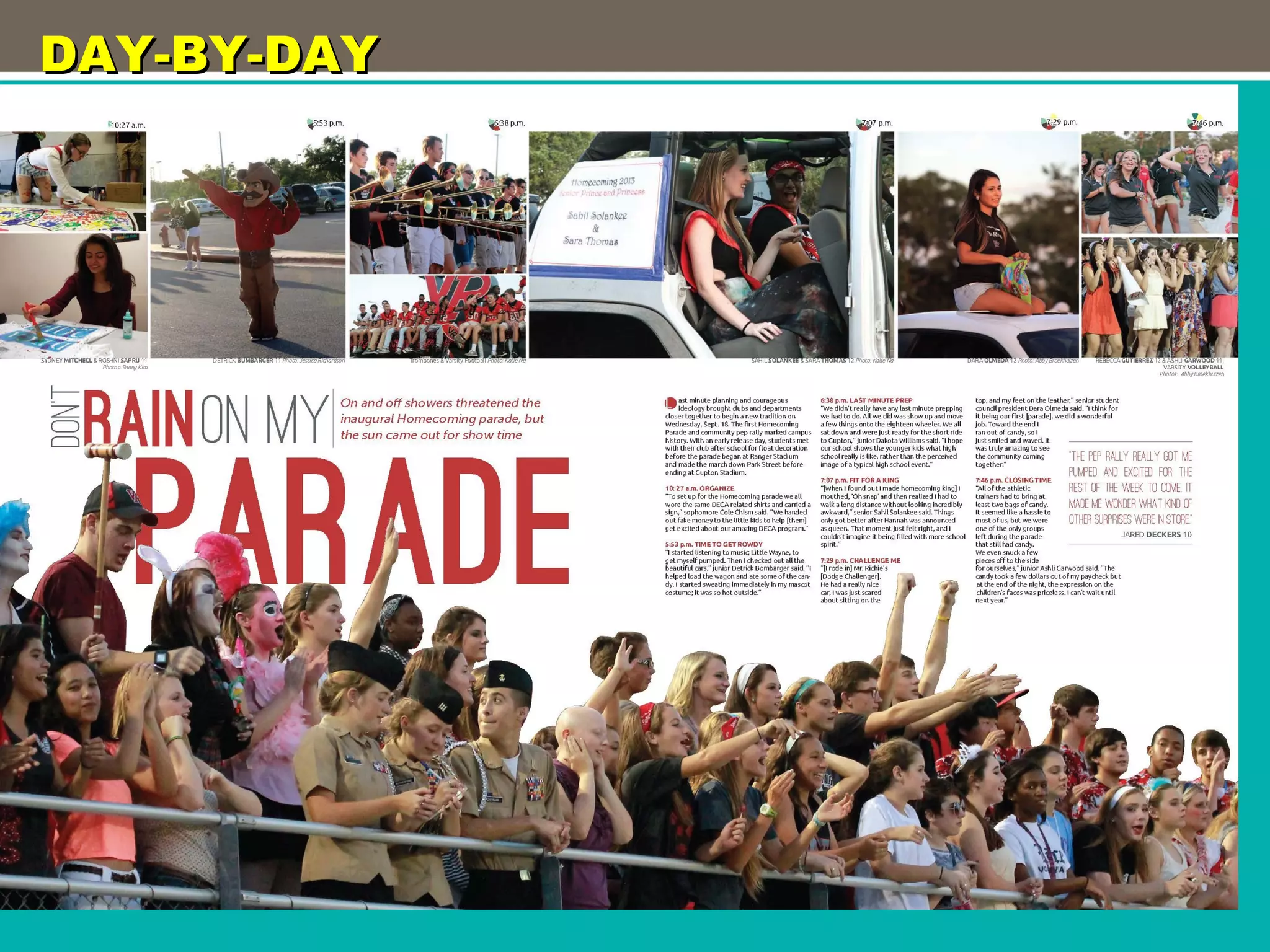
DAY-BY-DAYDAY-BY-DAY
Types of Alternative CopyTypes of Alternative Copy
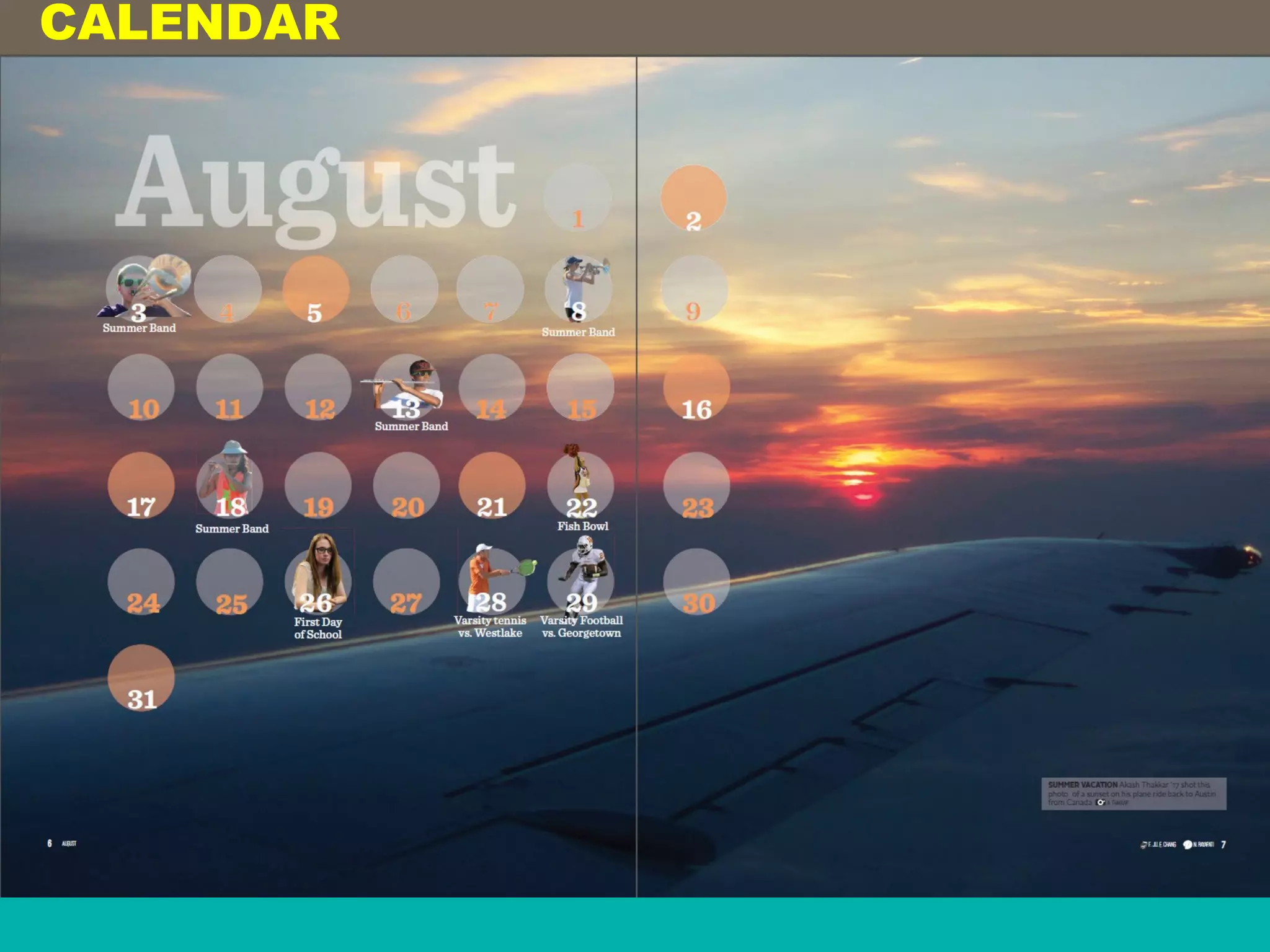
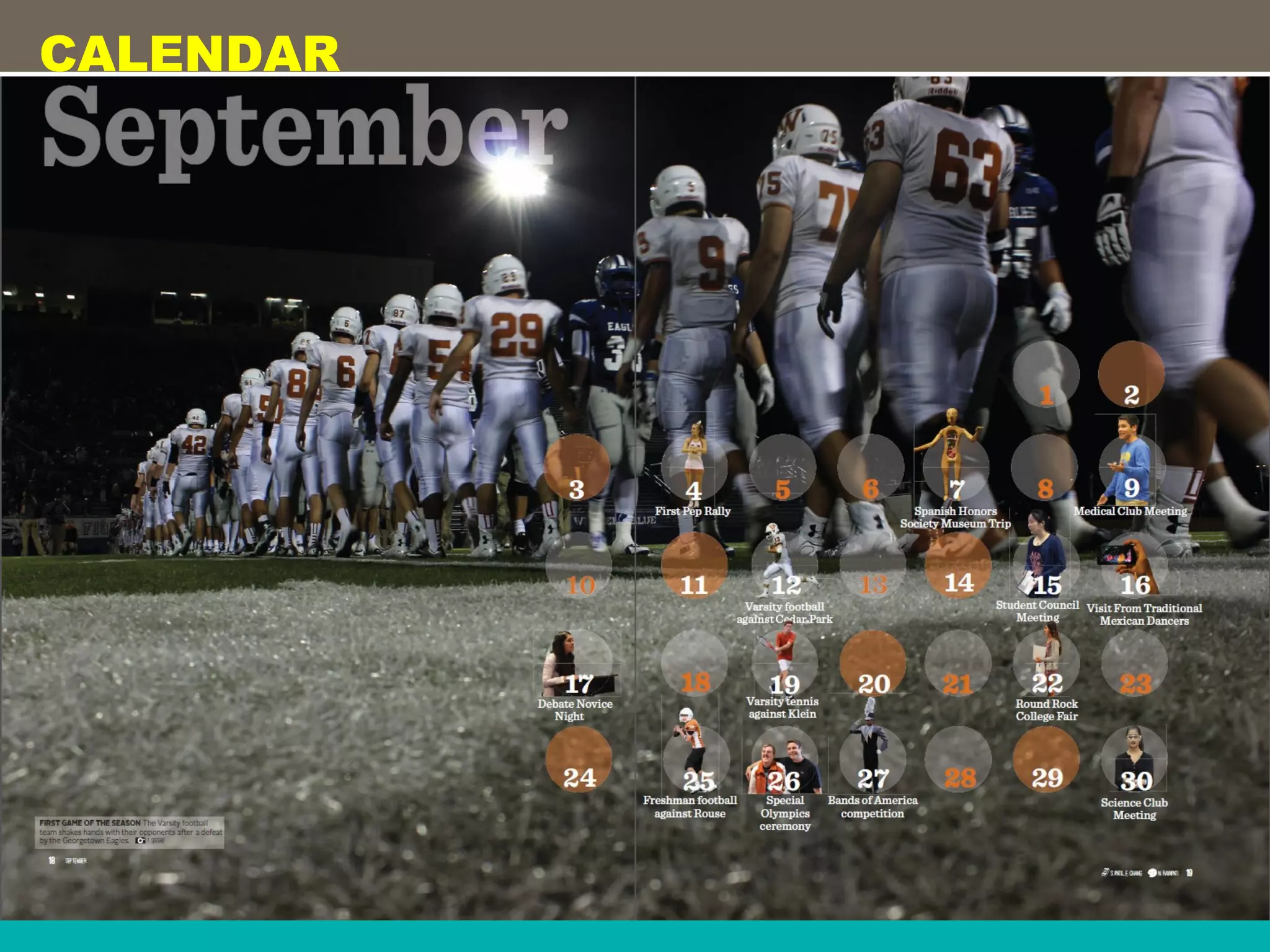
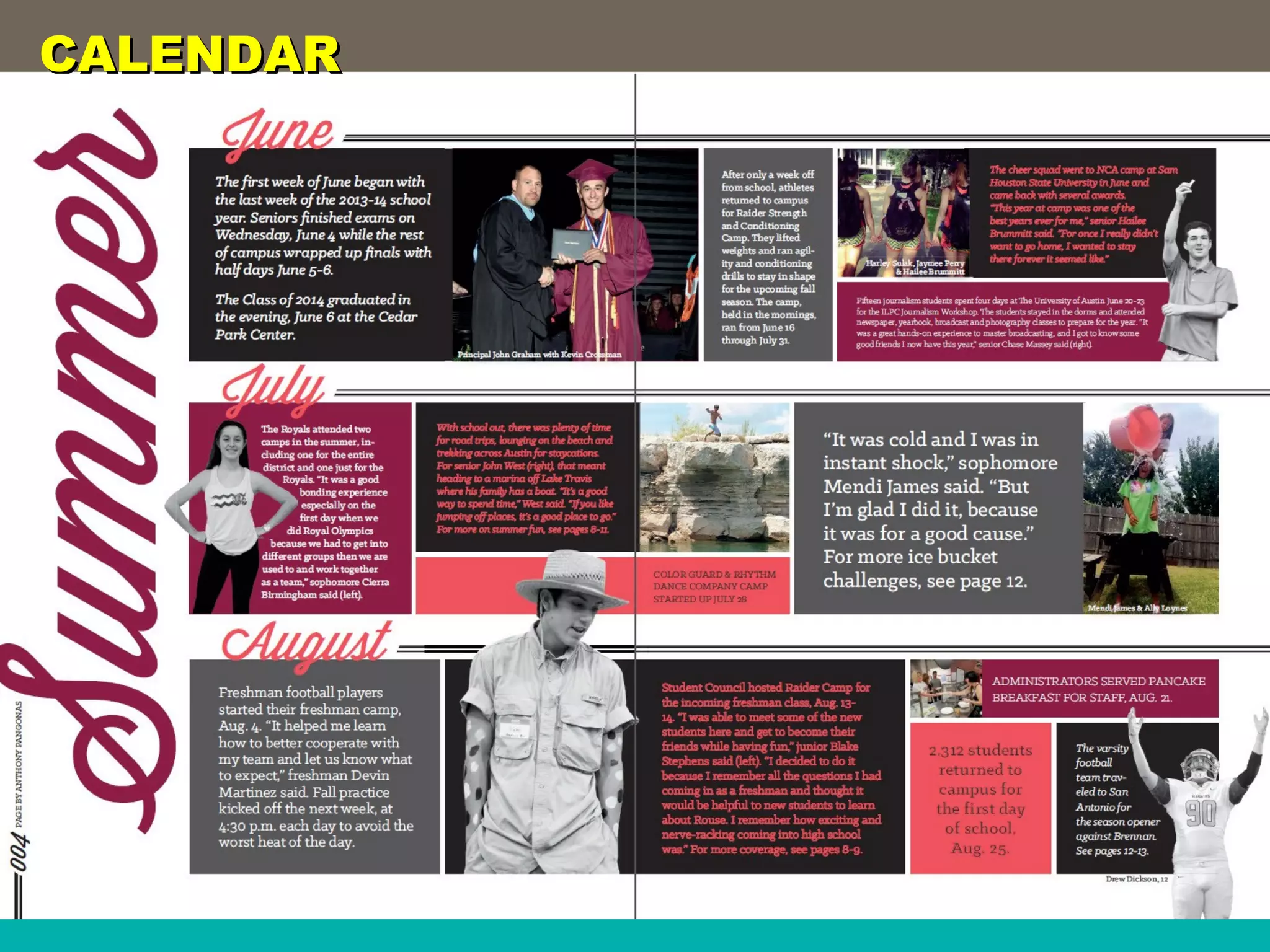
CalendarsCalendars
• Calendars offer a meaningful overview ofCalendars offer a meaningful overview of
a month or a season.a month or a season.
• Create a structure and then fill it withCreate a structure and then fill it with
facts, figures, quotes and pictures.facts, figures, quotes and pictures.
CALENDAR
CALENDAR
CALENDARCALENDAR
Types of Alternative CopyTypes of Alternative Copy
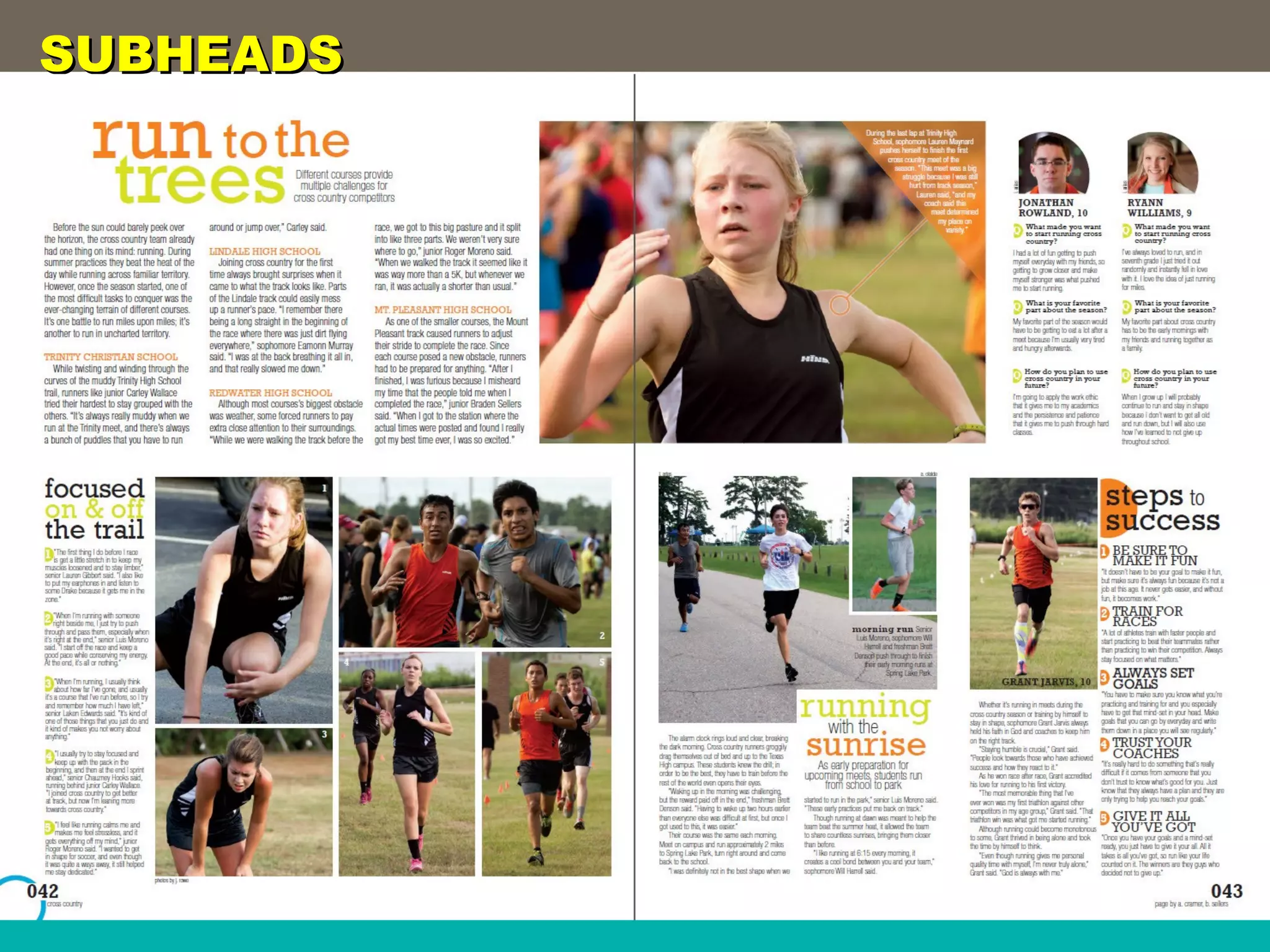
SubheadsSubheads
• Subheads break up long copy blocksSubheads break up long copy blocks
• Create a structure and then fill it withCreate a structure and then fill it with
facts, figures, quotes and pictures.facts, figures, quotes and pictures.
SUBHEADSSUBHEADS
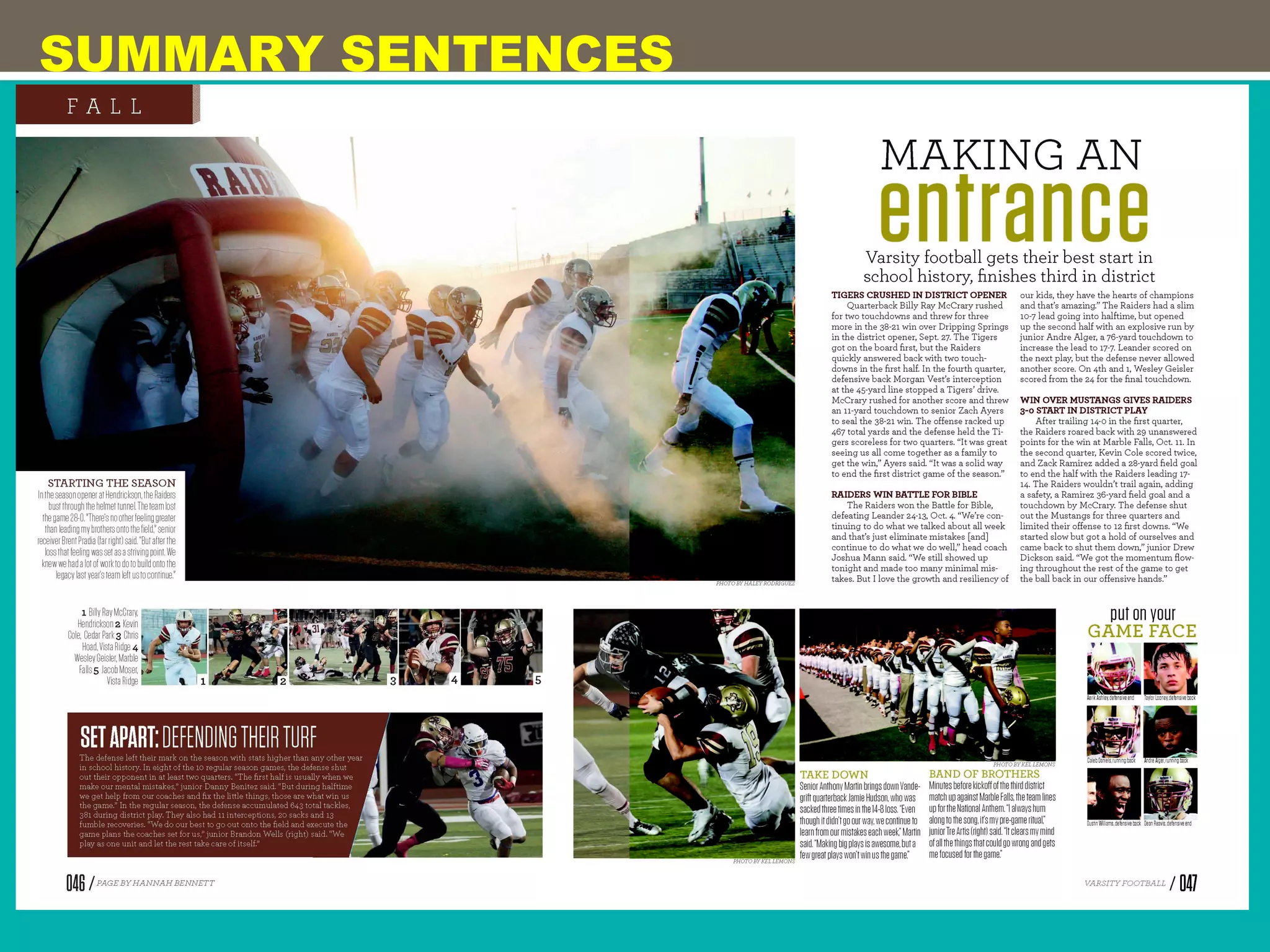
SUMMARY SENTENCES
Types of Alternative CopyTypes of Alternative Copy
TimelinesTimelines
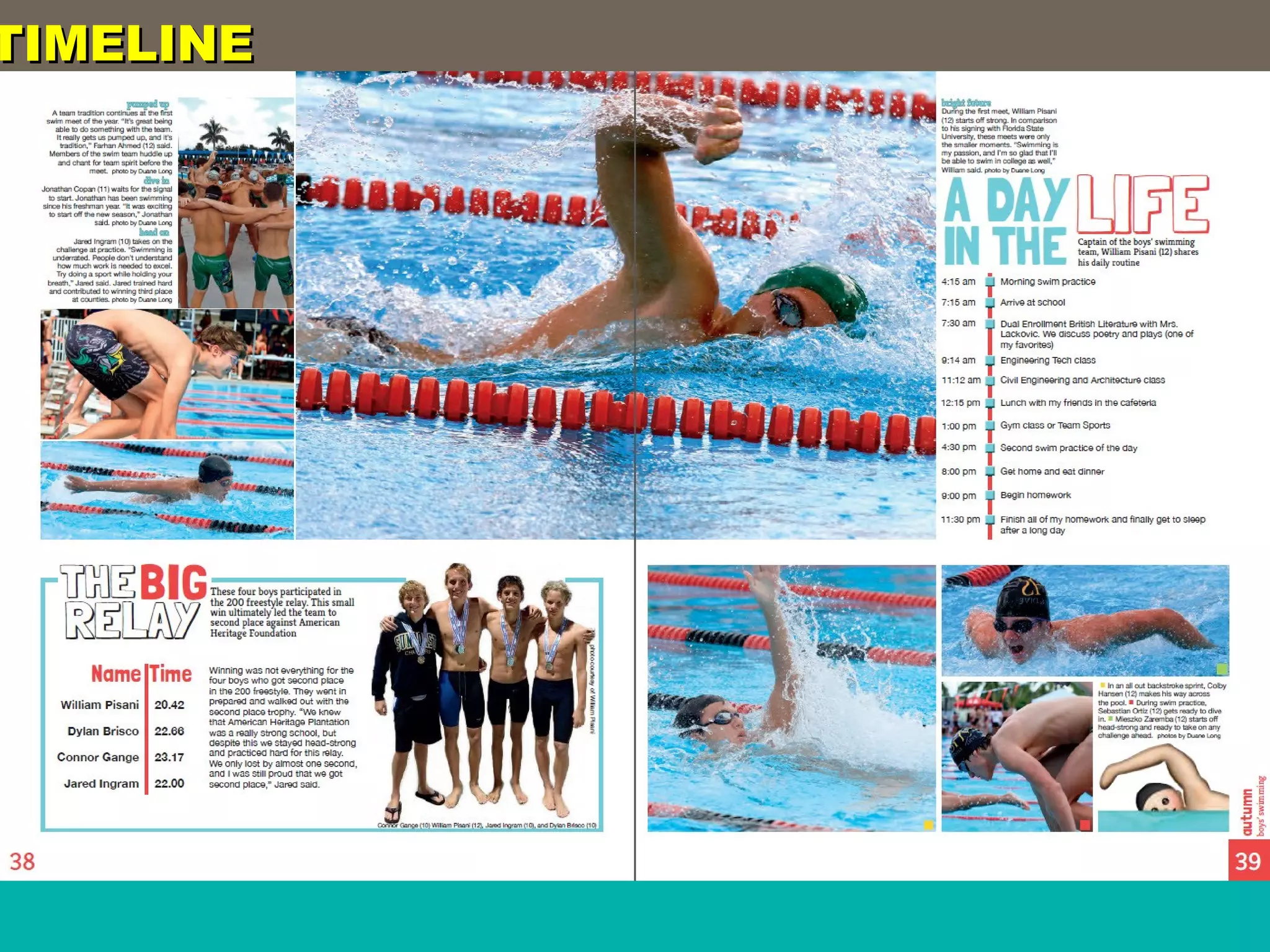
• Like day-by-day coverage, timelinesLike day-by-day coverage, timelines
capture the sequence of events.capture the sequence of events.
• The challenge is to fill the space withThe challenge is to fill the space with
meaningful quotes and photos.meaningful quotes and photos.
• Avoid the temptation to simply listAvoid the temptation to simply list
activities.activities.
TIMELINETIMELINE
TypesTypes of Alternative Copyof Alternative Copy
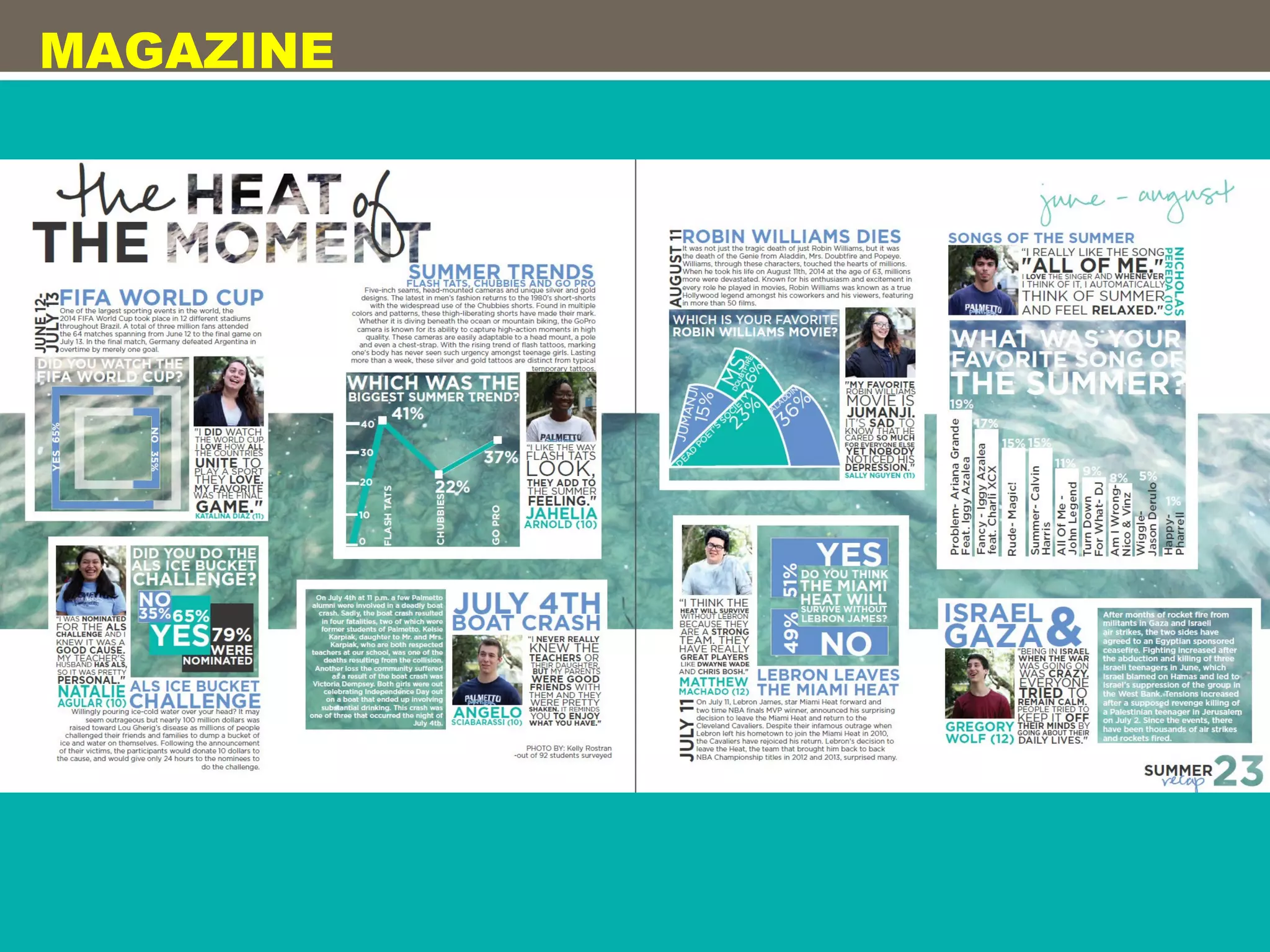
Magazine styleMagazine style
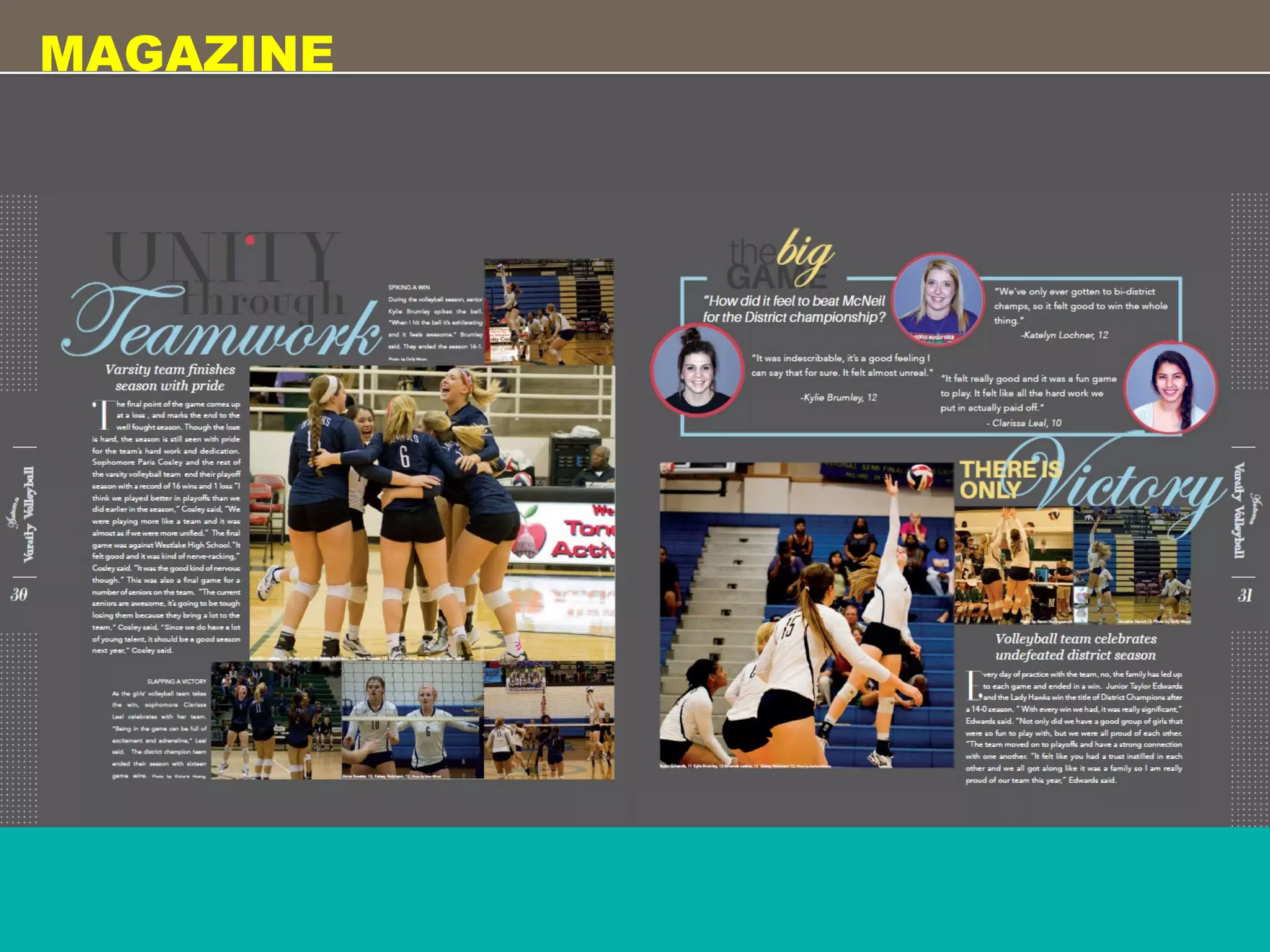
• This format features short copy with
photos on a variety of topics.
• Emphasis is on activities or events that
don’t dictate an entire spread.
• Content may or may not be related.
MAGAZINE
MAGAZINE
Types of Alternative Copy
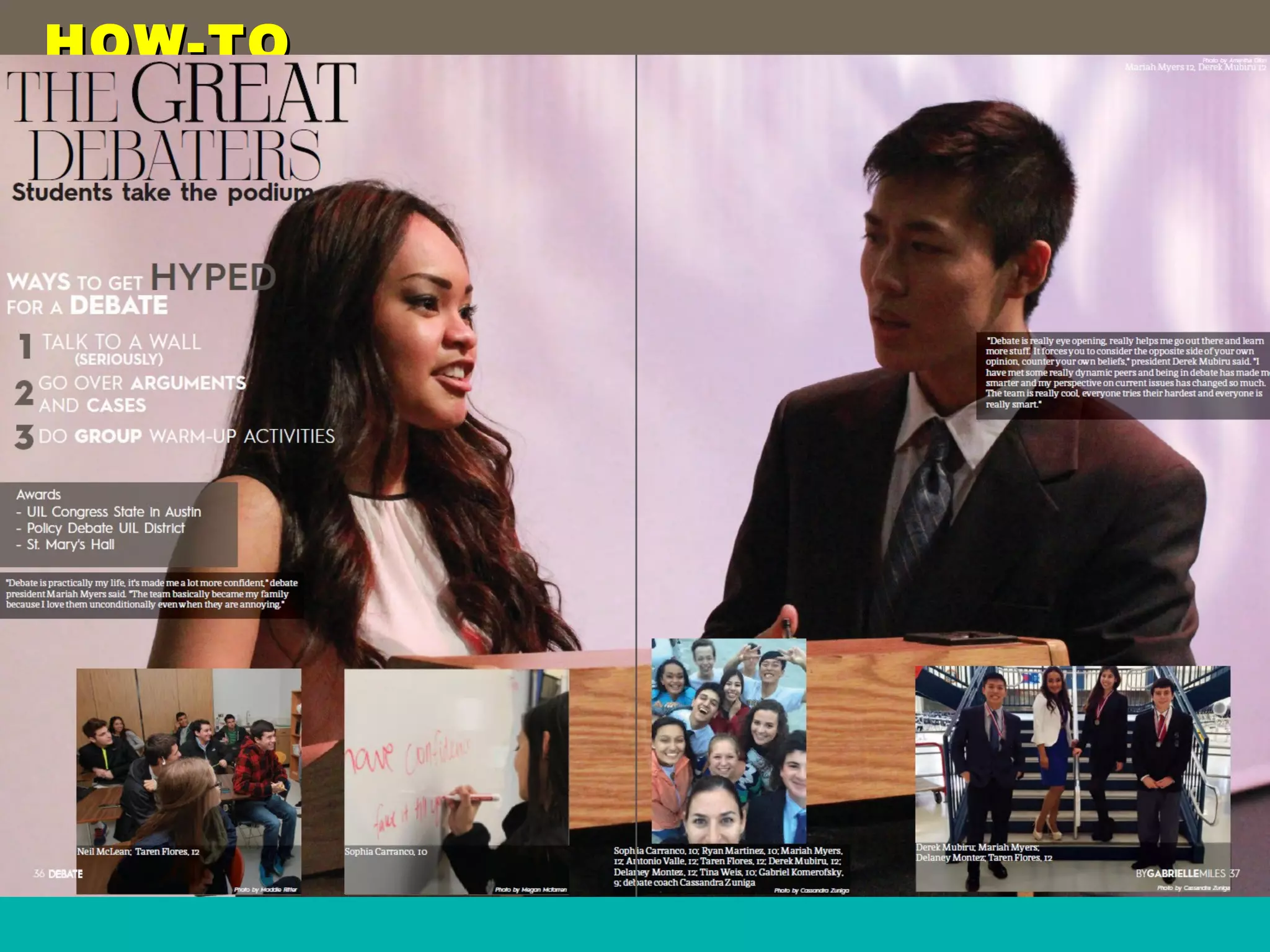
How-toHow-to
• Use this format when explanations areUse this format when explanations are
either necessary or fun.either necessary or fun.
• Think of things that may need anThink of things that may need an
explanation.explanation.
• Make it fun.Make it fun.
HOW-TOHOW-TO
HOW-TO
Types of Alternative CopyTypes of Alternative Copy
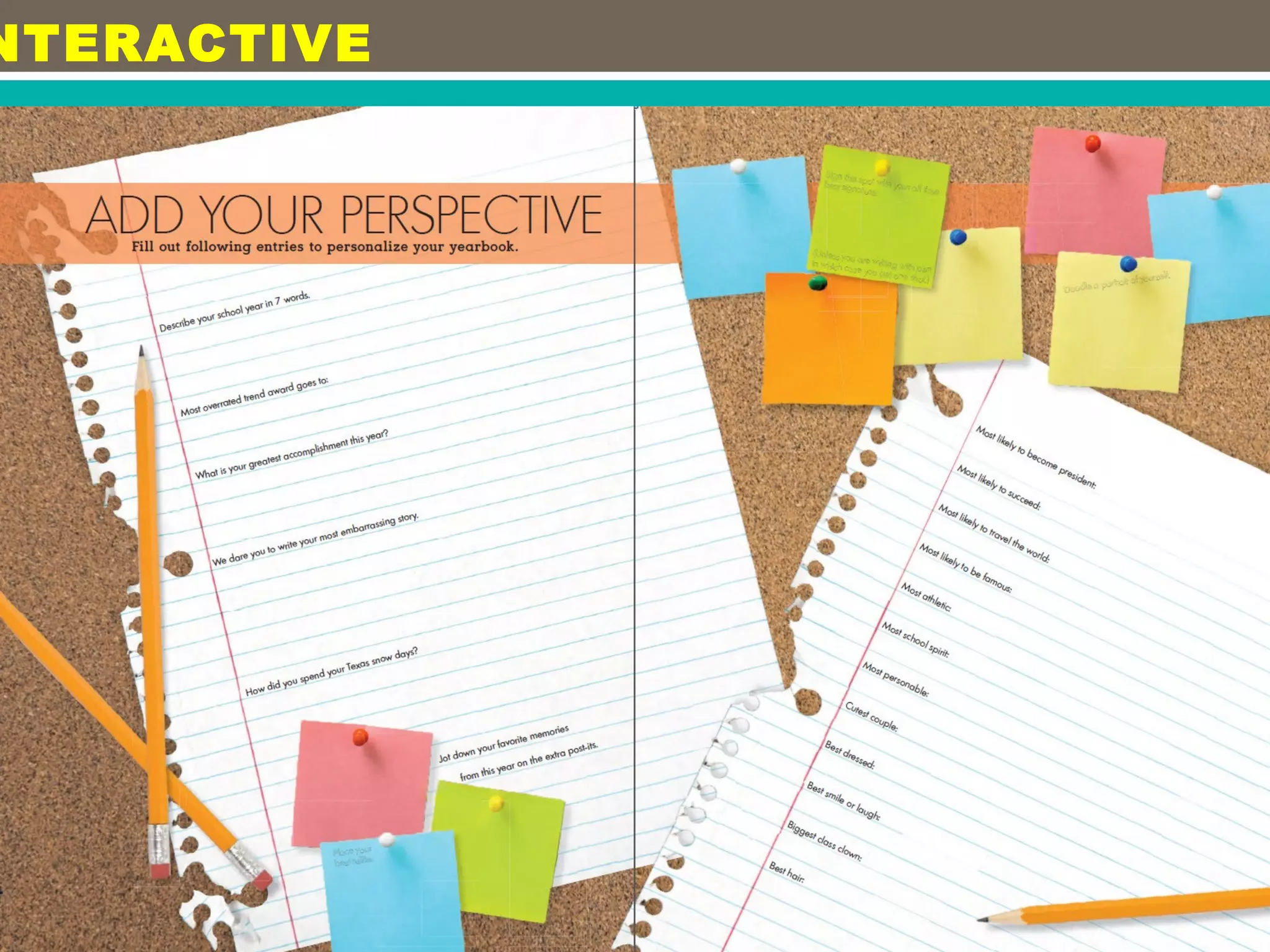
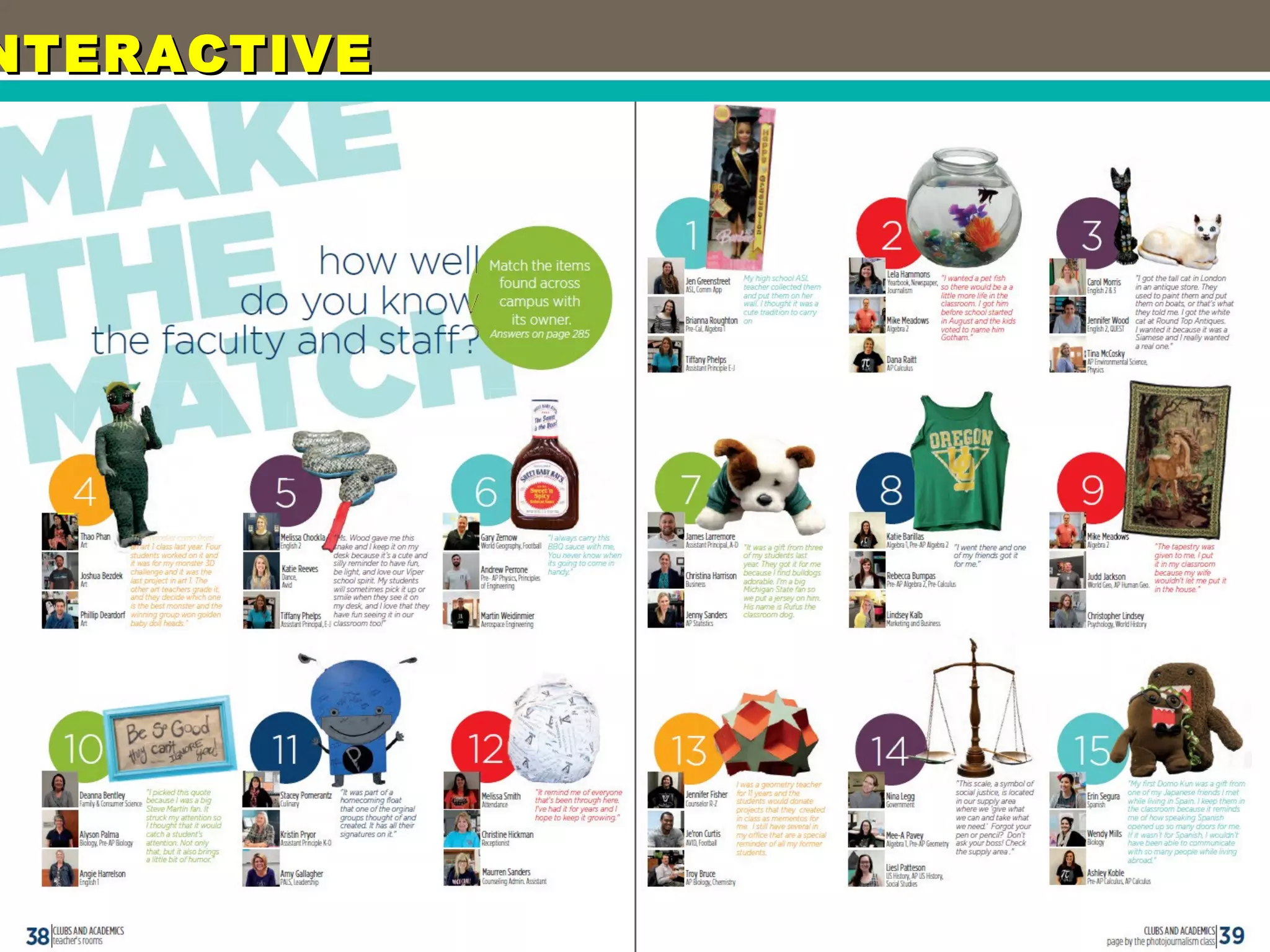
InteractiveInteractive
• Have readers interact with the book.ve readers interact with the book.
• Magazines do it!Magazines do it!
• Let the subject matter and/or the themeLet the subject matter and/or the theme
direct your interactive strategy.direct your interactive strategy.
NTERACTIVENTERACTIVE
NTERACTIVE
Types of Alternative CopyTypes of Alternative Copy
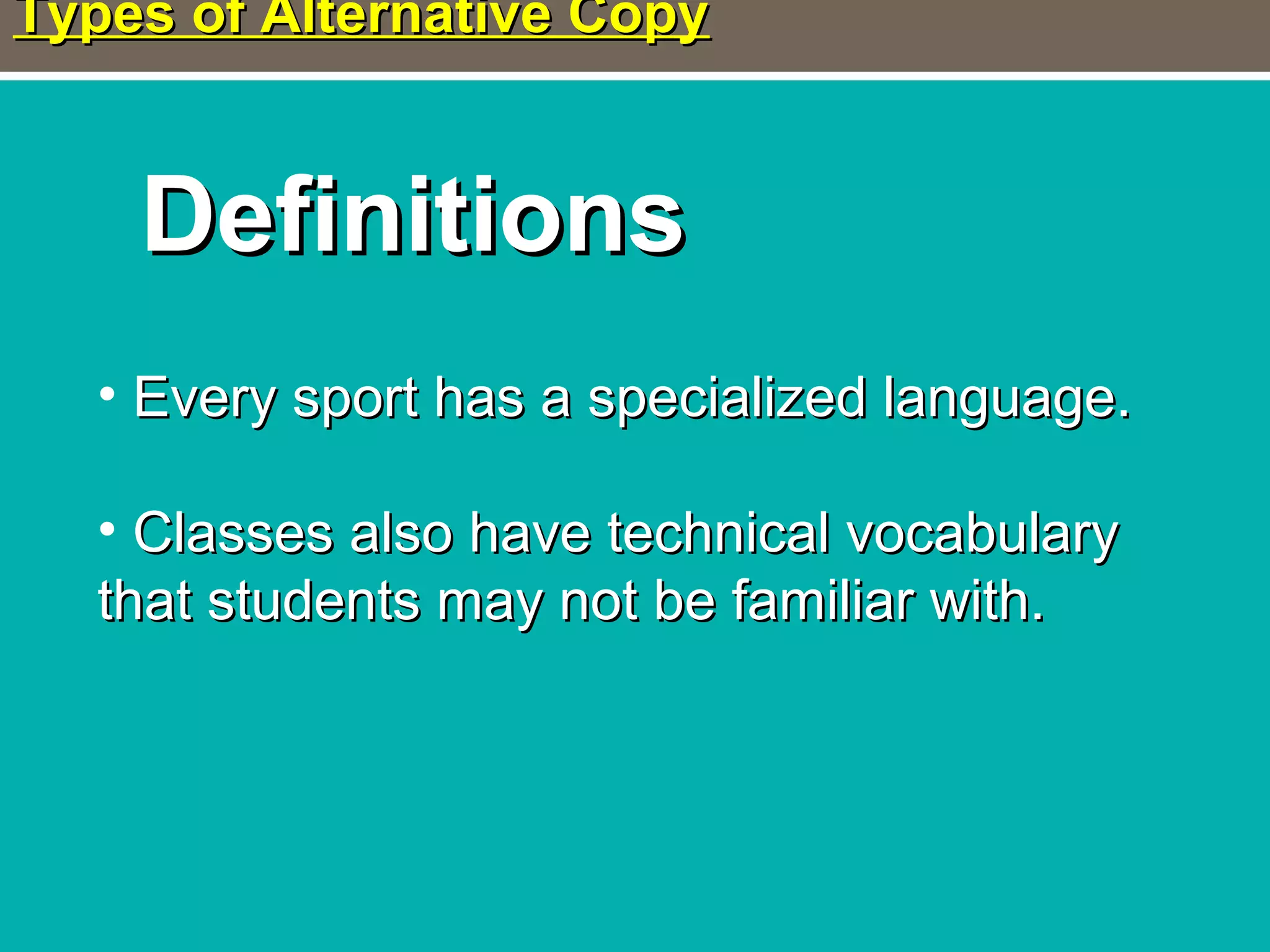
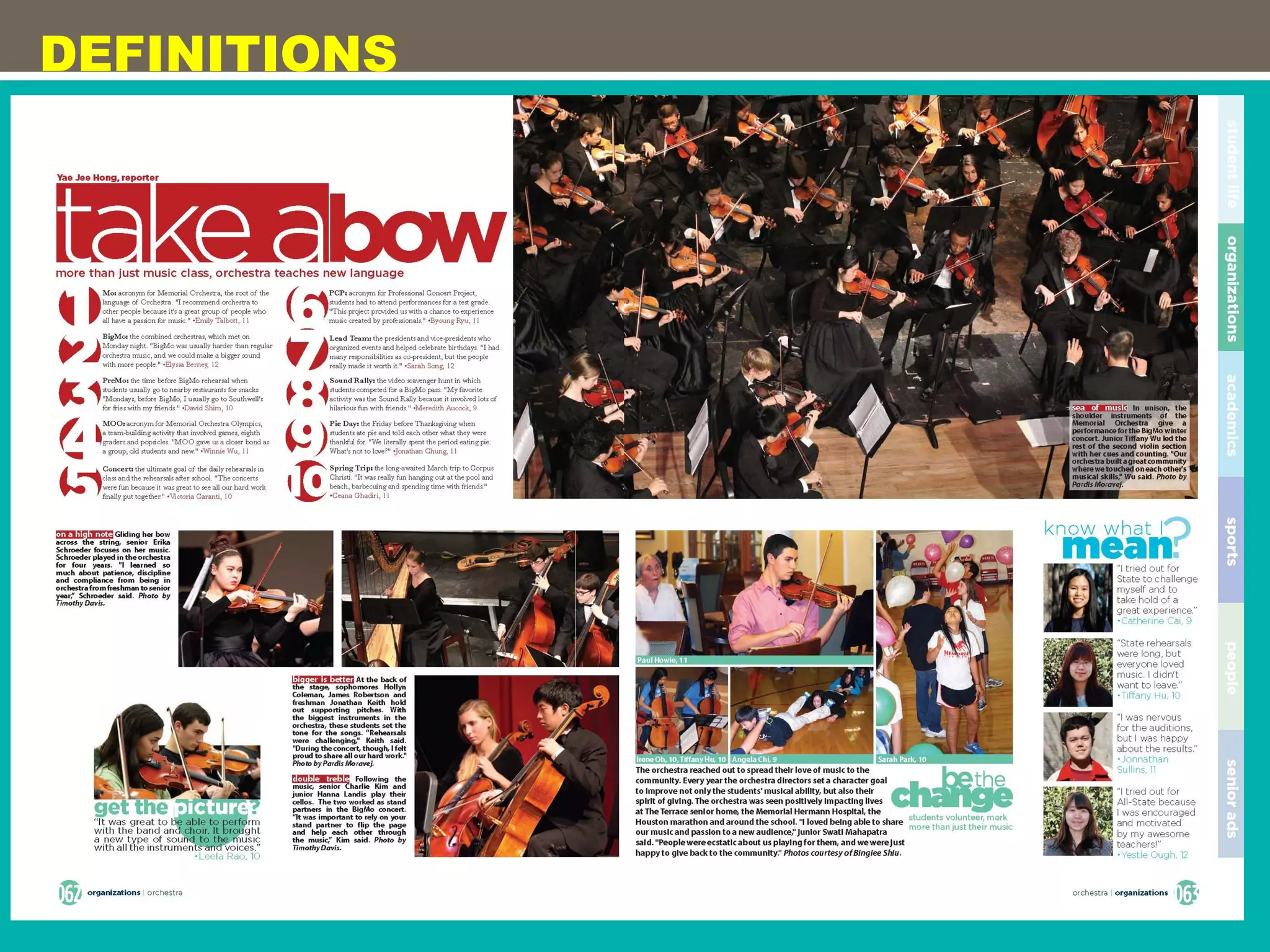
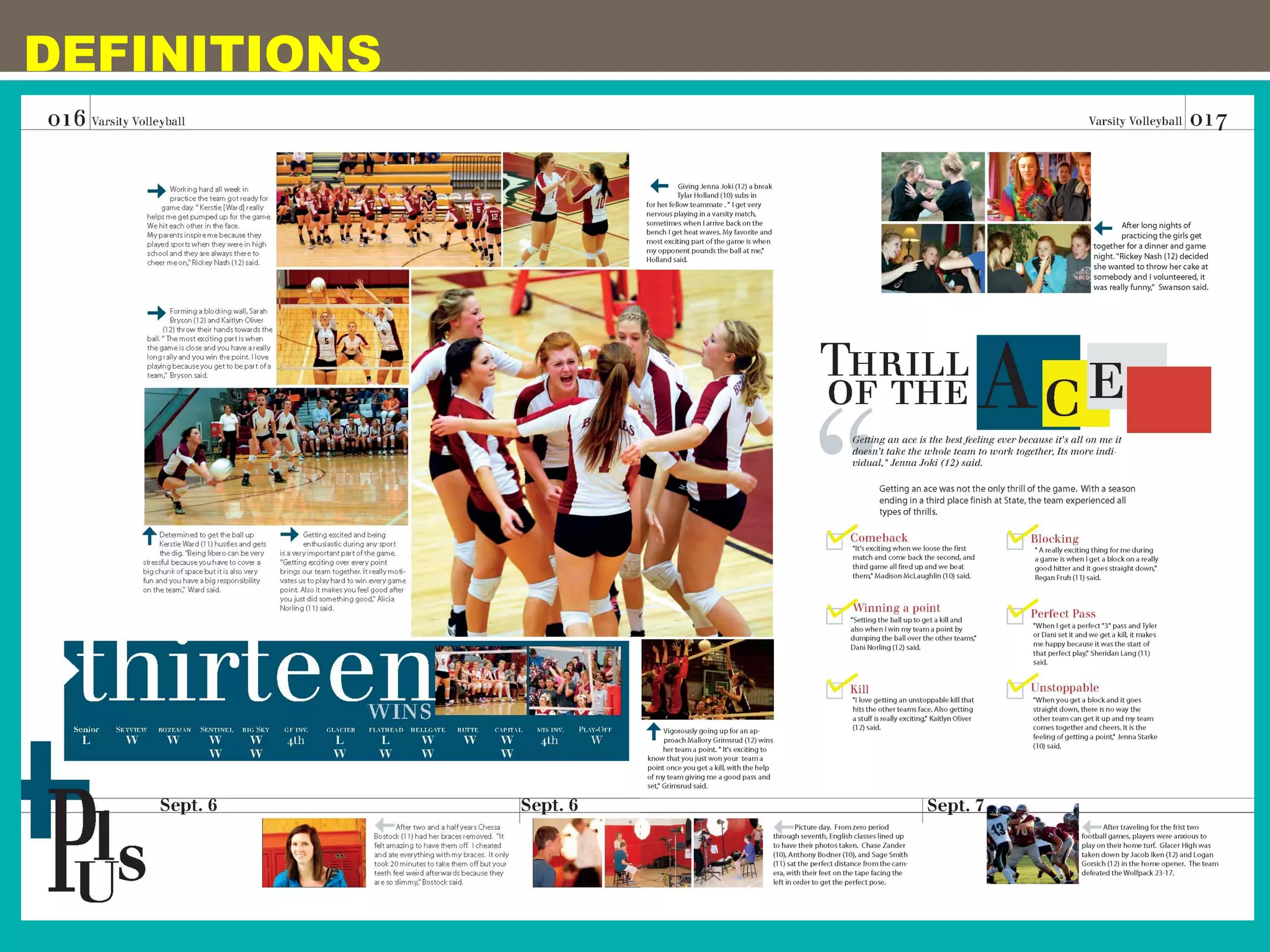
DefinitionsDefinitions
• Every sport has a specialized language.Every sport has a specialized language.
• Classes also have technical vocabularyClasses also have technical vocabulary
that students may not be familiar with.that students may not be familiar with.
DEFINITIONS
DEFINITIONS
Types of Alternative CopyTypes of Alternative Copy
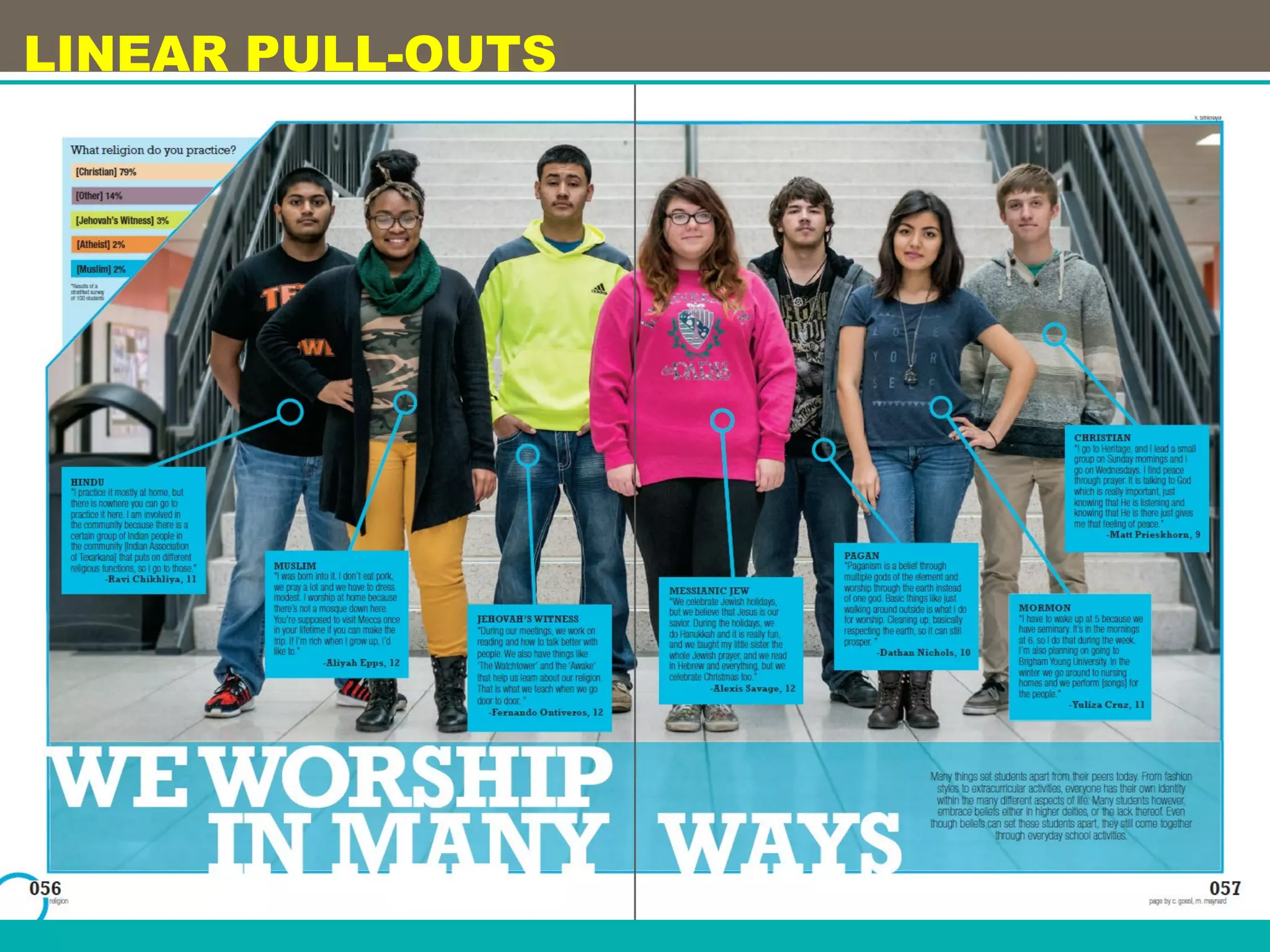
Linear Pull-outs withLinear Pull-outs with
QuotesQuotes
•Quick way to convey information.Quick way to convey information.
 LINEAR PULL-OUTS
LINEAR PULL-OUTS
Types of Alternative CopyTypes of Alternative Copy
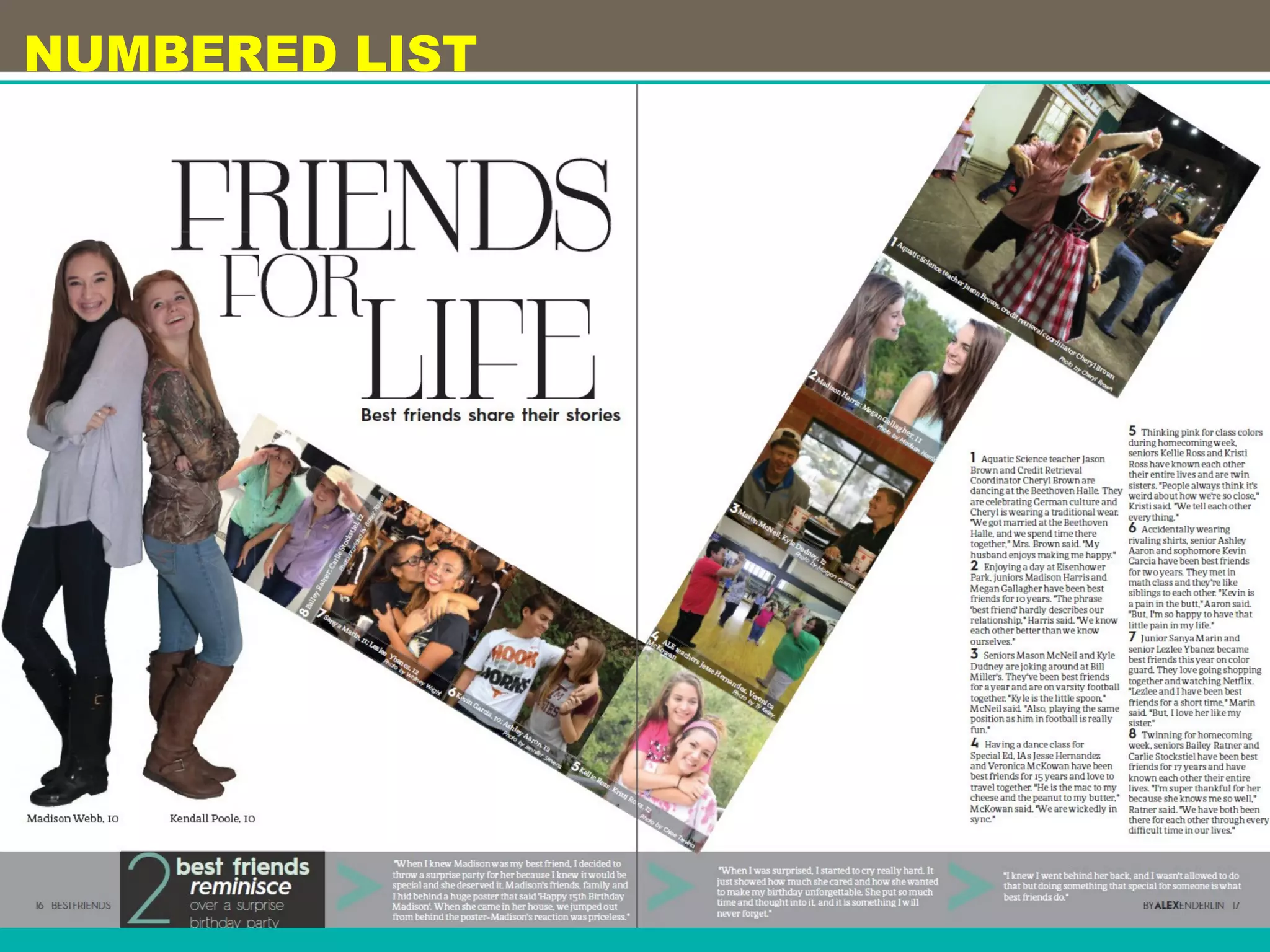
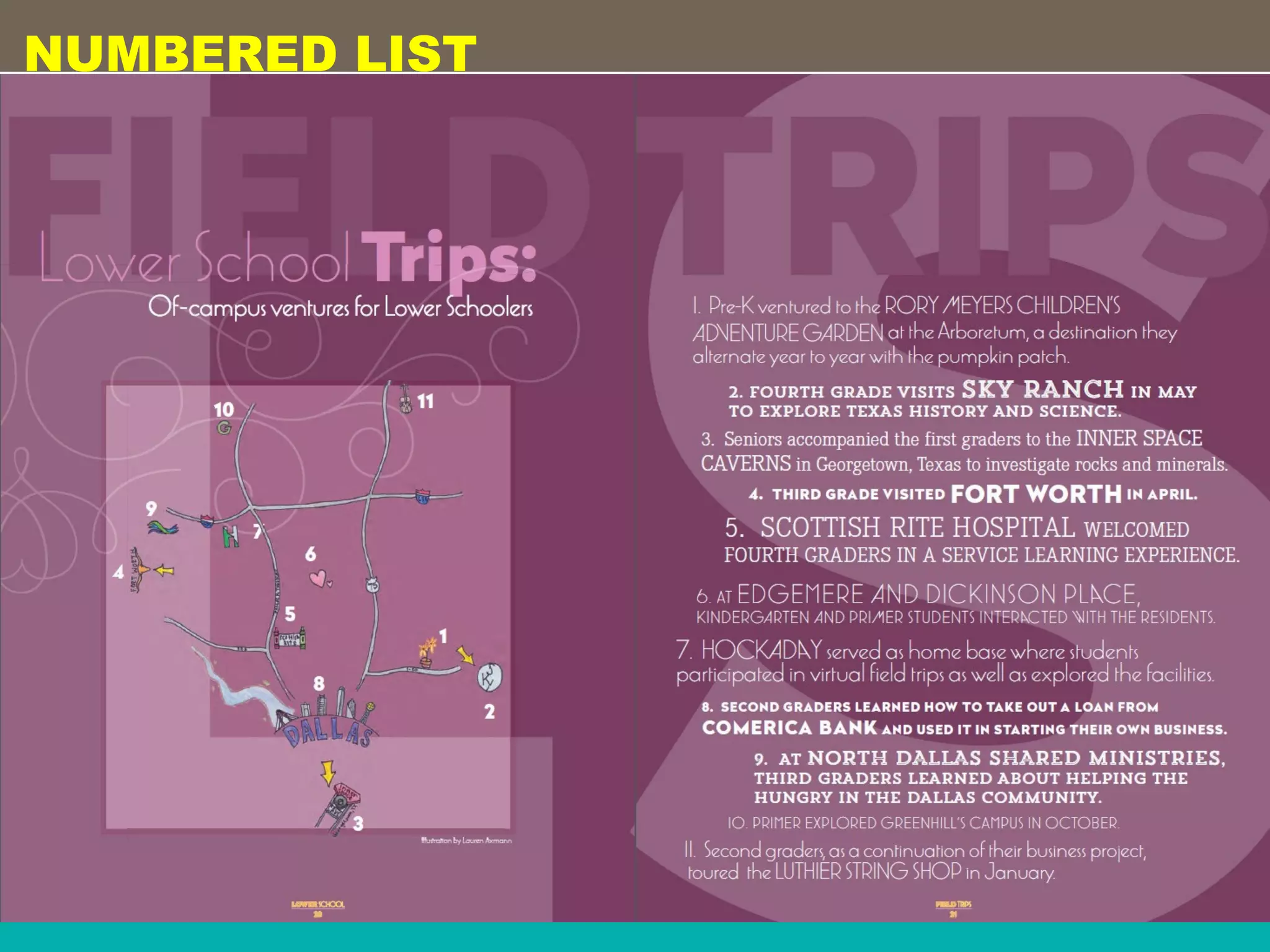
Numbered ListsNumbered Lists
•Quick way to convey informationQuick way to convey information
• Breaks up traditional designBreaks up traditional design
NUMBERED LIST
NUMBERED LIST
Types of Alternative CopyTypes of Alternative Copy
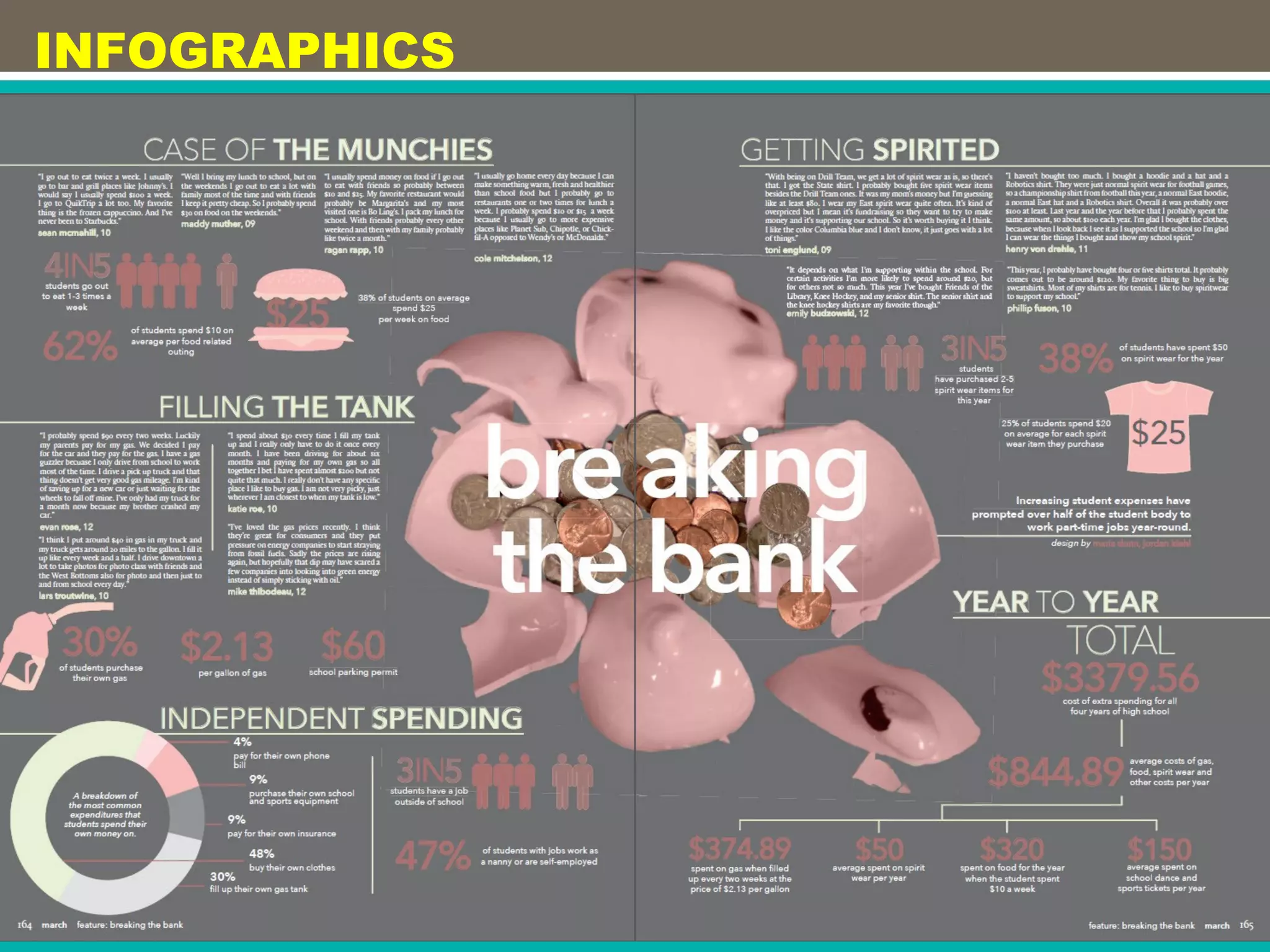
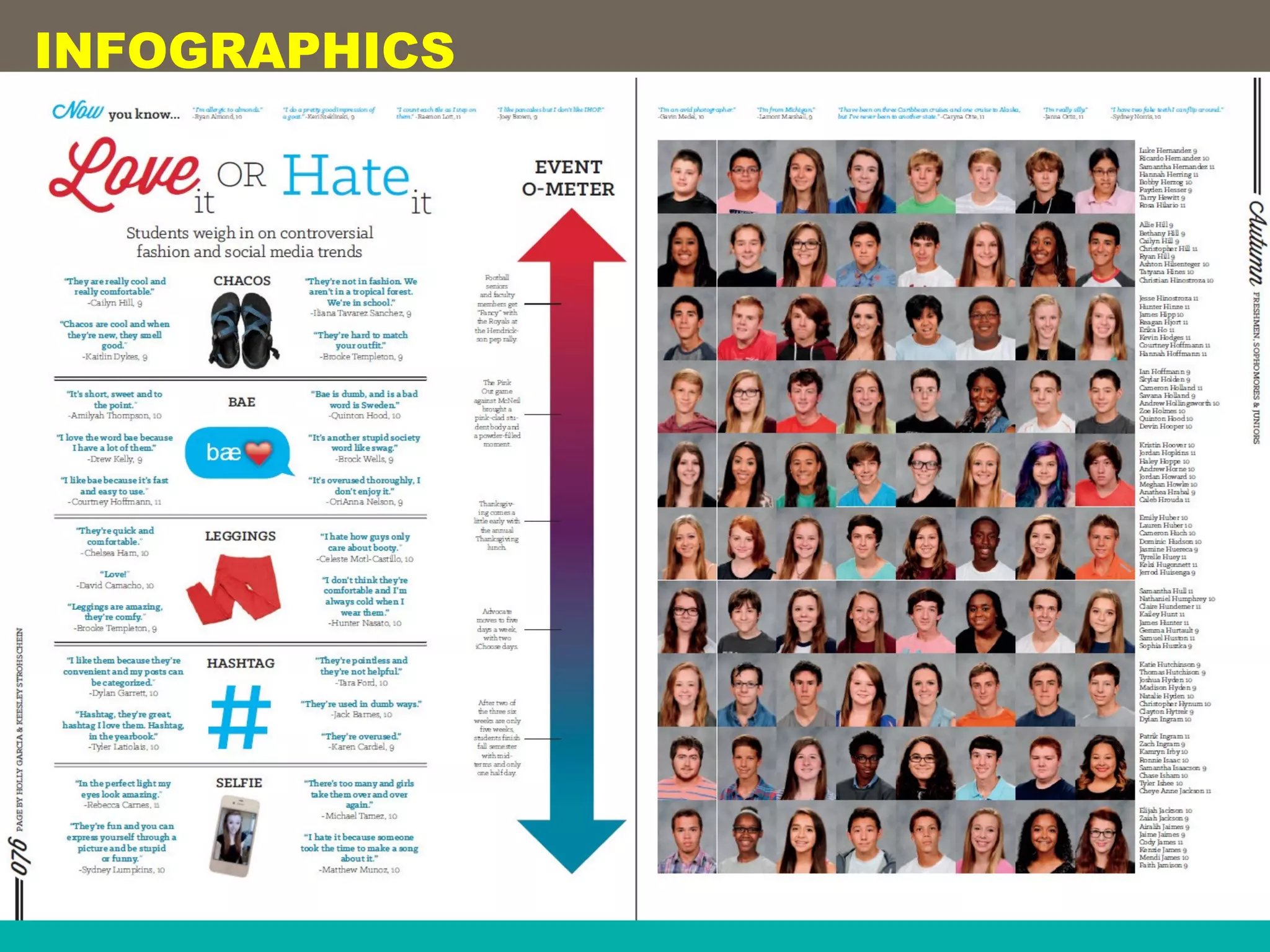
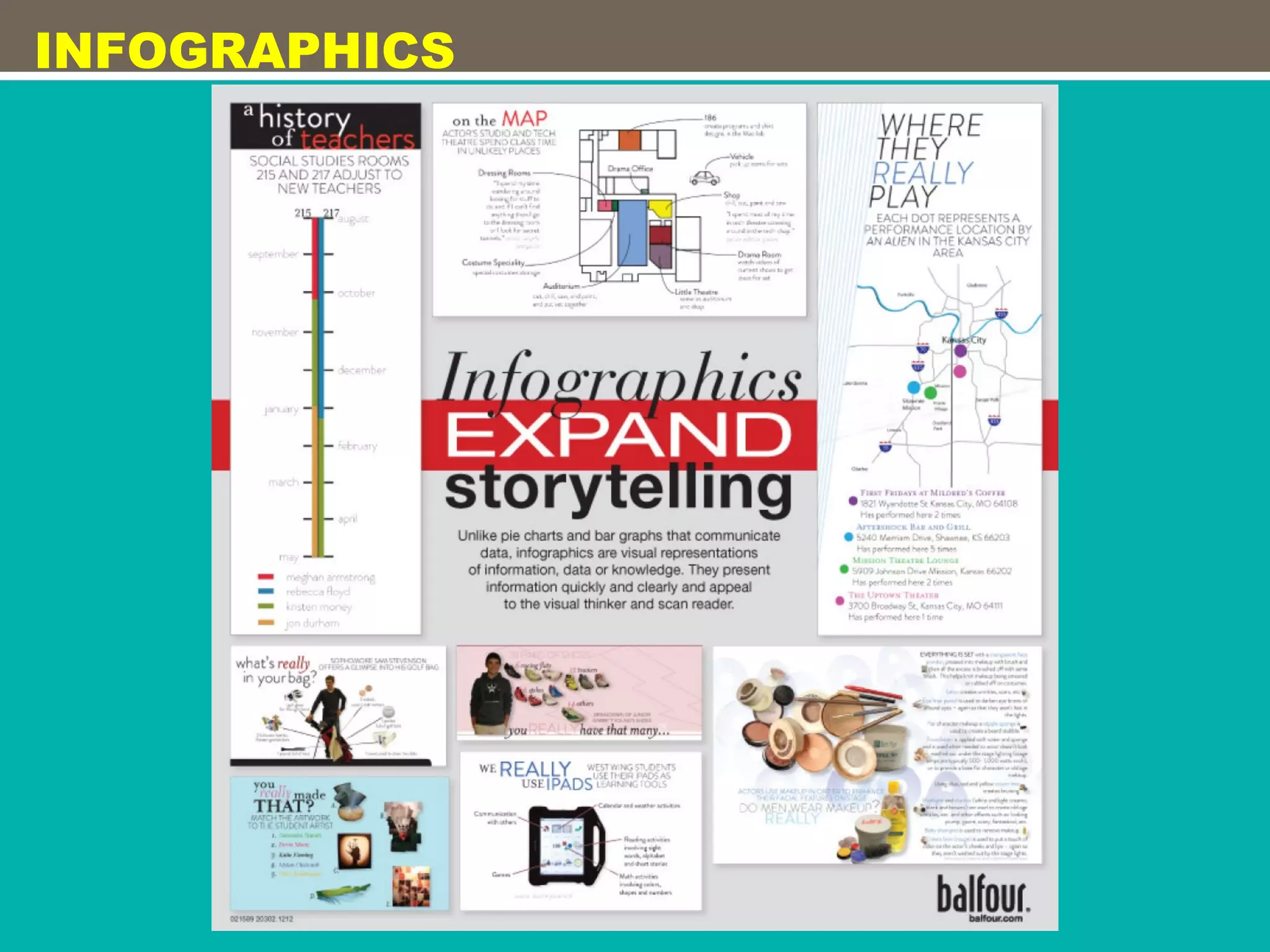
InfographicsInfographics
•Quick way to convey informationQuick way to convey information
• Breaks up traditional designBreaks up traditional design
INFOGRAPHICS
INFOGRAPHICS
INFOGRAPHICS
Types of Alternative CopyTypes of Alternative Copy
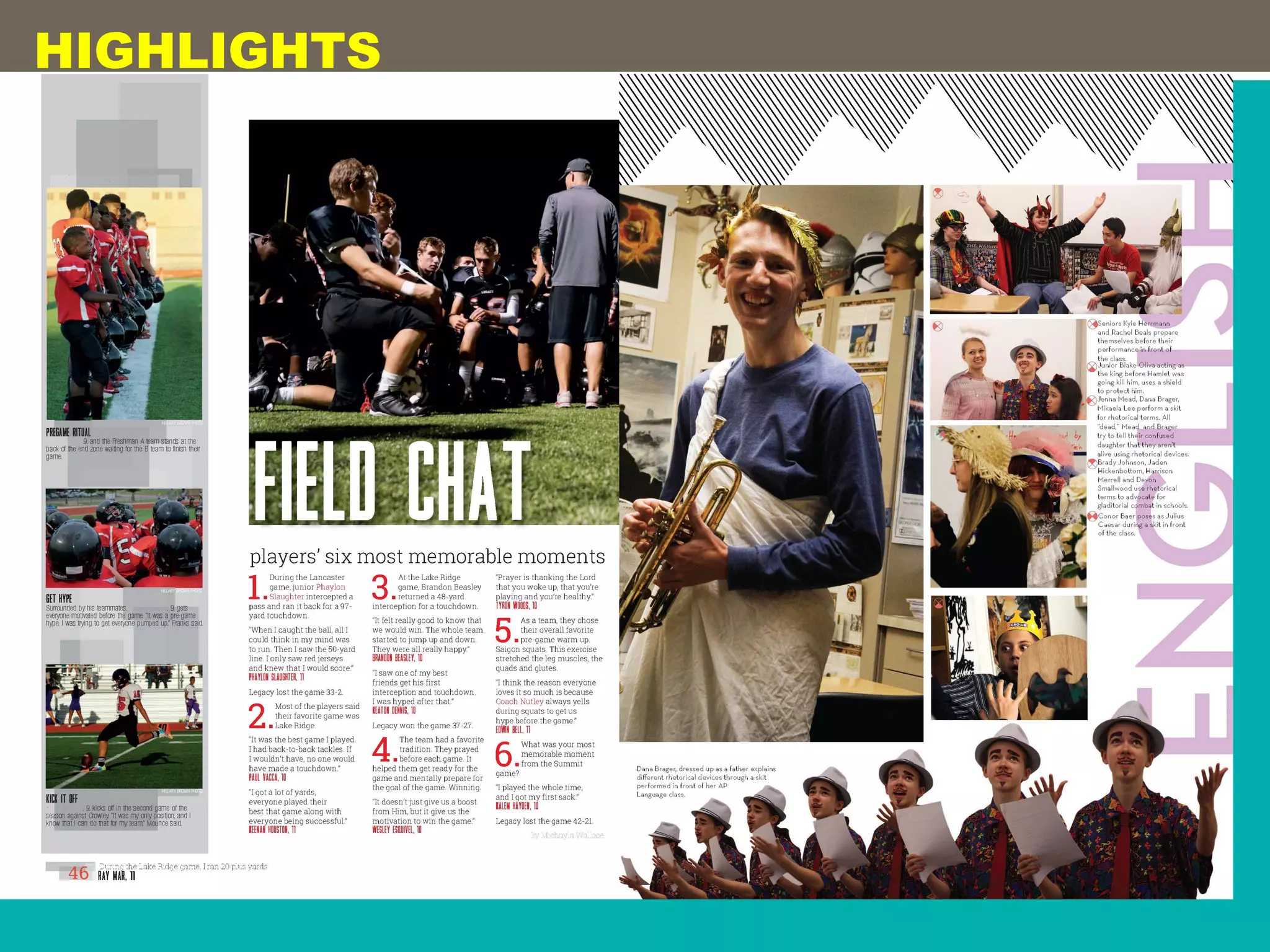
HighlightsHighlights
• Emphasizes primary pointsEmphasizes primary points
• Allows for asidesAllows for asides
HIGHLIGHTS
Types of Alternative CopyTypes of Alternative Copy
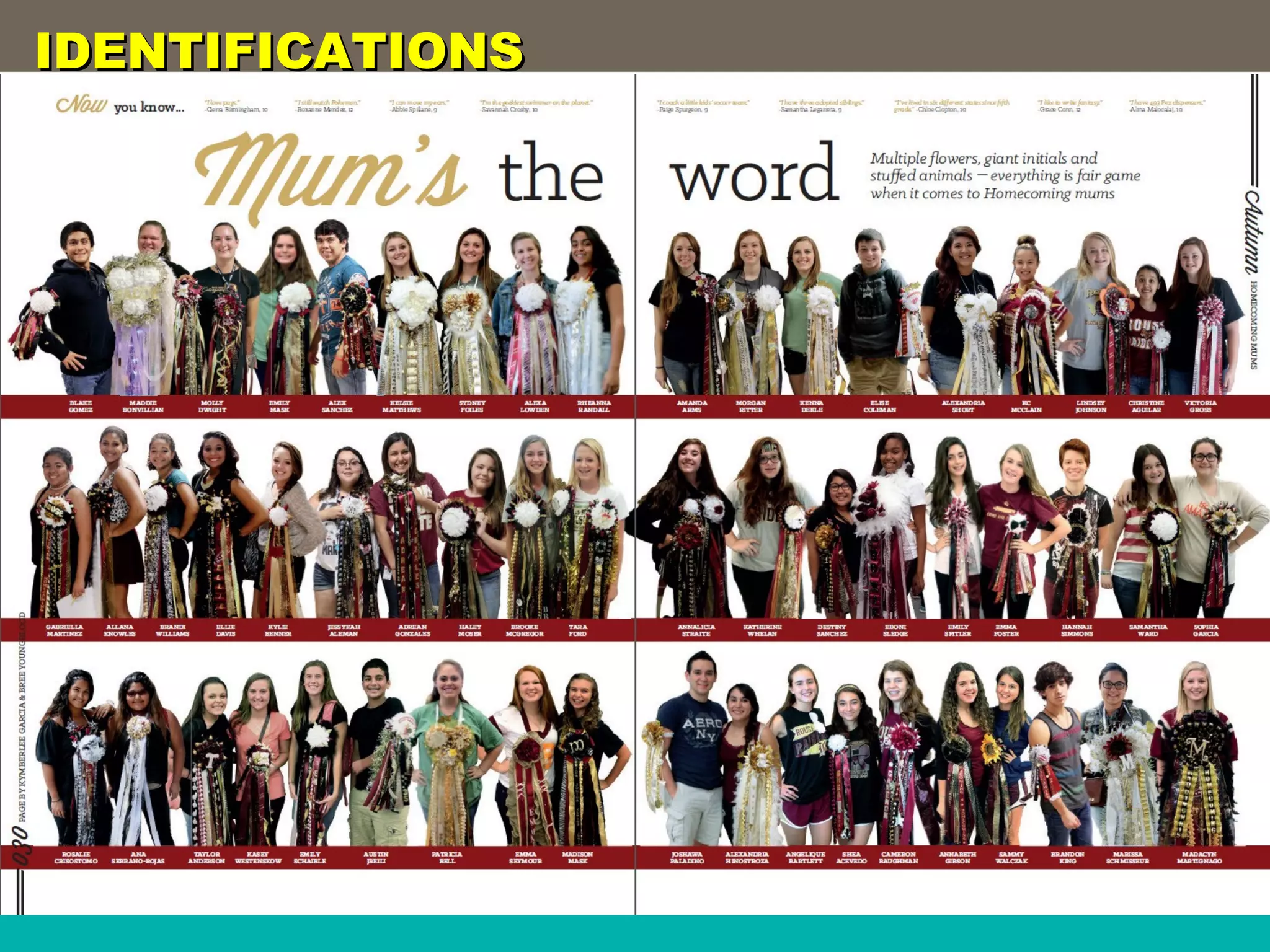
IdentificationsIdentifications
• SimpleSimple
• Features a number of studentsFeatures a number of students
IDENTIFICATIONSIDENTIFICATIONS
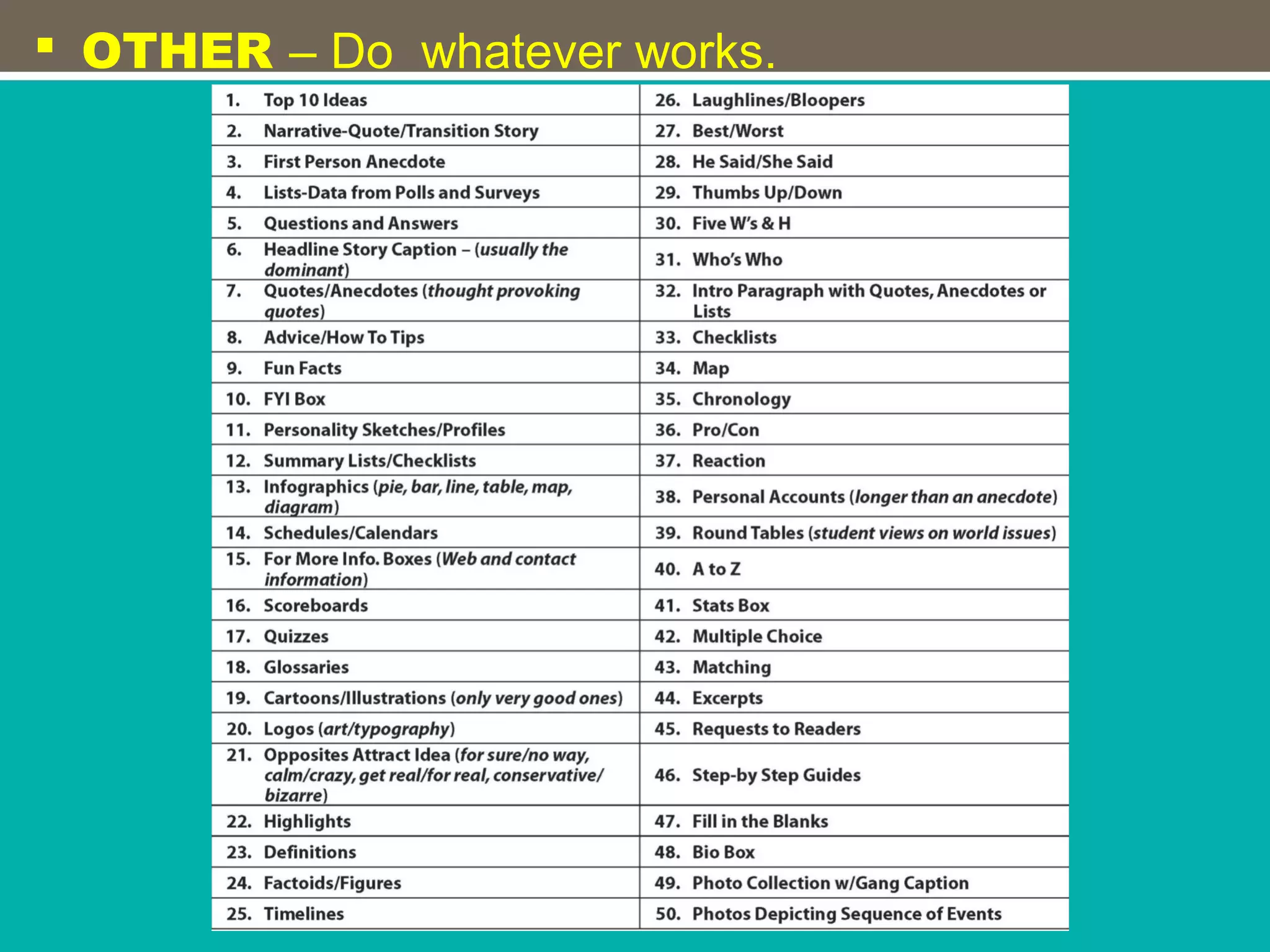
 OTHER – Do whatever works.
2015 alternative copy

2015 alternative copy

  • 2.
    • Most ofyour students can read. Why write stories?Why write stories? Our students don’t read themOur students don’t read them • Most of them will read something that interests them.
  • 3.
    • Focus onwhatFocus on what’s new’s new • Appeal to readersAppeal to readers’emotions’emotions • Include facts & figuresInclude facts & figures Become storytellersBecome storytellers
  • 4.
    Types of AlternativeCopyTypes of Alternative Copy Q & AQ & A • Find a person with a story to tell.Find a person with a story to tell. • Frame questions so there is a beginning,Frame questions so there is a beginning, a middle and an end to the story.a middle and an end to the story. • These are not random questions.These are not random questions. The goal is to capture the person’s story.The goal is to capture the person’s story.
  • 5.
    Q & AQ& A
  • 6.
    Q & AQ& A
  • 7.
    Types of AlternativeCopyTypes of Alternative Copy Story-telling CaptionStory-telling Caption • Select a picture that will fascinate theSelect a picture that will fascinate the readers.readers. • Tell them more. Write a short featureTell them more. Write a short feature story or relate an anecdotal, first-personstory or relate an anecdotal, first-person account.account.
  • 8.
  • 9.
    Types of AlternativeCopyTypes of Alternative Copy MultiplesMultiples • When there are too many things toWhen there are too many things to cover and too few pages to cover them,cover and too few pages to cover them, run multiple sports, clubs and classes onrun multiple sports, clubs and classes on one spread.one spread. • Write 3-5 sentences for each one &Write 3-5 sentences for each one & include a GREAT quote.include a GREAT quote.
  • 10.
  • 11.
  • 12.
  • 13.
  • 14.
  • 15.
  • 16.
    Types of AlternativeCopyTypes of Alternative Copy QuotesQuotes • If 12 witnesses see the same event,If 12 witnesses see the same event, each one will offer a unique perspective.each one will offer a unique perspective. • Include quotes from a wide variety ofInclude quotes from a wide variety of students.students.
  • 17.
  • 18.
  • 19.
  • 20.
    Types of AlternativeCopyTypes of Alternative Copy Day-by-dayDay-by-day • This format provides a calendar-likeThis format provides a calendar-like progression.progression. • Include quotes from a wide variety ofInclude quotes from a wide variety of students.students.
  • 21.
  • 22.
  • 23.
    Types of AlternativeCopyTypes of Alternative Copy CalendarsCalendars • Calendars offer a meaningful overview ofCalendars offer a meaningful overview of a month or a season.a month or a season. • Create a structure and then fill it withCreate a structure and then fill it with facts, figures, quotes and pictures.facts, figures, quotes and pictures.
  • 24.
  • 25.
  • 26.
  • 27.
    Types of AlternativeCopyTypes of Alternative Copy SubheadsSubheads • Subheads break up long copy blocksSubheads break up long copy blocks • Create a structure and then fill it withCreate a structure and then fill it with facts, figures, quotes and pictures.facts, figures, quotes and pictures.
  • 28.
  • 29.
  • 30.
    Types of AlternativeCopyTypes of Alternative Copy TimelinesTimelines • Like day-by-day coverage, timelinesLike day-by-day coverage, timelines capture the sequence of events.capture the sequence of events. • The challenge is to fill the space withThe challenge is to fill the space with meaningful quotes and photos.meaningful quotes and photos. • Avoid the temptation to simply listAvoid the temptation to simply list activities.activities.
  • 31.
  • 32.
    TypesTypes of AlternativeCopyof Alternative Copy Magazine styleMagazine style • This format features short copy with photos on a variety of topics. • Emphasis is on activities or events that don’t dictate an entire spread. • Content may or may not be related.
  • 33.
  • 34.
  • 35.
    Types of AlternativeCopy How-toHow-to • Use this format when explanations areUse this format when explanations are either necessary or fun.either necessary or fun. • Think of things that may need anThink of things that may need an explanation.explanation. • Make it fun.Make it fun.
  • 36.
  • 37.
  • 38.
    Types of AlternativeCopyTypes of Alternative Copy InteractiveInteractive • Have readers interact with the book.ve readers interact with the book. • Magazines do it!Magazines do it! • Let the subject matter and/or the themeLet the subject matter and/or the theme direct your interactive strategy.direct your interactive strategy.
  • 39.
  • 40.
  • 41.
    Types of AlternativeCopyTypes of Alternative Copy DefinitionsDefinitions • Every sport has a specialized language.Every sport has a specialized language. • Classes also have technical vocabularyClasses also have technical vocabulary that students may not be familiar with.that students may not be familiar with.
  • 42.
  • 43.
  • 44.
    Types of AlternativeCopyTypes of Alternative Copy Linear Pull-outs withLinear Pull-outs with QuotesQuotes •Quick way to convey information.Quick way to convey information.
  • 45.
  • 46.
  • 47.
    Types of AlternativeCopyTypes of Alternative Copy Numbered ListsNumbered Lists •Quick way to convey informationQuick way to convey information • Breaks up traditional designBreaks up traditional design
  • 48.
  • 49.
  • 50.
    Types of AlternativeCopyTypes of Alternative Copy InfographicsInfographics •Quick way to convey informationQuick way to convey information • Breaks up traditional designBreaks up traditional design
  • 51.
  • 52.
  • 53.
  • 54.
    Types of AlternativeCopyTypes of Alternative Copy HighlightsHighlights • Emphasizes primary pointsEmphasizes primary points • Allows for asidesAllows for asides
  • 55.
  • 56.
    Types of AlternativeCopyTypes of Alternative Copy IdentificationsIdentifications • SimpleSimple • Features a number of studentsFeatures a number of students
  • 57.
  • 58.
     OTHER –Do whatever works.