
Focusing on “generation Y” students’
expectations: a new way of conceiving an
e-learning strategy
Prof. Anne-Dominique Salamin
Guillaume Fort

UAS Western Switzerland
eLearn conference 2013 – Las Vegas
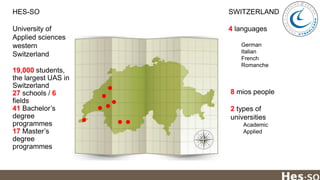
HES-SO

SWITZERLAND

University of
Applied sciences
western
Switzerland

4 languages

19,000 students,
the largest UAS in
Switzerland
27 schools / 6
fields
41 Bachelor’s
degree
programmes
17 Master’s
degree
programmes

German
Italian
French
Romanche

8 mios people
2 types of
universities
Academic
Applied
new tools
for new students
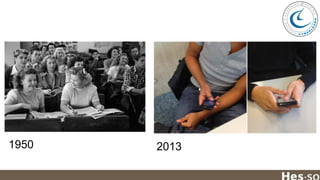
1950

2013
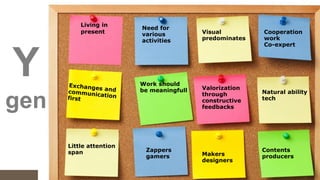
Living in
present

Y

Need for
various
activities

Work should
be meaningfull

gen
Little attention
span

Zappers
gamers

Visual
predominates

Valorization
through
constructive
feedbacks

Makers
designers

Cooperation
work
Co-expert

Natural ability
tech

Contents
producers
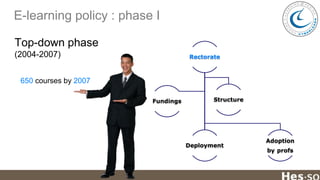
E-learning policy : phase I
Top-down phase
(2004-2007)

Rectorate

650 courses by 2007
Fundings

Structure

Deployment

Adoption
by profs
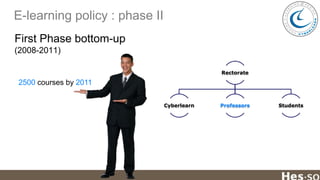
E-learning policy : phase II
First Phase bottom-up
(2008-2011)
Rectorate

2500 courses by 2011
Cyberlearn

Professors

Students
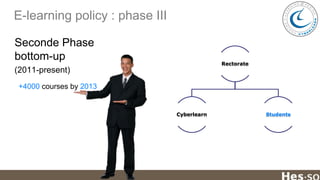
E-learning policy : phase III
Seconde Phase
bottom-up

Rectorate

(2011-present)
+4000 courses by 2013

Cyberlearn

Students
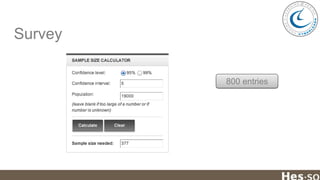
Survey
800 entries
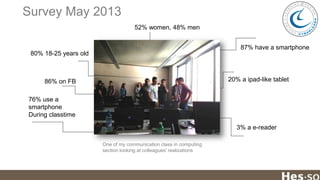
Survey May 2013
52% women, 48% men
87% have a smartphone
80% 18-25 years old

20% a ipad-like tablet

86% on FB

76% use a
smartphone
During classtime
3% a e-reader
One of my communication class in computing
section looking at colleagues' realizations
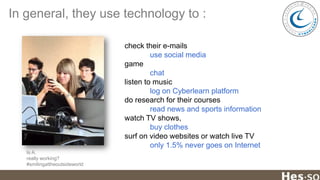
In general, they use technology to :
check their e-mails
use social media
game
chat
listen to music
log on Cyberlearn platform
do research for their courses
read news and sports information
watch TV shows,
buy clothes
surf on video websites or watch live TV
only 1.5% never goes on Internet
Is A.
really working?
#smilingattheoutsideworld
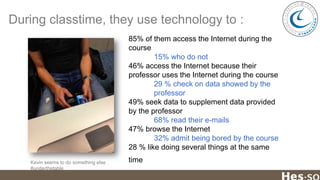
During classtime, they use technology to :
85% of them access the Internet during the
course
15% who do not
46% access the Internet because their
professor uses the Internet during the course
29 % check on data showed by the
professor
49% seek data to supplement data provided
by the professor
68% read their e-mails
47% browse the Internet
32% admit being bored by the course
28 % like doing several things at the same
Kevin seems to do something else
#underthetable

time
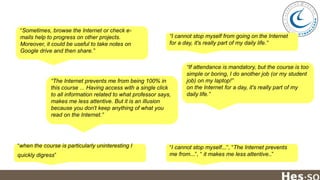
“Sometimes, browse the Internet or check emails help to progress on other projects.
Moreover, it could be useful to take notes on
Google drive and then share.”

“I cannot stop myself from going on the Internet
for a day, it's really part of my daily life.”

“The Internet prevents me from being 100% in
this course ... Having access with a single click
to all information related to what professor says,
makes me less attentive. But it is an illusion
because you don't keep anything of what you
read on the Internet.”

“when the course is particularly uninteresting I
quickly digress”

“If attendance is mandatory, but the course is too
simple or boring, I do another job (or my student
job) on my laptop!”
on the Internet for a day, it's really part of my
daily life.”

“I cannot stop myself...”, “The Internet prevents
me from...”, “ it makes me less attentive..”
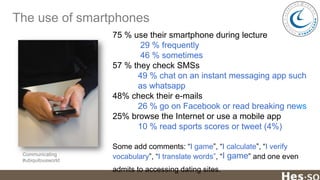
The use of smartphones
75 % use their smartphone during lecture
29 % frequently
46 % sometimes
57 % they check SMSs
49 % chat on an instant messaging app such
as whatsapp
48% check their e-mails
26 % go on Facebook or read breaking news
25% browse the Internet or use a mobile app
10 % read sports scores or tweet (4%)

Communicating
#ubiquitousworld

Some add comments: “I game”, “I calculate”, “I verify
vocabulary”, “I translate words”, “I game” and one even
admits to accessing dating sites.
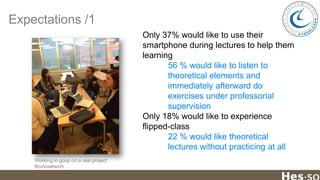
Expectations /1
Only 37% would like to use their
smartphone during lectures to help them
learning
56 % would like to listen to
theoretical elements and
immediately afterward do
exercises under professorial
supervision
Only 18% would like to experience
flipped-class
22 % would like theoretical
lectures without practicing at all
Working in goup on a real project
#putusatwork
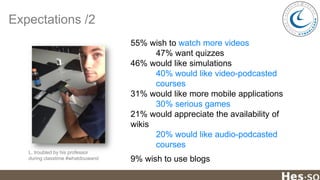
Expectations /2
55% wish to watch more videos
47% want quizzes
46% would like simulations
40% would like video-podcasted
courses
31% would like more mobile applications
30% serious games
21% would appreciate the availability of
wikis
20% would like audio-podcasted
courses
L. troubled by his professor
during classtime #whatdouwand

9% wish to use blogs
e-learning future orientation
Help professors making their courses more interactive
Quizzes, instant polls, mini videos
Develop mobile apps to be used outside the classroom
Google m-drill and try it
Implement some serious games
Google gademavo and try it
Realize a MOOC as a pilot based on video
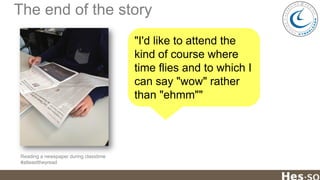
The end of the story
"I'd like to attend the
kind of course where
time flies and to which I
can say "wow" rather
than "ehmm""

Reading a newspaper during classtime
#atleasttheyread

Focusing on “generation Y” students’ expectations: a new way of conceiving an e-learning strategy

  • 1.
    Focusing on “generationY” students’ expectations: a new way of conceiving an e-learning strategy Prof. Anne-Dominique Salamin Guillaume Fort UAS Western Switzerland eLearn conference 2013 – Las Vegas
  • 2.
    HES-SO SWITZERLAND University of Applied sciences western Switzerland 4languages 19,000 students, the largest UAS in Switzerland 27 schools / 6 fields 41 Bachelor’s degree programmes 17 Master’s degree programmes German Italian French Romanche 8 mios people 2 types of universities Academic Applied
  • 3.
  • 4.
  • 5.
    Living in present Y Need for various activities Workshould be meaningfull gen Little attention span Zappers gamers Visual predominates Valorization through constructive feedbacks Makers designers Cooperation work Co-expert Natural ability tech Contents producers
  • 6.
    E-learning policy :phase I Top-down phase (2004-2007) Rectorate 650 courses by 2007 Fundings Structure Deployment Adoption by profs
  • 7.
    E-learning policy :phase II First Phase bottom-up (2008-2011) Rectorate 2500 courses by 2011 Cyberlearn Professors Students
  • 8.
    E-learning policy :phase III Seconde Phase bottom-up Rectorate (2011-present) +4000 courses by 2013 Cyberlearn Students
  • 9.
  • 10.
    Survey May 2013 52%women, 48% men 87% have a smartphone 80% 18-25 years old 20% a ipad-like tablet 86% on FB 76% use a smartphone During classtime 3% a e-reader One of my communication class in computing section looking at colleagues' realizations
  • 11.
    In general, theyuse technology to : check their e-mails use social media game chat listen to music log on Cyberlearn platform do research for their courses read news and sports information watch TV shows, buy clothes surf on video websites or watch live TV only 1.5% never goes on Internet Is A. really working? #smilingattheoutsideworld
  • 12.
    During classtime, theyuse technology to : 85% of them access the Internet during the course 15% who do not 46% access the Internet because their professor uses the Internet during the course 29 % check on data showed by the professor 49% seek data to supplement data provided by the professor 68% read their e-mails 47% browse the Internet 32% admit being bored by the course 28 % like doing several things at the same Kevin seems to do something else #underthetable time
  • 13.
    “Sometimes, browse theInternet or check emails help to progress on other projects. Moreover, it could be useful to take notes on Google drive and then share.” “I cannot stop myself from going on the Internet for a day, it's really part of my daily life.” “The Internet prevents me from being 100% in this course ... Having access with a single click to all information related to what professor says, makes me less attentive. But it is an illusion because you don't keep anything of what you read on the Internet.” “when the course is particularly uninteresting I quickly digress” “If attendance is mandatory, but the course is too simple or boring, I do another job (or my student job) on my laptop!” on the Internet for a day, it's really part of my daily life.” “I cannot stop myself...”, “The Internet prevents me from...”, “ it makes me less attentive..”
  • 14.
    The use ofsmartphones 75 % use their smartphone during lecture 29 % frequently 46 % sometimes 57 % they check SMSs 49 % chat on an instant messaging app such as whatsapp 48% check their e-mails 26 % go on Facebook or read breaking news 25% browse the Internet or use a mobile app 10 % read sports scores or tweet (4%) Communicating #ubiquitousworld Some add comments: “I game”, “I calculate”, “I verify vocabulary”, “I translate words”, “I game” and one even admits to accessing dating sites.
  • 15.
    Expectations /1 Only 37%would like to use their smartphone during lectures to help them learning 56 % would like to listen to theoretical elements and immediately afterward do exercises under professorial supervision Only 18% would like to experience flipped-class 22 % would like theoretical lectures without practicing at all Working in goup on a real project #putusatwork
  • 16.
    Expectations /2 55% wishto watch more videos 47% want quizzes 46% would like simulations 40% would like video-podcasted courses 31% would like more mobile applications 30% serious games 21% would appreciate the availability of wikis 20% would like audio-podcasted courses L. troubled by his professor during classtime #whatdouwand 9% wish to use blogs
  • 17.
    e-learning future orientation Helpprofessors making their courses more interactive Quizzes, instant polls, mini videos Develop mobile apps to be used outside the classroom Google m-drill and try it Implement some serious games Google gademavo and try it Realize a MOOC as a pilot based on video
  • 18.
    The end ofthe story "I'd like to attend the kind of course where time flies and to which I can say "wow" rather than "ehmm"" Reading a newspaper during classtime #atleasttheyread