Ethics and
Behavior
in
Organizations
.
INTRODUCTION

 What is ethical behavior?
 How do ethical dilemmas complicate the workplace?
 How can high ethical standards be maintained?
 What is corporate social responsibility?
 How do organizations and governments work together in

society?
What is ethical behavior?
 Ethics


Code of moral principles.



Set standards of “good” and “bad” as opposed to “right” and
“wrong.”

 Ethical behavior


What is accepted as good and right in the context of the
governing moral code.
What is ethical behavior?
 Law, values, and ethical behavior:
 Legal behavior is not necessarily ethical behavior.
 Personal values help determine individual ethical behavior.
 Terminal values
 Instrumental values

.
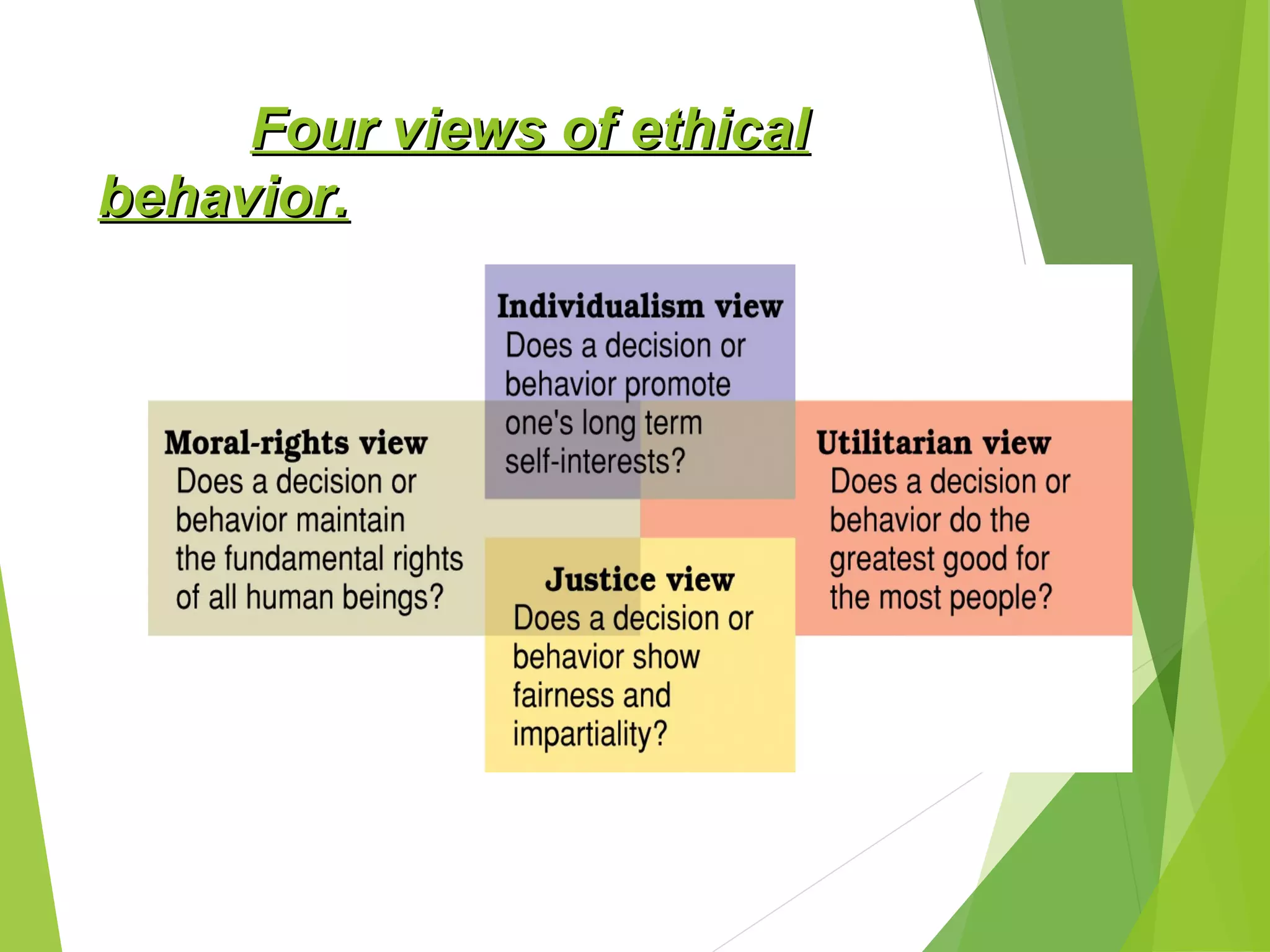
Four views of ethical
behavior.
What is ethical behavior?
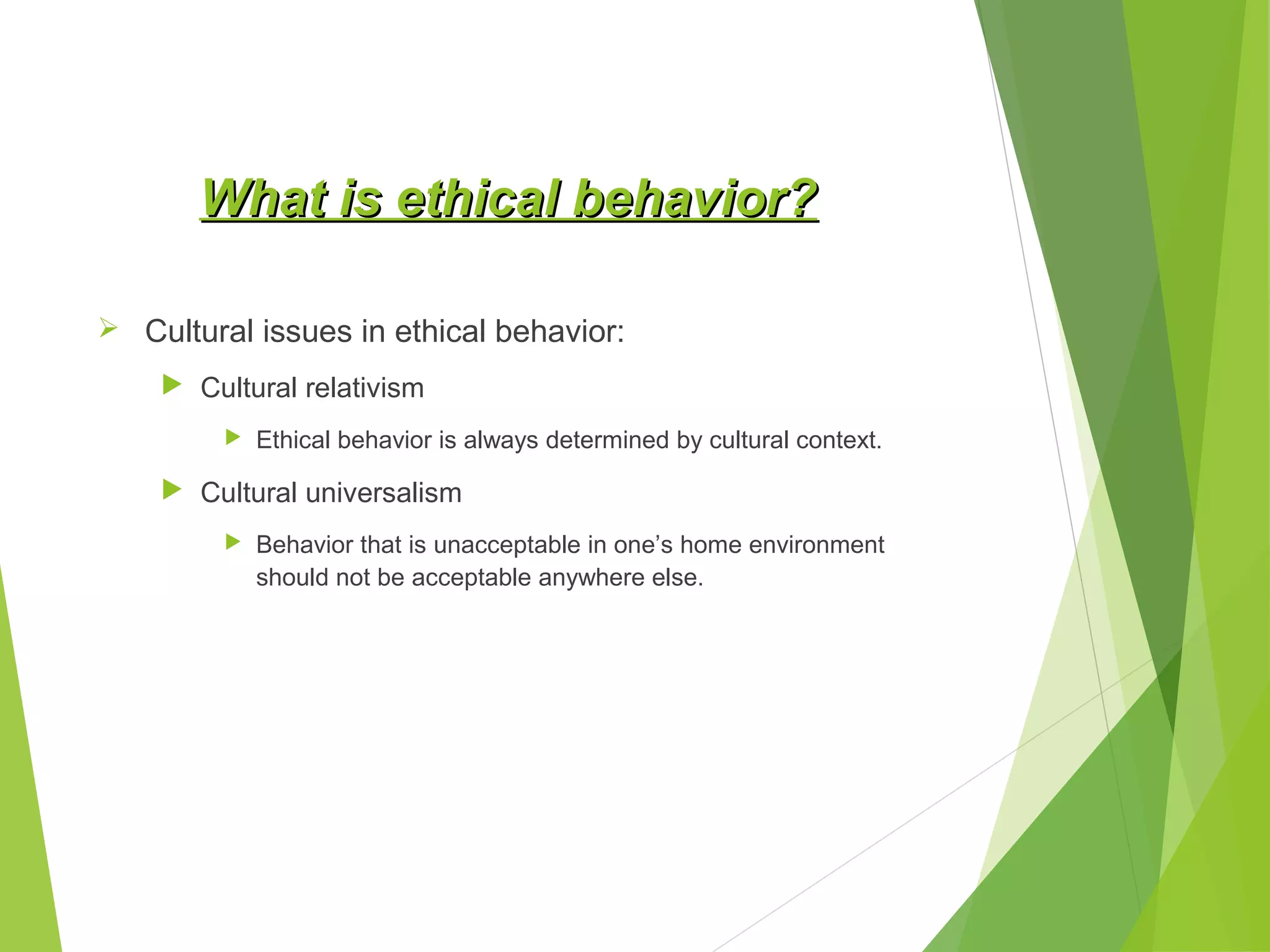
 Cultural issues in ethical behavior:
 Cultural relativism


Ethical behavior is always determined by cultural context.

 Cultural universalism


Behavior that is unacceptable in one’s home environment
should not be acceptable anywhere else.
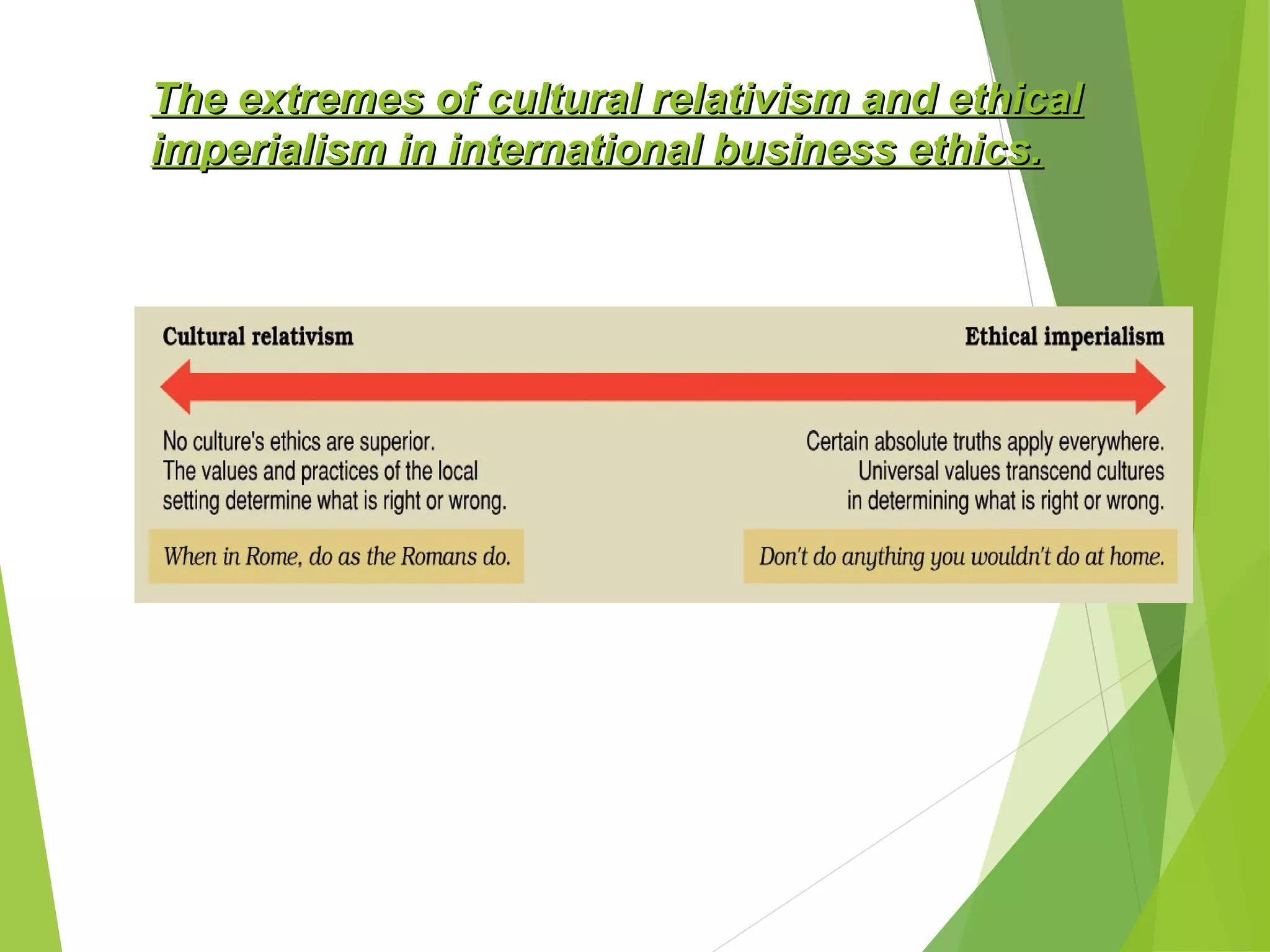
The extremes of cultural relativism and ethical
imperialism in international business ethics.
Respect for human dignity
• Create culture that values employees, customers, and
suppliers.
• Keep a safe workplace.
• Produce safe products and services.
Respect for basic rights
• Protect rights of employees, customers, and communities.
• Avoid anything that threatening safety, health, education, and
living standards.
Be good citizens
• Support social institutions, including economic and educational
systems.
• Work with local government and institutions to protect
environment.
How do ethical dilemmas
complicate the workplace?
 An ethical dilemma occurs when

choices, although having potential for
personal and/or organizational benefit,
may be considered unethical.
 Ethical dilemmas include:
 Discrimination
 Sexual harassment
 Conflicts of interest
 Customer confidence
 Organizational resources
How do ethical dilemmas complicate the
workplace?
 Ethical behavior can be rationalized by

convincing yourself that:
 Behavior

is not really illegal.

 Behavior

is really in everyone’s best interests.

 Nobody
 The

will ever find out.

organization will “protect” you.
10
 Factors influencing ethical behavior include:
 The person
 Family influences, religious values, personal standards,

and personal needs.

 The organization
 Supervisory behavior, peer group norms and behavior,

and policy statements and written rules.

 The environment
 Government laws and regulations, societal norms and

values, and competitive climate in an industry.
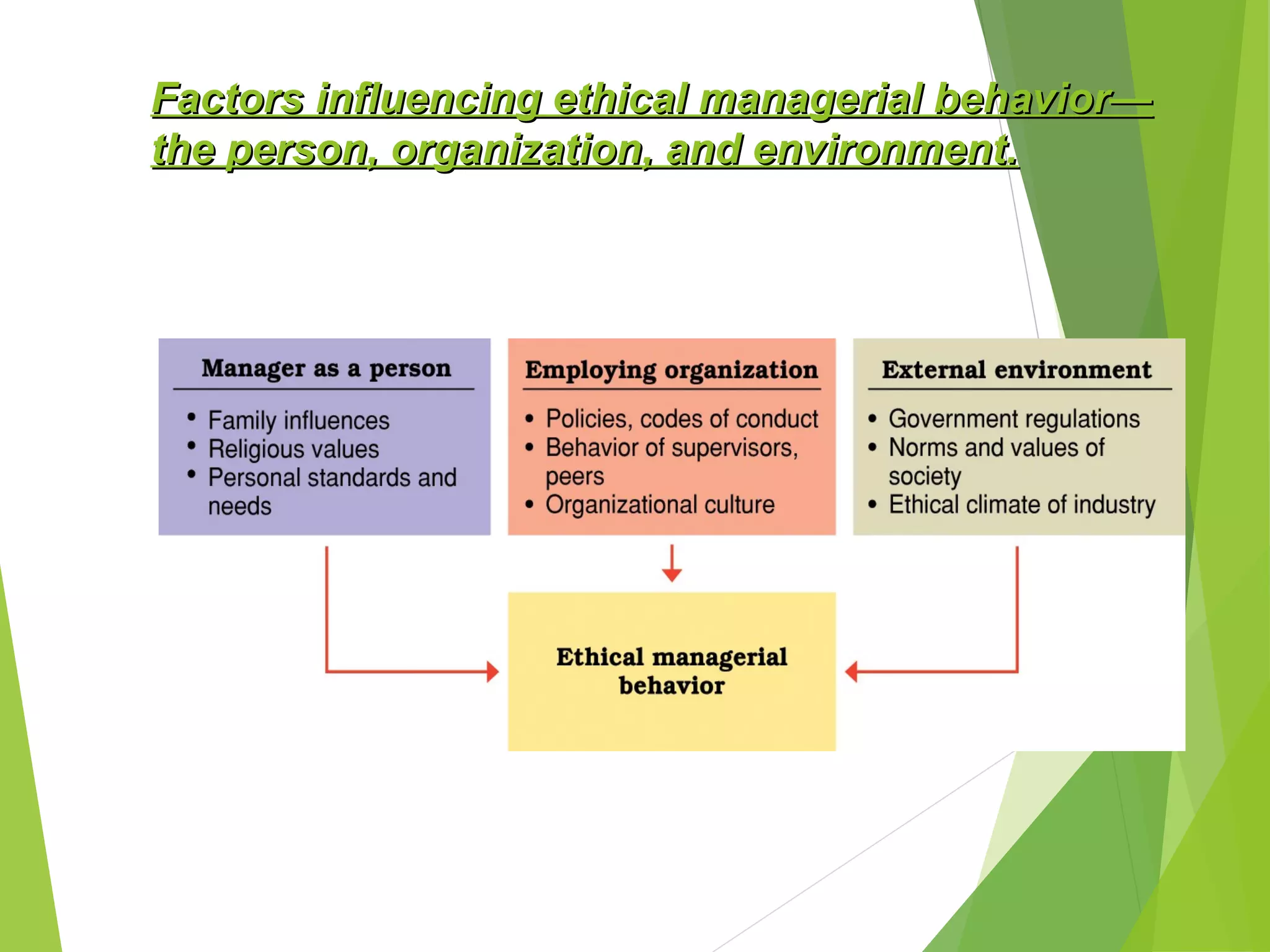
Factors influencing ethical managerial behavior—
the person, organization, and environment.
How can high ethical standards be
maintained?

 Ethics training:
Structured programs that help
participants to understand
ethical aspects of decision
making.
Helps people incorporate high
ethical standards into daily life.
Helps people deal with ethical
issues under pressure.
How can high ethical standards
be maintained?
 Ethical role models:
 Top managers serve as ethical role models.
 All managers can influence the ethical behavior

of people who work for and with them.
 Excessive pressure can foster unethical

behavior.
 Managers should be realistic in setting

performance goals for others.
How can high ethical standards be
maintained?
 Codes of ethics:

 Formal

statement of an organization’s
values and ethical principles regarding
how to behave in situations susceptible
to the creation of ethical dilemmas.



Areas often covered by codes of ethics:

 Bribes

and kickbacks
 Political contributions
 Honesty of books or records
 Customer/supplier relationships
 Confidentiality of corporate information
What is corporate social responsibility?

 Corporate social responsibility:
 Looks at ethical issues on the organization level.
 Obligates organizations to act in ways that serve both its

own interests and the interests of society at large.
What is corporate social responsibility?
 Beliefs that guide socially responsible

business practices:

 People do their best with a balance of work and

family life.
 Organizations perform best in healthy
communities.
 Organizations gain by respecting the natural
environment.
 Organizations must be managed and led for longterm success.
 Organizations must protect their reputations.
What is corporate social responsibility?


Arguments against
social responsibility:






Reduced business
profits
Higher business
costs
Dilution of business
purpose
Too much social
power for business
Lack of public
accountability



Arguments in favor
of social
responsibility:






Adds long-run
profits
Improved public
image
Avoids more
government
regulation
Businesses have
resources and
ethical obligation
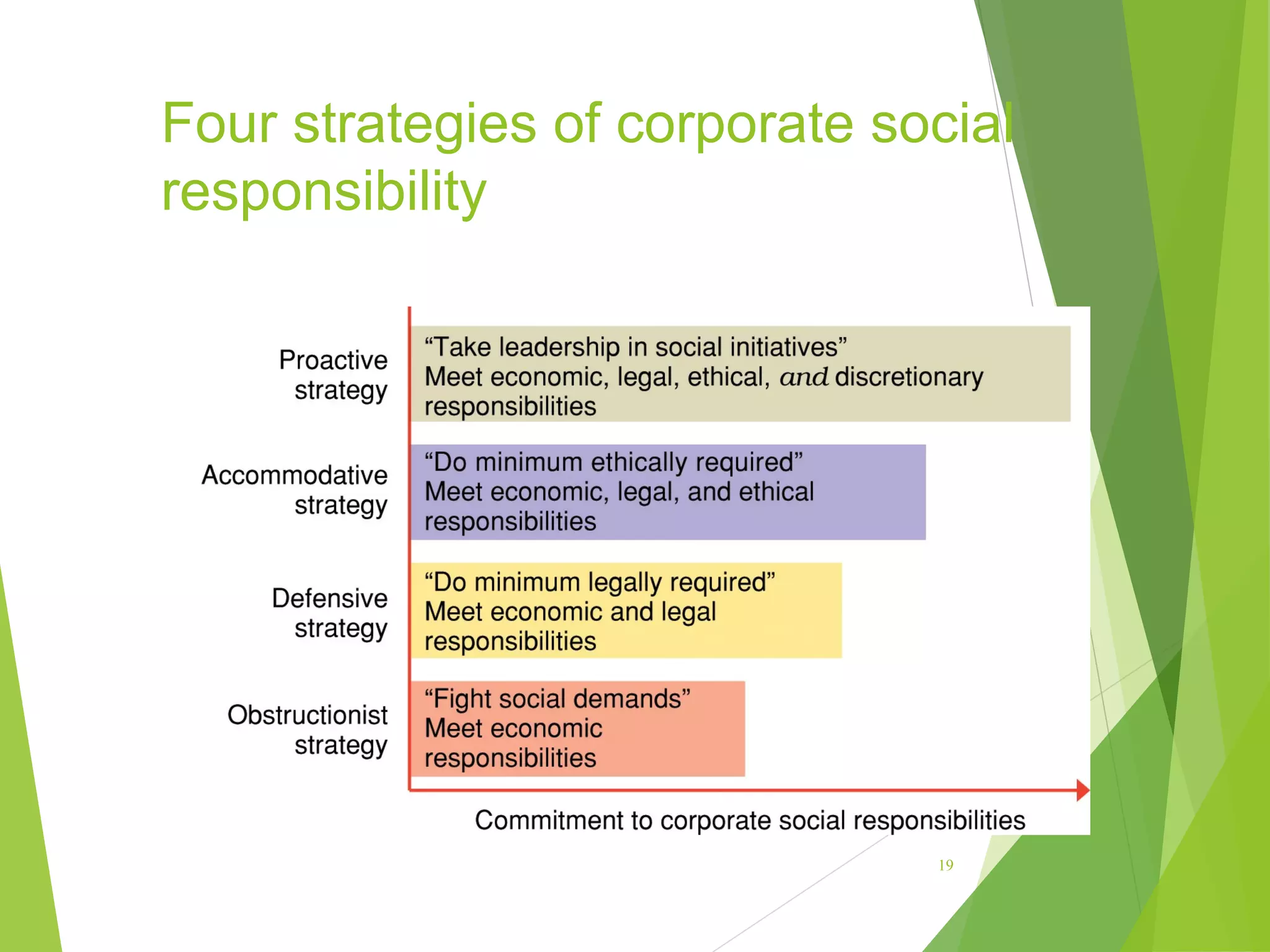
Four strategies of corporate social
responsibility

19
How do organizations and
governments work together in
society?
 How government influences organizations:

 Common areas of government regulation of business

affairs:
 Occupational safety and health
 Fair labor practices
 Consumer protection
 Environmental protection

20
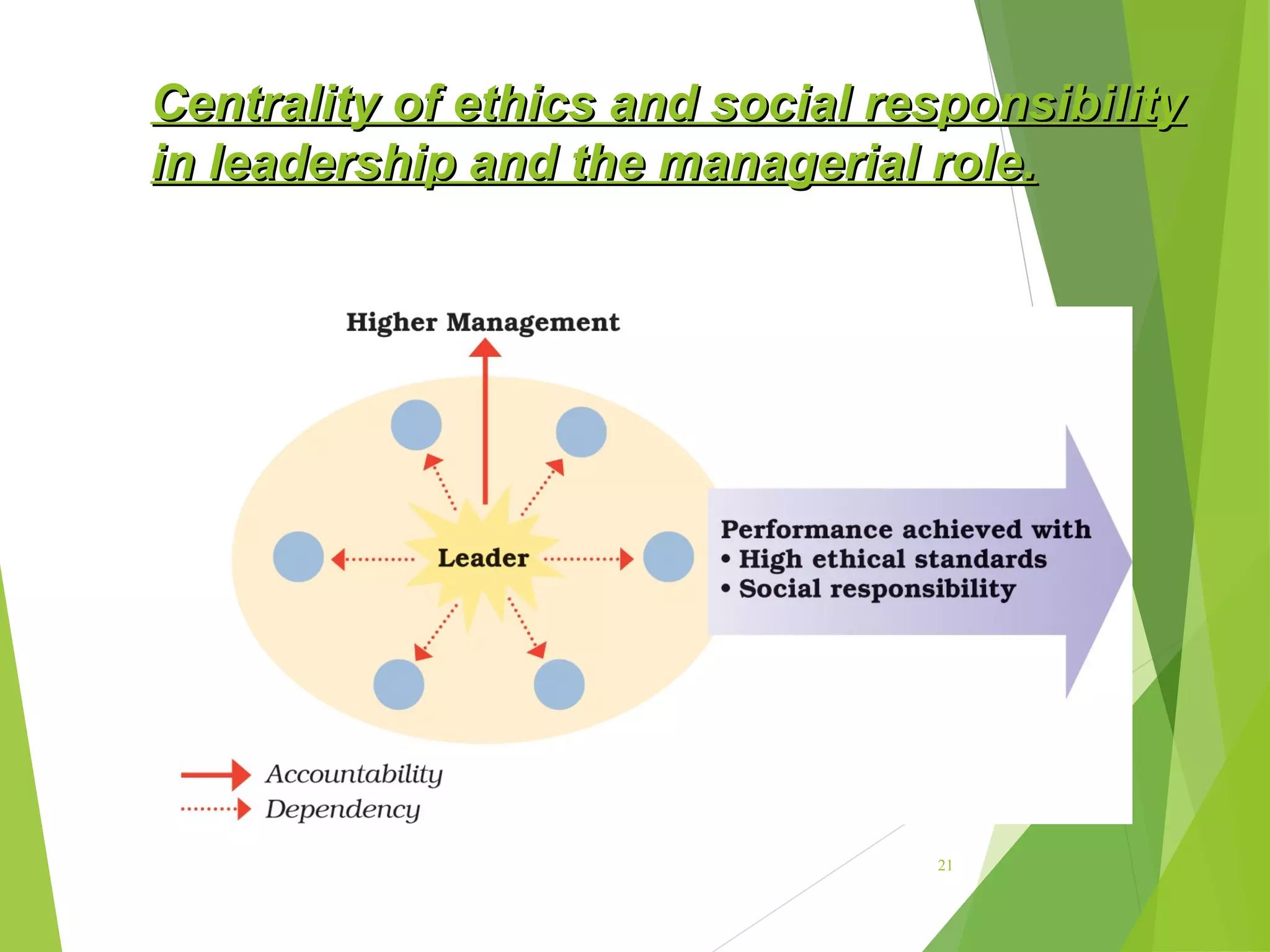
Centrality of ethics and social responsibility
in leadership and the managerial role.

21
REFERENCES:
Source: Developed from Thomas Donaldson, “Values in Tension: Ethics
Away from Home,” Harvard Business Review, vol. 74 (September-October
1996), pp. 48-62.

2004 © John Wiley & Sons, Inc
Ethical behavior code
Theories of ethics

22

201228429 slideshare

  • 1.
  • 2.
    INTRODUCTION  What isethical behavior?  How do ethical dilemmas complicate the workplace?  How can high ethical standards be maintained?  What is corporate social responsibility?  How do organizations and governments work together in society?
  • 3.
    What is ethicalbehavior?  Ethics  Code of moral principles.  Set standards of “good” and “bad” as opposed to “right” and “wrong.”  Ethical behavior  What is accepted as good and right in the context of the governing moral code.
  • 4.
    What is ethicalbehavior?  Law, values, and ethical behavior:  Legal behavior is not necessarily ethical behavior.  Personal values help determine individual ethical behavior.  Terminal values  Instrumental values .
  • 5.
    Four views ofethical behavior.
  • 6.
    What is ethicalbehavior?  Cultural issues in ethical behavior:  Cultural relativism  Ethical behavior is always determined by cultural context.  Cultural universalism  Behavior that is unacceptable in one’s home environment should not be acceptable anywhere else.
  • 7.
    The extremes ofcultural relativism and ethical imperialism in international business ethics.
  • 8.
    Respect for humandignity • Create culture that values employees, customers, and suppliers. • Keep a safe workplace. • Produce safe products and services. Respect for basic rights • Protect rights of employees, customers, and communities. • Avoid anything that threatening safety, health, education, and living standards. Be good citizens • Support social institutions, including economic and educational systems. • Work with local government and institutions to protect environment.
  • 9.
    How do ethicaldilemmas complicate the workplace?  An ethical dilemma occurs when choices, although having potential for personal and/or organizational benefit, may be considered unethical.  Ethical dilemmas include:  Discrimination  Sexual harassment  Conflicts of interest  Customer confidence  Organizational resources
  • 10.
    How do ethicaldilemmas complicate the workplace?  Ethical behavior can be rationalized by convincing yourself that:  Behavior is not really illegal.  Behavior is really in everyone’s best interests.  Nobody  The will ever find out. organization will “protect” you. 10
  • 11.
     Factors influencingethical behavior include:  The person  Family influences, religious values, personal standards, and personal needs.  The organization  Supervisory behavior, peer group norms and behavior, and policy statements and written rules.  The environment  Government laws and regulations, societal norms and values, and competitive climate in an industry.
  • 12.
    Factors influencing ethicalmanagerial behavior— the person, organization, and environment.
  • 13.
    How can highethical standards be maintained?  Ethics training: Structured programs that help participants to understand ethical aspects of decision making. Helps people incorporate high ethical standards into daily life. Helps people deal with ethical issues under pressure.
  • 14.
    How can highethical standards be maintained?  Ethical role models:  Top managers serve as ethical role models.  All managers can influence the ethical behavior of people who work for and with them.  Excessive pressure can foster unethical behavior.  Managers should be realistic in setting performance goals for others.
  • 15.
    How can highethical standards be maintained?  Codes of ethics:  Formal statement of an organization’s values and ethical principles regarding how to behave in situations susceptible to the creation of ethical dilemmas.  Areas often covered by codes of ethics:  Bribes and kickbacks  Political contributions  Honesty of books or records  Customer/supplier relationships  Confidentiality of corporate information
  • 16.
    What is corporatesocial responsibility?  Corporate social responsibility:  Looks at ethical issues on the organization level.  Obligates organizations to act in ways that serve both its own interests and the interests of society at large.
  • 17.
    What is corporatesocial responsibility?  Beliefs that guide socially responsible business practices:  People do their best with a balance of work and family life.  Organizations perform best in healthy communities.  Organizations gain by respecting the natural environment.  Organizations must be managed and led for longterm success.  Organizations must protect their reputations.
  • 18.
    What is corporatesocial responsibility?  Arguments against social responsibility:      Reduced business profits Higher business costs Dilution of business purpose Too much social power for business Lack of public accountability  Arguments in favor of social responsibility:     Adds long-run profits Improved public image Avoids more government regulation Businesses have resources and ethical obligation
  • 19.
    Four strategies ofcorporate social responsibility 19
  • 20.
    How do organizationsand governments work together in society?  How government influences organizations:  Common areas of government regulation of business affairs:  Occupational safety and health  Fair labor practices  Consumer protection  Environmental protection 20
  • 21.
    Centrality of ethicsand social responsibility in leadership and the managerial role. 21
  • 22.
    REFERENCES: Source: Developed fromThomas Donaldson, “Values in Tension: Ethics Away from Home,” Harvard Business Review, vol. 74 (September-October 1996), pp. 48-62. 2004 © John Wiley & Sons, Inc Ethical behavior code Theories of ethics 22