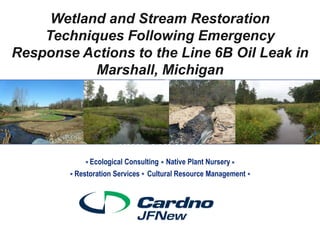
Wetland and Stream Restoration
    Techniques Following Emergency
Wetland and Stream Restoration
Response Actions to the Line 6B Oil Leak in
      TechniquesMichigan
           Marshall, Following
Emergency Response Actions to
the Line 6B Oil Leak in Marshall,
            Michigan
             Ecological Consulting Native Plant Nursery
         Restoration Services Cultural Resource Management
Background
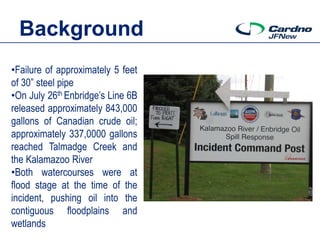
•Failure of approximately 5 feet
of 30” steel pipe
•On July 26th Enbridge’s Line 6B
released approximately 843,000
gallons of Canadian crude oil;
approximately 337,0000 gallons
reached Talmadge Creek and
the Kalamazoo River
•Both watercourses were at
flood stage at the time of the
incident, pushing oil into the
contiguous floodplains and
wetlands
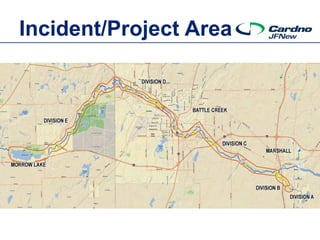
Incident/Project Area
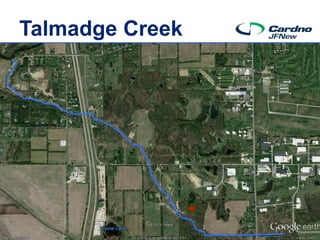
Talmadge Creek
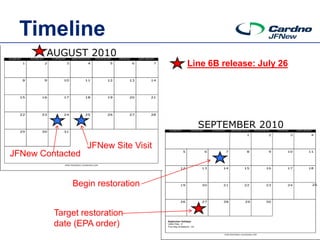
Timeline
 Text                                Line 6B release: July 26


                  JFNew Site Visit
JFNew Contacted


             Begin restoration


         Target restoration
         date (EPA order)
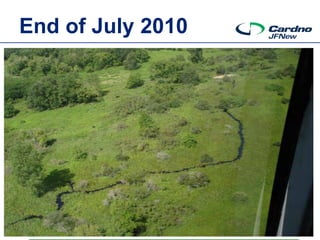
End of July 2010
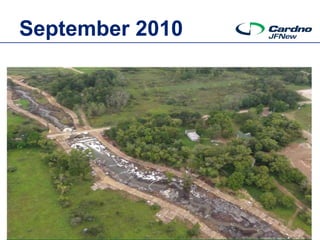
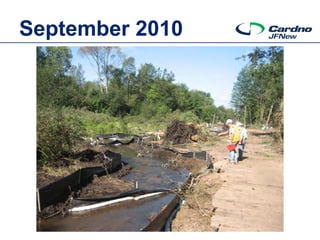
September 2010
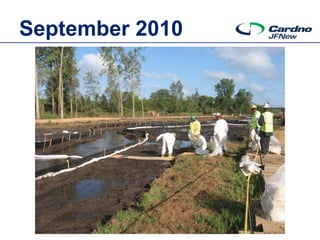
September 2010
September 2010
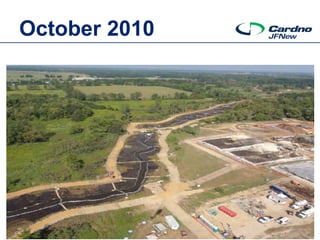
October 2010
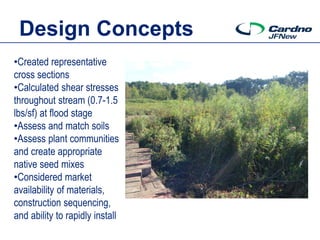
Design Concepts
•Created representative
cross sections
•Calculated shear stresses
throughout stream (0.7-1.5
lbs/sf) at flood stage
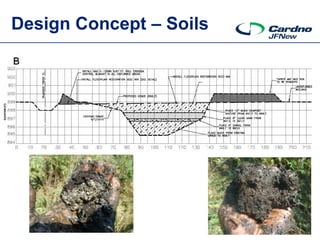
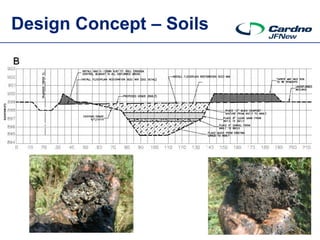
•Assess and match soils
•Assess plant communities
and create appropriate
native seed mixes
•Considered market
availability of materials,
construction sequencing,
and ability to rapidly install
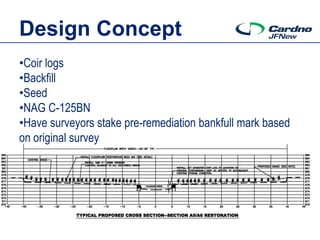
Design Concept
•Coir logs
•Backfill
•Seed
•NAG C-125BN
•Have surveyors stake pre-remediation bankfull mark based
on original survey
Design Concept – Soils
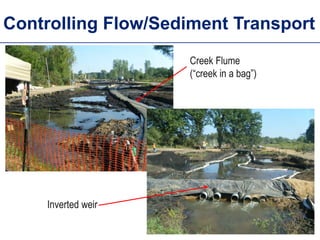
Controlling Flow/Sediment Transport
                    Creek Flume
                    (“creek in a bag”)


    Inverted weir
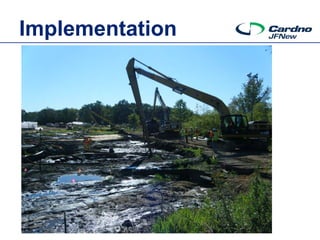
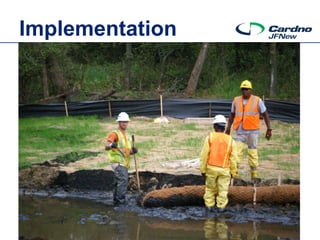
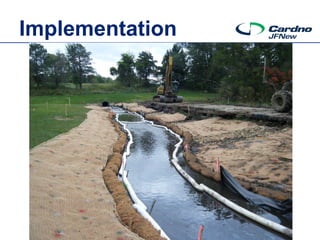
Implementation
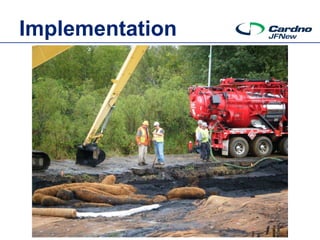
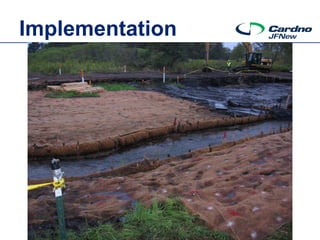
Implementation
Implementation
Implementation
Implementation
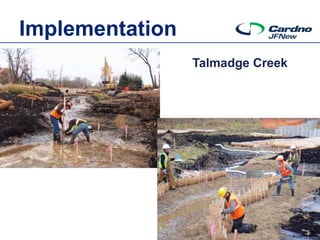
                 Talmadge Creek
Implementation
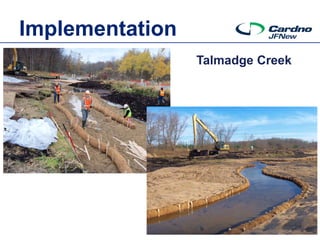
                 Talmadge Creek
Implementation
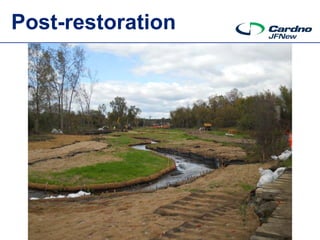
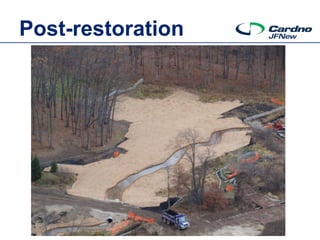
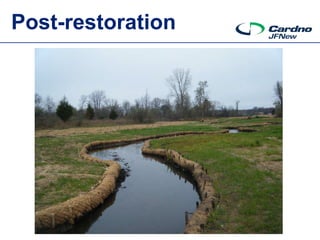
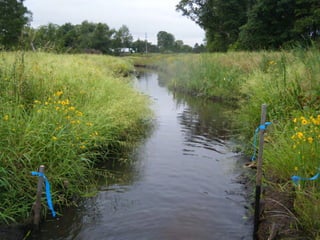
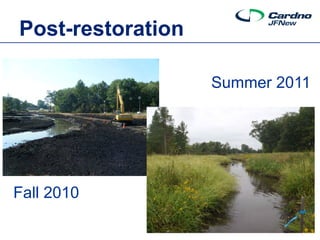
Post-restoration
Post-restoration
Post-restoration
Post-restoration

                   Summer 2011


Fall 2010
Design Concept – Soils
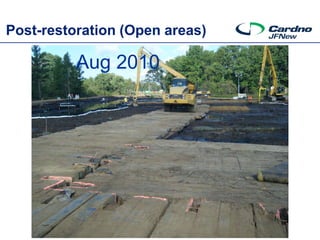
Post-restoration (Open areas)

          Aug 2010
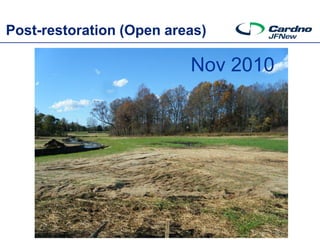
Post-restoration (Open areas)

                          Nov 2010
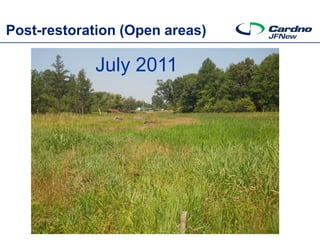
Post-restoration (Open areas)

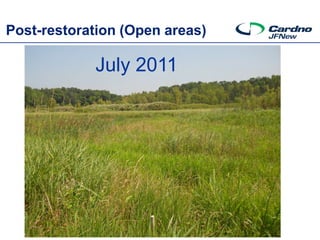
            July 2011
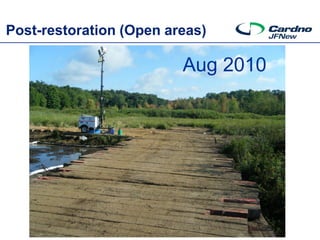
Post-restoration (Open areas)

                         Aug 2010
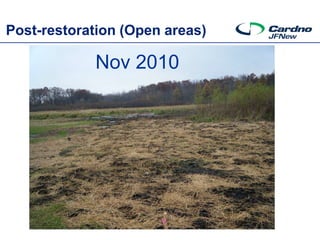
Post-restoration (Open areas)

            Nov 2010
            July 2011
Post-restoration (Open areas)

            July 2011
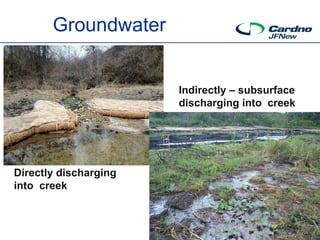
Groundwater


                       Indirectly – subsurface
                       discharging into creek


Directly discharging
into creek
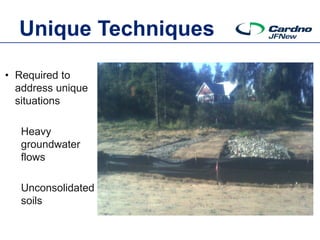
Unique Techniques

• Required to
  address unique
  situations

   Heavy
   groundwater
   flows

   Unconsolidated
   soils
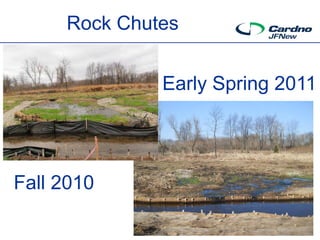
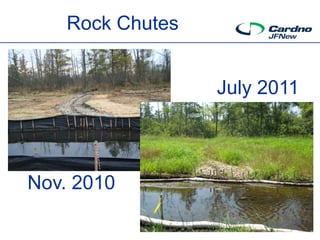
Rock Chutes


              Early Spring 2011


Fall 2010
Rock Chutes


                  July 2011


Nov. 2010
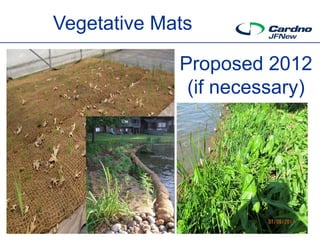
Vegetative Mats

             Proposed 2012
              (if necessary)
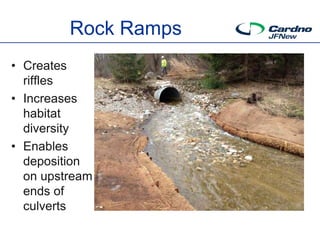
Rock Ramps
• Creates
  riffles
• Increases
  habitat
  diversity
• Enables
  deposition
  on upstream
  ends of
  culverts
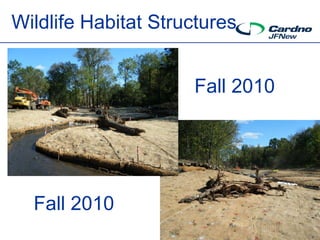
Wildlife Habitat Structures


                     Fall 2010


  Fall 2010
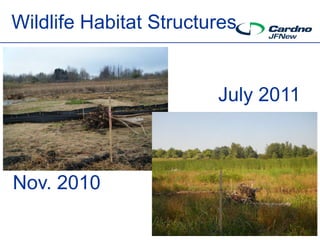
Wildlife Habitat Structures


                        July 2011


Nov. 2010
Stu Kogge
stu.kogge@cardno.com
517-898-9018
Indianapolis, IN Walkerton, IN Cincinnati, OH   Chicago, IL
Grand Haven, MI Ann Arbor, MI Madison, WI       Lansing, MI
The Cardno
Family of
Companies
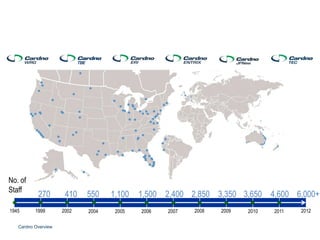
No. of
Staff
           270        410   550    1,100   1,500 2,400 2,850 3,350 3,650 4,600 6,000+
1945      1999       2002   2004    2005   2006   2007   2008   2009   2010   2011   2012

   Cardno Overview

2012 FEPA Presentation: Stu Kogge