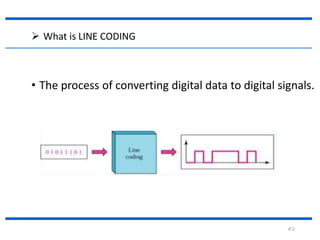
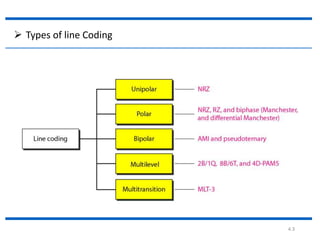
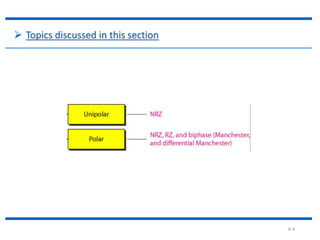
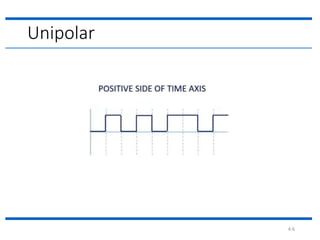
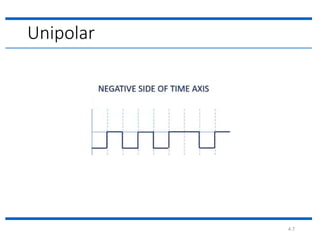
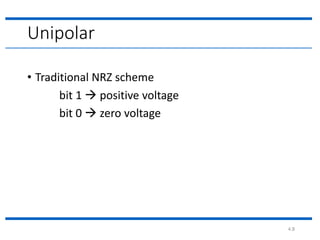
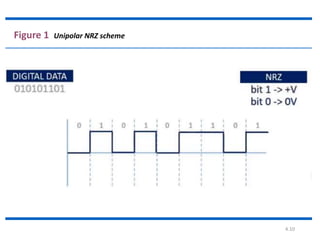
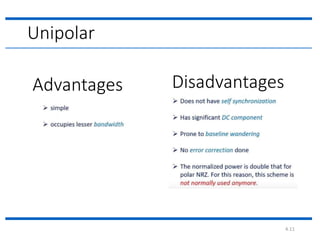
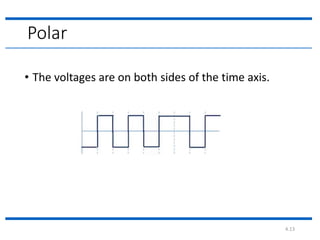
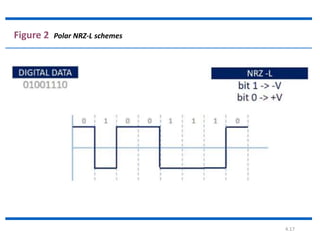
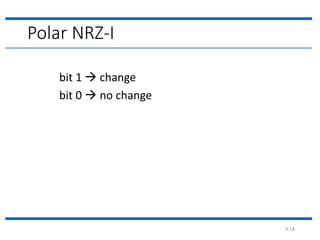
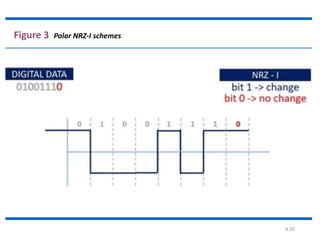
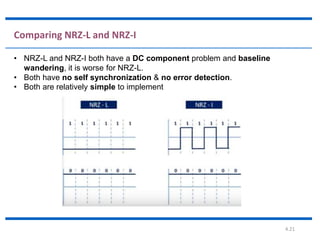
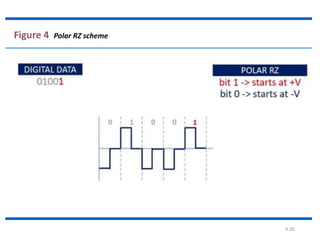
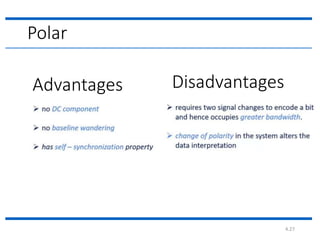
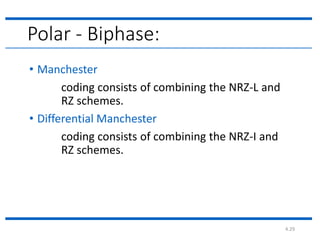
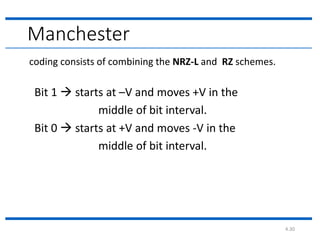
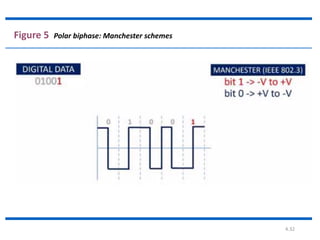
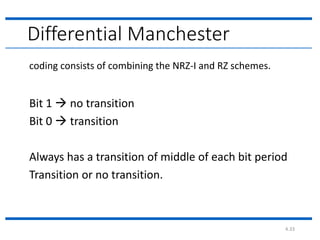
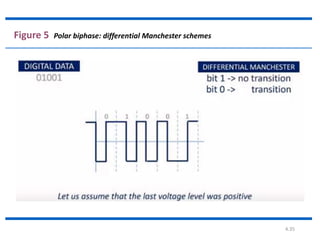
This document discusses different types of line coding used to convert digital data to digital signals for transmission. It describes unipolar coding, which uses a single voltage level, and polar coding, which uses both positive and negative voltages. Polar coding includes NRZ-L, NRZ-I, RZ, Manchester, and differential Manchester schemes. Manchester coding combines NRZ-L and RZ, using positive-to-negative or negative-to-positive transitions to indicate bits. Differential Manchester combines NRZ-I and RZ, using transitions to indicate 1s and no transition to indicate 0s. The document provides examples and diagrams of each type of coding.






![[Deck] What's New in Spark-Iceberg Integration via DSV2.pptx](https://cdn.slidesharecdn.com/ss_thumbnails/deckwhatsnewinspark-icebergintegrationviadsv2-260210005337-25955b12-thumbnail.jpg?width=640&height=640&fit=bounds)


