Preterm labor and Prematurity
Asheber Gaym M.D.
January 2009
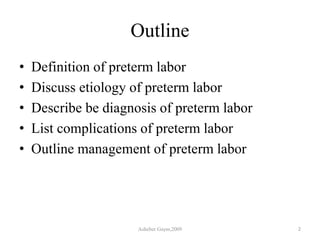
Outline
• Definition of preterm labor
• Discuss etiology of preterm labor
• Describe be diagnosis of preterm labor
• List complications of preterm labor
• Outline management of preterm labor
Asheber Gaym,2009 2
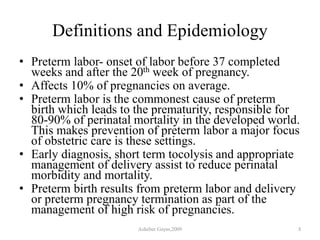
Definitions and Epidemiology
• Preterm labor- onset of labor before 37 completed
weeks and after the 20th week of pregnancy.
• Affects 10% of pregnancies on average.
• Preterm labor is the commonest cause of preterm
birth which leads to the prematurity, responsible for
80-90% of perinatal mortality in the developed world.
This makes prevention of preterm labor a major focus
of obstetric care is these settings.
• Early diagnosis, short term tocolysis and appropriate
management of delivery assist to reduce perinatal
morbidity and mortality.
• Preterm birth results from preterm labor and delivery
or preterm pregnancy termination as part of the
management of high risk of pregnancies.
Asheber Gaym,2009 3
Asheber Gaym,2009 4
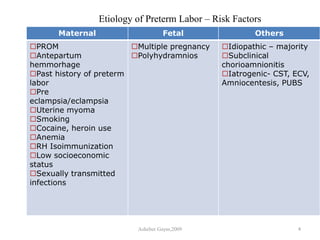
Etiology of Preterm Labor – Risk Factors
Maternal Fetal Others
PROM
Antepartum
hemmorhage
Past history of preterm
labor
Pre
eclampsia/eclampsia
Uterine myoma
Smoking
Cocaine, heroin use
Anemia
RH Isoimmunization
Low socioeconomic
status
Sexually transmitted
infections
Multiple pregnancy
Polyhydramnios
Idiopathic – majority
Subclinical
chorioamnionitis
Iatrogenic- CST, ECV,
Amniocentesis, PUBS
Diagnosis of Preterm Labor
• Confirmed Gestational Age <37 completed
weeks and
• Regular, painful, rhythmic uterine contractions
recurring at least twice in 20 minutes plus
• A cervical dilatation of at least 2 cms or
• Ruptured membranes or
• Cervical effacement of > 80% or
• Documented cervical change during follow up
Asheber Gaym,2009 5
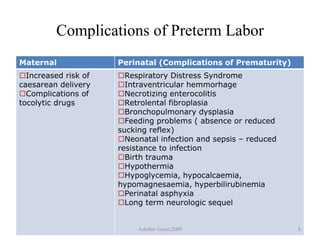
Complications of Preterm Labor
Maternal Perinatal (Complications of Prematurity)
Increased risk of
caesarean delivery
Complications of
tocolytic drugs
Respiratory Distress Syndrome
Intraventricular hemmorhage
Necrotizing enterocolitis
Retrolental fibroplasia
Bronchopulmonary dysplasia
Feeding problems ( absence or reduced
sucking reflex)
Neonatal infection and sepsis – reduced
resistance to infection
Birth trauma
Hypothermia
Hypoglycemia, hypocalcaemia,
hypomagnesaemia, hyperbilirubinemia
Perinatal asphyxia
Long term neurologic sequel
Asheber Gaym,2009 6
Asheber Gaym,2009 7
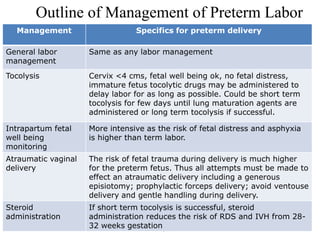
Outline of Management of Preterm Labor
Management Specifics for preterm delivery
General labor
management
Same as any labor management
Tocolysis Cervix <4 cms, fetal well being ok, no fetal distress,
immature fetus tocolytic drugs may be administered to
delay labor for as long as possible. Could be short term
tocolysis for few days until lung maturation agents are
administered or long term tocolysis if successful.
Intrapartum fetal
well being
monitoring
More intensive as the risk of fetal distress and asphyxia
is higher than term labor.
Atraumatic vaginal
delivery
The risk of fetal trauma during delivery is much higher
for the preterm fetus. Thus all attempts must be made to
effect an atraumatic delivery including a generous
episiotomy; prophylactic forceps delivery; avoid ventouse
delivery and gentle handling during delivery.
Steroid
administration
If short term tocolysis is successful, steroid
administration reduces the risk of RDS and IVH from 28-
32 weeks gestation
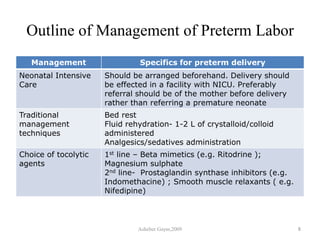
Outline of Management of Preterm Labor
Management Specifics for preterm delivery
Neonatal Intensive
Care
Should be arranged beforehand. Delivery should
be effected in a facility with NICU. Preferably
referral should be of the mother before delivery
rather than referring a premature neonate
Traditional
management
techniques
Bed rest
Fluid rehydration- 1-2 L of crystalloid/colloid
administered
Analgesics/sedatives administration
Choice of tocolytic
agents
1st line – Beta mimetics (e.g. Ritodrine );
Magnesium sulphate
2nd line- Prostaglandin synthase inhibitors (e.g.
Indomethacine) ; Smooth muscle relaxants ( e.g.
Nifedipine)
Asheber Gaym,2009 8

1.Preterm labor and Prematurity2.ppt

  • 1.
    Preterm labor andPrematurity Asheber Gaym M.D. January 2009
  • 2.
    Outline • Definition ofpreterm labor • Discuss etiology of preterm labor • Describe be diagnosis of preterm labor • List complications of preterm labor • Outline management of preterm labor Asheber Gaym,2009 2
  • 3.
    Definitions and Epidemiology •Preterm labor- onset of labor before 37 completed weeks and after the 20th week of pregnancy. • Affects 10% of pregnancies on average. • Preterm labor is the commonest cause of preterm birth which leads to the prematurity, responsible for 80-90% of perinatal mortality in the developed world. This makes prevention of preterm labor a major focus of obstetric care is these settings. • Early diagnosis, short term tocolysis and appropriate management of delivery assist to reduce perinatal morbidity and mortality. • Preterm birth results from preterm labor and delivery or preterm pregnancy termination as part of the management of high risk of pregnancies. Asheber Gaym,2009 3
  • 4.
    Asheber Gaym,2009 4 Etiologyof Preterm Labor – Risk Factors Maternal Fetal Others PROM Antepartum hemmorhage Past history of preterm labor Pre eclampsia/eclampsia Uterine myoma Smoking Cocaine, heroin use Anemia RH Isoimmunization Low socioeconomic status Sexually transmitted infections Multiple pregnancy Polyhydramnios Idiopathic – majority Subclinical chorioamnionitis Iatrogenic- CST, ECV, Amniocentesis, PUBS
  • 5.
    Diagnosis of PretermLabor • Confirmed Gestational Age <37 completed weeks and • Regular, painful, rhythmic uterine contractions recurring at least twice in 20 minutes plus • A cervical dilatation of at least 2 cms or • Ruptured membranes or • Cervical effacement of > 80% or • Documented cervical change during follow up Asheber Gaym,2009 5
  • 6.
    Complications of PretermLabor Maternal Perinatal (Complications of Prematurity) Increased risk of caesarean delivery Complications of tocolytic drugs Respiratory Distress Syndrome Intraventricular hemmorhage Necrotizing enterocolitis Retrolental fibroplasia Bronchopulmonary dysplasia Feeding problems ( absence or reduced sucking reflex) Neonatal infection and sepsis – reduced resistance to infection Birth trauma Hypothermia Hypoglycemia, hypocalcaemia, hypomagnesaemia, hyperbilirubinemia Perinatal asphyxia Long term neurologic sequel Asheber Gaym,2009 6
  • 7.
    Asheber Gaym,2009 7 Outlineof Management of Preterm Labor Management Specifics for preterm delivery General labor management Same as any labor management Tocolysis Cervix <4 cms, fetal well being ok, no fetal distress, immature fetus tocolytic drugs may be administered to delay labor for as long as possible. Could be short term tocolysis for few days until lung maturation agents are administered or long term tocolysis if successful. Intrapartum fetal well being monitoring More intensive as the risk of fetal distress and asphyxia is higher than term labor. Atraumatic vaginal delivery The risk of fetal trauma during delivery is much higher for the preterm fetus. Thus all attempts must be made to effect an atraumatic delivery including a generous episiotomy; prophylactic forceps delivery; avoid ventouse delivery and gentle handling during delivery. Steroid administration If short term tocolysis is successful, steroid administration reduces the risk of RDS and IVH from 28- 32 weeks gestation
  • 8.
    Outline of Managementof Preterm Labor Management Specifics for preterm delivery Neonatal Intensive Care Should be arranged beforehand. Delivery should be effected in a facility with NICU. Preferably referral should be of the mother before delivery rather than referring a premature neonate Traditional management techniques Bed rest Fluid rehydration- 1-2 L of crystalloid/colloid administered Analgesics/sedatives administration Choice of tocolytic agents 1st line – Beta mimetics (e.g. Ritodrine ); Magnesium sulphate 2nd line- Prostaglandin synthase inhibitors (e.g. Indomethacine) ; Smooth muscle relaxants ( e.g. Nifedipine) Asheber Gaym,2009 8