Preterm labour and
care of the preterm
baby
Group 3 presentation
Definition
• Preterm labour: this is the labour starting
spontaneously after gestation viability but
before 37 completed weeks of pregnancy.
• Labour is the process your body goes through
to give birth to your baby.
• Preterm labour can lead to premature birth.
This is when your baby is born early before 37
weeks of pregnancy.
• Preterm birth: this is the delivery that occurs
before 37 completed weeks.
• Early preterm: those occurs before 34 weeks
of gestation.
• Late preterm: those occuring between 34 and
36 completed weeks.
• Small for gestation age: Newborns whose
birth weight is usually <10th percentile for
gestation age.
• Large for gestation age: newborns whose birth
weight is > 90th percentiles for gestation age.
• Appropriate for gestation age: newborns
whose is between the 10th and 90th
percentiles.
• Low birth weight: neonates weighing 1500 to
2500g
• Very low birth weight: neonates weighing
between 500 and 1500g.
Causes of preterm labour
• High risk factors
1. History
2. Complication in present pregnancy
3. Iatrogenic
4. Idiopathic
1. History
a) Previous history of induced/ spontaneous
abortion/preterm delivery.
b) Pregnancy followed by assisted reproductive
techniques.
c) Asymptomatic bacteriuria/recurrent STI
d) Smoking habit
e) Low social-economic and nutrition status
f) Maternal stress.
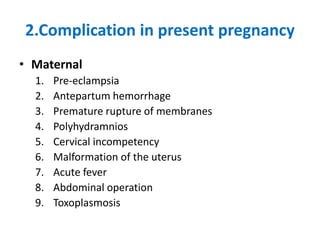
2.Complication in present pregnancy
• Maternal
1. Pre-eclampsia
2. Antepartum hemorrhage
3. Premature rupture of membranes
4. Polyhydramnios
5. Cervical incompetency
6. Malformation of the uterus
7. Acute fever
8. Abdominal operation
9. Toxoplasmosis
10. hypertension
11. nephritis
12. diabetes
13. low BMI(body mass index)
14. genital tract infections
15. bacteria vaginosis
16 chlamydia
• Fetal complications:
1. multiple pregnancy
2. Congenital malformation
3. Intrauterine death
• Placental complication;
1. Infraction
2. Thrombosis
3. Placental previa
4. Placental abruption
4. Iatrogenic
• This is a preterm delivery that occurs due to
medical or obstetric complication
5. Idiopathic
1. Premature effacement of the cervix.
2. Early engagement of the head
Diagnosis
• Regular uterine contractions with or without
pains
• Dilatation (>2cm) with 80% effacement the
cervix
• Length of the cervix (<2.5cm) with funnelling
of the internal Os
• Pelvic pressure, back ache. Vaginal discharge
and bleeding.
Management
• To prevent of preterm onset of labor if
possible
• To arrest preterm labor if contraindicated
• Appropriate management of labor
• Effective neonatal care
Prevention of preterm labor
1. Identification of risk factors from the history and
employing measures like; adequate rest,
nutritional supplements and avoidance of
smoking.
2. Premature effacement of cervix can be achieved
by; bed rest, and administration of tocolytic
agents.
3. Appropriate therapy, rest and hospitalization
4. Close observation for complicated pregnancy i.e
eclampsia, polyhydromnios and placental previa.
Investigation
• Full blood count
• Urine for routine analysis, culture and
sensitivity.
PRETERM LABOR pptx
PRETERM LABOR pptx

PRETERM LABOR pptx

  • 1.
    Preterm labour and careof the preterm baby Group 3 presentation
  • 2.
    Definition • Preterm labour:this is the labour starting spontaneously after gestation viability but before 37 completed weeks of pregnancy. • Labour is the process your body goes through to give birth to your baby. • Preterm labour can lead to premature birth. This is when your baby is born early before 37 weeks of pregnancy.
  • 3.
    • Preterm birth:this is the delivery that occurs before 37 completed weeks. • Early preterm: those occurs before 34 weeks of gestation. • Late preterm: those occuring between 34 and 36 completed weeks. • Small for gestation age: Newborns whose birth weight is usually <10th percentile for gestation age.
  • 4.
    • Large forgestation age: newborns whose birth weight is > 90th percentiles for gestation age. • Appropriate for gestation age: newborns whose is between the 10th and 90th percentiles. • Low birth weight: neonates weighing 1500 to 2500g • Very low birth weight: neonates weighing between 500 and 1500g.
  • 5.
    Causes of pretermlabour • High risk factors 1. History 2. Complication in present pregnancy 3. Iatrogenic 4. Idiopathic
  • 6.
    1. History a) Previoushistory of induced/ spontaneous abortion/preterm delivery. b) Pregnancy followed by assisted reproductive techniques. c) Asymptomatic bacteriuria/recurrent STI d) Smoking habit e) Low social-economic and nutrition status f) Maternal stress.
  • 7.
    2.Complication in presentpregnancy • Maternal 1. Pre-eclampsia 2. Antepartum hemorrhage 3. Premature rupture of membranes 4. Polyhydramnios 5. Cervical incompetency 6. Malformation of the uterus 7. Acute fever 8. Abdominal operation 9. Toxoplasmosis
  • 8.
    10. hypertension 11. nephritis 12.diabetes 13. low BMI(body mass index) 14. genital tract infections 15. bacteria vaginosis 16 chlamydia
  • 9.
    • Fetal complications: 1.multiple pregnancy 2. Congenital malformation 3. Intrauterine death
  • 10.
    • Placental complication; 1.Infraction 2. Thrombosis 3. Placental previa 4. Placental abruption
  • 11.
    4. Iatrogenic • Thisis a preterm delivery that occurs due to medical or obstetric complication 5. Idiopathic 1. Premature effacement of the cervix. 2. Early engagement of the head
  • 12.
    Diagnosis • Regular uterinecontractions with or without pains • Dilatation (>2cm) with 80% effacement the cervix • Length of the cervix (<2.5cm) with funnelling of the internal Os • Pelvic pressure, back ache. Vaginal discharge and bleeding.
  • 13.
    Management • To preventof preterm onset of labor if possible • To arrest preterm labor if contraindicated • Appropriate management of labor • Effective neonatal care
  • 14.
    Prevention of pretermlabor 1. Identification of risk factors from the history and employing measures like; adequate rest, nutritional supplements and avoidance of smoking. 2. Premature effacement of cervix can be achieved by; bed rest, and administration of tocolytic agents. 3. Appropriate therapy, rest and hospitalization 4. Close observation for complicated pregnancy i.e eclampsia, polyhydromnios and placental previa.
  • 15.
    Investigation • Full bloodcount • Urine for routine analysis, culture and sensitivity.