South America
1.  How have historical figures and events affected South America today?How has location affected the development of countries in South America?How has the role of the government changed over time in South America countries?What physical and cultural characteristics make the countries of South America countries?What factors have contributed to economics success and failures in different South American countries?Essential Questions
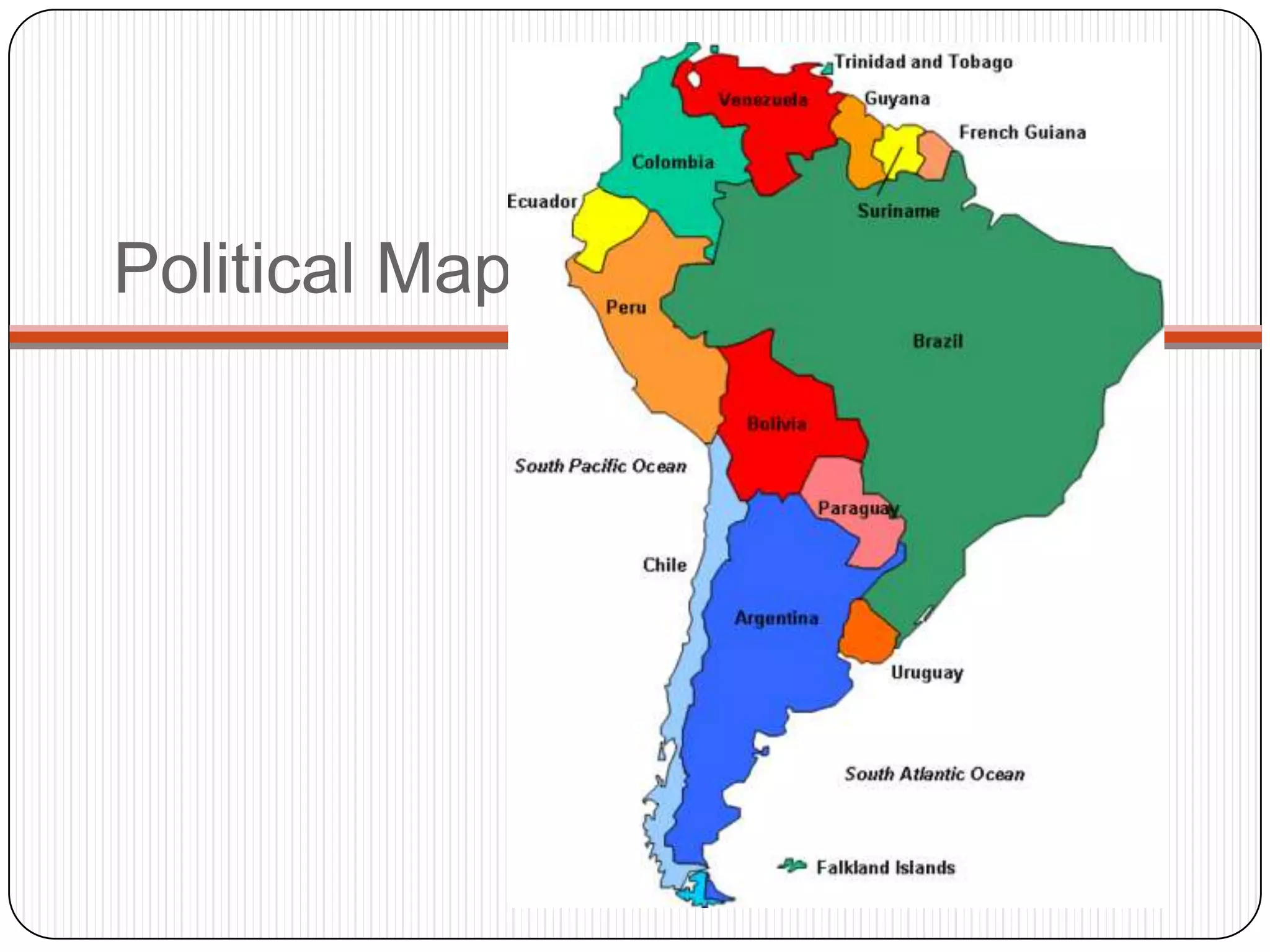
Political Map
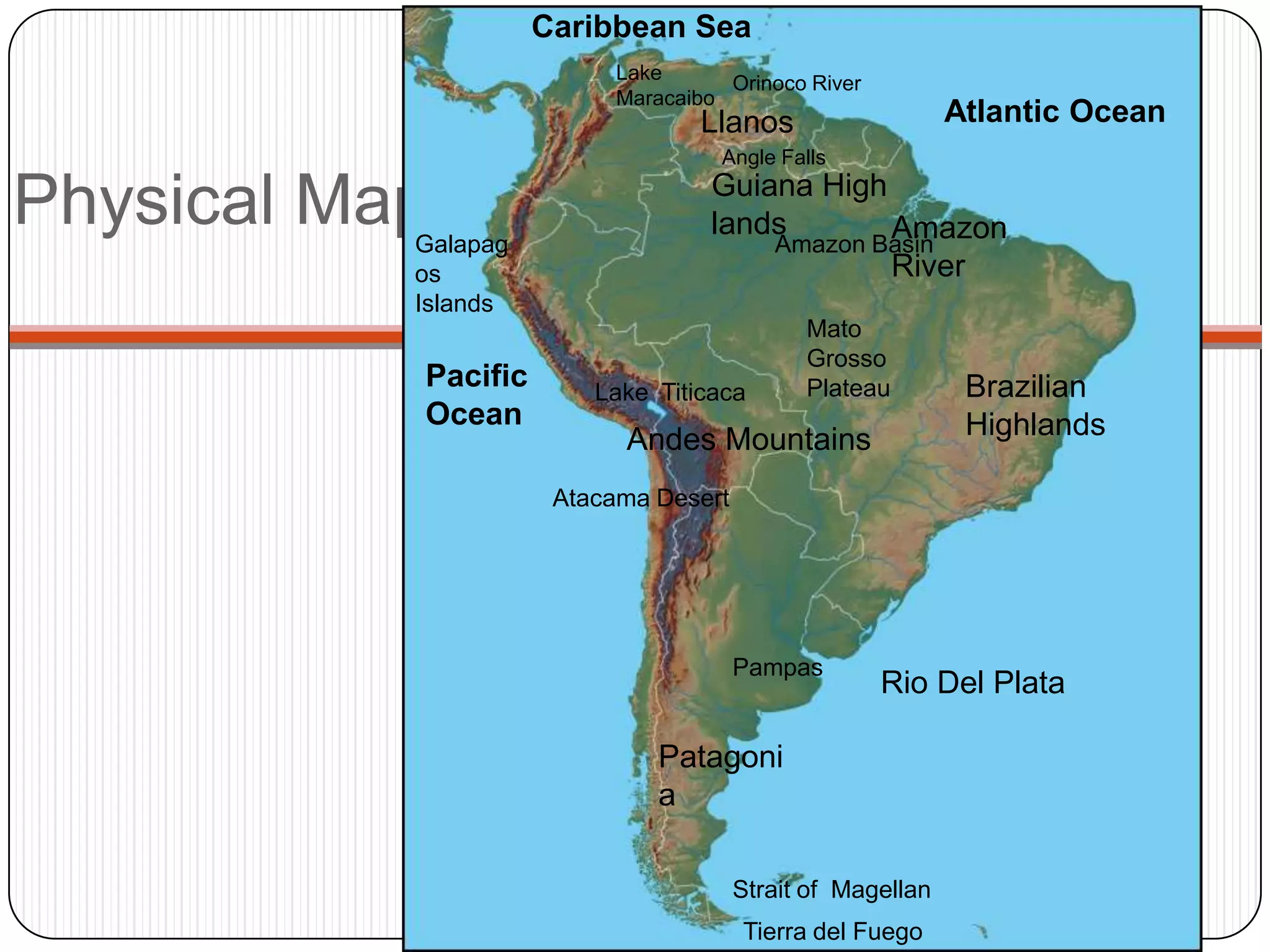
Caribbean SeaLake MaracaiboPhysical MapOrinoco RiverAtlantic OceanLlanosAngle FallsGuiana High landsAmazon RiverAmazon BasinGalapagos IslandsMatoGrosso PlateauPacific OceanBrazilian HighlandsLake  TiticacaAndes MountainsAtacama DesertPampasRio Del PlataPatagoniaStrait of  MagellanTierra del Fuego
Areas of South AmericaCaribbean South America- ColombiaVenezuela Guyana SurinameFrench GuianaAtlantic South America-BrazilParaguayArgentinaUruguayPacific South AmericaEcuadorPeruBoliviaChile
Key Terms
ColombiaAnimalRegion- Caribbean South AmericaCapital-BogotaLandform-Andes, LlanosBody of Water-Cauca RiverClimate-Humid subtropical, Highlands, Tropical savannaPopulation-43 millionLanguage-Romance-Spanish and PortugueseReligion-Christianity-northwestern sectionGovernment-RepublicEconomy-Agriculture, oil, iron ore, gold, coal and emeralds80% of Columbian flowers are shipped to the US
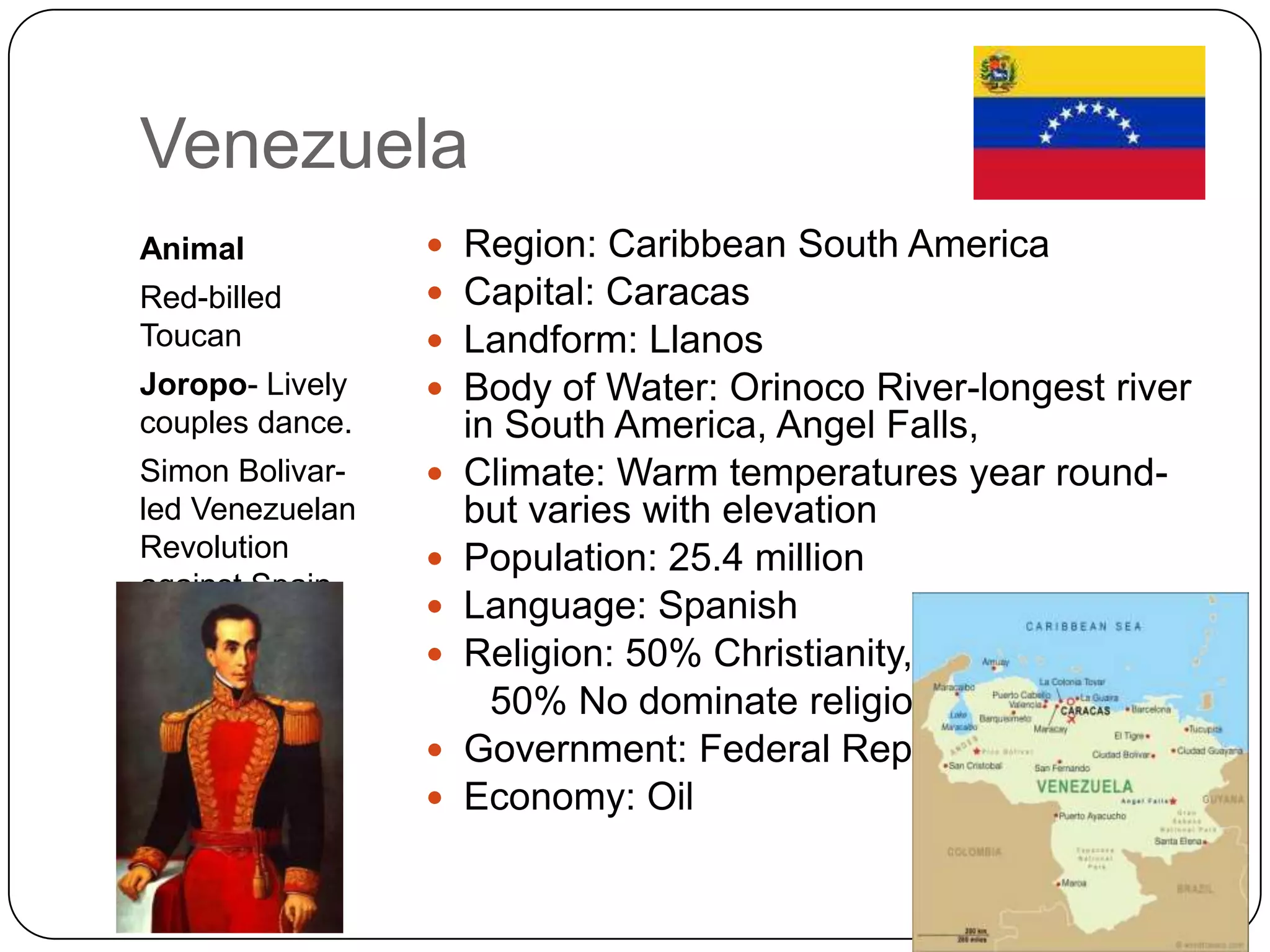
VenezuelaAnimalRed-billed ToucanJoropo- Lively couples dance.Simon Bolivar-led Venezuelan Revolution against SpainRegion: Caribbean South AmericaCapital: CaracasLandform: LlanosBody of Water: Orinoco River-longest river in South America, Angel Falls, Climate: Warm temperatures year round- but varies with elevationPopulation: 25.4 millionLanguage: SpanishReligion: 50% Christianity,       50% No dominate religionGovernment: Federal RepublicEconomy: Oil
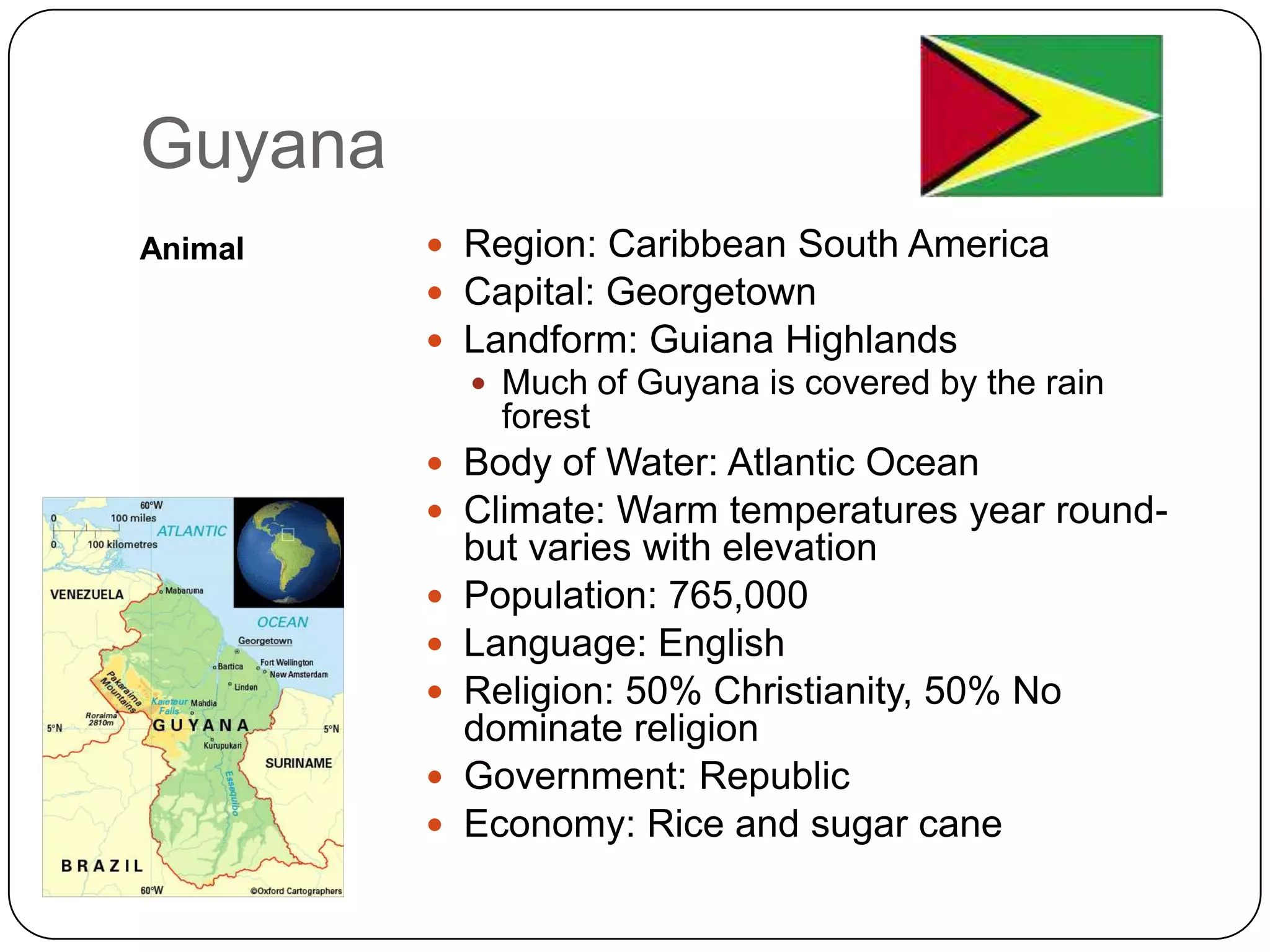
GuyanaAnimalRegion: Caribbean South AmericaCapital: GeorgetownLandform: Guiana HighlandsMuch of Guyana is covered by the rain forestBody of Water: Atlantic OceanClimate: Warm temperatures year round- but varies with elevationPopulation: 765,000Language: EnglishReligion: 50% Christianity, 50% No dominate religionGovernment: RepublicEconomy: Rice and sugar cane
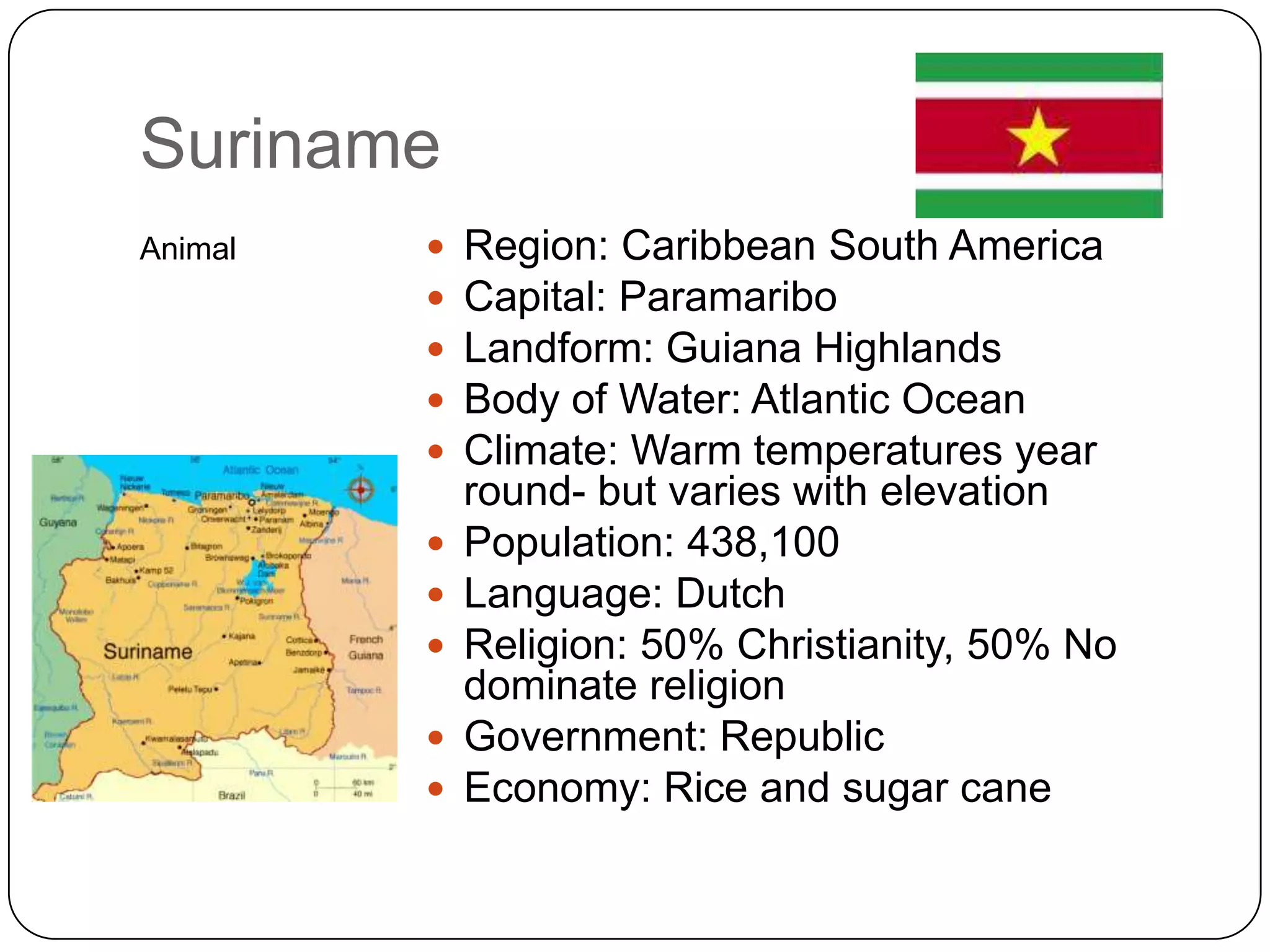
SurinameAnimalRegion: Caribbean South AmericaCapital: ParamariboLandform: Guiana HighlandsBody of Water: Atlantic OceanClimate: Warm temperatures year round- but varies with elevationPopulation: 438,100Language: DutchReligion: 50% Christianity, 50% No dominate religionGovernment: RepublicEconomy: Rice and sugar cane
French GuianaAnimalRegion: Caribbean South AmericaCapital: CayenneLandform: flat landBody of Water: Atlantic OceanClimate: Warm temperatures year round- but varies with elevationPopulation: 217,000Religion: 50% Christianity, 50% No dominate religionGovernment: RepublicEconomy: Heavily depends on France- mainly fishing
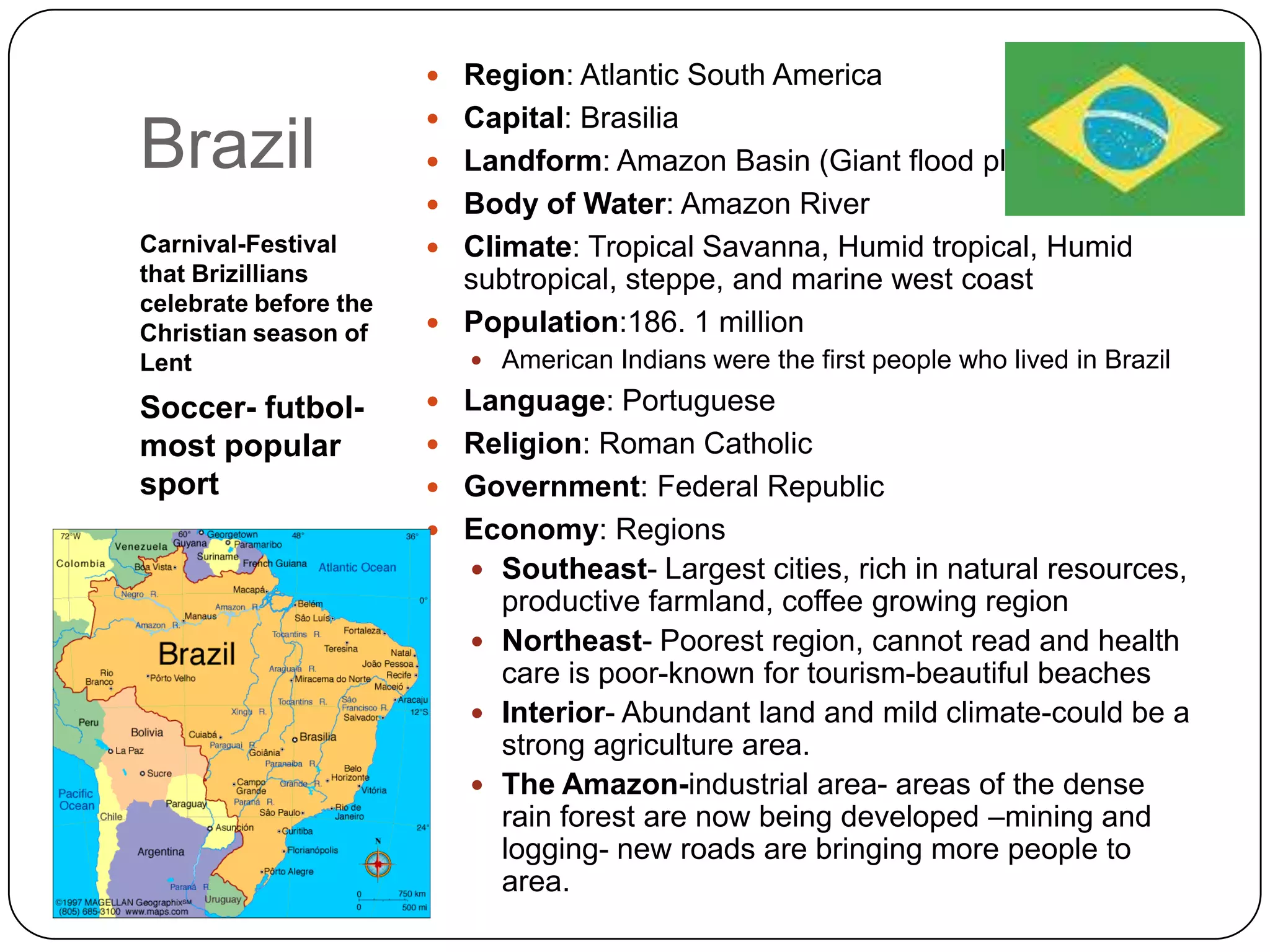
BrazilCarnival-Festival that Brizillians celebrate before the Christian season of LentSoccer- futbol-most popular sportRegion: Atlantic South AmericaCapital: BrasiliaLandform: Amazon Basin (Giant flood plainBody of Water: Amazon RiverClimate: Tropical Savanna, Humid tropical, Humid subtropical, steppe, and marine west coastPopulation:186. 1 millionAmerican Indians were the first people who lived in BrazilLanguage: PortugueseReligion: Roman CatholicGovernment: Federal RepublicEconomy: RegionsSoutheast- Largest cities, rich in natural resources, productive farmland, coffee growing regionNortheast- Poorest region, cannot read and health care is poor-known for tourism-beautiful beachesInterior- Abundant land and mild climate-could be a strong agriculture area.The Amazon-industrial area- areas of the dense rain forest are now being developed –mining and logging- new roads are bringing more people to area.
ParaguayAnimalRegion: Atlantic South AmericaCapital: AsuncionLandform:  Landlocked country                     Gran ChacoBody of Water: Paraguay RiverClimate: Humid SubtropicalPopulation: 6.3 millionLanguage: Spanish, GuaraniReligion: Roman CatholicGovernment: RepublicEconomy: Paraguay’s wealth is controlled by a few rich families and companies.Agriculture is very important-cotton, corn, soybeans and sugarcane
UruguayAnimalRegion: Atlantic South AmericaCapital: MontevideoLandform: plainsBody of Water: Rio de la Plata- estuary- partially enclosed body of water where fresh water mixes with salt waterClimate: Humid subtropicalPopulation: 3.4 millionLanguage: SpanishReligion: Roman CatholicGovernment: RepublicEconomy: Beef is important export –Agriculture and manufacturing is basis of economy
ArgentinaAnimalRegion: Atlantic South AmericaSouthern most country in South AmericaCapital: Buenos AiresLandform: Patagonia-region of dry plains and plateausPampas- wide grassy plainAndes-mountainsBody of Water: Parana RiverClimate: Marine west coast, steppePopulation: 39.5 million (Argentina’s culture has been mostly influenced by EuropeansLanguage: SpanishReligion: Roman CatholicGovernment: RepublicEconomy:  Economy has always been affected by government policies- Argentina joined a group- Mercosur-group that promotes trade and economic cooperationAgriculture- produce beef, grow wheat  and cornInformal economy- part of the economy based on odd jobs that people perform without government regulation through taxes.
EcuadorAnimalRegion: Pacific South AmericaCapital: QuitoLandform: AndesBody of  Water: Gulf of GuayaquilClimate: MediterraneanPopulation: 13.4 millionLanguage: Spanish, QuechuaReligion: Roman CatholicGovernment: RepublicEconomy: 3 regionsCoastal lowlands- agriculture and industryAndean region- poorer-tourismAmazon basin- valuable oil deposits
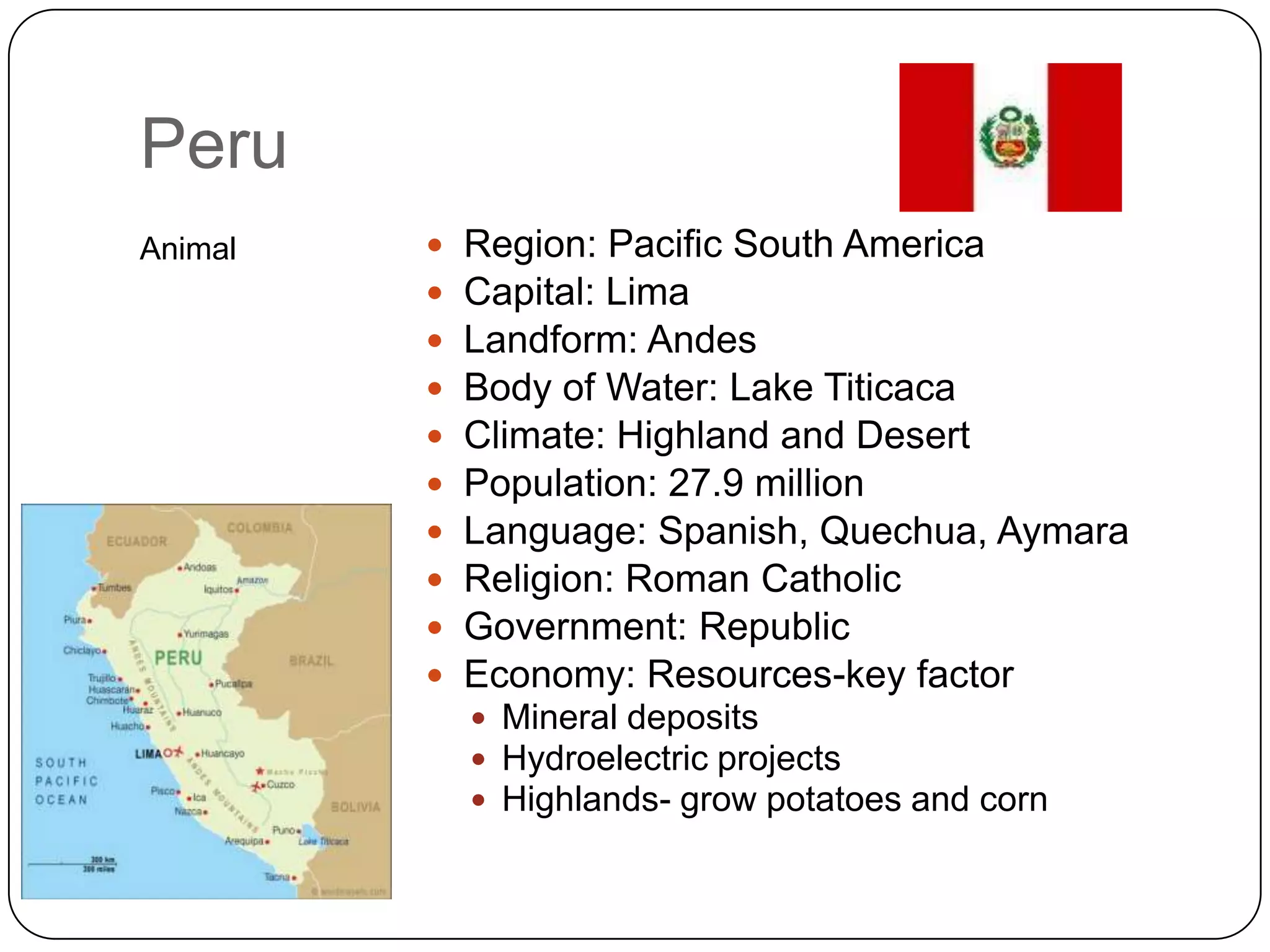
PeruAnimalRegion: Pacific South AmericaCapital: LimaLandform: AndesBody of Water: Lake TiticacaClimate: Highland and DesertPopulation: 27.9 millionLanguage: Spanish, Quechua, AymaraReligion: Roman CatholicGovernment: RepublicEconomy: Resources-key factorMineral depositsHydroelectric projectsHighlands- grow potatoes and corn
BoliviaAnimalRegion: Pacific South AmericaCapital: :La Paz, SucreLandform: AndesBody of Water: Lake TiticacaClimate: Tropical savanna, HighlandPopulation: 8.9 millionLanguage: Spanish, Quechua, AymaraReligion: Roman CatholicGovernment: RepublicEconomy: Poorest country in South AmericaFew roads and little money for investmentValuable resources- metals and natural gas
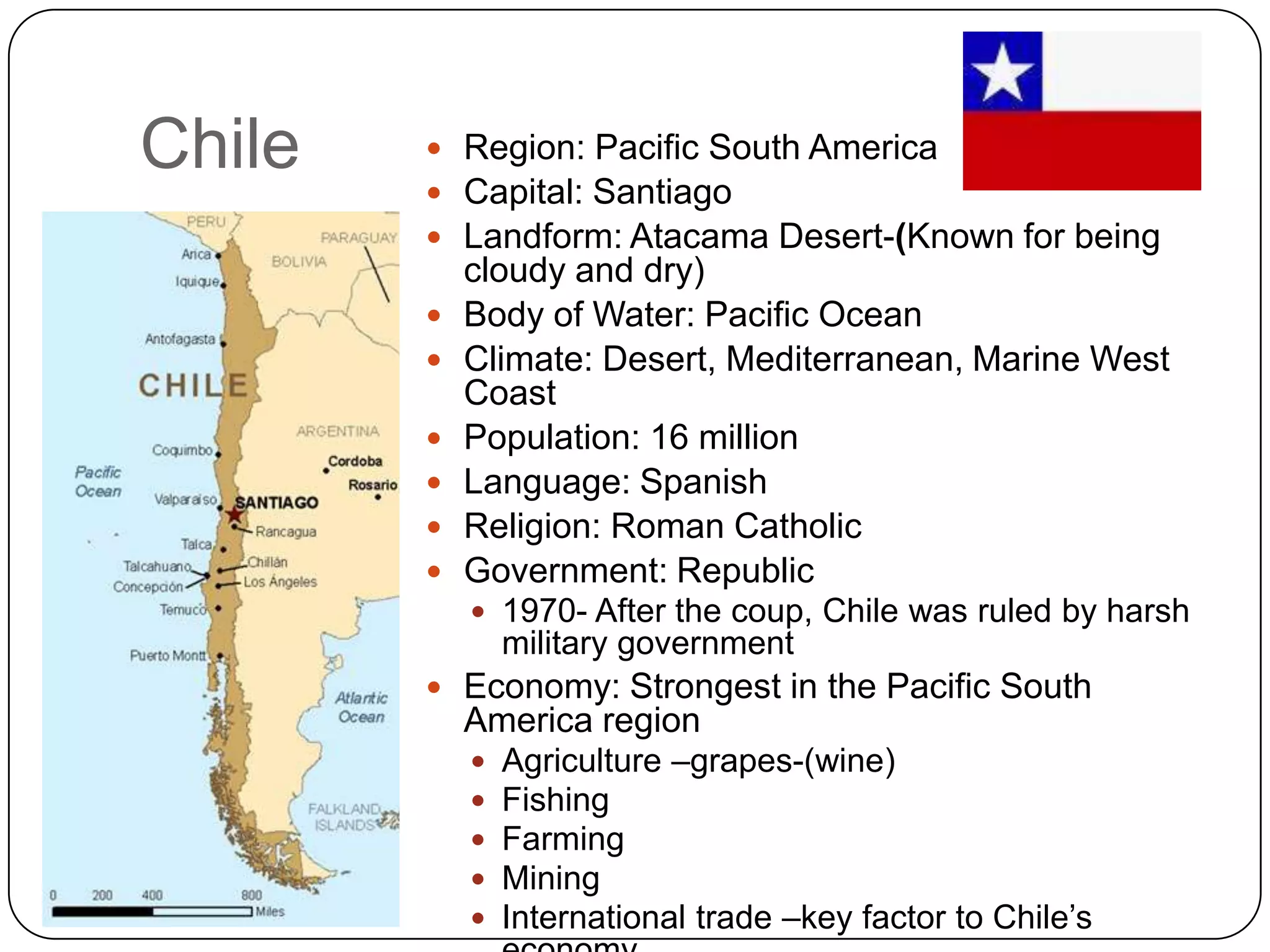
ChileAnimalRegion: Pacific South AmericaCapital: SantiagoLandform: Atacama Desert-(Known for being cloudy and dry)Body of Water: Pacific OceanClimate: Desert, Mediterranean, Marine West CoastPopulation: 16 millionLanguage: SpanishReligion: Roman CatholicGovernment: Republic1970- After the coup, Chile was ruled by harsh military governmentEconomy: Strongest in the Pacific South America regionAgriculture –grapes-(wine)Fishing FarmingMiningInternational trade –key factor to Chile’s economy
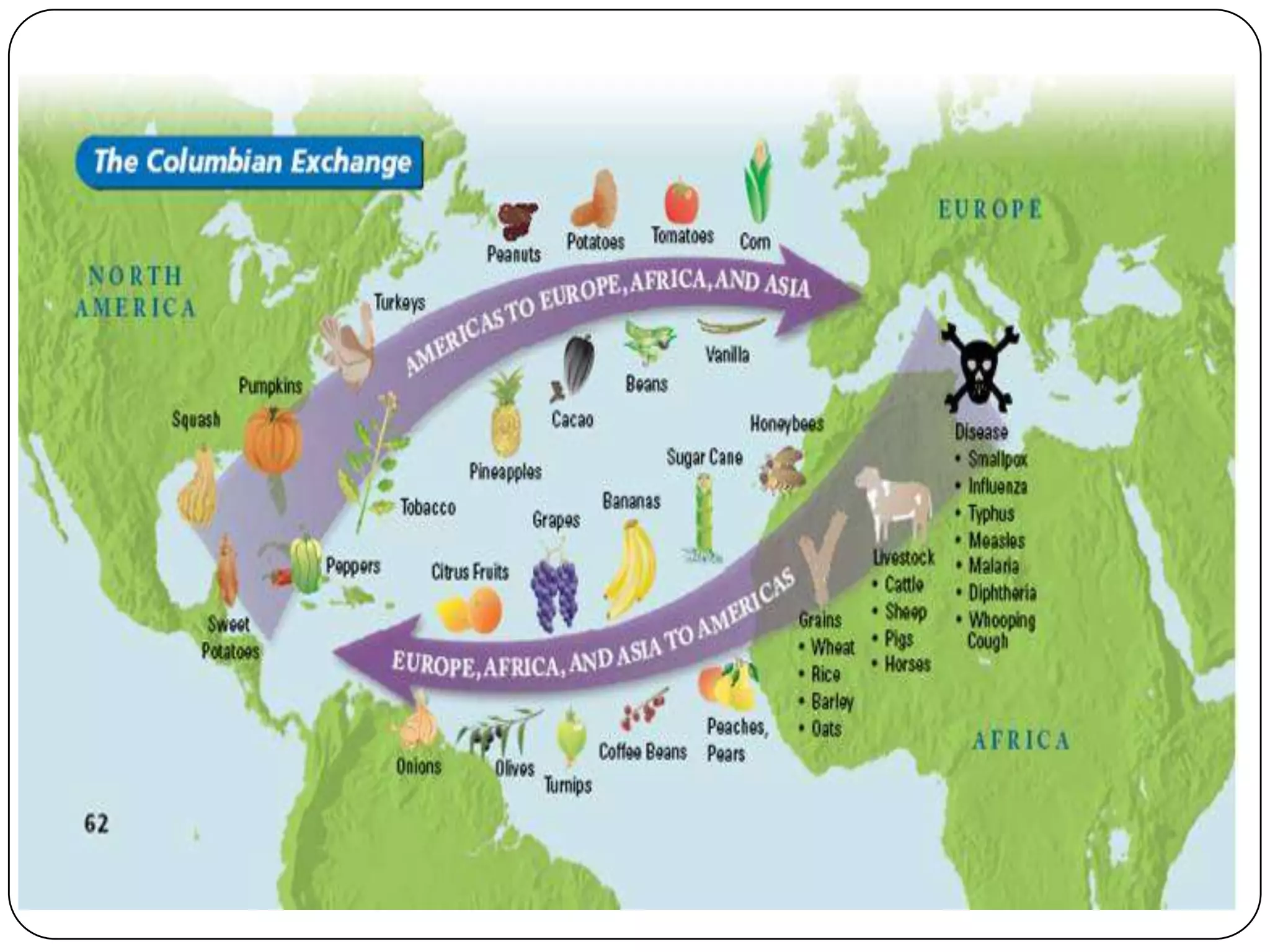
Colombian ExchangeBy the 1400’s the Inca, an early people who ruled a vast empire in western South America, had developed thousands of varieties of potatoes.  So, how did potatoes get from such a faraway time and place to part of our everyday lives?Before 1400’s people living in the Eastern Hemisphere were unknown to people living in the Western Hemisphere.  This changed in 1492, when explorer Christopher Columbus sailed from Spain and landed in the Bahamas in the Americas.  Believing he had reached the Indies of Asia, Columbus named the people on the islands, “Indians” and claimed the land for SpainHe returned the next year bringing many ships and men and with this trip, Columbus began what is known as the “Columbian Exchange”-An exchange of people, animals, plants and even diseases between the two hemispheres
South America PowerPoint

South America PowerPoint

  • 1.
  • 2.
    1. Howhave historical figures and events affected South America today?How has location affected the development of countries in South America?How has the role of the government changed over time in South America countries?What physical and cultural characteristics make the countries of South America countries?What factors have contributed to economics success and failures in different South American countries?Essential Questions
  • 3.
  • 4.
    Caribbean SeaLake MaracaiboPhysicalMapOrinoco RiverAtlantic OceanLlanosAngle FallsGuiana High landsAmazon RiverAmazon BasinGalapagos IslandsMatoGrosso PlateauPacific OceanBrazilian HighlandsLake TiticacaAndes MountainsAtacama DesertPampasRio Del PlataPatagoniaStrait of MagellanTierra del Fuego
  • 5.
    Areas of SouthAmericaCaribbean South America- ColombiaVenezuela Guyana SurinameFrench GuianaAtlantic South America-BrazilParaguayArgentinaUruguayPacific South AmericaEcuadorPeruBoliviaChile
  • 6.
  • 7.
    ColombiaAnimalRegion- Caribbean SouthAmericaCapital-BogotaLandform-Andes, LlanosBody of Water-Cauca RiverClimate-Humid subtropical, Highlands, Tropical savannaPopulation-43 millionLanguage-Romance-Spanish and PortugueseReligion-Christianity-northwestern sectionGovernment-RepublicEconomy-Agriculture, oil, iron ore, gold, coal and emeralds80% of Columbian flowers are shipped to the US
  • 8.
    VenezuelaAnimalRed-billed ToucanJoropo- Livelycouples dance.Simon Bolivar-led Venezuelan Revolution against SpainRegion: Caribbean South AmericaCapital: CaracasLandform: LlanosBody of Water: Orinoco River-longest river in South America, Angel Falls, Climate: Warm temperatures year round- but varies with elevationPopulation: 25.4 millionLanguage: SpanishReligion: 50% Christianity, 50% No dominate religionGovernment: Federal RepublicEconomy: Oil
  • 9.
    GuyanaAnimalRegion: Caribbean SouthAmericaCapital: GeorgetownLandform: Guiana HighlandsMuch of Guyana is covered by the rain forestBody of Water: Atlantic OceanClimate: Warm temperatures year round- but varies with elevationPopulation: 765,000Language: EnglishReligion: 50% Christianity, 50% No dominate religionGovernment: RepublicEconomy: Rice and sugar cane
  • 10.
    SurinameAnimalRegion: Caribbean SouthAmericaCapital: ParamariboLandform: Guiana HighlandsBody of Water: Atlantic OceanClimate: Warm temperatures year round- but varies with elevationPopulation: 438,100Language: DutchReligion: 50% Christianity, 50% No dominate religionGovernment: RepublicEconomy: Rice and sugar cane
  • 11.
    French GuianaAnimalRegion: CaribbeanSouth AmericaCapital: CayenneLandform: flat landBody of Water: Atlantic OceanClimate: Warm temperatures year round- but varies with elevationPopulation: 217,000Religion: 50% Christianity, 50% No dominate religionGovernment: RepublicEconomy: Heavily depends on France- mainly fishing
  • 12.
    BrazilCarnival-Festival that Brizillianscelebrate before the Christian season of LentSoccer- futbol-most popular sportRegion: Atlantic South AmericaCapital: BrasiliaLandform: Amazon Basin (Giant flood plainBody of Water: Amazon RiverClimate: Tropical Savanna, Humid tropical, Humid subtropical, steppe, and marine west coastPopulation:186. 1 millionAmerican Indians were the first people who lived in BrazilLanguage: PortugueseReligion: Roman CatholicGovernment: Federal RepublicEconomy: RegionsSoutheast- Largest cities, rich in natural resources, productive farmland, coffee growing regionNortheast- Poorest region, cannot read and health care is poor-known for tourism-beautiful beachesInterior- Abundant land and mild climate-could be a strong agriculture area.The Amazon-industrial area- areas of the dense rain forest are now being developed –mining and logging- new roads are bringing more people to area.
  • 13.
    ParaguayAnimalRegion: Atlantic SouthAmericaCapital: AsuncionLandform: Landlocked country Gran ChacoBody of Water: Paraguay RiverClimate: Humid SubtropicalPopulation: 6.3 millionLanguage: Spanish, GuaraniReligion: Roman CatholicGovernment: RepublicEconomy: Paraguay’s wealth is controlled by a few rich families and companies.Agriculture is very important-cotton, corn, soybeans and sugarcane
  • 14.
    UruguayAnimalRegion: Atlantic SouthAmericaCapital: MontevideoLandform: plainsBody of Water: Rio de la Plata- estuary- partially enclosed body of water where fresh water mixes with salt waterClimate: Humid subtropicalPopulation: 3.4 millionLanguage: SpanishReligion: Roman CatholicGovernment: RepublicEconomy: Beef is important export –Agriculture and manufacturing is basis of economy
  • 15.
    ArgentinaAnimalRegion: Atlantic SouthAmericaSouthern most country in South AmericaCapital: Buenos AiresLandform: Patagonia-region of dry plains and plateausPampas- wide grassy plainAndes-mountainsBody of Water: Parana RiverClimate: Marine west coast, steppePopulation: 39.5 million (Argentina’s culture has been mostly influenced by EuropeansLanguage: SpanishReligion: Roman CatholicGovernment: RepublicEconomy: Economy has always been affected by government policies- Argentina joined a group- Mercosur-group that promotes trade and economic cooperationAgriculture- produce beef, grow wheat and cornInformal economy- part of the economy based on odd jobs that people perform without government regulation through taxes.
  • 16.
    EcuadorAnimalRegion: Pacific SouthAmericaCapital: QuitoLandform: AndesBody of Water: Gulf of GuayaquilClimate: MediterraneanPopulation: 13.4 millionLanguage: Spanish, QuechuaReligion: Roman CatholicGovernment: RepublicEconomy: 3 regionsCoastal lowlands- agriculture and industryAndean region- poorer-tourismAmazon basin- valuable oil deposits
  • 17.
    PeruAnimalRegion: Pacific SouthAmericaCapital: LimaLandform: AndesBody of Water: Lake TiticacaClimate: Highland and DesertPopulation: 27.9 millionLanguage: Spanish, Quechua, AymaraReligion: Roman CatholicGovernment: RepublicEconomy: Resources-key factorMineral depositsHydroelectric projectsHighlands- grow potatoes and corn
  • 18.
    BoliviaAnimalRegion: Pacific SouthAmericaCapital: :La Paz, SucreLandform: AndesBody of Water: Lake TiticacaClimate: Tropical savanna, HighlandPopulation: 8.9 millionLanguage: Spanish, Quechua, AymaraReligion: Roman CatholicGovernment: RepublicEconomy: Poorest country in South AmericaFew roads and little money for investmentValuable resources- metals and natural gas
  • 19.
    ChileAnimalRegion: Pacific SouthAmericaCapital: SantiagoLandform: Atacama Desert-(Known for being cloudy and dry)Body of Water: Pacific OceanClimate: Desert, Mediterranean, Marine West CoastPopulation: 16 millionLanguage: SpanishReligion: Roman CatholicGovernment: Republic1970- After the coup, Chile was ruled by harsh military governmentEconomy: Strongest in the Pacific South America regionAgriculture –grapes-(wine)Fishing FarmingMiningInternational trade –key factor to Chile’s economy
  • 20.
    Colombian ExchangeBy the1400’s the Inca, an early people who ruled a vast empire in western South America, had developed thousands of varieties of potatoes. So, how did potatoes get from such a faraway time and place to part of our everyday lives?Before 1400’s people living in the Eastern Hemisphere were unknown to people living in the Western Hemisphere. This changed in 1492, when explorer Christopher Columbus sailed from Spain and landed in the Bahamas in the Americas. Believing he had reached the Indies of Asia, Columbus named the people on the islands, “Indians” and claimed the land for SpainHe returned the next year bringing many ships and men and with this trip, Columbus began what is known as the “Columbian Exchange”-An exchange of people, animals, plants and even diseases between the two hemispheres