Restaging the Primary Tumor


           Cameron Wright, MD
             Thoracic Surgery
                  MGH
      2012 Focus on Thoracic Surgery:
               Lung Cancer
Disclosures


 None
CT Characteristics of Locally
Advanced Disease

• Pleural effusion and nodularity-suggestive of M1a disease-
  thoracentesis or VATS exploration and biopsy
• Chest wall invasion-signs of invasion include bone
  destruction, pleural thickening, loss of extrapleural fat plane,
  tumor extending into the chest wall and extensive contact
  between chest wall and tumor. Only bone destruction is
  100% accurate.
• Mediastinal invasion-invasion of mediastinal fat, extensive
  contact with the mediastinal pleura (> 3 cm) or aorta (>90
  degree ) suggestive of invasion. However unless there is
  extensive invasion CT is often unreliable.
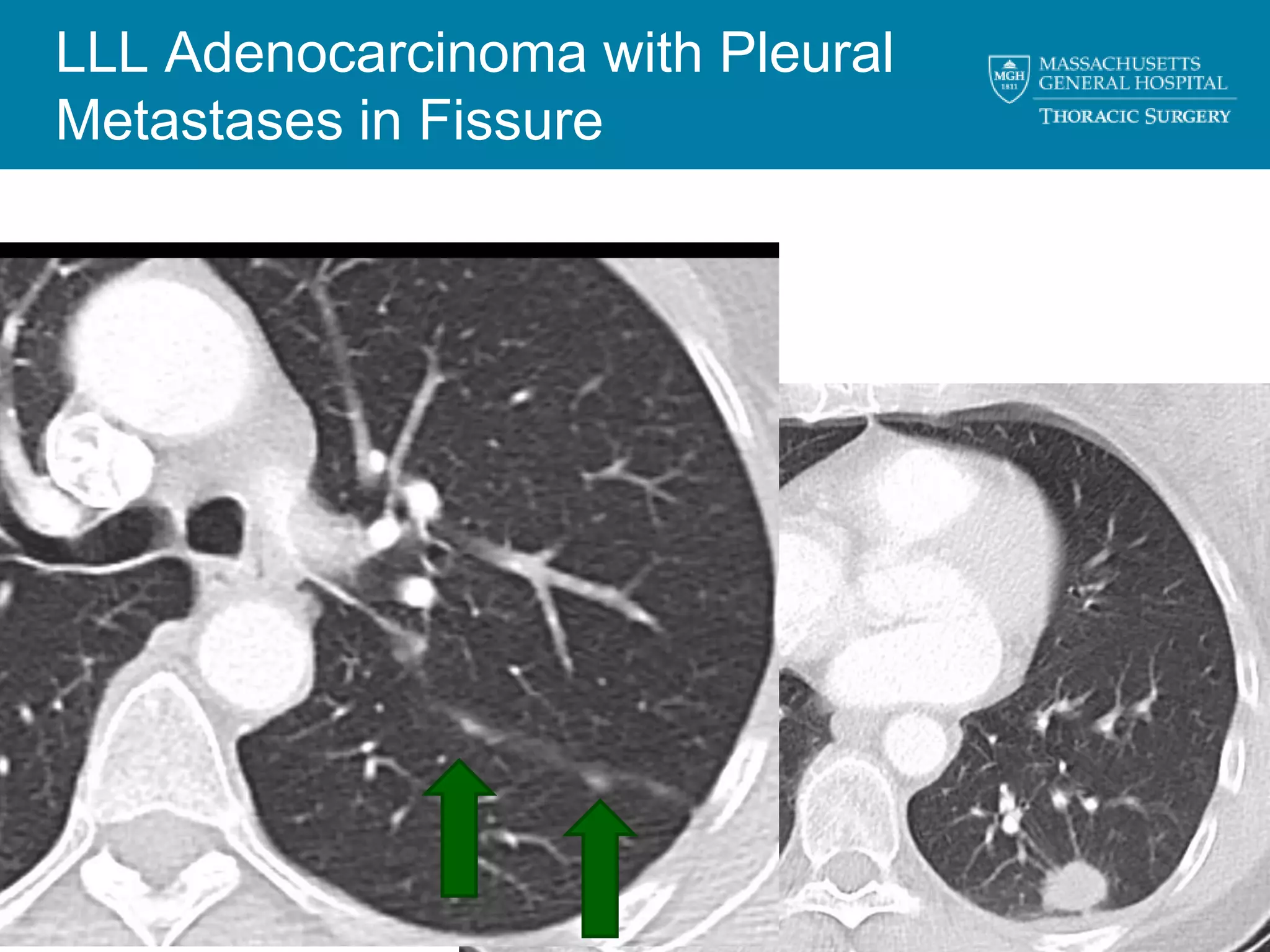
LLL Adenocarcinoma with Pleural
    Metastases in Fissure


4
NCCN Restaging Guidelines

    • Restaging after induction therapy is difficult to interpret,
      but CT +/- PET should be performed to exclude disease
      progression or interval development of metastatic disease


    • Radiographic methods have a poor positive and negative
      predictive values in the evaluation of the mediastinum
      after neoadjuvant therapy


    • Recommendations are category 2A


5
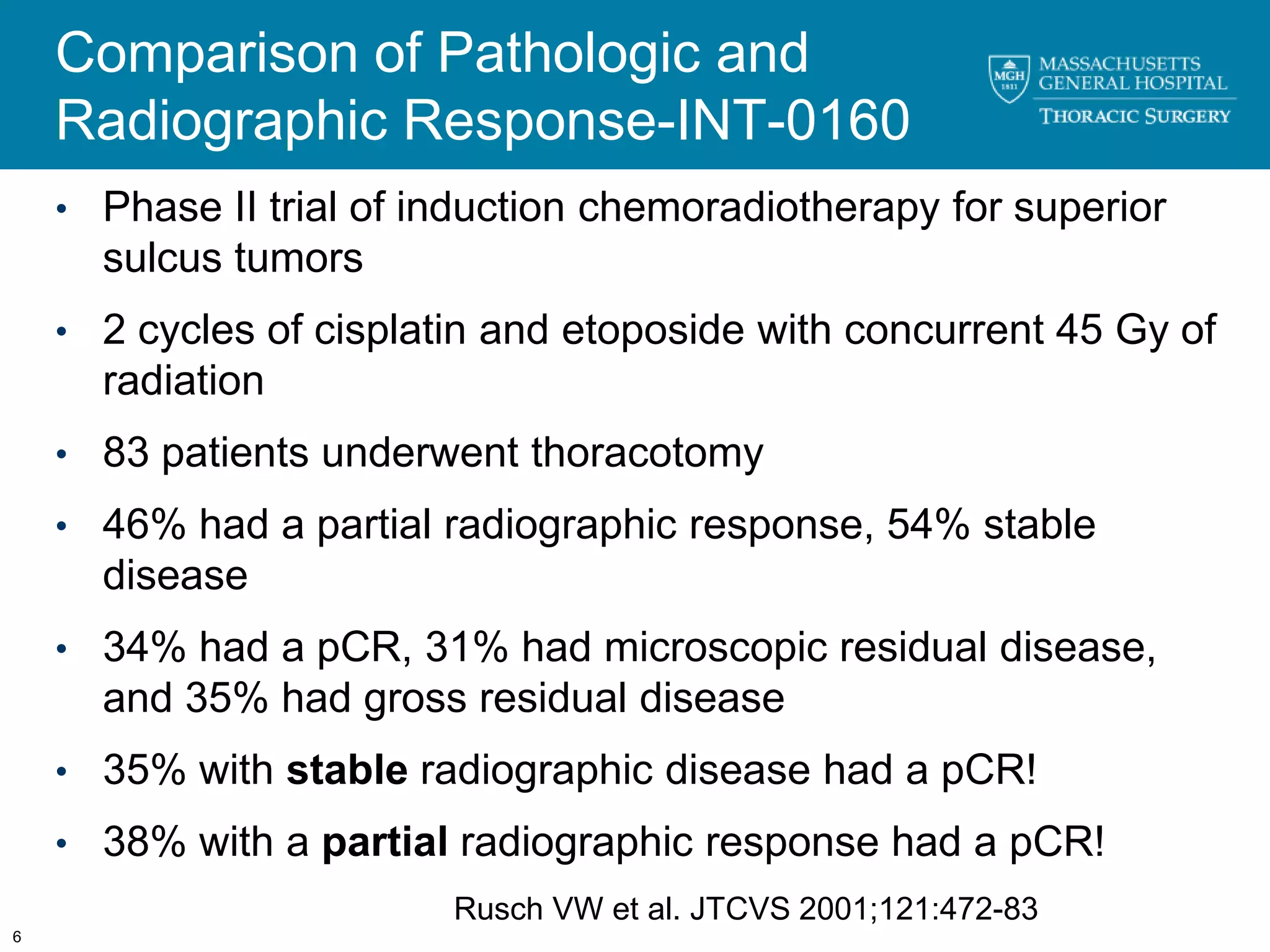
Comparison of Pathologic and
    Radiographic Response-INT-0160
    • Phase II trial of induction chemoradiotherapy for superior
      sulcus tumors
    • 2 cycles of cisplatin and etoposide with concurrent 45 Gy of
      radiation
    • 83 patients underwent thoracotomy
    • 46% had a partial radiographic response, 54% stable
      disease
    • 34% had a pCR, 31% had microscopic residual disease,
      and 35% had gross residual disease
    • 35% with stable radiographic disease had a pCR!

    • 38% with a partial radiographic response had a pCR!
                         Rusch VW et al. JTCVS 2001;121:472-83
6
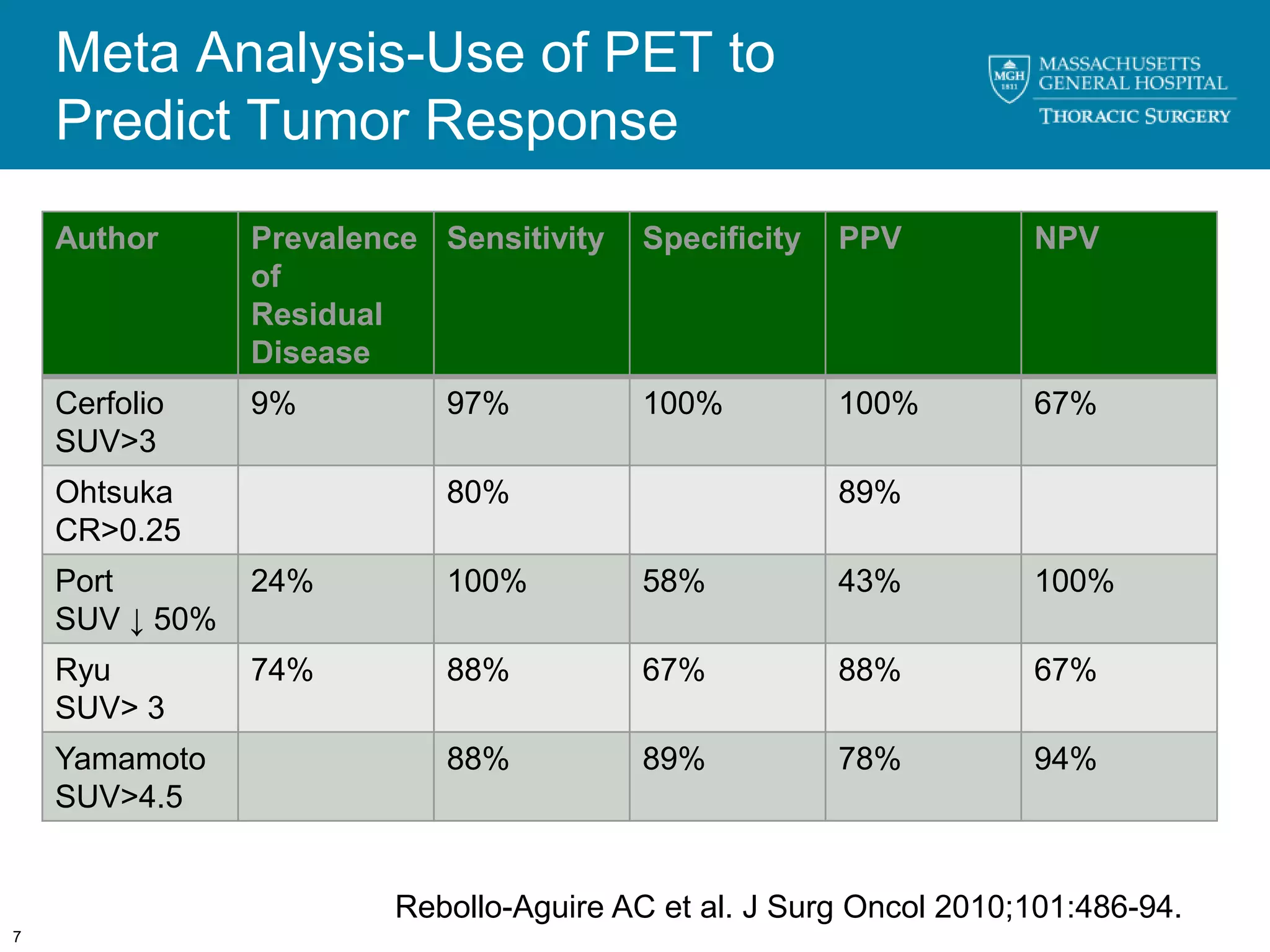
Meta Analysis-Use of PET to
    Predict Tumor Response
    Author      Prevalence Sensitivity   Specificity   PPV         NPV
                of
                Residual
                Disease
    Cerfolio    9%          97%          100%          100%        67%
    SUV>3
    Ohtsuka                 80%                        89%
    CR>0.25
    Port        24%         100%         58%           43%         100%
    SUV ↓ 50%
    Ryu         74%         88%          67%           88%         67%
    SUV> 3
    Yamamoto                88%          89%           78%         94%
    SUV>4.5


                        Rebollo-Aguire AC et al. J Surg Oncol 2010;101:486-94.
7
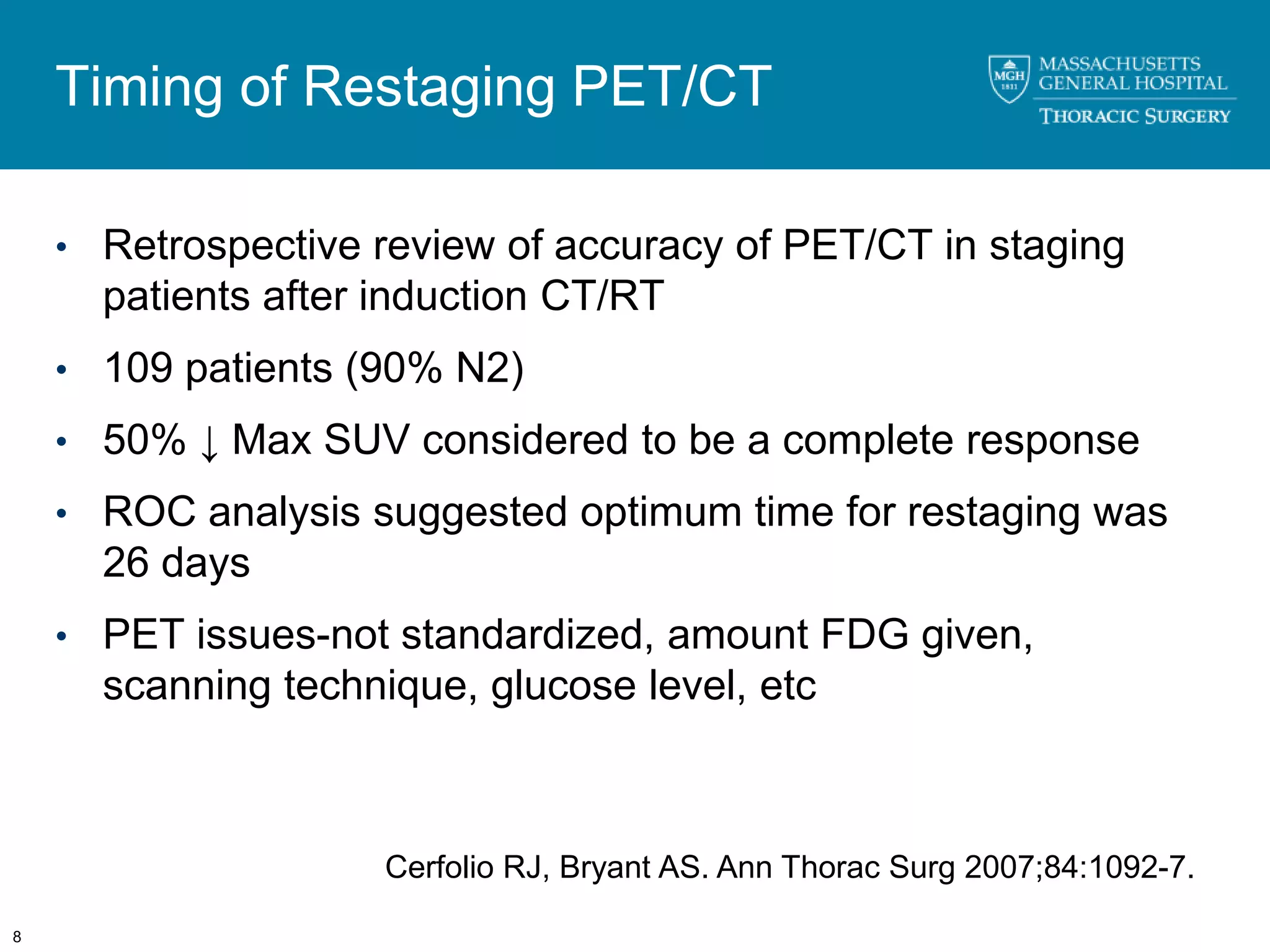
Timing of Restaging PET/CT

    • Retrospective review of accuracy of PET/CT in staging
      patients after induction CT/RT
    • 109 patients (90% N2)

    • 50% ↓ Max SUV considered to be a complete response

    • ROC analysis suggested optimum time for restaging was
      26 days
    • PET issues-not standardized, amount FDG given,
      scanning technique, glucose level, etc


                     Cerfolio RJ, Bryant AS. Ann Thorac Surg 2007;84:1092-7.

8
T4N0M0 SVC Involvement before
    and after Induction CT/RT


9
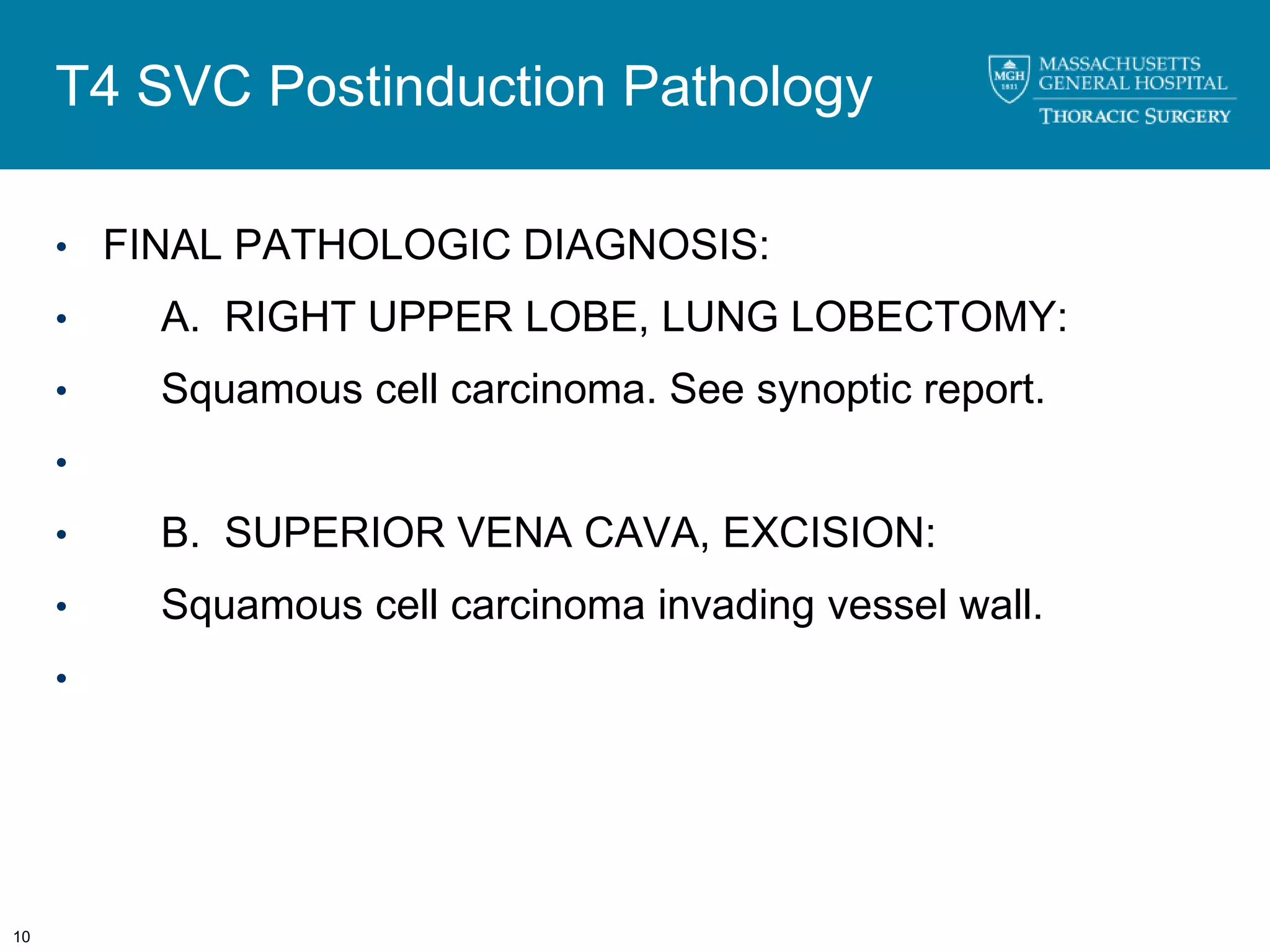
T4 SVC Postinduction Pathology

     • FINAL PATHOLOGIC DIAGNOSIS:

     •   A. RIGHT UPPER LOBE, LUNG LOBECTOMY:
     •   Squamous cell carcinoma. See synoptic report.
     •

     •   B. SUPERIOR VENA CAVA, EXCISION:
     •   Squamous cell carcinoma invading vessel wall.
     •


10
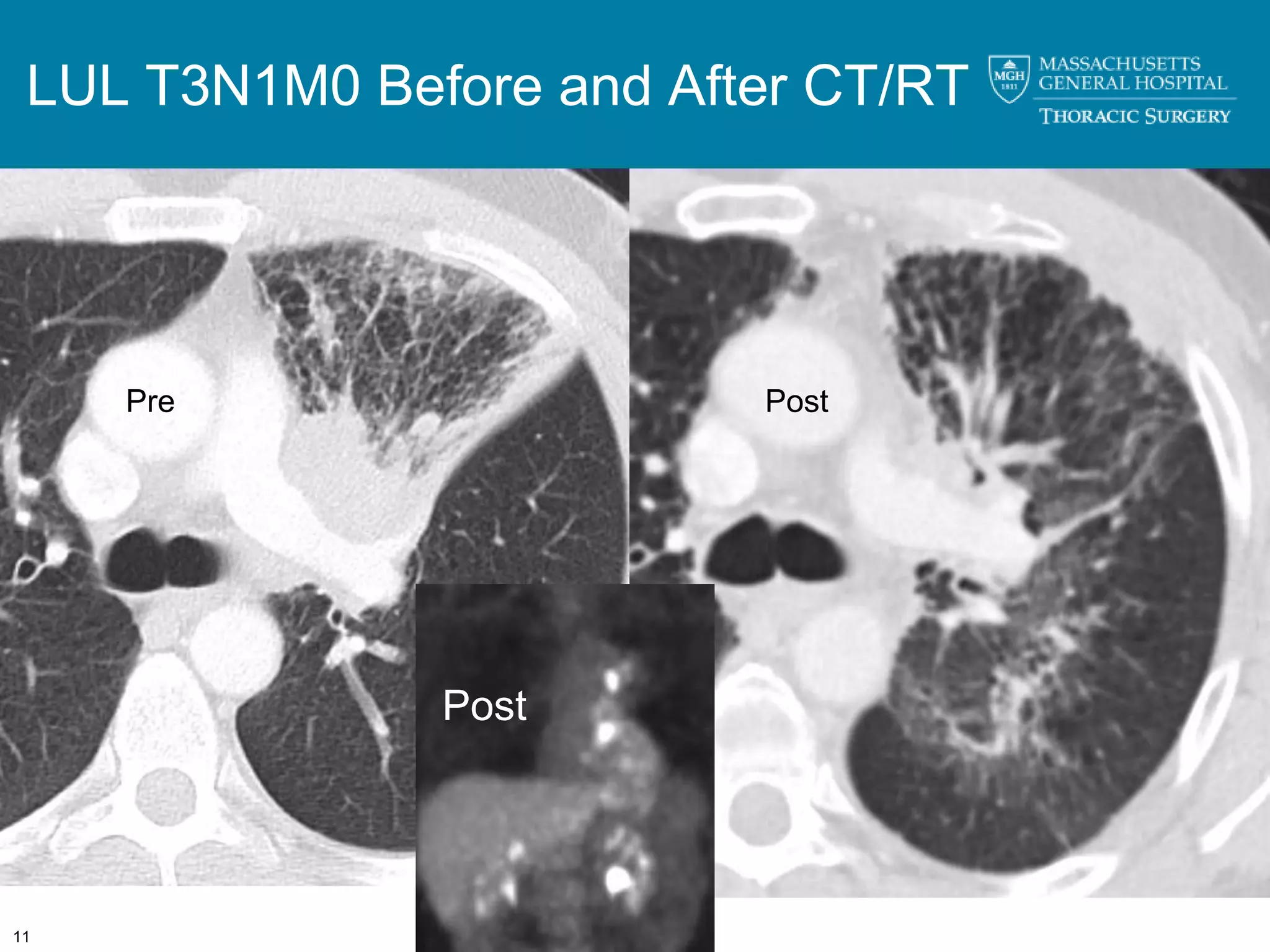
LUL T3N1M0 Before and After CT/RT


     Pre                  Post


               Post


11
T3N1 Postinduction Pathology

     • FINAL PATHOLOGIC DIAGNOSIS:

     •      A. LUNG PNEUMONECTOMY, LEFT:
     •       Squamous cell carcinoma (4.4 cm), moderately
         differentiated, s/p chemoradiation
     •      with approximately 30% of tumor mass showing
         necrosis.
     •
     •       Note: The tumor invades the hilar fat but the inked soft
         tissue resection
     •      margins are free.

12
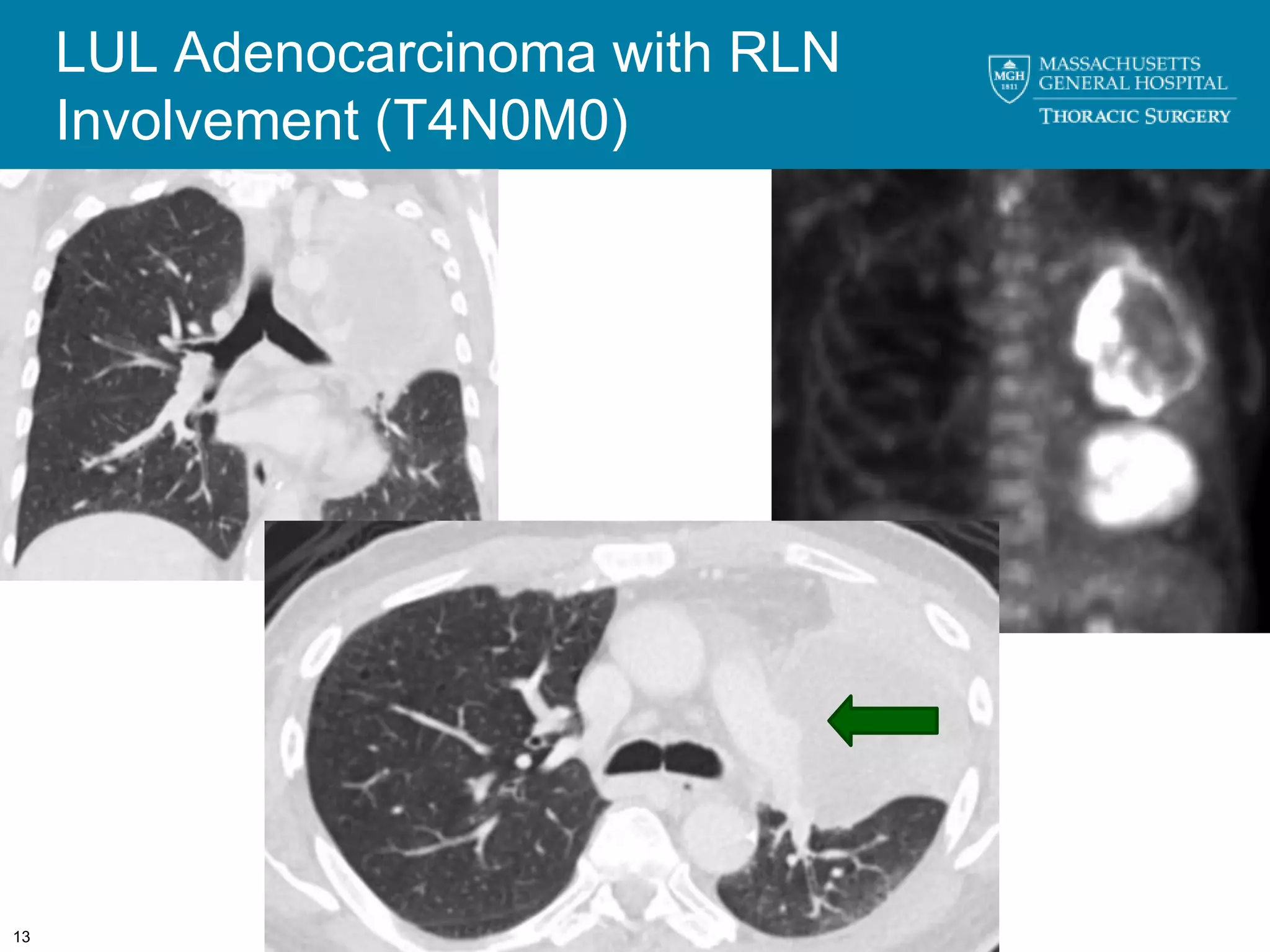
LUL Adenocarcinoma with RLN
     Involvement (T4N0M0)


13
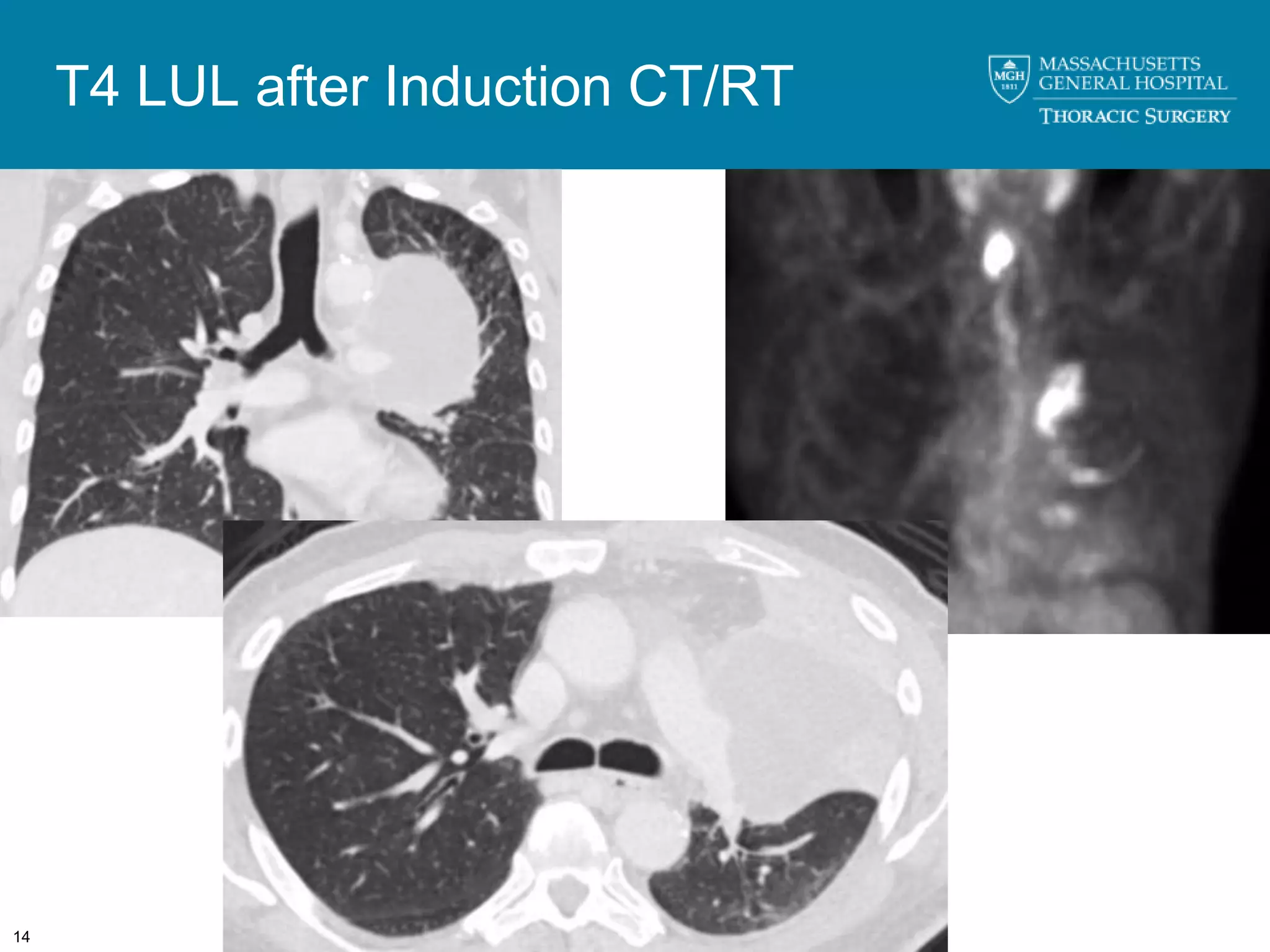
T4 LUL after Induction CT/RT


14
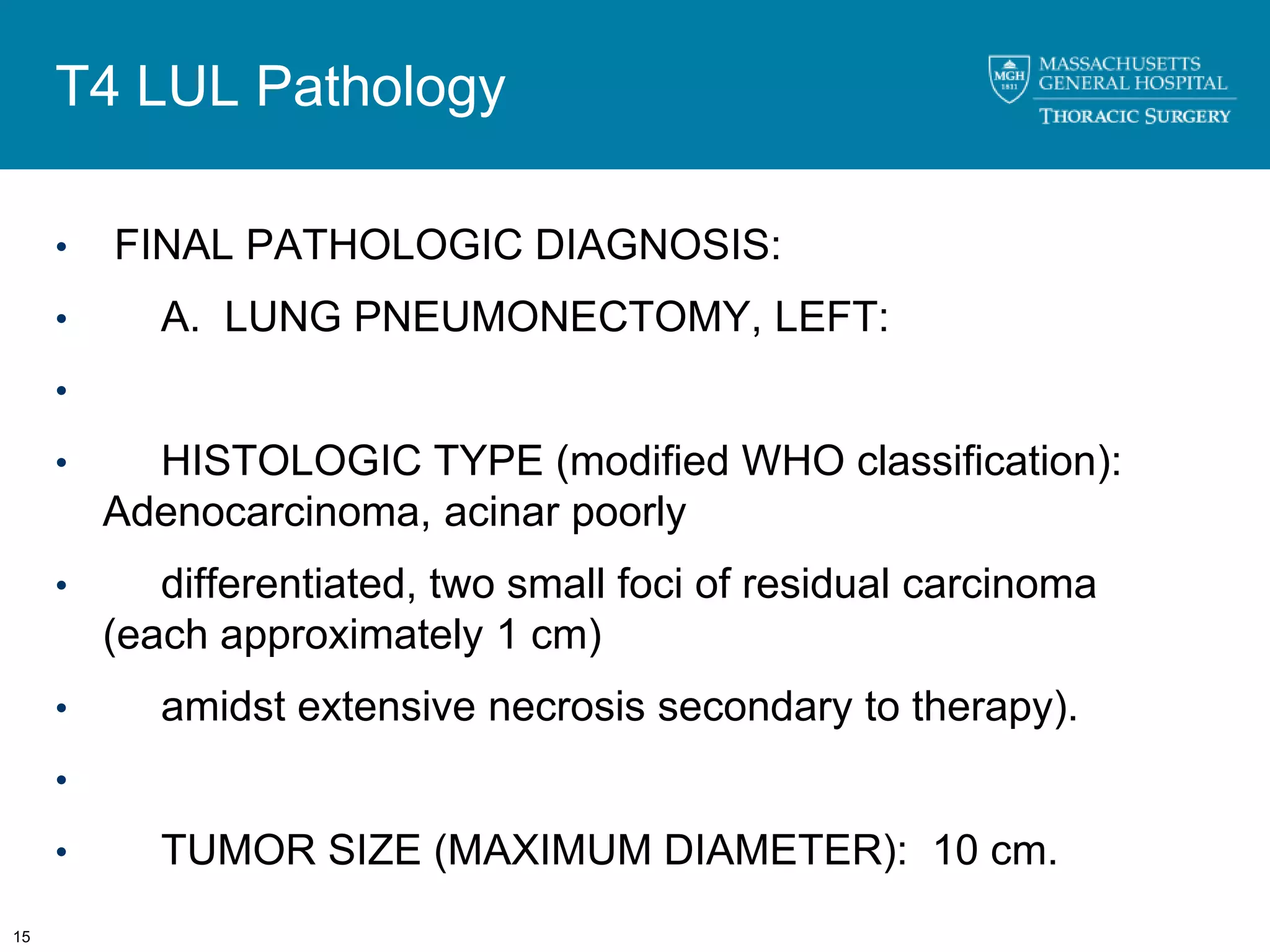
T4 LUL Pathology

     •   FINAL PATHOLOGIC DIAGNOSIS:
     •      A. LUNG PNEUMONECTOMY, LEFT:
     •

     •     HISTOLOGIC TYPE (modified WHO classification):
         Adenocarcinoma, acinar poorly
     •      differentiated, two small foci of residual carcinoma
         (each approximately 1 cm)
     •      amidst extensive necrosis secondary to therapy).
     •

     •      TUMOR SIZE (MAXIMUM DIAMETER): 10 cm.
15
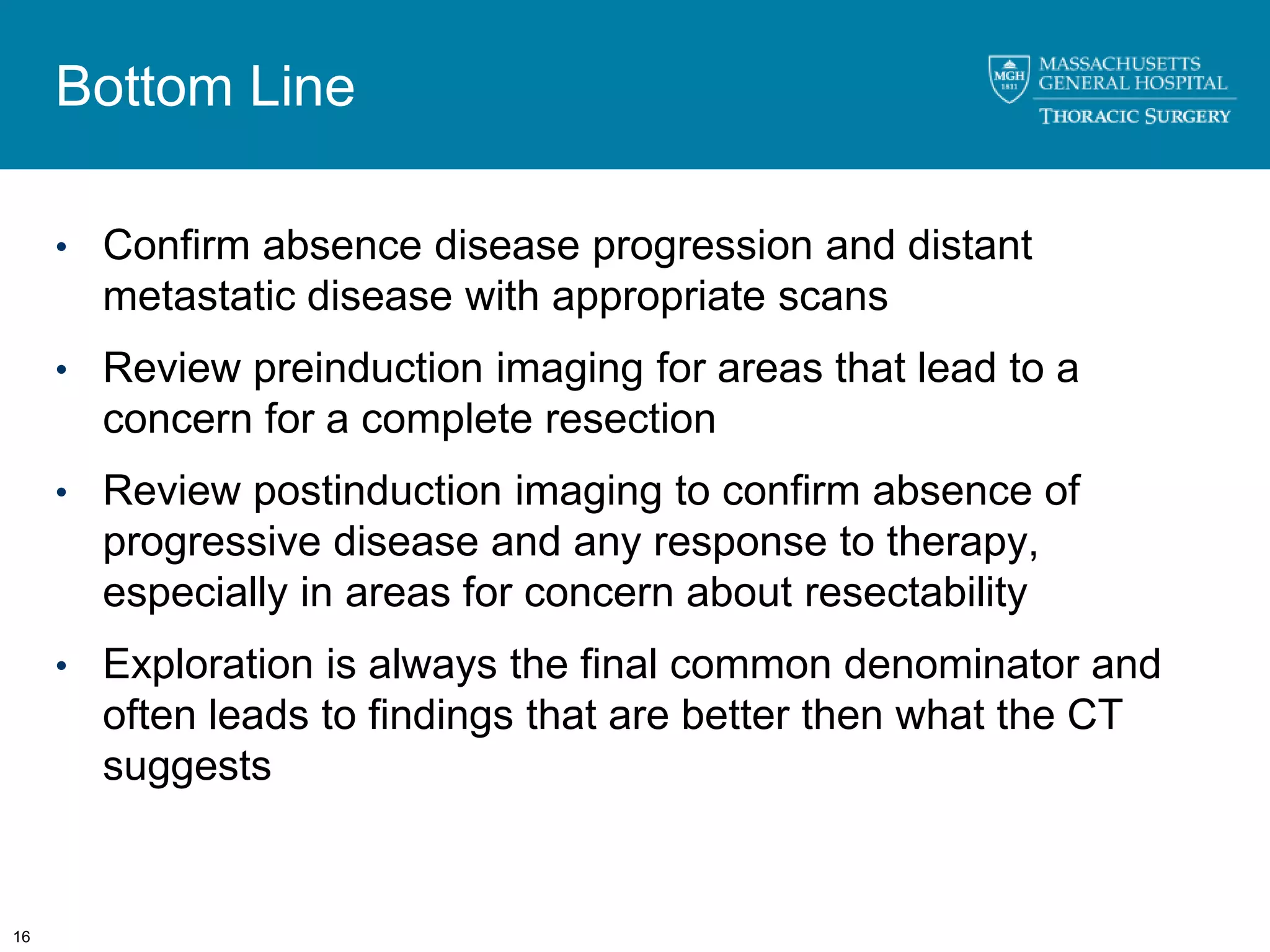
Bottom Line

     • Confirm absence disease progression and distant
       metastatic disease with appropriate scans
     • Review preinduction imaging for areas that lead to a
       concern for a complete resection
     • Review postinduction imaging to confirm absence of
       progressive disease and any response to therapy,
       especially in areas for concern about resectability
     • Exploration is always the final common denominator and
       often leads to findings that are better then what the CT
       suggests


16

1530 wright

  • 1.
    Restaging the PrimaryTumor Cameron Wright, MD Thoracic Surgery MGH 2012 Focus on Thoracic Surgery: Lung Cancer
  • 2.
  • 3.
    CT Characteristics ofLocally Advanced Disease • Pleural effusion and nodularity-suggestive of M1a disease- thoracentesis or VATS exploration and biopsy • Chest wall invasion-signs of invasion include bone destruction, pleural thickening, loss of extrapleural fat plane, tumor extending into the chest wall and extensive contact between chest wall and tumor. Only bone destruction is 100% accurate. • Mediastinal invasion-invasion of mediastinal fat, extensive contact with the mediastinal pleura (> 3 cm) or aorta (>90 degree ) suggestive of invasion. However unless there is extensive invasion CT is often unreliable.
  • 4.
    LLL Adenocarcinoma withPleural Metastases in Fissure 4
  • 5.
    NCCN Restaging Guidelines • Restaging after induction therapy is difficult to interpret, but CT +/- PET should be performed to exclude disease progression or interval development of metastatic disease • Radiographic methods have a poor positive and negative predictive values in the evaluation of the mediastinum after neoadjuvant therapy • Recommendations are category 2A 5
  • 6.
    Comparison of Pathologicand Radiographic Response-INT-0160 • Phase II trial of induction chemoradiotherapy for superior sulcus tumors • 2 cycles of cisplatin and etoposide with concurrent 45 Gy of radiation • 83 patients underwent thoracotomy • 46% had a partial radiographic response, 54% stable disease • 34% had a pCR, 31% had microscopic residual disease, and 35% had gross residual disease • 35% with stable radiographic disease had a pCR! • 38% with a partial radiographic response had a pCR! Rusch VW et al. JTCVS 2001;121:472-83 6
  • 7.
    Meta Analysis-Use ofPET to Predict Tumor Response Author Prevalence Sensitivity Specificity PPV NPV of Residual Disease Cerfolio 9% 97% 100% 100% 67% SUV>3 Ohtsuka 80% 89% CR>0.25 Port 24% 100% 58% 43% 100% SUV ↓ 50% Ryu 74% 88% 67% 88% 67% SUV> 3 Yamamoto 88% 89% 78% 94% SUV>4.5 Rebollo-Aguire AC et al. J Surg Oncol 2010;101:486-94. 7
  • 8.
    Timing of RestagingPET/CT • Retrospective review of accuracy of PET/CT in staging patients after induction CT/RT • 109 patients (90% N2) • 50% ↓ Max SUV considered to be a complete response • ROC analysis suggested optimum time for restaging was 26 days • PET issues-not standardized, amount FDG given, scanning technique, glucose level, etc Cerfolio RJ, Bryant AS. Ann Thorac Surg 2007;84:1092-7. 8
  • 9.
    T4N0M0 SVC Involvementbefore and after Induction CT/RT 9
  • 10.
    T4 SVC PostinductionPathology • FINAL PATHOLOGIC DIAGNOSIS: • A. RIGHT UPPER LOBE, LUNG LOBECTOMY: • Squamous cell carcinoma. See synoptic report. • • B. SUPERIOR VENA CAVA, EXCISION: • Squamous cell carcinoma invading vessel wall. • 10
  • 11.
    LUL T3N1M0 Beforeand After CT/RT Pre Post Post 11
  • 12.
    T3N1 Postinduction Pathology • FINAL PATHOLOGIC DIAGNOSIS: • A. LUNG PNEUMONECTOMY, LEFT: • Squamous cell carcinoma (4.4 cm), moderately differentiated, s/p chemoradiation • with approximately 30% of tumor mass showing necrosis. • • Note: The tumor invades the hilar fat but the inked soft tissue resection • margins are free. 12
  • 13.
    LUL Adenocarcinoma withRLN Involvement (T4N0M0) 13
  • 14.
    T4 LUL afterInduction CT/RT 14
  • 15.
    T4 LUL Pathology • FINAL PATHOLOGIC DIAGNOSIS: • A. LUNG PNEUMONECTOMY, LEFT: • • HISTOLOGIC TYPE (modified WHO classification): Adenocarcinoma, acinar poorly • differentiated, two small foci of residual carcinoma (each approximately 1 cm) • amidst extensive necrosis secondary to therapy). • • TUMOR SIZE (MAXIMUM DIAMETER): 10 cm. 15
  • 16.
    Bottom Line • Confirm absence disease progression and distant metastatic disease with appropriate scans • Review preinduction imaging for areas that lead to a concern for a complete resection • Review postinduction imaging to confirm absence of progressive disease and any response to therapy, especially in areas for concern about resectability • Exploration is always the final common denominator and often leads to findings that are better then what the CT suggests 16