





1
Strategies for Education
and Learning
Hirotaka Onishi MD, MHPE
International Research Center for Medical Education
University of Tokyo
Strategies (Step 4)
Terminologies
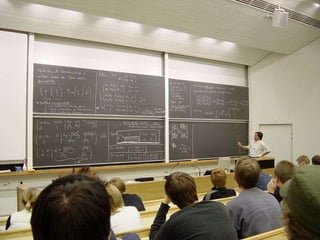
 What is a lecture?
2
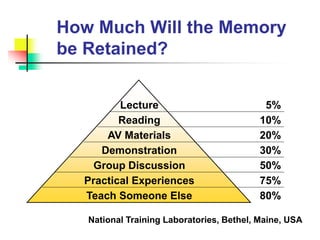
How Much Will the Memory
be Retained?
National Training Laboratories, Bethel, Maine, USA
5%
10%
20%
30%
50%
75%
80%
Lecture
Reading
AV Materials
Demonstration
Group Discussion
Practical Experiences
Teach Someone Else
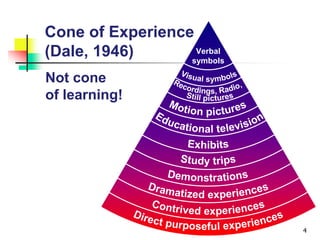
Cone of Experience
(Dale, 1946)
4
Not cone
of learning!
Verbal
symbols
Terminologies
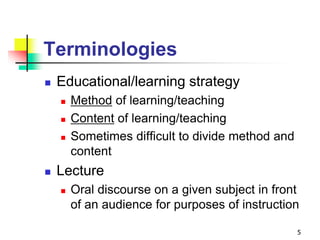
 Educational/learning strategy
 Method of learning/teaching
 Content of learning/teaching
 Sometimes difficult to divide method and
content
 Lecture
 Oral discourse on a given subject in front
of an audience for purposes of instruction
5
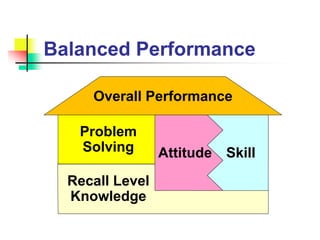
Balanced Performance
Overall Performance
Problem
Solving Attitude
Recall Level
Knowledge
Skill
Reading
 Strengths
 Low cost
 Easy to cover broad areas
 Less preparatory time for faculty
 Weaknesses
 Passive learning
 Difficult to continue if motivation is low
8
Lecture
 Strengths
 Low cost
 High learner-teacher ratio is possible
 Systematic presentation of complex issues
 Weaknesses
 Passive learning
 Teacher-centered
 Quality depends on a speaker or AV
material
10
11
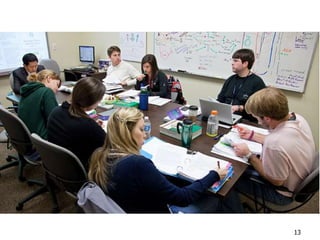
PBL (problem-based learning)
 Strengths
 Combines small-group learning, case-
based learning and self-directed learning
 Easy to motivate with real context
 Weaknesses
 Low efficiency if self-directed learning is
insufficient
 Resource intensive in faculty number
 Difficult for good scenario writing
13
Learning Project
 Strengths
 Active learning
 Facilitates self-directed learning
 Effective even for problem-solving
 Weaknesses
 Requires motivation
 Needs access to information source or
such an ability
 Requires a tutor
15
Role-modeling
 Strengths
 Faculty can play this role
 Deep and potential influence
 Weaknesses
 Few effective role-models
 Difficult to evaluate intervention/outcome
17
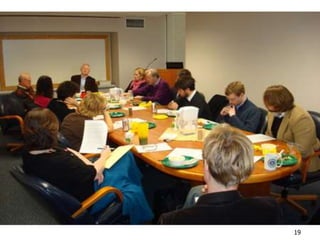
Group Discussion
 Strengths
 Active learning
 Integration is possible for multiple areas
 Promotes collaboration/team work
 Effective even for problem-solving or
affective objectives
 Weaknesses
 Requires group facilitation skills for teachers
 Success partly depends on group members
19
Demonstration
 Strengths
 “Seeing is believing”
 Possible high learner-teacher ratio
 Weaknesses
 Passive learning
 Teacher-centered
 Quality depends on the speaker/AV
materials
21
Role-play
 Strengths
 Simulation for practical contents
 Deals with multi-area/integrative objectives
 Low cost
 Weaknesses
 Requires well-trained multiple facilitators
 Requires fundamental knowledge/skills
and experiences
23
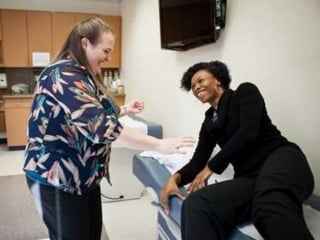
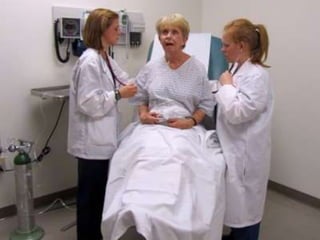
Simulated patients
 Strengths
 Higher reality than role-play
 Safe environment for skill training
 Feedback is available for learners
 Weaknesses
 High cost
 Requires an expert for development and
training/teaching
25
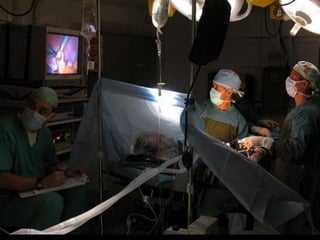
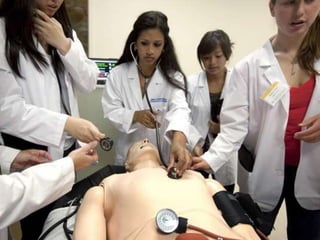
Simulator
 Strengths
 Safe environment for skill training
 Self-directed pace for a learner
 Weaknesses
 Only available for some contents
 Some simulators are highly costly
 Requires an administrator/trained facilitator
27
Reflection with Playback
 Strengths
 Recording/videotaping became inexpensive
 Feedback is available for the performance
 Provides an opportunity for self-monitoring
 Weaknesses
 Requires a patient’s allowance
 Requires a facilitator
 Takes time for review/reflection
 Recording/videotaping may distract practices
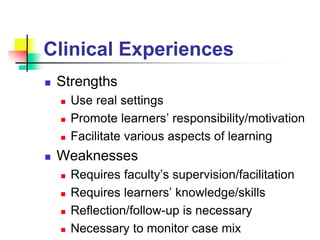
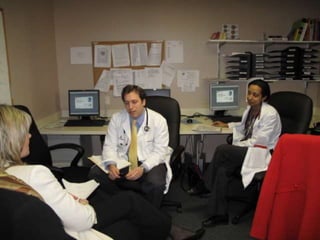
Clinical Experiences
 Strengths
 Use real settings
 Promote learners’ responsibility/motivation
 Facilitate various aspects of learning
 Weaknesses
 Requires faculty’s supervision/facilitation
 Requires learners’ knowledge/skills
 Reflection/follow-up is necessary
 Necessary to monitor case mix
30
31
32
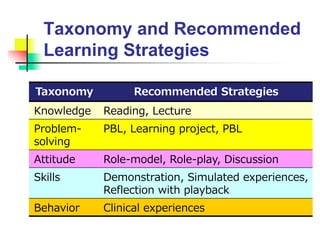
Taxonomy and Recommended
Learning Strategies
Taxonomy Recommended Strategies
Knowledge Reading, Lecture
Problem-
solving
PBL, Learning project, PBL
Attitude Role-model, Role-play, Discussion
Skills Demonstration, Simulated experiences,
Reflection with playback
Behavior Clinical experiences
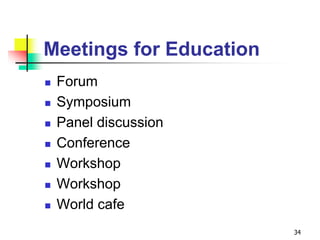
Meetings for Education
 Forum
 Symposium
 Panel discussion
 Conference
 Workshop
 Workshop
 World cafe
34
Theme for Discussion
 Plan an educational course (3hrs x 5)
for communication skills for nursing
students in a developing country
35

15 04-22 strategies

  • 1.
    1 Strategies for Education andLearning Hirotaka Onishi MD, MHPE International Research Center for Medical Education University of Tokyo
  • 2.
  • 3.
    How Much Willthe Memory be Retained? National Training Laboratories, Bethel, Maine, USA 5% 10% 20% 30% 50% 75% 80% Lecture Reading AV Materials Demonstration Group Discussion Practical Experiences Teach Someone Else
  • 4.
    Cone of Experience (Dale,1946) 4 Not cone of learning! Verbal symbols
  • 5.
    Terminologies  Educational/learning strategy Method of learning/teaching  Content of learning/teaching  Sometimes difficult to divide method and content  Lecture  Oral discourse on a given subject in front of an audience for purposes of instruction 5
  • 6.
    Balanced Performance Overall Performance Problem SolvingAttitude Recall Level Knowledge Skill
  • 7.
    Reading  Strengths  Lowcost  Easy to cover broad areas  Less preparatory time for faculty  Weaknesses  Passive learning  Difficult to continue if motivation is low
  • 8.
  • 9.
    Lecture  Strengths  Lowcost  High learner-teacher ratio is possible  Systematic presentation of complex issues  Weaknesses  Passive learning  Teacher-centered  Quality depends on a speaker or AV material
  • 10.
  • 11.
  • 12.
    PBL (problem-based learning) Strengths  Combines small-group learning, case- based learning and self-directed learning  Easy to motivate with real context  Weaknesses  Low efficiency if self-directed learning is insufficient  Resource intensive in faculty number  Difficult for good scenario writing
  • 13.
  • 14.
    Learning Project  Strengths Active learning  Facilitates self-directed learning  Effective even for problem-solving  Weaknesses  Requires motivation  Needs access to information source or such an ability  Requires a tutor
  • 15.
  • 16.
    Role-modeling  Strengths  Facultycan play this role  Deep and potential influence  Weaknesses  Few effective role-models  Difficult to evaluate intervention/outcome
  • 17.
  • 18.
    Group Discussion  Strengths Active learning  Integration is possible for multiple areas  Promotes collaboration/team work  Effective even for problem-solving or affective objectives  Weaknesses  Requires group facilitation skills for teachers  Success partly depends on group members
  • 19.
  • 20.
    Demonstration  Strengths  “Seeingis believing”  Possible high learner-teacher ratio  Weaknesses  Passive learning  Teacher-centered  Quality depends on the speaker/AV materials
  • 21.
  • 22.
    Role-play  Strengths  Simulationfor practical contents  Deals with multi-area/integrative objectives  Low cost  Weaknesses  Requires well-trained multiple facilitators  Requires fundamental knowledge/skills and experiences
  • 23.
  • 24.
    Simulated patients  Strengths Higher reality than role-play  Safe environment for skill training  Feedback is available for learners  Weaknesses  High cost  Requires an expert for development and training/teaching
  • 25.
  • 26.
    Simulator  Strengths  Safeenvironment for skill training  Self-directed pace for a learner  Weaknesses  Only available for some contents  Some simulators are highly costly  Requires an administrator/trained facilitator
  • 27.
  • 28.
    Reflection with Playback Strengths  Recording/videotaping became inexpensive  Feedback is available for the performance  Provides an opportunity for self-monitoring  Weaknesses  Requires a patient’s allowance  Requires a facilitator  Takes time for review/reflection  Recording/videotaping may distract practices
  • 29.
    Clinical Experiences  Strengths Use real settings  Promote learners’ responsibility/motivation  Facilitate various aspects of learning  Weaknesses  Requires faculty’s supervision/facilitation  Requires learners’ knowledge/skills  Reflection/follow-up is necessary  Necessary to monitor case mix
  • 30.
  • 31.
  • 32.
  • 33.
    Taxonomy and Recommended LearningStrategies Taxonomy Recommended Strategies Knowledge Reading, Lecture Problem- solving PBL, Learning project, PBL Attitude Role-model, Role-play, Discussion Skills Demonstration, Simulated experiences, Reflection with playback Behavior Clinical experiences
  • 34.
    Meetings for Education Forum  Symposium  Panel discussion  Conference  Workshop  Workshop  World cafe 34
  • 35.
    Theme for Discussion Plan an educational course (3hrs x 5) for communication skills for nursing students in a developing country 35

Editor's Notes