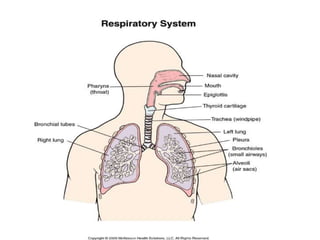
Image of the Respiratory System
FUNCTIONS OF RESPIRATORY SYSTEM 
• Provides an extensive area for gas exchange between air & circulating blood 
• Moving air to & from the exchange surfaces of the lungs 
• Protects respiratory surfaces from dehydration, temperature changes & other 
environmental variations 
• Defend respiratory system & other tissues from invasion by pathogenic micro-organisms 
• Produce sounds involved in speaking, singing or non-verbal communication 
• Assists in regulation of blood volume, blood pressure & the control of body fluid 
pH
Respiratory Overview Picture Nasal 
Cavity 
Nose 
Mouth 
Bronchus 
Bronchiole 
Alveolus 
Diaphragm 
Throat 
(pharynx) 
Windpipe 
(Trachea) 
Left lungs 
Ribs
CARTILAGES OF LARYNX 
THYROID CARTILAGE 
• Largest laryngeal cartilage 
• Forms most of anterior & lateral 
walls of larynx 
• Commonly called Adams Apple 
(laryngeal prominence) 
• Inferior surface articulates with 
cricoid 
• Superior surface has ligamentous 
attachments to epiglottis & other 
smaller laryngeal cartilages
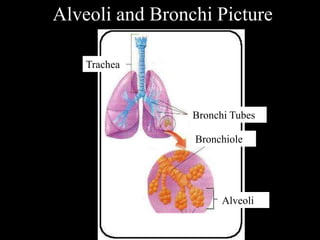
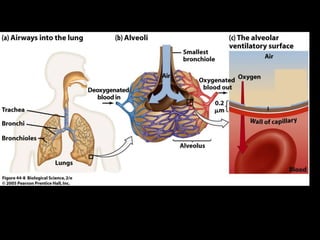
Alveoli and Bronchi Picture 
Trachea 
Bronchi Tubes 
Bronchiole 
Alveoli
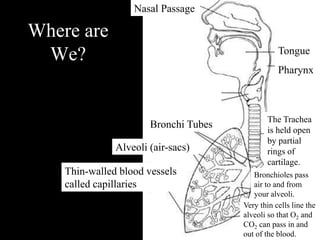
Nasal Passage 
Bronchi Tubes 
Alveoli (air-sacs) 
Thin-walled blood vessels 
called capillaries 
Tongue 
Pharynx 
The Trachea 
is held open 
by partial 
rings of 
cartilage. 
Bronchioles pass 
air to and from 
your alveoli. 
Very thin cells line the 
alveoli so that O2 and 
CO2 can pass in and 
out of the blood.
Alveoli Picture 
Here is a close 
up picture of 
your Alveoli 
and a Capillary 
surrounding it. 
Capillary 
Red Blood 
Cell 
Carbon 
Dioxide is 
dropped off 
Oxygen is 
picked up 
Wall of 
the air 
sac
Nasal Passage 
Bronchi Tubes 
Alveoli (air-sacs) 
Thin-walled blood vessels 
called capillaries 
Tongue 
Pharynx 
The Trachea 
is held open 
by partial 
rings of 
cartilage. 
Bronchioles pass 
air to and from 
your alveoli. 
Very thin cells line the 
alveoli so that O2 and 
CO2 can pass in and 
out of the blood. 
Where are 
We?
Cool pictures
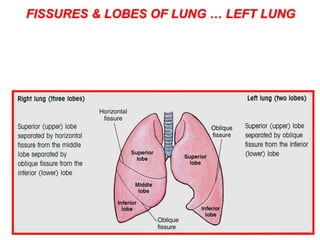
FISSURES & LOBES OF LUNG … LEFT LUNG 
• 2 lobes viz. : superior & inferior 
• Separated by oblique fissure 
• Tongue shaped projection of left lung below cardiac notch is called LINGULA ; 
corresponds to middle lobe of right lung
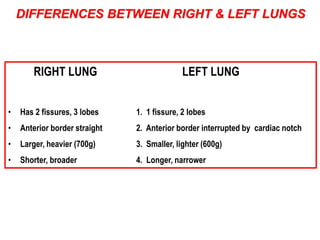
DIFFERENCES BETWEEN RIGHT & LEFT LUNGS 
RIGHT LUNG LEFT LUNG 
• Has 2 fissures, 3 lobes 1. 1 fissure, 2 lobes 
• Anterior border straight 2. Anterior border interrupted by cardiac notch 
• Larger, heavier (700g) 3. Smaller, lighter (600g) 
• Shorter, broader 4. Longer, narrower
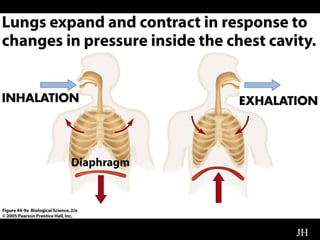
Diagram of Diaphragm 
JH
Fun Facts 
* At rest, the body takes in and breathes out about 10 liters of air each minute. 
* The right lung is slightly larger than the left. 
* The highest recorded "sneeze speed" is 165 km per hour. 
* The surface area of the lungs is roughly the same size as a tennis court. 
* The capillaries in the lungs would extend 1,600 kilometers if placed end to 
end. 
* We lose half a liter of water a day through breathing. This is the water vapor 
we see when we breathe onto glass. 
* A person at rest usually breathes between 12 and 15 times a minute. 
* The breathing rate is faster in children and women than in men.

12. respiratory system copy

  • 2.
    Image of theRespiratory System
  • 4.
    FUNCTIONS OF RESPIRATORYSYSTEM • Provides an extensive area for gas exchange between air & circulating blood • Moving air to & from the exchange surfaces of the lungs • Protects respiratory surfaces from dehydration, temperature changes & other environmental variations • Defend respiratory system & other tissues from invasion by pathogenic micro-organisms • Produce sounds involved in speaking, singing or non-verbal communication • Assists in regulation of blood volume, blood pressure & the control of body fluid pH
  • 5.
    Respiratory Overview PictureNasal Cavity Nose Mouth Bronchus Bronchiole Alveolus Diaphragm Throat (pharynx) Windpipe (Trachea) Left lungs Ribs
  • 6.
    CARTILAGES OF LARYNX THYROID CARTILAGE • Largest laryngeal cartilage • Forms most of anterior & lateral walls of larynx • Commonly called Adams Apple (laryngeal prominence) • Inferior surface articulates with cricoid • Superior surface has ligamentous attachments to epiglottis & other smaller laryngeal cartilages
  • 7.
    Alveoli and BronchiPicture Trachea Bronchi Tubes Bronchiole Alveoli
  • 8.
    Nasal Passage BronchiTubes Alveoli (air-sacs) Thin-walled blood vessels called capillaries Tongue Pharynx The Trachea is held open by partial rings of cartilage. Bronchioles pass air to and from your alveoli. Very thin cells line the alveoli so that O2 and CO2 can pass in and out of the blood.
  • 9.
    Alveoli Picture Hereis a close up picture of your Alveoli and a Capillary surrounding it. Capillary Red Blood Cell Carbon Dioxide is dropped off Oxygen is picked up Wall of the air sac
  • 10.
    Nasal Passage BronchiTubes Alveoli (air-sacs) Thin-walled blood vessels called capillaries Tongue Pharynx The Trachea is held open by partial rings of cartilage. Bronchioles pass air to and from your alveoli. Very thin cells line the alveoli so that O2 and CO2 can pass in and out of the blood. Where are We?
  • 11.
  • 12.
    FISSURES & LOBESOF LUNG … LEFT LUNG • 2 lobes viz. : superior & inferior • Separated by oblique fissure • Tongue shaped projection of left lung below cardiac notch is called LINGULA ; corresponds to middle lobe of right lung
  • 13.
    DIFFERENCES BETWEEN RIGHT& LEFT LUNGS RIGHT LUNG LEFT LUNG • Has 2 fissures, 3 lobes 1. 1 fissure, 2 lobes • Anterior border straight 2. Anterior border interrupted by cardiac notch • Larger, heavier (700g) 3. Smaller, lighter (600g) • Shorter, broader 4. Longer, narrower
  • 14.
  • 16.
    Fun Facts *At rest, the body takes in and breathes out about 10 liters of air each minute. * The right lung is slightly larger than the left. * The highest recorded "sneeze speed" is 165 km per hour. * The surface area of the lungs is roughly the same size as a tennis court. * The capillaries in the lungs would extend 1,600 kilometers if placed end to end. * We lose half a liter of water a day through breathing. This is the water vapor we see when we breathe onto glass. * A person at rest usually breathes between 12 and 15 times a minute. * The breathing rate is faster in children and women than in men.