PRESENTATION PREPARED BY:
RAJAN RANABHAT
ROLL NO. : 12
M.SC. IN PUBLIC HEALTH AND DISASTER ENGINEERING
POKHARA UNIVERSITY
 Adolescence, transitional phase of growth and
development between childhood and adulthood. The World Health
Organization(WHO) defines an adolescent as any person between ages
10 and 19.
 In many societies, however, adolescence is narrowly equated
with puberty and the cycle of physical changes culminating in
reproductive maturity.
 In other societies adolescence is understood in broader terms
that encompass psychological, social, and moral terrain as well as the
strictly physical aspects of maturation. In these societies the
term adolescence typically refers to the period between ages 12 and 20
and is roughly equivalent to the word teens.
 Around 1.2 billion people, or 1 in 6 of the world’s population, are
adolescents aged 10 to 19.
 Most are healthy, but there is still substantial premature death, illness,
and injury among adolescents
 Illnesses can hinder their ability to grow and develop to their full
potential.
 Alcohol or tobacco use, lack of physical activity, unprotected sex and/or
exposure to violence can jeopardize not only their current health, but
also their health as adults, and even the health of their future children.
 Personal and social problem
 Problems of health and physical self-esteem
 Sex and reproductive health problem
 Home and faimly related problem
 Injuries
 Mental health
 Violence
 HIV/AIDS
 Alcohol and drugs
 Nutrition and micronutrient deficiencies
 Under nutrition and obesity
 Physical activity
 Tobacco use
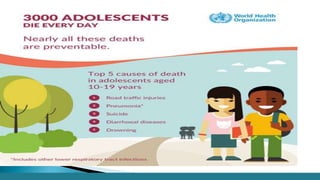
 More than 1.1 million adolescents aged 10-19 years died in 2016, over 3000
every day, mostly from preventable or treatable causes.
 Road traffic injuries were the leading cause of death among adolescents in
2016. Other major causes of adolescent deaths include suicide,
interpersonal violence, HIV/AIDS and diarrheal diseases.
 Half of all mental health disorders in adulthood start by age 14, but most
cases are undetected and untreated.
 Globally, there are 44 births per 1000 to girls aged 15 to 19 per year.
 About 22% (6.38 million) of Nepal’s 28.5 million population
(government projection for 2016) are adolescents aged 10–19 years.
 The legal age of marriage in Nepal is 20 years. Despite that, 48.5% of
women aged 20–49 years were married by the age of 18 and 15.5% aged
15-49 were married by the age of 15, according to the Nepal Multiple
Indicator Cluster Survey 2014 (NMICS 2014).
 Childbearing also begins early, especially in rural areas. Almost a quarter
of women in Nepal give birth before the age of 18 and nearly half before
they are 20 years old, according to the Nepal demographic and health
survey 2011 (NDHS 2011) although the numbers of teenage pregnancies
have reduced in recent years, as shown by NMICS 2014.

 Adolescent’s social and health vulnerabilities are high in Nepal
especially among girls and those from remote areas (mountain and hill
region), and belonging to Dalit caste.
 The factors associated with vulnerabilities had mainly the socio-
economic causes and difficulties in accessing health services.
 Early marriage, psychosocial problems and out of schooling were the
major factors responsible for vulnerability among girls
 injury was the common vulnerability factor for boys.
 adolescents from higher status faimly had higher psychosocial
vulnerability.
 Domestic violence and alcohol abuse were also responsible for health
vulnerability of Nepalese adolescents.
 Damage to health.
 Physical injury and death
 Mental health problem (Risk of depression ,Posttraumatic stress disorder
effect)
 Lack of Basic needs.
 Lack of Privacy.
12 adolescent health problem

12 adolescent health problem

  • 1.
    PRESENTATION PREPARED BY: RAJANRANABHAT ROLL NO. : 12 M.SC. IN PUBLIC HEALTH AND DISASTER ENGINEERING POKHARA UNIVERSITY
  • 3.
     Adolescence, transitionalphase of growth and development between childhood and adulthood. The World Health Organization(WHO) defines an adolescent as any person between ages 10 and 19.  In many societies, however, adolescence is narrowly equated with puberty and the cycle of physical changes culminating in reproductive maturity.  In other societies adolescence is understood in broader terms that encompass psychological, social, and moral terrain as well as the strictly physical aspects of maturation. In these societies the term adolescence typically refers to the period between ages 12 and 20 and is roughly equivalent to the word teens.
  • 4.
     Around 1.2billion people, or 1 in 6 of the world’s population, are adolescents aged 10 to 19.  Most are healthy, but there is still substantial premature death, illness, and injury among adolescents  Illnesses can hinder their ability to grow and develop to their full potential.  Alcohol or tobacco use, lack of physical activity, unprotected sex and/or exposure to violence can jeopardize not only their current health, but also their health as adults, and even the health of their future children.
  • 5.
     Personal andsocial problem  Problems of health and physical self-esteem  Sex and reproductive health problem  Home and faimly related problem
  • 6.
     Injuries  Mentalhealth  Violence  HIV/AIDS  Alcohol and drugs  Nutrition and micronutrient deficiencies  Under nutrition and obesity  Physical activity  Tobacco use
  • 8.
     More than1.1 million adolescents aged 10-19 years died in 2016, over 3000 every day, mostly from preventable or treatable causes.  Road traffic injuries were the leading cause of death among adolescents in 2016. Other major causes of adolescent deaths include suicide, interpersonal violence, HIV/AIDS and diarrheal diseases.  Half of all mental health disorders in adulthood start by age 14, but most cases are undetected and untreated.  Globally, there are 44 births per 1000 to girls aged 15 to 19 per year.
  • 9.
     About 22%(6.38 million) of Nepal’s 28.5 million population (government projection for 2016) are adolescents aged 10–19 years.  The legal age of marriage in Nepal is 20 years. Despite that, 48.5% of women aged 20–49 years were married by the age of 18 and 15.5% aged 15-49 were married by the age of 15, according to the Nepal Multiple Indicator Cluster Survey 2014 (NMICS 2014).  Childbearing also begins early, especially in rural areas. Almost a quarter of women in Nepal give birth before the age of 18 and nearly half before they are 20 years old, according to the Nepal demographic and health survey 2011 (NDHS 2011) although the numbers of teenage pregnancies have reduced in recent years, as shown by NMICS 2014. 
  • 10.
     Adolescent’s socialand health vulnerabilities are high in Nepal especially among girls and those from remote areas (mountain and hill region), and belonging to Dalit caste.  The factors associated with vulnerabilities had mainly the socio- economic causes and difficulties in accessing health services.  Early marriage, psychosocial problems and out of schooling were the major factors responsible for vulnerability among girls  injury was the common vulnerability factor for boys.  adolescents from higher status faimly had higher psychosocial vulnerability.  Domestic violence and alcohol abuse were also responsible for health vulnerability of Nepalese adolescents.
  • 11.
     Damage tohealth.  Physical injury and death  Mental health problem (Risk of depression ,Posttraumatic stress disorder effect)  Lack of Basic needs.  Lack of Privacy.