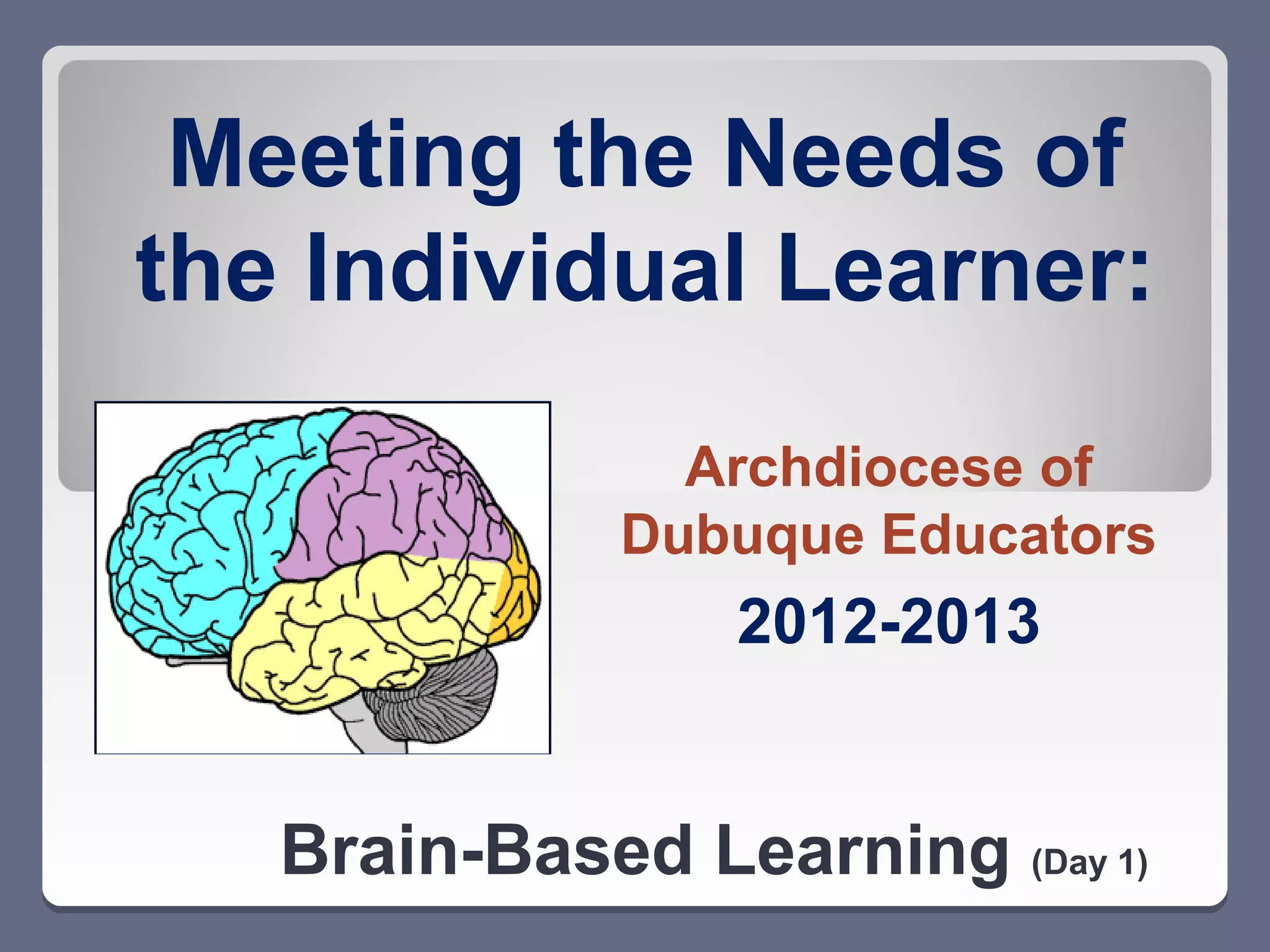
Meeting the Needs of
the Individual Learner:
               Archdiocese of
             Dubuque Educators
                 2012-2013


   Brain-Based Learning (Day 1)
Who
What
Where
When
It’s time
                                                                 for a
                                                                quiz!


Google Image Source: http://www.amazon.com/Home-Alone-Macaulay-Culkin/dp/B00000K3CL
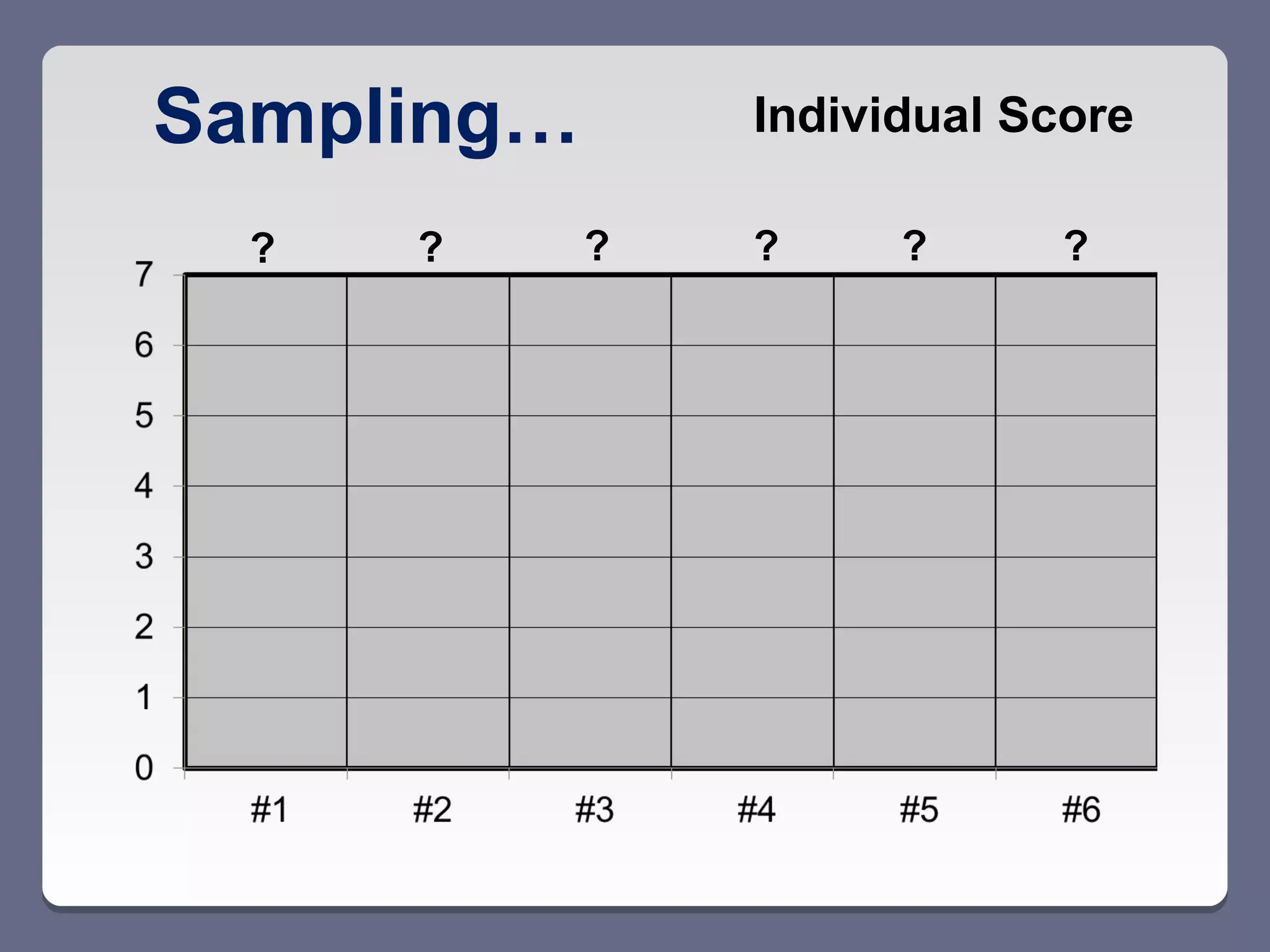
Sampling…       Individual Score

  ?   ?     ?   ?     ?      ?
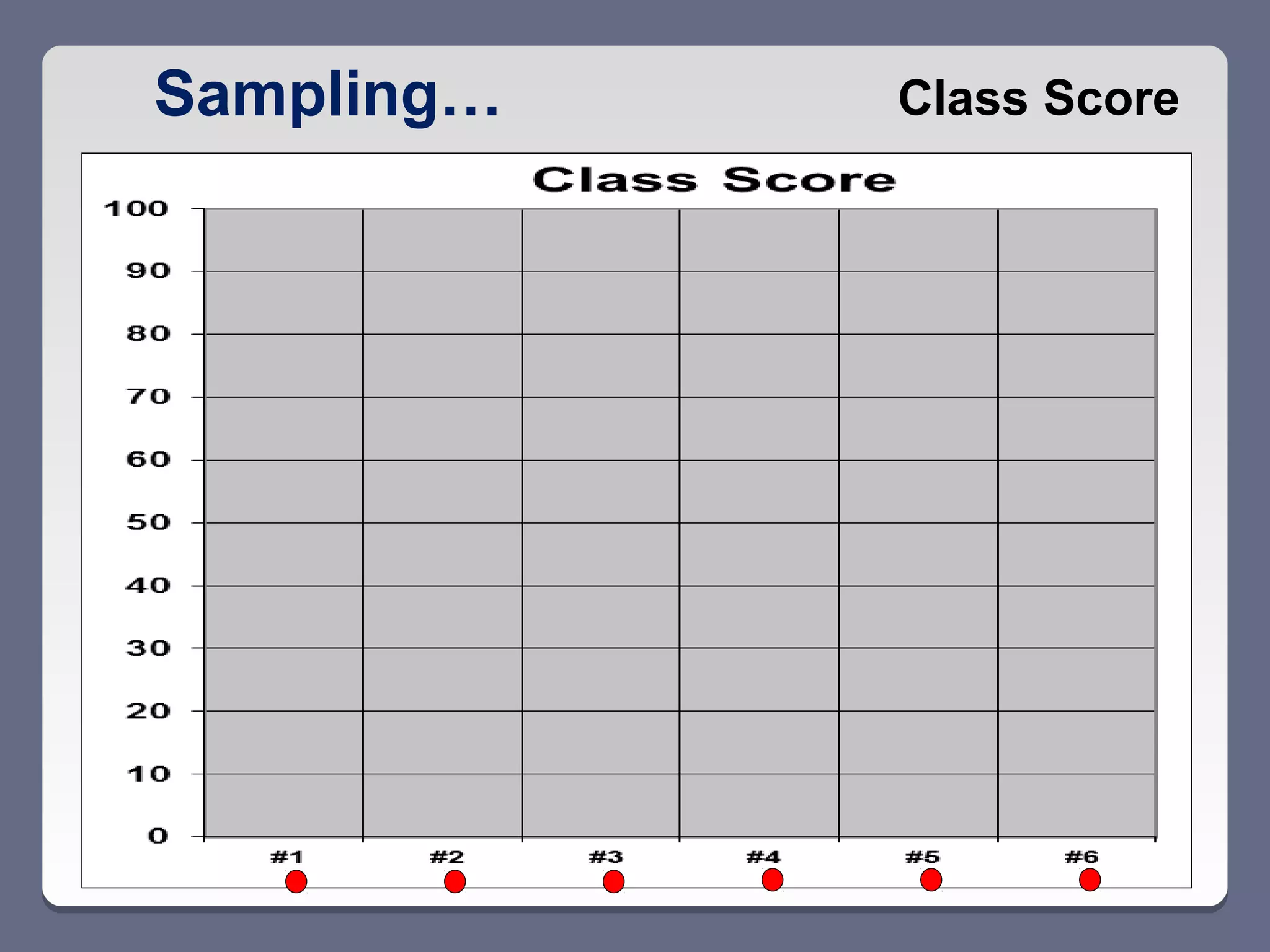
Sampling…   Class Score
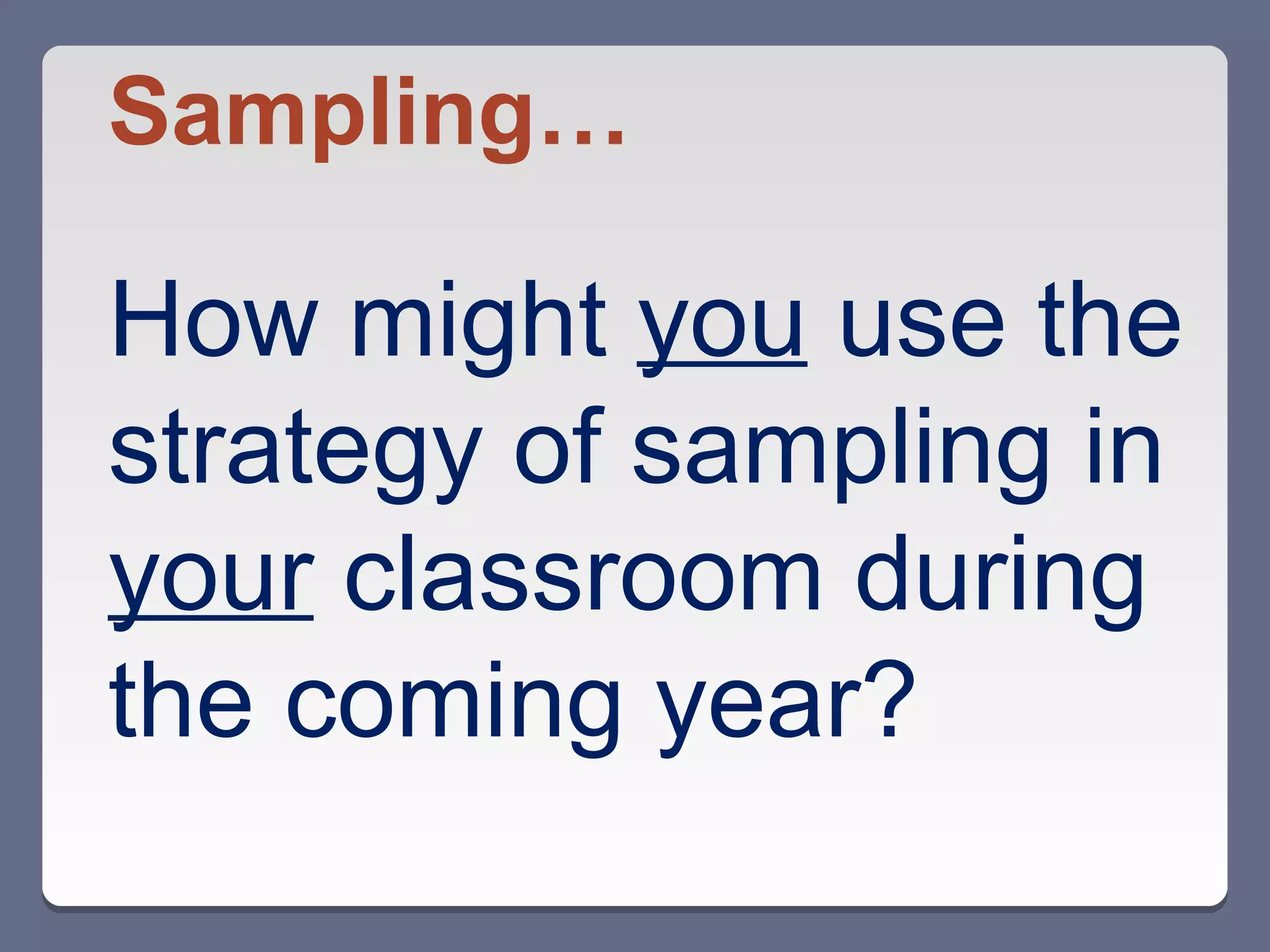
Sampling…

How might you use the
strategy of sampling in
your classroom during
the coming year?
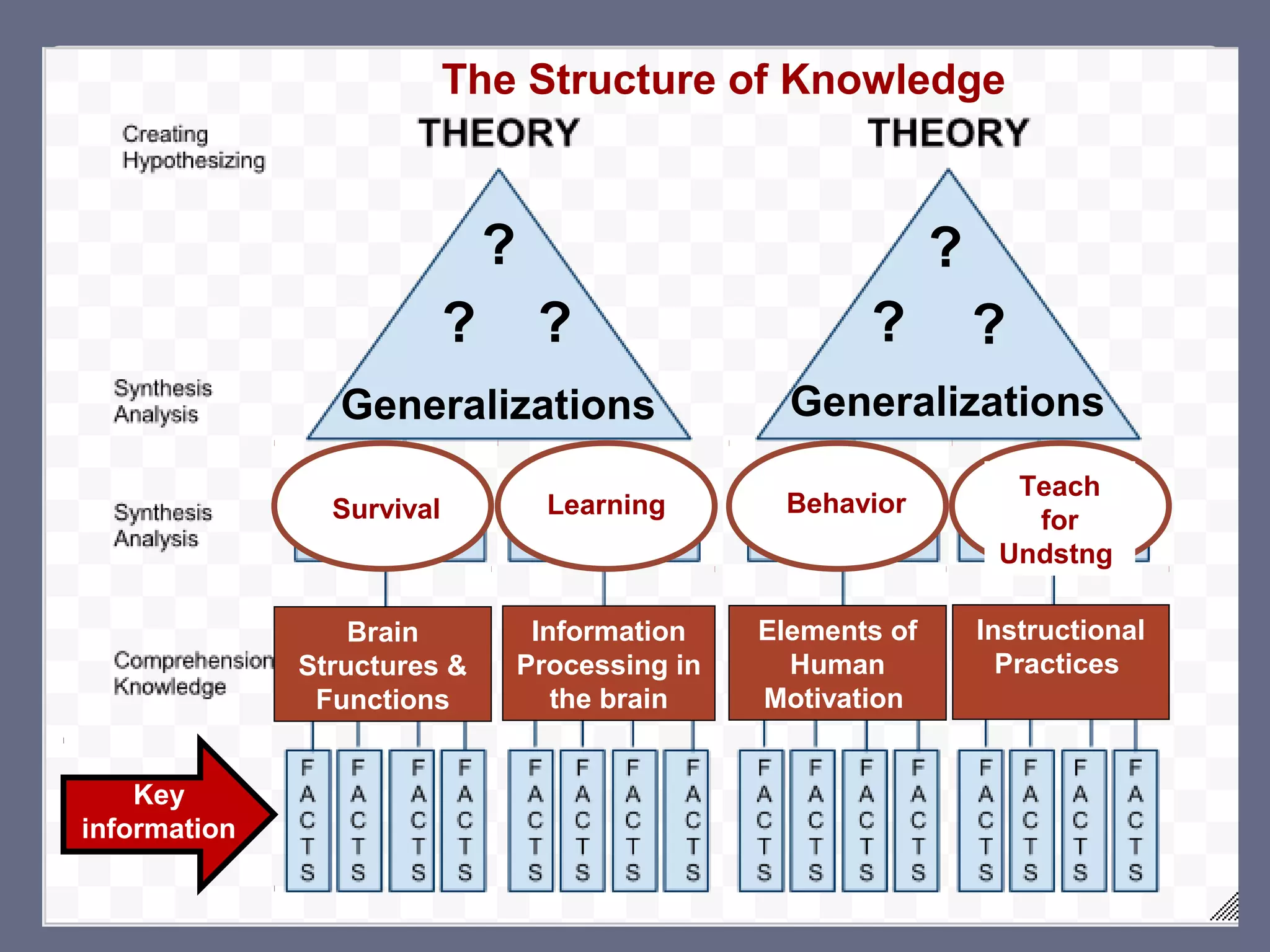
The Structure of Knowledge


                               ?                                 ?
                           ?        ?                     ?          ?
                 Generalizations                     Generalizations
                                                                       Teach
                Survival             Learning       Behavior
                                                                        for
                                                                      Undstng

                  Brain             Information    Elements of       Instructional
              Structures &         Processing in     Human             Practices
               Functions              the brain    Motivation


    Key
information
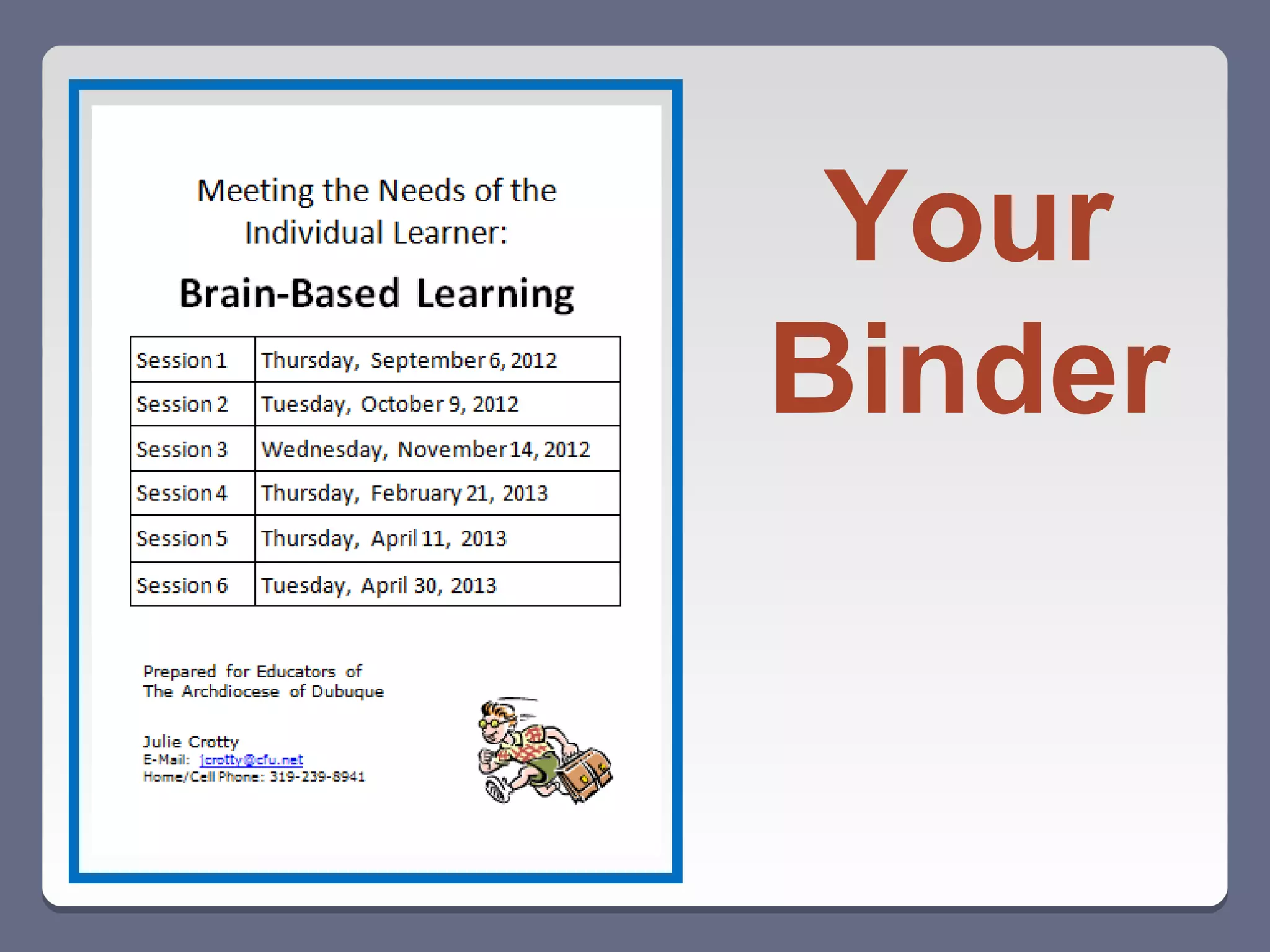
Your
Binder
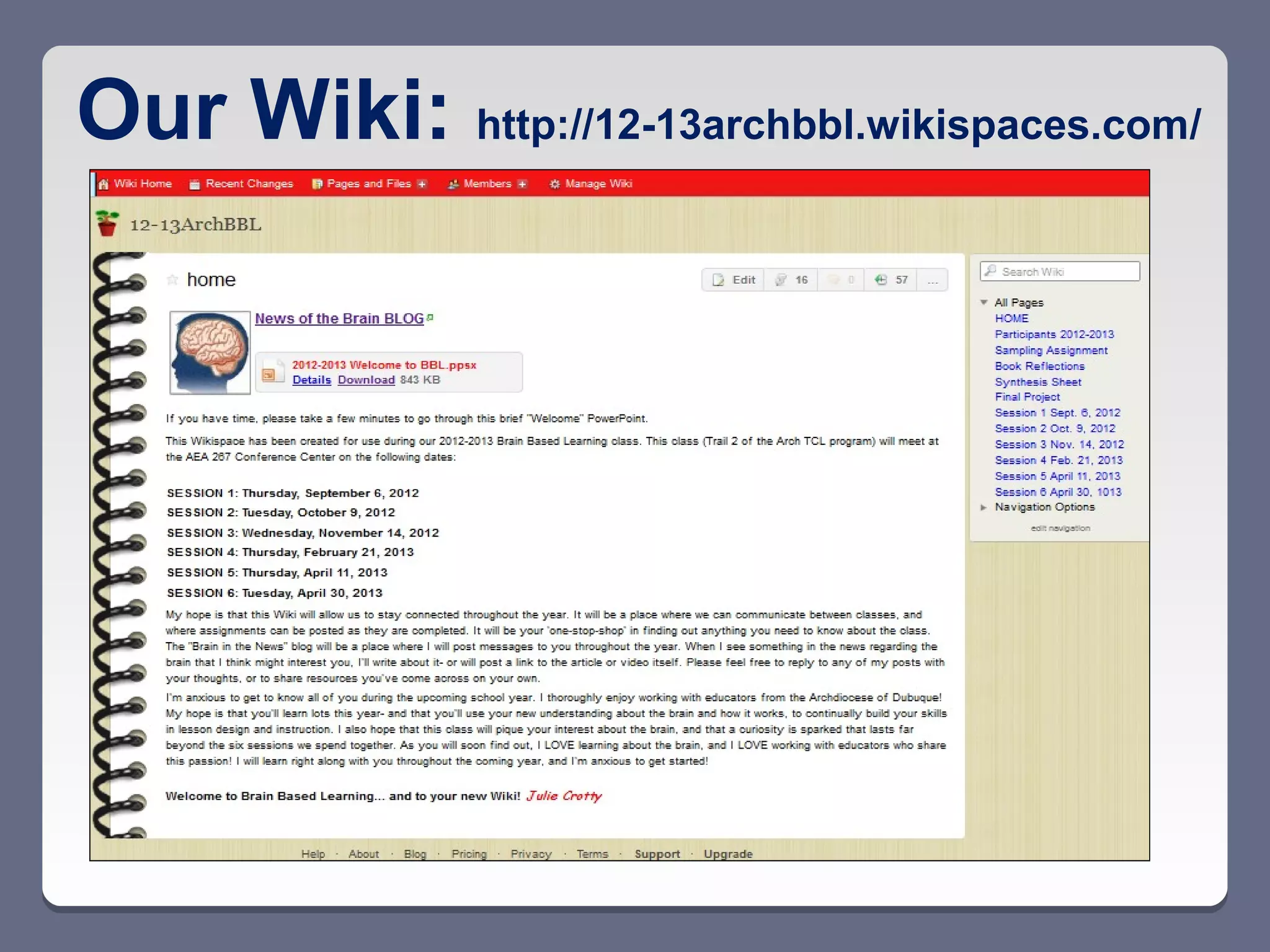
Our Wiki: http://12-13archbbl.wikispaces.com/
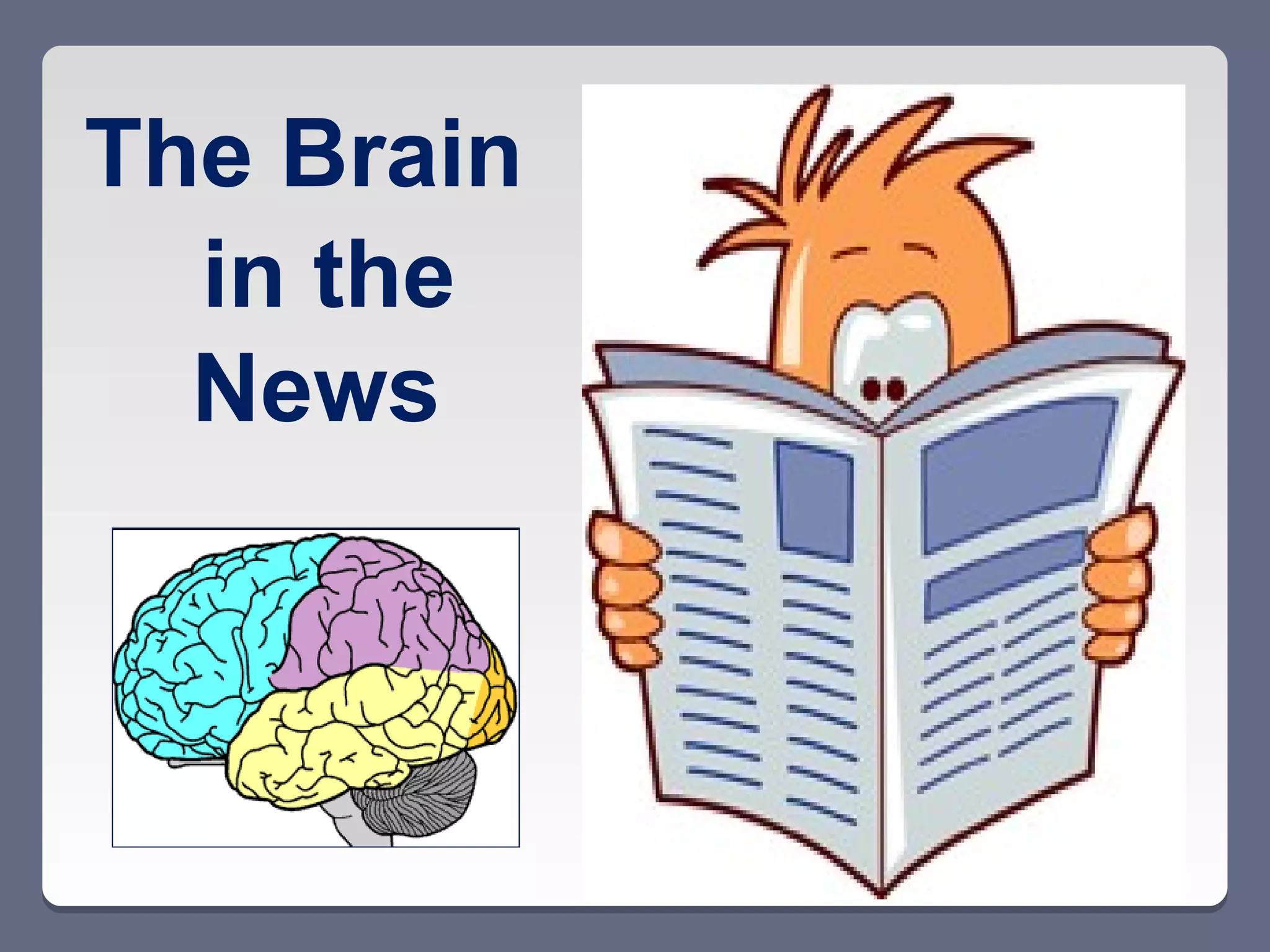
The Brain
  in the
  News
What does it take
to engage you as
a learner?


     Under what conditions
     do you find yourself
     motivated to learn?
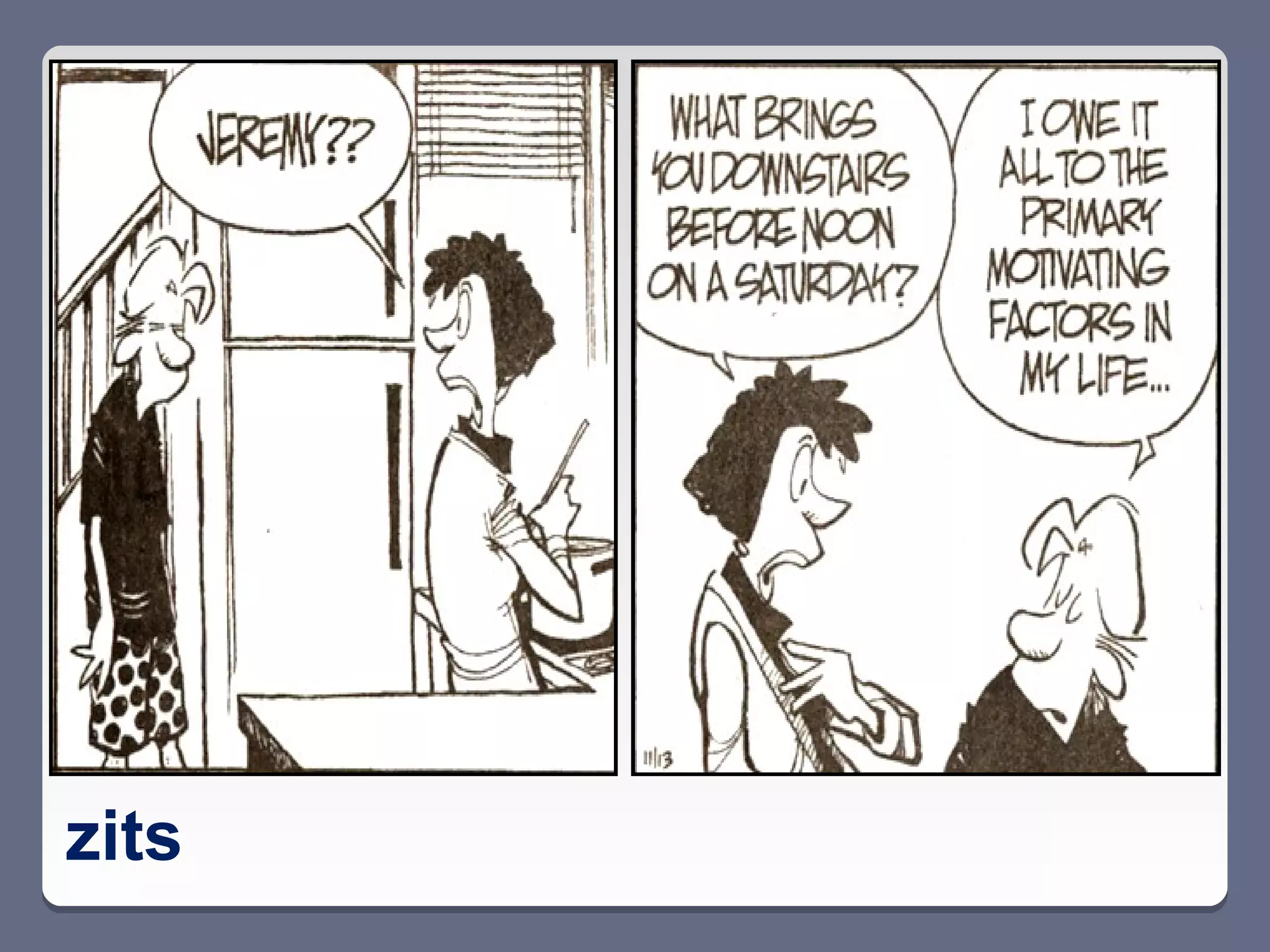
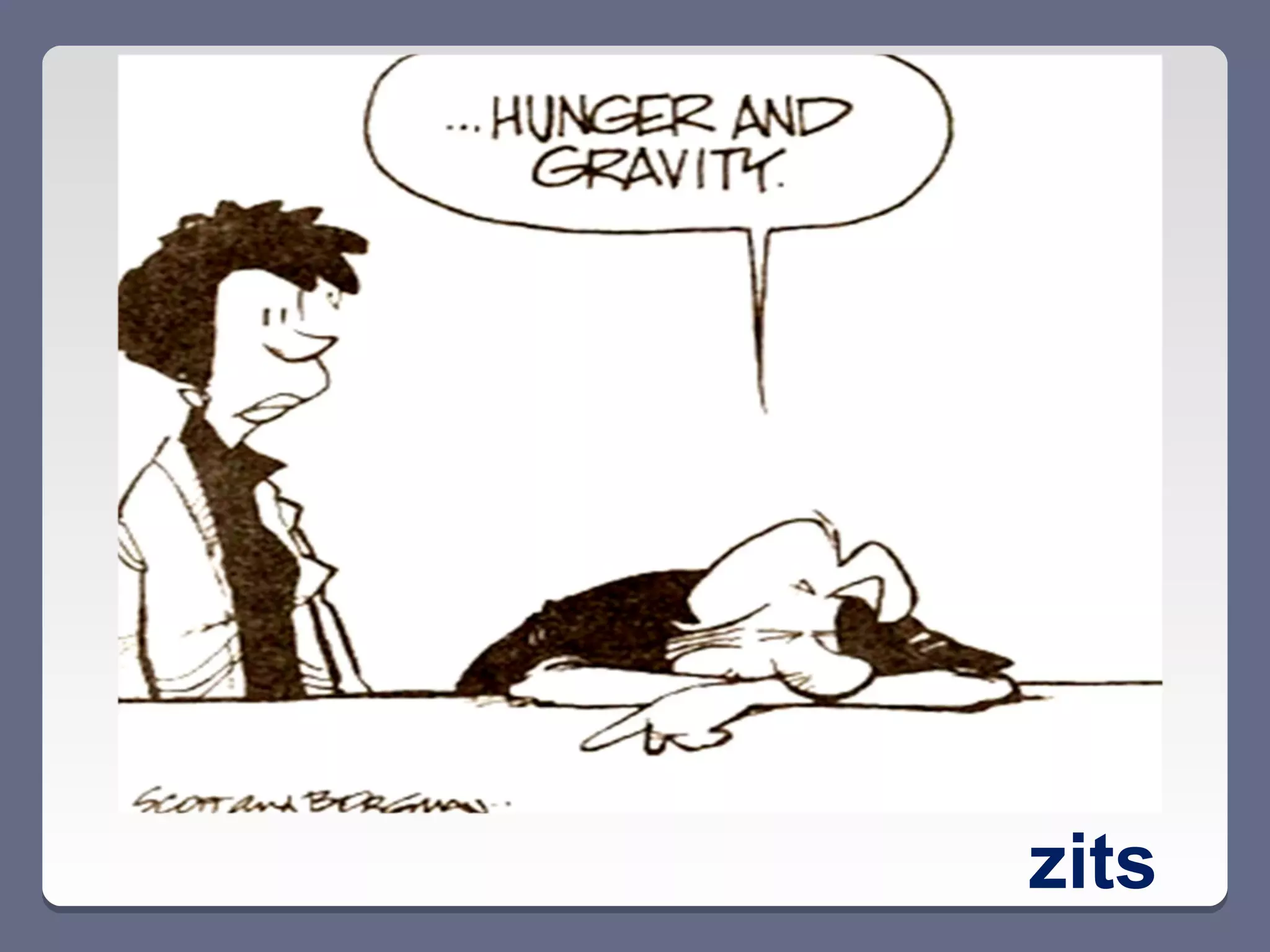
zits
zits
Is motivation for learning
something that is innate,
    or must it be
learned?
Is there physiological
evidence of an innate
desire to learn?
If humans are “born” learners,
what external factors come into
play that enhance or hinder that
innate desire to learn?
How does the use of
       rewards and punishments
       affect a student’s level of
       motivation for a task?

Is it accurate to say that
some students are
motivated to learn and
others are not?
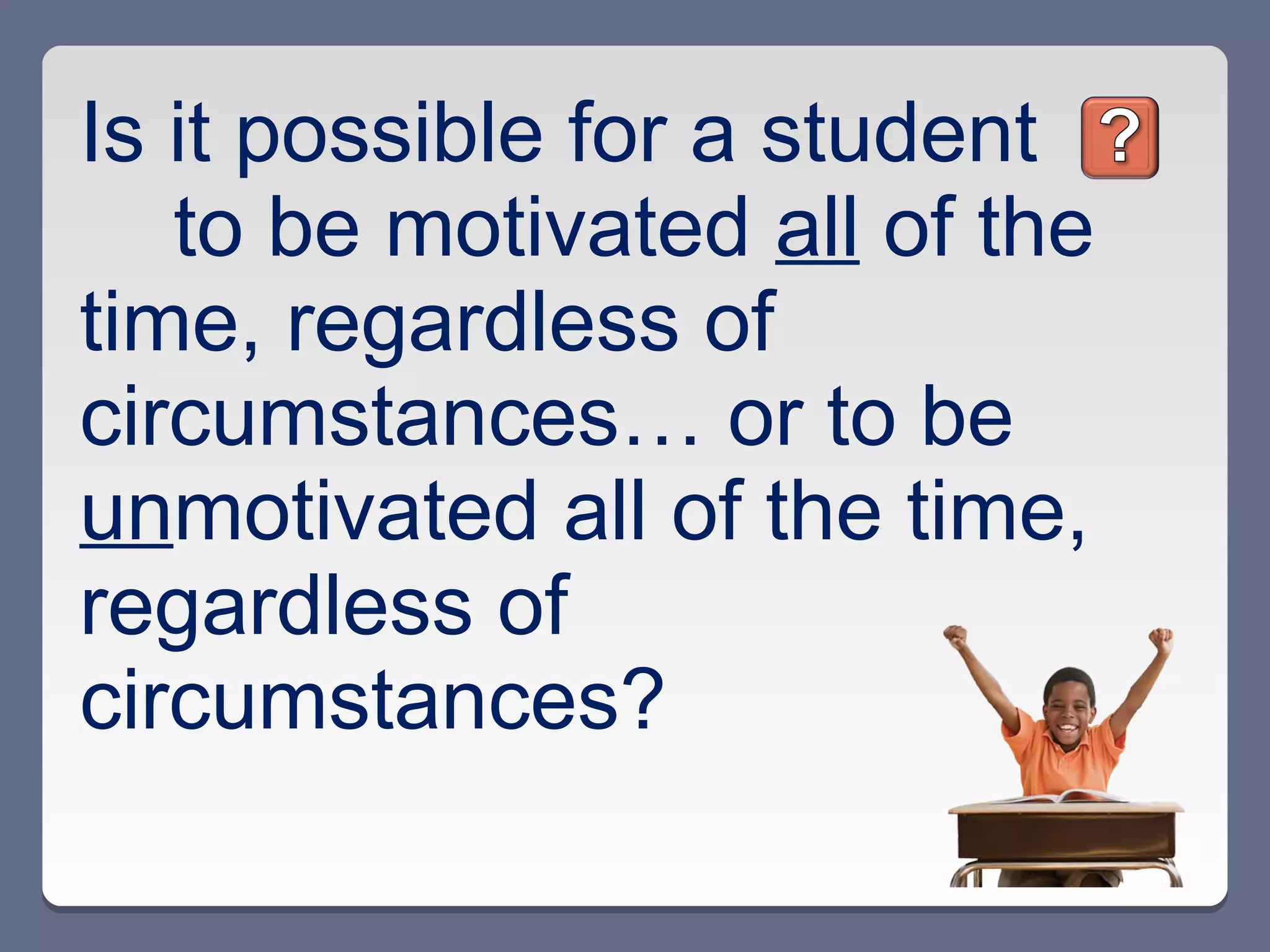
Is it possible for a student
   to be motivated all of the
time, regardless of
circumstances… or to be
unmotivated all of the time,
regardless of
circumstances?
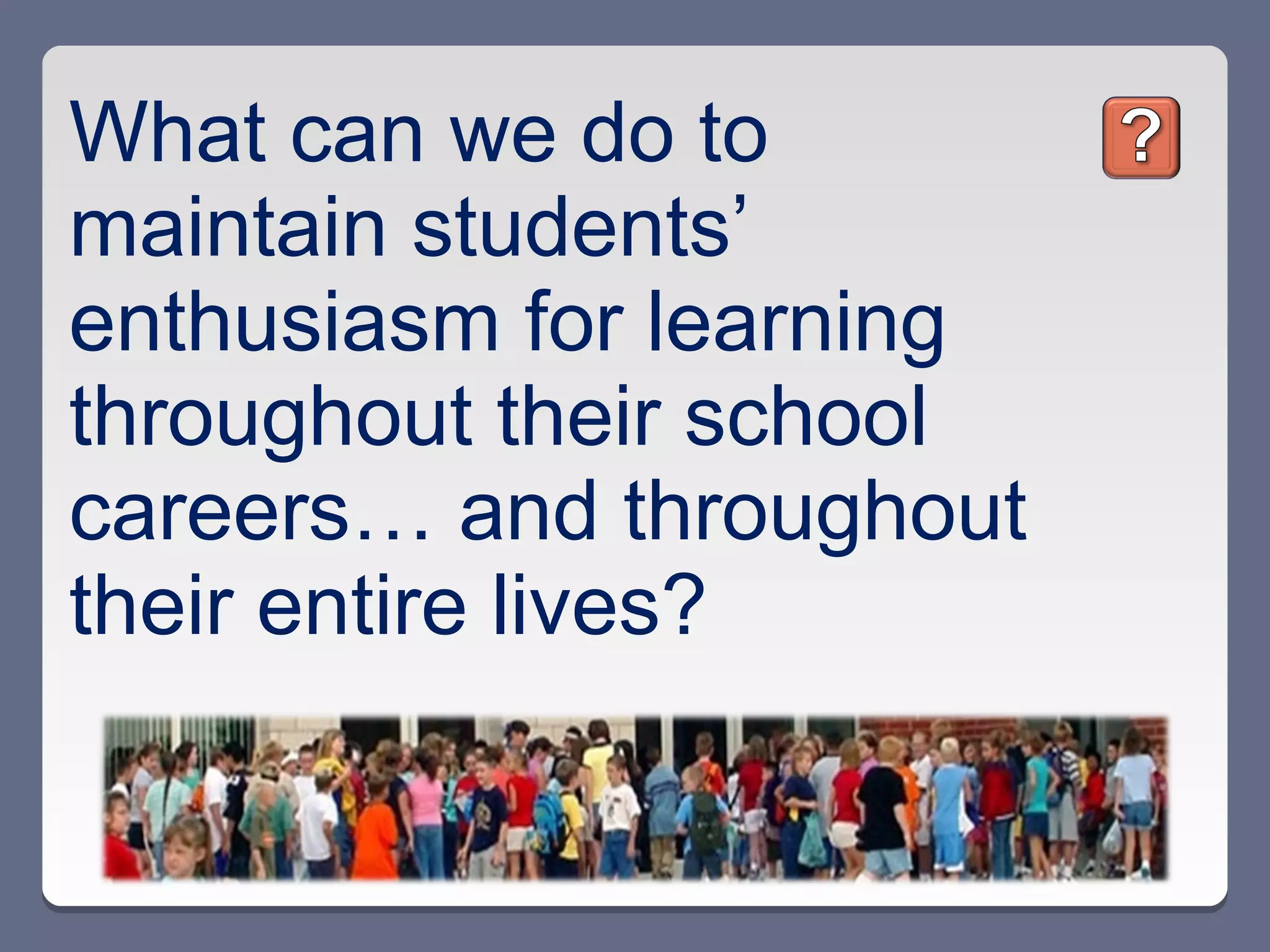
What can we do to
maintain students’
enthusiasm for learning
throughout their school
careers… and throughout
their entire lives?
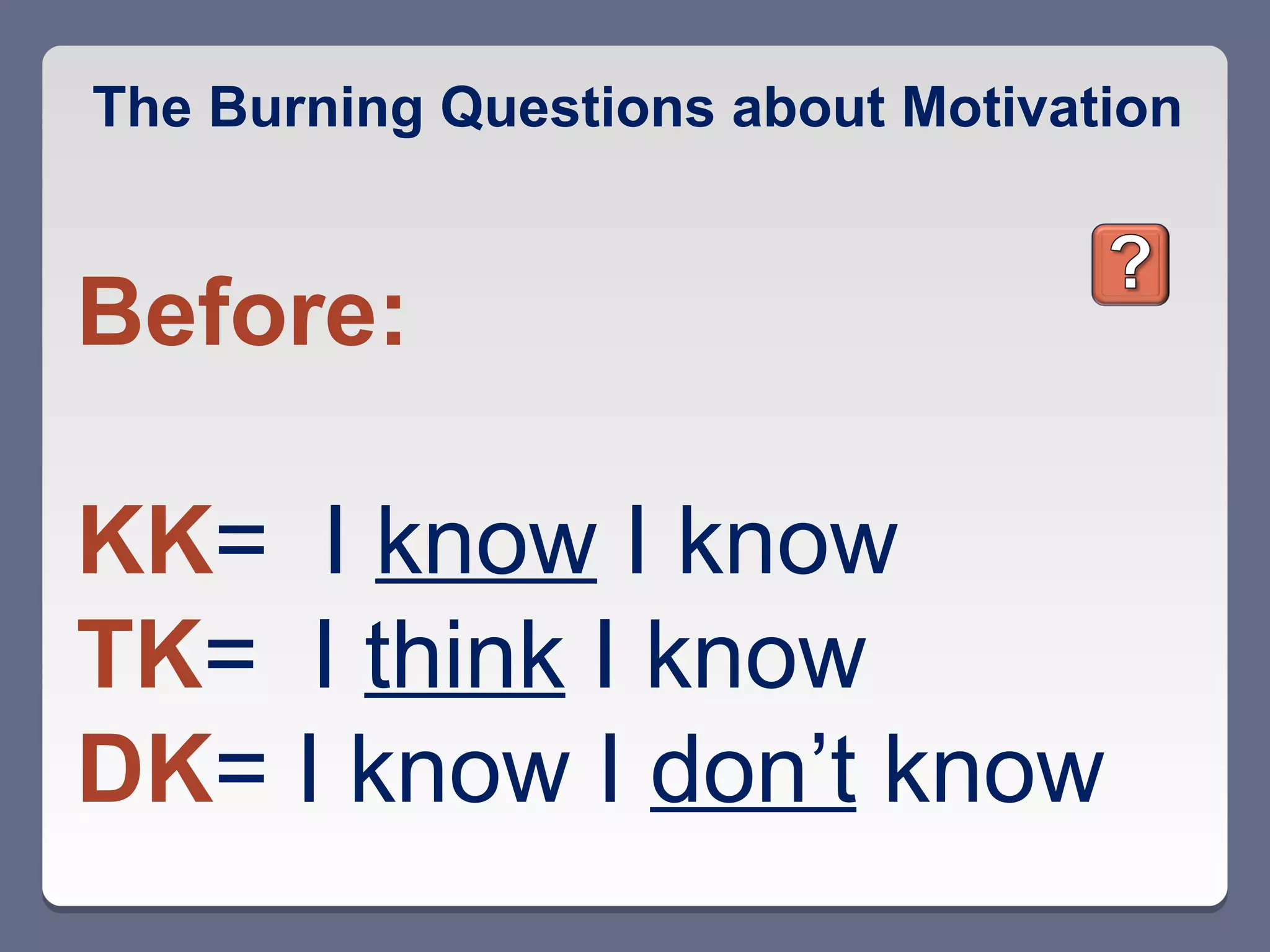
The Burning Questions about Motivation


Before:

KK= I know I know
TK= I think I know
DK= I know I don’t know
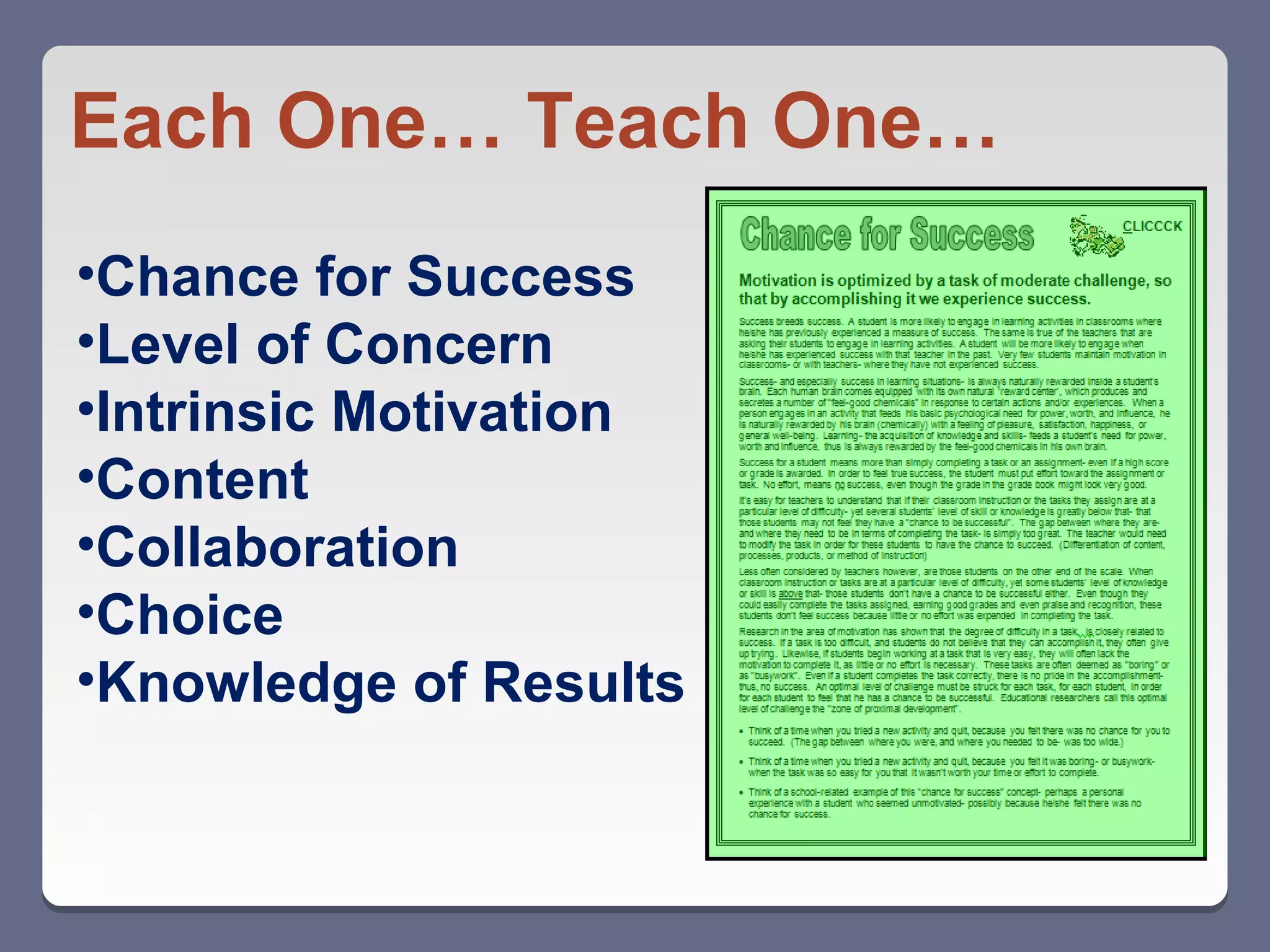
Each One… Teach One…
•Chance for Success
•Level of Concern
•Intrinsic Motivation
•Content
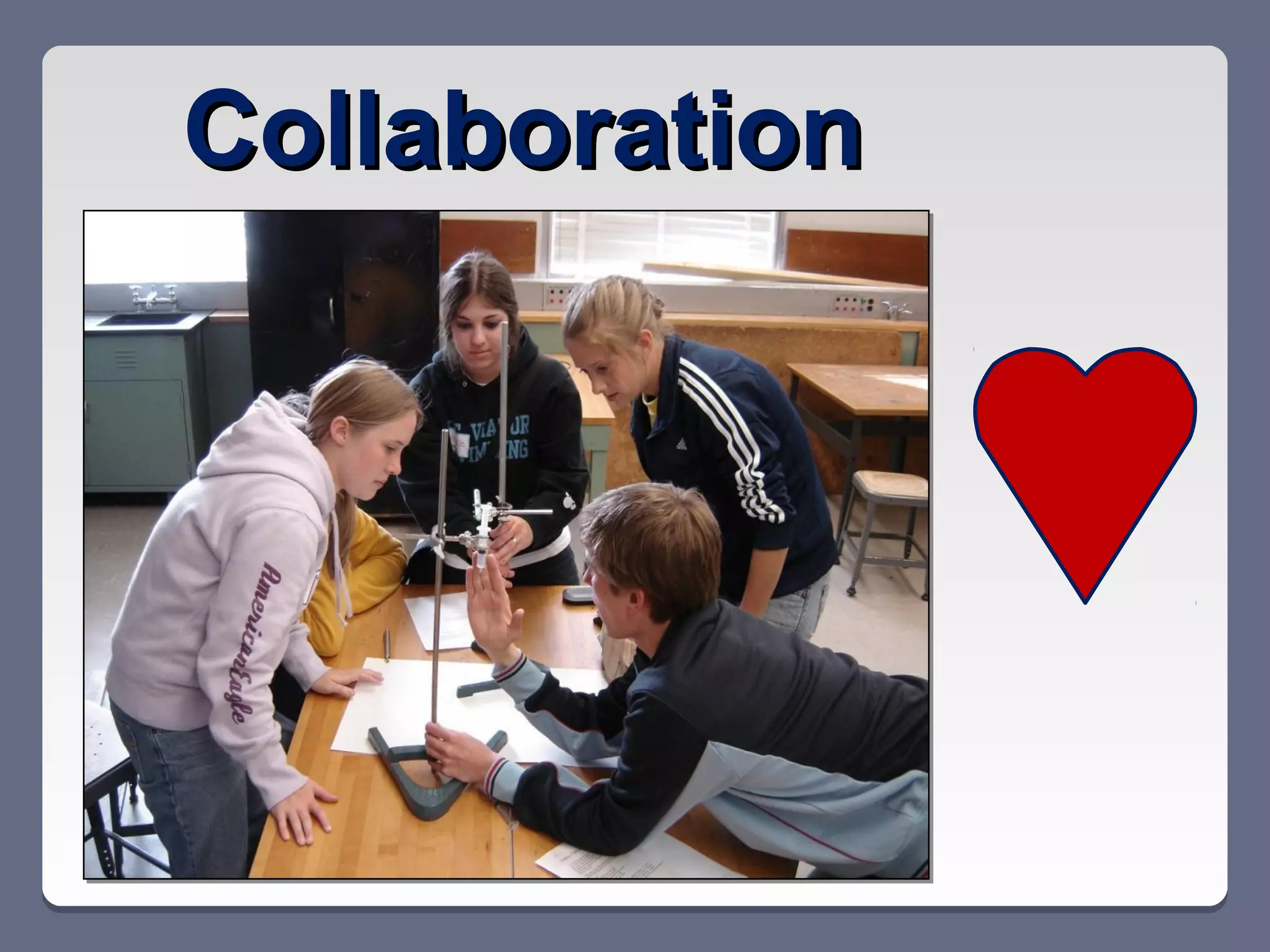
•Collaboration
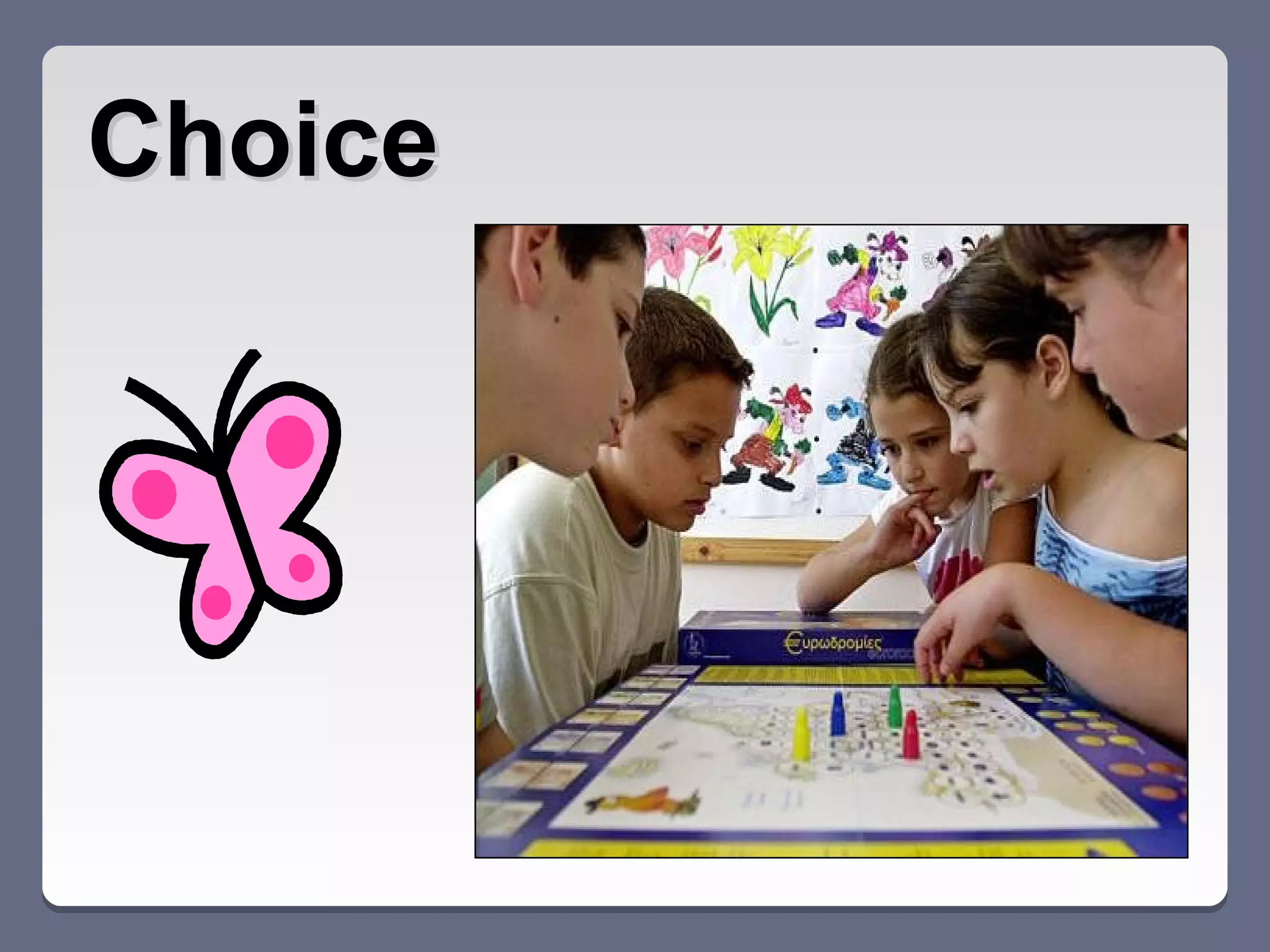
•Choice
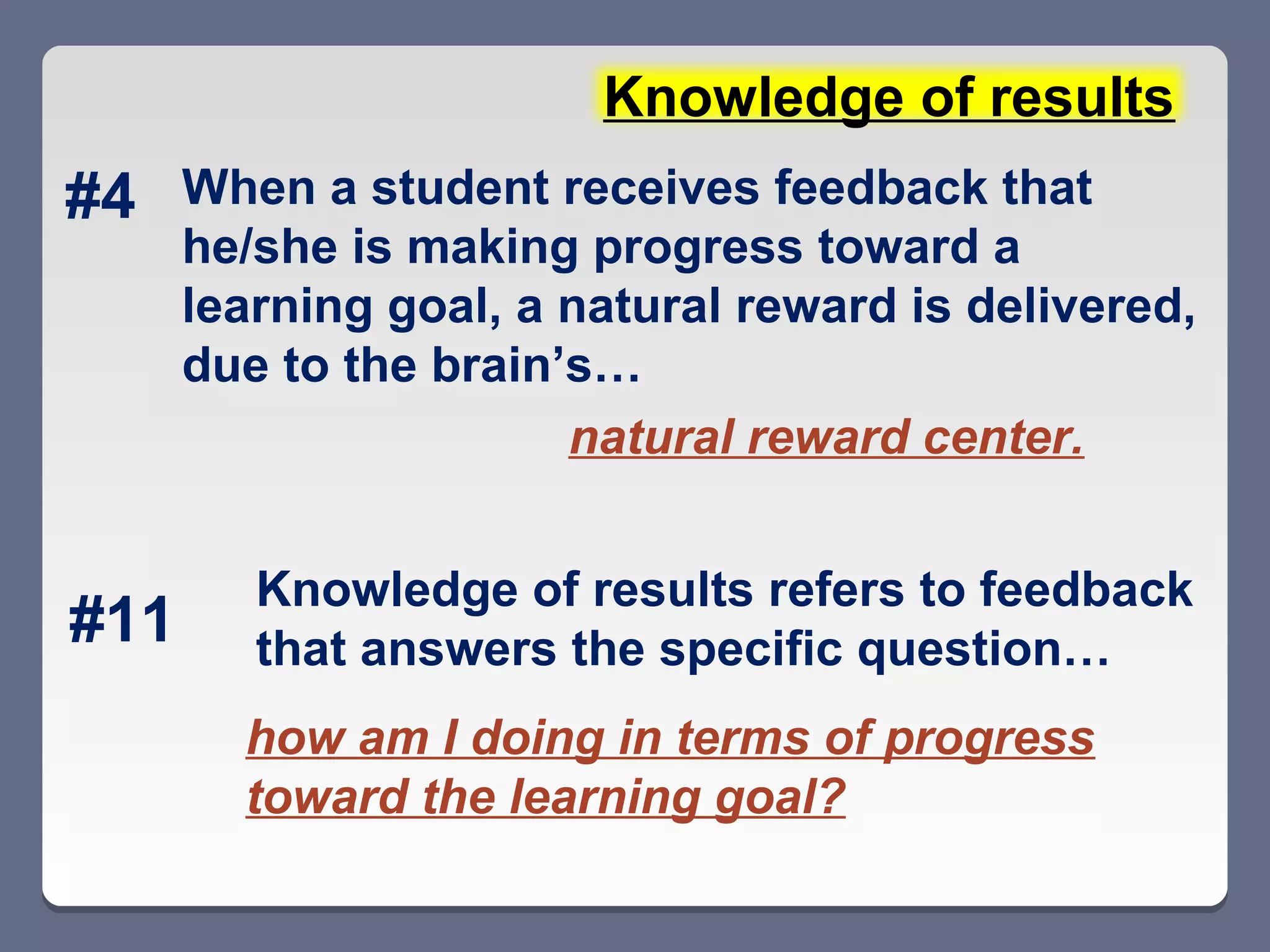
•Knowledge of Results
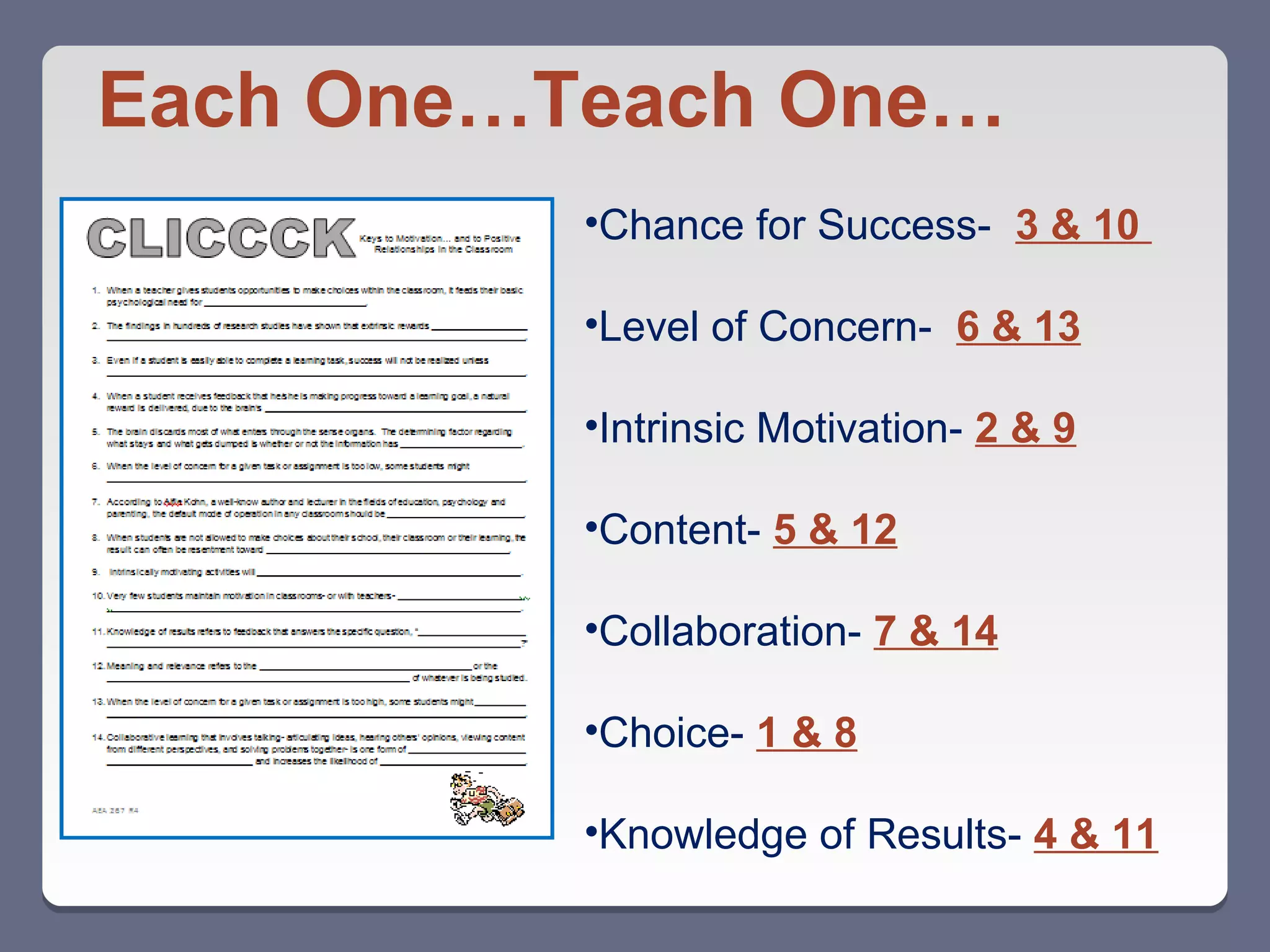
Each One…Teach One…
          •Chance for Success- 3 & 10

          •Level of Concern- 6 & 13

          •Intrinsic Motivation- 2 & 9

          •Content- 5 & 12

          •Collaboration- 7 & 14

          •Choice- 1 & 8

          •Knowledge of Results- 4 & 11
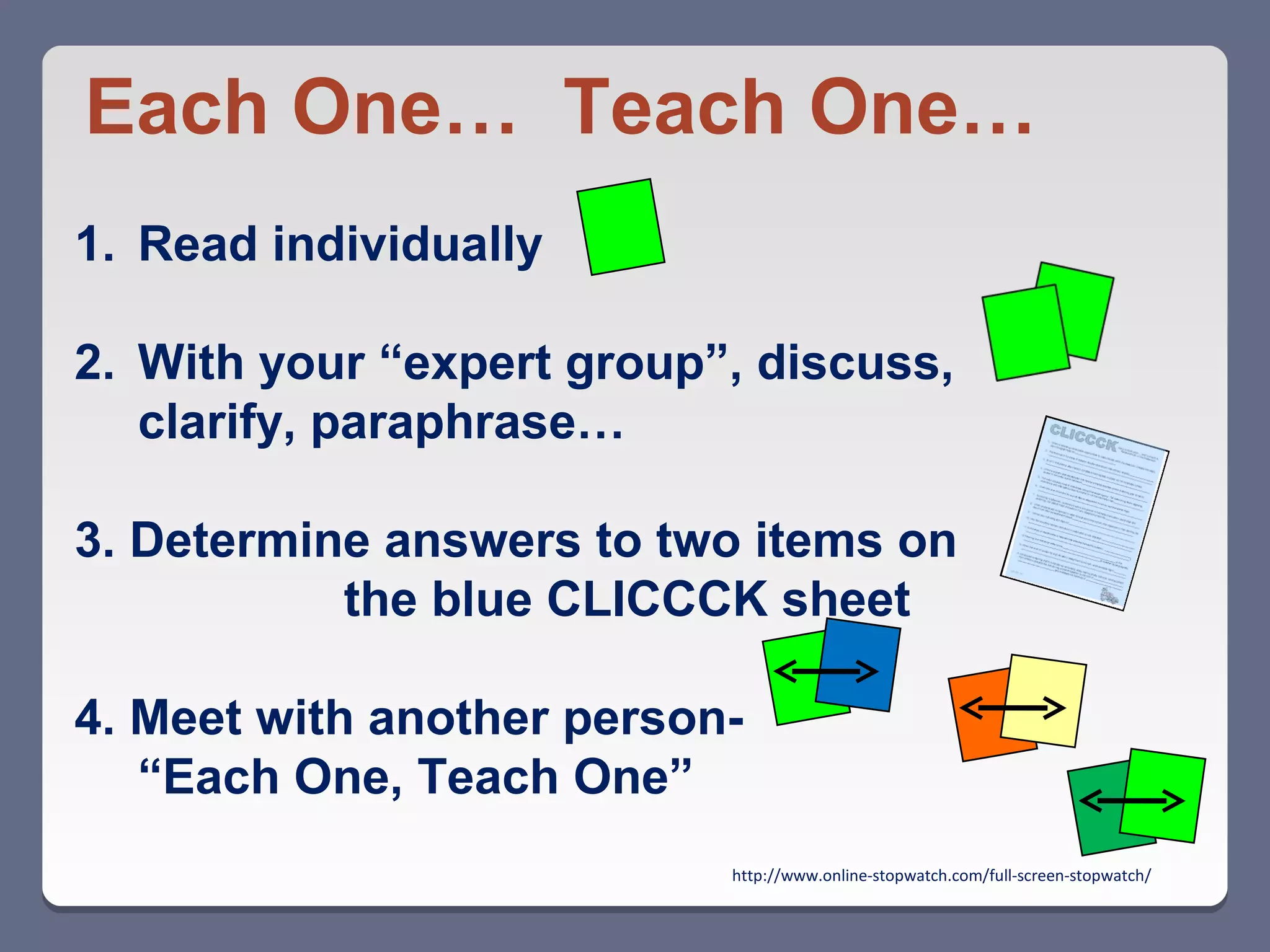
Each One… Teach One…
1. Read individually

2. With your “expert group”, discuss,
   clarify, paraphrase…

3. Determine answers to two items on
           the blue CLICCCK sheet

4. Meet with another person-
   “Each One, Teach One”
                           http://www.online-stopwatch.com/full-screen-stopwatch/
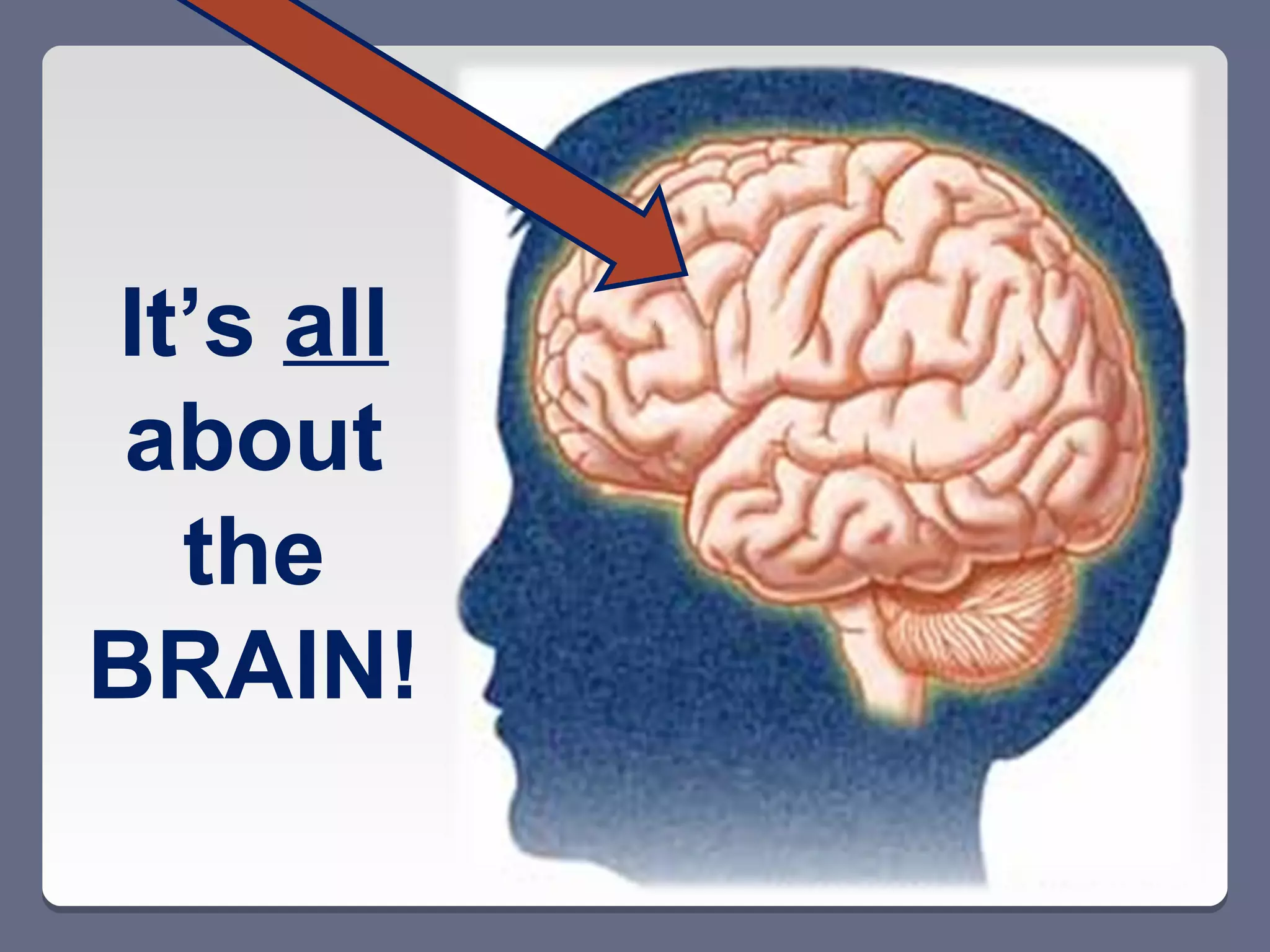
It’s all
 about
  the
BRAIN!
The brain’s #1 job:


                          Air
                          Water
                          Food
                          Shelter
                 Safety from danger
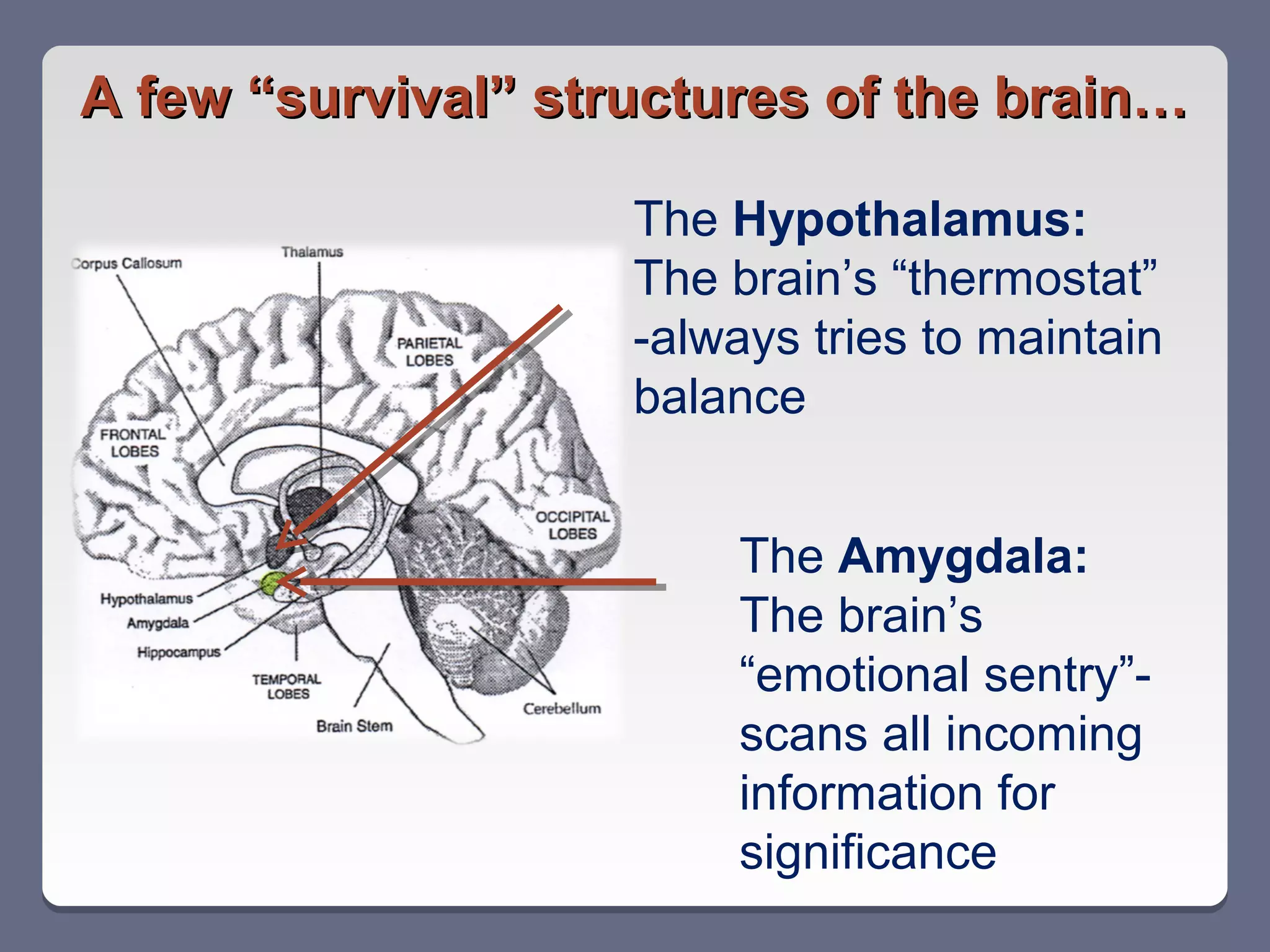
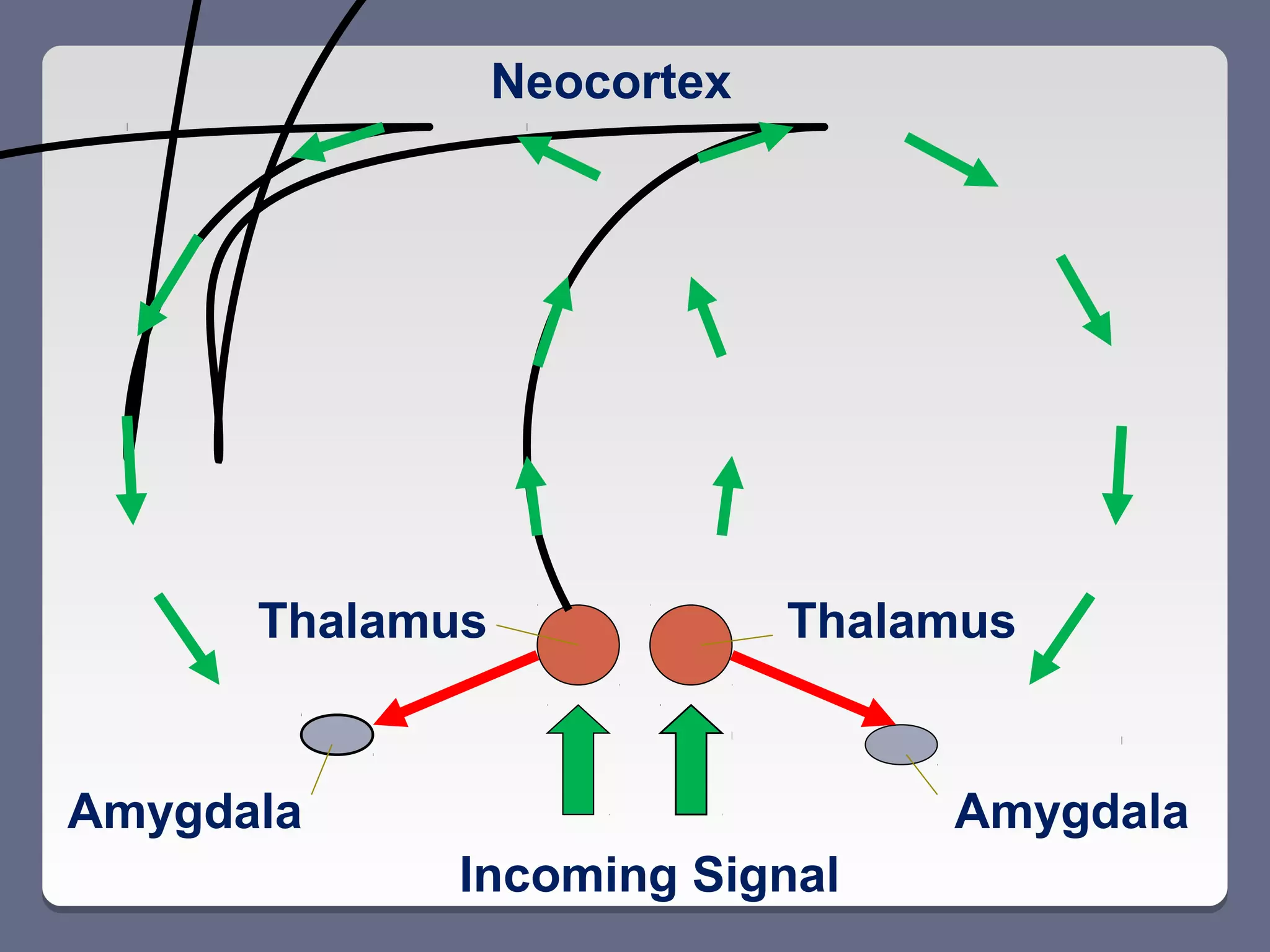
A few “survival” structures of the brain…

                    The Hypothalamus:
                    The brain’s “thermostat”
                    -always tries to maintain
                    balance


                        The Amygdala:
                        The brain’s
                        “emotional sentry”-
                        scans all incoming
                        information for
                        significance
Neocortex


      Thalamus               Thalamus


Amygdala                          Amygdala
             Incoming Signal
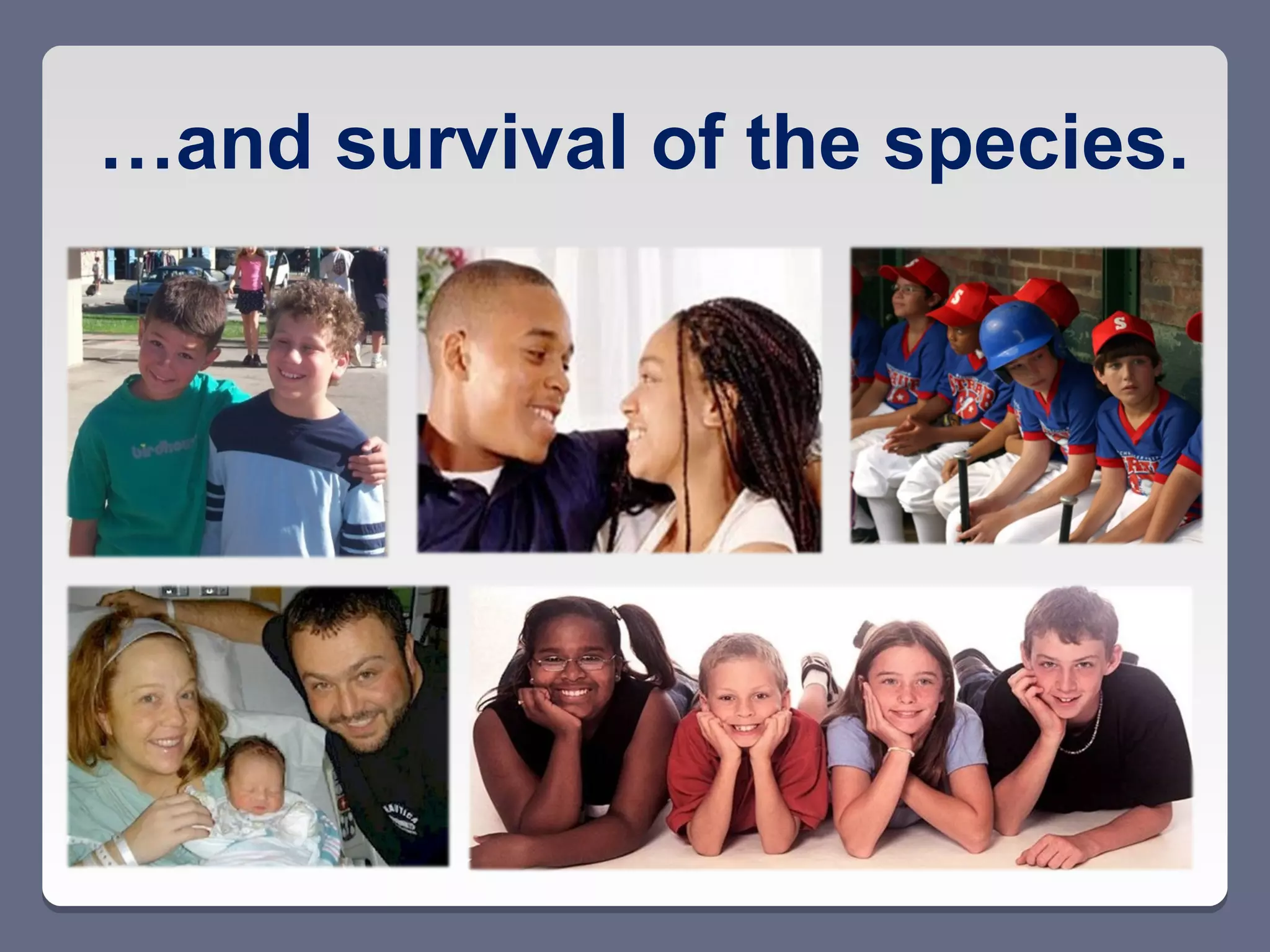
…and survival of the species.
Four Basic Psychological Needs…

Love
Power
Freedom
Fun
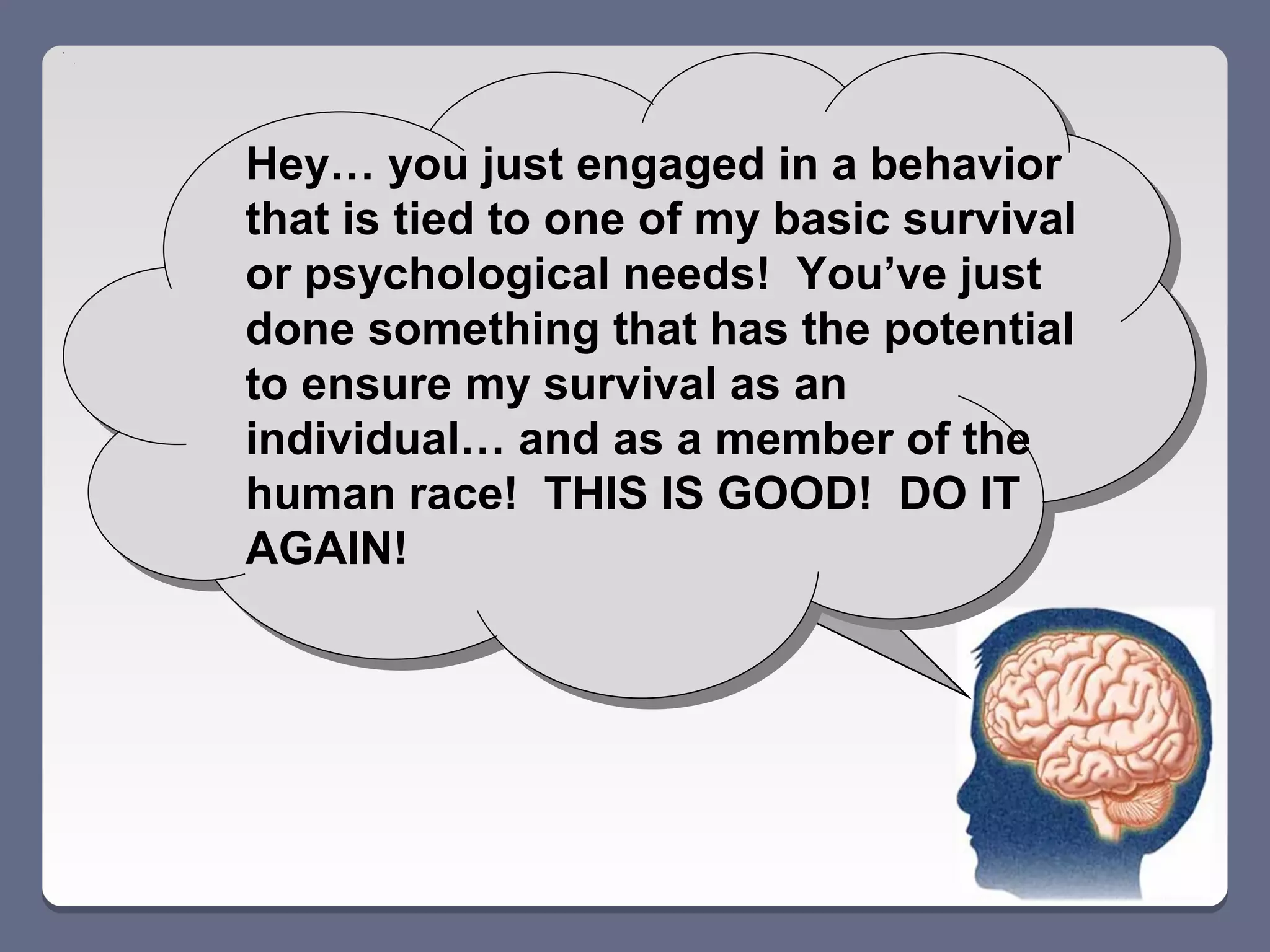
A few more survival structures…


The Brain’s Natural Reward System
The brain produces its own
              “feel-good chemicals”.

               Endorphins
               Oxytocin
               Dopamine
               Serotonin…
Hey… you just engaged in a behavior
that is tied to one of my basic survival
or psychological needs! You’ve just
done something that has the potential
to ensure my survival as an
individual… and as a member of the
human race! THIS IS GOOD! DO IT
AGAIN!
Four Basic Psychological Needs…

Love
Power
Freedom
Fun
The brain doesn’t need
to be motivated to
learn… any more than
the heart needs to be
motivated to pump
blood. (Leslie Hart)
Human
Motivation
 Theory
Chance for Success

#3    Even if a student is easily able to complete
      a learning task, success will not be realized
      unless… effort is put forth (required)
                in order to complete the task.


         Very few students maintain motivation
#10      in classrooms- or with teachers…
         where they have not experienced a
         measure of success.
Chance for Success
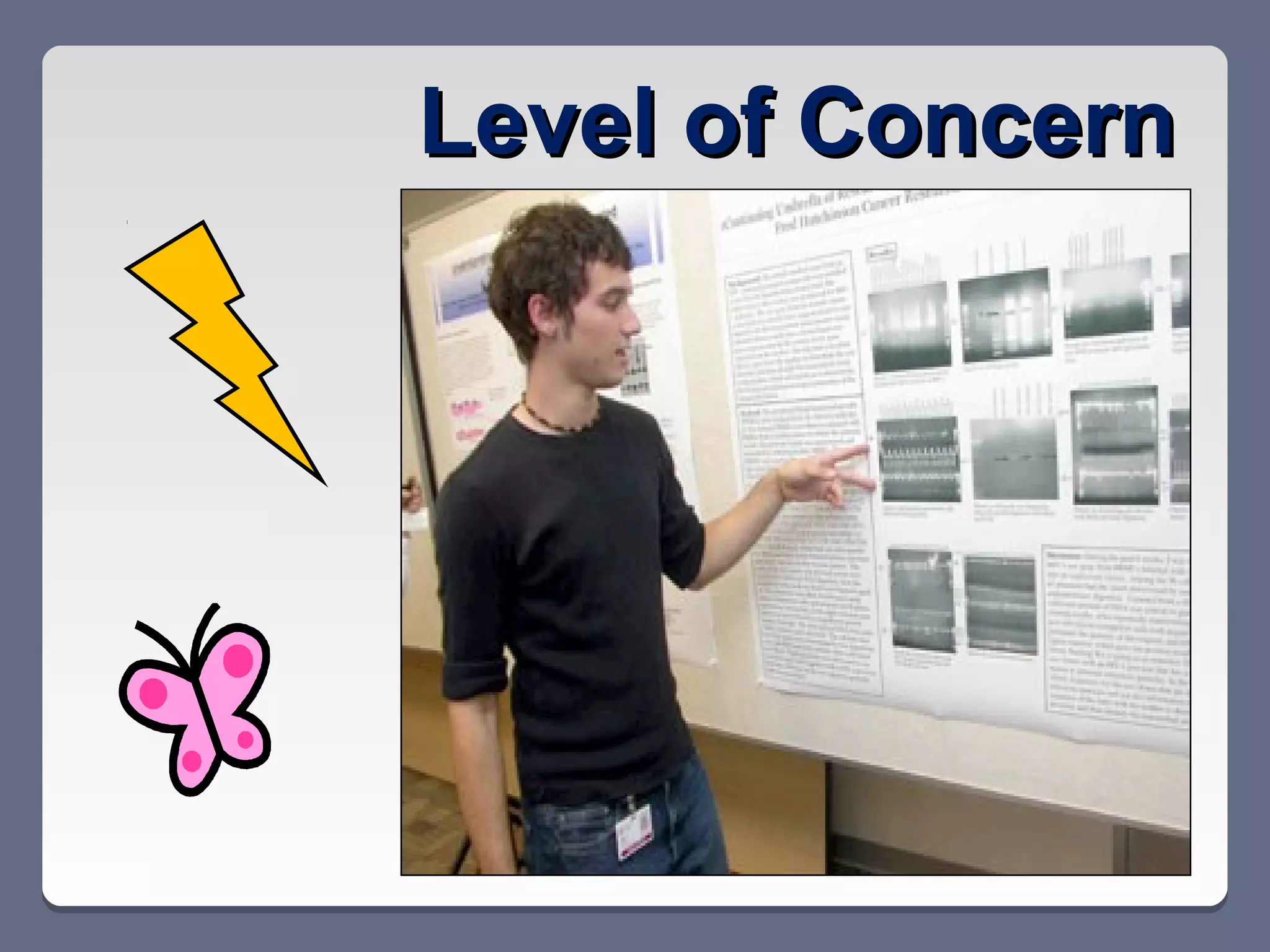
Level of Concern

      When the level of concern for a given task
#6    or assignment is too low, some students
      might… not be motivated to put forth any
               effort to complete the task.

         When the level of concern for a given
#13      task or assignment is too high, some
         students might…
         spend more time and energy stressing
         over the task than completing it-and
         learning from it.
Level of Concern
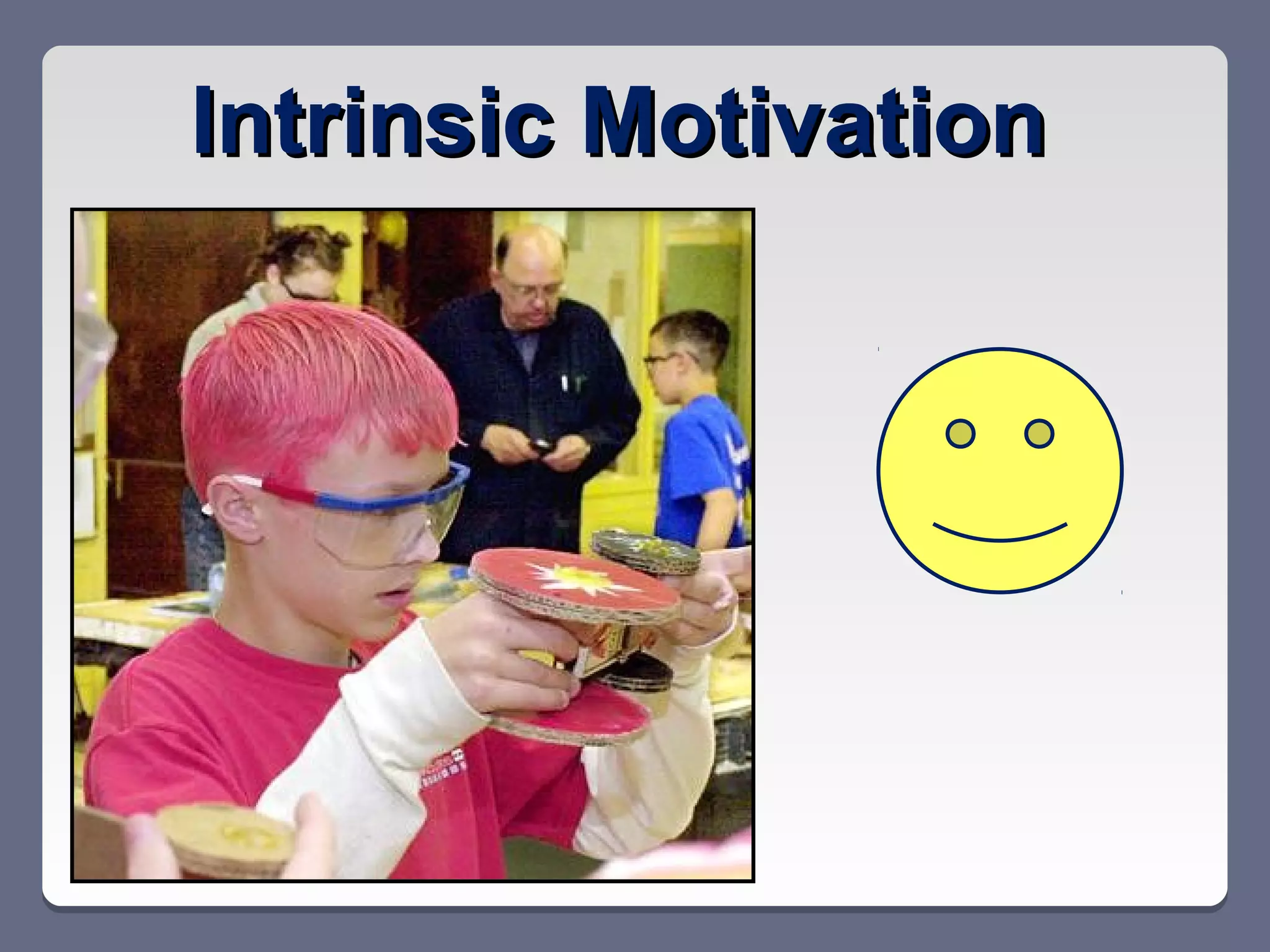
Intrinsic Motivation
#2   The findings in hundreds of research
     studies have shown that extrinsic
     rewards…
      actually diminish intrinsic desire to
      engage in a task.


#9    Intrinsically motivating activities will …
      always be rewarded- by the natural
      reward center in the students’ brains.
Intrinsic Motivation
Content
      The brain discards most of what enters
#5    through the sense organs. The determining
      factor regarding what stays and what gets
      dumped is whether or not the information
      has …
             meaning and relevance.


#12      Meaning and relevance refers to the…
        real-world significance or the value
        beyond the classroom of whatever is
        being studied.
Content
Collaboration
      According to Alfie Kohn… the default mode
#7    of operation in any classroom should be …
      collaboration.

       Collaborative learning that involves
#14    talking- articulating ideas, hearing others’
       opinions, viewing content from different
       perspectives, and solving problems
       together… elaborative rehearsal &
       increases the likelihood of long-term
       retention.
Collaboration
Choice
     When a teacher gives students
#1   opportunities to make choices within the
     classroom, it feeds their basic
     psychological need for… freedom.


     When students are not allowed to make
#8   choices about their school, their
     classroom or their learning, the result
     can often be resentment toward…
      those perceived to be “in control”
Choice
Knowledge of results
#4    When a student receives feedback that
      he/she is making progress toward a
      learning goal, a natural reward is delivered,
      due to the brain’s…
                       natural reward center.


         Knowledge of results refers to feedback
#11      that answers the specific question…
        how am I doing in terms of progress
        toward the learning goal?
Knowledge of Results


              Percentage Correct Word Sequences
               Feb. 1998 Written Language Probe


           Michael                           71

            Abby              34
                                                          C WS
             John                  45

            Anne                                   88


                     0   20   40        60    80    100
Which of the seven CLICCCK
elements do you think would
have the biggest impact on
developing positive
relationships in your
classroom? Why?
To do for Session 2: Tues. October 9, 2012

7 Essentials for Project-Based Learning


                  A link to this article is
                  on the Session 1
                  page of the Wiki.
                  Note examples of
                  CLICCCK- come
                  prepared to discuss.
No one can make a child
learn. However,
circumstances in the
environment can be arranged
 so a child will be encouraged
  to do something that will
result in learning.
        (Madeline Hunter)
Student-Centered Classrooms

Teaching for Understanding

Assessment FOR Learning
Rigorous & Relevant Curriculum

  The Characteristics   of Effective
Teaching for Learner Differences
    Instruction… contain every
 element of CLICCCK… and thus
     create the right “cognitive
      conditions” for learning.
See you on October 9!

12 13 bbl day 1

  • 1.
    Meeting the Needsof the Individual Learner: Archdiocese of Dubuque Educators 2012-2013 Brain-Based Learning (Day 1)
  • 2.
  • 3.
    It’s time for a quiz! Google Image Source: http://www.amazon.com/Home-Alone-Macaulay-Culkin/dp/B00000K3CL
  • 4.
    Sampling… Individual Score ? ? ? ? ? ?
  • 5.
    Sampling… Class Score
  • 6.
    Sampling… How might youuse the strategy of sampling in your classroom during the coming year?
  • 7.
    The Structure ofKnowledge ? ? ? ? ? ? Generalizations Generalizations Teach Survival Learning Behavior for Undstng Brain Information Elements of Instructional Structures & Processing in Human Practices Functions the brain Motivation Key information
  • 8.
  • 9.
  • 11.
    The Brain in the News
  • 12.
    What does ittake to engage you as a learner? Under what conditions do you find yourself motivated to learn?
  • 13.
  • 14.
  • 15.
    Is motivation forlearning something that is innate, or must it be learned? Is there physiological evidence of an innate desire to learn?
  • 16.
    If humans are“born” learners, what external factors come into play that enhance or hinder that innate desire to learn?
  • 17.
    How does theuse of rewards and punishments affect a student’s level of motivation for a task? Is it accurate to say that some students are motivated to learn and others are not?
  • 18.
    Is it possiblefor a student to be motivated all of the time, regardless of circumstances… or to be unmotivated all of the time, regardless of circumstances?
  • 19.
    What can wedo to maintain students’ enthusiasm for learning throughout their school careers… and throughout their entire lives?
  • 20.
    The Burning Questionsabout Motivation Before: KK= I know I know TK= I think I know DK= I know I don’t know
  • 21.
    Each One… TeachOne… •Chance for Success •Level of Concern •Intrinsic Motivation •Content •Collaboration •Choice •Knowledge of Results
  • 22.
    Each One…Teach One… •Chance for Success- 3 & 10 •Level of Concern- 6 & 13 •Intrinsic Motivation- 2 & 9 •Content- 5 & 12 •Collaboration- 7 & 14 •Choice- 1 & 8 •Knowledge of Results- 4 & 11
  • 23.
    Each One… TeachOne… 1. Read individually 2. With your “expert group”, discuss, clarify, paraphrase… 3. Determine answers to two items on the blue CLICCCK sheet 4. Meet with another person- “Each One, Teach One” http://www.online-stopwatch.com/full-screen-stopwatch/
  • 24.
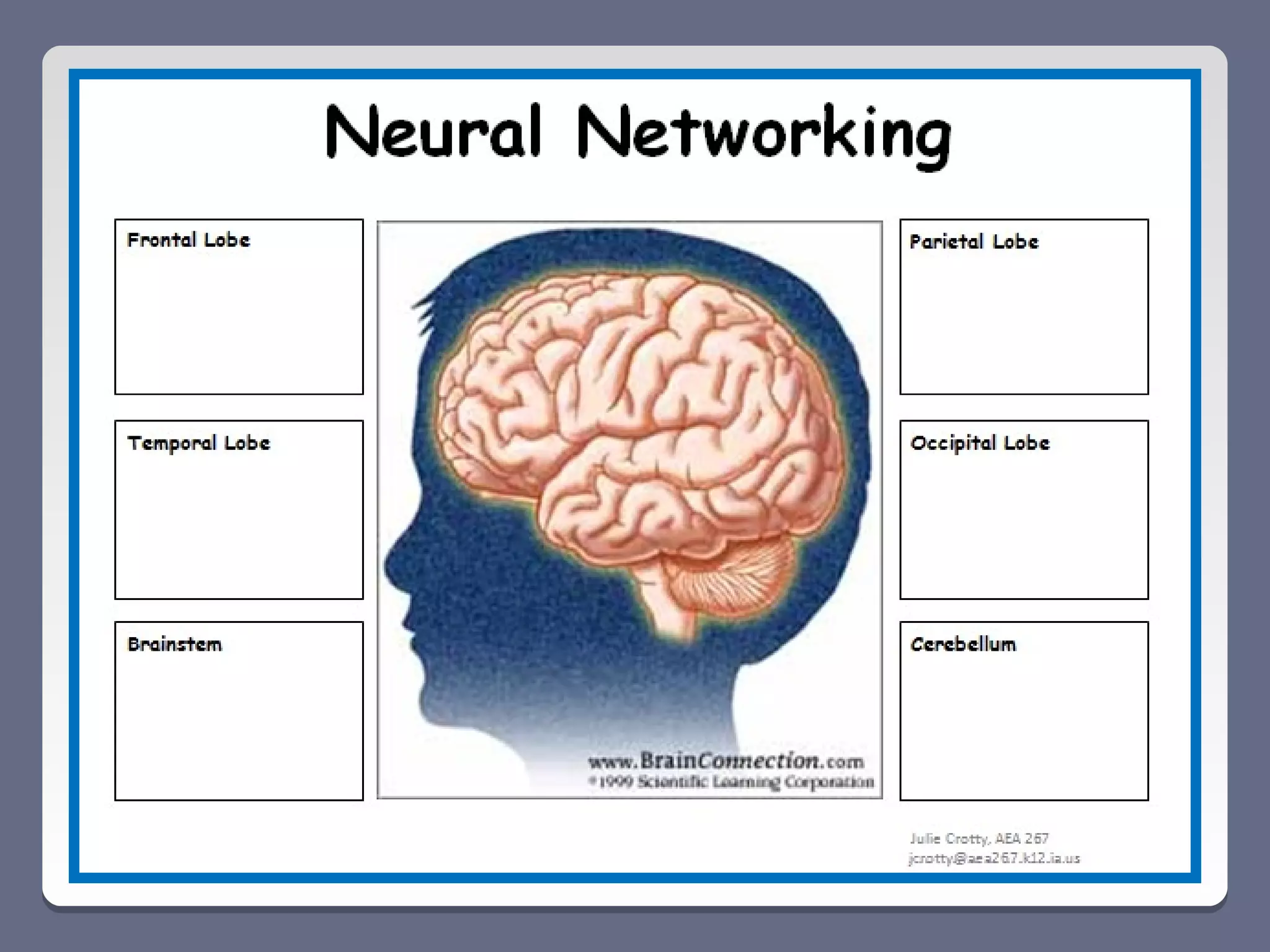
  • 25.
    The brain’s #1job: Air Water Food Shelter Safety from danger
  • 26.
    A few “survival”structures of the brain… The Hypothalamus: The brain’s “thermostat” -always tries to maintain balance The Amygdala: The brain’s “emotional sentry”- scans all incoming information for significance
  • 27.
    Neocortex Thalamus Thalamus Amygdala Amygdala Incoming Signal
  • 28.
    …and survival ofthe species.
  • 29.
    Four Basic PsychologicalNeeds… Love Power Freedom Fun
  • 30.
    A few moresurvival structures… The Brain’s Natural Reward System
  • 31.
    The brain producesits own “feel-good chemicals”. Endorphins Oxytocin Dopamine Serotonin…
  • 32.
    Hey… you justengaged in a behavior that is tied to one of my basic survival or psychological needs! You’ve just done something that has the potential to ensure my survival as an individual… and as a member of the human race! THIS IS GOOD! DO IT AGAIN!
  • 33.
    Four Basic PsychologicalNeeds… Love Power Freedom Fun
  • 34.
    The brain doesn’tneed to be motivated to learn… any more than the heart needs to be motivated to pump blood. (Leslie Hart)
  • 35.
  • 36.
    Chance for Success #3 Even if a student is easily able to complete a learning task, success will not be realized unless… effort is put forth (required) in order to complete the task. Very few students maintain motivation #10 in classrooms- or with teachers… where they have not experienced a measure of success.
  • 37.
  • 38.
    Level of Concern When the level of concern for a given task #6 or assignment is too low, some students might… not be motivated to put forth any effort to complete the task. When the level of concern for a given #13 task or assignment is too high, some students might… spend more time and energy stressing over the task than completing it-and learning from it.
  • 39.
  • 40.
    Intrinsic Motivation #2 The findings in hundreds of research studies have shown that extrinsic rewards… actually diminish intrinsic desire to engage in a task. #9 Intrinsically motivating activities will … always be rewarded- by the natural reward center in the students’ brains.
  • 41.
  • 42.
    Content The brain discards most of what enters #5 through the sense organs. The determining factor regarding what stays and what gets dumped is whether or not the information has … meaning and relevance. #12 Meaning and relevance refers to the… real-world significance or the value beyond the classroom of whatever is being studied.
  • 43.
  • 44.
    Collaboration According to Alfie Kohn… the default mode #7 of operation in any classroom should be … collaboration. Collaborative learning that involves #14 talking- articulating ideas, hearing others’ opinions, viewing content from different perspectives, and solving problems together… elaborative rehearsal & increases the likelihood of long-term retention.
  • 45.
  • 46.
    Choice When a teacher gives students #1 opportunities to make choices within the classroom, it feeds their basic psychological need for… freedom. When students are not allowed to make #8 choices about their school, their classroom or their learning, the result can often be resentment toward… those perceived to be “in control”
  • 47.
  • 48.
    Knowledge of results #4 When a student receives feedback that he/she is making progress toward a learning goal, a natural reward is delivered, due to the brain’s… natural reward center. Knowledge of results refers to feedback #11 that answers the specific question… how am I doing in terms of progress toward the learning goal?
  • 49.
    Knowledge of Results Percentage Correct Word Sequences Feb. 1998 Written Language Probe Michael 71 Abby 34 C WS John 45 Anne 88 0 20 40 60 80 100
  • 50.
    Which of theseven CLICCCK elements do you think would have the biggest impact on developing positive relationships in your classroom? Why?
  • 51.
    To do forSession 2: Tues. October 9, 2012 7 Essentials for Project-Based Learning A link to this article is on the Session 1 page of the Wiki. Note examples of CLICCCK- come prepared to discuss.
  • 52.
    No one canmake a child learn. However, circumstances in the environment can be arranged so a child will be encouraged to do something that will result in learning. (Madeline Hunter)
  • 53.
    Student-Centered Classrooms Teaching forUnderstanding Assessment FOR Learning Rigorous & Relevant Curriculum The Characteristics of Effective Teaching for Learner Differences Instruction… contain every element of CLICCCK… and thus create the right “cognitive conditions” for learning.
  • 54.
    See you onOctober 9!

Editor's Notes

  • #2 9/6/2012 Julie Crotty, [email_address] Archdiocese of Dubuque TCL-BBL Session #1
  • #3 Archdiocese of Dubuque TCL-BBL Session #1 9/6/2012 Julie Crotty, [email_address]
  • #4 Archdiocese of Dubuque TCL-BBL Session #1 9/6/2012 Julie Crotty, [email_address]
  • #5 Archdiocese of Dubuque TCL-BBL Session #1 9/6/2012 Julie Crotty, [email_address]
  • #6 Archdiocese of Dubuque TCL-BBL Session #1 9/6/2012 Julie Crotty, [email_address]
  • #7 Archdiocese of Dubuque TCL-BBL Session #1 9/6/2012 Julie Crotty, [email_address]
  • #8 Archdiocese of Dubuque TCL-BBL Session #1 9/6/2012 Julie Crotty, [email_address]
  • #9 Archdiocese of Dubuque TCL-BBL Session #1 9/6/2012 Julie Crotty, [email_address]
  • #10 Archdiocese of Dubuque TCL-BBL Session #1 9/6/2012 Julie Crotty, [email_address]
  • #11 Archdiocese of Dubuque TCL-BBL Session #1 9/6/2012 Julie Crotty, [email_address]
  • #12 Archdiocese of Dubuque TCL-BBL Session #1 9/6/2012 Julie Crotty, [email_address]
  • #13 Archdiocese of Dubuque TCL-BBL Session #1 9/6/2012 Julie Crotty, [email_address]
  • #14 Archdiocese of Dubuque TCL-BBL Session #1 9/6/2012 Julie Crotty, [email_address]
  • #15 Archdiocese of Dubuque TCL-BBL Session #1 9/6/2012 Julie Crotty, [email_address]
  • #16 Archdiocese of Dubuque TCL-BBL Session #1 9/6/2012 Julie Crotty, [email_address]
  • #17 Archdiocese of Dubuque TCL-BBL Session #1 9/6/2012 Julie Crotty, [email_address]
  • #18 Archdiocese of Dubuque TCL-BBL Session #1 9/6/2012 Julie Crotty, [email_address]
  • #19 Archdiocese of Dubuque TCL-BBL Session #1 9/6/2012 Julie Crotty, [email_address]
  • #20 Archdiocese of Dubuque TCL-BBL Session #1 9/6/2012 Julie Crotty, [email_address]
  • #21 Archdiocese of Dubuque TCL-BBL Session #1 9/6/2012 Julie Crotty, [email_address]
  • #22 Archdiocese of Dubuque TCL-BBL Session #1 9/6/2012 Julie Crotty, [email_address]
  • #23 Archdiocese of Dubuque TCL-BBL Session #1 9/6/2012 Julie Crotty, [email_address]
  • #24 Archdiocese of Dubuque TCL-BBL Session #1 9/6/2012 Julie Crotty, [email_address]
  • #25 Archdiocese of Dubuque TCL-BBL Session #1 9/6/2012 Julie Crotty, [email_address]
  • #26 Archdiocese of Dubuque TCL-BBL Session #1 9/6/2012 Julie Crotty, [email_address]
  • #27 Archdiocese of Dubuque TCL-BBL Session #1 9/6/2012 Julie Crotty, [email_address]
  • #28 Archdiocese of Dubuque TCL-BBL Session #1 9/6/2012 Julie Crotty, [email_address]
  • #29 Archdiocese of Dubuque TCL-BBL Session #1 9/6/2012 Julie Crotty, [email_address]
  • #30 Archdiocese of Dubuque TCL-BBL Session #1 9/6/2012 Julie Crotty, [email_address]
  • #31 Archdiocese of Dubuque TCL-BBL Session #1 9/6/2012 Julie Crotty, [email_address]
  • #32 Archdiocese of Dubuque TCL-BBL Session #1 9/6/2012 Julie Crotty, [email_address]
  • #33 Archdiocese of Dubuque TCL-BBL Session #1 9/6/2012 Julie Crotty, [email_address]
  • #34 Archdiocese of Dubuque TCL-BBL Session #1 9/6/2012 Julie Crotty, [email_address]
  • #35 Julie Crotty, [email_address] Archdiocese of Dubuque TCL-BBL Session #1 9/6/2012
  • #36 Archdiocese of Dubuque TCL-BBL Session #1 9/6/2012 Julie Crotty, [email_address]
  • #37 Archdiocese of Dubuque TCL-BBL Session #1 9/6/2012 Julie Crotty, [email_address]
  • #38 Archdiocese of Dubuque TCL-BBL Session #1 9/6/2012 Julie Crotty, [email_address]
  • #39 Archdiocese of Dubuque TCL-BBL Session #1 9/6/2012 Julie Crotty, [email_address]
  • #40 Archdiocese of Dubuque TCL-BBL Session #1 9/6/2012 Julie Crotty, [email_address]
  • #41 Archdiocese of Dubuque TCL-BBL Session #1 9/6/2012 Julie Crotty, [email_address]
  • #42 Archdiocese of Dubuque TCL-BBL Session #1 9/6/2012 Julie Crotty, [email_address]
  • #43 Archdiocese of Dubuque TCL-BBL Session #1 9/6/2012 Julie Crotty, [email_address]
  • #44 Archdiocese of Dubuque TCL-BBL Session #1 9/6/2012 Julie Crotty, [email_address]
  • #45 Archdiocese of Dubuque TCL-BBL Session #1 9/6/2012 Julie Crotty, [email_address]
  • #46 Archdiocese of Dubuque TCL-BBL Session #1 9/6/2012 Julie Crotty, [email_address]
  • #47 Archdiocese of Dubuque TCL-BBL Session #1 9/6/2012 Julie Crotty, [email_address]
  • #48 Archdiocese of Dubuque TCL-BBL Session #1 9/6/2012 Julie Crotty, [email_address]
  • #49 Archdiocese of Dubuque TCL-BBL Session #1 9/6/2012 Julie Crotty, [email_address]
  • #50 Archdiocese of Dubuque TCL-BBL Session #1 9/6/2012 Julie Crotty, [email_address]
  • #51 Archdiocese of Dubuque TCL-BBL Session #1 9/6/2012 Julie Crotty, [email_address]
  • #52 Archdiocese of Dubuque TCL-BBL Session #1 9/6/2012 Julie Crotty, [email_address]
  • #53 9/6/2012 Julie Crotty, [email_address] Archdiocese of Dubuque TCL-BBL Session #1
  • #54 Archdiocese of Dubuque TCL-BBL Session #1 9/6/2012 Julie Crotty, [email_address]
  • #55 Archdiocese of Dubuque TCL-BBL Session #1 9/6/2012 Julie Crotty, [email_address]