ESPAÑOL I – SR. JOHNSTON
martes, el once de diciembre del 2012
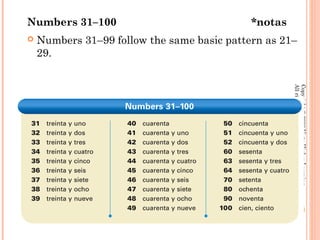
Numbers 31–100                               *notas
   Numbers 31–99 follow the same basic pattern as 21–
    29.


                                                        All rights reserved.
                                                        Copyright © 2008 Vista Higher Learning.
                                                      2.4-2
*notas


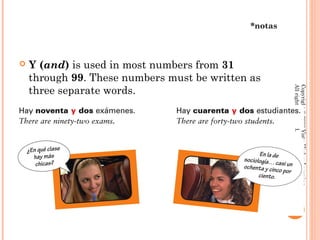
   Y (and) is used in most numbers from 31
    through 99. These numbers must be written as
    three separate words.


                                                         All rights reserved.
                                                         Copyright © 2008 Vista Higher Learning.
                                                       2.4-3
*notas


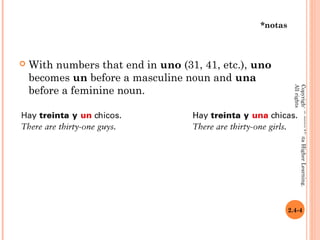
   With numbers that end in uno (31, 41, etc.), uno
    becomes un before a masculine noun and una
    before a feminine noun.


                                                            All rights reserved.
                                                            Copyright © 2008 Vista Higher Learning.
                                                          2.4-4
*notas


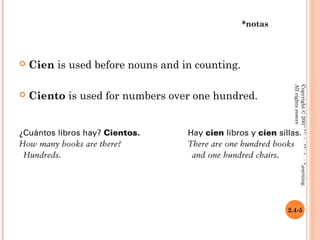
   Cien is used before nouns and in counting.


                                                            All rights reserved.
                                                            Copyright © 2008 Vista Higher Learning.
   Ciento is used for numbers over one hundred.


                                                          2.4-5
Copyright © 2008 Vista Higher Learning.
                                                                    2.2-6


                          All rights reserved.
*notas


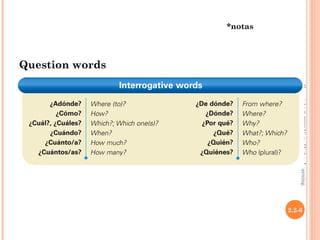
         Question words
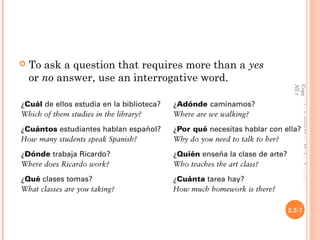
   To ask a question that requires more than a yes
    or no answer, use an interrogative word.


                                                        All rights reserved.
                                                        Copyright © 2008 Vista Higher Learning.
                                                      2.2-7
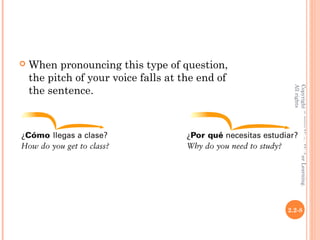
   When pronouncing this type of question,
    the pitch of your voice falls at the end of
    the sentence.


                                                    All rights reserved.
                                                    Copyright © 2008 Vista Higher Learning.
                                                  2.2-8
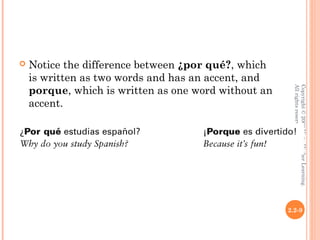
   Notice the difference between ¿por qué?, which
    is written as two words and has an accent, and
    porque, which is written as one word without an


                                                        All rights reserved.
                                                        Copyright © 2008 Vista Higher Learning.
    accent.


                                                      2.2-9
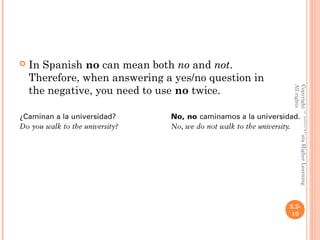
   In Spanish no can mean both no and not.
    Therefore, when answering a yes/no question in
    the negative, you need to use no twice.


                                                      All rights reserved.
                                                      Copyright © 2008 Vista Higher Learning.
                                                     2.2-
                                                      10

12 11 12 leccion

  • 1.
    ESPAÑOL I –SR. JOHNSTON martes, el once de diciembre del 2012
  • 2.
    Numbers 31–100 *notas  Numbers 31–99 follow the same basic pattern as 21– 29. All rights reserved. Copyright © 2008 Vista Higher Learning. 2.4-2
  • 3.
    *notas  Y (and) is used in most numbers from 31 through 99. These numbers must be written as three separate words. All rights reserved. Copyright © 2008 Vista Higher Learning. 2.4-3
  • 4.
    *notas  With numbers that end in uno (31, 41, etc.), uno becomes un before a masculine noun and una before a feminine noun. All rights reserved. Copyright © 2008 Vista Higher Learning. 2.4-4
  • 5.
    *notas  Cien is used before nouns and in counting. All rights reserved. Copyright © 2008 Vista Higher Learning.  Ciento is used for numbers over one hundred. 2.4-5
  • 6.
    Copyright © 2008Vista Higher Learning. 2.2-6 All rights reserved. *notas Question words
  • 7.
    To ask a question that requires more than a yes or no answer, use an interrogative word. All rights reserved. Copyright © 2008 Vista Higher Learning. 2.2-7
  • 8.
    When pronouncing this type of question, the pitch of your voice falls at the end of the sentence. All rights reserved. Copyright © 2008 Vista Higher Learning. 2.2-8
  • 9.
    Notice the difference between ¿por qué?, which is written as two words and has an accent, and porque, which is written as one word without an All rights reserved. Copyright © 2008 Vista Higher Learning. accent. 2.2-9
  • 10.
    In Spanish no can mean both no and not. Therefore, when answering a yes/no question in the negative, you need to use no twice. All rights reserved. Copyright © 2008 Vista Higher Learning. 2.2- 10