ESPAÑOL I – SR. JOHNSTON
martes, el veintidós de enero del 2012
PARA EMPEZAR – 5 MINUTOS
EN TU CUADERNO:
 Describe dos miembros de tu familia.

 Usa de cuatro a seis adjetivos.

 ejemplo:
     “Mi padre es gordo e inteligente.”
     “Mis abuelos son viejos, bajos e interesantes.”


   Useful vocabulary:
     Adjectives   and nationalities (p.89)
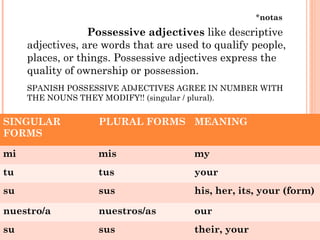
*notas
                  Possessive adjectives like descriptive
     adjectives, are words that are used to qualify people,
     places, or things. Possessive adjectives express the
     quality of ownership or possession.
     SPANISH POSSESSIVE ADJECTIVES AGREE IN NUMBER WITH
     THE NOUNS THEY MODIFY!! (singular / plural).


SINGULAR           PLURAL FORMS MEANING
FORMS

mi                 mis                 my
tu                 tus                 your
su                 sus                 his, her, its, your (form)

nuestro/a          nuestros/as         our
su                 sus                 their, your    3.2-3
*NOTAS


   Because su and sus have multiple meanings
    (your, his, her, their, its), you can avoid confusion
    by using this clarifying construction instead:
        [article] + [noun] + de + [subject pronoun].


    You can also say:   los parientes de Yamilex (the subject’s name)
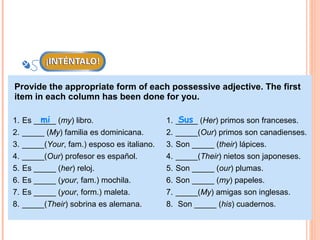
Provide the appropriate form of each possessive adjective. The first
item in each column has been done for you.

1.        mi
     Es _____ (my) libro.                    1.    Sus
                                                  _____ (Her) primos son franceses.
2.   _____ (My) familia es dominicana.       2.   _____(Our) primos son canadienses.
3.   _____(Your, fam.) esposo es italiano.   3.   Son _____ (their) lápices.
4.   _____(Our) profesor es español.         4.   _____(Their) nietos son japoneses.
5.   Es _____ (her) reloj.                   5.   Son _____ (our) plumas.
6.   Es _____ (your, fam.) mochila.          6.   Son _____ (my) papeles.
7.   Es _____ (your, form.) maleta.          7.   _____(My) amigas son inglesas.
8.   _____(Their) sobrina es alemana.        8.    Son _____ (his) cuadernos.
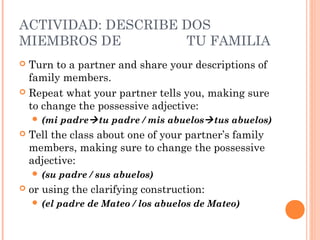
ACTIVIDAD: DESCRIBE DOS
MIEMBROS DE         TU FAMILIA
 Turn to a partner and share your descriptions of
  family members.
 Repeat what your partner tells you, making sure
  to change the possessive adjective:
     (mi   padre tu padre / mis abuelos tus abuelos)
   Tell the class about one of your partner’s family
    members, making sure to change the possessive
    adjective:
     (su   padre / sus abuelos)
   or using the clarifying construction:
     (el   padre de Mateo / los abuelos de Mateo)
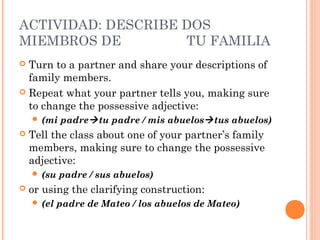
ACTIVIDAD: DESCRIBE DOS
MIEMBROS DE         TU FAMILIA
 Turn to a partner and share your descriptions of
  family members.
 Repeat what your partner tells you, making sure
  to change the possessive adjective:
     (mi   padre tu padre / mis abuelos tus abuelos)
   Tell the class about one of your partner’s family
    members, making sure to change the possessive
    adjective:
     (su   padre / sus abuelos)
   or using the clarifying construction:
     (el   padre de Mateo / los abuelos de Mateo)

1 22 13 leccion

  • 1.
    ESPAÑOL I –SR. JOHNSTON martes, el veintidós de enero del 2012
  • 2.
    PARA EMPEZAR –5 MINUTOS EN TU CUADERNO:  Describe dos miembros de tu familia.  Usa de cuatro a seis adjetivos.  ejemplo:  “Mi padre es gordo e inteligente.”  “Mis abuelos son viejos, bajos e interesantes.”  Useful vocabulary:  Adjectives and nationalities (p.89)
  • 3.
    *notas Possessive adjectives like descriptive adjectives, are words that are used to qualify people, places, or things. Possessive adjectives express the quality of ownership or possession. SPANISH POSSESSIVE ADJECTIVES AGREE IN NUMBER WITH THE NOUNS THEY MODIFY!! (singular / plural). SINGULAR PLURAL FORMS MEANING FORMS mi mis my tu tus your su sus his, her, its, your (form) nuestro/a nuestros/as our su sus their, your 3.2-3
  • 4.
    *NOTAS  Because su and sus have multiple meanings (your, his, her, their, its), you can avoid confusion by using this clarifying construction instead: [article] + [noun] + de + [subject pronoun]. You can also say: los parientes de Yamilex (the subject’s name)
  • 5.
    Provide the appropriateform of each possessive adjective. The first item in each column has been done for you. 1. mi Es _____ (my) libro. 1. Sus _____ (Her) primos son franceses. 2. _____ (My) familia es dominicana. 2. _____(Our) primos son canadienses. 3. _____(Your, fam.) esposo es italiano. 3. Son _____ (their) lápices. 4. _____(Our) profesor es español. 4. _____(Their) nietos son japoneses. 5. Es _____ (her) reloj. 5. Son _____ (our) plumas. 6. Es _____ (your, fam.) mochila. 6. Son _____ (my) papeles. 7. Es _____ (your, form.) maleta. 7. _____(My) amigas son inglesas. 8. _____(Their) sobrina es alemana. 8. Son _____ (his) cuadernos.
  • 6.
    ACTIVIDAD: DESCRIBE DOS MIEMBROSDE TU FAMILIA  Turn to a partner and share your descriptions of family members.  Repeat what your partner tells you, making sure to change the possessive adjective:  (mi padre tu padre / mis abuelos tus abuelos)  Tell the class about one of your partner’s family members, making sure to change the possessive adjective:  (su padre / sus abuelos)  or using the clarifying construction:  (el padre de Mateo / los abuelos de Mateo)
  • 7.
    ACTIVIDAD: DESCRIBE DOS MIEMBROSDE TU FAMILIA  Turn to a partner and share your descriptions of family members.  Repeat what your partner tells you, making sure to change the possessive adjective:  (mi padre tu padre / mis abuelos tus abuelos)  Tell the class about one of your partner’s family members, making sure to change the possessive adjective:  (su padre / sus abuelos)  or using the clarifying construction:  (el padre de Mateo / los abuelos de Mateo)