CHAPTER
ONE
Communication Skills
Ms. Shital S. Patil
Shital S. Patil
CONTENTS
• Introduction
• Importance of Communication
• Communication Process
• Barriers to Communication
• Causes of Barriers
• Perspectives in Communication
Shital S. Patil
Introduction
• Greek Word Communi-cate means to Share.
• It is concern with the ways we make others to
know or to understand our feelings, opinions,
informations etc.
• All living beings communicate and it is an
innate gift of god by which living beings exists,
survive and grow in particular information.
Shital S. Patil
Definitions
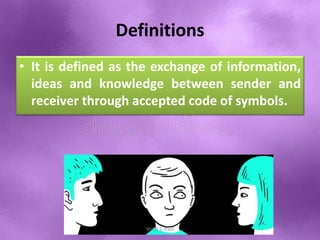
• It is defined as the exchange of information,
ideas and knowledge between sender and
receiver through accepted code of symbols.
Shital S. Patil
Definitions
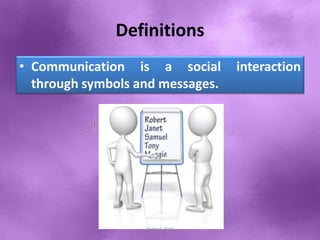
• Communication is a social interaction
through symbols and messages.
Shital S. Patil
Definitions
• Communication is the transfer of information
and understanding from one person to
another person.
Shital S. Patil
Definitions
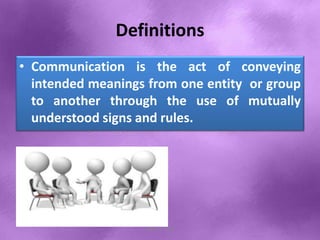
• Communication is the act of conveying
intended meanings from one entity or group
to another through the use of mutually
understood signs and rules.
Shital S. Patil
Main Points of Communication
• Communication is the transmission of signals
from one person to another person.
• It involves use of symbols which are directed
toward some goals.
• Communication involves perception of
commonly understood symbolic stimuli of
language.
• Communication may bring about change in a
person or in an organization if used for a specific
purpose.
Shital S. Patil
Importance of Communication
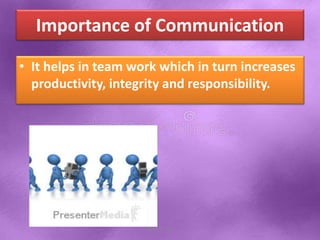
• It helps in team work which in turn increases
productivity, integrity and responsibility.
Shital S. Patil
Importance of Communication
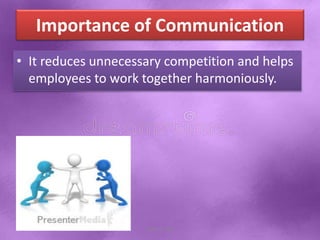
• It reduces unnecessary competition and helps
employees to work together harmoniously.
Shital S. Patil
Importance of Communication
• It produces a healthy work environment and
employees do their duties with a positive
attitude.
Shital S. Patil
Importance of Communication
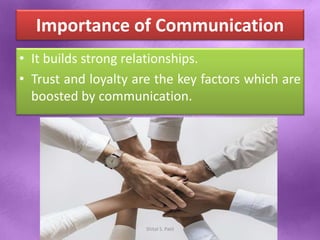
• It builds strong relationships.
• Trust and loyalty are the key factors which are
boosted by communication.
Shital S. Patil
Importance of Communication
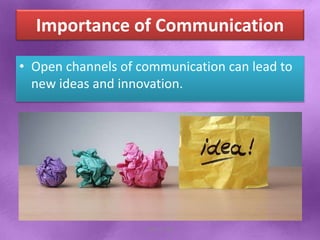
• Open channels of communication can lead to
new ideas and innovation.
Shital S. Patil
Importance of Communication
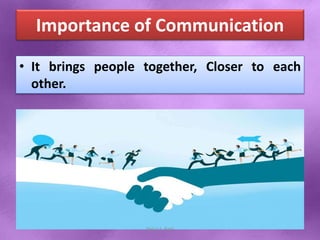
• It brings people together, Closer to each
other.
Shital S. Patil
Importance of Communication
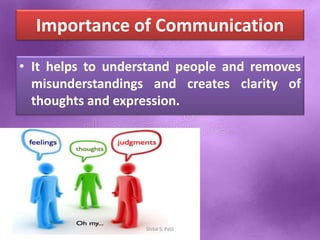
• It helps to understand people and removes
misunderstandings and creates clarity of
thoughts and expression.
Shital S. Patil
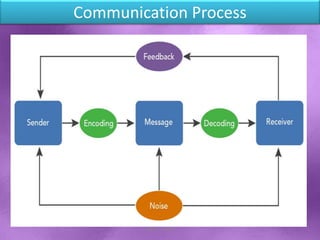
Communication Process
• Communication is a complex process and it
occurs within a common frame of reference
called communication environment.
• The origin of a message starts at different
levels of our consciousness and sender
becomes the agents who transmit it to
receiver.
Shital S. Patil
Communication Process
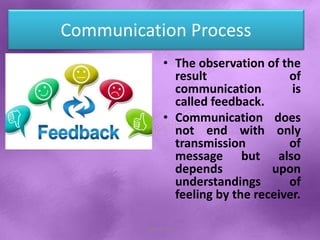
• The observation of the
result of
communication is
called feedback.
• Communication does
not end with only
transmission of
message but also
depends upon
understandings of
feeling by the receiver.
Shital S. Patil
Communication Process
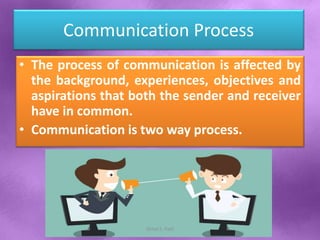
• The process of communication is affected by
the background, experiences, objectives and
aspirations that both the sender and receiver
have in common.
• Communication is two way process.
Shital S. Patil
Components of Communication Process
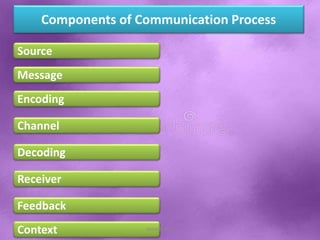
Source
Message
Encoding
Channel
Decoding
Receiver
Feedback
Context Shital S. Patil
Communication Process
Source/ Sender
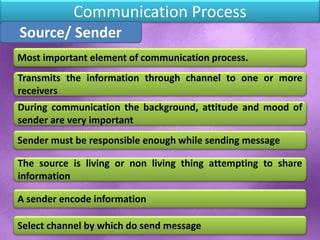
Most important element of communication process.
During communication the background, attitude and mood of
sender are very important
Sender must be responsible enough while sending message
The source is living or non living thing attempting to share
information
A sender encode information
Select channel by which do send message
Transmits the information through channel to one or more
receivers
Shital S. Patil
Communication Process
Message
Message is equally important as the source.
Message is the information that the sender wants to send.
Actually it is an idea , sometimes data or statement issued
by sender
It is in the form of word, symbols, gesture etc.
Nowadays it may be electronic signals or icons over
computer.
Message may be verbal or Non Verbal
Shital S. Patil
Communication Process
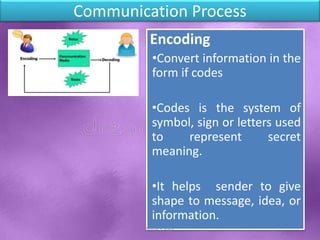
Encoding
•Convert information in the
form if codes
•Codes is the system of
symbol, sign or letters used
to represent secret
meaning.
•It helps sender to give
shape to message, idea, or
information.
Shital S. Patil
Communication Process
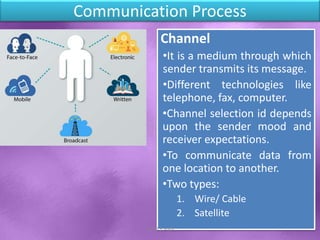
Channel
•It is a medium through which
sender transmits its message.
•Different technologies like
telephone, fax, computer.
•Channel selection id depends
upon the sender mood and
receiver expectations.
•To communicate data from
one location to another.
•Two types:
1. Wire/ Cable
2. Satellite
Shital S. Patil
Communication Process
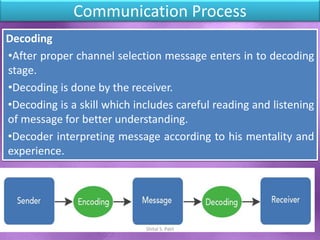
Decoding
•After proper channel selection message enters in to decoding
stage.
•Decoding is done by the receiver.
•Decoding is a skill which includes careful reading and listening
of message for better understanding.
•Decoder interpreting message according to his mentality and
experience.
Shital S. Patil
Communication Process
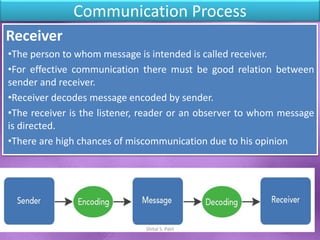
Receiver
•The person to whom message is intended is called receiver.
•For effective communication there must be good relation between
sender and receiver.
•Receiver decodes message encoded by sender.
•The receiver is the listener, reader or an observer to whom message
is directed.
•There are high chances of miscommunication due to his opinion
Shital S. Patil
Communication Process
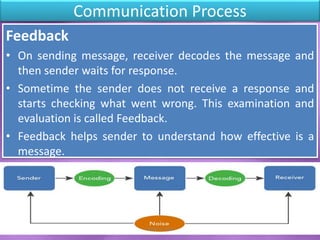
Feedback
• On sending message, receiver decodes the message and
then sender waits for response.
• Sometime the sender does not receive a response and
starts checking what went wrong. This examination and
evaluation is called Feedback.
• Feedback helps sender to understand how effective is a
message.
Shital S. Patil
Communication Process
• Feedback helps in
– Collection of information
– Measures the
effectiveness of
communication.
– Improves labor-
management relationship
– Measure effectiveness of
media
– Helps in taking proper
decision and in solving
problem
– Helps in coordination of
various departments
Shital S. Patil
Communication Process
Context
•Context is defined as the
circumstances surrounding a message.
•Circumstances includes the setting,
value positions of the people and
appropriateness of a message.
•The sender has to consider speaking
style and various norms.
•Contexts is of various types
–Physical context
–Temporal context
–Social-psychological context.
Shital S. Patil
Communication Process
Shital S. Patil
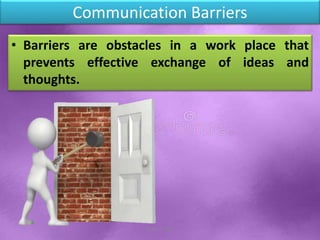
Communication Barriers
• Barriers are obstacles in a work place that
prevents effective exchange of ideas and
thoughts.
Shital S. Patil
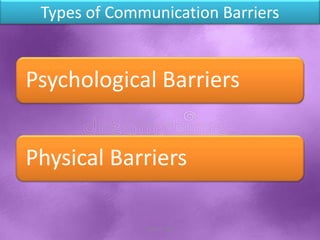
Types of Communication Barriers
Psychological Barriers
Physical Barriers
Shital S. Patil
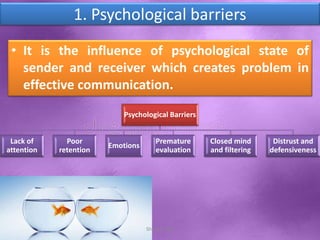
1. Psychological barriers
• It is the influence of psychological state of
sender and receiver which creates problem in
effective communication.
Psychological Barriers
Lack of
attention
Poor
retention
Emotions
Premature
evaluation
Closed mind
and filtering
Distrust and
defensiveness
Shital S. Patil
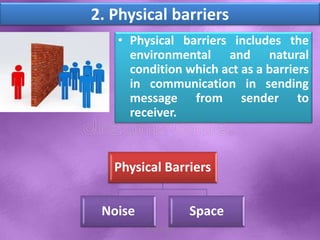
2. Physical barriers
• Physical barriers includes the
environmental and natural
condition which act as a barriers
in communication in sending
message from sender to
receiver.
Physical Barriers
Noise Space
Shital S. Patil

1.1 communication and introduction

  • 1.
  • 2.
    CONTENTS • Introduction • Importanceof Communication • Communication Process • Barriers to Communication • Causes of Barriers • Perspectives in Communication Shital S. Patil
  • 3.
    Introduction • Greek WordCommuni-cate means to Share. • It is concern with the ways we make others to know or to understand our feelings, opinions, informations etc. • All living beings communicate and it is an innate gift of god by which living beings exists, survive and grow in particular information. Shital S. Patil
  • 4.
    Definitions • It isdefined as the exchange of information, ideas and knowledge between sender and receiver through accepted code of symbols. Shital S. Patil
  • 5.
    Definitions • Communication isa social interaction through symbols and messages. Shital S. Patil
  • 6.
    Definitions • Communication isthe transfer of information and understanding from one person to another person. Shital S. Patil
  • 7.
    Definitions • Communication isthe act of conveying intended meanings from one entity or group to another through the use of mutually understood signs and rules. Shital S. Patil
  • 8.
    Main Points ofCommunication • Communication is the transmission of signals from one person to another person. • It involves use of symbols which are directed toward some goals. • Communication involves perception of commonly understood symbolic stimuli of language. • Communication may bring about change in a person or in an organization if used for a specific purpose. Shital S. Patil
  • 9.
    Importance of Communication •It helps in team work which in turn increases productivity, integrity and responsibility. Shital S. Patil
  • 10.
    Importance of Communication •It reduces unnecessary competition and helps employees to work together harmoniously. Shital S. Patil
  • 11.
    Importance of Communication •It produces a healthy work environment and employees do their duties with a positive attitude. Shital S. Patil
  • 12.
    Importance of Communication •It builds strong relationships. • Trust and loyalty are the key factors which are boosted by communication. Shital S. Patil
  • 13.
    Importance of Communication •Open channels of communication can lead to new ideas and innovation. Shital S. Patil
  • 14.
    Importance of Communication •It brings people together, Closer to each other. Shital S. Patil
  • 15.
    Importance of Communication •It helps to understand people and removes misunderstandings and creates clarity of thoughts and expression. Shital S. Patil
  • 16.
    Communication Process • Communicationis a complex process and it occurs within a common frame of reference called communication environment. • The origin of a message starts at different levels of our consciousness and sender becomes the agents who transmit it to receiver. Shital S. Patil
  • 17.
    Communication Process • Theobservation of the result of communication is called feedback. • Communication does not end with only transmission of message but also depends upon understandings of feeling by the receiver. Shital S. Patil
  • 18.
    Communication Process • Theprocess of communication is affected by the background, experiences, objectives and aspirations that both the sender and receiver have in common. • Communication is two way process. Shital S. Patil
  • 19.
    Components of CommunicationProcess Source Message Encoding Channel Decoding Receiver Feedback Context Shital S. Patil
  • 20.
    Communication Process Source/ Sender Mostimportant element of communication process. During communication the background, attitude and mood of sender are very important Sender must be responsible enough while sending message The source is living or non living thing attempting to share information A sender encode information Select channel by which do send message Transmits the information through channel to one or more receivers Shital S. Patil
  • 21.
    Communication Process Message Message isequally important as the source. Message is the information that the sender wants to send. Actually it is an idea , sometimes data or statement issued by sender It is in the form of word, symbols, gesture etc. Nowadays it may be electronic signals or icons over computer. Message may be verbal or Non Verbal Shital S. Patil
  • 22.
    Communication Process Encoding •Convert informationin the form if codes •Codes is the system of symbol, sign or letters used to represent secret meaning. •It helps sender to give shape to message, idea, or information. Shital S. Patil
  • 23.
    Communication Process Channel •It isa medium through which sender transmits its message. •Different technologies like telephone, fax, computer. •Channel selection id depends upon the sender mood and receiver expectations. •To communicate data from one location to another. •Two types: 1. Wire/ Cable 2. Satellite Shital S. Patil
  • 24.
    Communication Process Decoding •After properchannel selection message enters in to decoding stage. •Decoding is done by the receiver. •Decoding is a skill which includes careful reading and listening of message for better understanding. •Decoder interpreting message according to his mentality and experience. Shital S. Patil
  • 25.
    Communication Process Receiver •The personto whom message is intended is called receiver. •For effective communication there must be good relation between sender and receiver. •Receiver decodes message encoded by sender. •The receiver is the listener, reader or an observer to whom message is directed. •There are high chances of miscommunication due to his opinion Shital S. Patil
  • 26.
    Communication Process Feedback • Onsending message, receiver decodes the message and then sender waits for response. • Sometime the sender does not receive a response and starts checking what went wrong. This examination and evaluation is called Feedback. • Feedback helps sender to understand how effective is a message. Shital S. Patil
  • 27.
    Communication Process • Feedbackhelps in – Collection of information – Measures the effectiveness of communication. – Improves labor- management relationship – Measure effectiveness of media – Helps in taking proper decision and in solving problem – Helps in coordination of various departments Shital S. Patil
  • 28.
    Communication Process Context •Context isdefined as the circumstances surrounding a message. •Circumstances includes the setting, value positions of the people and appropriateness of a message. •The sender has to consider speaking style and various norms. •Contexts is of various types –Physical context –Temporal context –Social-psychological context. Shital S. Patil
  • 29.
  • 30.
    Communication Barriers • Barriersare obstacles in a work place that prevents effective exchange of ideas and thoughts. Shital S. Patil
  • 31.
    Types of CommunicationBarriers Psychological Barriers Physical Barriers Shital S. Patil
  • 32.
    1. Psychological barriers •It is the influence of psychological state of sender and receiver which creates problem in effective communication. Psychological Barriers Lack of attention Poor retention Emotions Premature evaluation Closed mind and filtering Distrust and defensiveness Shital S. Patil
  • 33.
    2. Physical barriers •Physical barriers includes the environmental and natural condition which act as a barriers in communication in sending message from sender to receiver. Physical Barriers Noise Space Shital S. Patil