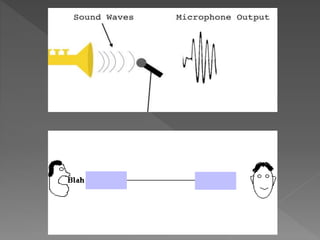
 Sound is produced only by the vibrating bodies.
 The vibrations that create sound must travel through a
medium , such as air or water , or anything made of
molecules
 Due to vibrations of bodies the air around them also
vibrates and the air vibrations produces sensation of
sound to our ears.
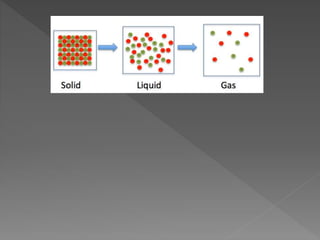
 Sound is a form of energy that is caused by the vibration of
matter.
 Sound is transmitted through waves, which travel through
solids, liquids and gases.
 We are most used to the sound travelling through air,
but sound is able to travel faster and further in
solids and liquids
 Speed of sound in air is effected by the changes of
1. Temperature
2. Pressure
3. Humidity
 Speed of sound Greatly varies with Temperature and
humidity.
 Speed of sound in air is 343m/s when,
1. Temperature of air in room is 21°C
2. Atmospheric pressure is equal to 1atm
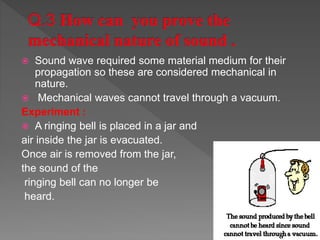
 Sound wave required some material medium for their
propagation so these are considered mechanical in
nature.
 Mechanical waves cannot travel through a vacuum.
Experiment :
 A ringing bell is placed in a jar and
air inside the jar is evacuated.
Once air is removed from the jar,
the sound of the
ringing bell can no longer be
heard.
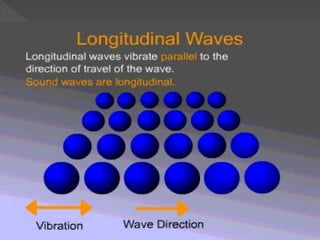
 In longitudinal wave the particles of the medium
move back and forth along the direction of
propagation of wave.
 Distance between two consecutive compressions
and rarefactions is the wavelength of the sound
wave.
 Sound is a form of energy and display all the
properties of waves when it interact with
materials or boundaries.
Examples :
 Reflection
 Diffraction
 Refraction
 Yes , sound always manifest these characteristics.
 Echo is the practical Example for the reflection of sound
waves.
 Listening of a person in other room is an example of
diffraction of sound waves.
 Refraction of sound wave means speed and directions of
sound waves are change
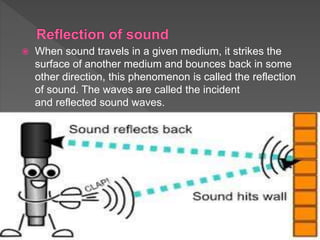
 When sound travels in a given medium, it strikes the
surface of another medium and bounces back in some
other direction, this phenomenon is called the reflection
of sound. The waves are called the incident
and reflected sound waves.
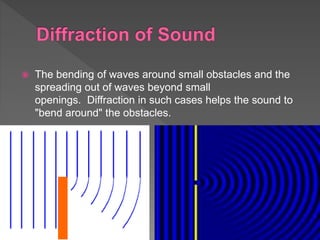
 The bending of waves around small obstacles and the
spreading out of waves beyond small
openings. Diffraction in such cases helps the sound to
"bend around" the obstacles.
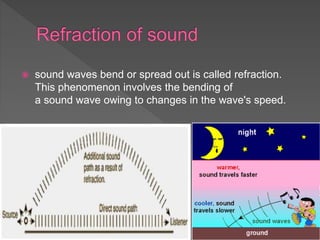
 sound waves bend or spread out is called refraction.
This phenomenon involves the bending of
a sound wave owing to changes in the wave's speed.
10th  physics

10th physics

  • 2.
     Sound isproduced only by the vibrating bodies.  The vibrations that create sound must travel through a medium , such as air or water , or anything made of molecules  Due to vibrations of bodies the air around them also vibrates and the air vibrations produces sensation of sound to our ears.
  • 4.
     Sound isa form of energy that is caused by the vibration of matter.  Sound is transmitted through waves, which travel through solids, liquids and gases.  We are most used to the sound travelling through air, but sound is able to travel faster and further in solids and liquids
  • 5.
     Speed ofsound in air is effected by the changes of 1. Temperature 2. Pressure 3. Humidity  Speed of sound Greatly varies with Temperature and humidity.  Speed of sound in air is 343m/s when, 1. Temperature of air in room is 21°C 2. Atmospheric pressure is equal to 1atm
  • 7.
     Sound waverequired some material medium for their propagation so these are considered mechanical in nature.  Mechanical waves cannot travel through a vacuum. Experiment :  A ringing bell is placed in a jar and air inside the jar is evacuated. Once air is removed from the jar, the sound of the ringing bell can no longer be heard.
  • 8.
     In longitudinalwave the particles of the medium move back and forth along the direction of propagation of wave.  Distance between two consecutive compressions and rarefactions is the wavelength of the sound wave.
  • 11.
     Sound isa form of energy and display all the properties of waves when it interact with materials or boundaries. Examples :  Reflection  Diffraction  Refraction
  • 12.
     Yes ,sound always manifest these characteristics.  Echo is the practical Example for the reflection of sound waves.  Listening of a person in other room is an example of diffraction of sound waves.  Refraction of sound wave means speed and directions of sound waves are change
  • 13.
     When soundtravels in a given medium, it strikes the surface of another medium and bounces back in some other direction, this phenomenon is called the reflection of sound. The waves are called the incident and reflected sound waves.
  • 14.
     The bendingof waves around small obstacles and the spreading out of waves beyond small openings. Diffraction in such cases helps the sound to "bend around" the obstacles.
  • 15.
     sound wavesbend or spread out is called refraction. This phenomenon involves the bending of a sound wave owing to changes in the wave's speed.