10 Tips On
Receiving Feedback
Effectively
Harsh Johari
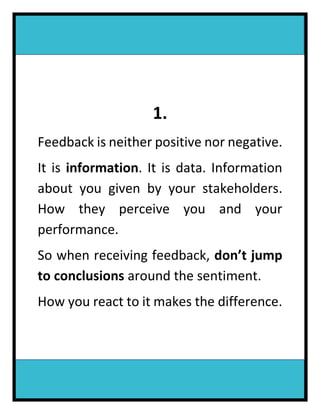
1.
Feedback is neither positive nor negative.
It is information. It is data. Information
about you given by your stakeholders.
How they perceive you and your
performance.
So when receiving feedback, don’t jump
to conclusions around the sentiment.
How you react to it makes the difference.
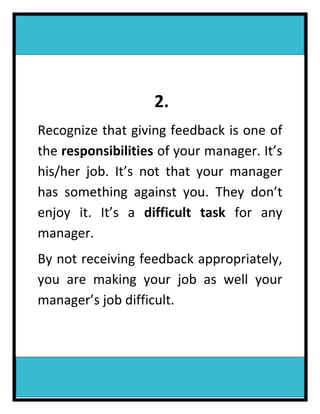
2.
Recognize that giving feedback is one of
the responsibilities of your manager. It’s
his/her job. It’s not that your manager
has something against you. They don’t
enjoy it. It’s a difficult task for any
manager.
By not receiving feedback appropriately,
you are making your job as well your
manager’s job difficult.
3.
Feedback discussion is not about your
manager. It’s not about your peers.
It’s about YOU.
So make sure you don’t waste time in
highlighting what your manager did not
do well or what your team members
were not doing. You are the subject and
the discussion has to revolve around you.
4.
You have 3 choices when you receive
feedback
a) Accept it
b) Reject it
c) Contest it
The choice you make decides whether
you move ahead or not
5.
Acceptance
You can accept feedback on face value. It
is what it is.
But accept with openness. Not by
accepting it in front of your manager and
then cribbing about it behind the back.
When you accept the feedback, it creates
opportunity for improvement. It creates
direction to move ahead.
6.
Rejection
You can reject the feedback, but it will
not change the feedback. Your
stakeholders will continue to perceive
you the same way.
Until and unless you change something
about it.
Rejection means you are ignoring
important signals from the organization
and the system. Things will not change
for you.
7.
Contest
If you choose to contest, make sure you have
concrete examples/data to back you. Again,
this approach does not change the feedback
as such.
In some cases, it might help in changing
perception slightly, but not always.
It provides your managers with some
context or new information which they may
not be aware of. You may feel better by
stating your side of the story.
Don’t contest for the sake of arguments.
8.
Listen to the feedback with the intent of
listening and not with the intent to
respond or react.
If you are in doubt, feel free to ask for
specific examples. It’s the job of your
manager to provide you with evidence
where warranted
9.
If the feedback is that you’re doing well in
certain areas, make sure you
acknowledge and feel proud about it. A
lot of times, our focus diverts to areas of
development only and we don’t give
ourselves credit for things which are
really going well. We all want to hear
good things about us, but the fact is that
there will some areas where we can do
better – always.
Understand your strengths and build on
them.
10.
Finally, what do you do post a feedback
discussion?
Go back and reflect. It is information
about you. Give yourself time to
assimilate the information.
Set up a follow-up meeting with your
manager to discuss an action plan. What
you need to do as next steps. Seek his/her
support.
Show willingness and commitment to
improve where needed. Move forward.

10 tips to receive feedback

  • 1.
    10 Tips On ReceivingFeedback Effectively Harsh Johari
  • 2.
    1. Feedback is neitherpositive nor negative. It is information. It is data. Information about you given by your stakeholders. How they perceive you and your performance. So when receiving feedback, don’t jump to conclusions around the sentiment. How you react to it makes the difference.
  • 3.
    2. Recognize that givingfeedback is one of the responsibilities of your manager. It’s his/her job. It’s not that your manager has something against you. They don’t enjoy it. It’s a difficult task for any manager. By not receiving feedback appropriately, you are making your job as well your manager’s job difficult.
  • 4.
    3. Feedback discussion isnot about your manager. It’s not about your peers. It’s about YOU. So make sure you don’t waste time in highlighting what your manager did not do well or what your team members were not doing. You are the subject and the discussion has to revolve around you.
  • 5.
    4. You have 3choices when you receive feedback a) Accept it b) Reject it c) Contest it The choice you make decides whether you move ahead or not
  • 6.
    5. Acceptance You can acceptfeedback on face value. It is what it is. But accept with openness. Not by accepting it in front of your manager and then cribbing about it behind the back. When you accept the feedback, it creates opportunity for improvement. It creates direction to move ahead.
  • 7.
    6. Rejection You can rejectthe feedback, but it will not change the feedback. Your stakeholders will continue to perceive you the same way. Until and unless you change something about it. Rejection means you are ignoring important signals from the organization and the system. Things will not change for you.
  • 8.
    7. Contest If you chooseto contest, make sure you have concrete examples/data to back you. Again, this approach does not change the feedback as such. In some cases, it might help in changing perception slightly, but not always. It provides your managers with some context or new information which they may not be aware of. You may feel better by stating your side of the story. Don’t contest for the sake of arguments.
  • 9.
    8. Listen to thefeedback with the intent of listening and not with the intent to respond or react. If you are in doubt, feel free to ask for specific examples. It’s the job of your manager to provide you with evidence where warranted
  • 10.
    9. If the feedbackis that you’re doing well in certain areas, make sure you acknowledge and feel proud about it. A lot of times, our focus diverts to areas of development only and we don’t give ourselves credit for things which are really going well. We all want to hear good things about us, but the fact is that there will some areas where we can do better – always. Understand your strengths and build on them.
  • 11.
    10. Finally, what doyou do post a feedback discussion? Go back and reflect. It is information about you. Give yourself time to assimilate the information. Set up a follow-up meeting with your manager to discuss an action plan. What you need to do as next steps. Seek his/her support. Show willingness and commitment to improve where needed. Move forward.