10 reasons for
         saying “NO”
…………..and possible answers
Volunteering


Any activity which involves spending time, unpaid,
doing something which aims to benefit someone,
individuals or groups other than, or in addition to,
close relatives, or to benefit the environment.
(From the Compact Code on Volunteering)
Formal or informal?
•   Formal volunteering refers to people
    who volunteer with official groups, clubs
    or organisations
•   Informal volunteering refers to people
    who give unpaid help to other people,
    usually friends or neighbours

    Focus today on Formal Volunteering
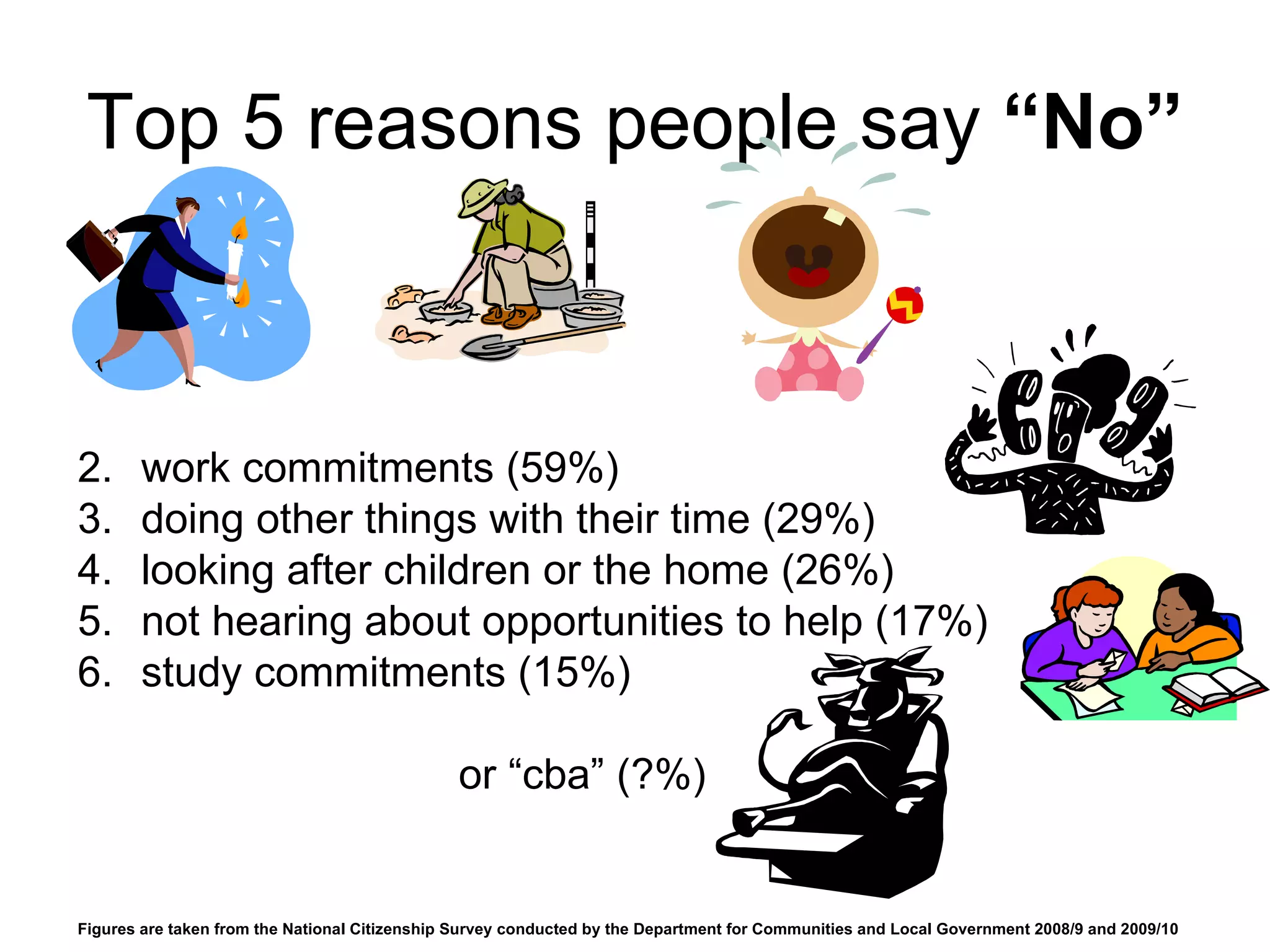
Top 5 reasons people say “No”


2.     work commitments (59%)
3.     doing other things with their time (29%)
4.     looking after children or the home (26%)
5.     not hearing about opportunities to help (17%)
6.     study commitments (15%)

                                               or “cba” (?%)


Figures are taken from the National Citizenship Survey conducted by the Department for Communities and Local Government 2008/9 and 2009/10
No! #1
       Employer-supported
          volunteering

Participation is unchanged since 2005
2% once a month
5% once a year
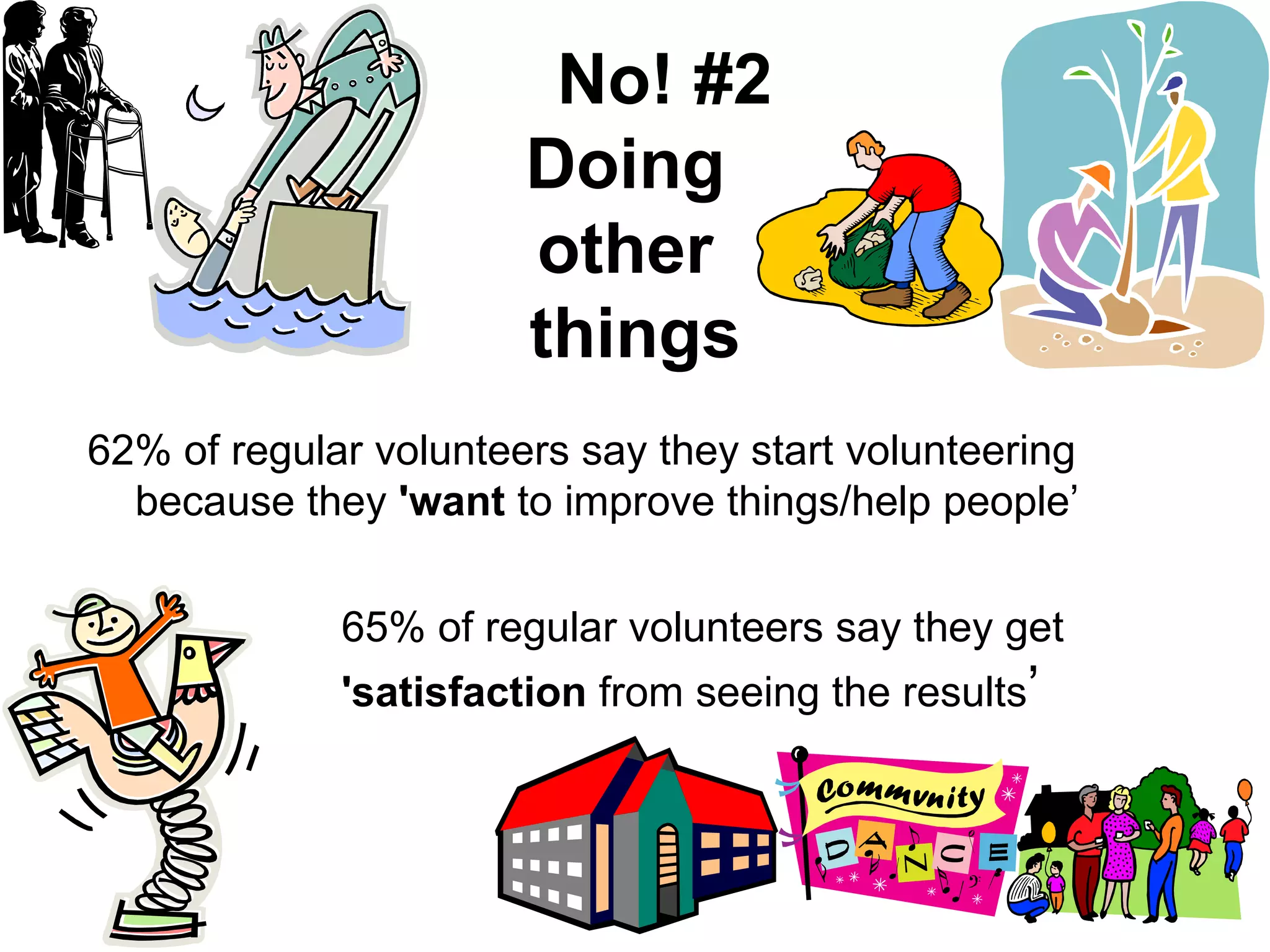
No! #2
                       Doing
                       other
                       things
62% of regular volunteers say they start volunteering
  because they 'want to improve things/help people’

             65% of regular volunteers say they get
             'satisfaction from seeing the results’
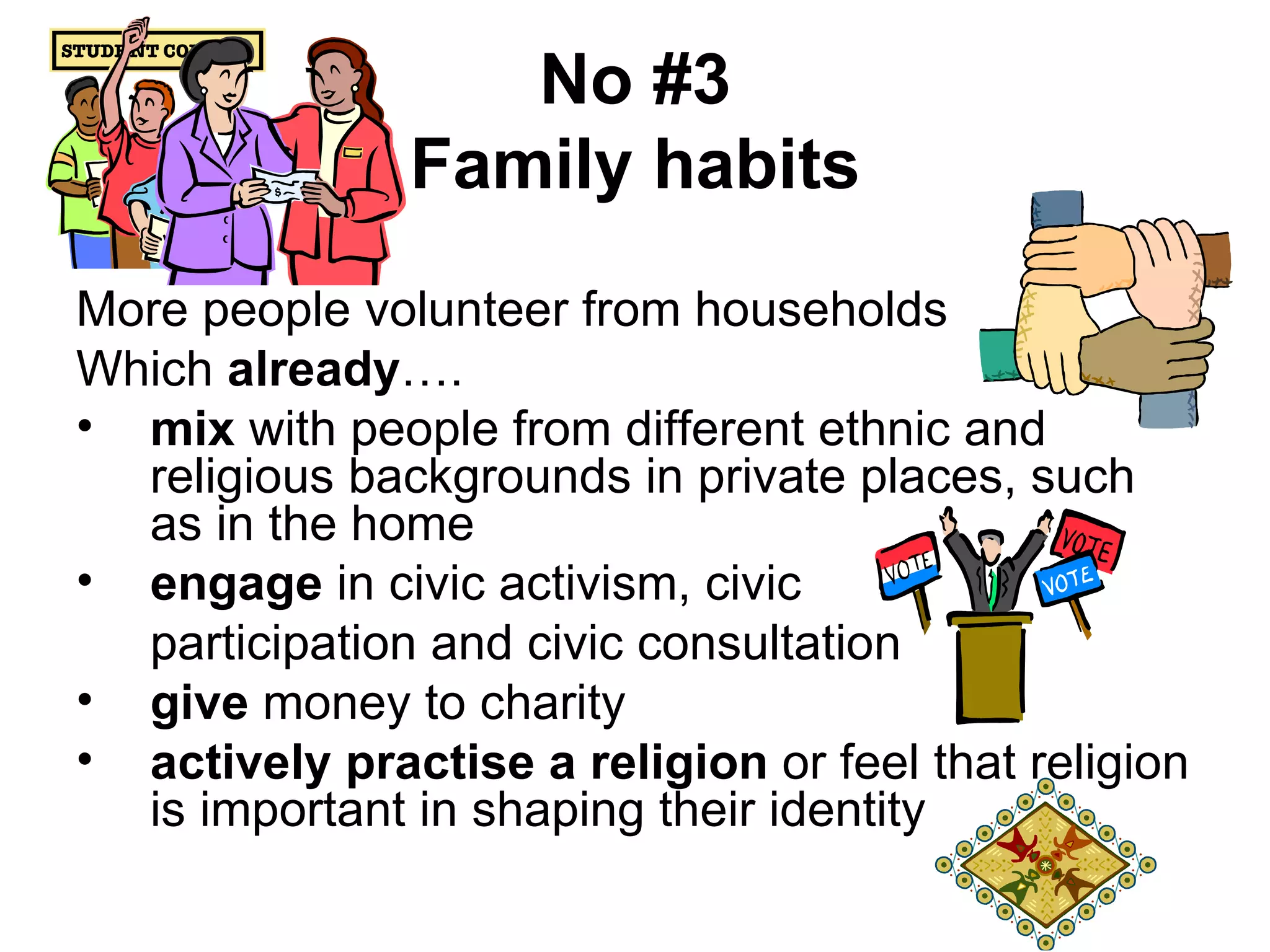
No #3
               Family habits
More people volunteer from households
Which already….
• mix with people from different ethnic and
  religious backgrounds in private places, such
  as in the home
• engage in civic activism, civic
  participation and civic consultation
• give money to charity
• actively practise a religion or feel that religion
  is important in shaping their identity
No! #4
        Hearing about it
The most common method through which
people find out about volunteering
opportunities is through someone else
already involved in the group or
organisation (53%).
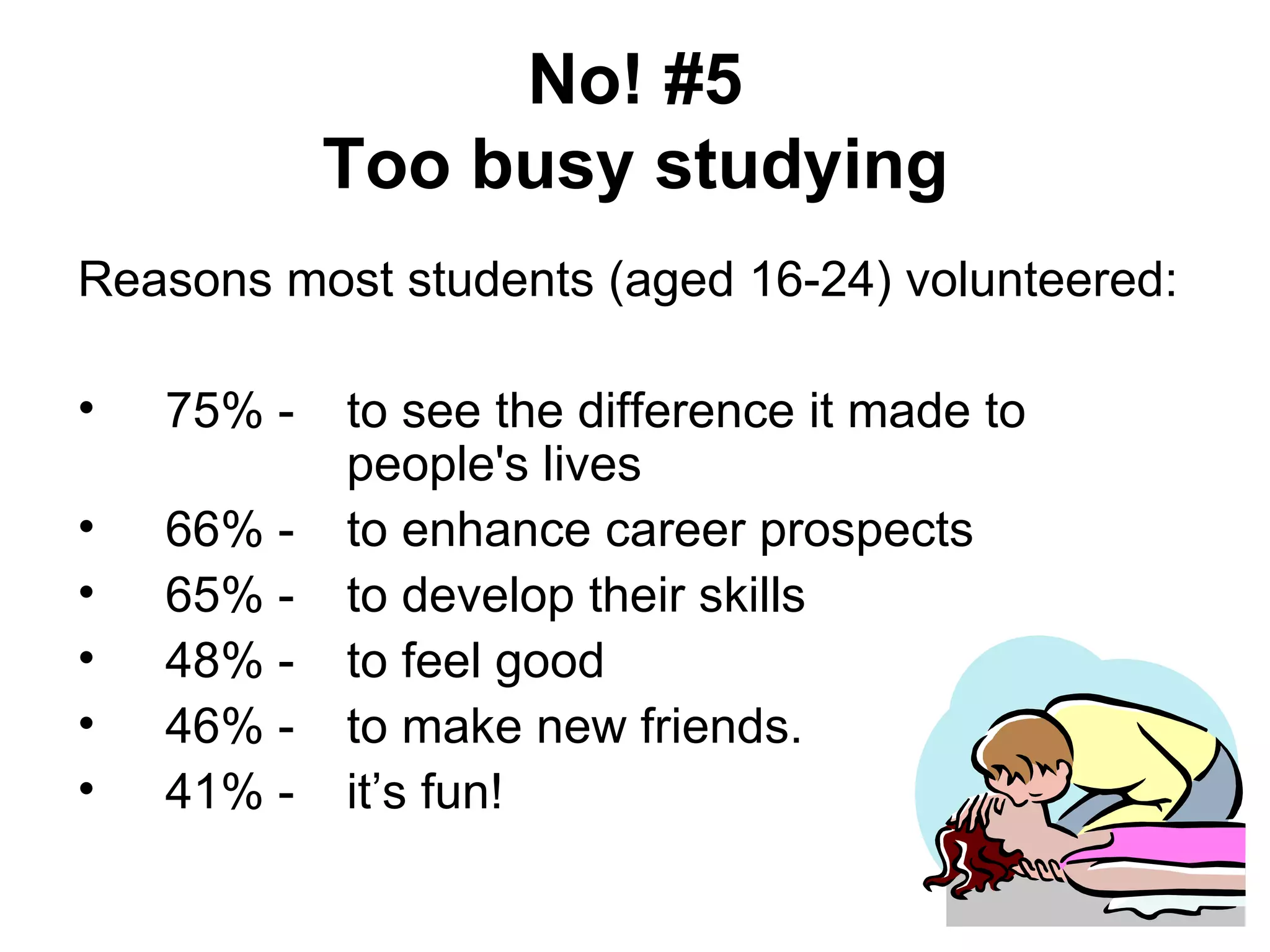
No! #5
            Too busy studying
Reasons most students (aged 16-24) volunteered:

•   75% -   to see the difference it made to
            people's lives
•   66% -   to enhance career prospects
•   65% -   to develop their skills
•   48% -   to feel good
•   46% -   to make new friends.
•   41% -   it’s fun!
Time commitment?


Regular volunteering averages about 12
 hours a month (less than 3 hours a week)
Little change in levels of
       volunteering since 2009


• One in four people - at least once a
  month
• Two in five people - at least once in the
  last 12 months
Drop in informal volunteering



• at least once a month - from 35% in
  2008/09 to 29% in 2009/10.
• at least once a year in 2008/9 from 62%
  to 54% in 2009/10
Older people


Bigger drop  !
• aged 75 years - 32% in 2008-09 to 25% in
  2009/10 (once a month)
• aged 65-74 – 63% to 51% (once a year)
……More motives


• Over 50% say volunteering experience
  helped them secure a new job/promotion

• 25% aged between 35 and 44 say they
  volunteer to improve their health
Why do over 60’s volunteer

     Over 50% say – to make new friends
Did you know?

• Households with two or more children
  have a higher chance of regular
  volunteering compared with households
  with no children

• People living in rural areas have a greater
  likelihood of regular volunteering than
  people in urban areas
3 more reasons to say NO!


6. ‘put off by bureaucracy’ (49%),
7. ‘worried about risk/ liability’ (47%)
8. ‘not got the right skills/ experience’
   (39%)
(Quotes from “Helping Out”, 2007).
Some things to bear in mind…….

10 reasons to say no and the answers

  • 1.
    10 reasons for saying “NO” …………..and possible answers
  • 2.
    Volunteering Any activity whichinvolves spending time, unpaid, doing something which aims to benefit someone, individuals or groups other than, or in addition to, close relatives, or to benefit the environment. (From the Compact Code on Volunteering)
  • 3.
    Formal or informal? • Formal volunteering refers to people who volunteer with official groups, clubs or organisations • Informal volunteering refers to people who give unpaid help to other people, usually friends or neighbours Focus today on Formal Volunteering
  • 4.
    Top 5 reasonspeople say “No” 2. work commitments (59%) 3. doing other things with their time (29%) 4. looking after children or the home (26%) 5. not hearing about opportunities to help (17%) 6. study commitments (15%) or “cba” (?%) Figures are taken from the National Citizenship Survey conducted by the Department for Communities and Local Government 2008/9 and 2009/10
  • 5.
    No! #1 Employer-supported volunteering Participation is unchanged since 2005 2% once a month 5% once a year
  • 6.
    No! #2 Doing other things 62% of regular volunteers say they start volunteering because they 'want to improve things/help people’ 65% of regular volunteers say they get 'satisfaction from seeing the results’
  • 7.
    No #3 Family habits More people volunteer from households Which already…. • mix with people from different ethnic and religious backgrounds in private places, such as in the home • engage in civic activism, civic participation and civic consultation • give money to charity • actively practise a religion or feel that religion is important in shaping their identity
  • 8.
    No! #4 Hearing about it The most common method through which people find out about volunteering opportunities is through someone else already involved in the group or organisation (53%).
  • 9.
    No! #5 Too busy studying Reasons most students (aged 16-24) volunteered: • 75% - to see the difference it made to people's lives • 66% - to enhance career prospects • 65% - to develop their skills • 48% - to feel good • 46% - to make new friends. • 41% - it’s fun!
  • 10.
    Time commitment? Regular volunteeringaverages about 12 hours a month (less than 3 hours a week)
  • 11.
    Little change inlevels of volunteering since 2009 • One in four people - at least once a month • Two in five people - at least once in the last 12 months
  • 12.
    Drop in informalvolunteering  • at least once a month - from 35% in 2008/09 to 29% in 2009/10. • at least once a year in 2008/9 from 62% to 54% in 2009/10
  • 13.
    Older people Bigger drop ! • aged 75 years - 32% in 2008-09 to 25% in 2009/10 (once a month) • aged 65-74 – 63% to 51% (once a year)
  • 14.
    ……More motives • Over50% say volunteering experience helped them secure a new job/promotion • 25% aged between 35 and 44 say they volunteer to improve their health
  • 15.
    Why do over60’s volunteer Over 50% say – to make new friends
  • 16.
    Did you know? •Households with two or more children have a higher chance of regular volunteering compared with households with no children • People living in rural areas have a greater likelihood of regular volunteering than people in urban areas
  • 17.
    3 more reasonsto say NO! 6. ‘put off by bureaucracy’ (49%), 7. ‘worried about risk/ liability’ (47%) 8. ‘not got the right skills/ experience’ (39%) (Quotes from “Helping Out”, 2007).
  • 18.
    Some things tobear in mind…….