IPW 2013
1.   Using Volume and Pace
2.   Maintaining Posture
3.   Maintaining Eye Contact
4.   Using Facial Expressions
5.   Using Presentation Aids
   Speak at an acceptable volume.
    ◦   Shows audience that you are confident
    ◦   Shows that you know your subject matter well
    ◦   Shows that you are prepared
    ◦   Helps the audience to pay attention to what you are
        saying
   Consider the size of the room.
    ◦ If the room is large, speak at a louder volume and project
      your voice so people at the back of the room can hear
      you.

   Size of the audience
    ◦ If you are speaking to a
      large number of people
      (eg. the entire class),
      project your voice
   Monitoring the pace you speak at is also essential
    to giving a successful presentation.
    ◦ If you speak too quickly, the audience may not be able to
      understand what you are saying.
    ◦ If you speak too slowly, the audience may lose interest
      and stop paying attention.

   Pause after important points so that the audience
    can take in the information.
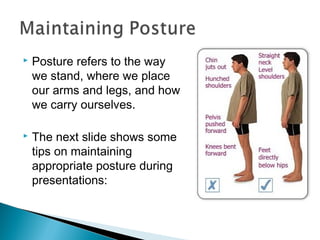
   Posture refers to the way
    we stand, where we place
    our arms and legs, and how
    we carry ourselves.

   The next slide shows some
    tips on maintaining
    appropriate posture during
    presentations:
Do …                                     Do NOT …
Stand up straight.                       Slouch.
   This shows that you are confident        This shows the audience that
   and prepared.                            you lack confidence and
   It helps you to project your voice       respect.
   better.
Relax your neck and shoulders.           Put your hands in your
   It helps you breathe better and       pockets.
   maintain a good volume.                  This shows you are nervous or
                                            unsure.
Use appropriate hand gestures.           Use too many hand gestures.
   This helps you to emphasise an idea      This distracts the audience.
   or point.
Move at appropriate points .             Move too much.
                                            Pacing and rocking back and
   Eye contact is made when we look at people
       and hold their gaze.
      Making eye contact with the audience shows:

1)           Making eye contact shows you are prepared and at
Confidence   ease.
             Looking away or at your feet indicates that you are
             nervous or not ready for the presentation.
2) Knowledge It also shows that you have full knowledge of your
             presentation’s content.
3) Attitude         Looking at the audience shows that you care if they
                    are listening.
                    Looking elsewhere indicates to the audience that
                    you are unenthusiastic about the presentation.
   Presentation aids include handouts, slideshows
    and videos.


   Purpose of using presentation aids:
    ◦ Makes the presentation more effective and interesting
    ◦ Makes the presentation easier to follow for the audience.
   Here are some tips about presentation aids:

    ◦ Do NOT use distracting colours or fonts in your
      slideshows. The main focus should be on what you are
      saying.

    ◦ Do NOT use colours or font size that are not visible
      from the back of the classroom.

    ◦ Do NOT read directly from the handout or slides. You
      should make eye contact with your audience!
   Ensure that you:

    ◦ Do NOT put chunks of text in your slides.

    ◦ Put the MAIN POINTS on the slides, then elaborate on
      your main points verbally.

    ◦ Have prepared what you are going to say on cue cards
      or on paper.
 Use your creativity!
 Videos, jokes and/or comics can be included along the

  way to engage your audience.
 Ask questions or get your audience to participate!

 You can also dress up!


These will definitely make
your presentation more
interesting and memorable!
   For a successful presentation, PRACTICE
    PRACTICE PRACTICE!

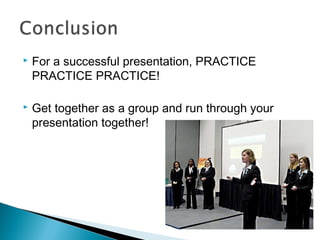
   Get together as a group and run through your
    presentation together!

1 delivering presentations

  • 1.
  • 2.
    1. Using Volume and Pace 2. Maintaining Posture 3. Maintaining Eye Contact 4. Using Facial Expressions 5. Using Presentation Aids
  • 3.
    Speak at an acceptable volume. ◦ Shows audience that you are confident ◦ Shows that you know your subject matter well ◦ Shows that you are prepared ◦ Helps the audience to pay attention to what you are saying
  • 4.
    Consider the size of the room. ◦ If the room is large, speak at a louder volume and project your voice so people at the back of the room can hear you.  Size of the audience ◦ If you are speaking to a large number of people (eg. the entire class), project your voice
  • 5.
    Monitoring the pace you speak at is also essential to giving a successful presentation. ◦ If you speak too quickly, the audience may not be able to understand what you are saying. ◦ If you speak too slowly, the audience may lose interest and stop paying attention.  Pause after important points so that the audience can take in the information.
  • 6.
    Posture refers to the way we stand, where we place our arms and legs, and how we carry ourselves.  The next slide shows some tips on maintaining appropriate posture during presentations:
  • 7.
    Do … Do NOT … Stand up straight. Slouch. This shows that you are confident This shows the audience that and prepared. you lack confidence and It helps you to project your voice respect. better. Relax your neck and shoulders. Put your hands in your It helps you breathe better and pockets. maintain a good volume. This shows you are nervous or unsure. Use appropriate hand gestures. Use too many hand gestures. This helps you to emphasise an idea This distracts the audience. or point. Move at appropriate points . Move too much. Pacing and rocking back and
  • 8.
    Eye contact is made when we look at people and hold their gaze.  Making eye contact with the audience shows: 1) Making eye contact shows you are prepared and at Confidence ease. Looking away or at your feet indicates that you are nervous or not ready for the presentation. 2) Knowledge It also shows that you have full knowledge of your presentation’s content. 3) Attitude Looking at the audience shows that you care if they are listening. Looking elsewhere indicates to the audience that you are unenthusiastic about the presentation.
  • 9.
    Presentation aids include handouts, slideshows and videos.  Purpose of using presentation aids: ◦ Makes the presentation more effective and interesting ◦ Makes the presentation easier to follow for the audience.
  • 10.
    Here are some tips about presentation aids: ◦ Do NOT use distracting colours or fonts in your slideshows. The main focus should be on what you are saying. ◦ Do NOT use colours or font size that are not visible from the back of the classroom. ◦ Do NOT read directly from the handout or slides. You should make eye contact with your audience!
  • 11.
    Ensure that you: ◦ Do NOT put chunks of text in your slides. ◦ Put the MAIN POINTS on the slides, then elaborate on your main points verbally. ◦ Have prepared what you are going to say on cue cards or on paper.
  • 12.
     Use yourcreativity!  Videos, jokes and/or comics can be included along the way to engage your audience.  Ask questions or get your audience to participate!  You can also dress up! These will definitely make your presentation more interesting and memorable!
  • 13.
    For a successful presentation, PRACTICE PRACTICE PRACTICE!  Get together as a group and run through your presentation together!