Download as PPSX, PPTX




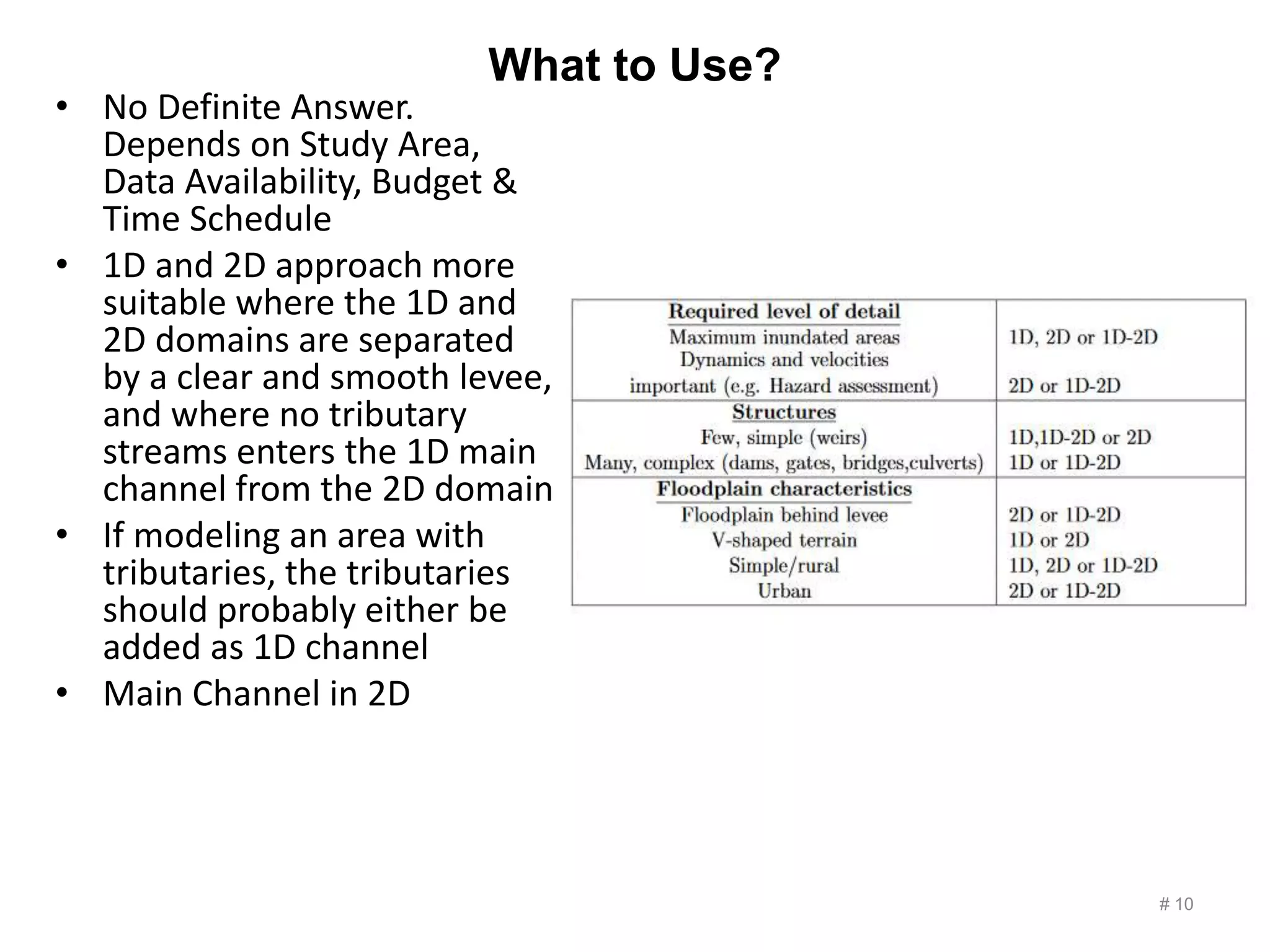


This document provides an introduction to 1D, 2D, and coupled 1D-2D flood modeling. It discusses the differences between model types in terms of data requirements, preprocessing, setup, and output. 1D models are suitable when flow is primarily uni-directional, while 2D models are needed when flow spreads widely. Coupled 1D-2D models represent the channel in 1D and overflow areas in 2D, avoiding the need for a fine mesh in the channel. The document provides guidelines for selecting a 1D, 2D or coupled model based on study area characteristics.
An overview of 1D & 2D modeling in flood scenarios introduced by Rajesh Kumar Mahana.
Discussion on differences in models: data requirements, applications, sensitivity of inundation, mesh design, and stability factors.
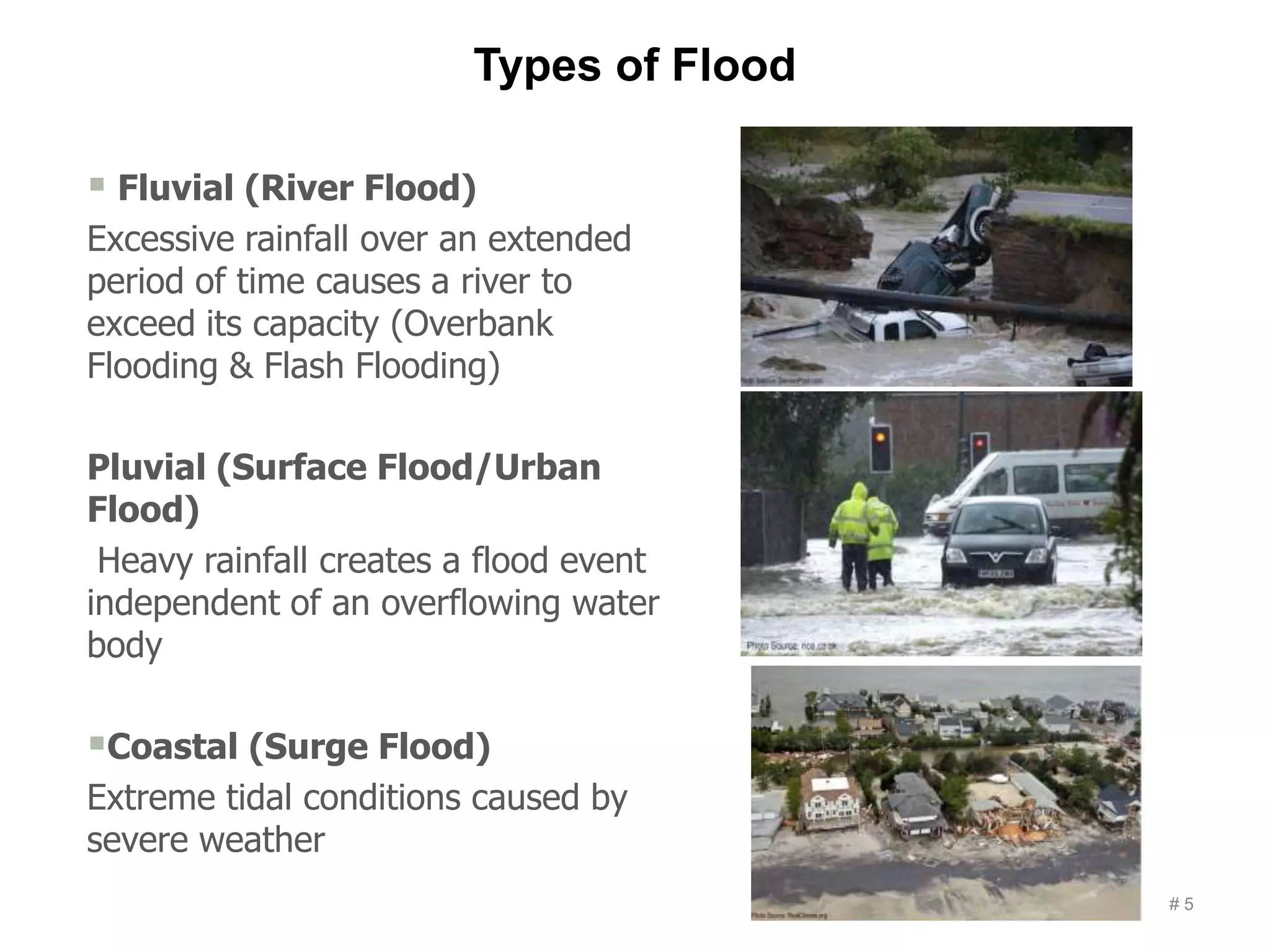
Explains hydrologic vs hydraulic models and details geometric data, flow data, boundary conditions, and different flood types.
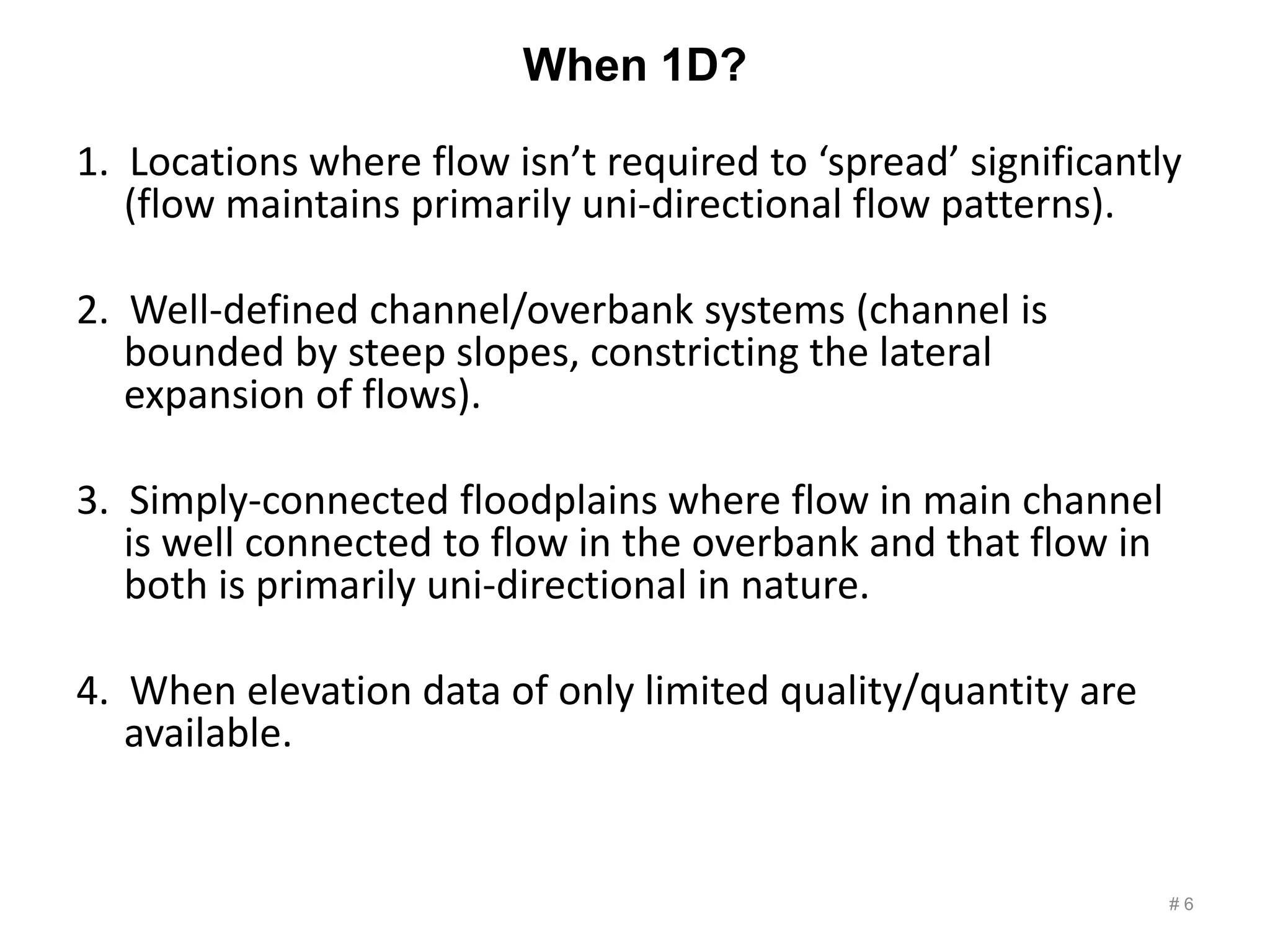
Criteria for utilizing 1D models based on flow direction, channel definition, floodplain characteristics, and data quality.
Criteria for utilizing 2D models in various scenarios where flow spreads and in urban or wide floodplains.
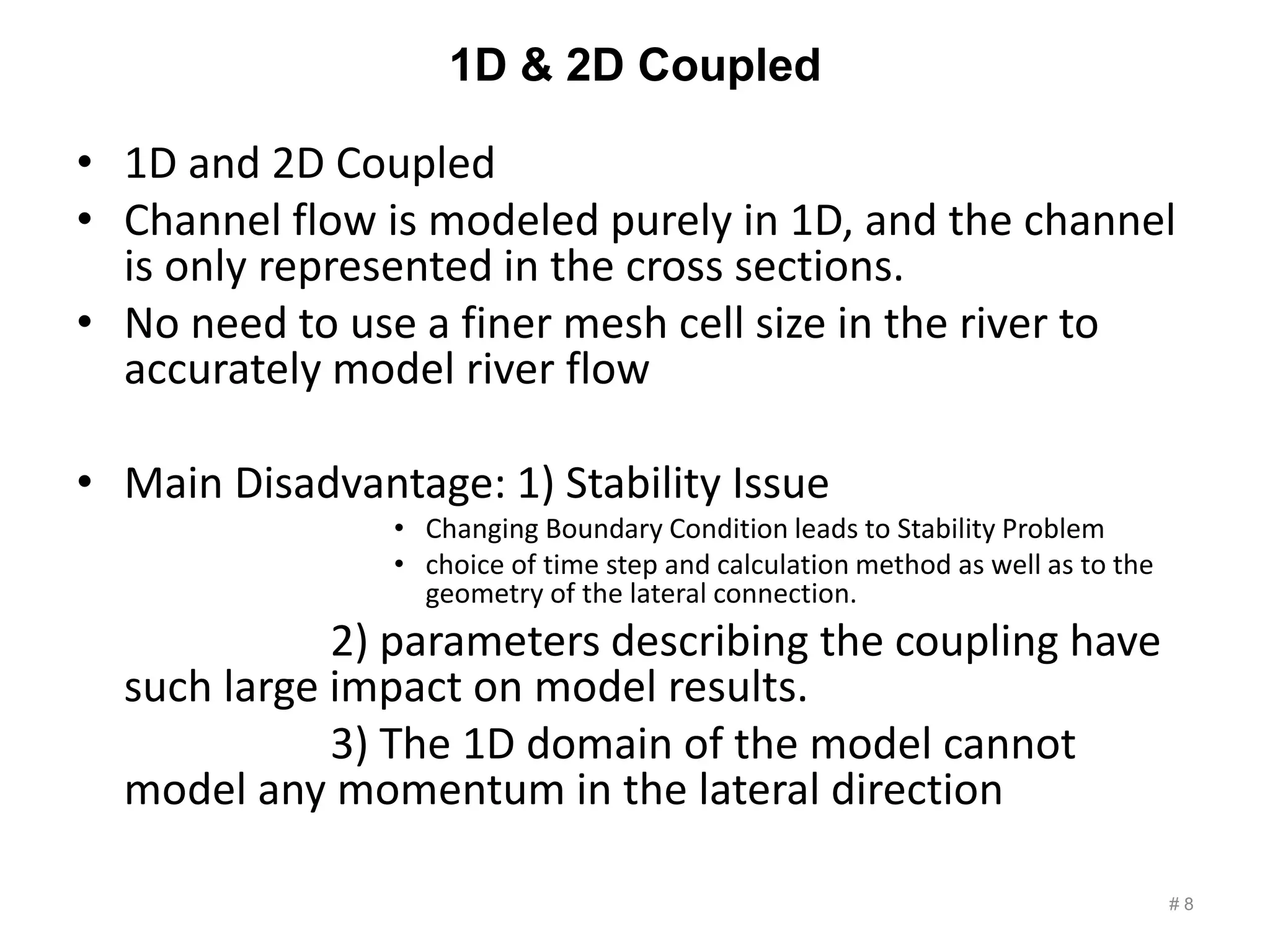
Details on coupled models, advantages of simplified modeling, stability issues, and the impact of boundary conditions.
Guidelines for selecting between 1D and 2D models based on geometry, features, and needs for detailed flood pattern visualizations.
Emphasizes that model choice depends on study area, data, budget, tributary considerations, and overall model compatibility.
A comparative analysis of different modeling approaches in terms of their usage and efficiency.
An empty slide, likely serving as a placeholder.


![Civil v-hydrology and irrigation engineering [10 cv55]-notes](https://cdn.slidesharecdn.com/ss_thumbnails/civil-v-hydrologyandirrigationengineering10cv55-notes-160425135643-thumbnail.jpg?width=640&height=640&fit=bounds)


