
ICU SCORING SYSTEM
PRESENTED BY
MR. NAVID IQBAL ,Dr Deepak Agarwal
NURSE INFORMATICS SPECIALIST
JPNATC, AIIMS
INTRODUCTION
 ICU Scoring system started at April
2012.
 It was developed by JPNATC itself.
 It is calculates score the severity of
disease and the prognosis of patients in
ICU.
 It is used by doctors & ICU Nurses.
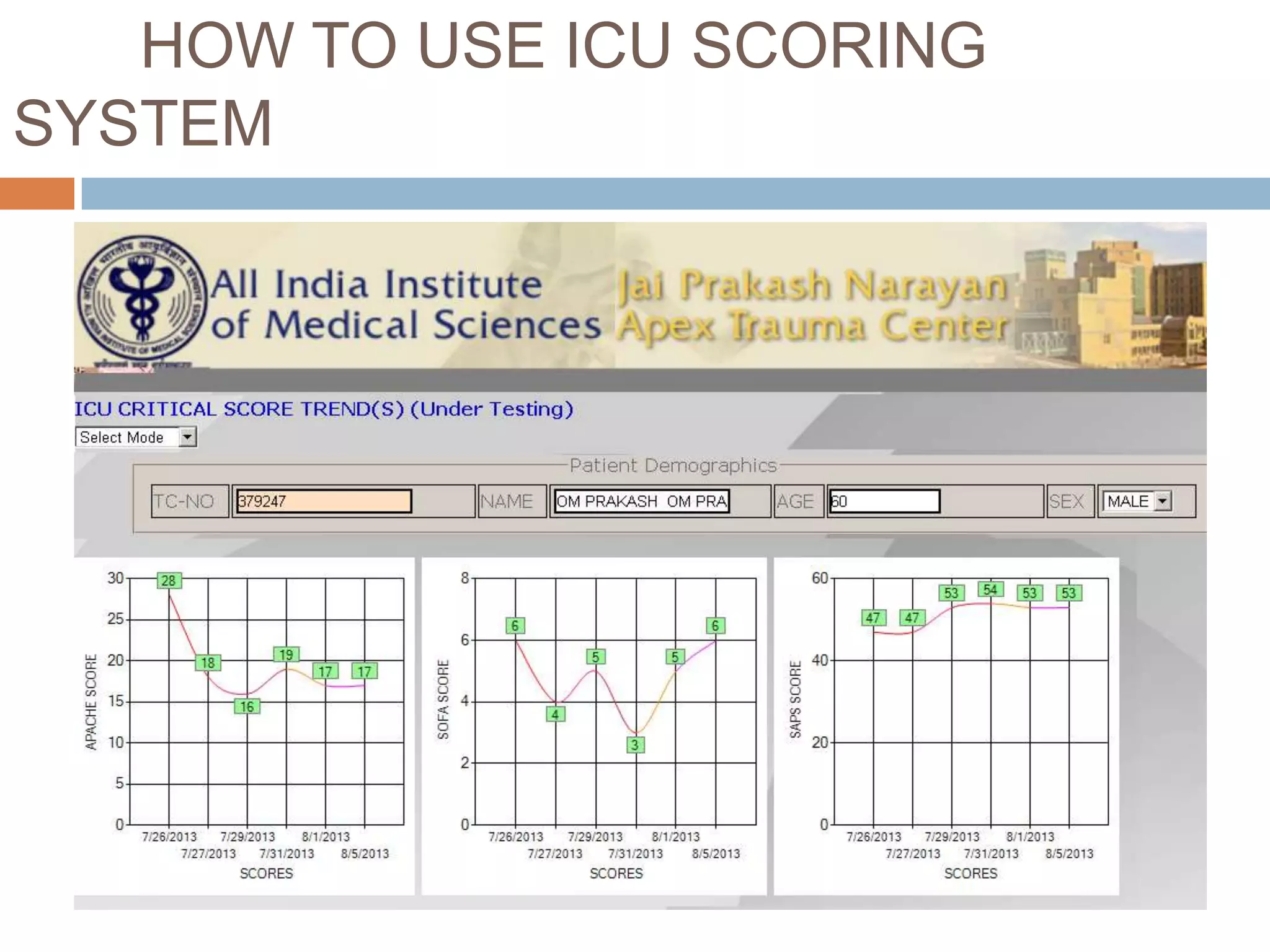
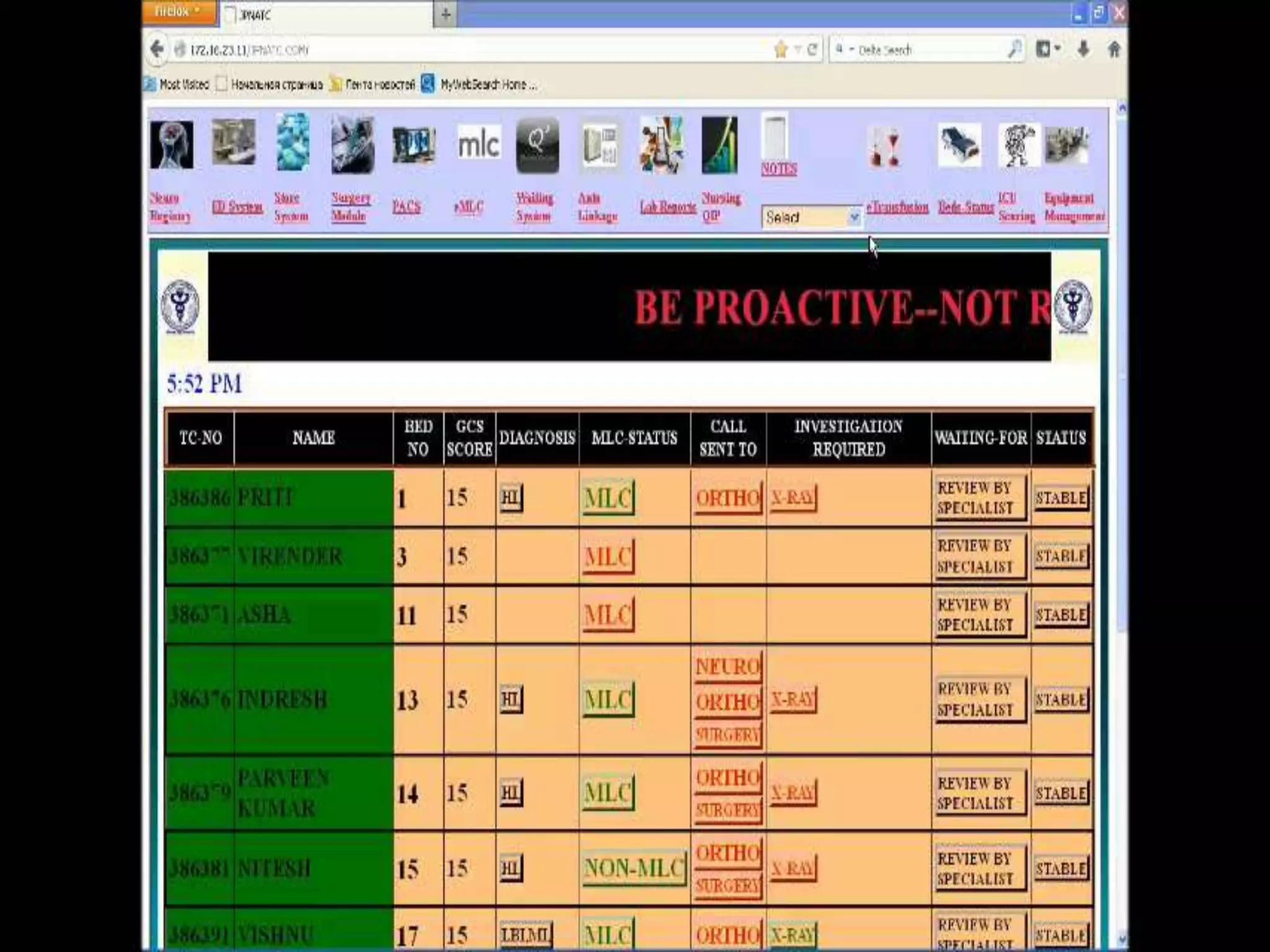
HOW TO USE ICU SCORING
SYSTEM
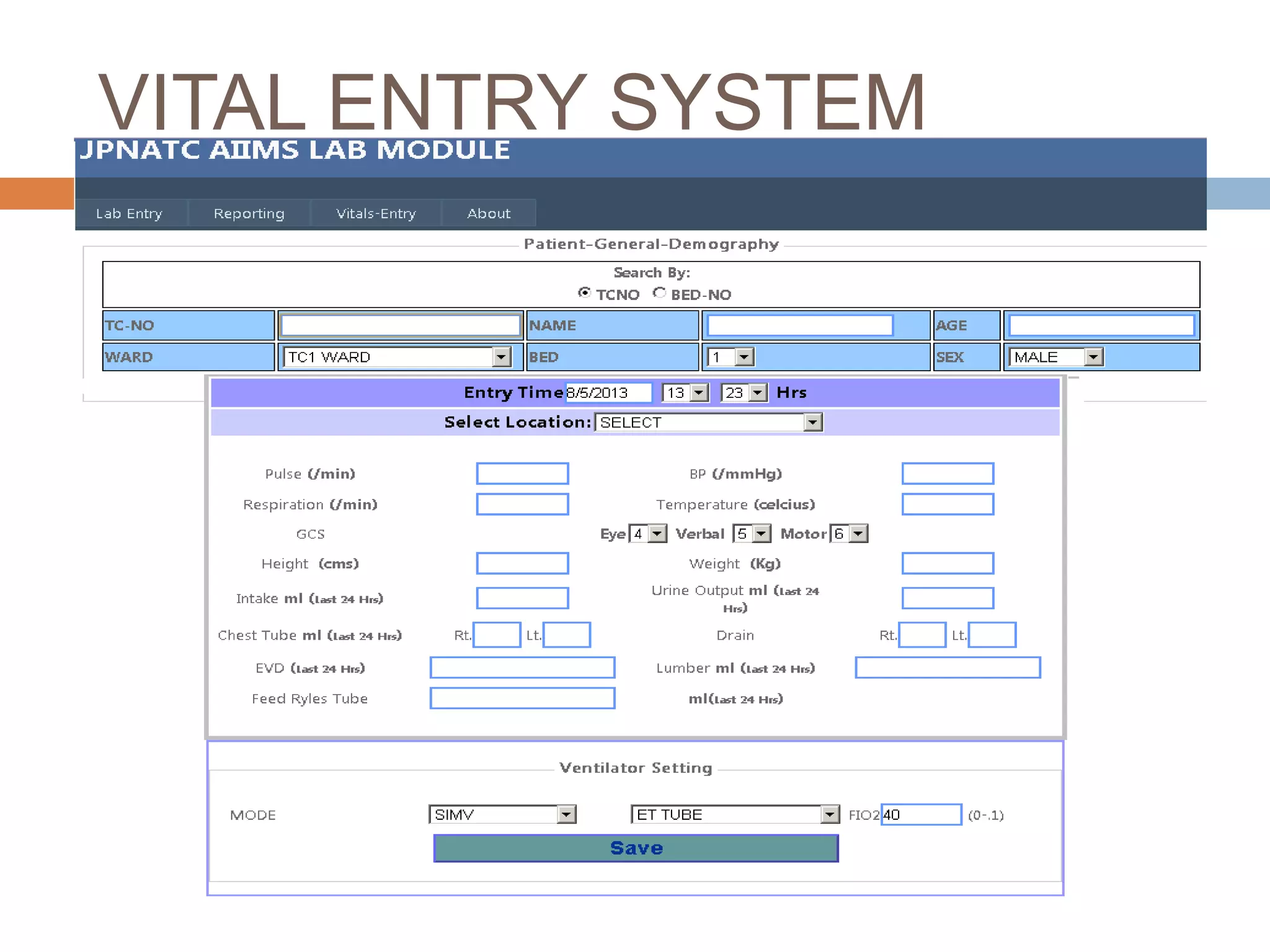
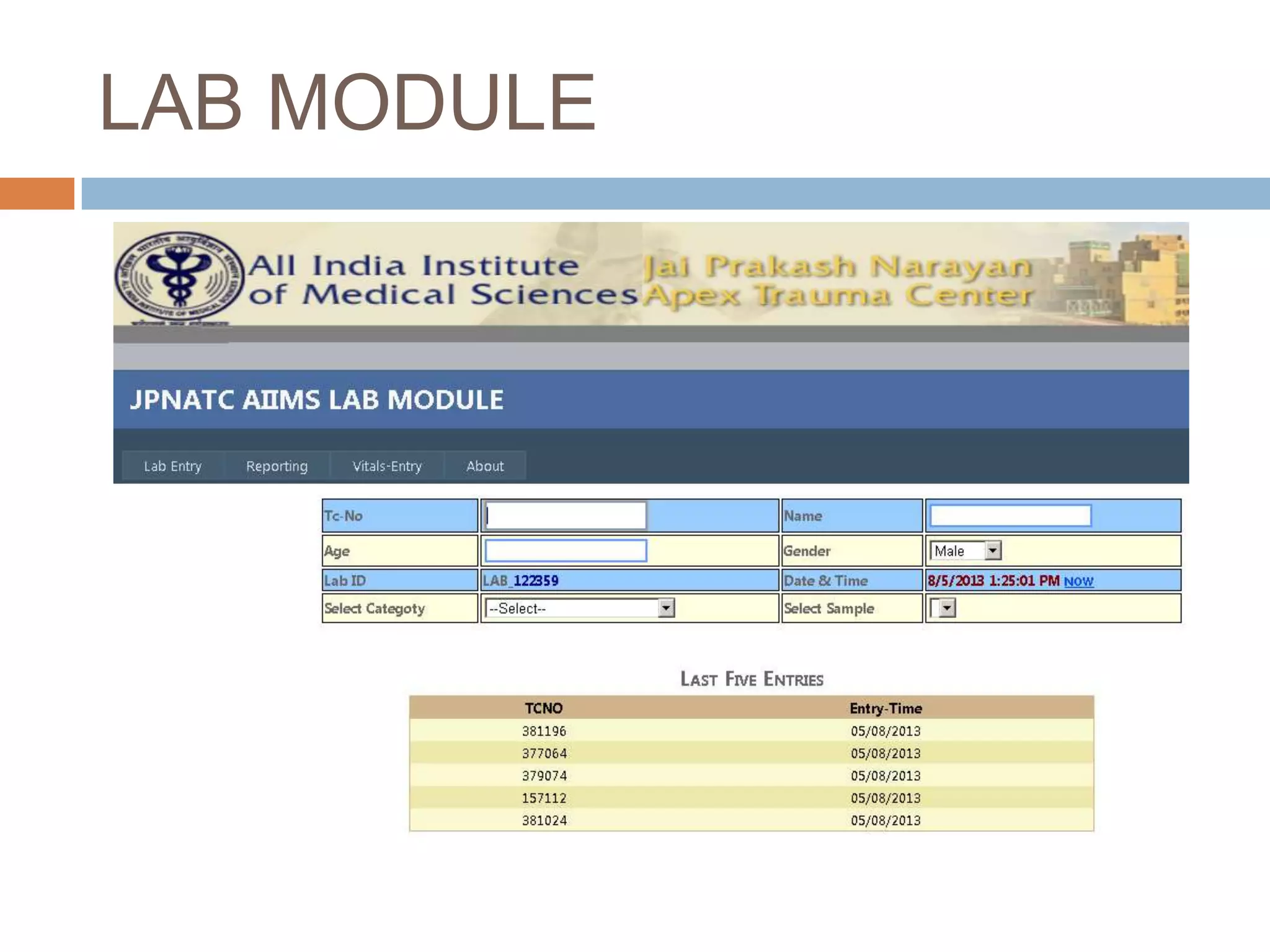
VITAL ENTRY SYSTEM
LAB MODULE
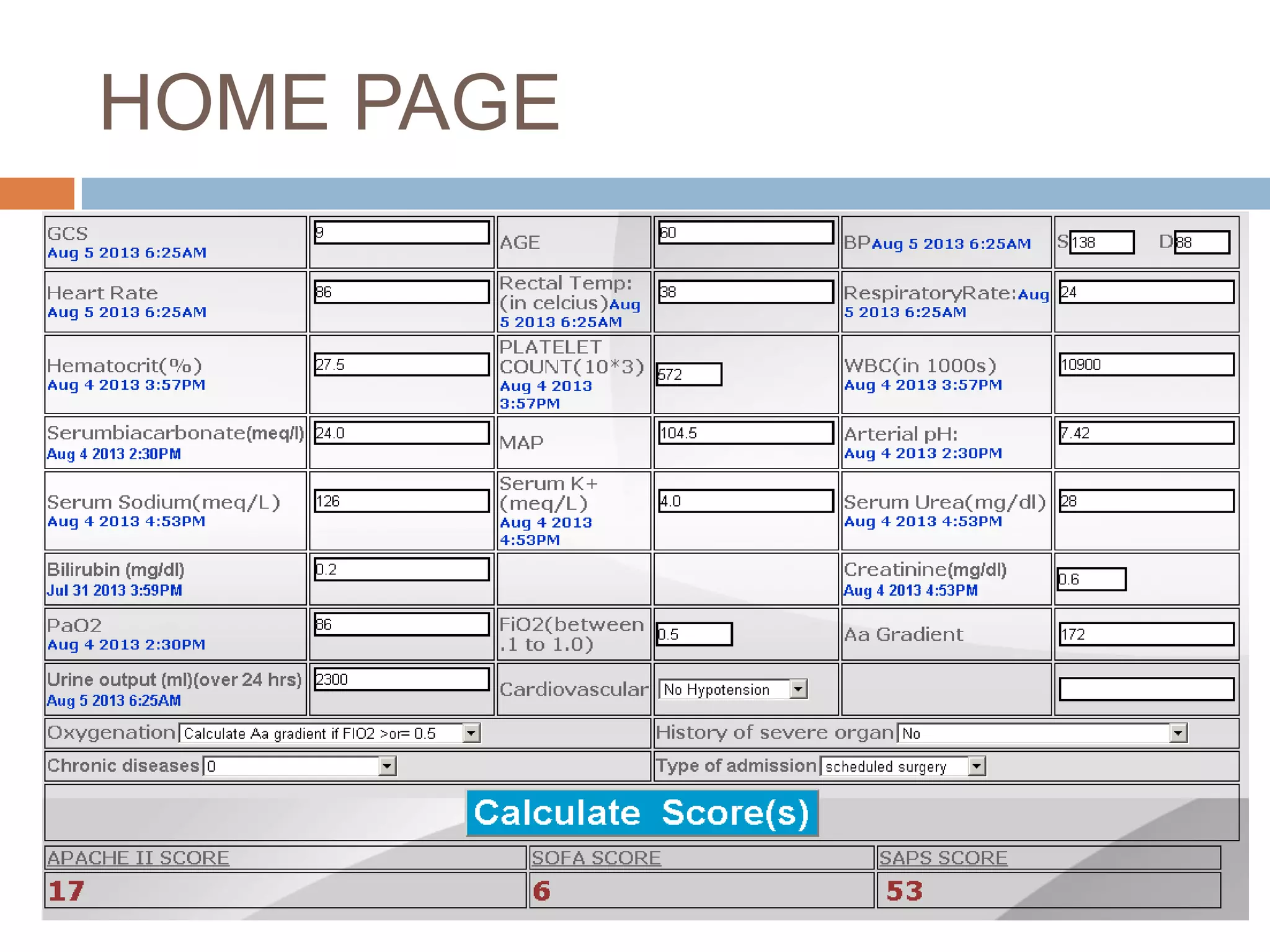
HOME PAGE
Types of ICU scoring
 APACHE SCORE :-Acute Physiology And Chronic
Health Evaluation
 SOFA SCORE :-Sequential Organ failure
Assessment Score.
 SPA SCORE :-Simplified Acute Physiology Score
• APACHE SCORE :-Acute Physiology And Chronic
Health Evaluation
• SOFA SCORE :-Sequential Organ failure Assessment
Score.
• SPA SCORE :-Simplified Acute Physiology Score
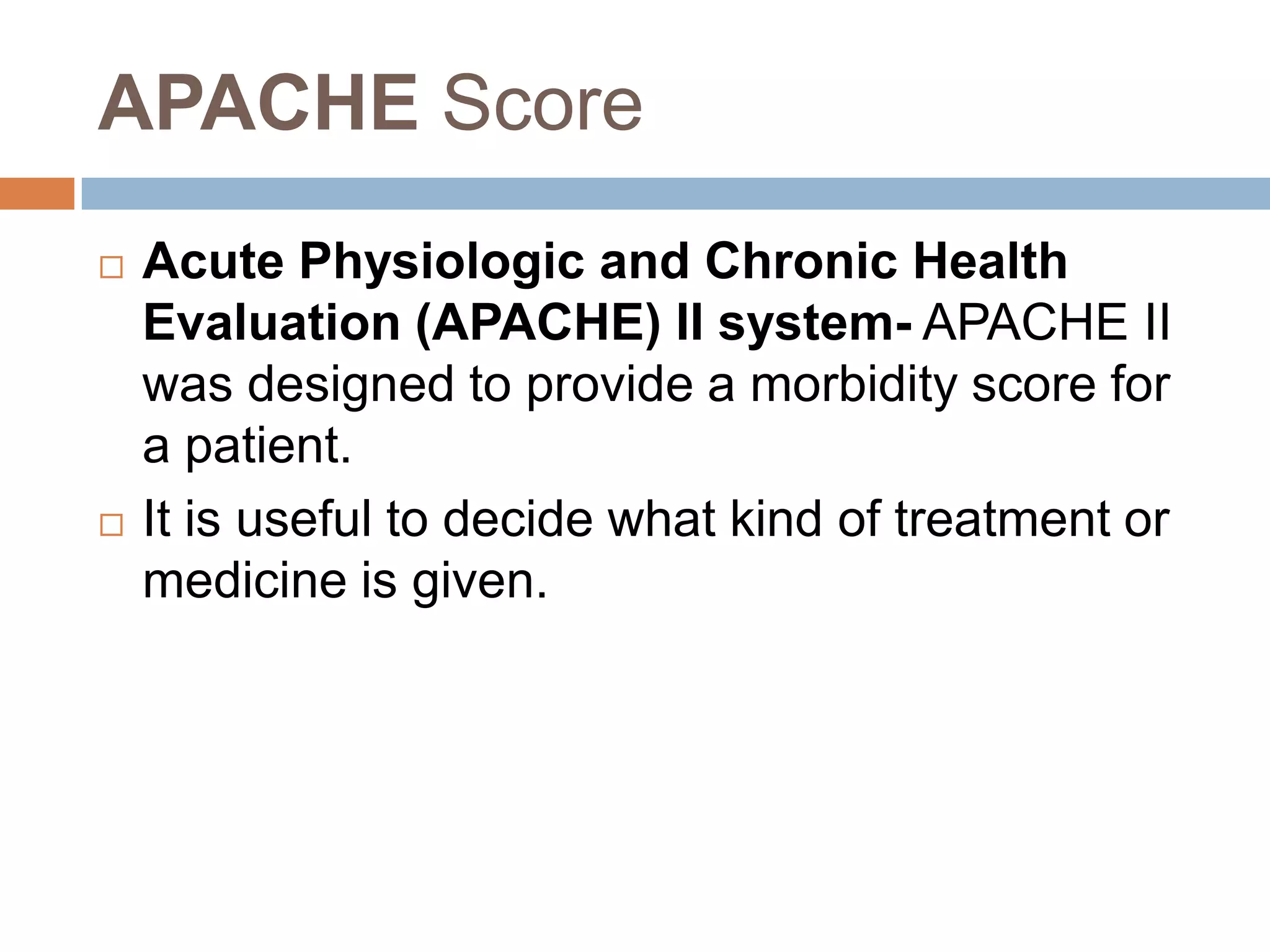
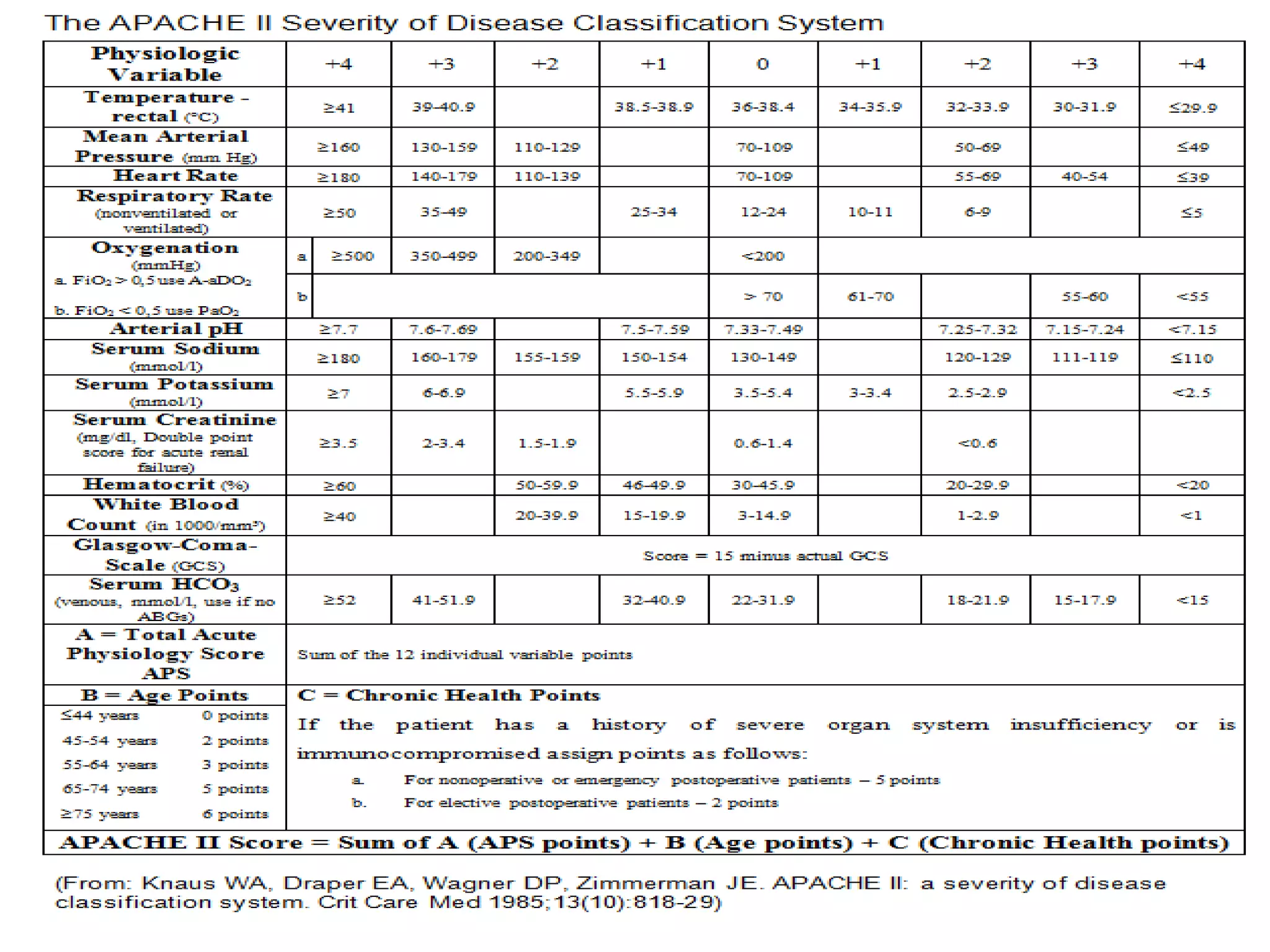
APACHE Score
 Acute Physiologic and Chronic Health
Evaluation (APACHE) II system- APACHE II
was designed to provide a morbidity score for
a patient.
 It is useful to decide what kind of treatment or
medicine is given.
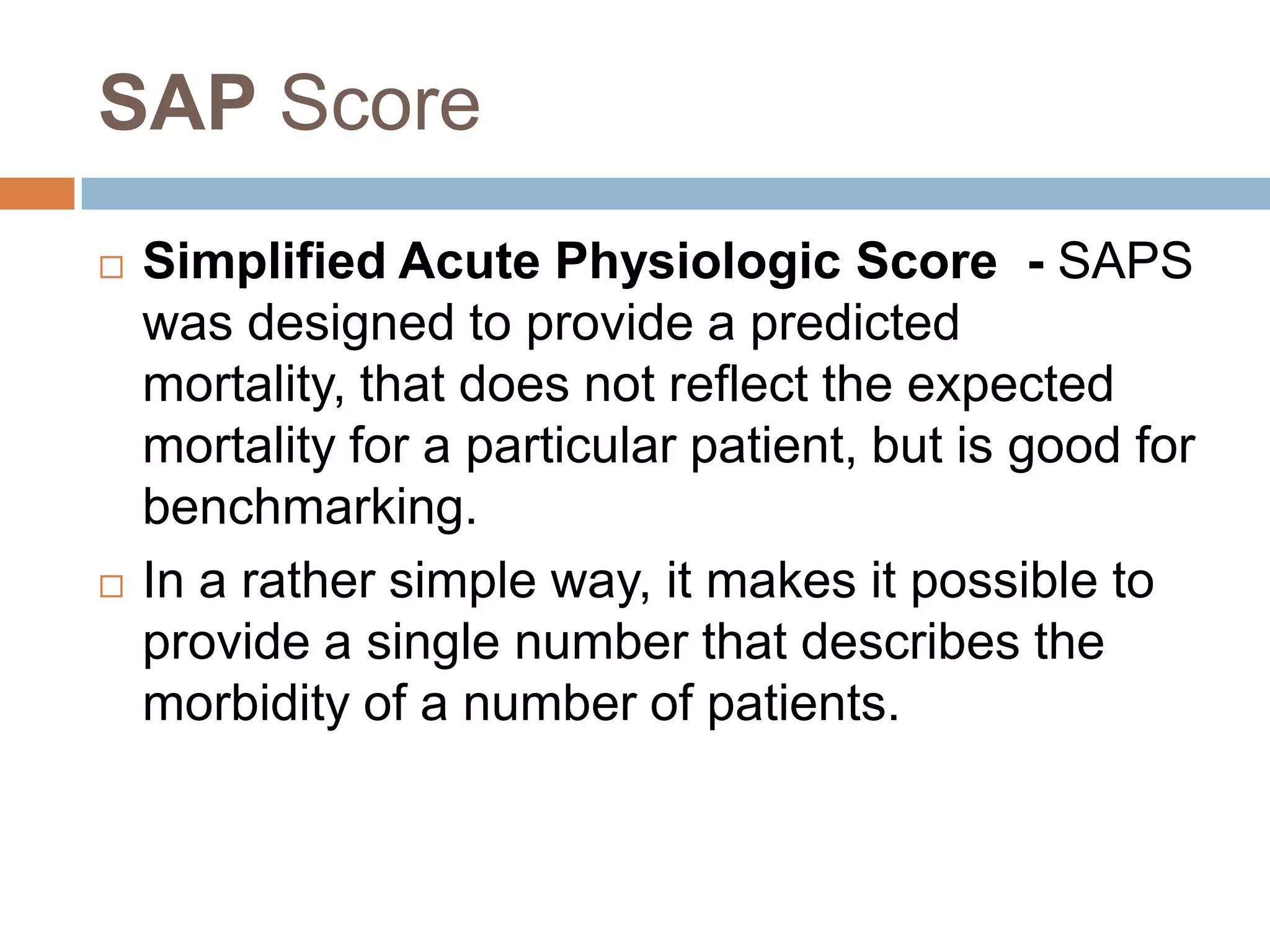
SAP Score
 Simplified Acute Physiologic Score - SAPS
was designed to provide a predicted
mortality, that does not reflect the expected
mortality for a particular patient, but is good for
benchmarking.
 In a rather simple way, it makes it possible to
provide a single number that describes the
morbidity of a number of patients.
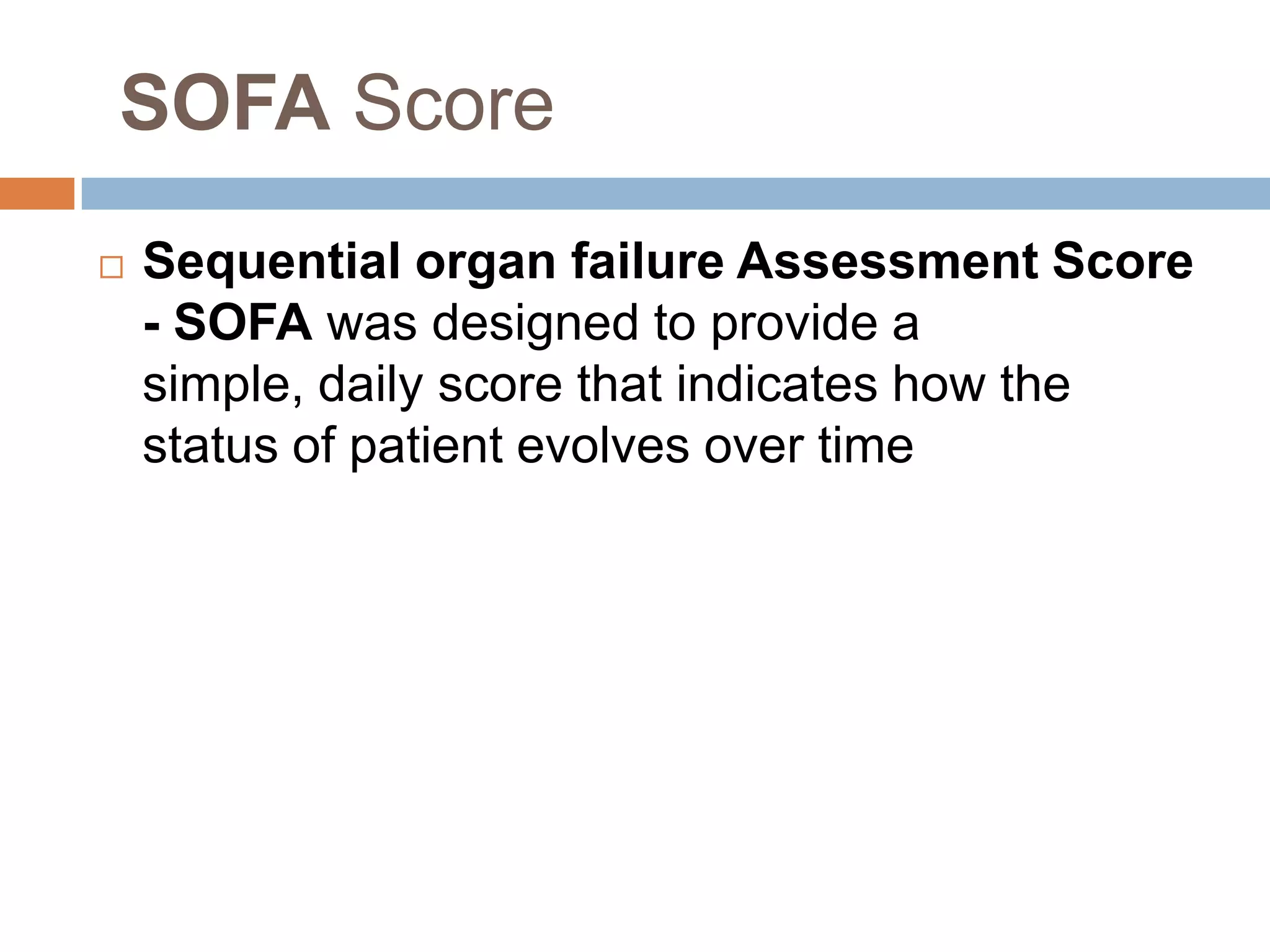
SOFA Score
 Sequential organ failure Assessment Score
- SOFA was designed to provide a
simple, daily score that indicates how the
status of patient evolves over time
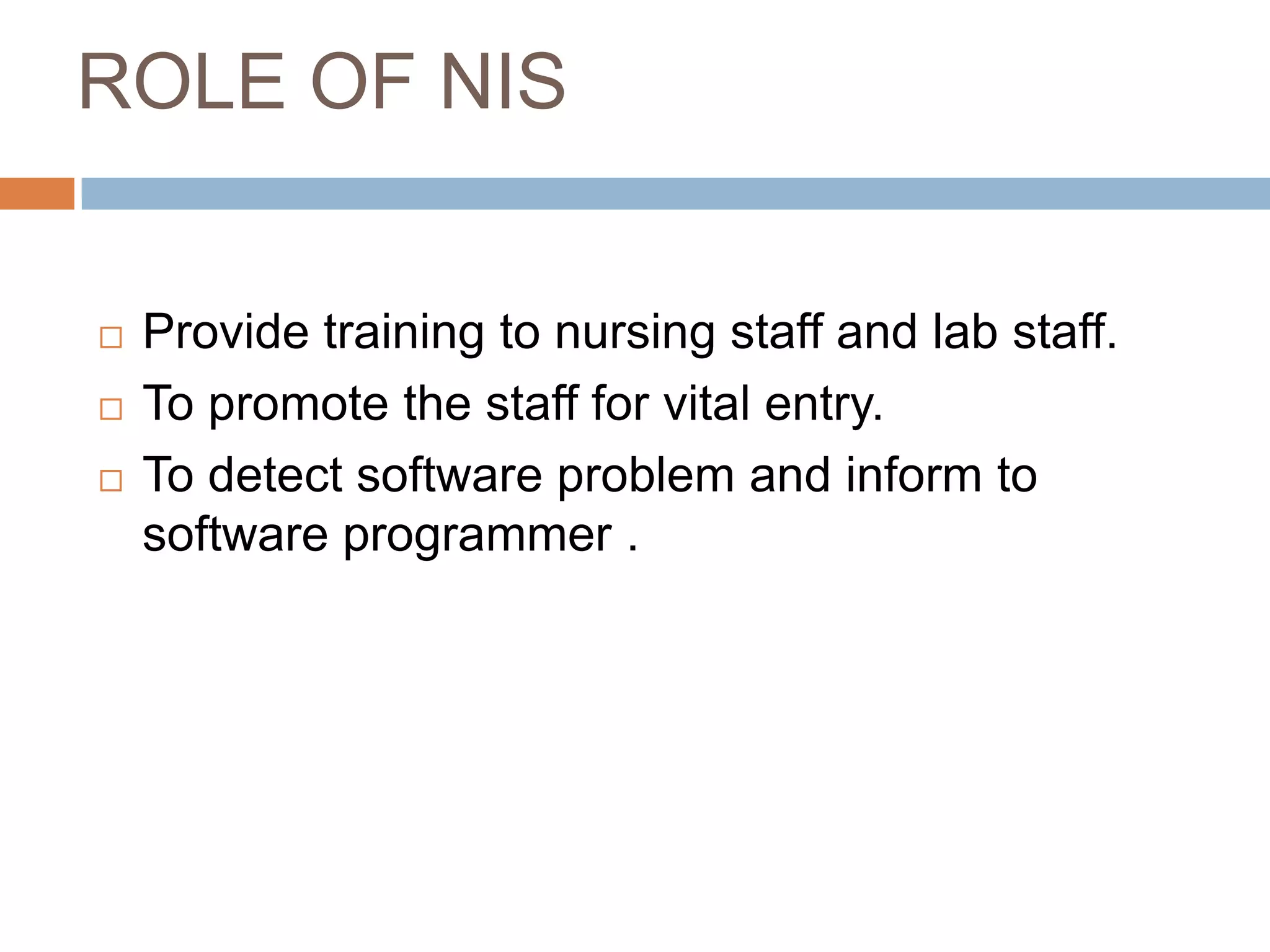
ROLE OF NIS
 Provide training to nursing staff and lab staff.
 To promote the staff for vital entry.
 To detect software problem and inform to
software programmer .
BENIFITS
 Easy to use.
 Easy to assess severity of patient.
 Easy to assess ICU performance .
 It shows data in graphical format.
 It is helpful for clinical
decision, research, and comparing the
quality of patient care across ICUs.
CHALLENGES
 One of the biggest challenges faced in the
implementation of this software was to train
the nurses on how to use computers and also
to make them familiar and confident in
implementing the software.
COMPLIANCE
 There is 100% compliance in neuro ICU.
Conclusion
 Automatic calculation of these scores
(apache, saps, sofa) can dramatically reduce
the workload on doctors and nurses.
 Nurses can the major helps by entering the
most of the variables so that continues
calculation is possible of the ICU patients.
THANK
YOU

Computerised real time automatic SAPS APACHE and SOFA score calculation and display system

  • 1.
    ICU SCORING SYSTEM PRESENTEDBY MR. NAVID IQBAL ,Dr Deepak Agarwal NURSE INFORMATICS SPECIALIST JPNATC, AIIMS
  • 2.
    INTRODUCTION  ICU Scoringsystem started at April 2012.  It was developed by JPNATC itself.  It is calculates score the severity of disease and the prognosis of patients in ICU.  It is used by doctors & ICU Nurses.
  • 3.
    HOW TO USEICU SCORING SYSTEM
  • 4.
  • 5.
  • 7.
  • 8.
    Types of ICUscoring  APACHE SCORE :-Acute Physiology And Chronic Health Evaluation  SOFA SCORE :-Sequential Organ failure Assessment Score.  SPA SCORE :-Simplified Acute Physiology Score • APACHE SCORE :-Acute Physiology And Chronic Health Evaluation • SOFA SCORE :-Sequential Organ failure Assessment Score. • SPA SCORE :-Simplified Acute Physiology Score
  • 9.
    APACHE Score  AcutePhysiologic and Chronic Health Evaluation (APACHE) II system- APACHE II was designed to provide a morbidity score for a patient.  It is useful to decide what kind of treatment or medicine is given.
  • 10.
    SAP Score  SimplifiedAcute Physiologic Score - SAPS was designed to provide a predicted mortality, that does not reflect the expected mortality for a particular patient, but is good for benchmarking.  In a rather simple way, it makes it possible to provide a single number that describes the morbidity of a number of patients.
  • 11.
    SOFA Score  Sequentialorgan failure Assessment Score - SOFA was designed to provide a simple, daily score that indicates how the status of patient evolves over time
  • 12.
    ROLE OF NIS Provide training to nursing staff and lab staff.  To promote the staff for vital entry.  To detect software problem and inform to software programmer .
  • 13.
    BENIFITS  Easy touse.  Easy to assess severity of patient.  Easy to assess ICU performance .  It shows data in graphical format.  It is helpful for clinical decision, research, and comparing the quality of patient care across ICUs.
  • 14.
    CHALLENGES  One ofthe biggest challenges faced in the implementation of this software was to train the nurses on how to use computers and also to make them familiar and confident in implementing the software.
  • 15.
    COMPLIANCE  There is100% compliance in neuro ICU.
  • 17.
    Conclusion  Automatic calculationof these scores (apache, saps, sofa) can dramatically reduce the workload on doctors and nurses.  Nurses can the major helps by entering the most of the variables so that continues calculation is possible of the ICU patients.
  • 18.