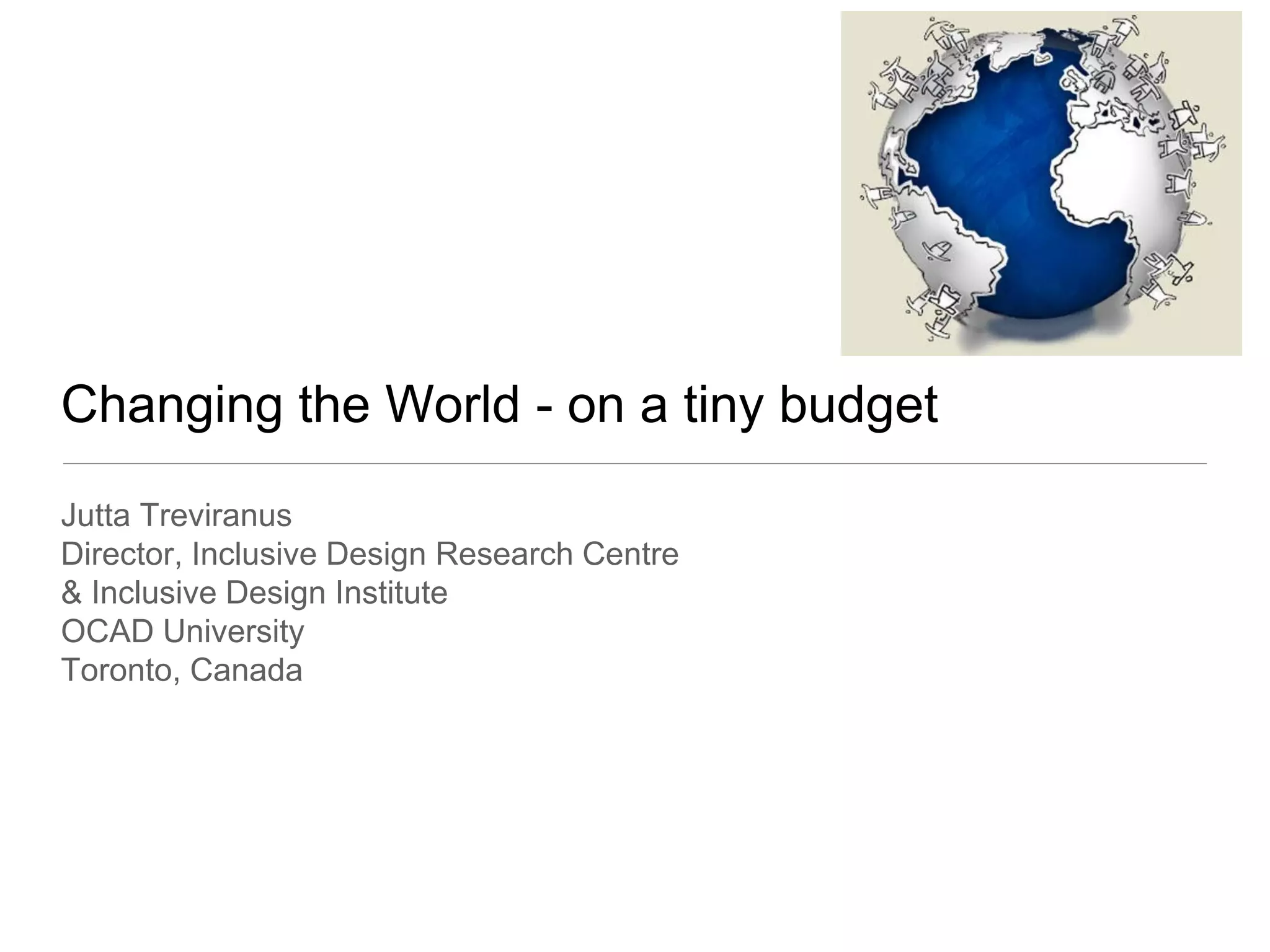
Changing the World - on a tiny budget
Jutta Treviranus
Director, Inclusive Design Research Centre
& Inclusive Design Institute
OCAD University
Toronto, Canada
The imperative....

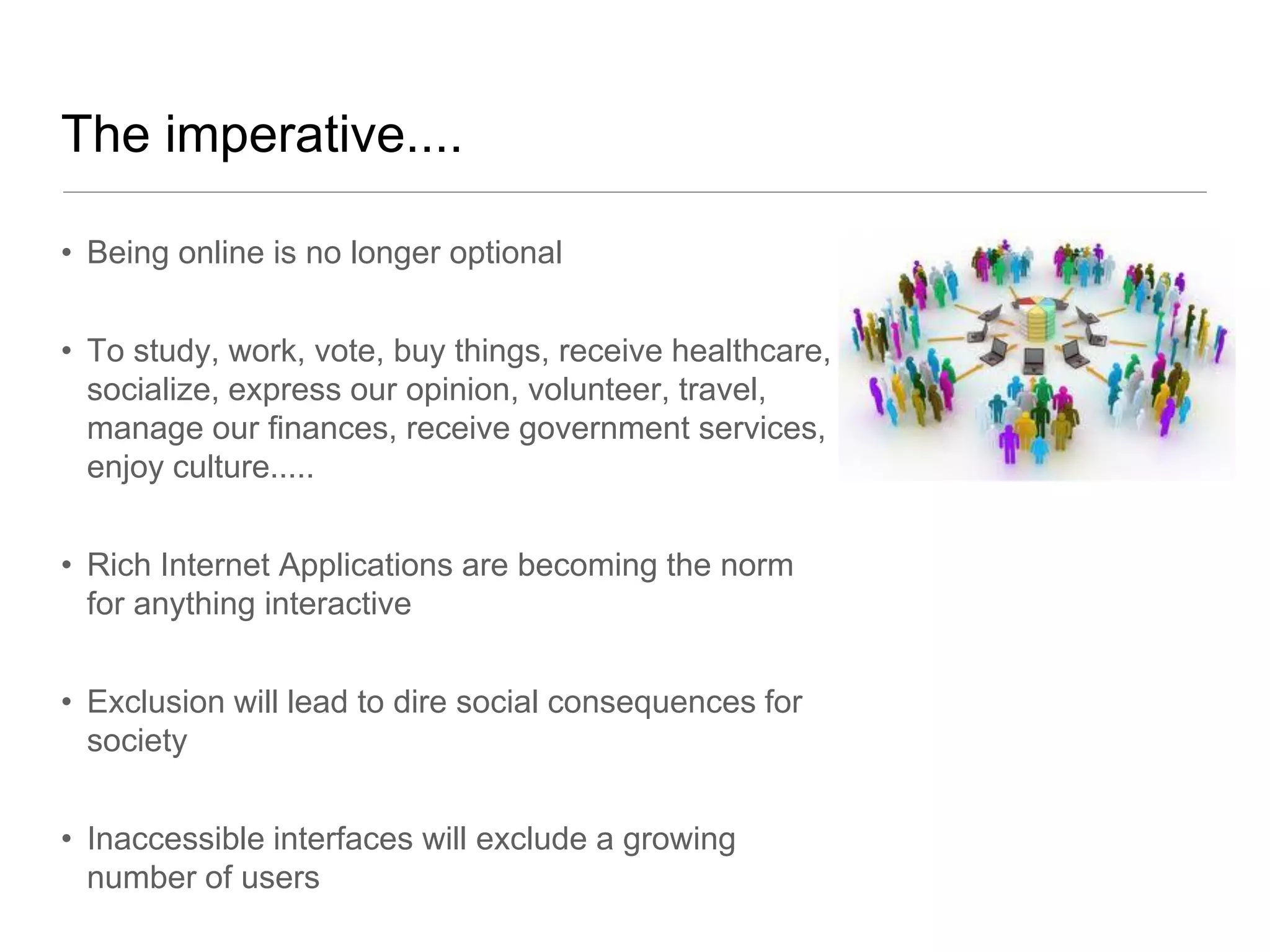
• Being online is no longer optional


• To study, work, vote, buy things, receive healthcare,
  socialize, express our opinion, volunteer, travel,
  manage our finances, receive government services,
  enjoy culture.....


• Rich Internet Applications are becoming the norm
  for anything interactive


• Exclusion will lead to dire social consequences for
  society


• Inaccessible interfaces will exclude a growing
  number of users
The seemingly insurmountable mission...

• a tiny global community


• very limited resources


• technically complex agenda that not yet fully defined


• addressing thousands of moving targets


• some in areas we are restricted from


• across a huge disjointed terrain
The very risky wager....

• RIAs are created by an ever-increasing number of developers


• Using a changing and growing set of tools


• Implementing ever-evolving designs


• We need to:


  • reach every developer


  • affect every development tool


  • respond to every advance in design
Even worse...

• Many developers use closed proprietary development environments


• Many create applications using mash-ups that draw components from
  disjointed sources


• Most know nothing about accessible design


• Some don’t care


• All have competing priorities
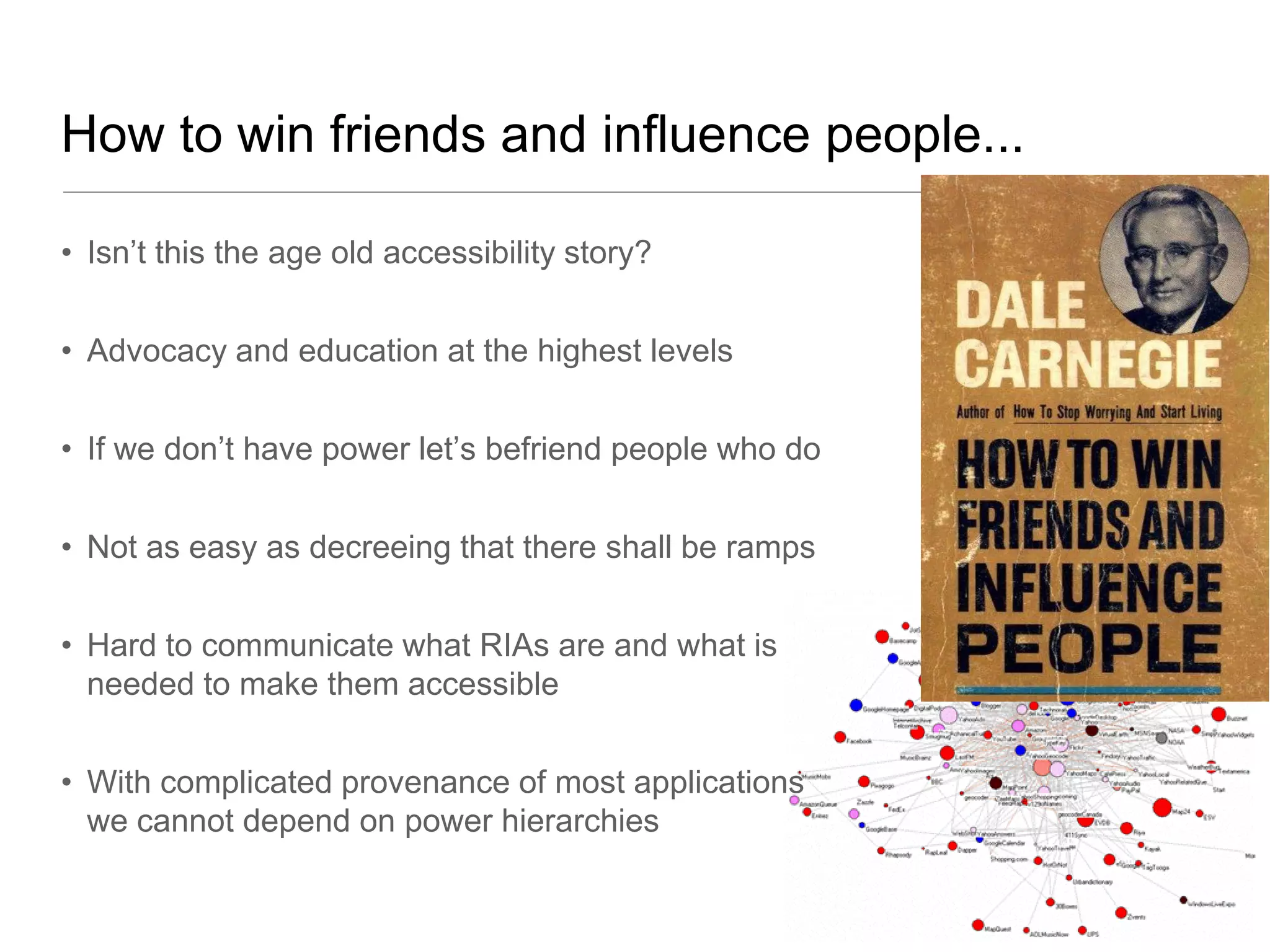
How to win friends and influence people...

• Isn’t this the age old accessibility story?


• Advocacy and education at the highest levels


• If we don’t have power let’s befriend people who do


• Not as easy as decreeing that there shall be ramps


• Hard to communicate what RIAs are and what is
  needed to make them accessible


• With complicated provenance of most applications
  we cannot depend on power hierarchies
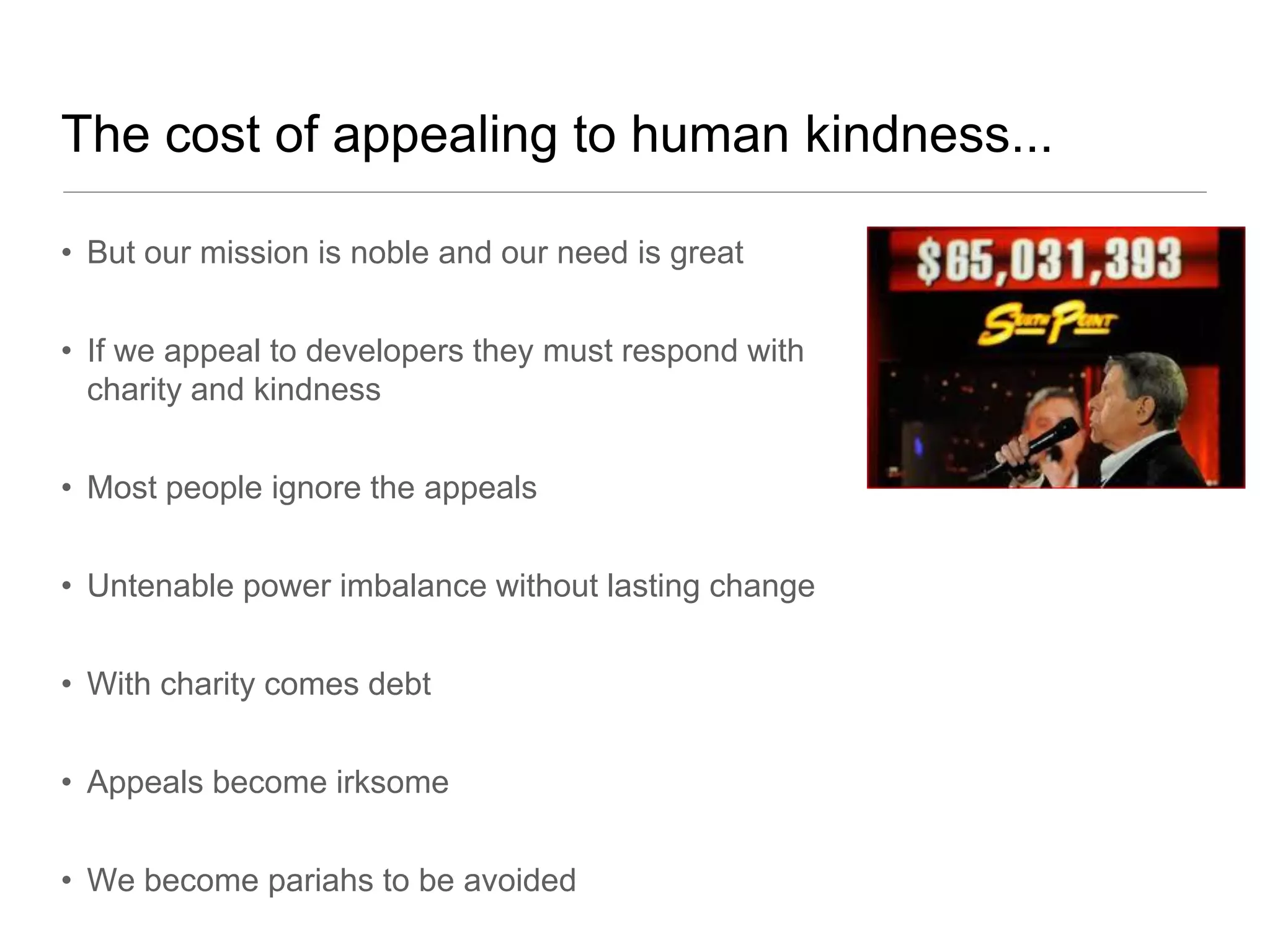
The cost of appealing to human kindness...

• But our mission is noble and our need is great


• If we appeal to developers they must respond with
  charity and kindness


• Most people ignore the appeals


• Untenable power imbalance without lasting change


• With charity comes debt


• Appeals become irksome


• We become pariahs to be avoided
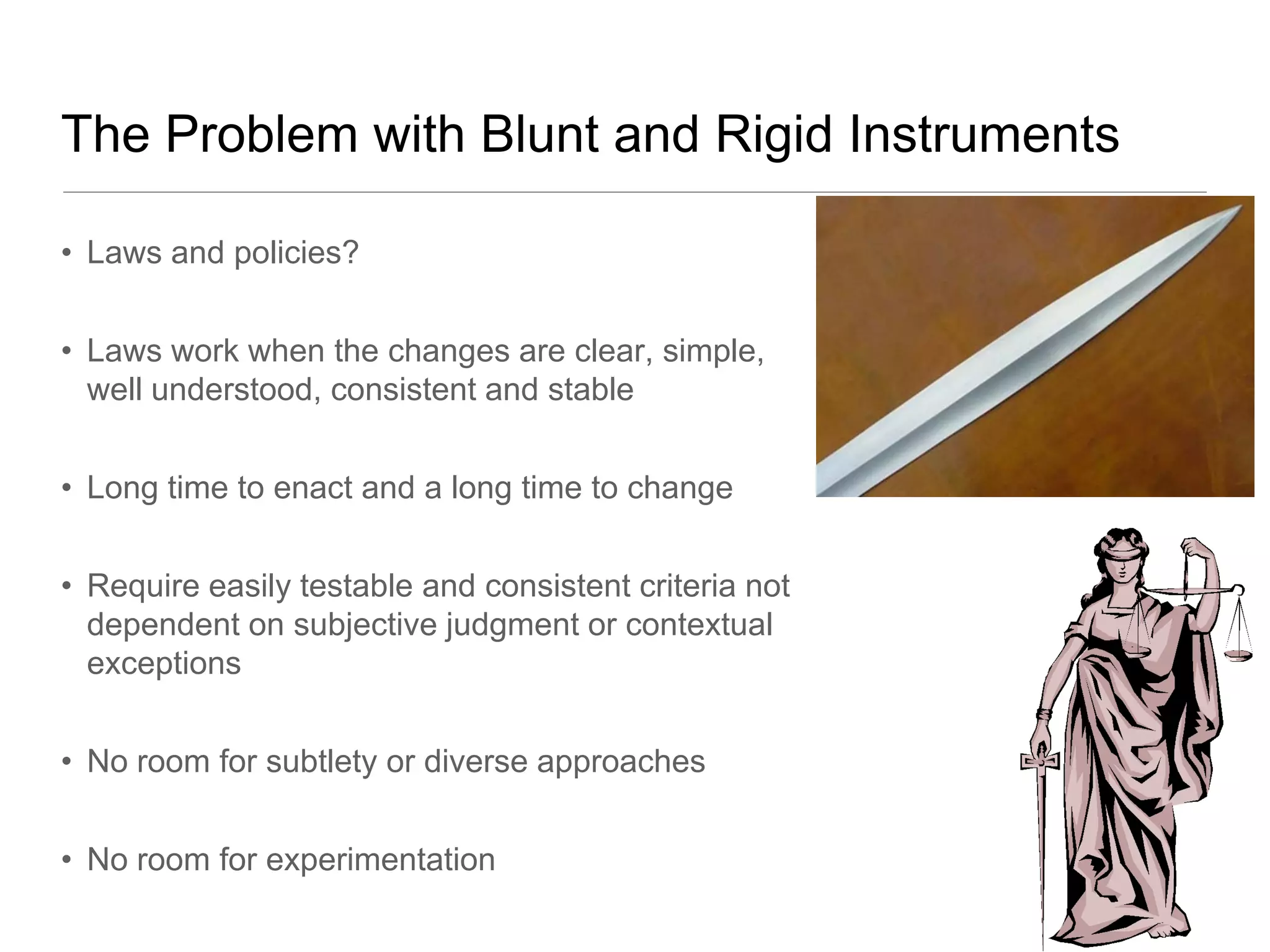
The Problem with Blunt and Rigid Instruments

• Laws and policies?


• Laws work when the changes are clear, simple,
  well understood, consistent and stable


• Long time to enact and a long time to change


• Require easily testable and consistent criteria not
  dependent on subjective judgment or contextual
  exceptions


• No room for subtlety or diverse approaches


• No room for experimentation
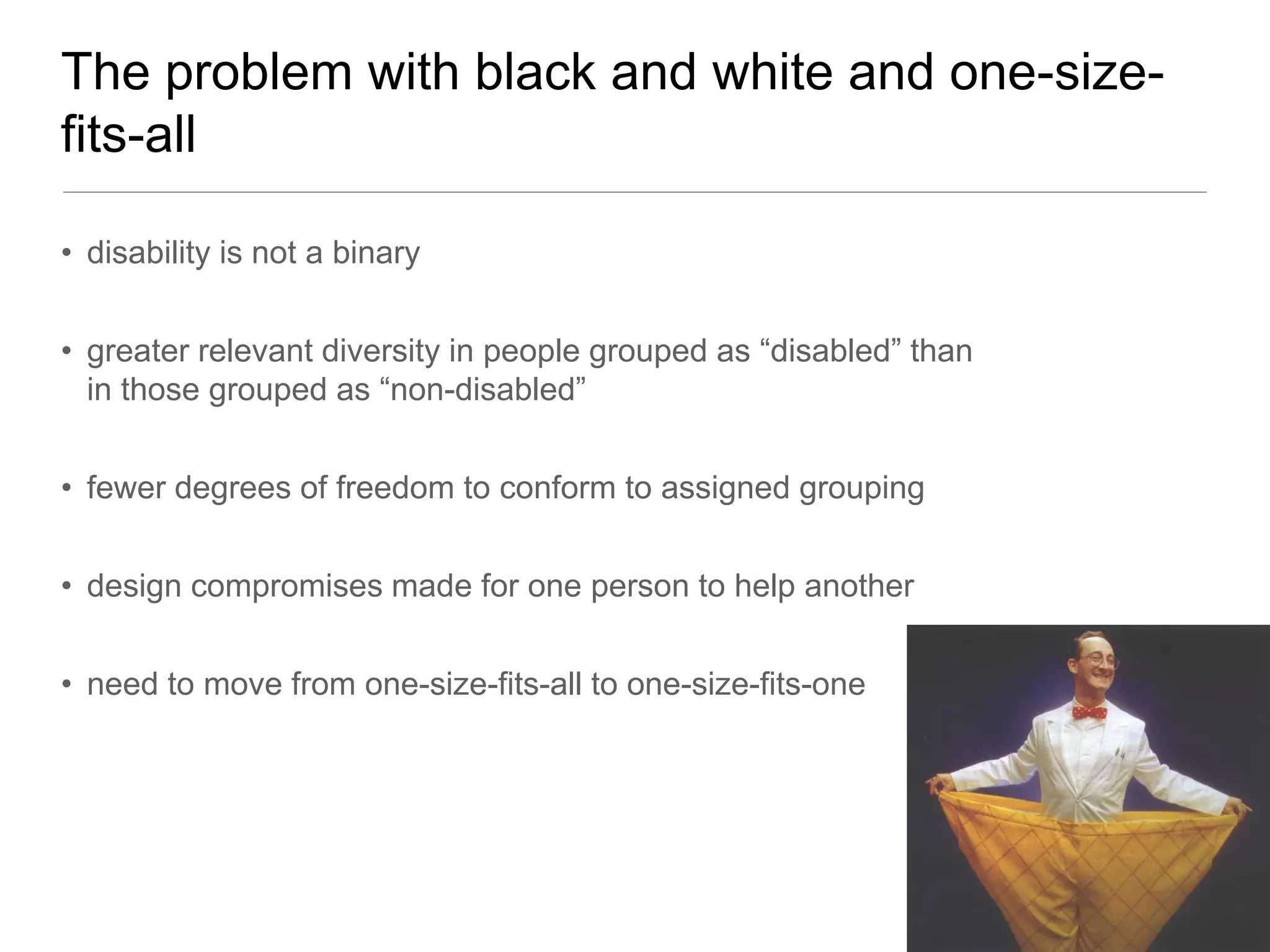
The problem with black and white and one-size-
fits-all

• disability is not a binary


• greater relevant diversity in people grouped as “disabled” than
  in those grouped as “non-disabled”


• fewer degrees of freedom to conform to assigned grouping


• design compromises made for one person to help another


• need to move from one-size-fits-all to one-size-fits-one
Why people don’t do what is good for them...

• Changes would benefit everyone


• Will help with device independence, mobile delivery, reuse,
  updating, maintenance and general usability


• Good for developers and providers of applications


• Developers should implement changes for their own good, the
  good of their employers and their customers


• Human nature to work toward own self interest


• But....


• brushing teeth, documentation....
Precarious Values

• No one would disagree that they are important but ...


   • when other matters compete for our attention they are the last to be
     considered


   • disproportionate vulnerability to procrastinations


   • frequently fall off the table all together
Cacophony is no way to communicate

• Must reach agreement on strategy


• Cannot give contradictory messages


• No room for competition or egos
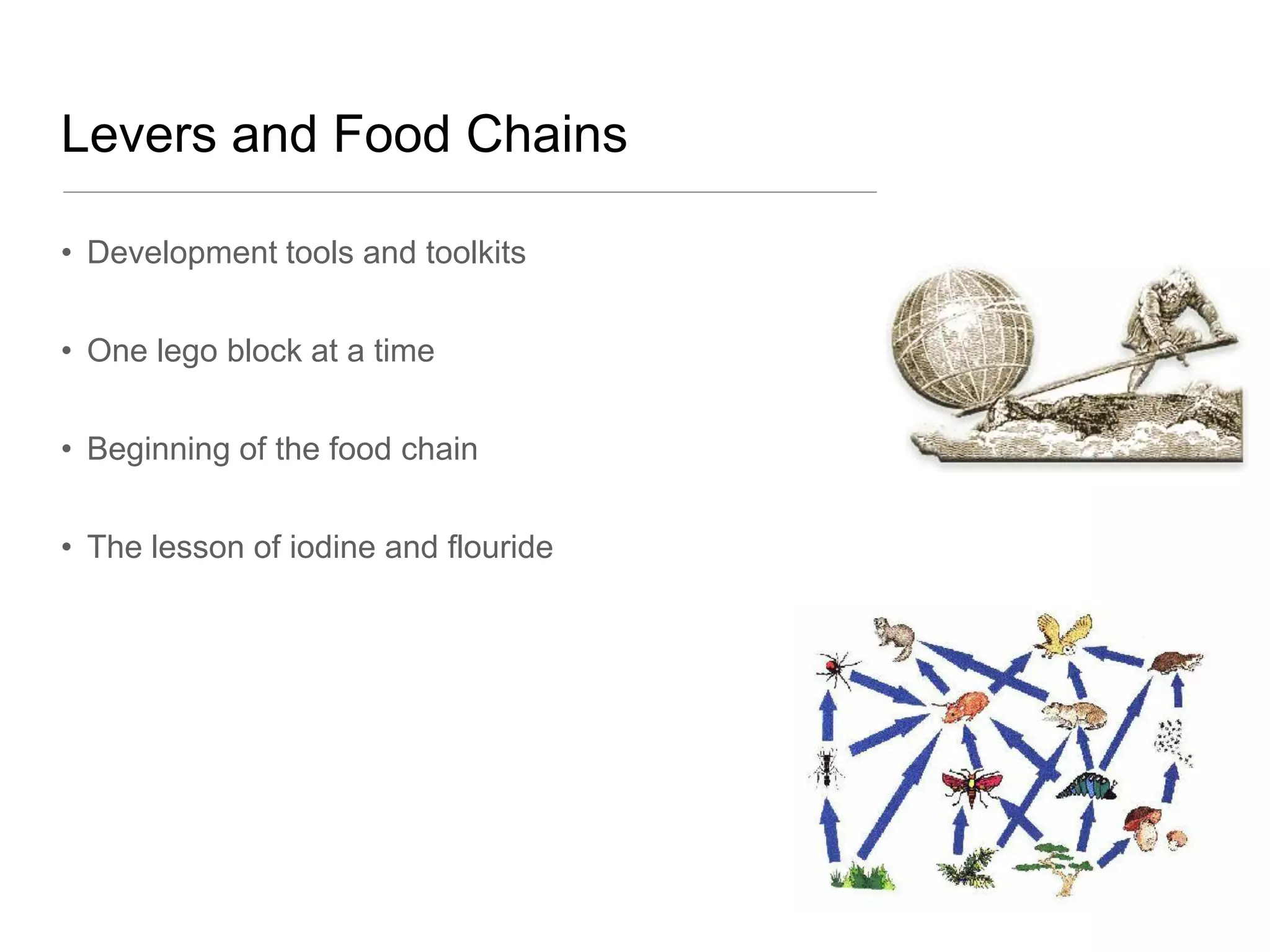
Levers and Food Chains

• Development tools and toolkits


• One lego block at a time


• Beginning of the food chain


• The lesson of iodine and flouride
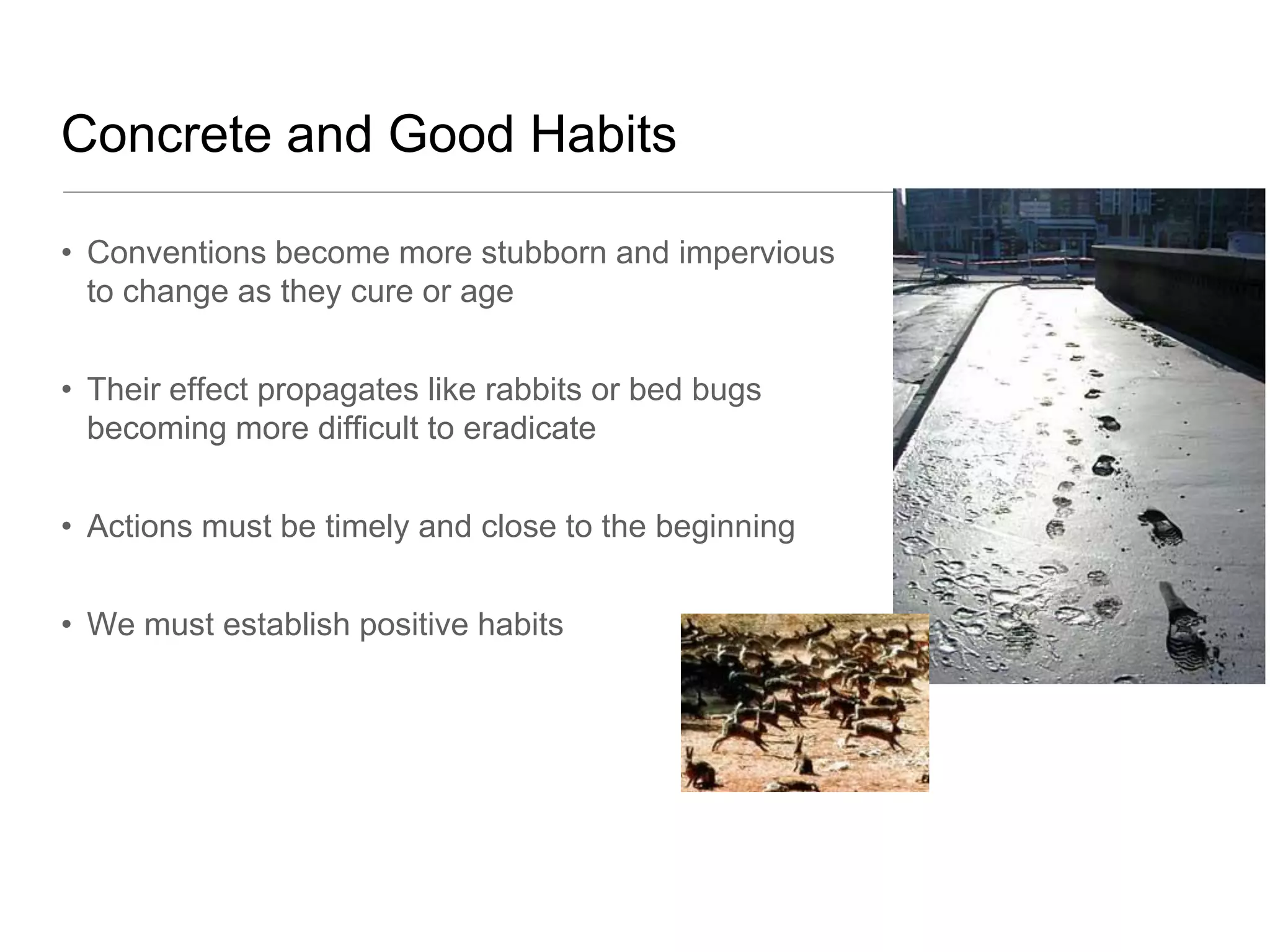
Concrete and Good Habits

• Conventions become more stubborn and impervious
  to change as they cure or age


• Their effect propagates like rabbits or bed bugs
  becoming more difficult to eradicate


• Actions must be timely and close to the beginning


• We must establish positive habits
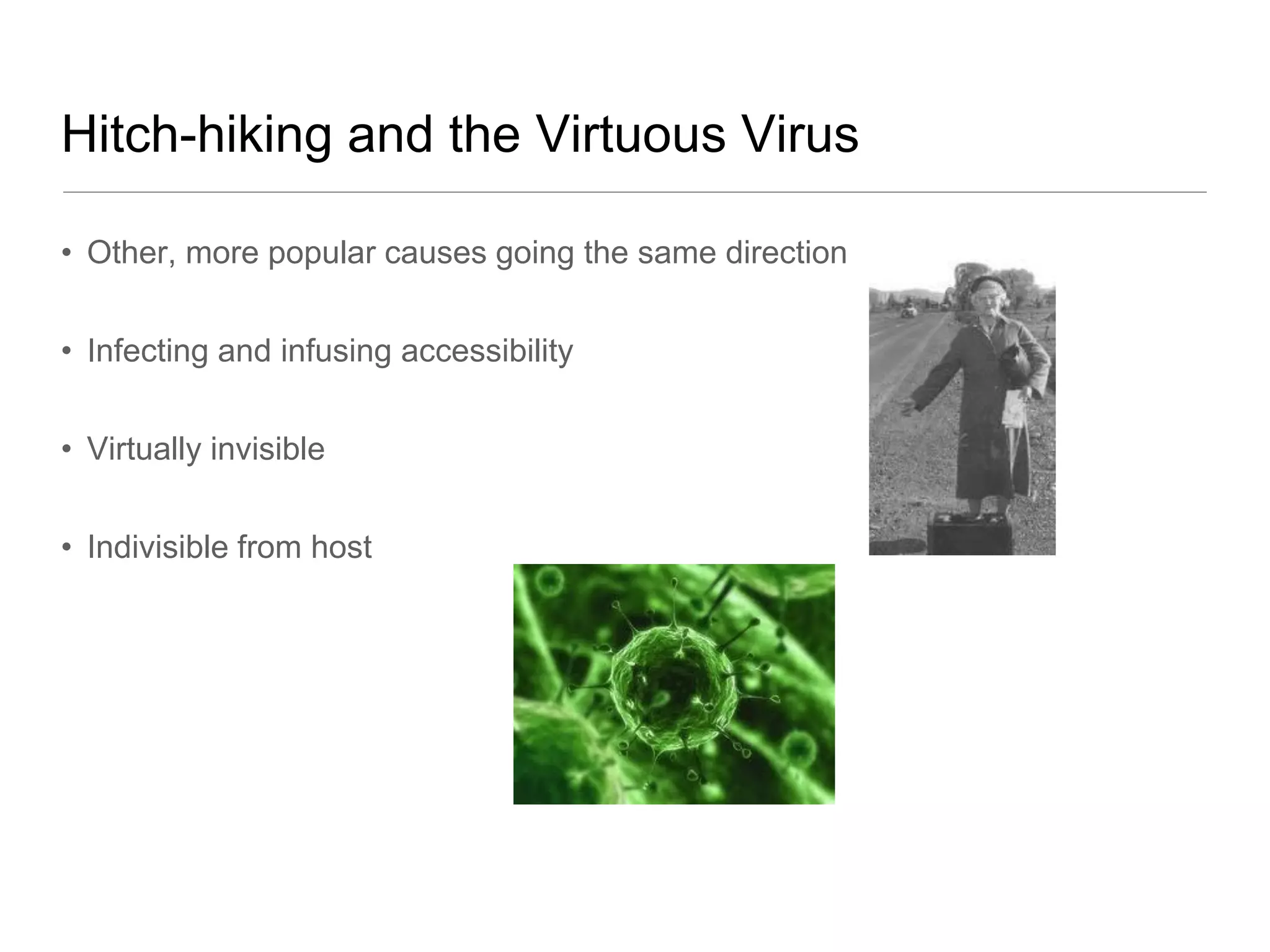
Hitch-hiking and the Virtuous Virus

• Other, more popular causes going the same direction


• Infecting and infusing accessibility


• Virtually invisible


• Indivisible from host
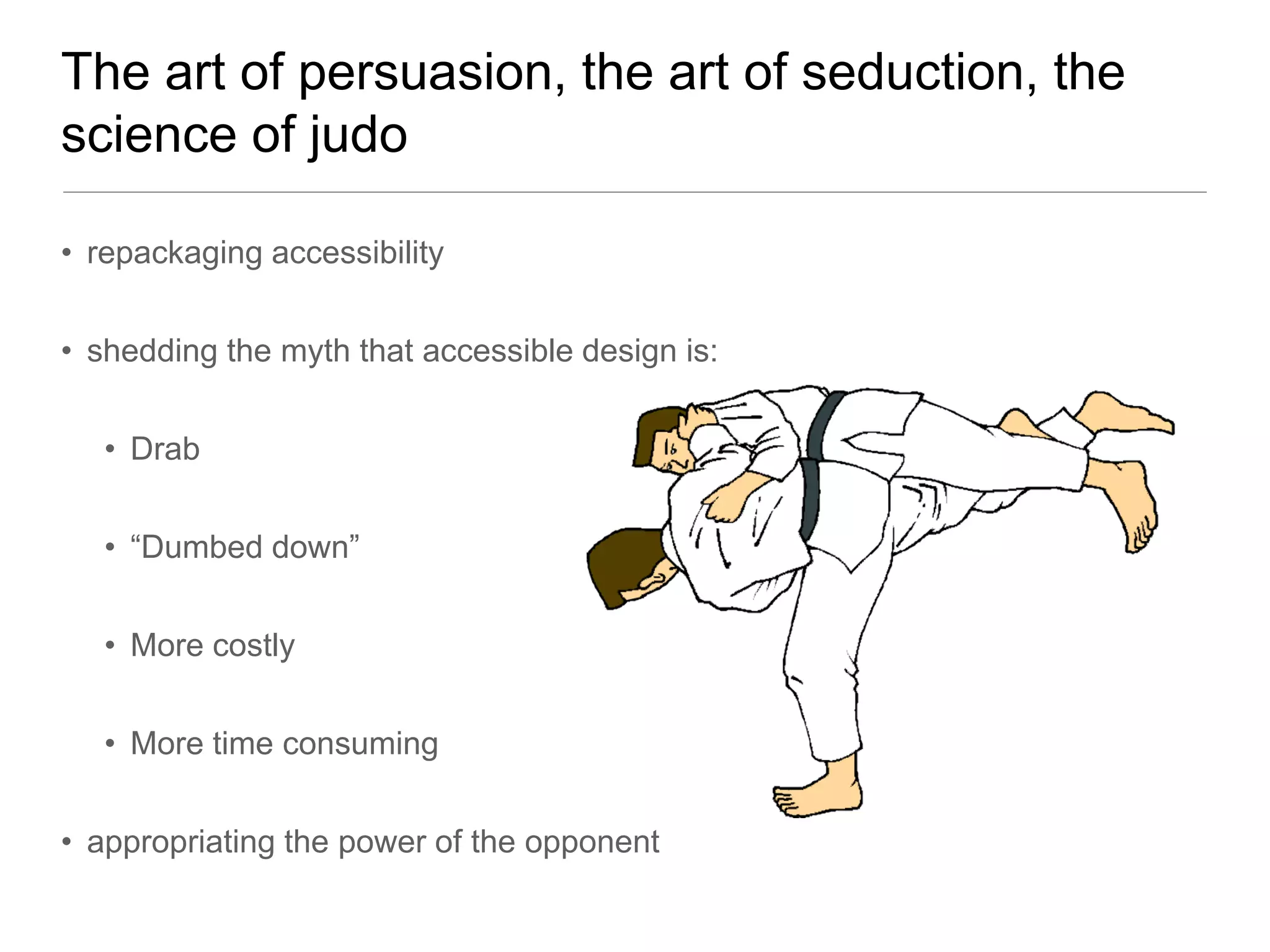
The art of persuasion, the art of seduction, the
science of judo

• repackaging accessibility


• shedding the myth that accessible design is:


   • Drab


   • “Dumbed down”


   • More costly


   • More time consuming


• appropriating the power of the opponent
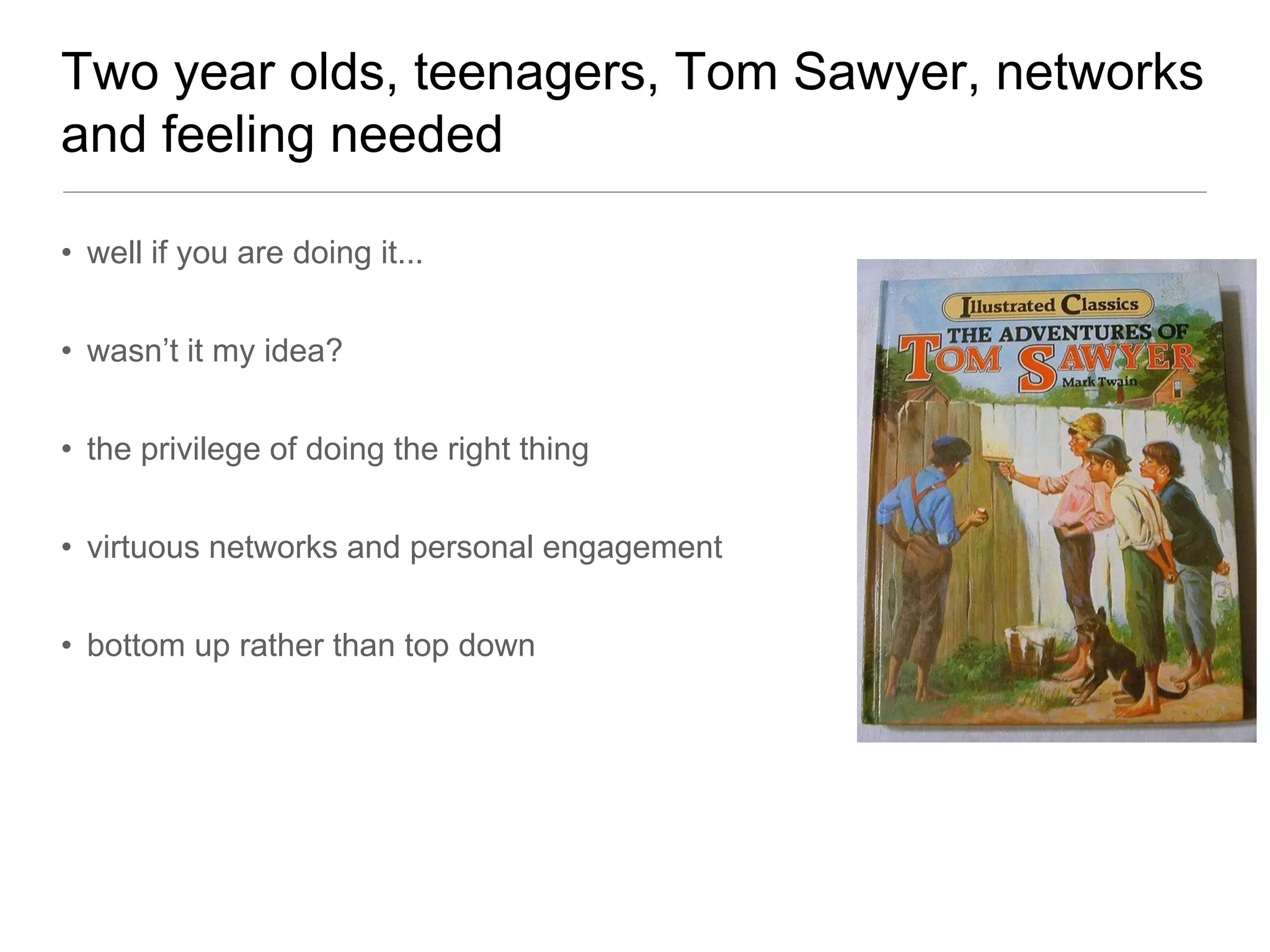
Two year olds, teenagers, Tom Sawyer, networks
and feeling needed

• well if you are doing it...


• wasn’t it my idea?


• the privilege of doing the right thing


• virtuous networks and personal engagement


• bottom up rather than top down
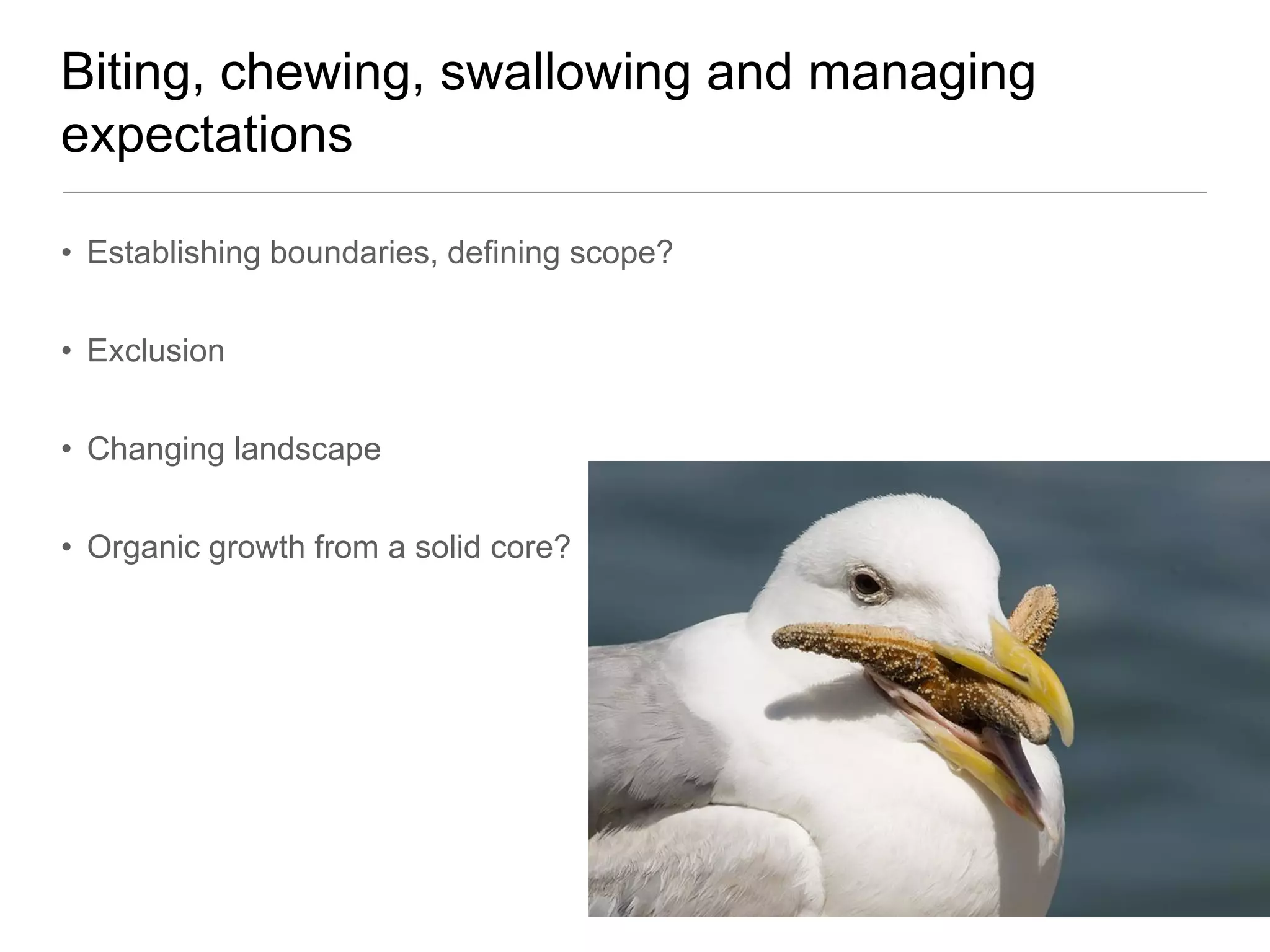
Biting, chewing, swallowing and managing
expectations

• Establishing boundaries, defining scope?


• Exclusion


• Changing landscape


• Organic growth from a solid core?
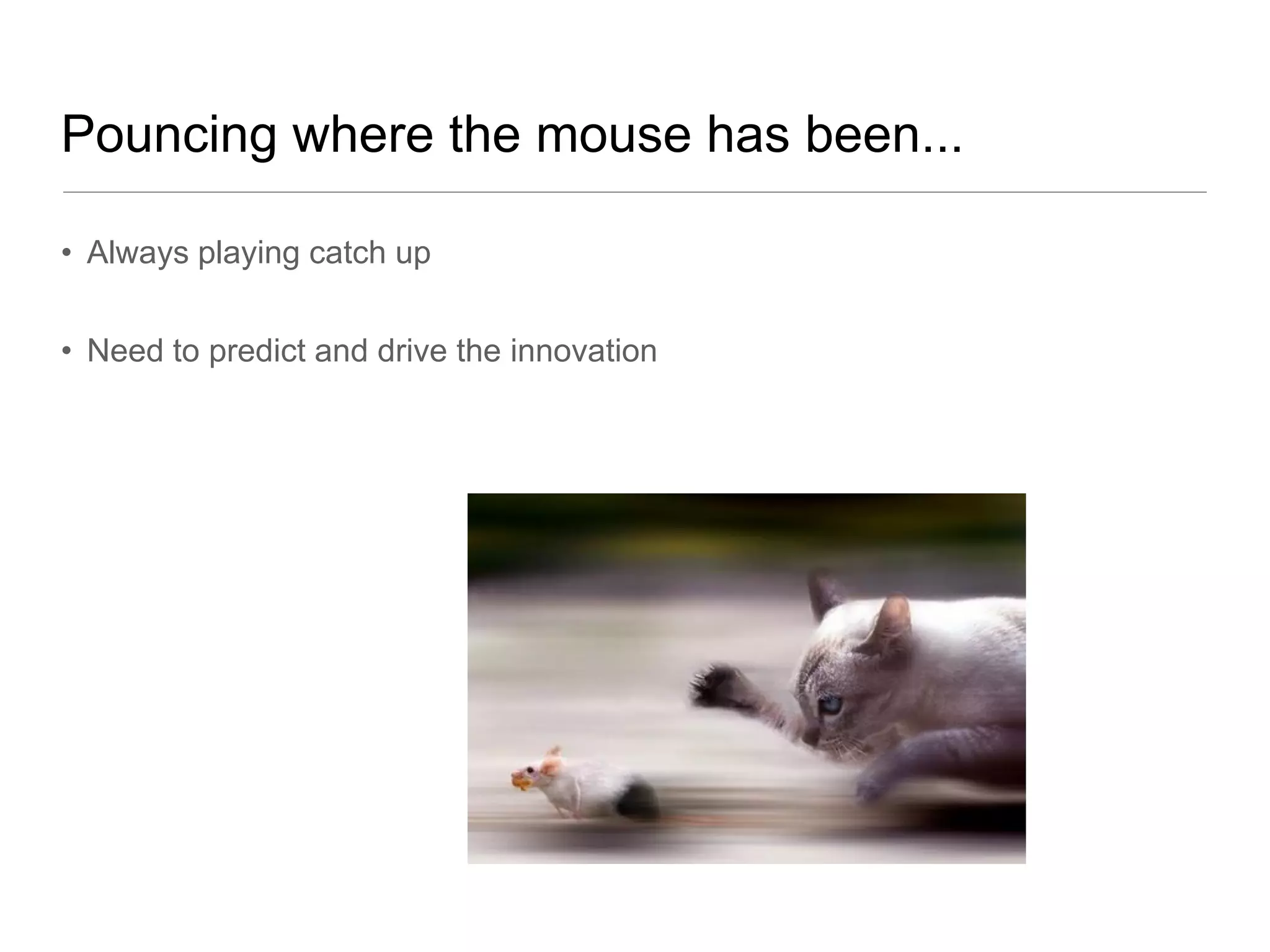
Pouncing where the mouse has been...

• Always playing catch up


• Need to predict and drive the innovation
Change the world?

• We don’t have the muscle


• We don’t have the numbers


• We don’t have the money


• We have the heart


• We have the community


• We must have the cohesion


• We must have the smarts

Changing the world – on a tiny budget.

  • 1.
    Changing the World- on a tiny budget Jutta Treviranus Director, Inclusive Design Research Centre & Inclusive Design Institute OCAD University Toronto, Canada
  • 2.
    The imperative.... • Beingonline is no longer optional • To study, work, vote, buy things, receive healthcare, socialize, express our opinion, volunteer, travel, manage our finances, receive government services, enjoy culture..... • Rich Internet Applications are becoming the norm for anything interactive • Exclusion will lead to dire social consequences for society • Inaccessible interfaces will exclude a growing number of users
  • 3.
    The seemingly insurmountablemission... • a tiny global community • very limited resources • technically complex agenda that not yet fully defined • addressing thousands of moving targets • some in areas we are restricted from • across a huge disjointed terrain
  • 4.
    The very riskywager.... • RIAs are created by an ever-increasing number of developers • Using a changing and growing set of tools • Implementing ever-evolving designs • We need to: • reach every developer • affect every development tool • respond to every advance in design
  • 5.
    Even worse... • Manydevelopers use closed proprietary development environments • Many create applications using mash-ups that draw components from disjointed sources • Most know nothing about accessible design • Some don’t care • All have competing priorities
  • 6.
    How to winfriends and influence people... • Isn’t this the age old accessibility story? • Advocacy and education at the highest levels • If we don’t have power let’s befriend people who do • Not as easy as decreeing that there shall be ramps • Hard to communicate what RIAs are and what is needed to make them accessible • With complicated provenance of most applications we cannot depend on power hierarchies
  • 7.
    The cost ofappealing to human kindness... • But our mission is noble and our need is great • If we appeal to developers they must respond with charity and kindness • Most people ignore the appeals • Untenable power imbalance without lasting change • With charity comes debt • Appeals become irksome • We become pariahs to be avoided
  • 8.
    The Problem withBlunt and Rigid Instruments • Laws and policies? • Laws work when the changes are clear, simple, well understood, consistent and stable • Long time to enact and a long time to change • Require easily testable and consistent criteria not dependent on subjective judgment or contextual exceptions • No room for subtlety or diverse approaches • No room for experimentation
  • 9.
    The problem withblack and white and one-size- fits-all • disability is not a binary • greater relevant diversity in people grouped as “disabled” than in those grouped as “non-disabled” • fewer degrees of freedom to conform to assigned grouping • design compromises made for one person to help another • need to move from one-size-fits-all to one-size-fits-one
  • 10.
    Why people don’tdo what is good for them... • Changes would benefit everyone • Will help with device independence, mobile delivery, reuse, updating, maintenance and general usability • Good for developers and providers of applications • Developers should implement changes for their own good, the good of their employers and their customers • Human nature to work toward own self interest • But.... • brushing teeth, documentation....
  • 11.
    Precarious Values • Noone would disagree that they are important but ... • when other matters compete for our attention they are the last to be considered • disproportionate vulnerability to procrastinations • frequently fall off the table all together
  • 12.
    Cacophony is noway to communicate • Must reach agreement on strategy • Cannot give contradictory messages • No room for competition or egos
  • 13.
    Levers and FoodChains • Development tools and toolkits • One lego block at a time • Beginning of the food chain • The lesson of iodine and flouride
  • 14.
    Concrete and GoodHabits • Conventions become more stubborn and impervious to change as they cure or age • Their effect propagates like rabbits or bed bugs becoming more difficult to eradicate • Actions must be timely and close to the beginning • We must establish positive habits
  • 15.
    Hitch-hiking and theVirtuous Virus • Other, more popular causes going the same direction • Infecting and infusing accessibility • Virtually invisible • Indivisible from host
  • 16.
    The art ofpersuasion, the art of seduction, the science of judo • repackaging accessibility • shedding the myth that accessible design is: • Drab • “Dumbed down” • More costly • More time consuming • appropriating the power of the opponent
  • 17.
    Two year olds,teenagers, Tom Sawyer, networks and feeling needed • well if you are doing it... • wasn’t it my idea? • the privilege of doing the right thing • virtuous networks and personal engagement • bottom up rather than top down
  • 18.
    Biting, chewing, swallowingand managing expectations • Establishing boundaries, defining scope? • Exclusion • Changing landscape • Organic growth from a solid core?
  • 19.
    Pouncing where themouse has been... • Always playing catch up • Need to predict and drive the innovation
  • 20.
    Change the world? •We don’t have the muscle • We don’t have the numbers • We don’t have the money • We have the heart • We have the community • We must have the cohesion • We must have the smarts