Binary Logic Systems
Chapter 06 – Binary Logic Systems
EMEC125
Why Binary Logic Systems?
• Documents need to be understood by people with very different
backgrounds. People who could need the documentation are:
• Management
• Process Designers
• Operations Staffs
• Maintenance Technicians
• Electrical and Control System Professionals
• Logic Device Programmers
• Supervisory Control and Data Acquisition (SCADA) System Configurators
Binary Logic Diagrams
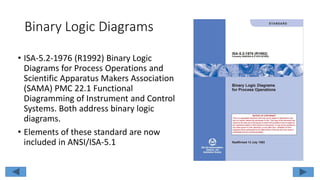
• ISA-5.2-1976 (R1992) Binary Logic
Diagrams for Process Operations and
Scientific Apparatus Makers Association
(SAMA) PMC 22.1 Functional
Diagramming of Instrument and Control
Systems. Both address binary logic
diagrams.
• Elements of these standard are now
included in ANSI/ISA-5.1
Terms You Should Know Before Proceeding
• Discrete Control
• “On/off control. One of the two output values is equal to zero.” (International
Society of Automation, 2003, p. 150)
• A better definition would be: A signal that is either fully ON or fully OFF with
no values in-between.
• Binary
• “1. A term applied to a signal or device that has only two discrete positions or
states. When used in its simplest form, as in “binary signal” (as opposed to
“analog signal”), the term denotes an “on-off” or “high-low” state, that is, one
that does not represent continuously varying quantities. [ANSI-ISA-5.1-1984
(R1992)].” (International Society of Automation, 2003, p. 49).
Terms You Should Know Before Proceeding
• Analog
• “1. Having the form of continuously variable physical quantities, as in data.
Contrast with digital. 2. The representation of numerical quantities by means
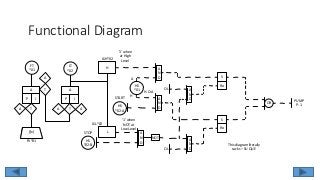
of physical variables, such as translation, rotation, voltage or resistance. 3. A
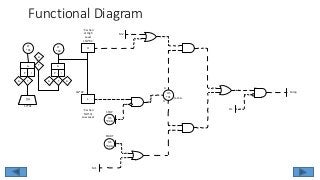
waveform is analog if it is continuous and varies over an arbitrary range.
Contrast with digital.” (International Society of Automation, 2003, p. 21).
• Another way to define Analog is: A continually varying signal that can be fully
ON, fully OFF or any level in between. (International Society of Automation,
2003, p. 21).
Terms You Should Know Before Proceeding
• Process Variable
• “1. Any variable property of a process. The term process variable is used in
the relevant standard to apply to all variables other than instrument signals
[ANSI/ISA-5.1-1984 (R1992)]. 2. In the treatment of material, any
characteristic or measurable attribute whose value changes with changes in
prevailing conditions. Common variables are flow, level, pressure and
temperature.” (International Society of Automation, 2003, p. 392).
• Control Variable (Controlled Variable)
• “1. The variable that the control system attempts to keep at the set point
value. The set point may be constant or variable. 2. The part of a process to
be controlled (flow, level, temperature, pressure, etc.).” (International Society
of Automation, 2003, p. 109).
Combining Analog and On-Off Control
• Combining analog and on/off control schemes can be defined by
using:
• Process control descriptions
• Instrument diagrams
• Functional diagrams
• Electrical schematic diagrams
• These documents can be used independently or together depending
upon the phase of design, construction or operation.
Process Control Descriptions
• The more complex the process, the more detail that is required in a
Process Control Description. The following are areas to be included,
but not limited to, in a Process Description:
• Process Description
• Title of the system
• General description
• Form
• Control Description
• More specific data on how the system will perform
• Loop-by-loop descriptions
• Format
The Binary Concept – Multiple Input
• This two-state binary concept, applied to gates, can be the basis for
making decisions in ladder logic.
• The gate is a device that has one or more inputs and one output.
• The gate will perform a logical decision based on the status of its
inputs and produce a result at its one output.
Using Gates to Make Decisions
• The logical AND gate or function.
• All inputs must be true to obtain an output.
AND
Gate
Air Conditioner
Switch
Blower Switch
Cold Air
The automotive air conditioning to work,
the Air Conditioner must be turned on and
the Blower must be turned on.
Using Gates to Make Decisions
• The logical OR gate or function.
• Any one input must be true to obtain an output.
OR
Gate
Passenger
Door Switch
Driver Door
Switch
Dome Light
The automotive dome light will be on when
the passenger door OR the driver door or
both door switch(s) is activated.
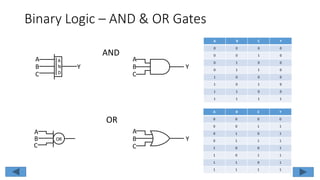
The AND Function
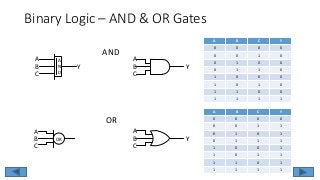
• The AND function has two or more
inputs and one output. The input
signals are labeled A, B, C, etc. and
the output signal is labeled Y.
• A binary 1 represents the presence
of a voltage (signal). A binary 0
represents the absence of voltage
(no signal, 0 V or ground).
• Logic functions can be represented
using a truth table. The truth table
lists all possible input status
conditions with the corresponding
output status for each set of input
condition.
AND
Gate
A
B
YInputs
Output
Two input AND gate
An AND Gate Application
• An AND gate functions like switches in series.
• The light will only be ON when switch A AND switch B are both
closed.
AND
Gate
PB1 = 1
LT1 ON
PB2 = 1
The OR Function
• The OR function has two or more
inputs and one output. The input
signals are labeled A, B, C, etc. and
the output signal is labeled Y.
• A binary 1 represents the presence
of a voltage (signal). A binary 0
represents the absence of voltage
(no signal, 0 V or ground).
• Logic functions can be represented
using a truth table. The truth table
lists all possible input status
conditions with the corresponding
output status for each set of input
condition.
OR
Gate
A
B
YInputs
Output
Two input OR gate
An OR Gate Application
• An OR gate functions like switches in parallel.
• The light will be ON when either or both switch A OR switch B are
closed.
OR
Gate
PB3 = 1
PB4 = 0
LT2 ON
The NOT Function (Inverter)
• The NOT function gate, also
called an inverter, has one input
and one output.
• The NOT gate functions like its
name states, it inverts the input
signal status.
• If the input is a 1 the output is a
0.
• If the input is a 0, the output is a
1.
Input Input
A A
(not A)
A NOT Gate Application
• The NOT gate functions like a normally closed switch.
• The light will be ON if the switch is NOT being activated and OFF
when the switch IS being activated.
Input Input
PB5 PB5
(not PB5)
The NAND Function
• The NAND gate functions like an
AND gate with an INVERTER on
its output.
• The only time that the output of
a NAND gate is a 0 is when all
the inputs are a binary 1.
NAND
Gate
PB6
PB7
Light
Two input NAND gate
The NOR Function
• The NOR gate functions like an
OR gate with an INVERTER on its
output.
• The only time that the output of
a NOR gate is a 1 is when all the
inputs are a binary 0.
NOR
Gate
PB8
PB9
LT5
Two input NOR gate
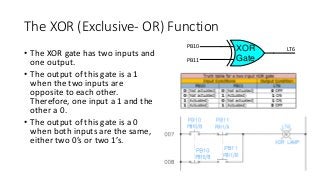
The XOR (Exclusive- OR) Function
• The XOR gate has two inputs and
one output.
• The output of this gate is a 1
when the two inputs are
opposite to each other.
Therefore, one input a 1 and the
other a 0.
• The output of this gate is a 0
when both inputs are the same,
either two 0’s or two 1’s.
XOR
Gate
PB10
PB11
LT6
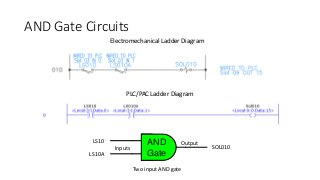
AND Gate Circuits
AND
Gate
LS10
LS10A
SOL010Inputs
Output
Two input AND gate
Electromechanical Ladder Diagram
PLC/PAC Ladder Diagram
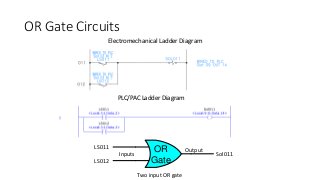
OR Gate Circuits
OR
Gate
LS011
LS012
Sol011Inputs
Output
Two input OR gate
Electromechanical Ladder Diagram
PLC/PAC Ladder Diagram
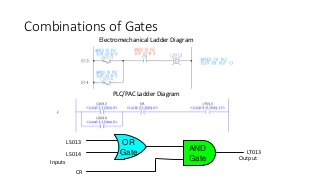
Combinations of Gates
OR
Gate AND
Gate
LS013
LS014 LT013
Inputs
Output
CR
Electromechanical Ladder Diagram
PLC/PAC Ladder Diagram
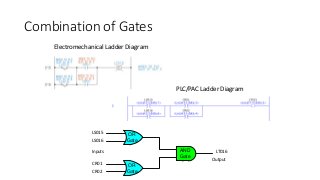
Combination of Gates
AND
Gate
OR
Gate
OR
Gate
LS015
LS016
LT016Inputs
Output
CR01
CR02
Electromechanical Ladder Diagram
PLC/PAC Ladder Diagram
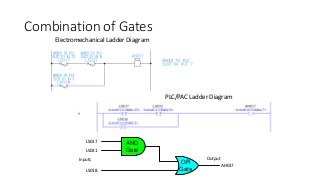
Combination of Gates
AND
Gate
OR
Gate
LS017
LS031
AH017
Inputs Output
LS018
Electromechanical Ladder Diagram
PLC/PAC Ladder Diagram
Combination of Gates
AND
Gate
OR
Gate
AND
Gate
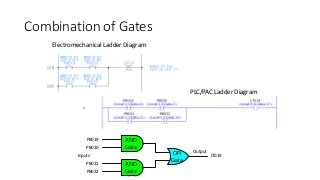
PB019
PB020
LT019Inputs
Output
PB021
PB022
Electromechanical Ladder Diagram
PLC/PAC Ladder Diagram
Combination of Gates
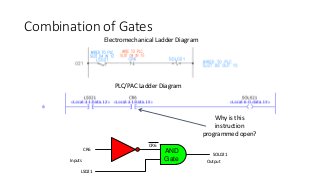
Why is this
instruction
programmed open?
AND
Gate
CR6
LS021
SOL021
Inputs Output
CR6
Electromechanical Ladder Diagram
PLC/PAC Ladder Diagram
Combination of Gates
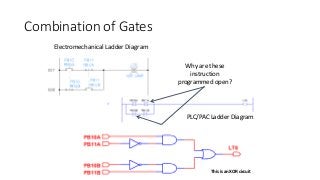
Why are these
instruction
programmed open?
Electromechanical Ladder Diagram
PLC/PAC Ladder Diagram
This is an XOR circuit
Combination of Gates
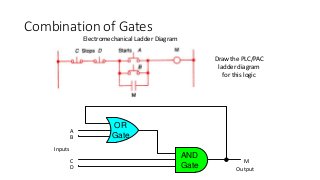
AND
Gate
OR
Gate
A
B
M
Inputs
Output
C
D
Electromechanical Ladder Diagram
Draw the PLC/PAC
ladder diagram
for this logic
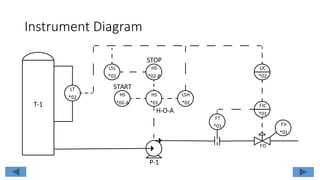
Control Description (From ANSI/ISA-5.1)
• Control system design for:
• Small volumes for long and short periods should allow tank to fill to a high level to
automatically start the pump and then to stop the pump at a low level.
• Large volumes for long periods should allow the pump t run continuously and
maintain a fixed level with a level-to-flow cascade control loop.
• Pump (run, or operation) control is selected by a three-position Hand-Off-
Auto (H-O-A) selector switch:
• Selector switch is in “HAND” position.
• Selector switch is in “AUTO” position.
• Pump should be stopped at any time:
• Automatically if low level is exceeded.
• By operation the stop pushbutton.
• Switching the H-O-A selector to “OFF” position.
ISA 5.1 (2009).pdf
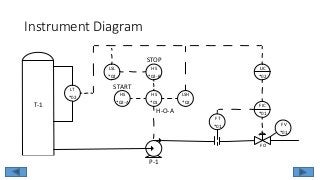
Instrument Diagram
T-1
LT
*02
LSL
*02
HS
*02-B
HS
*01
HS
*02-A
LSH
*02
FT
*01
P-1
FO
FIC
*01
LIC
*02
FV
*01
STOP
START
H-O-A
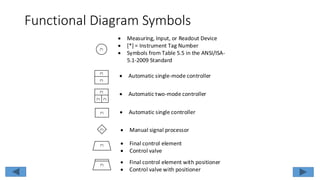
Functional Diagram Symbols
(*)
 Measuring, Input, or Readout Device
 [*] = Instrument Tag Number
 Symbols from Table 5.5 in the ANSI/ISA-
5.1-2009 Standard
(*)
(*)
 Automatic single-mode controller
(*)
(*) (*)
 Automatic two-mode controller
(*)  Automatic single controller
(*)  Manual signal processor
(*)  Final control element
 Control valve
(*)
 Final control element with positioner
 Control valve with positioner
Binary Logic – AND & OR Gates
A
N
D
OR
A
B
C
A
B
C
Y Y
A
B
A
B Y
AND
OR
A B C Y
0 0 0 0
0 0 1 0
0 1 0 0
0 1 1 0
1 0 0 0
1 0 1 0
1 1 0 0
1 1 1 1
A B C Y
0 0 0 0
0 0 1 1
0 1 0 1
0 1 1 1
1 0 0 1
1 0 1 1
1 1 0 1
1 1 1 1
A
N
D
OR
A
B
C
A
B
C
Y Y
A
B
C
A
B
C
Y
Binary Logic – NOT & Memory
A
A
B
C
NOT A A A
S
R D
NOT
Memory
A
A
B
C
NOT A A A
S
R D
A A
0 1
1 0
A B C D
1 0 0 0 1
2 1 0 1 0
3 0 0 1 0
4 0 1 0 1
5 0 0 0 1
6 1 1 1 0
7 0 0 1 0
8 1 1 0 1
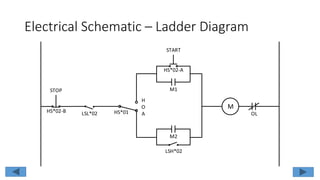
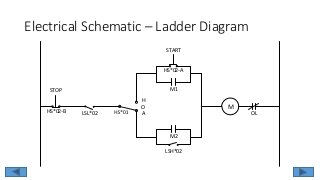
Electrical Schematic – Ladder Diagram
M1
M2
LSH*02
HS*02-A
HS*02-B LSL*02
M
OL
STOP
START
H
O
A
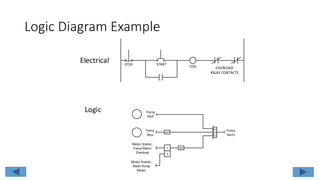
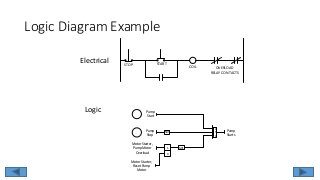
Logic Diagram Example
STARTSTOP COIL OVERLOAD
RELAY CONTACTS
Pump
Stop
Motor Starter,
Pump Motor
Overload
Motor Starter,
Reset Pump
Motor
NOT
S
R
NOT
A
N
D
Pump
Start
Pump
Starts
Electrical
Logic
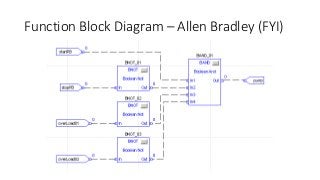
Function Block Diagram – Allen Bradley (FYI)
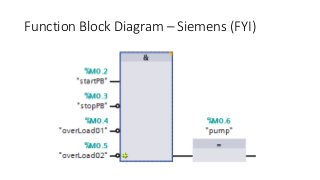
Function Block Diagram – Siemens (FYI)
Δ
P I
Δ
P I
TA TA A
T
A
(*)f(x)
FT
*01
LT
*02
FV*01
H
LSH*02
L
LSL*02
A
N
D
A
N
D
HS
*02-B
STOP
NOT
A
N
DHS
*02-A
HS
*01 H-O-A
A
N
D
A
N
D
OR
S
Ro
S
Ro
OL
OL
PUMP
P-1
START
H
A
‘1’ when
NOT at
Low Level
‘1’ when
at High
Level
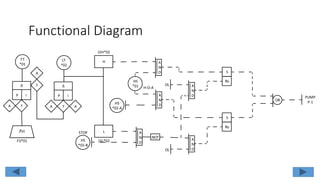
This diagram literally
sucks – SU QU E
Functional Diagram
Δ
P I
Δ
P I
TA TA A
T
A
(*)f(x)
FT
*01
LT
*02
FV*01
H
LSH*02
L
LSL*02
‘1’ when
NOT at
Low Level
‘1’ when
at High
Level
HS
*02-B
STOP
HS
*02-A
START
HS
*01 H-O-A
H
A
M2
M1
OL
Pump
Functional Diagram
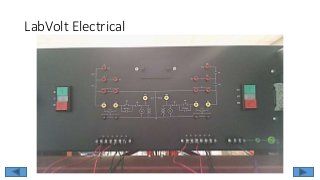
LabVolt Electrical
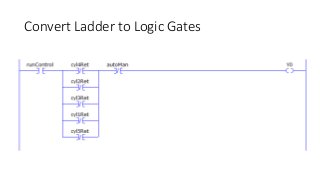
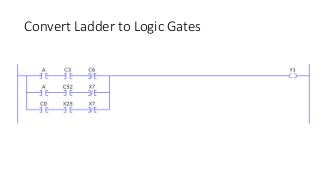
Convert Ladder to Logic Gates
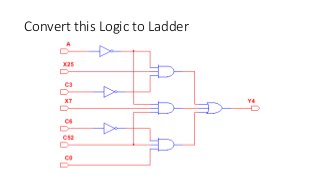
Convert this Logic to Ladder
Summary
• This chapter discussed discrete control (on/off control) in a process
plant.
• Logic diagrams will aid in the understanding of how Safety
Instrumented Systems (SIS) work.
• Functional diagram symbols were discussed along with an example of
how they are used.
• Basic logic gates have been discussed, along with the symbols used to
represent them.
References
CEmark.com & European.Authorized-Representative.eu. (1996-2015). What is CE Marking (CE Mark)?
Retrieved June 17, 2015, from Welkang Tech Consulting: http://www.ce-marking.org/what-is-ce-
marking.html
International Society of Automation. (2003). Automation, Systems, and Instrumentation Dictonary (4th ed.).
Research Triangle Park: International Society of Automation. Retrieved from
http://app.knovel.com/hotlink/toc/id:kpASIDE005/automation-systems-instrumentation/automation-
systems-instrumentation
International Society of Automation. (2009, September 18). ANSI/ISA-5.1-2009 Instrumentation Symbols and
Identification. American National Standard. Research Triangle Park, North Carolina: International Society
of Automation.
Kirk, W. F., Weedon, A. T., & Kirk, P. (2014). Instrumentation and Process Control (6th ed.). Orland Park,
Illinois: American Technical Publishers.
Lipták, G. B. (Ed.). (1995). Process Measurement and Analysis (3rd ed.). Radnor, Pennsylvania: Chilton Book
Company.
McAvinew, T., & Mulley, R. (2004). Control System Documentation Applying Symbols and Identification (2nd
ed.). Research Triangle Park, North Carolina, USA: International Society of Automation.
Meier, F. A., & Meier, A. C. (2011). Instrumentation and Control Systems Documentation (2nd ed.). Research
Triangle Park, North Carolina: International Society of Automation.
Thomas, E. C. (2015). Introduction to Process Technology (4th ed.). Boston, MA: Cengage Learning.

06 chapter06 binary_logic_systems_Rev02

  • 1.
    Binary Logic Systems Chapter06 – Binary Logic Systems EMEC125
  • 2.
    Why Binary LogicSystems? • Documents need to be understood by people with very different backgrounds. People who could need the documentation are: • Management • Process Designers • Operations Staffs • Maintenance Technicians • Electrical and Control System Professionals • Logic Device Programmers • Supervisory Control and Data Acquisition (SCADA) System Configurators
  • 3.
    Binary Logic Diagrams •ISA-5.2-1976 (R1992) Binary Logic Diagrams for Process Operations and Scientific Apparatus Makers Association (SAMA) PMC 22.1 Functional Diagramming of Instrument and Control Systems. Both address binary logic diagrams. • Elements of these standard are now included in ANSI/ISA-5.1
  • 4.
    Terms You ShouldKnow Before Proceeding • Discrete Control • “On/off control. One of the two output values is equal to zero.” (International Society of Automation, 2003, p. 150) • A better definition would be: A signal that is either fully ON or fully OFF with no values in-between. • Binary • “1. A term applied to a signal or device that has only two discrete positions or states. When used in its simplest form, as in “binary signal” (as opposed to “analog signal”), the term denotes an “on-off” or “high-low” state, that is, one that does not represent continuously varying quantities. [ANSI-ISA-5.1-1984 (R1992)].” (International Society of Automation, 2003, p. 49).
  • 5.
    Terms You ShouldKnow Before Proceeding • Analog • “1. Having the form of continuously variable physical quantities, as in data. Contrast with digital. 2. The representation of numerical quantities by means of physical variables, such as translation, rotation, voltage or resistance. 3. A waveform is analog if it is continuous and varies over an arbitrary range. Contrast with digital.” (International Society of Automation, 2003, p. 21). • Another way to define Analog is: A continually varying signal that can be fully ON, fully OFF or any level in between. (International Society of Automation, 2003, p. 21).
  • 6.
    Terms You ShouldKnow Before Proceeding • Process Variable • “1. Any variable property of a process. The term process variable is used in the relevant standard to apply to all variables other than instrument signals [ANSI/ISA-5.1-1984 (R1992)]. 2. In the treatment of material, any characteristic or measurable attribute whose value changes with changes in prevailing conditions. Common variables are flow, level, pressure and temperature.” (International Society of Automation, 2003, p. 392). • Control Variable (Controlled Variable) • “1. The variable that the control system attempts to keep at the set point value. The set point may be constant or variable. 2. The part of a process to be controlled (flow, level, temperature, pressure, etc.).” (International Society of Automation, 2003, p. 109).
  • 7.
    Combining Analog andOn-Off Control • Combining analog and on/off control schemes can be defined by using: • Process control descriptions • Instrument diagrams • Functional diagrams • Electrical schematic diagrams • These documents can be used independently or together depending upon the phase of design, construction or operation.
  • 8.
    Process Control Descriptions •The more complex the process, the more detail that is required in a Process Control Description. The following are areas to be included, but not limited to, in a Process Description: • Process Description • Title of the system • General description • Form • Control Description • More specific data on how the system will perform • Loop-by-loop descriptions • Format
  • 9.
    The Binary Concept– Multiple Input • This two-state binary concept, applied to gates, can be the basis for making decisions in ladder logic. • The gate is a device that has one or more inputs and one output. • The gate will perform a logical decision based on the status of its inputs and produce a result at its one output.
  • 10.
    Using Gates toMake Decisions • The logical AND gate or function. • All inputs must be true to obtain an output. AND Gate Air Conditioner Switch Blower Switch Cold Air The automotive air conditioning to work, the Air Conditioner must be turned on and the Blower must be turned on.
  • 11.
    Using Gates toMake Decisions • The logical OR gate or function. • Any one input must be true to obtain an output. OR Gate Passenger Door Switch Driver Door Switch Dome Light The automotive dome light will be on when the passenger door OR the driver door or both door switch(s) is activated.
  • 12.
    The AND Function •The AND function has two or more inputs and one output. The input signals are labeled A, B, C, etc. and the output signal is labeled Y. • A binary 1 represents the presence of a voltage (signal). A binary 0 represents the absence of voltage (no signal, 0 V or ground). • Logic functions can be represented using a truth table. The truth table lists all possible input status conditions with the corresponding output status for each set of input condition. AND Gate A B YInputs Output Two input AND gate
  • 13.
    An AND GateApplication • An AND gate functions like switches in series. • The light will only be ON when switch A AND switch B are both closed. AND Gate PB1 = 1 LT1 ON PB2 = 1
  • 14.
    The OR Function •The OR function has two or more inputs and one output. The input signals are labeled A, B, C, etc. and the output signal is labeled Y. • A binary 1 represents the presence of a voltage (signal). A binary 0 represents the absence of voltage (no signal, 0 V or ground). • Logic functions can be represented using a truth table. The truth table lists all possible input status conditions with the corresponding output status for each set of input condition. OR Gate A B YInputs Output Two input OR gate
  • 15.
    An OR GateApplication • An OR gate functions like switches in parallel. • The light will be ON when either or both switch A OR switch B are closed. OR Gate PB3 = 1 PB4 = 0 LT2 ON
  • 16.
    The NOT Function(Inverter) • The NOT function gate, also called an inverter, has one input and one output. • The NOT gate functions like its name states, it inverts the input signal status. • If the input is a 1 the output is a 0. • If the input is a 0, the output is a 1. Input Input A A (not A)
  • 17.
    A NOT GateApplication • The NOT gate functions like a normally closed switch. • The light will be ON if the switch is NOT being activated and OFF when the switch IS being activated. Input Input PB5 PB5 (not PB5)
  • 18.
    The NAND Function •The NAND gate functions like an AND gate with an INVERTER on its output. • The only time that the output of a NAND gate is a 0 is when all the inputs are a binary 1. NAND Gate PB6 PB7 Light Two input NAND gate
  • 19.
    The NOR Function •The NOR gate functions like an OR gate with an INVERTER on its output. • The only time that the output of a NOR gate is a 1 is when all the inputs are a binary 0. NOR Gate PB8 PB9 LT5 Two input NOR gate
  • 20.
    The XOR (Exclusive-OR) Function • The XOR gate has two inputs and one output. • The output of this gate is a 1 when the two inputs are opposite to each other. Therefore, one input a 1 and the other a 0. • The output of this gate is a 0 when both inputs are the same, either two 0’s or two 1’s. XOR Gate PB10 PB11 LT6
  • 21.
    AND Gate Circuits AND Gate LS10 LS10A SOL010Inputs Output Twoinput AND gate Electromechanical Ladder Diagram PLC/PAC Ladder Diagram
  • 22.
    OR Gate Circuits OR Gate LS011 LS012 Sol011Inputs Output Twoinput OR gate Electromechanical Ladder Diagram PLC/PAC Ladder Diagram
  • 23.
    Combinations of Gates OR GateAND Gate LS013 LS014 LT013 Inputs Output CR Electromechanical Ladder Diagram PLC/PAC Ladder Diagram
  • 24.
  • 25.
    Combination of Gates AND Gate OR Gate LS017 LS031 AH017 InputsOutput LS018 Electromechanical Ladder Diagram PLC/PAC Ladder Diagram
  • 26.
  • 27.
    Combination of Gates Whyis this instruction programmed open? AND Gate CR6 LS021 SOL021 Inputs Output CR6 Electromechanical Ladder Diagram PLC/PAC Ladder Diagram
  • 28.
    Combination of Gates Whyare these instruction programmed open? Electromechanical Ladder Diagram PLC/PAC Ladder Diagram This is an XOR circuit
  • 29.
    Combination of Gates AND Gate OR Gate A B M Inputs Output C D ElectromechanicalLadder Diagram Draw the PLC/PAC ladder diagram for this logic
  • 30.
    Control Description (FromANSI/ISA-5.1) • Control system design for: • Small volumes for long and short periods should allow tank to fill to a high level to automatically start the pump and then to stop the pump at a low level. • Large volumes for long periods should allow the pump t run continuously and maintain a fixed level with a level-to-flow cascade control loop. • Pump (run, or operation) control is selected by a three-position Hand-Off- Auto (H-O-A) selector switch: • Selector switch is in “HAND” position. • Selector switch is in “AUTO” position. • Pump should be stopped at any time: • Automatically if low level is exceeded. • By operation the stop pushbutton. • Switching the H-O-A selector to “OFF” position. ISA 5.1 (2009).pdf
  • 31.
  • 32.
    Functional Diagram Symbols (*) Measuring, Input, or Readout Device  [*] = Instrument Tag Number  Symbols from Table 5.5 in the ANSI/ISA- 5.1-2009 Standard (*) (*)  Automatic single-mode controller (*) (*) (*)  Automatic two-mode controller (*)  Automatic single controller (*)  Manual signal processor (*)  Final control element  Control valve (*)  Final control element with positioner  Control valve with positioner
  • 33.
    Binary Logic –AND & OR Gates A N D OR A B C A B C Y Y A B A B Y AND OR A B C Y 0 0 0 0 0 0 1 0 0 1 0 0 0 1 1 0 1 0 0 0 1 0 1 0 1 1 0 0 1 1 1 1 A B C Y 0 0 0 0 0 0 1 1 0 1 0 1 0 1 1 1 1 0 0 1 1 0 1 1 1 1 0 1 1 1 1 1 A N D OR A B C A B C Y Y A B C A B C Y
  • 34.
    Binary Logic –NOT & Memory A A B C NOT A A A S R D NOT Memory A A B C NOT A A A S R D A A 0 1 1 0 A B C D 1 0 0 0 1 2 1 0 1 0 3 0 0 1 0 4 0 1 0 1 5 0 0 0 1 6 1 1 1 0 7 0 0 1 0 8 1 1 0 1
  • 35.
    Electrical Schematic –Ladder Diagram M1 M2 LSH*02 HS*02-A HS*02-B LSL*02 M OL STOP START H O A
  • 36.
    Logic Diagram Example STARTSTOPCOIL OVERLOAD RELAY CONTACTS Pump Stop Motor Starter, Pump Motor Overload Motor Starter, Reset Pump Motor NOT S R NOT A N D Pump Start Pump Starts Electrical Logic
  • 37.
    Function Block Diagram– Allen Bradley (FYI)
  • 38.
    Function Block Diagram– Siemens (FYI)
  • 39.
    Δ P I Δ P I TATA A T A (*)f(x) FT *01 LT *02 FV*01 H LSH*02 L LSL*02 A N D A N D HS *02-B STOP NOT A N DHS *02-A HS *01 H-O-A A N D A N D OR S Ro S Ro OL OL PUMP P-1 START H A ‘1’ when NOT at Low Level ‘1’ when at High Level This diagram literally sucks – SU QU E Functional Diagram
  • 40.
    Δ P I Δ P I TATA A T A (*)f(x) FT *01 LT *02 FV*01 H LSH*02 L LSL*02 ‘1’ when NOT at Low Level ‘1’ when at High Level HS *02-B STOP HS *02-A START HS *01 H-O-A H A M2 M1 OL Pump Functional Diagram
  • 41.
  • 42.
    Convert Ladder toLogic Gates
  • 43.
    Convert Ladder toLogic Gates
  • 44.
  • 45.
    Summary • This chapterdiscussed discrete control (on/off control) in a process plant. • Logic diagrams will aid in the understanding of how Safety Instrumented Systems (SIS) work. • Functional diagram symbols were discussed along with an example of how they are used. • Basic logic gates have been discussed, along with the symbols used to represent them.
  • 46.
    References CEmark.com & European.Authorized-Representative.eu.(1996-2015). What is CE Marking (CE Mark)? Retrieved June 17, 2015, from Welkang Tech Consulting: http://www.ce-marking.org/what-is-ce- marking.html International Society of Automation. (2003). Automation, Systems, and Instrumentation Dictonary (4th ed.). Research Triangle Park: International Society of Automation. Retrieved from http://app.knovel.com/hotlink/toc/id:kpASIDE005/automation-systems-instrumentation/automation- systems-instrumentation International Society of Automation. (2009, September 18). ANSI/ISA-5.1-2009 Instrumentation Symbols and Identification. American National Standard. Research Triangle Park, North Carolina: International Society of Automation. Kirk, W. F., Weedon, A. T., & Kirk, P. (2014). Instrumentation and Process Control (6th ed.). Orland Park, Illinois: American Technical Publishers. Lipták, G. B. (Ed.). (1995). Process Measurement and Analysis (3rd ed.). Radnor, Pennsylvania: Chilton Book Company. McAvinew, T., & Mulley, R. (2004). Control System Documentation Applying Symbols and Identification (2nd ed.). Research Triangle Park, North Carolina, USA: International Society of Automation. Meier, F. A., & Meier, A. C. (2011). Instrumentation and Control Systems Documentation (2nd ed.). Research Triangle Park, North Carolina: International Society of Automation. Thomas, E. C. (2015). Introduction to Process Technology (4th ed.). Boston, MA: Cengage Learning.

Editor's Notes

  • #3 Introduce the students as to why a Binary Logic System and it’s documents are needed.
  • #4 Discuss the ISA-5.2-1976 (R1992) and SAMA PMC 22.1 standard and how important elements of them are now in the ISA-5.1 standard. They have been listed in the ISA-5.1 standard because of their importance to the documentation package.
  • #5 Review these terms with the class. These terms will be needed when further discussing how to read P&ID’s and other instrument and process drawings. Give some examples of each.
  • #6 Review these terms with the class. These terms will be needed when further discussing how to read P&ID’s and other instrument and process drawings. Give some examples of each.
  • #7 Review these terms with the class. These terms will be needed when further discussing how to read P&ID’s and other instrument and process drawings. The students should be somewhat familiar with PV and CV from the home heating exercise that was done in a previous chapter. Give some examples of each.
  • #8 Discuss the four basic documents as listed on this slide. Mention that these are listed and described in Annex B of ANSI/ISA-5.1-2009.
  • #9 Process Description Title – Provide a title for the control system being documented General Description – A written description of what the system does including system limits (Where in the document starts and ends in the system). A description of the major equipment is provided and how this equipment is suppose to work. Discussion should include the conversion of material inputs to the product output. If this is a design project, the scope of the project should be included. Form – The process description is an executive summary. It should be assumed that a large number of people will be reading the document and will need to understand its content. Setpoints and ranges for loops should not be included in this document. The overall system range and limits should be listed. Control Description System operation in more specific form and data. A detailed loop-by-loop description should be provided. Format – This is a well written section that contains specific logic steps or modules in the program. Some process, process control and/or experience is typically required to read this section. Addition information that can be included: P&ID drawing number references A list of motors and interlocks A list of analog and discrete loops affected by the on/off control elements
  • #31 Open the file “ISA 5.1 (2009).pdf” and review the simple control description in Annex B, Paragraph 13 of the ANSI/ISA-5.1-2009 standard. Clicking the link on the slide will open a PDF with only the simple process description from paragraph 13. Then review the Instrument Diagram, Functional Diagram and the electrical diagram. For the Functional Diagram, slides are included that define Functional Diagramming Symbols.
  • #32 Review this Instrument Diagram and how it relates to the simple process description in Annex B, Paragraph 13 of the ANSI/ISA-5.1-2009 Standard.
  • #33 Review the Functional Diagram Symbols and their meaning according to the ANSI/ISA-5.1-2009 Standard
  • #34 Discuss the operation of the AND and OR gates and the various symbols that represent them. There are other symbols and they could/should be mentioned; however, the Functional Diagram Symbols are the important ones at this time.
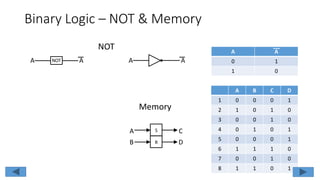
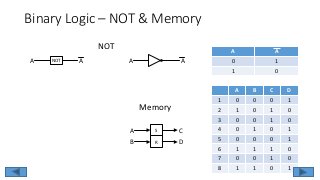
  • #35 Discuss the operation of the NOT gate and Memory and the various symbols that represent them. There are other symbols and they could/should be mentioned; however, the Functional Diagram Symbols are the important ones at this time. Output C and D are always opposite If input A = 1 then output C = 1 and output D = 0 If input A changes to 0, output C remains 1 until input B = 1 then output C = 0 and output D = 1 If input B= 1 then output D = 1 and output C = 0 If input B changes to 0 output D remains 1 until input A = 1 then output D = 0 and output C = 1 If inputs A and B are simultaneously = 1 then outputs C and D change state
  • #36 Discuss the relationship between the Instrument Diagram, the Functional Diagram and the Ladder Diagram and how they all describe the basic process description in paragraph 13.
  • #37 Review the logic example on this slide. The electrical ladder logic requires that the overload relays are closed, the Stop push button is closed and the Start push button is pressed to get the motor to start. If the Stop push button is pressed or if either one of the overload relays open the circuit is interrupted and the motor coil is de-energized stopping the motor. The Logic diagram shows the same function. The diagram shows a 3-input AND gate with the output controlling the pump motor. All 3-inputs of the AND gate must be true (a logic 1) for the pump motor to start. The Start push button is normally open in the field and when the operator presses it, it closes placing a logic 1 on the top input of the AND gate. The Stop push button is normally closed in the field and is depicted as a push button with a NOT gate. In this case, the NOT gate is creating a logic 1 at the center input of the AND gate when the Stop push button is not being pressed. The memory logic has the 2-overload relays as the top input (S) and the motor starter reset as the bottom input (R). When both of these overloads are closed, a logic 1 is on the input side of the Memory. This creates a logic 0 out and therefore under normal operating conditions, the NOT gate is required to get a logic 1 on the bottom input of the AND gate. If a small letter o is placed around or next to the S in the Memory it means that the Overload overrides the Motor Reset. This means that if the overload(s) opens, the motor will not start with the reset.
  • #40 Review the correlation of this Functional Diagram to the simple process description and the Instrument Diagram. Be sure to show the student that they represent the same process description.
  • #41 Review the correlation of this Functional Diagram to the simple process description and the Instrument Diagram. Be sure to show the student that they represent the same process description.
  • #42 Draw the ladder logic on the white board and then convert it to logic gates.
  • #43 On the white board, convert this ladder logic to logic gates.
  • #44 On the white board, convert this ladder logic to logic gates.
  • #45 On the white board, convert this logic to a rung of ladder.