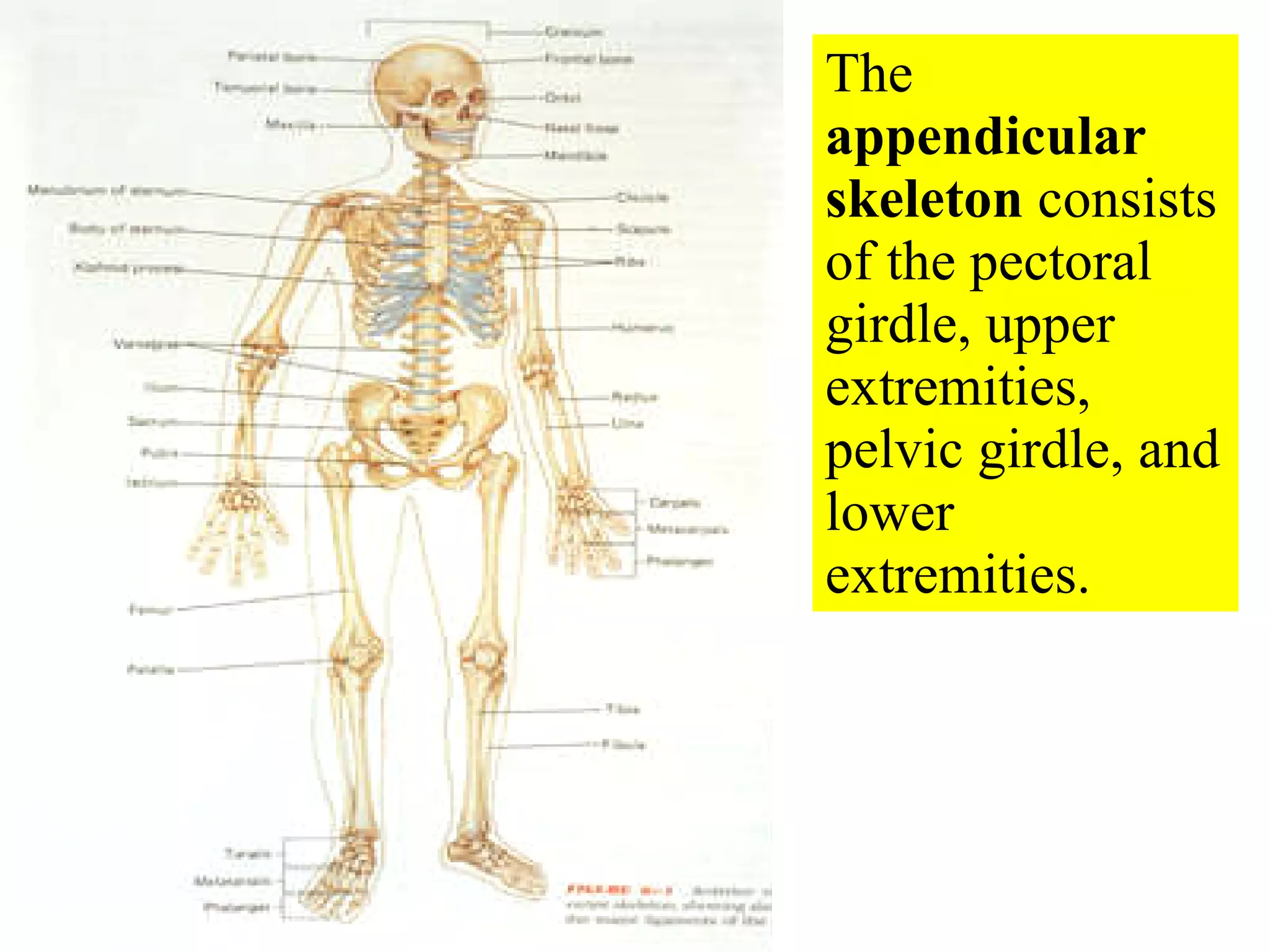
The  appendicular  skeleton  consists of the pectoral girdle, upper extremities, pelvic girdle, and lower extremities.
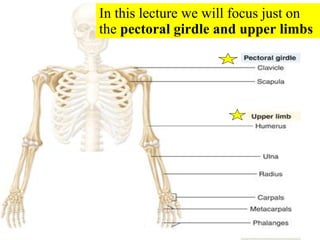
In this lecture we will focus just on the  pectoral girdle and upper limbs
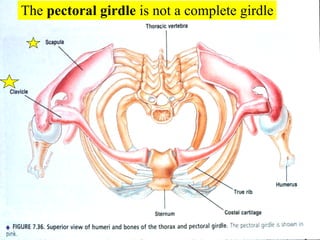
The  pectoral girdle  is not a complete girdle
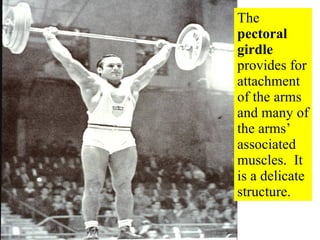
The  pectoral girdle  provides for attachment of the arms and many of the arms’ associated muscles.  It is a delicate structure.
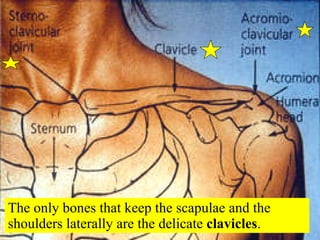
The only bones that keep the scapulae and the shoulders laterally are the delicate  clavicles .
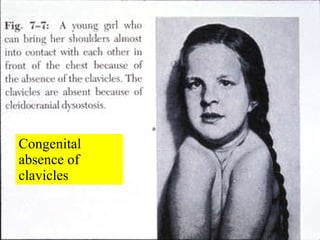
Congenital absence of clavicles
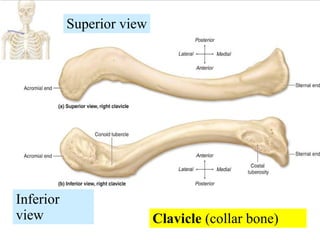
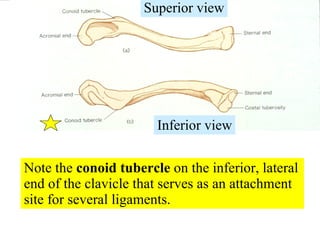
Clavicle  (collar bone) Inferior view Superior view
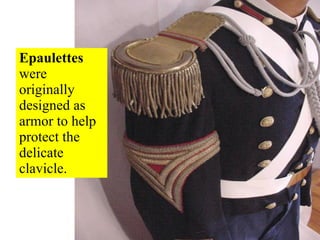
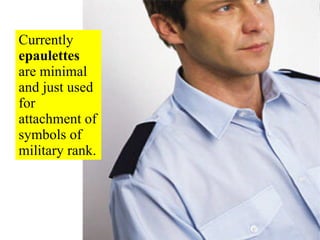
Epaulettes  were originally designed as armor to help protect the delicate clavicle.
Currently  epaulettes  are minimal and just used for attachment of symbols of military rank.
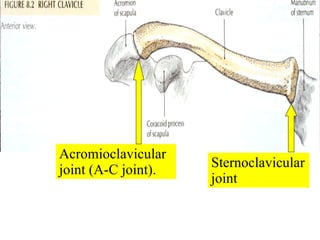
Sternoclavicular joint Acromioclavicular joint (A-C joint).
Note the  conoid tubercle  on the inferior, lateral end of the clavicle that serves as an attachment site for several ligaments. Superior view Inferior view
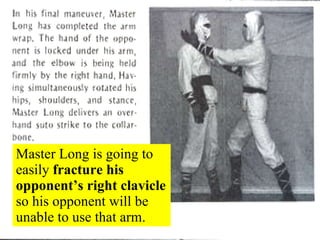
Master Long is going to easily  fracture his opponent’s right clavicle  so his opponent will be unable to use that arm.
ACCORDING TO THE CLINICAL VIEW IN YOUR TEXT, WHY IS A  POSTERIOR FRACTURE  OF THE CLAVICLE POTENTIALLY MORE SERIOUS THAN AN ANTERIOR FRACTURE? A MORE LIKELY TO BREAK THE SKIN B MORE LIKELY TO DAMAGE BLOOD VESSELS C MORE LIKELY TO ENTER HEART D MORE LIKELY TO INJURE ULNAR NERVE E MORE LIKELY TO TEAR DIAPHRAGM
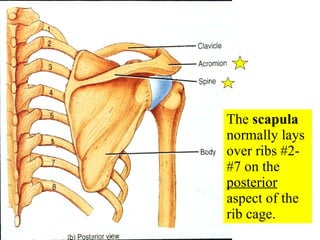
The  scapula  normally lays over ribs #2-#7 on the  posterior  aspect of the rib cage.
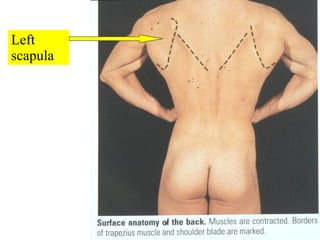
Left scapula
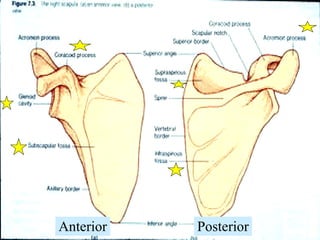
Anterior Posterior
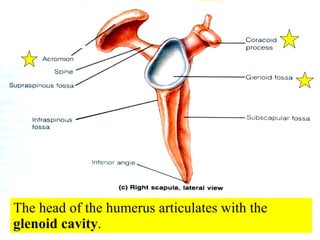
The head of the humerus articulates with the  glenoid cavity .
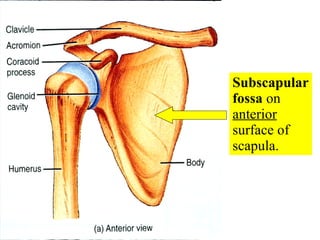
Subscapular fossa  on  anterior  surface of scapula.
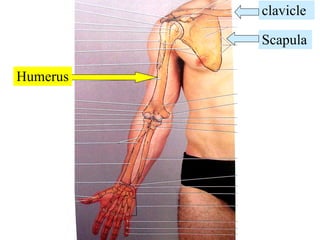
Humerus clavicle Scapula
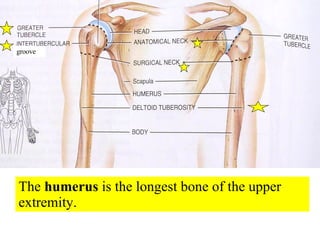
The  humerus  is the longest bone of the upper extremity. groove
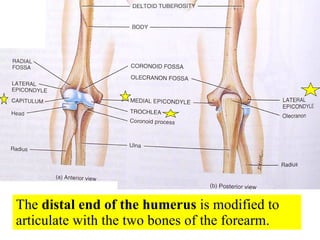
The  distal end of the humerus  is modified to articulate with the two bones of the forearm.
 
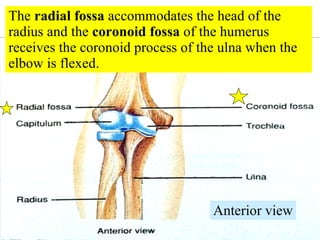
The  radial fossa  accommodates the head of the radius and the  coronoid fossa  of the humerus receives the coronoid process of the ulna when the elbow is flexed. Anterior view
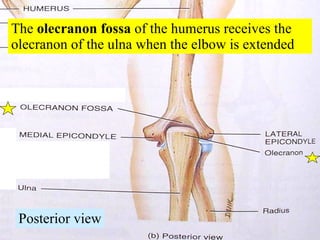
The  olecranon fossa  of the humerus receives the olecranon of the ulna when the elbow is extended Posterior view
WHICH OF THE FOLLOWING  IS CORRECT  ABOUT THE DISTAL MEDIAL END OF THE HUMERUS? A NEAR THE ULNAR NERVE B SHAPED LIKE A PULLEY C ARTICULATES WITH THE ULNA D FORMS A FIRM HINGE JOINT WITH THE  FOREARM E ALL OF THE ABOVE
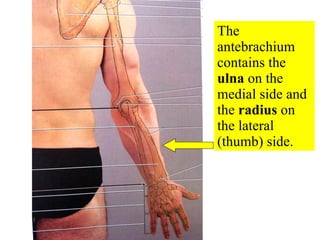
The antebrachium contains the  ulna  on the medial side and the  radius  on the lateral (thumb) side.
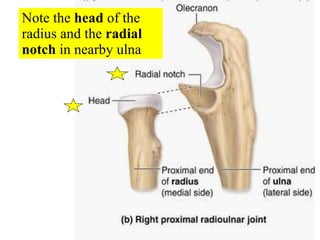
Note the  head  of the radius and the  radial notch  in nearby ulna
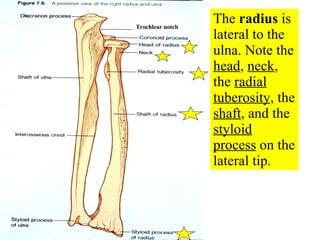
The  radius  is lateral to the ulna. Note the  head ,  neck , the  radial tuberosity , the  shaft , and the  styloid process  on the lateral tip. Trochlear notch
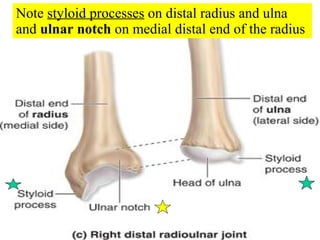
Note  styloid processes  on distal radius and ulna  and  ulnar notch  on medial distal end of the radius
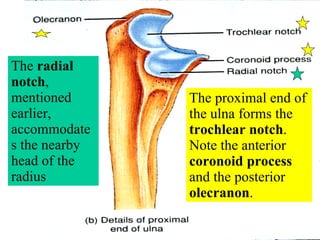
The proximal end of the ulna forms the  trochlear notch .  Note the anterior  coronoid process  and the posterior  olecranon . The  radial notch , mentioned earlier, accommodates the nearby head of the radius
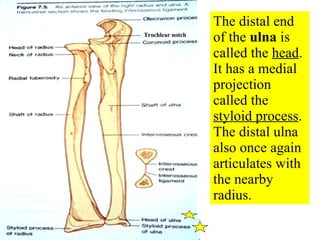
The distal end of the  ulna  is called the  head .  It has a medial projection called the  styloid process . The distal ulna also once again articulates with the nearby radius. Trochlear notch
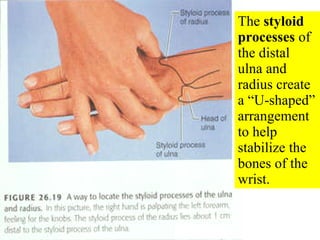
The  styloid processes  of the distal ulna and radius create a “U-shaped” arrangement to help stabilize the bones of the wrist.
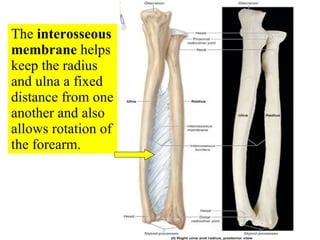
The  interosseous membrane  helps keep the radius and ulna a fixed distance from one another and also allows rotation of the forearm.
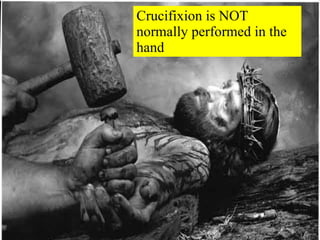
Crucifixion is NOT normally performed in the hand
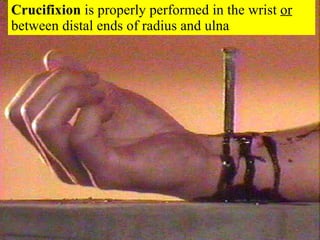
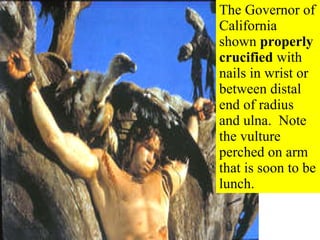
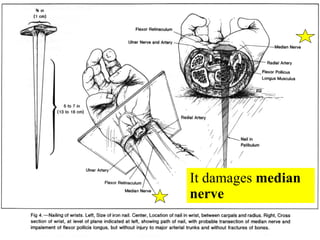
Crucifixion  is properly performed in the wrist  or   between distal ends of radius and ulna
The Governor of California shown  properly crucified  with nails in wrist or between distal end of radius and ulna.  Note the vulture perched on arm that is soon to be lunch.
It damages  median nerve
 
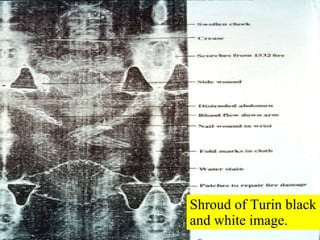
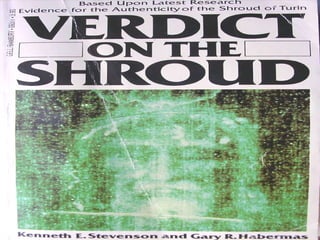
Shroud of Turin black and white image.
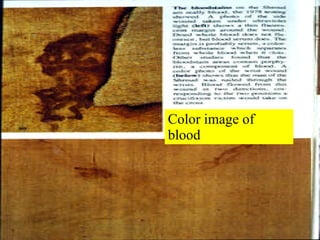
Color image of blood
In the Shroud of Turin the tibia and fibula are NOT  broken.
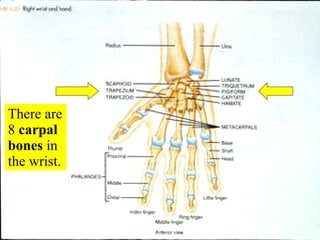
There are 8  carpal bones  in the wrist.
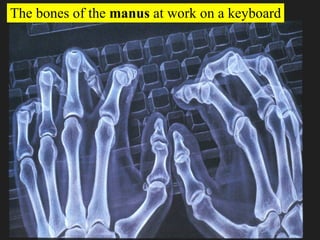
The bones of the  manus  at work on a keyboard
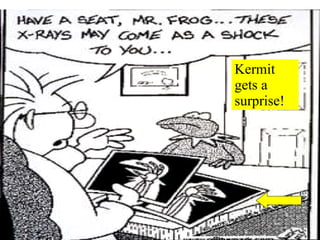
Kermit gets a surprise!
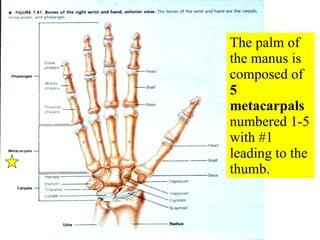
The palm of the manus is composed of  5 metacarpals  numbered 1-5 with #1 leading to the thumb.
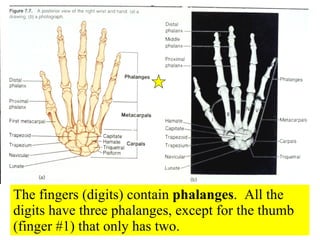
The fingers (digits) contain  phalanges .  All the digits have three phalanges, except for the thumb (finger #1) that only has two.
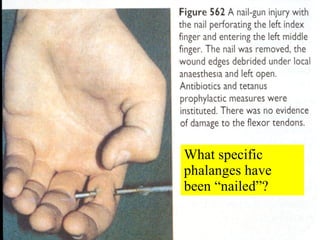
What specific phalanges have been “nailed”?
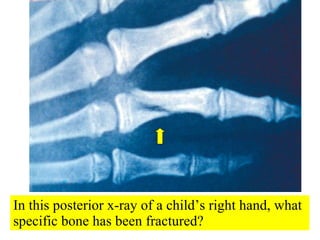
In this posterior x-ray of a child’s right hand, what specific bone has been fractured?
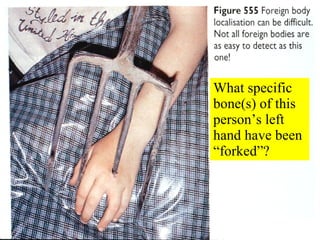
What specific bone(s) of this person’s left hand have been “forked”?
WHAT BONE  IS ENCIRCLED BY A WEDDING RING? A METACARPAL #3 OF RIGHT HAND B PROXIMAL BONE OF POLLEX C DISTAL PHALANX OF FINGER #5 OF RIGHT  HAND D BONE MEDIAL TO METACARPAL #4 AND  MIDDLE PHALANX #4 E MIDDLE PHALANX OF FINGER #3 OF LEFT HAND
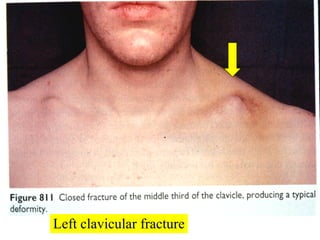
One of many ways to fracture the delicate  clavicle .
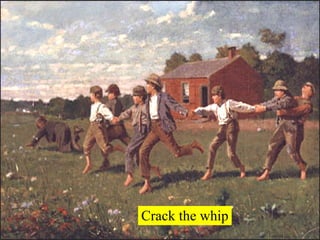
Crack the whip
Left clavicular fracture
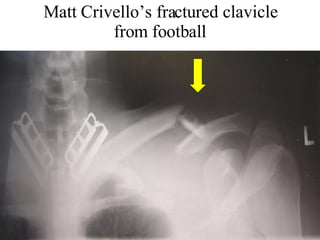
Matt Crivello’s fractured clavicle from football
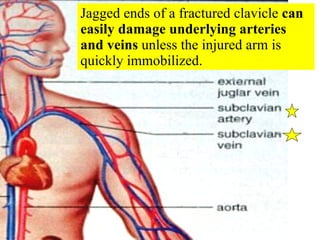
Jagged ends of a fractured clavicle  can easily damage underlying arteries and veins  unless the injured arm is quickly immobilized.
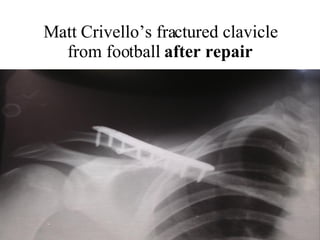
Matt Crivello’s fractured clavicle from football  after repair
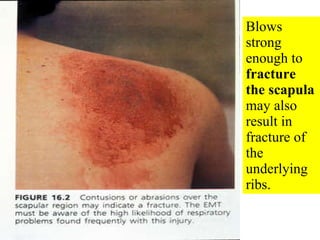
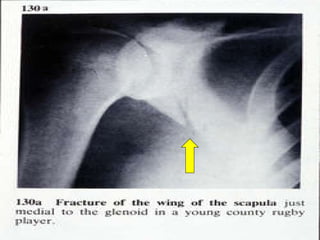
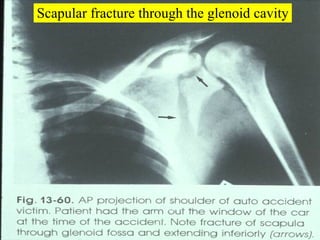
Blows strong enough to  fracture the scapula  may also result in fracture of the underlying ribs.
 
Scapular fracture through the glenoid cavity
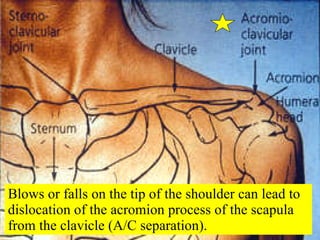
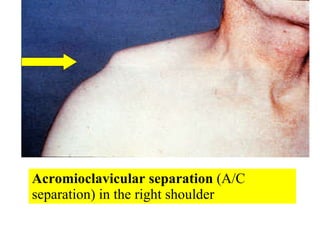
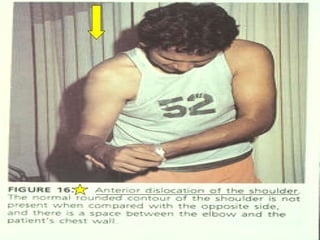
Blows or falls on the tip of the shoulder can lead to dislocation of the acromion process of the scapula from the clavicle (A/C separation).
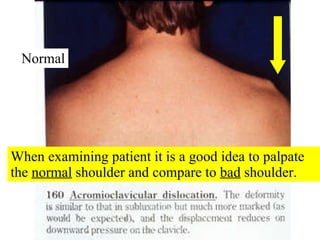
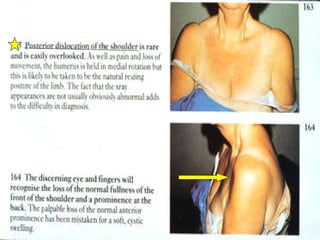
When examining patient it is a good idea to palpate the  normal  shoulder and compare to  bad  shoulder. Normal
Acromioclavicular separation  (A/C separation) in the right shoulder
 
 
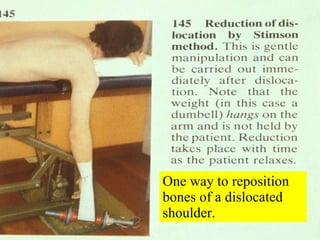
One way to reposition bones of a dislocated shoulder.
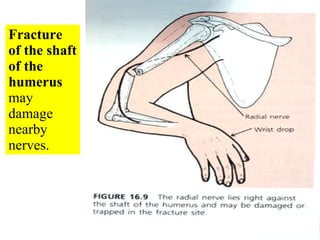
Fracture of the shaft of the humerus  may damage nearby nerves.
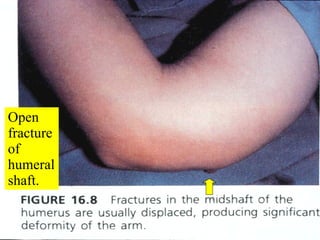
Open fracture of humeral shaft.
 
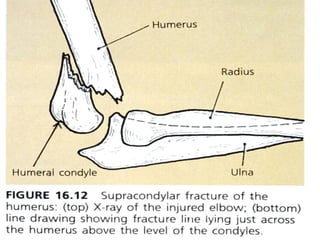
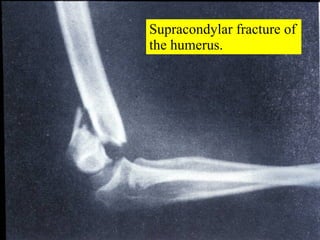
Supracondylar fracture of the humerus.
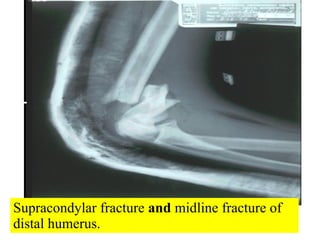
Supracondylar fracture  and  midline fracture of distal humerus.
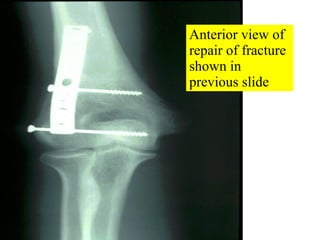
Anterior view of repair of fracture shown in previous slide
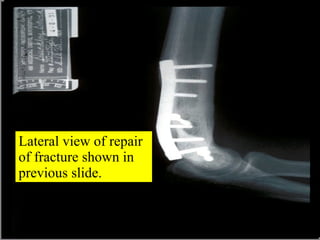
Lateral view of repair of fracture shown in previous slide.
 
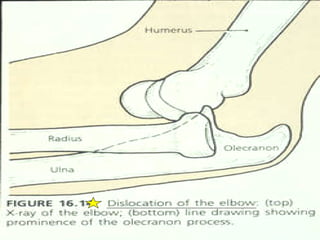
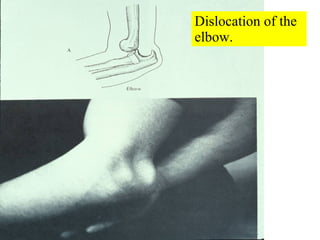
Dislocation of the elbow.
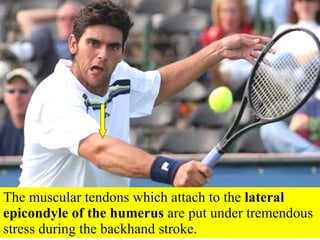
The muscular tendons which attach to the  lateral epicondyle of the humerus  are put under tremendous stress during the backhand stroke.
 
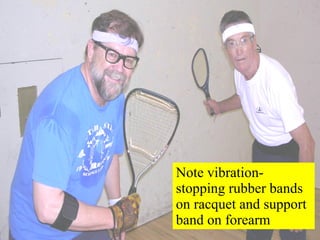
Note vibration-stopping rubber bands on racquet and support band on forearm
 
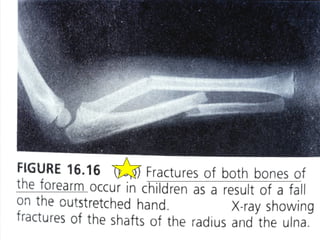
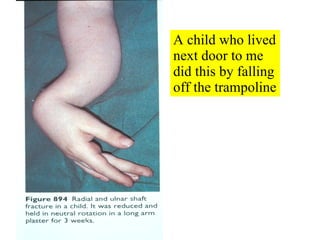
A child who lived next door to me did this by falling off the trampoline
 
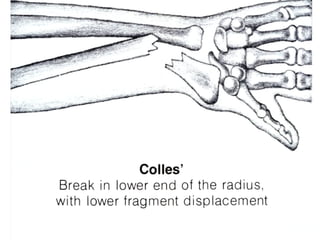
Colles’fracture.   Fracture of the distal end of the radius causing a “silver fork” deformity.
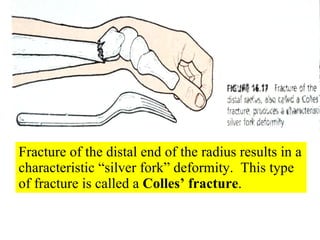
Fracture of the distal end of the radius results in a characteristic “silver fork” deformity.  This type of fracture is called a  Colles’ fracture .
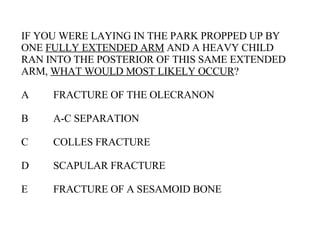
IF YOU WERE LAYING IN THE PARK PROPPED UP BY ONE  FULLY EXTENDED ARM  AND A HEAVY CHILD RAN INTO THE POSTERIOR OF THIS SAME EXTENDED ARM,  WHAT WOULD MOST LIKELY OCCUR ? A FRACTURE OF THE OLECRANON B A-C SEPARATION C COLLES FRACTURE D SCAPULAR FRACTURE E FRACTURE OF A SESAMOID BONE

06 Appendicular Skeleton Pectoral Girdle And Upper Limbs

  • 1.
    The appendicular skeleton consists of the pectoral girdle, upper extremities, pelvic girdle, and lower extremities.
  • 2.
    In this lecturewe will focus just on the pectoral girdle and upper limbs
  • 3.
    The pectoralgirdle is not a complete girdle
  • 4.
    The pectoralgirdle provides for attachment of the arms and many of the arms’ associated muscles. It is a delicate structure.
  • 5.
    The only bonesthat keep the scapulae and the shoulders laterally are the delicate clavicles .
  • 6.
  • 7.
    Clavicle (collarbone) Inferior view Superior view
  • 8.
    Epaulettes wereoriginally designed as armor to help protect the delicate clavicle.
  • 9.
    Currently epaulettes are minimal and just used for attachment of symbols of military rank.
  • 10.
  • 11.
    Note the conoid tubercle on the inferior, lateral end of the clavicle that serves as an attachment site for several ligaments. Superior view Inferior view
  • 12.
    Master Long isgoing to easily fracture his opponent’s right clavicle so his opponent will be unable to use that arm.
  • 13.
    ACCORDING TO THECLINICAL VIEW IN YOUR TEXT, WHY IS A POSTERIOR FRACTURE OF THE CLAVICLE POTENTIALLY MORE SERIOUS THAN AN ANTERIOR FRACTURE? A MORE LIKELY TO BREAK THE SKIN B MORE LIKELY TO DAMAGE BLOOD VESSELS C MORE LIKELY TO ENTER HEART D MORE LIKELY TO INJURE ULNAR NERVE E MORE LIKELY TO TEAR DIAPHRAGM
  • 14.
    The scapula normally lays over ribs #2-#7 on the posterior aspect of the rib cage.
  • 15.
  • 16.
  • 17.
    The head ofthe humerus articulates with the glenoid cavity .
  • 18.
    Subscapular fossa on anterior surface of scapula.
  • 19.
  • 20.
    The humerus is the longest bone of the upper extremity. groove
  • 21.
    The distalend of the humerus is modified to articulate with the two bones of the forearm.
  • 22.
  • 23.
    The radialfossa accommodates the head of the radius and the coronoid fossa of the humerus receives the coronoid process of the ulna when the elbow is flexed. Anterior view
  • 24.
    The olecranonfossa of the humerus receives the olecranon of the ulna when the elbow is extended Posterior view
  • 25.
    WHICH OF THEFOLLOWING IS CORRECT ABOUT THE DISTAL MEDIAL END OF THE HUMERUS? A NEAR THE ULNAR NERVE B SHAPED LIKE A PULLEY C ARTICULATES WITH THE ULNA D FORMS A FIRM HINGE JOINT WITH THE FOREARM E ALL OF THE ABOVE
  • 26.
    The antebrachium containsthe ulna on the medial side and the radius on the lateral (thumb) side.
  • 27.
    Note the head of the radius and the radial notch in nearby ulna
  • 28.
    The radius is lateral to the ulna. Note the head , neck , the radial tuberosity , the shaft , and the styloid process on the lateral tip. Trochlear notch
  • 29.
    Note styloidprocesses on distal radius and ulna and ulnar notch on medial distal end of the radius
  • 30.
    The proximal endof the ulna forms the trochlear notch . Note the anterior coronoid process and the posterior olecranon . The radial notch , mentioned earlier, accommodates the nearby head of the radius
  • 31.
    The distal endof the ulna is called the head . It has a medial projection called the styloid process . The distal ulna also once again articulates with the nearby radius. Trochlear notch
  • 32.
    The styloidprocesses of the distal ulna and radius create a “U-shaped” arrangement to help stabilize the bones of the wrist.
  • 33.
    The interosseousmembrane helps keep the radius and ulna a fixed distance from one another and also allows rotation of the forearm.
  • 34.
    Crucifixion is NOTnormally performed in the hand
  • 35.
    Crucifixion isproperly performed in the wrist or between distal ends of radius and ulna
  • 36.
    The Governor ofCalifornia shown properly crucified with nails in wrist or between distal end of radius and ulna. Note the vulture perched on arm that is soon to be lunch.
  • 37.
    It damages median nerve
  • 38.
  • 39.
    Shroud of Turinblack and white image.
  • 40.
  • 41.
    In the Shroudof Turin the tibia and fibula are NOT broken.
  • 42.
    There are 8 carpal bones in the wrist.
  • 43.
    The bones ofthe manus at work on a keyboard
  • 44.
    Kermit gets asurprise!
  • 45.
    The palm ofthe manus is composed of 5 metacarpals numbered 1-5 with #1 leading to the thumb.
  • 46.
    The fingers (digits)contain phalanges . All the digits have three phalanges, except for the thumb (finger #1) that only has two.
  • 47.
    What specific phalangeshave been “nailed”?
  • 48.
    In this posteriorx-ray of a child’s right hand, what specific bone has been fractured?
  • 49.
    What specific bone(s)of this person’s left hand have been “forked”?
  • 50.
    WHAT BONE IS ENCIRCLED BY A WEDDING RING? A METACARPAL #3 OF RIGHT HAND B PROXIMAL BONE OF POLLEX C DISTAL PHALANX OF FINGER #5 OF RIGHT HAND D BONE MEDIAL TO METACARPAL #4 AND MIDDLE PHALANX #4 E MIDDLE PHALANX OF FINGER #3 OF LEFT HAND
  • 51.
    One of manyways to fracture the delicate clavicle .
  • 52.
  • 53.
  • 54.
    Matt Crivello’s fracturedclavicle from football
  • 55.
    Jagged ends ofa fractured clavicle can easily damage underlying arteries and veins unless the injured arm is quickly immobilized.
  • 56.
    Matt Crivello’s fracturedclavicle from football after repair
  • 57.
    Blows strong enoughto fracture the scapula may also result in fracture of the underlying ribs.
  • 58.
  • 59.
    Scapular fracture throughthe glenoid cavity
  • 60.
    Blows or fallson the tip of the shoulder can lead to dislocation of the acromion process of the scapula from the clavicle (A/C separation).
  • 61.
    When examining patientit is a good idea to palpate the normal shoulder and compare to bad shoulder. Normal
  • 62.
    Acromioclavicular separation (A/C separation) in the right shoulder
  • 63.
  • 64.
  • 65.
    One way toreposition bones of a dislocated shoulder.
  • 66.
    Fracture of theshaft of the humerus may damage nearby nerves.
  • 67.
    Open fracture ofhumeral shaft.
  • 68.
  • 69.
  • 70.
    Supracondylar fracture and midline fracture of distal humerus.
  • 71.
    Anterior view ofrepair of fracture shown in previous slide
  • 72.
    Lateral view ofrepair of fracture shown in previous slide.
  • 73.
  • 74.
  • 75.
    The muscular tendonswhich attach to the lateral epicondyle of the humerus are put under tremendous stress during the backhand stroke.
  • 76.
  • 77.
    Note vibration-stopping rubberbands on racquet and support band on forearm
  • 78.
  • 79.
    A child wholived next door to me did this by falling off the trampoline
  • 80.
  • 81.
    Colles’fracture. Fracture of the distal end of the radius causing a “silver fork” deformity.
  • 82.
    Fracture of thedistal end of the radius results in a characteristic “silver fork” deformity. This type of fracture is called a Colles’ fracture .
  • 83.
    IF YOU WERELAYING IN THE PARK PROPPED UP BY ONE FULLY EXTENDED ARM AND A HEAVY CHILD RAN INTO THE POSTERIOR OF THIS SAME EXTENDED ARM, WHAT WOULD MOST LIKELY OCCUR ? A FRACTURE OF THE OLECRANON B A-C SEPARATION C COLLES FRACTURE D SCAPULAR FRACTURE E FRACTURE OF A SESAMOID BONE