Course Design in Context of NBA
Dr. Chetan B. Bhatt
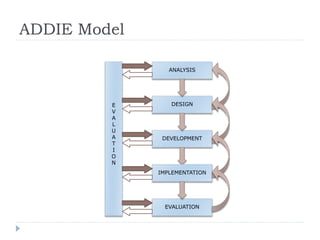
ADDIE Model
ANALYSIS
DESIGN
DEVELOPMENT
E
V
A
L
U
A
T
I
O
N
IMPLEMENTATION
EVALUATION
Development Phase
Development Phase
 The Development phase builds on both the Analysis
and Design phases. The purpose of this phase is to
select and/or generate learning materials as per the
chosen instructional methods and delivery
mechanisms.
 During this phase one will develop the instruction, all
media that will be used in instruction, and any
supporting documentation. This may include hardware
(e.g., simulation equipment) and software (e.g.,
computer-based instruction).
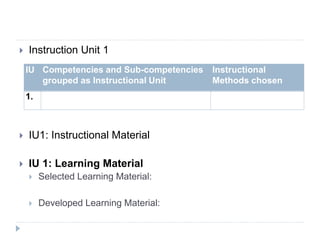
 Instruction Unit 1
 IU1: Instructional Material
 IU 1: Learning Material
 Selected Learning Material:
 Developed Learning Material:
IU Competencies and Sub-competencies
grouped as Instructional Unit
Instructional
Methods chosen
1.
Implementation
 The Implementation phase refers to the actual
delivery of the instruction, whether it is classroom-
based, laboratory-based, computer-based or a
combination there of. The purpose of this phase is
the effective and efficient delivery of instruction.
This phase must promote the students'
understanding of material, support the students'
mastery of objectives, and ensure the students'
transfer of knowledge from the instructional
setting to the job.
Implementation Phase
 Implement Phase presents specifics of an instance
of offering. The specific elements of Implement
Phase are
 Syllabus
 Resources Planning
 Instruction Schedule
 Assessment Instruments
 Feedback to students after every assessment
 Tracking students
Syllabus
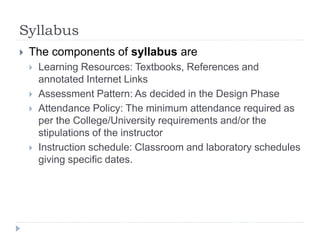
 The components of syllabus are
 Aim of the course: One or two sentences about the what
the students are expected to be able to do at the end of
the course
 Course Overview and Context: Relationship of the course
to the rest of the program, the nature of the course, its
importance to the profession and the approach proposed
to be taken by the instructor as created in the Analysis
Phase
 Competencies of the course: 10+2 competencies as
decided in the Analysis Phase
 Content of the Course as a list of topics
Syllabus
 The components of syllabus are
 Learning Resources: Textbooks, References and
annotated Internet Links
 Assessment Pattern: As decided in the Design Phase
 Attendance Policy: The minimum attendance required as
per the College/University requirements and/or the
stipulations of the instructor
 Instruction schedule: Classroom and laboratory schedules
giving specific dates.
Syllabus
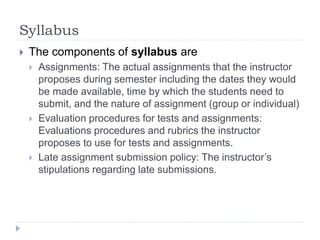
 The components of syllabus are
 Assignments: The actual assignments that the instructor
proposes during semester including the dates they would
be made available, time by which the students need to
submit, and the nature of assignment (group or individual)
 Evaluation procedures for tests and assignments:
Evaluations procedures and rubrics the instructor
proposes to use for tests and assignments.
 Late assignment submission policy: The instructor’s
stipulations regarding late submissions.
Syllabus
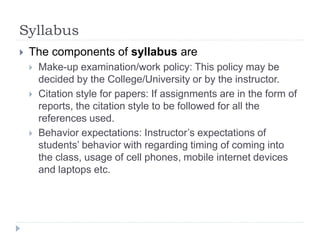
 The components of syllabus are
 Make-up examination/work policy: This policy may be
decided by the College/University or by the instructor.
 Citation style for papers: If assignments are in the form of
reports, the citation style to be followed for all the
references used.
 Behavior expectations: Instructor’s expectations of
students’ behavior with regarding timing of coming into
the class, usage of cell phones, mobile internet devices
and laptops etc.
Syllabus
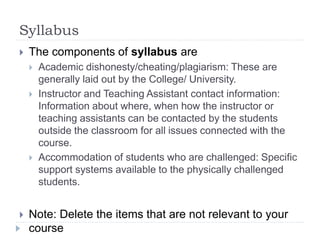
 The components of syllabus are
 Academic dishonesty/cheating/plagiarism: These are
generally laid out by the College/ University.
 Instructor and Teaching Assistant contact information:
Information about where, when how the instructor or
teaching assistants can be contacted by the students
outside the classroom for all issues connected with the
course.
 Accommodation of students who are challenged: Specific
support systems available to the physically challenged
students.
 Note: Delete the items that are not relevant to your
course
Evaluation
 Evaluation phase decides whether the course is
effective and satisfies the course objectives. This
phase considers feedback from learners. Evaluation is
done constantly, both during development and
delivery.

04 course design development phase

  • 1.
    Course Design inContext of NBA Dr. Chetan B. Bhatt
  • 2.
  • 3.
  • 4.
    Development Phase  TheDevelopment phase builds on both the Analysis and Design phases. The purpose of this phase is to select and/or generate learning materials as per the chosen instructional methods and delivery mechanisms.  During this phase one will develop the instruction, all media that will be used in instruction, and any supporting documentation. This may include hardware (e.g., simulation equipment) and software (e.g., computer-based instruction).
  • 5.
     Instruction Unit1  IU1: Instructional Material  IU 1: Learning Material  Selected Learning Material:  Developed Learning Material: IU Competencies and Sub-competencies grouped as Instructional Unit Instructional Methods chosen 1.
  • 6.
    Implementation  The Implementationphase refers to the actual delivery of the instruction, whether it is classroom- based, laboratory-based, computer-based or a combination there of. The purpose of this phase is the effective and efficient delivery of instruction. This phase must promote the students' understanding of material, support the students' mastery of objectives, and ensure the students' transfer of knowledge from the instructional setting to the job.
  • 7.
    Implementation Phase  ImplementPhase presents specifics of an instance of offering. The specific elements of Implement Phase are  Syllabus  Resources Planning  Instruction Schedule  Assessment Instruments  Feedback to students after every assessment  Tracking students
  • 8.
    Syllabus  The componentsof syllabus are  Aim of the course: One or two sentences about the what the students are expected to be able to do at the end of the course  Course Overview and Context: Relationship of the course to the rest of the program, the nature of the course, its importance to the profession and the approach proposed to be taken by the instructor as created in the Analysis Phase  Competencies of the course: 10+2 competencies as decided in the Analysis Phase  Content of the Course as a list of topics
  • 9.
    Syllabus  The componentsof syllabus are  Learning Resources: Textbooks, References and annotated Internet Links  Assessment Pattern: As decided in the Design Phase  Attendance Policy: The minimum attendance required as per the College/University requirements and/or the stipulations of the instructor  Instruction schedule: Classroom and laboratory schedules giving specific dates.
  • 10.
    Syllabus  The componentsof syllabus are  Assignments: The actual assignments that the instructor proposes during semester including the dates they would be made available, time by which the students need to submit, and the nature of assignment (group or individual)  Evaluation procedures for tests and assignments: Evaluations procedures and rubrics the instructor proposes to use for tests and assignments.  Late assignment submission policy: The instructor’s stipulations regarding late submissions.
  • 11.
    Syllabus  The componentsof syllabus are  Make-up examination/work policy: This policy may be decided by the College/University or by the instructor.  Citation style for papers: If assignments are in the form of reports, the citation style to be followed for all the references used.  Behavior expectations: Instructor’s expectations of students’ behavior with regarding timing of coming into the class, usage of cell phones, mobile internet devices and laptops etc.
  • 12.
    Syllabus  The componentsof syllabus are  Academic dishonesty/cheating/plagiarism: These are generally laid out by the College/ University.  Instructor and Teaching Assistant contact information: Information about where, when how the instructor or teaching assistants can be contacted by the students outside the classroom for all issues connected with the course.  Accommodation of students who are challenged: Specific support systems available to the physically challenged students.  Note: Delete the items that are not relevant to your course
  • 13.
    Evaluation  Evaluation phasedecides whether the course is effective and satisfies the course objectives. This phase considers feedback from learners. Evaluation is done constantly, both during development and delivery.