Framework, Elements, andBest
Practices
for
Course Design for Undergraduate and
Graduate Programs
2.
What is CourseDesign?
• Course design is the systematic planning of course
content, structure, and delivery.
• Aligns learning outcomes, teaching methods,
materials, and assessments.
• Ensures a cohesive and meaningful learning
experience for students at all levels.
3.
Key Elements ofCourse
Design
1. Learning Objectives
2. Course Content
3. Teaching and Learning Activities
4. Assessment and Evaluation
5. Instructional Materials
6. Course Policies
7. Feedback and Improvement
4.
Undergraduate vs. Graduate
CourseDesign
• Undergraduate:
- Foundational knowledge
- Structured learning
- Focus on skill acquisition
• Graduate:
- Research-oriented
- Critical analysis and synthesis
- Independent and collaborative inquiry
5.
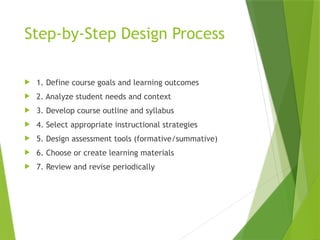
Step-by-Step Design Process
1. Define course goals and learning outcomes
2. Analyze student needs and context
3. Develop course outline and syllabus
4. Select appropriate instructional strategies
5. Design assessment tools (formative/summative)
6. Choose or create learning materials
7. Review and revise periodically
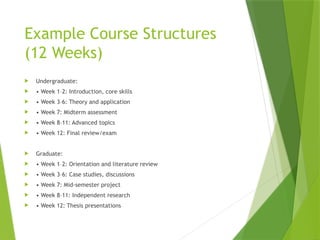
Example Course Structures
(12Weeks)
Undergraduate:
• Week 1–2: Introduction, core skills
• Week 3–6: Theory and application
• Week 7: Midterm assessment
• Week 8–11: Advanced topics
• Week 12: Final review/exam
Graduate:
• Week 1–2: Orientation and literature review
• Week 3–6: Case studies, discussions
• Week 7: Mid-semester project
• Week 8–11: Independent research
• Week 12: Thesis presentations
9.
Best Practices inCourse
Design
• Use backward design: start with outcomes
• Encourage active learning
• Provide timely and constructive feedback
• Ensure accessibility and inclusivity
• Continuously assess and improve the course
• Tailor depth and complexity to student level