Developing a Continuous Monitoring Action PlanAn InformationWeek Government Webcast  Sponsored by
Webcast Logistics
Welcome!John FoleyEditor InformationWeek Government
Today’s PresentersJohn StreufertDeputy Chief Information Officer Information AssuranceUnited States Department of StateSteve Johnston CISSP, ITIL Lead Federal Systems EngineerTripwire, Inc.
What Is Continuous Monitoring?       “Information security continuous monitoring is defined as maintaining ongoing awareness of information security, vulnerabilities, and threats to support organizational risk management decisions.”      >>NIST SP 800-137
Building It Into The IT Budget       “What makes us more secure is real-time security monitoring--continuous monitoring--and acting on data. That's why agencies are directed as part of the FY 2012 budgeting process to make sure that their budget reflects presidential priority in terms of investing in tools, not in paperwork reports.”    >>Federal CIO Vivek Kundra, June 2010
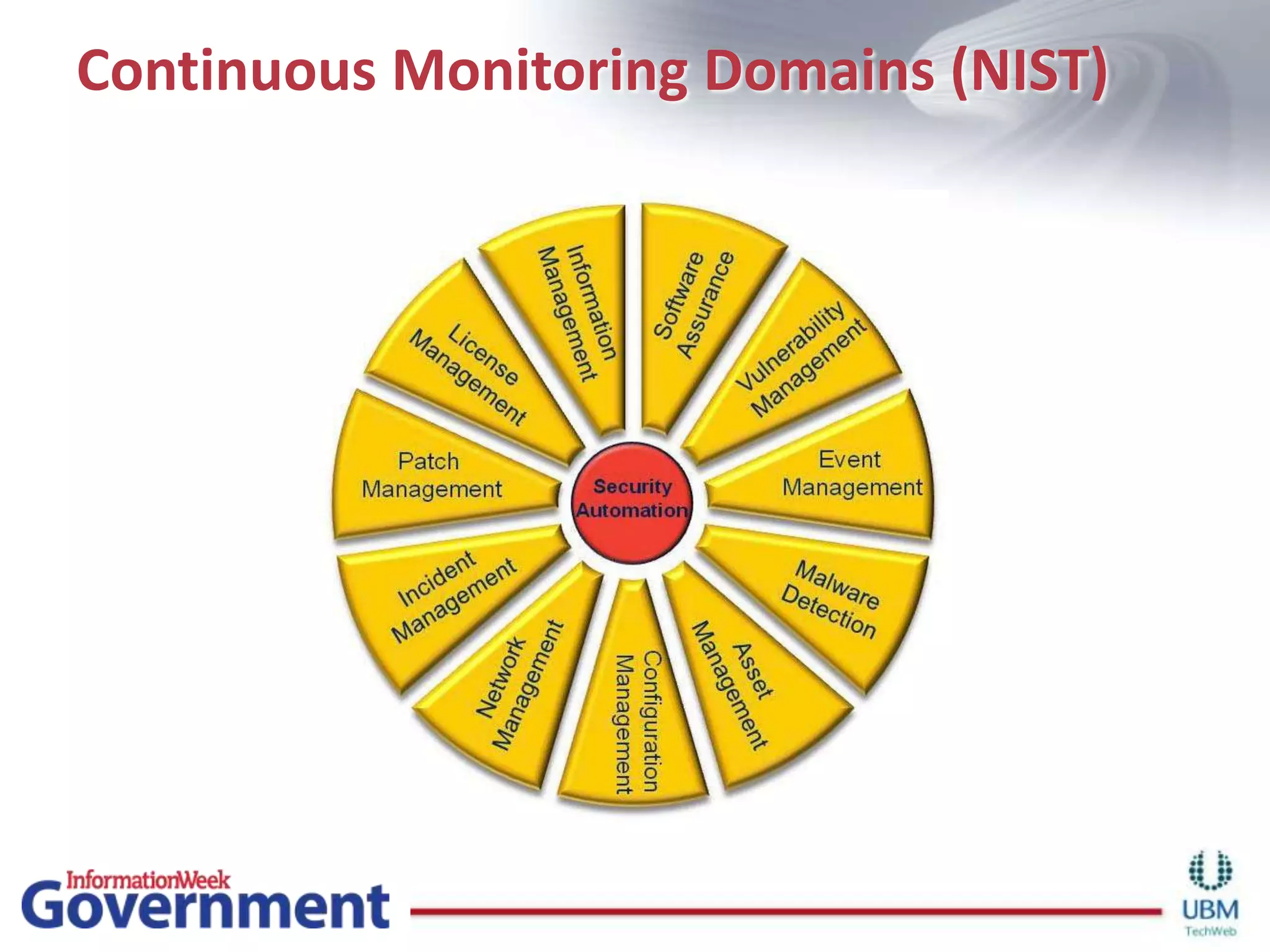
Continuous Monitoring Domains (NIST)
CIA Invests In RedSeal Systems      "Continuous monitoring technologies will enable the U.S. intelligence community to effectively operate the complex, dynamic network defenses that protect critical information and systems.”>>William Strecker, CTO, In-Q-Tel
FISMA 2.0: A Continuous MonitoringCase StudyJohn Streufert  ( DOSCISO@state.gov )Deputy Chief Information Officer for Information Security US Department of StateFebruary 14,  2011
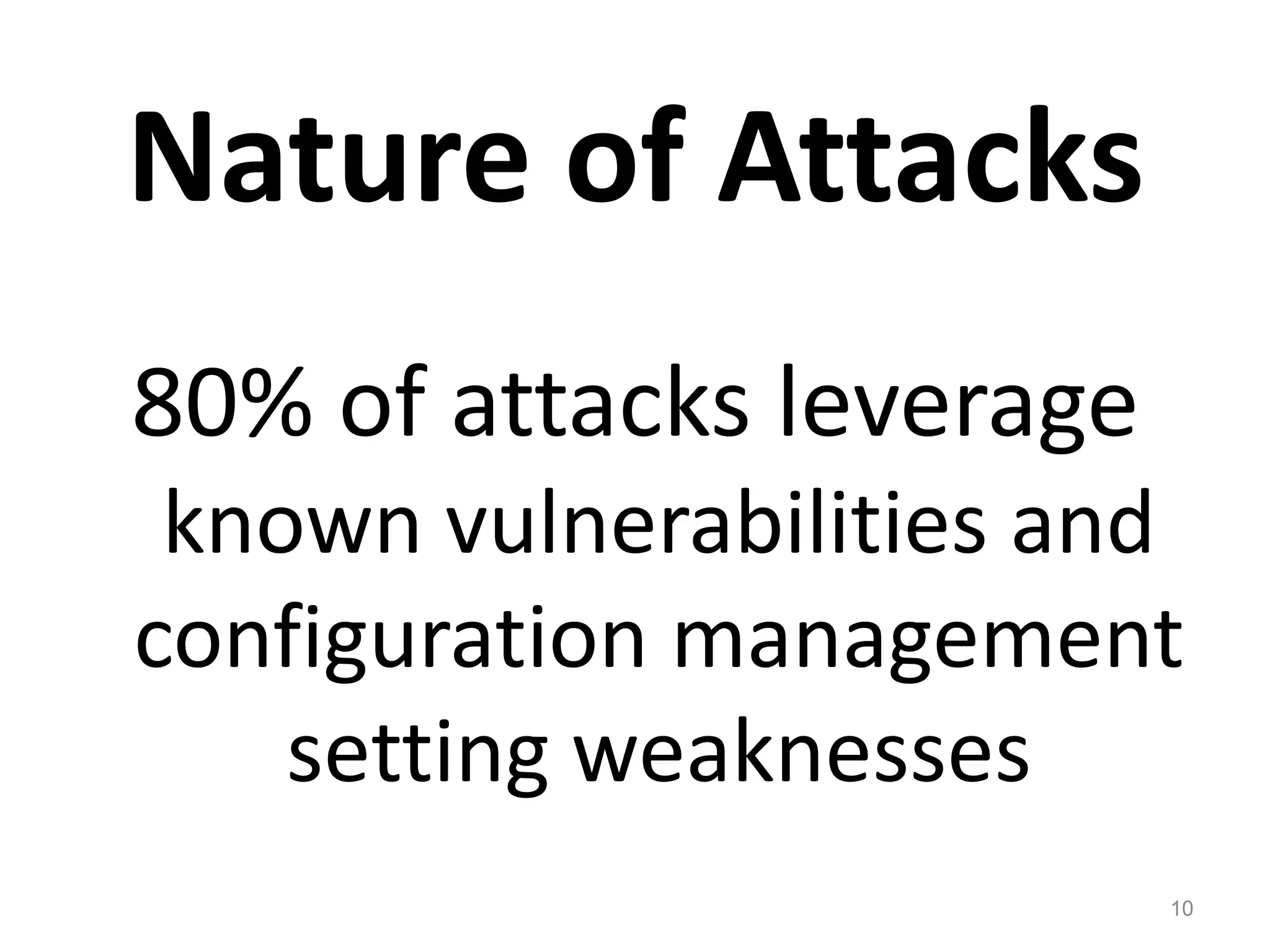
Nature of Attacks 80% of attacks leverage known vulnerabilities and configuration management setting weaknesses10
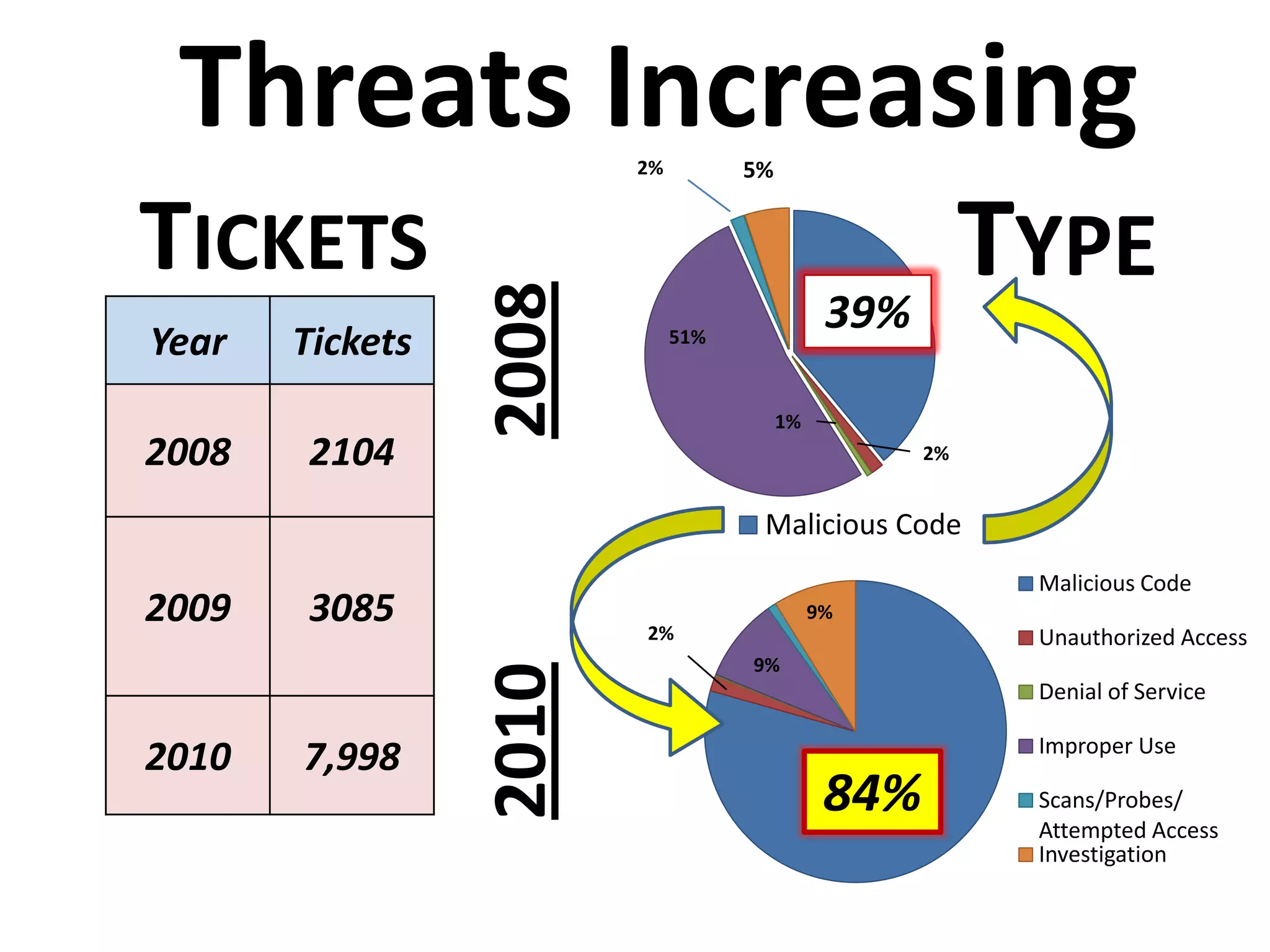
Threats Increasing2%5%TypeTickets39%200851%1%2%19%2%9%201084%
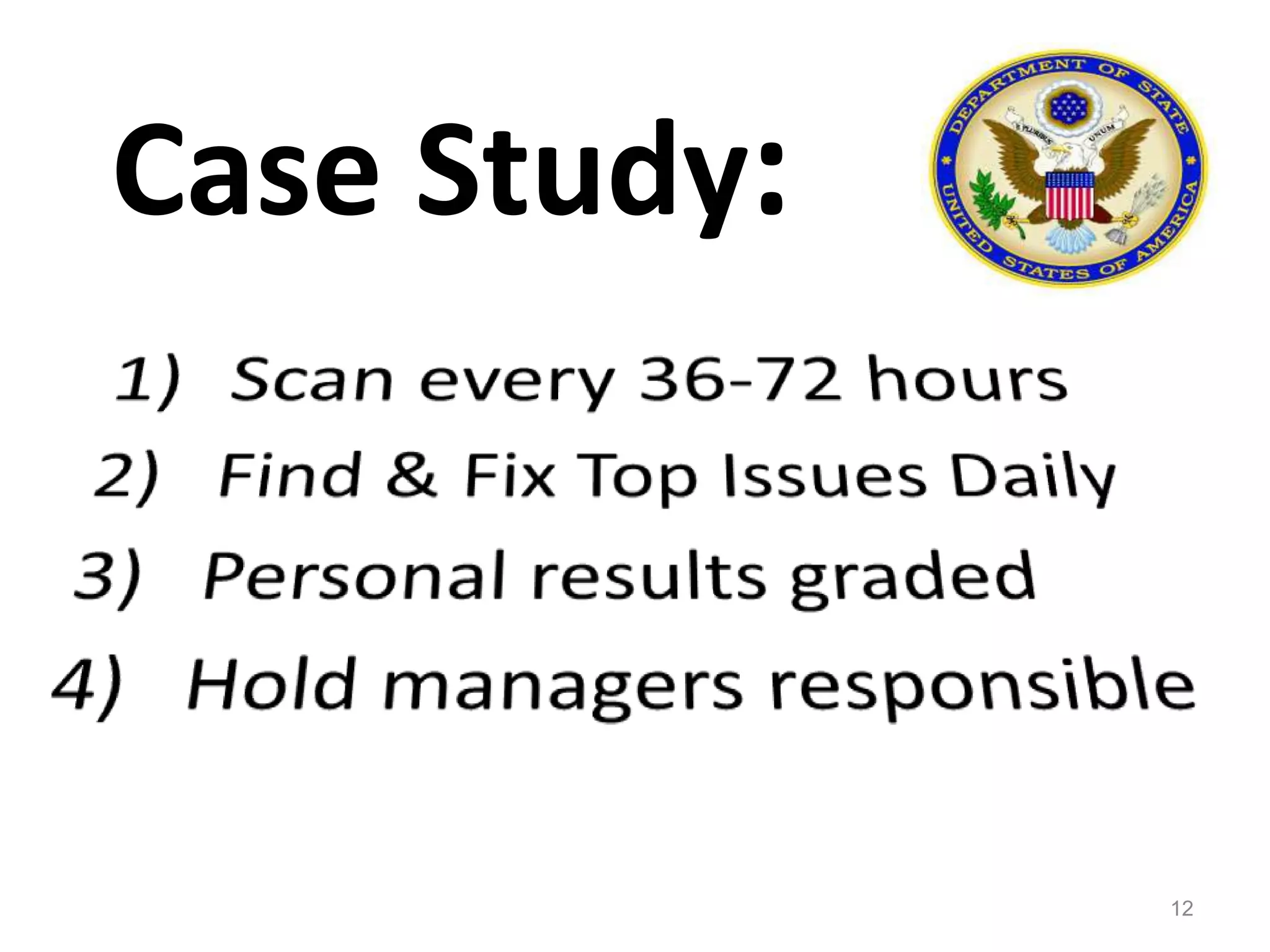
Case Study:Scan every 36-72 hoursFind & Fix Top Issues DailyPersonal results graded Hold managers responsible12
How:   1. Narrow Aim13[11 months before Feb 09]
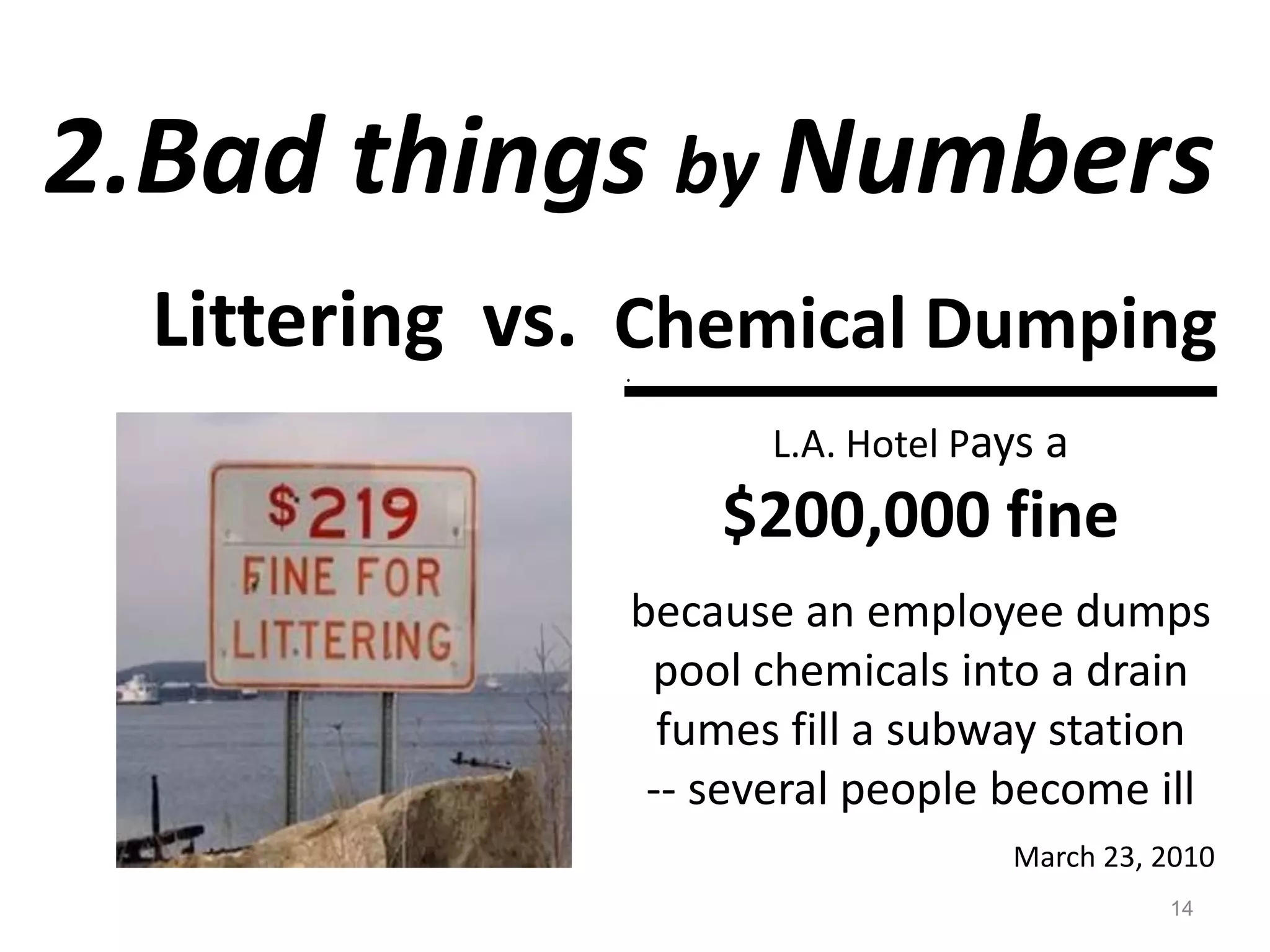
2.Bad things by NumbersChemical DumpingLittering  vs.L.A. Hotel Pays a$200,000 fine because an employee dumps pool chemicals into a drain fumes fill a subway station-- several people become ill March 23, 201014
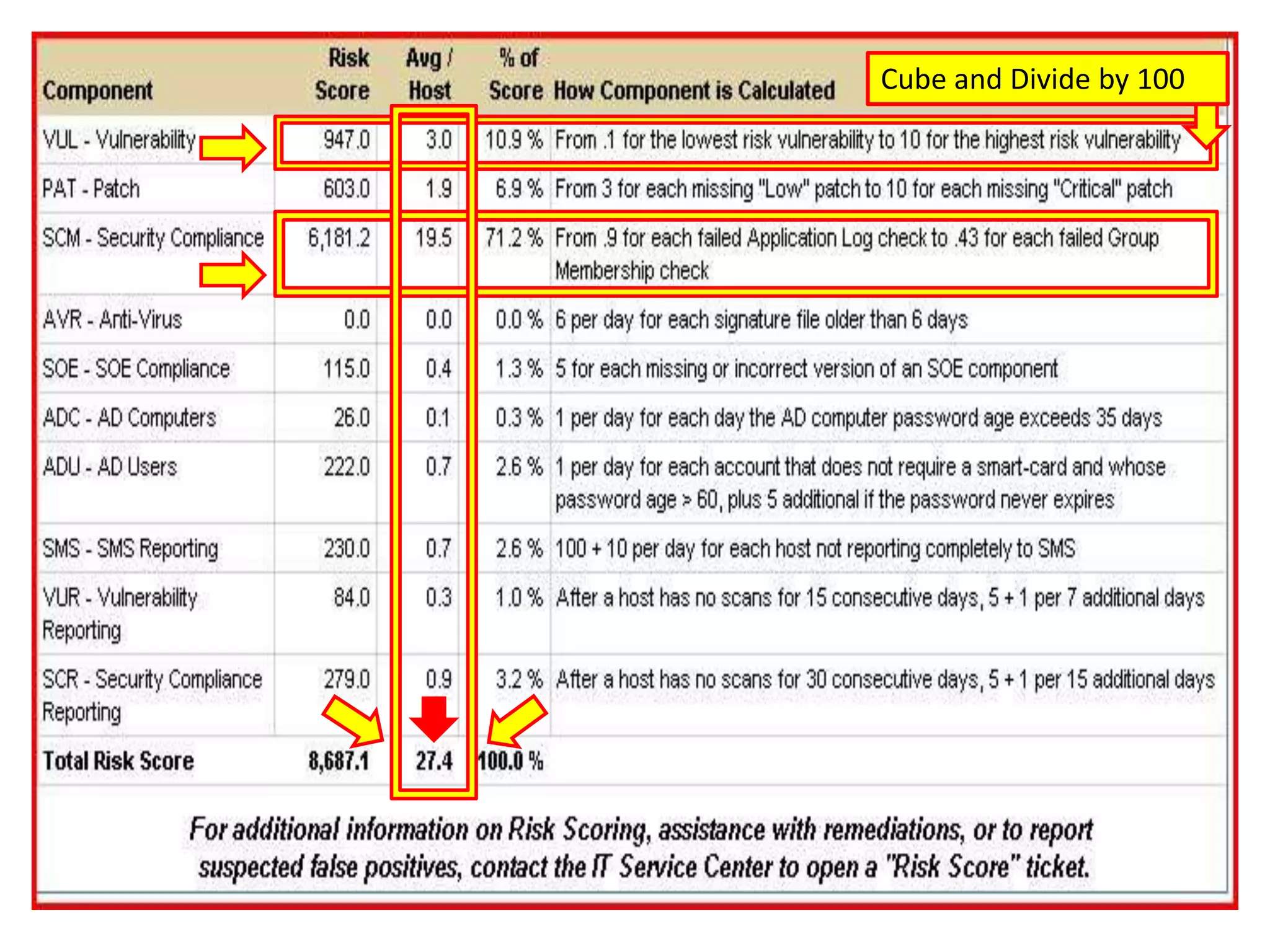
Cube and Divide by 100
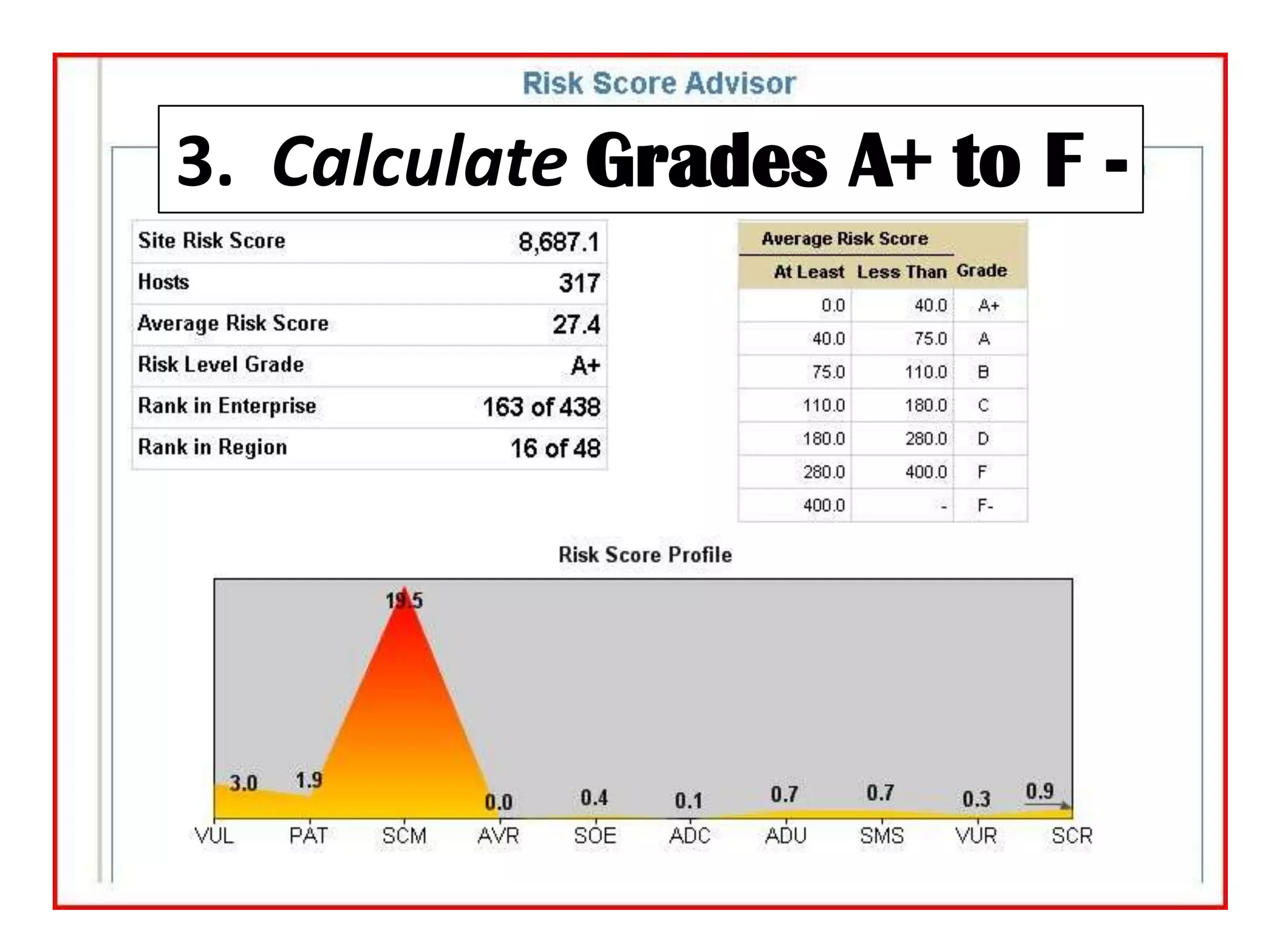
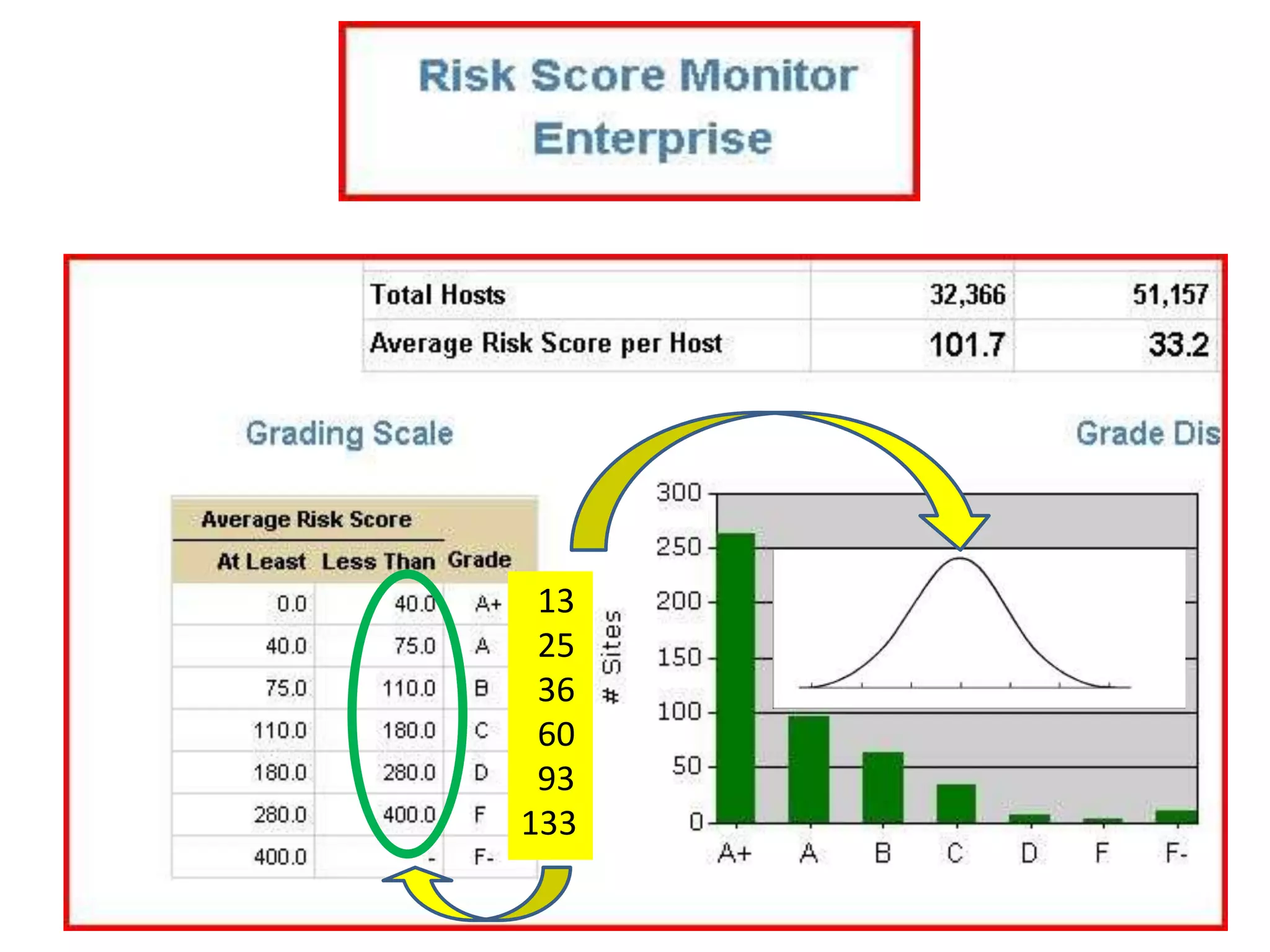
3.  CalculateGrades A+ to F -
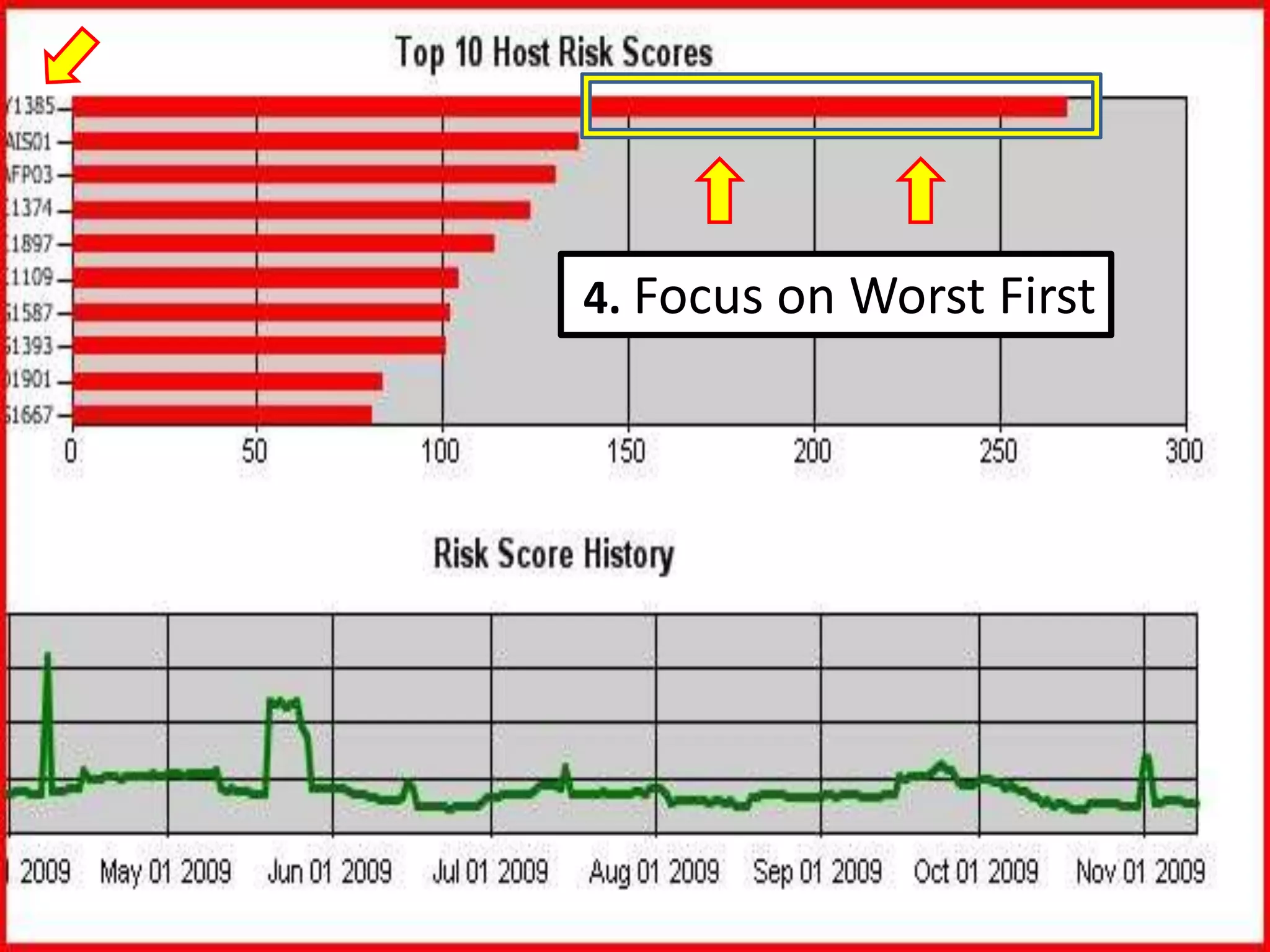
4. Focus on Worst First
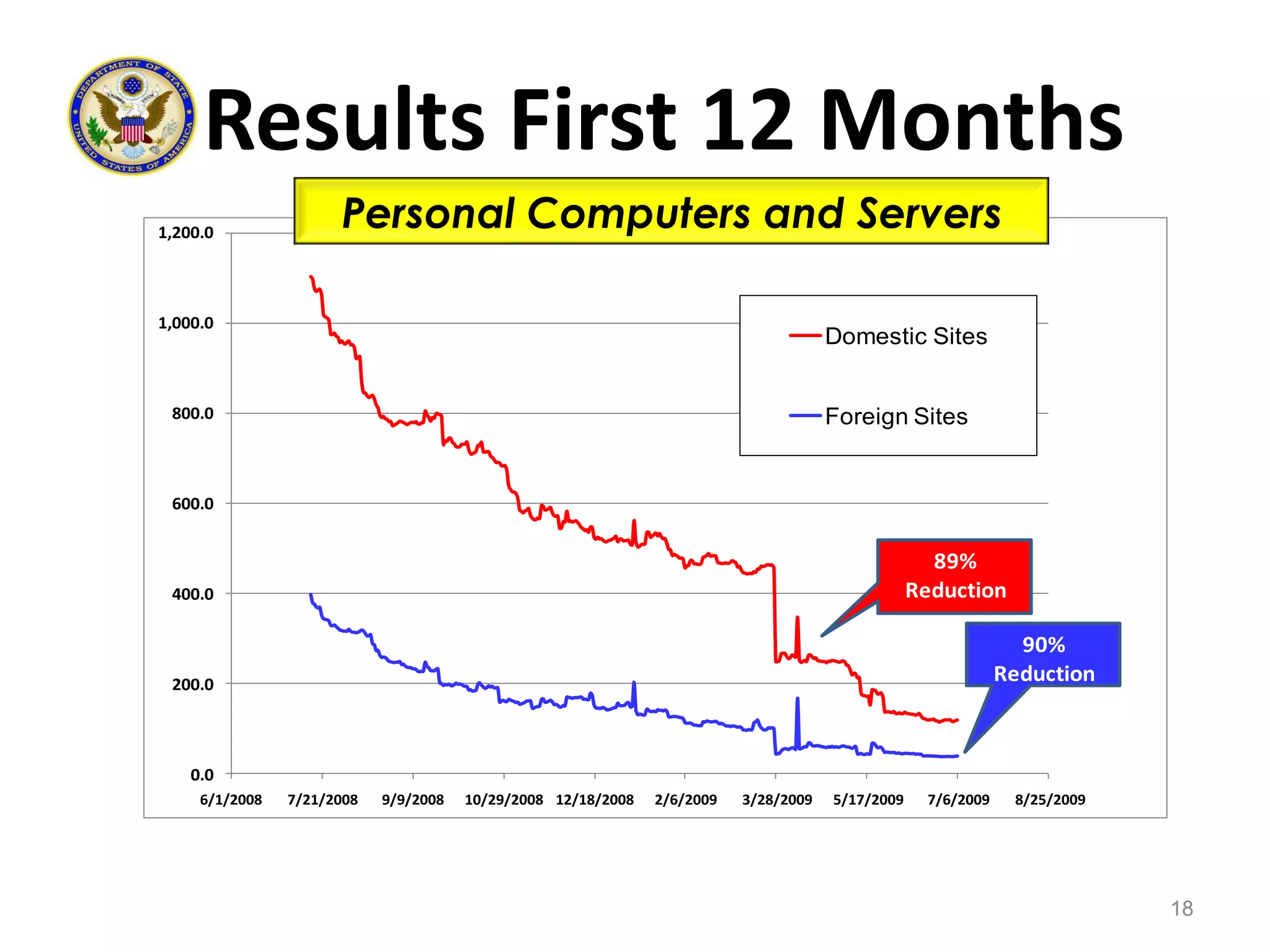
Results First 12 Months18Personal Computers and Servers
Risk Scoringin 2nd Year
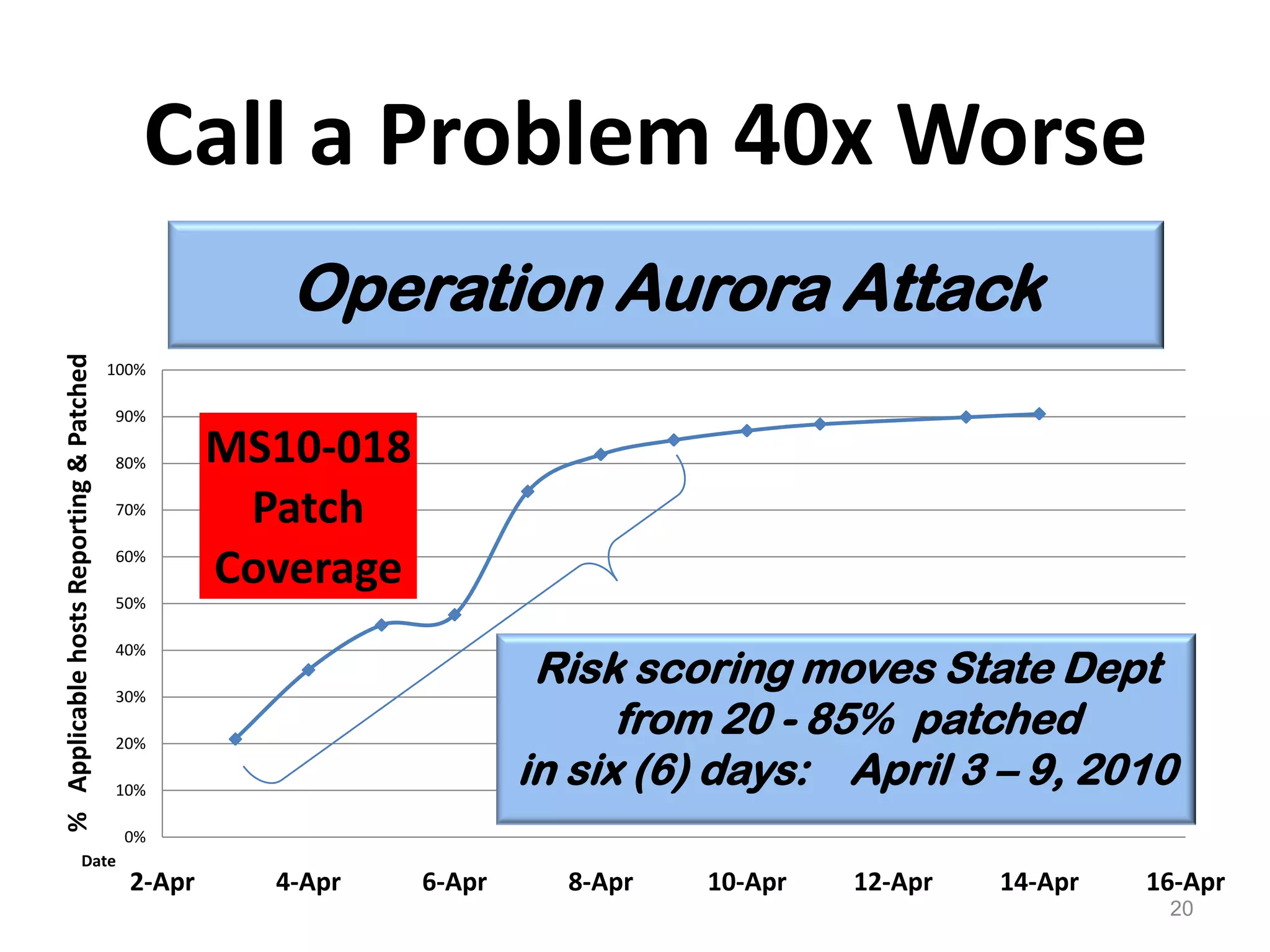
Operation Aurora Attack20Call a Problem 40x Worse
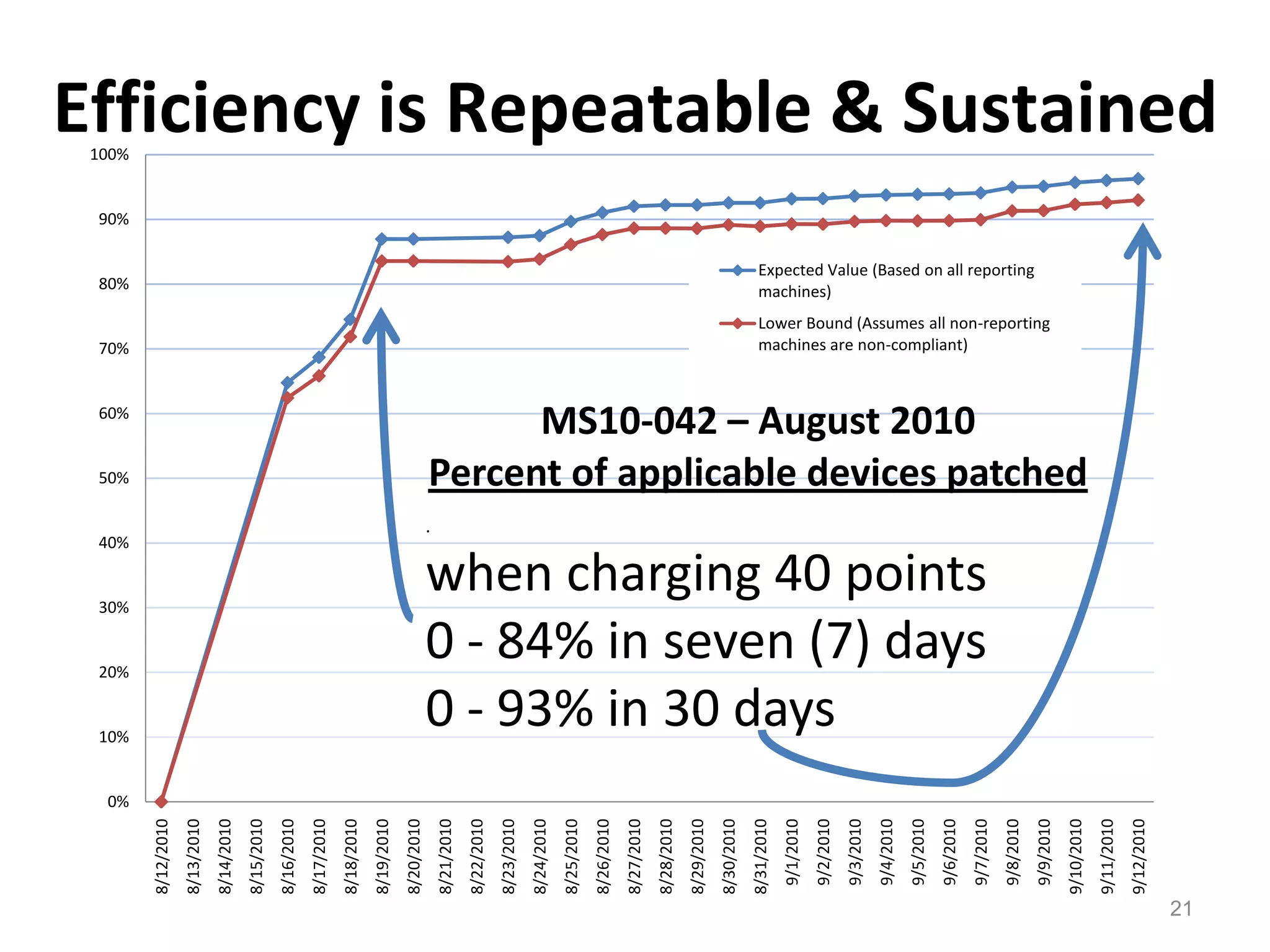
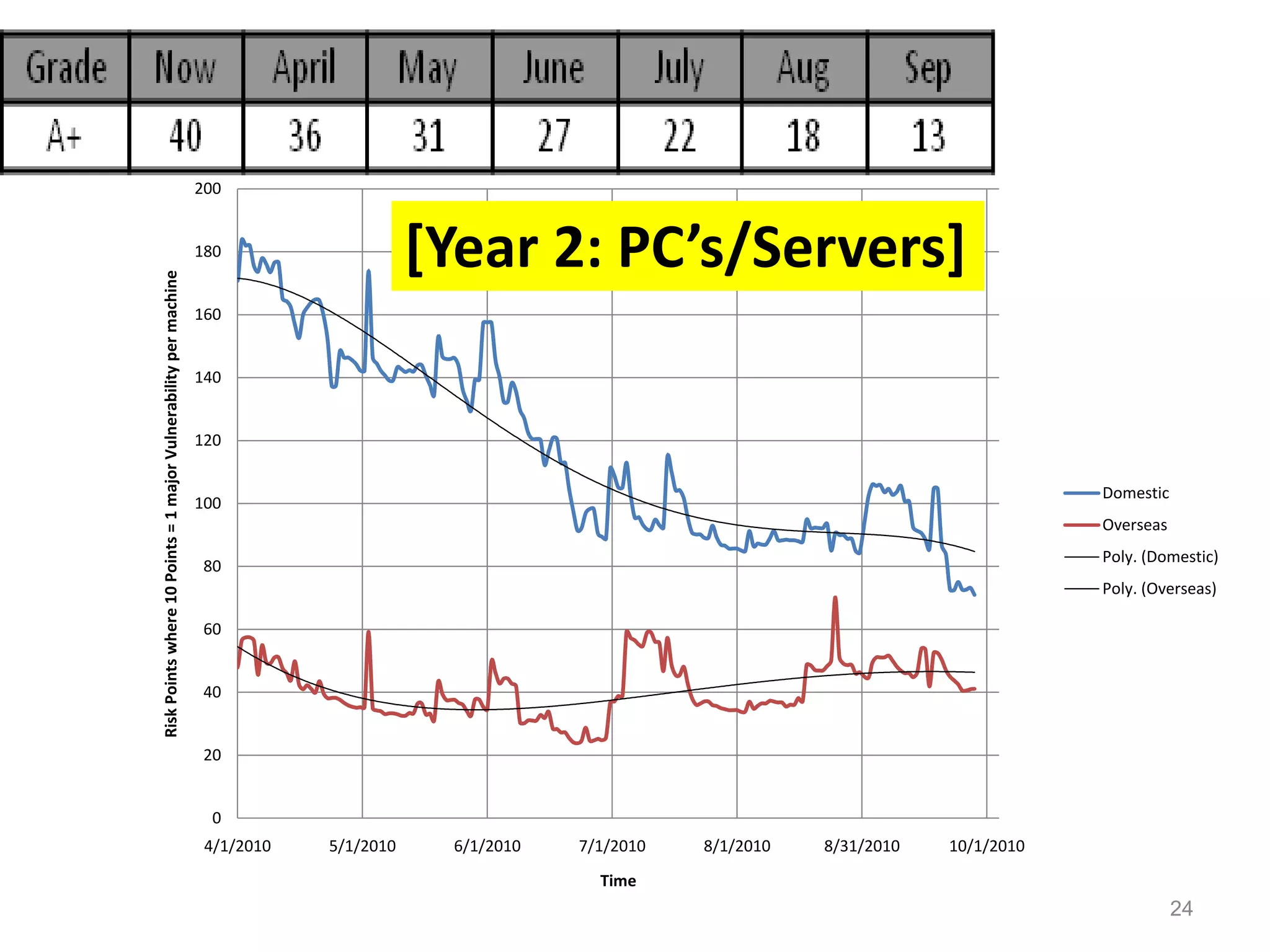
21.when charging 40 points0 - 84% in seven (7) days0 - 93% in 30 days
  13  25  36  60  93133
1/3 of Remaining Risk Removed23[Year 2: PC’s/Servers]
24
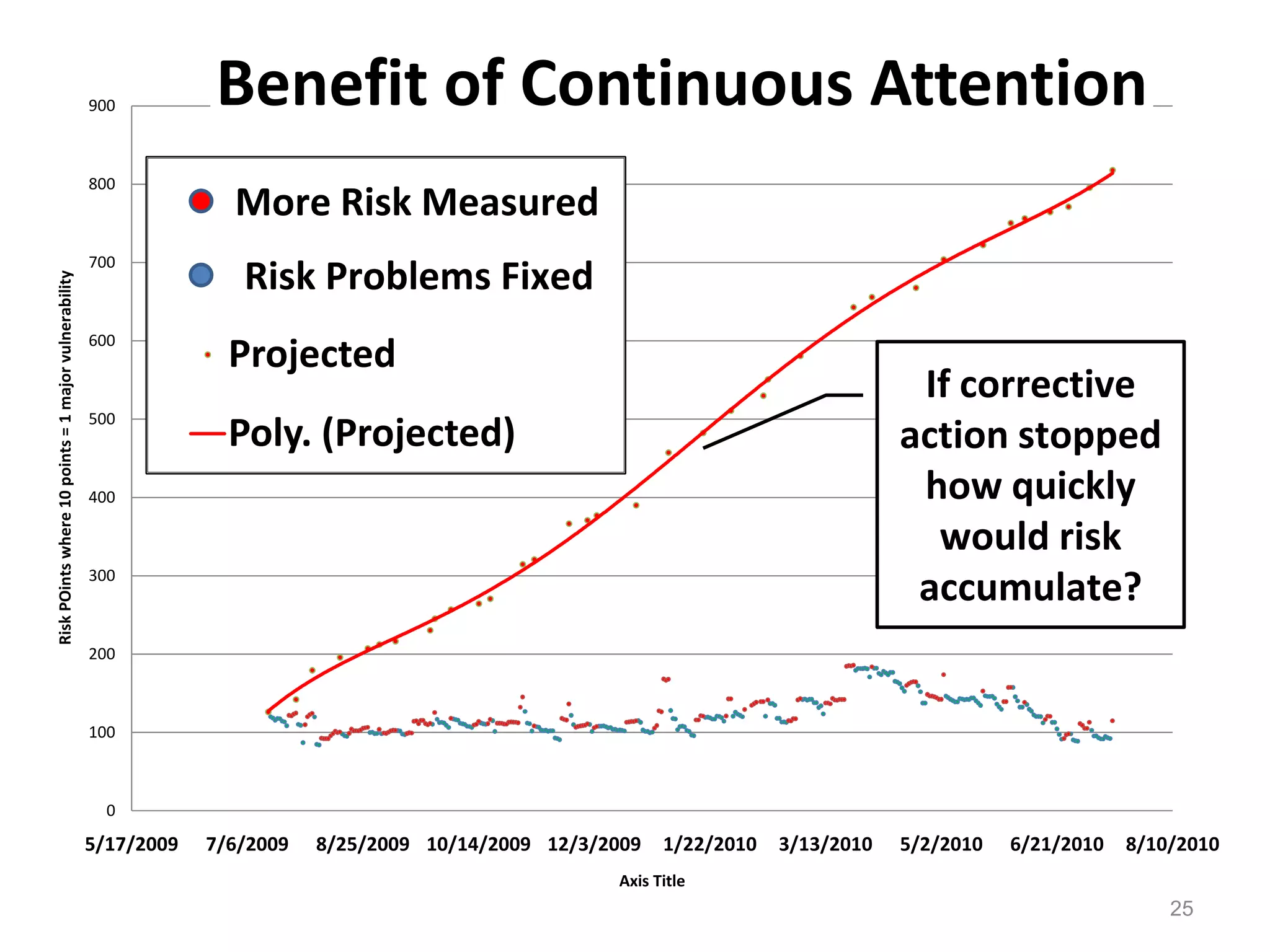
25
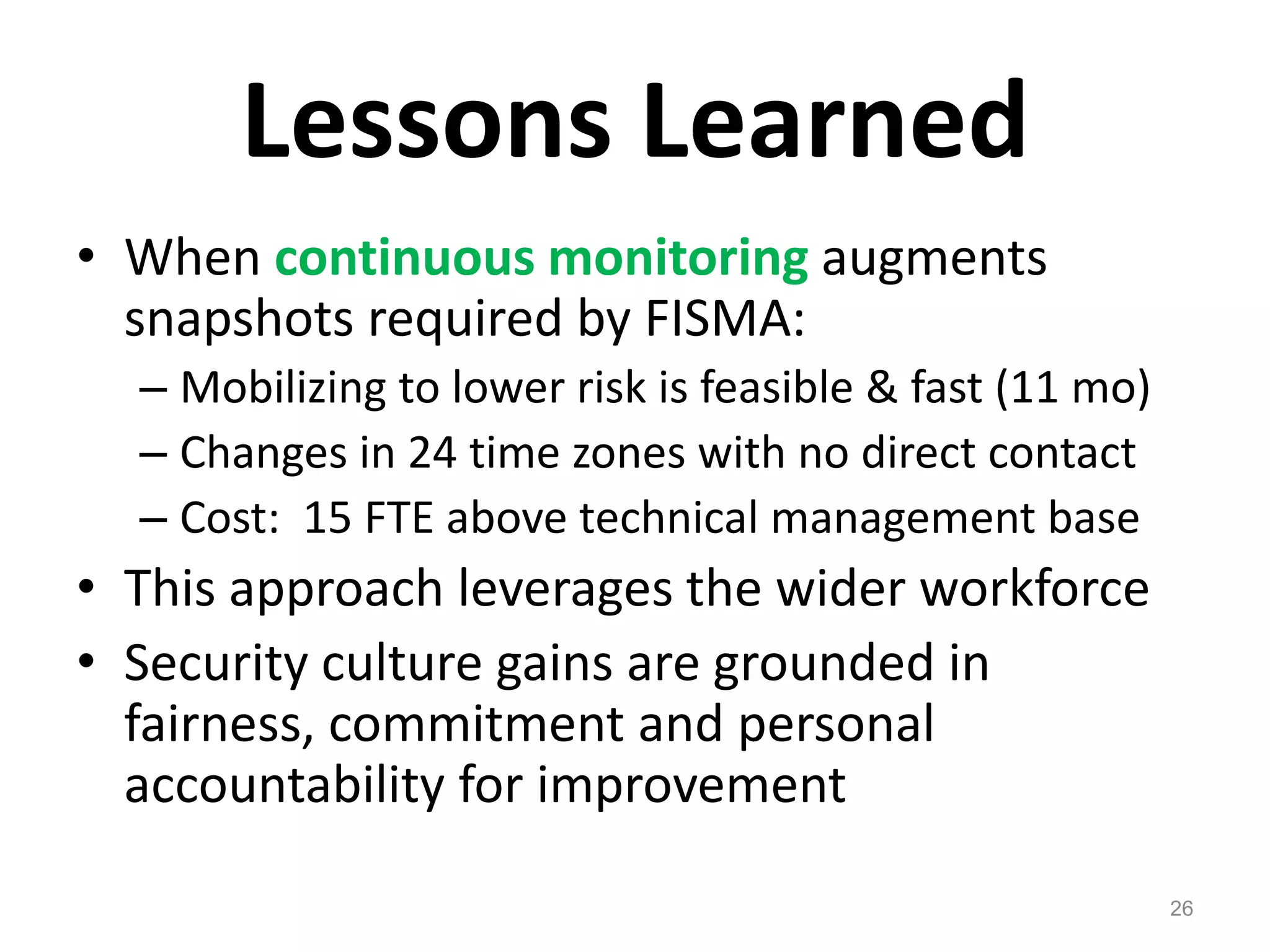
Lessons LearnedWhen continuous monitoring augments snapshots required by FISMA:Mobilizing to lower risk is feasible & fast (11 mo)Changes in 24 time zones with no direct contactCost:  15 FTE above technical management baseThis approach leverages the wider workforceSecurity culture gains are grounded in fairness, commitment and personal accountability for improvement26
Next Steps
20 Year old commercial said“The quality goes in, before the name goes on”28
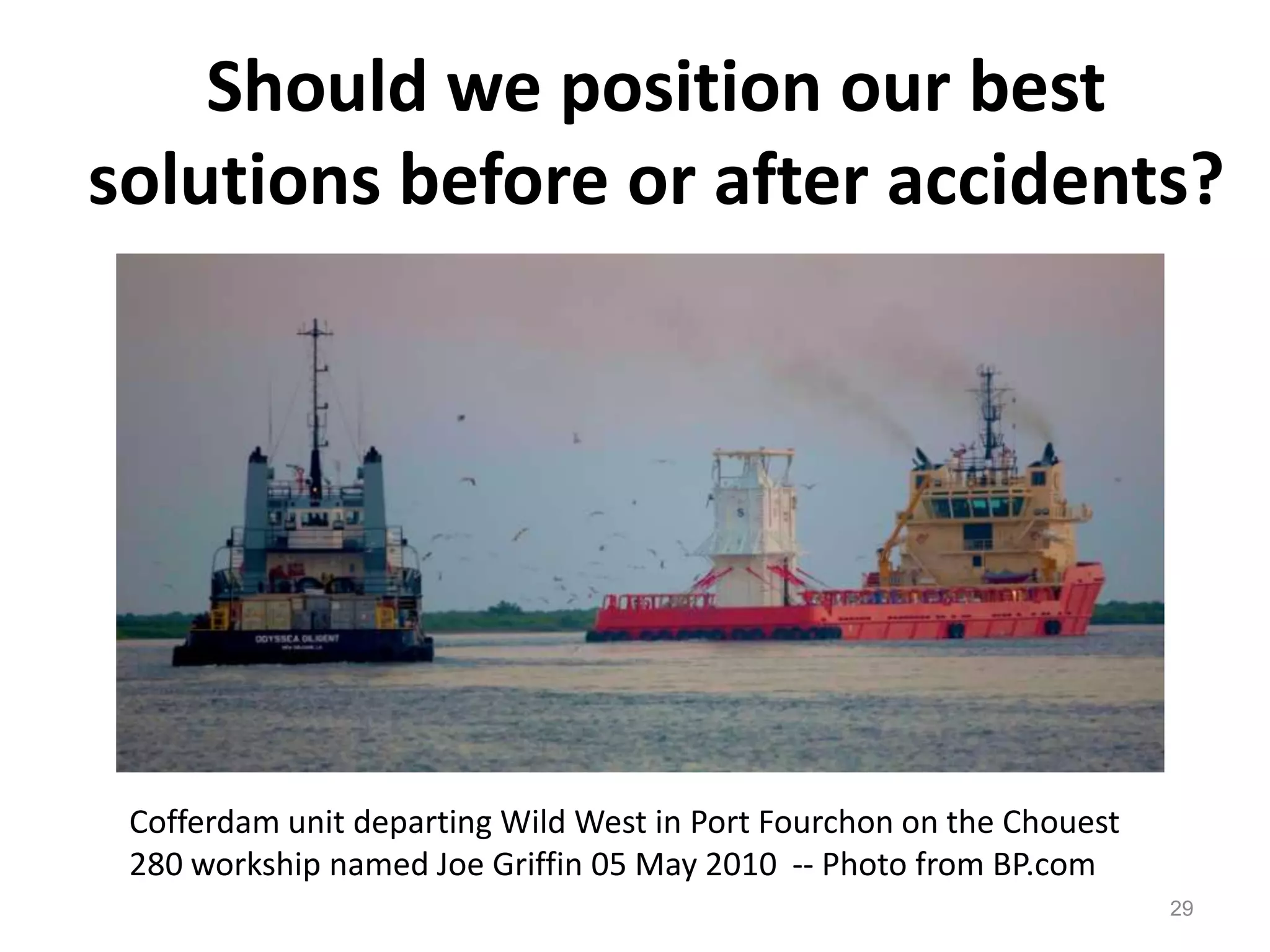
29Should we position our best solutions before or after accidents?Cofferdam unit departing Wild West in Port Fourchon on the Chouest 280 workship named Joe Griffin 05 May 2010  -- Photo from BP.com
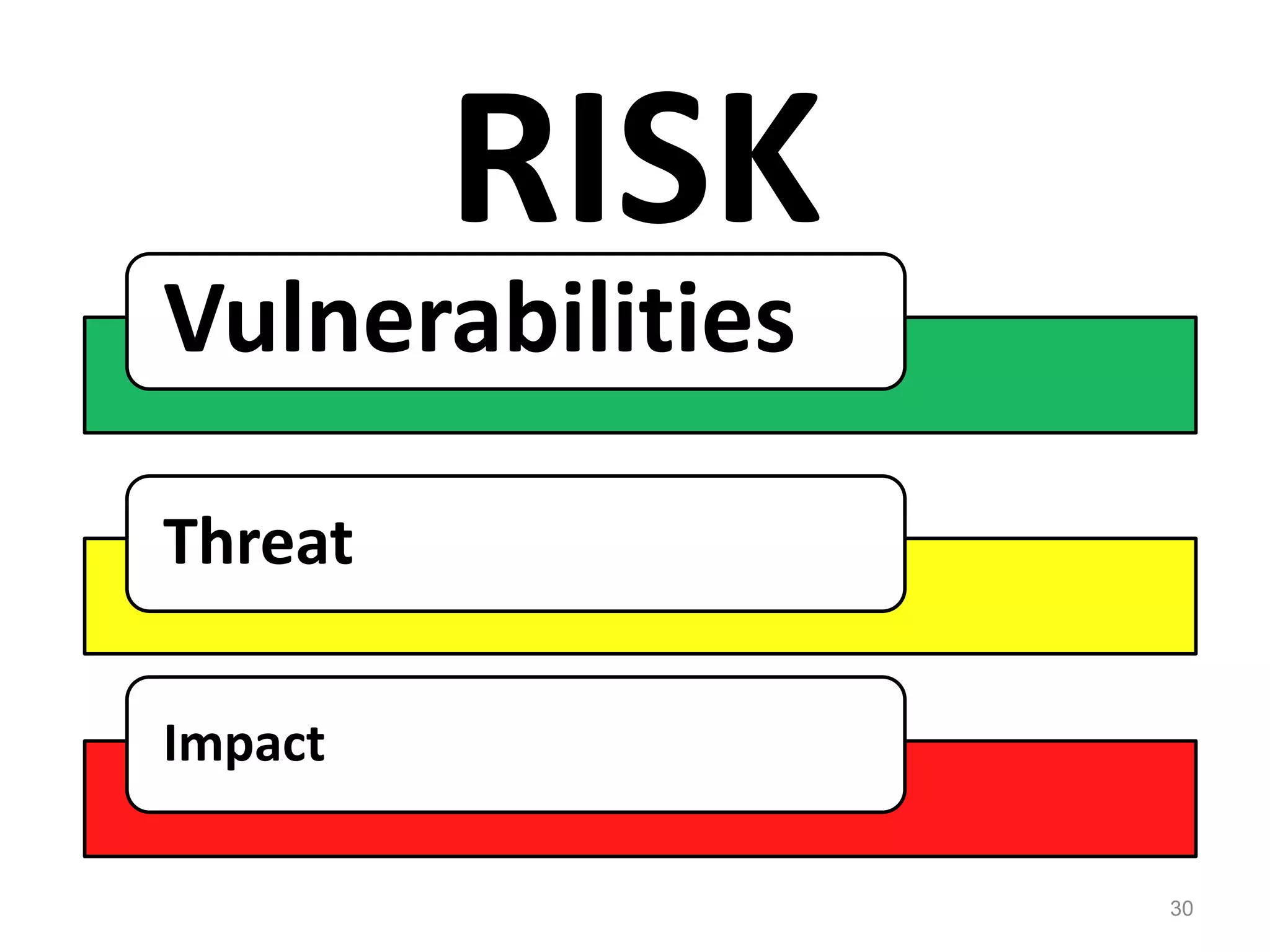
RISK30
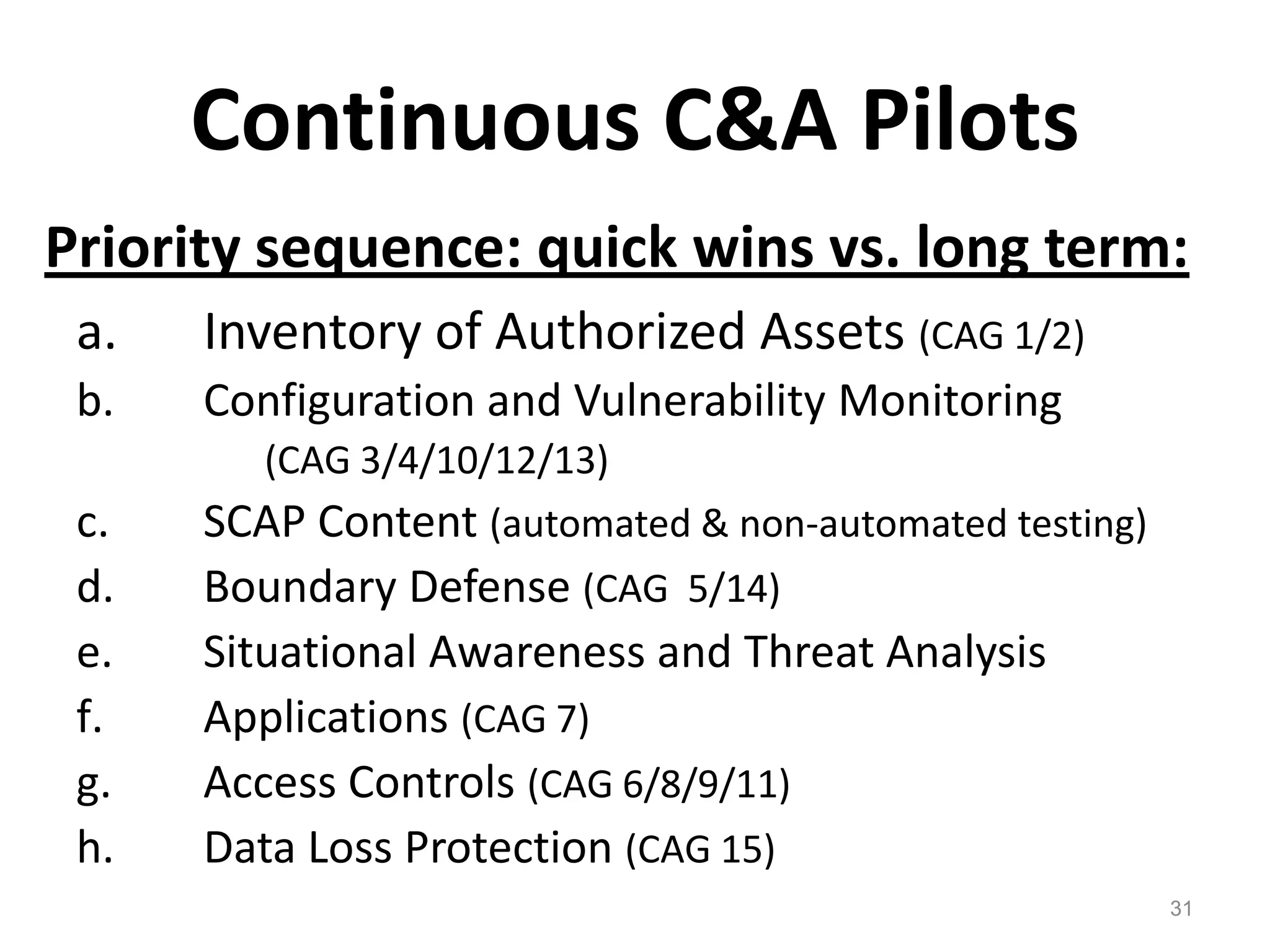
Continuous C&A PilotsPriority sequence: quick wins vs. long term:Inventory of Authorized Assets (CAG 1/2)Configuration and Vulnerability Monitoring               (CAG 3/4/10/12/13)SCAP Content (automated & non-automated testing)Boundary Defense (CAG  5/14)Situational Awareness and Threat AnalysisApplications (CAG 7)Access Controls (CAG 6/8/9/11)Data Loss Protection (CAG 15)31
32
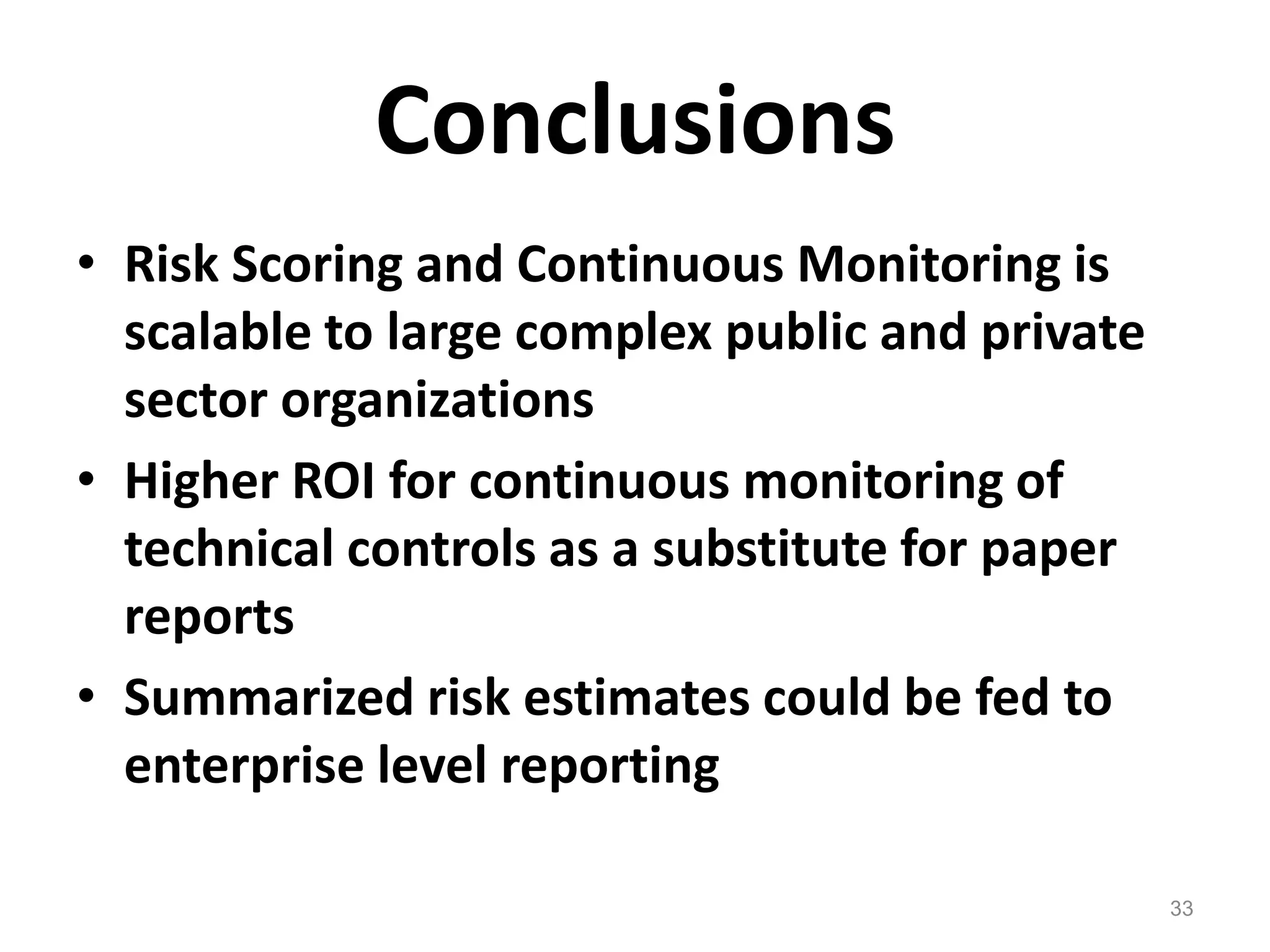
ConclusionsRisk Scoring and Continuous Monitoring is scalable to large complex public and private sector organizationsHigher ROI for continuous monitoring of technical controls as a substitute for paper reportsSummarized risk estimates could be fed to enterprise level reporting33
Continuous Monitoring: Best PracticesSteve Johnston, CISSP, ITIL, Lead Federal Systems EngineerTripwire, Inc.
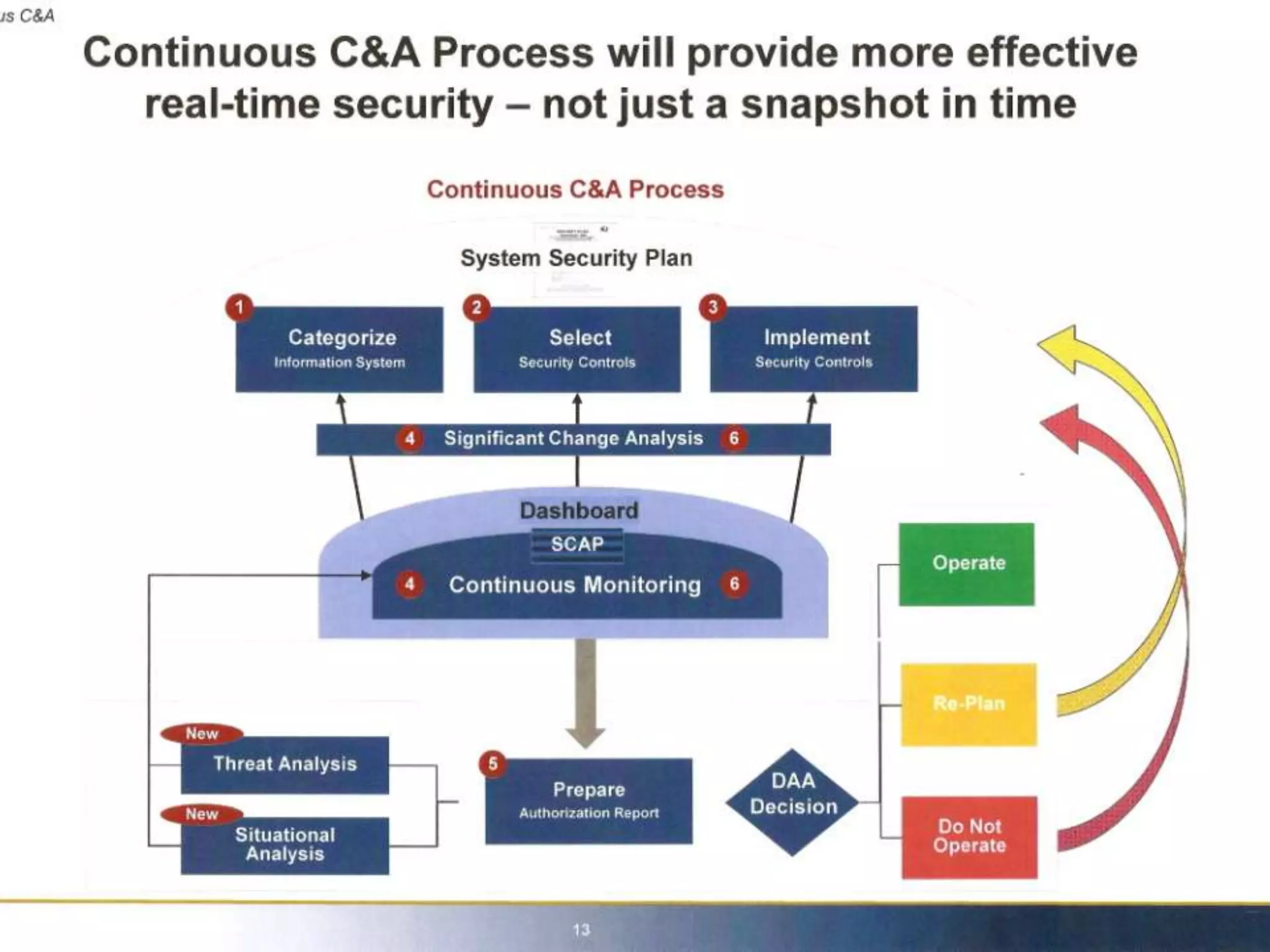
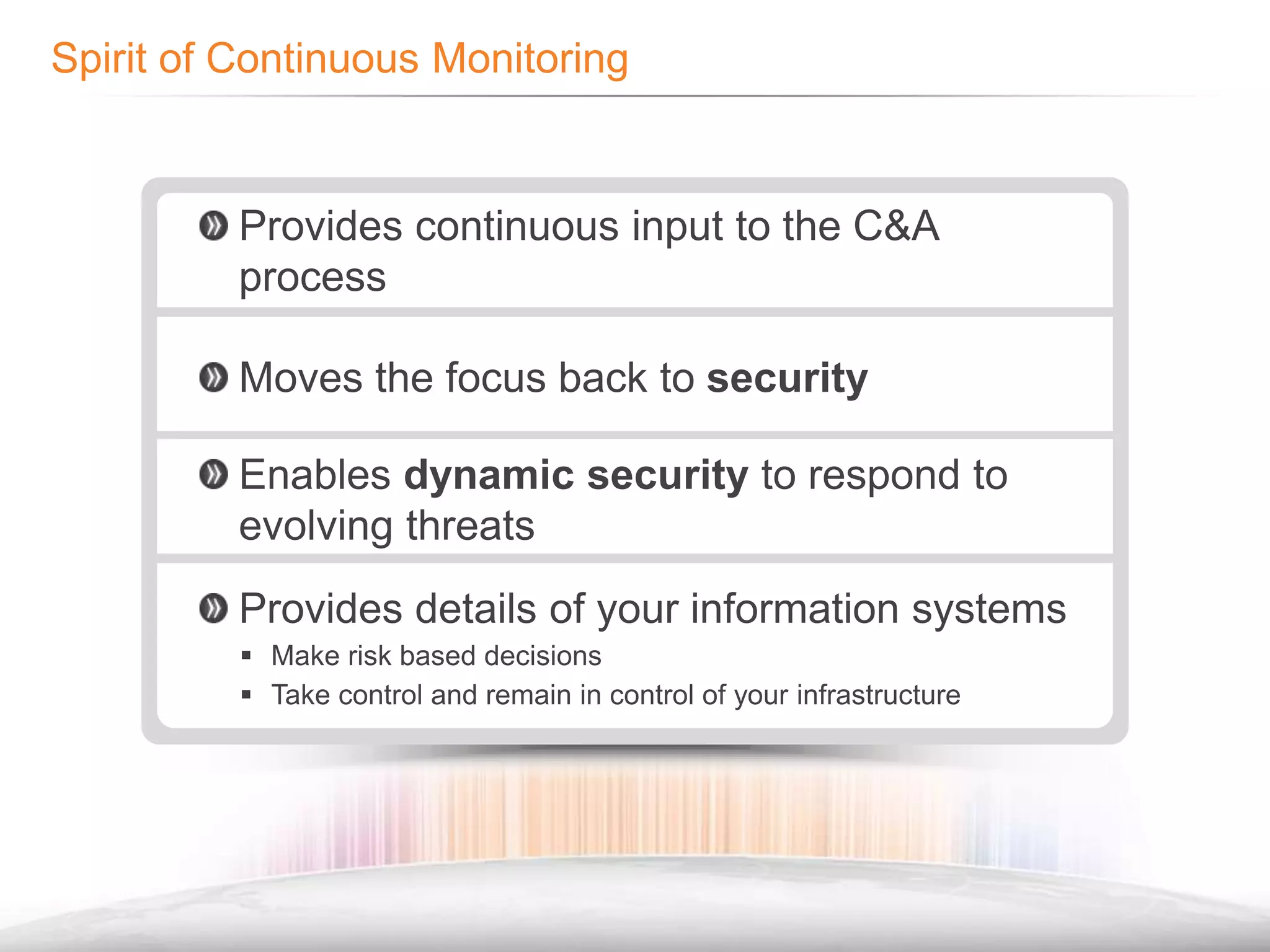
Provides continuous input to the C&A processMoves the focus back to securityEnables dynamic security to respond to evolving threatsProvides details of your information systemsMake risk based decisions
Take control and remain in control of your infrastructureSpirit of Continuous Monitoring
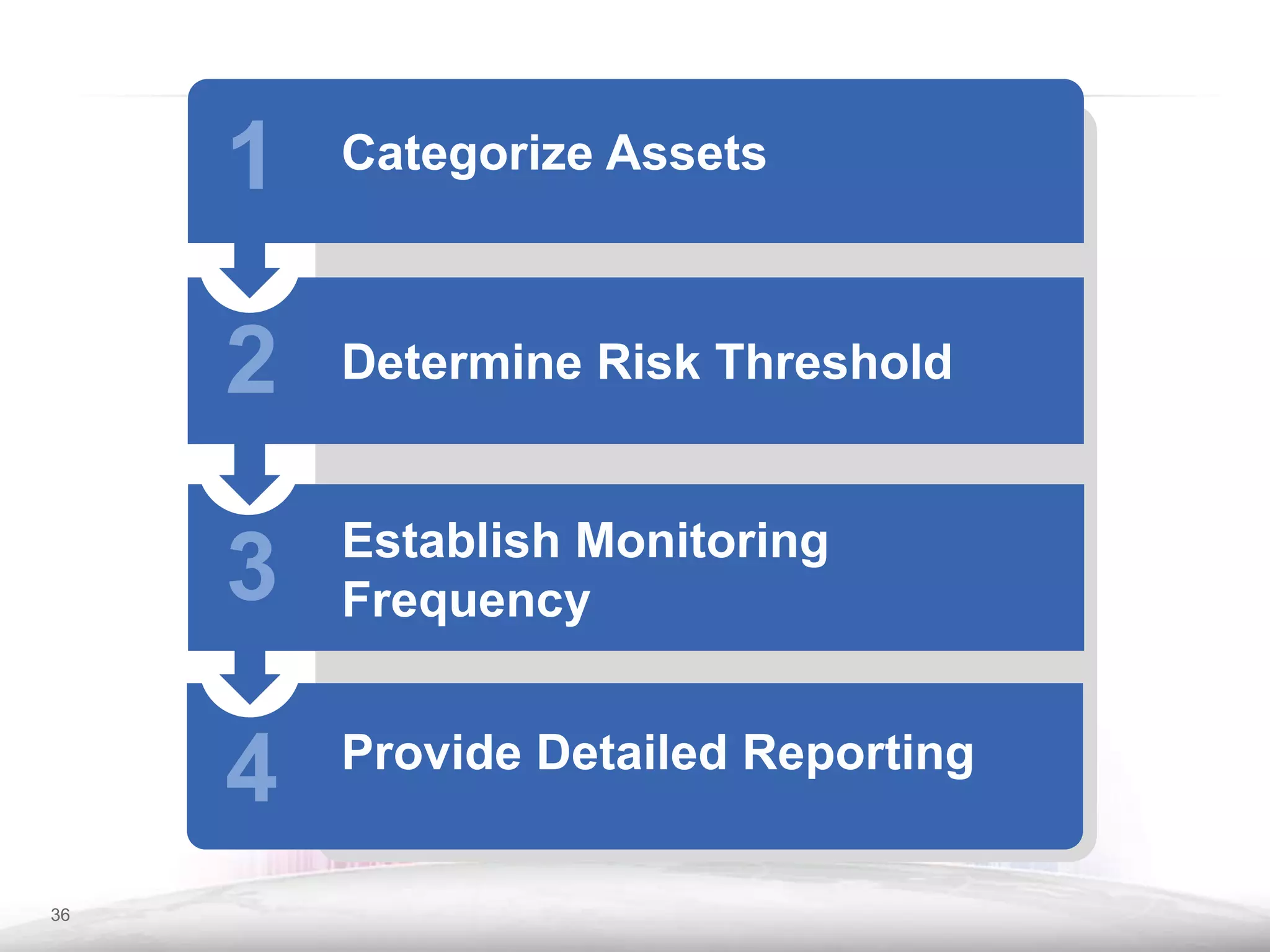
1Categorize Assets2Determine Risk Threshold3Establish Monitoring Frequency4Provide Detailed Reporting36
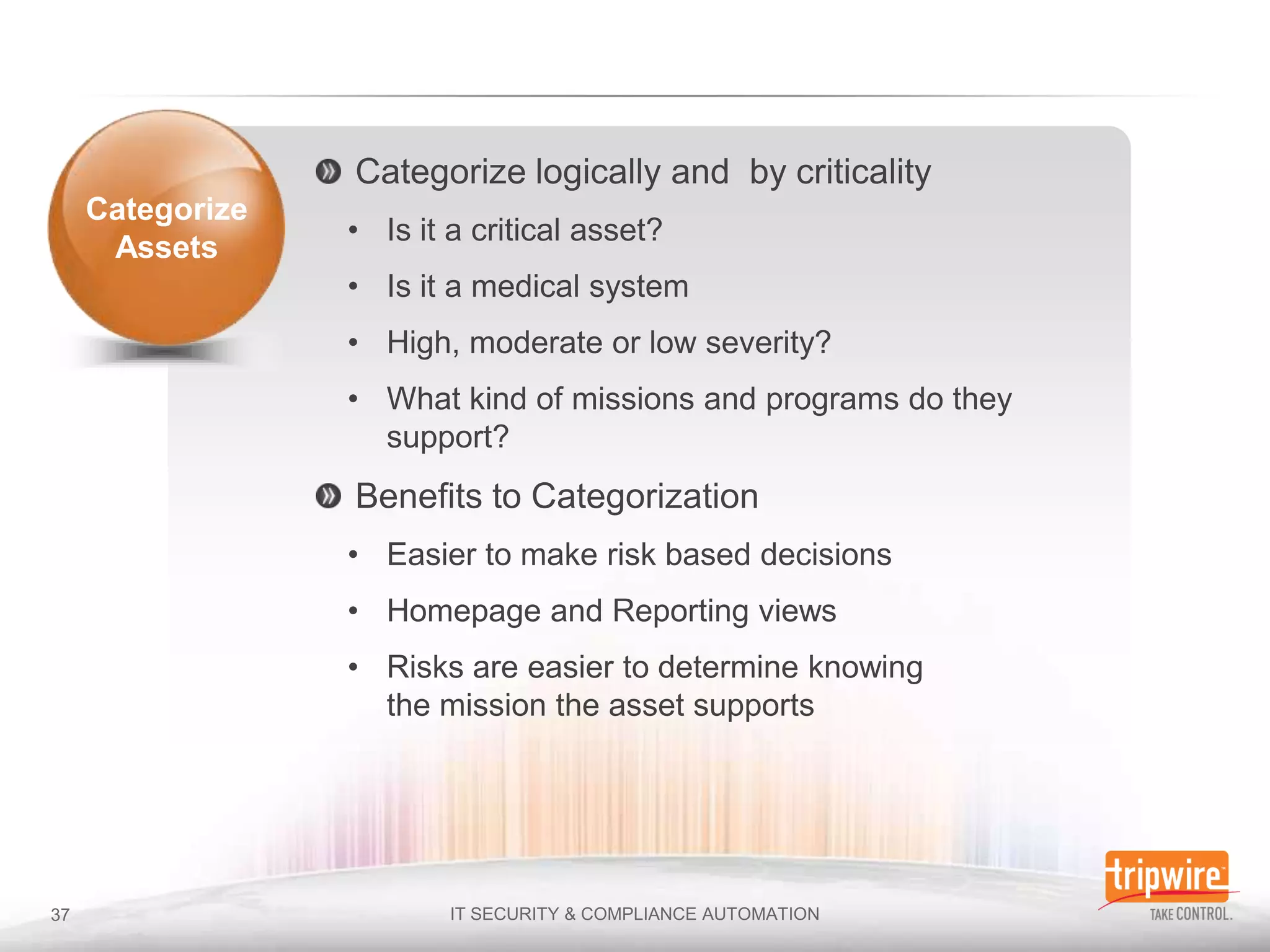
Categorize logically and  by criticalityIs it a critical asset?Is it a medical systemHigh, moderate or low severity?What kind of missions and programs do they support?Benefits to CategorizationEasier to make risk based decisionsHomepage and Reporting viewsRisks are easier to determine knowing the mission the asset supports37Categorize Assets
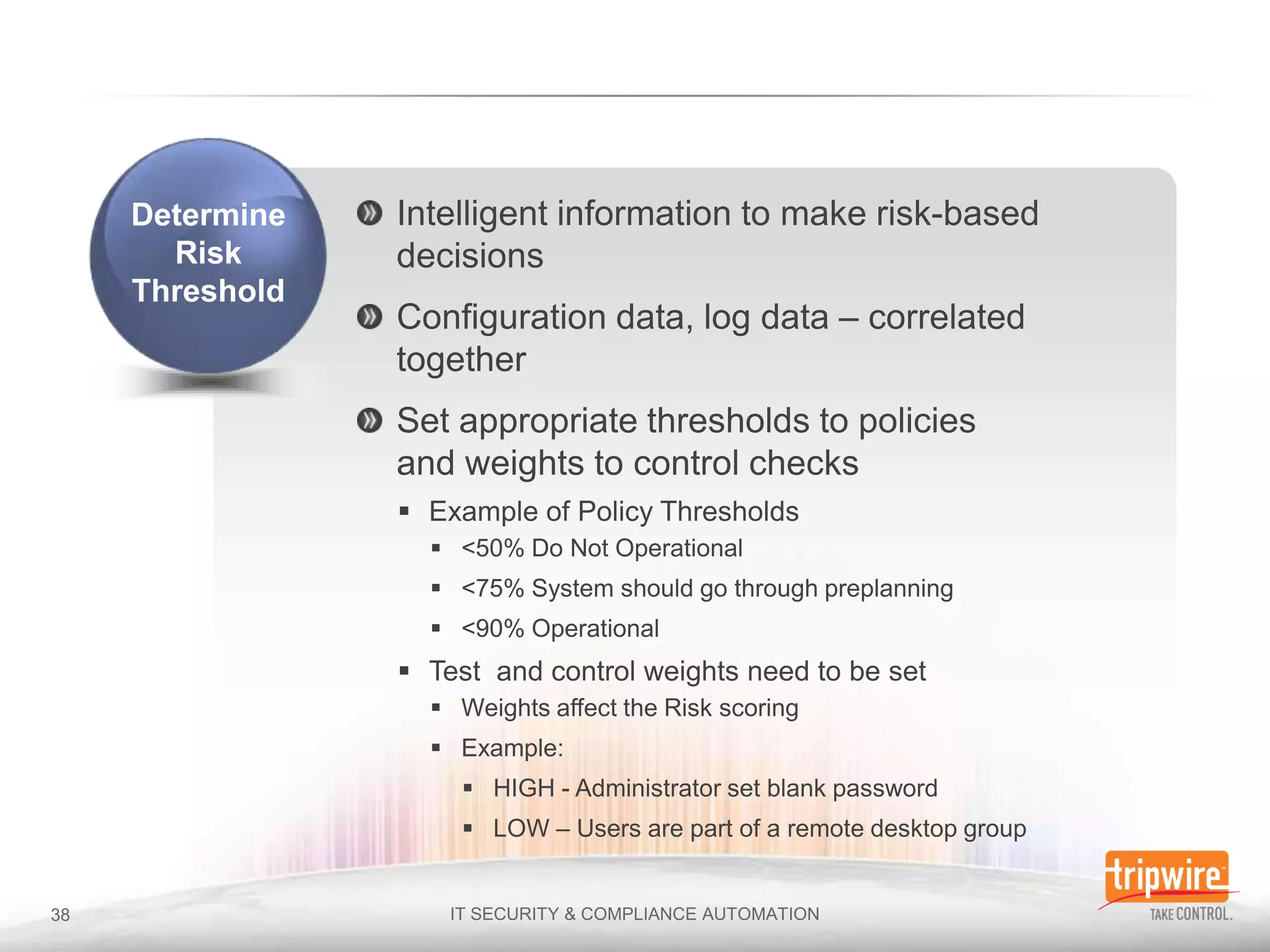
Intelligent information to make risk-based decisionsConfiguration data, log data – correlated togetherSet appropriate thresholds to policies and weights to control checksExample of Policy Thresholds
<50% Do Not Operational
<75% System should go through preplanning
<90% Operational
Test  and control weights need to be set
Weights affect the Risk scoring
Example:
HIGH - Administrator set blank password
LOW – Users are part of a remote desktop groupDetermine Risk Threshold38
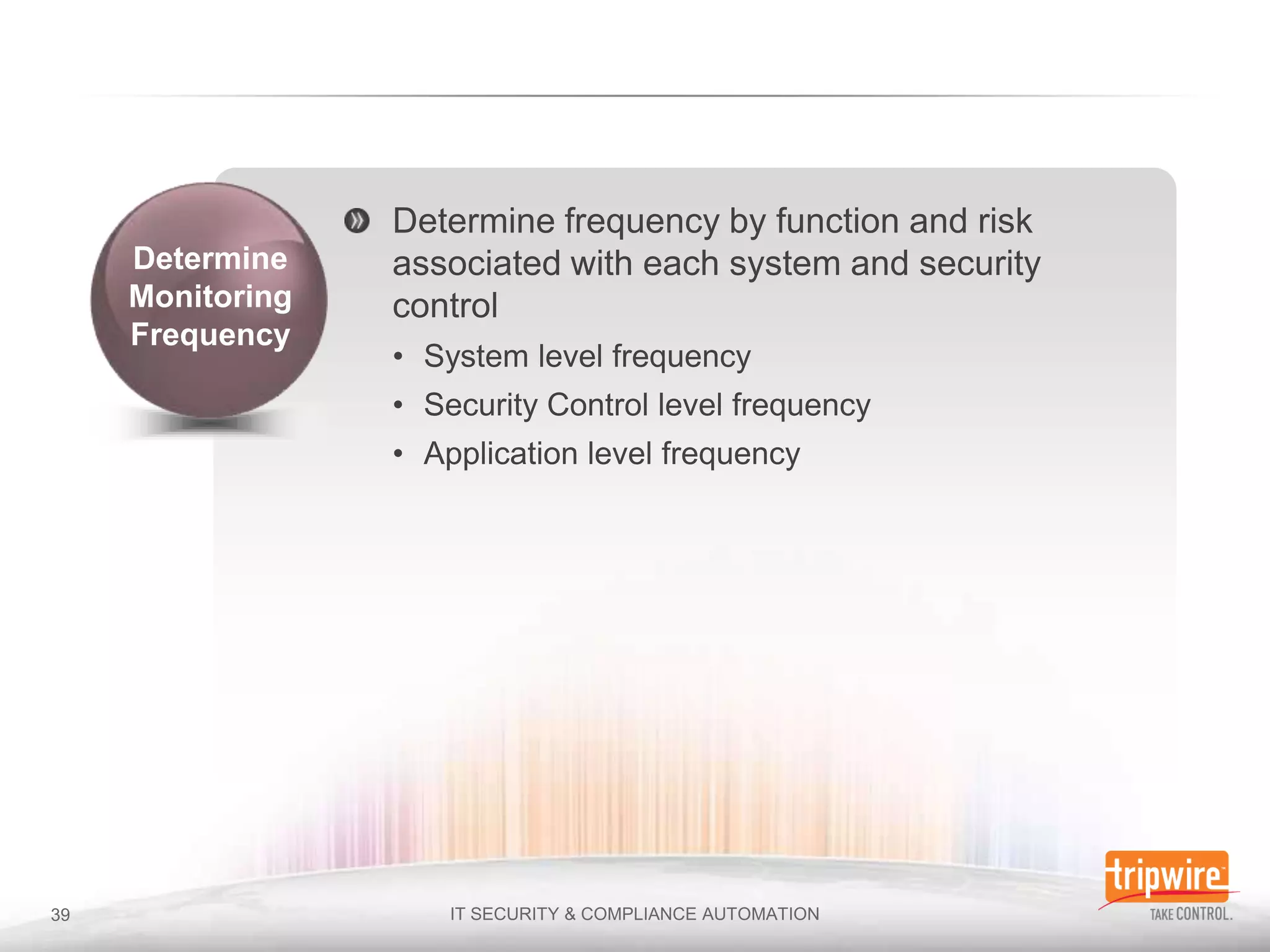
39Determine frequency by function and risk associated with each system and security controlSystem level frequencySecurity Control level frequencyApplication level frequencyDetermine Monitoring Frequency

Developing a Continuous Monitoring Action Plan

  • 1.
    Developing a ContinuousMonitoring Action PlanAn InformationWeek Government Webcast Sponsored by
  • 2.
  • 3.
  • 4.
    Today’s PresentersJohn StreufertDeputyChief Information Officer Information AssuranceUnited States Department of StateSteve Johnston CISSP, ITIL Lead Federal Systems EngineerTripwire, Inc.
  • 5.
    What Is ContinuousMonitoring? “Information security continuous monitoring is defined as maintaining ongoing awareness of information security, vulnerabilities, and threats to support organizational risk management decisions.” >>NIST SP 800-137
  • 6.
    Building It IntoThe IT Budget “What makes us more secure is real-time security monitoring--continuous monitoring--and acting on data. That's why agencies are directed as part of the FY 2012 budgeting process to make sure that their budget reflects presidential priority in terms of investing in tools, not in paperwork reports.” >>Federal CIO Vivek Kundra, June 2010
  • 7.
  • 8.
    CIA Invests InRedSeal Systems "Continuous monitoring technologies will enable the U.S. intelligence community to effectively operate the complex, dynamic network defenses that protect critical information and systems.”>>William Strecker, CTO, In-Q-Tel
  • 9.
    FISMA 2.0: AContinuous MonitoringCase StudyJohn Streufert ( DOSCISO@state.gov )Deputy Chief Information Officer for Information Security US Department of StateFebruary 14, 2011
  • 10.
    Nature of Attacks80% of attacks leverage known vulnerabilities and configuration management setting weaknesses10
  • 11.
  • 12.
    Case Study:Scan every36-72 hoursFind & Fix Top Issues DailyPersonal results graded Hold managers responsible12
  • 13.
    How: 1. Narrow Aim13[11 months before Feb 09]
  • 14.
    2.Bad things byNumbersChemical DumpingLittering vs.L.A. Hotel Pays a$200,000 fine because an employee dumps pool chemicals into a drain fumes fill a subway station-- several people become ill March 23, 201014
  • 15.
  • 16.
  • 17.
    4. Focus onWorst First
  • 18.
    Results First 12Months18Personal Computers and Servers
  • 19.
  • 20.
  • 21.
    21.when charging 40points0 - 84% in seven (7) days0 - 93% in 30 days
  • 22.
    13 25 36 60 93133
  • 23.
    1/3 of RemainingRisk Removed23[Year 2: PC’s/Servers]
  • 24.
  • 25.
  • 26.
    Lessons LearnedWhen continuousmonitoring augments snapshots required by FISMA:Mobilizing to lower risk is feasible & fast (11 mo)Changes in 24 time zones with no direct contactCost: 15 FTE above technical management baseThis approach leverages the wider workforceSecurity culture gains are grounded in fairness, commitment and personal accountability for improvement26
  • 27.
  • 28.
    20 Year oldcommercial said“The quality goes in, before the name goes on”28
  • 29.
    29Should we positionour best solutions before or after accidents?Cofferdam unit departing Wild West in Port Fourchon on the Chouest 280 workship named Joe Griffin 05 May 2010 -- Photo from BP.com
  • 30.
  • 31.
    Continuous C&A PilotsPrioritysequence: quick wins vs. long term:Inventory of Authorized Assets (CAG 1/2)Configuration and Vulnerability Monitoring (CAG 3/4/10/12/13)SCAP Content (automated & non-automated testing)Boundary Defense (CAG 5/14)Situational Awareness and Threat AnalysisApplications (CAG 7)Access Controls (CAG 6/8/9/11)Data Loss Protection (CAG 15)31
  • 32.
  • 33.
    ConclusionsRisk Scoring andContinuous Monitoring is scalable to large complex public and private sector organizationsHigher ROI for continuous monitoring of technical controls as a substitute for paper reportsSummarized risk estimates could be fed to enterprise level reporting33
  • 34.
    Continuous Monitoring: BestPracticesSteve Johnston, CISSP, ITIL, Lead Federal Systems EngineerTripwire, Inc.
  • 35.
    Provides continuous inputto the C&A processMoves the focus back to securityEnables dynamic security to respond to evolving threatsProvides details of your information systemsMake risk based decisions
  • 36.
    Take control andremain in control of your infrastructureSpirit of Continuous Monitoring
  • 37.
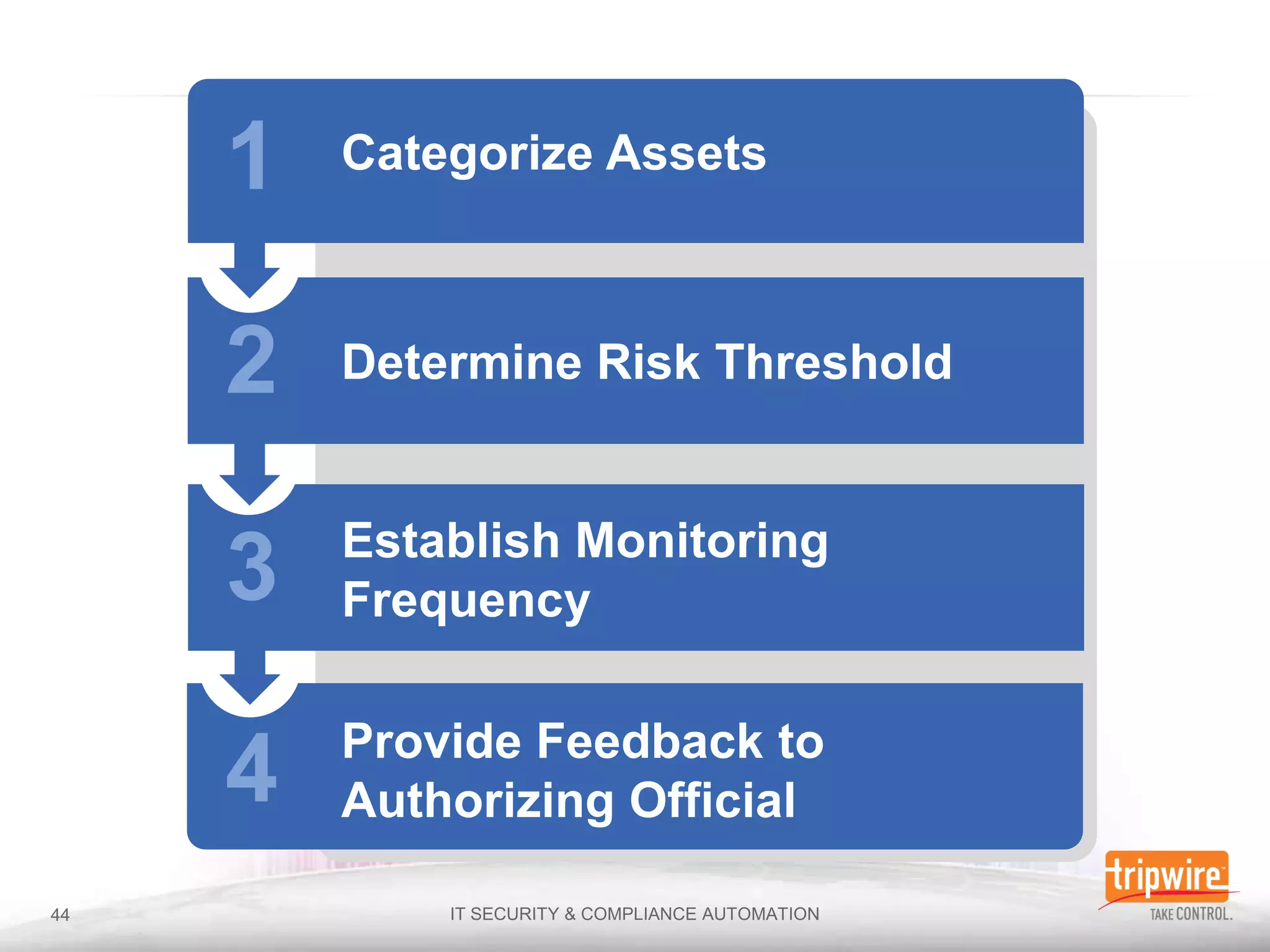
    1Categorize Assets2Determine RiskThreshold3Establish Monitoring Frequency4Provide Detailed Reporting36
  • 38.
    Categorize logically and by criticalityIs it a critical asset?Is it a medical systemHigh, moderate or low severity?What kind of missions and programs do they support?Benefits to CategorizationEasier to make risk based decisionsHomepage and Reporting viewsRisks are easier to determine knowing the mission the asset supports37Categorize Assets
  • 39.
    Intelligent information tomake risk-based decisionsConfiguration data, log data – correlated togetherSet appropriate thresholds to policies and weights to control checksExample of Policy Thresholds
  • 40.
    <50% Do NotOperational
  • 41.
    <75% System shouldgo through preplanning
  • 42.
  • 43.
    Test andcontrol weights need to be set
  • 44.
    Weights affect theRisk scoring
  • 45.
  • 46.
    HIGH - Administratorset blank password
  • 47.
    LOW – Usersare part of a remote desktop groupDetermine Risk Threshold38
  • 48.
    39Determine frequency byfunction and risk associated with each system and security controlSystem level frequencySecurity Control level frequencyApplication level frequencyDetermine Monitoring Frequency
  • 49.
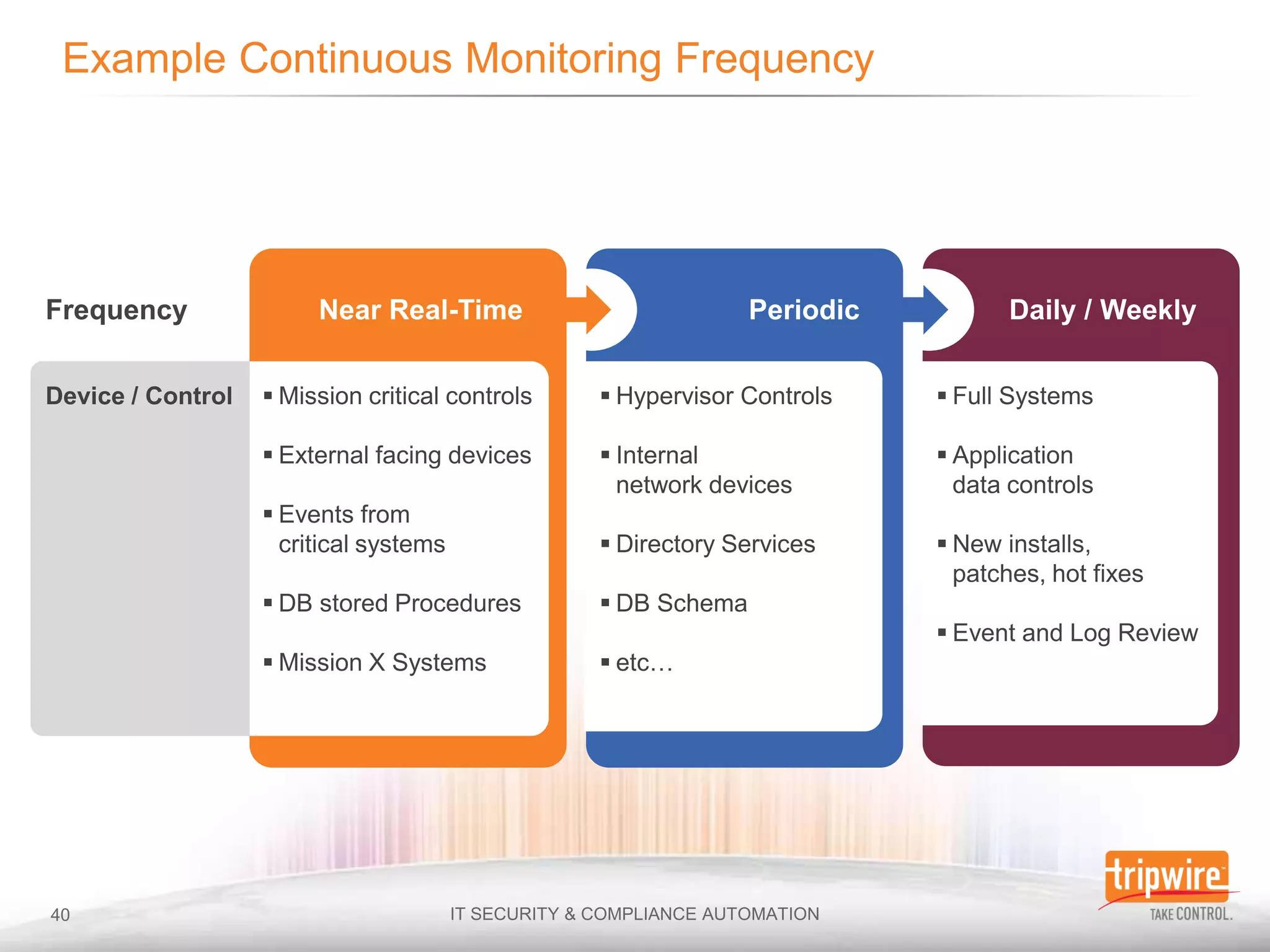
    Example Continuous MonitoringFrequency40Near Real-Time PeriodicDaily / WeeklyFrequencyMission critical controls
  • 50.
  • 51.
  • 52.
  • 53.
  • 54.
  • 55.
  • 56.
  • 57.
  • 58.
  • 59.
  • 60.
  • 61.
  • 62.
  • 63.
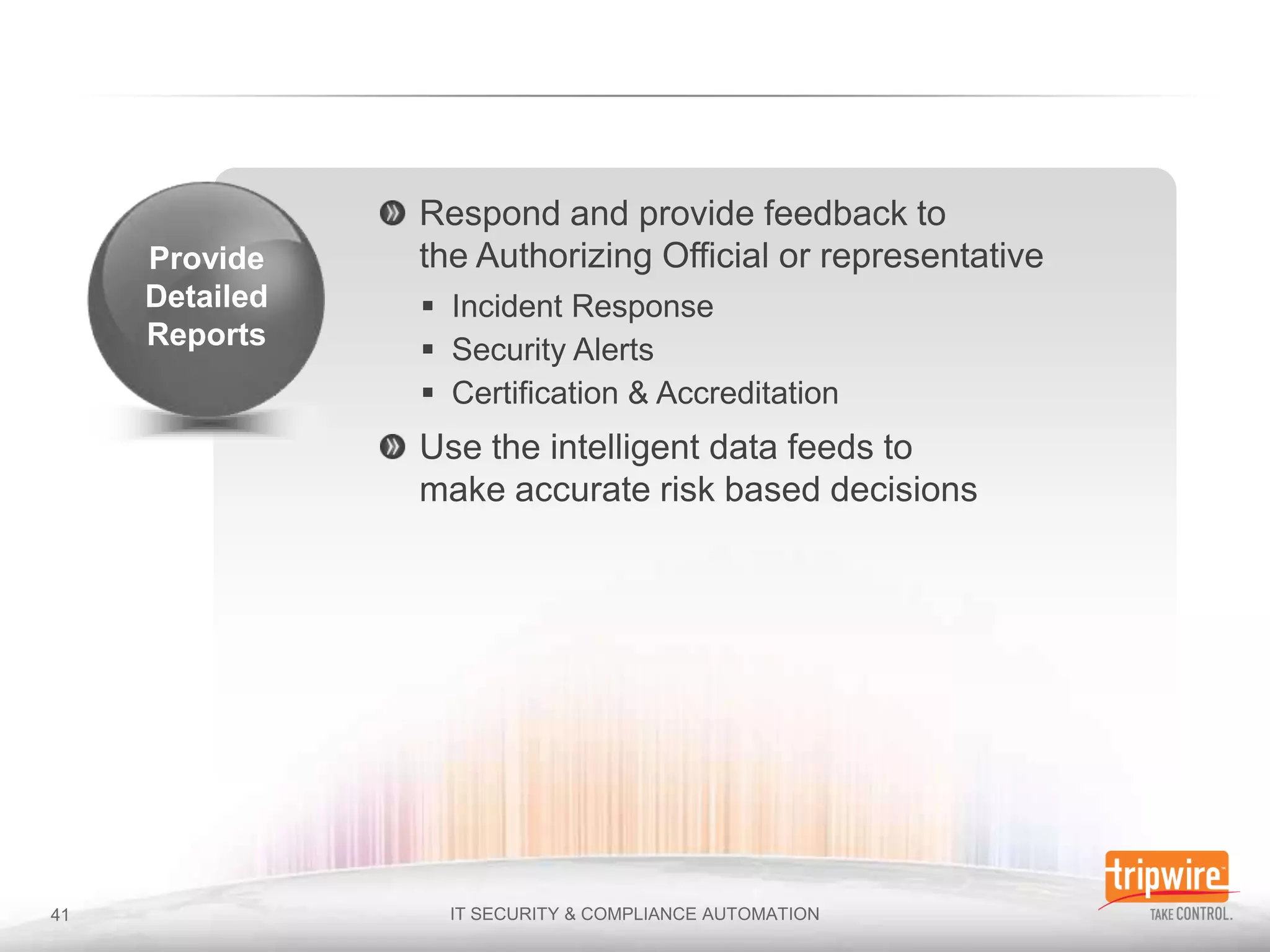
    Respond and providefeedback to the Authorizing Official or representativeIncident Response
  • 64.
  • 65.
    Certification & AccreditationUsethe intelligent data feeds to make accurate risk based decisionsProvide Detailed Reports41
  • 66.
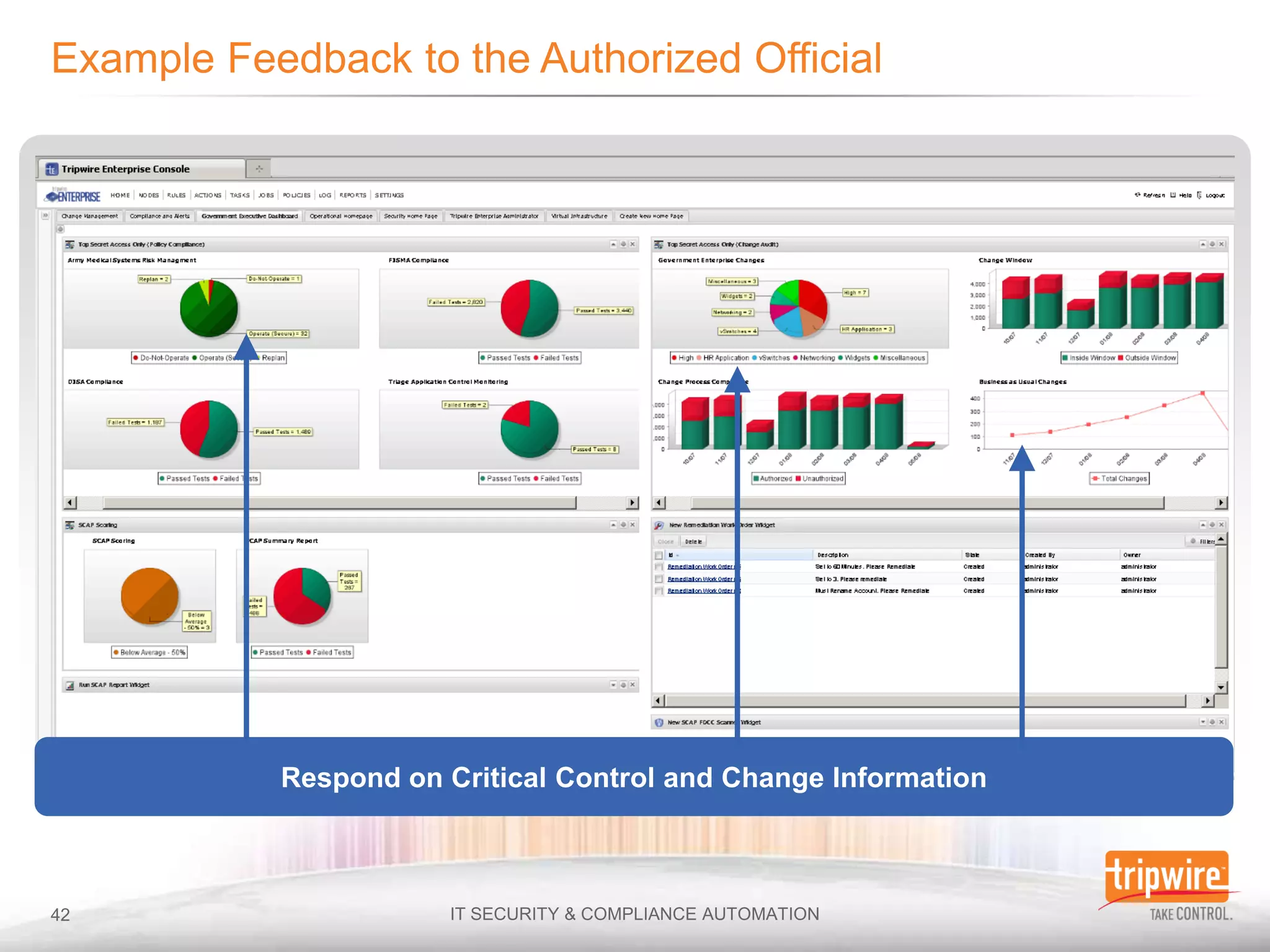
    Example Feedback tothe Authorized OfficialRespond on Critical Control and Change Information 42
  • 67.
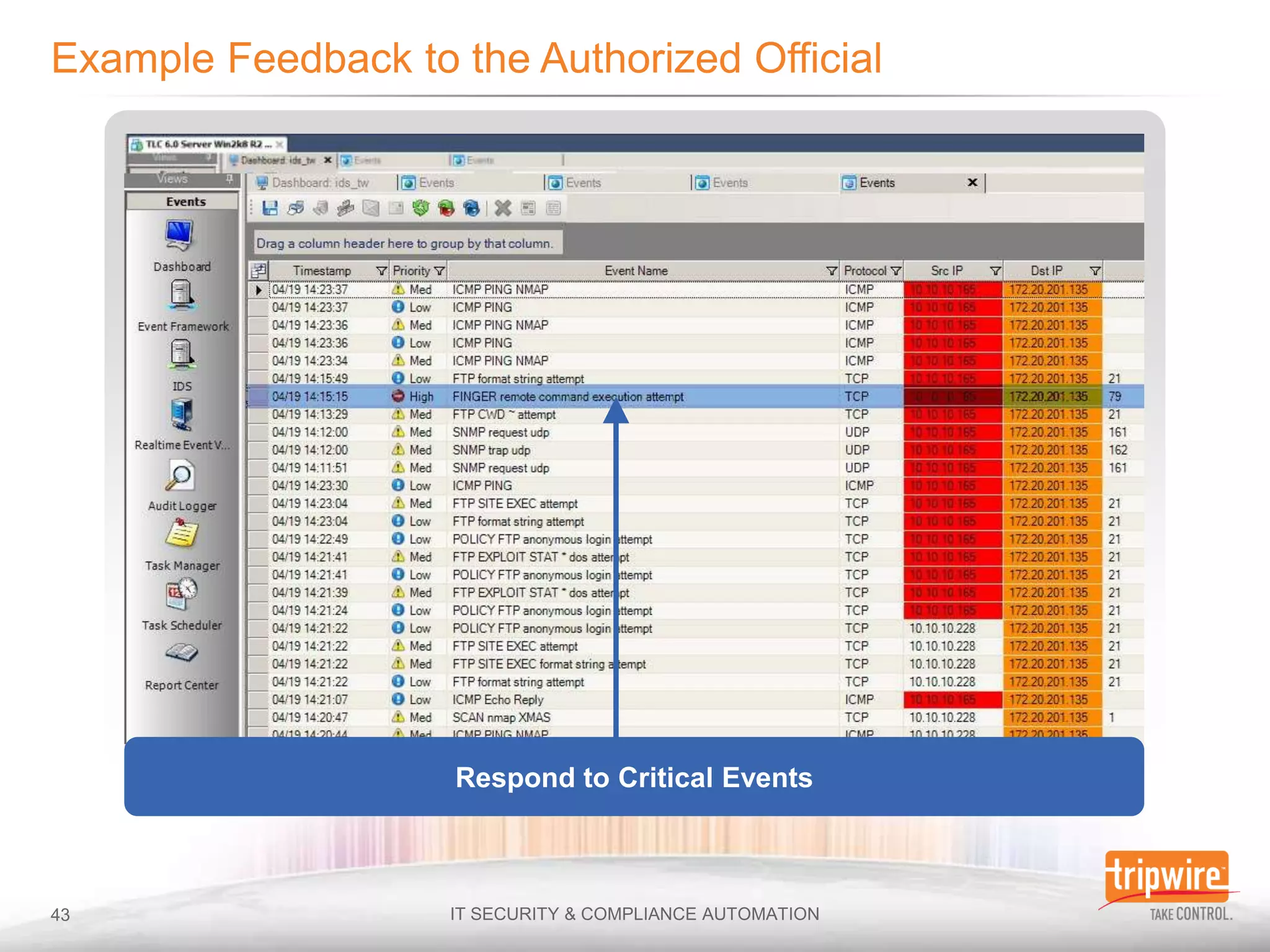
    Example Feedback tothe Authorized OfficialProvide actionable data What and WhereRespond to Critical Events43
  • 68.
    1Categorize Assets2Determine RiskThreshold3Establish Monitoring Frequency4Provide Feedback to Authorizing Official44
  • 69.
    About TripwireTripwire isa leading global provider of IT security and compliance automation solutions that help businesses and government agencies take control of their entire IT infrastructure. Over 5,500 customers in more than 87 countries rely on Tripwire’s integrated solutions. Tripwire® VIA™, the comprehensive suite of industry-leading file integrity, policy compliance and log and event management solutions, is the way organizations proactively prove continuous compliance, mitigate risk, and achieve operational control through Visibility, Intelligence and Automation. Learn more at www.tripwire.com
  • 70.
    Q&A SessionPlease SubmitYour Question Now
  • 71.
    Resources To ViewThis or Other Events On-Demand Please Visit:http://www.netseminar.comFor more information please visit:http://www.tripwire.com
  • 72.

Editor's Notes

  • #38 Is it a critical asset? Medical system?
  • #39 You need intelligent information to make risk-based decisions.
  • #40 You cannot “turn on” continuously monitoring or real-time on everything. So you need to choose the frequency.
  • #42 You need to feed that information to your authorizing official