517 341: Digital Logic
Design
Apisake Hongwitayakorn
e: apisake@cp.su.ac.th
w: http://www.cp.su.ac.th/~apisake/course/517341
What is this course all about?


The fundamental of Digital Logic
Binary numbers and relate number systems
 Digital circuit building block




How to design
Combinational logic circuits
 Sequential logic circuits

Course Management
Class


Lectures (2 hrs/week)
Apisake Hongwitayakorn
 Time: Thu 8:30-10:15
 Venue: 1239 SciBldg-1




Labs (3 hrs/week)
Noppadol Sukklomcheep
 Time: Wed 12:05-14:45
 Venue: 1227 SciBldg-1

Assessment



Lecture : Lab = 75% : 25%
Lecture:






Assignments & Quizzes
Midterm
Final

Lab: (details will be described)





Attendance
Lab Reports
Midterm
Final

20%
25%
30%
Courseware


Lecture:
Slides*
 A tool called “WinLogiLab”**




Lab:


Worksheets

* Will be available on my webpage.
** Get this from http://www.gu.edu.au/???
Introduction to Digital
Systems
Digital Technology






The term digital is derived from the way
computer perform operations  by counting
digits.
Today, digital tech is applied in a wide range of
areas.
The tech has progressed from vacuum-tube to
discrete transistors to complex ICs.
Digital and Analog Quantities


2 categories of electronic circuits:
Analog
 Digital





Analog quantity = continuous values
Digital quantity = a discrete set of values
Analog Quantity


Most things in nature  analog form




Temperature, pressure, distance, etc

Smooth, continuous curve like this:
Temp

Time
Digital Quantity



Sampled-value representation (quantization)
Each dot can be digitized as a digital code
(consists of 1s and 0s)
Temp

Time
Digital Advantages






Digital data can be processed and transmitted
more efficiently and reliably than analog data.
Digital data has a great advantage when storage
is necessary.
Let’s talk about digital music…
Digital Music


The media is very compact
but higher-density (and
counting):
CDs
 Memory cards

http://www.dpreview.com/news/





0303/sandisk512mb1gbsdcard.jpg
http://www.wwwk.co.uk/images/homepage/compact-disc.jpg

No more bulky and noiseprone media like cassette
tape
http://www.cricketsoda.com/images/music/cassette_tape.jpg
Digital systems are
everywhere!!!
Binary Digits,
Logic Levels, &
Digital Waveforms
Binary Digits


Binary system (either 0 or 1)




Bit (comes from binary digit)

Digital circuits:
1 represents HIGH voltage
 0 represents LOW voltage




Groups of bits (combinations of 0s and 1s) are
called codes


Being used to represent numbers, letters, symbols,
(i.e. ASCII code), instructions, and etc.
Logic Levels


The voltages used to represent a 1
and 0 are called logic levels.






Ideally, there is only HIGH (1) and
LOW (0).
Practically, there must be thresholds
to determine which one is HIGH or
LOW or neither of them.

CMOS



(2V to 3.3V  HIGH)
(0V. To 0.8V  LOW)

VH(max)
VH(min)

HIGH
(binary 1)
Not allowed

VL(max)
VL(min)

LOW
(binary 0)
Digital Waveforms



Voltage levels that are changing back and forth
between HIGH and LOW
(Ideal) pulse
HIGH

LOW

HIGH

t0

t1

Positive-going pulse



LOW

t0

t1

Negative-going pulse

At t0  leading edge, at t1  trailing edge
Non-Ideal Pulse
90%

Amplitude

tw

50%

Pulse width

10%

tr

tf

Rise time

Fall time
Waveform Characteristics


Waveforms = series of pulses (called pulse train)


Periodic

T1

T2

T3






Period (T) = T1 = T2 = T3 = … = Tn
Frequency (f) = 1/T

Nonperiodic
Duty Cycle


Ratio of the pulse width (tw) to the period (T)
Duty cycle = ( tw / T ) x 100%
Example


From a portion of a periodic waveform (as
shown) determine:
a)
b)
c)

Period
Frequency
Duty cycle
T
tw

0 1

10 11

t (ms)
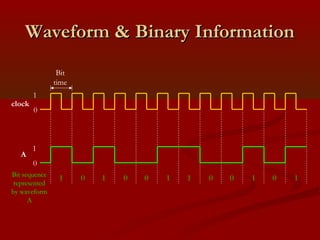
Waveform & Binary Information
Bit
time
clock

A

1
0

1
0

Bit sequence
represented
by waveform
A

1

0

1

0

0

1

1

0

0

1

0

1
Data Transfer


Binary data are transferred in two ways:
Serial – bits are sent one bit at a time
 Parallel – all the bits in a group are sent out on
separate lines at the same time (one line for each bit)




Serial over Parallel
Advantage: less transmission line
 Disadvantage: takes more time


01 introduction

  • 1.
    517 341: DigitalLogic Design Apisake Hongwitayakorn e: apisake@cp.su.ac.th w: http://www.cp.su.ac.th/~apisake/course/517341
  • 2.
    What is thiscourse all about?  The fundamental of Digital Logic Binary numbers and relate number systems  Digital circuit building block   How to design Combinational logic circuits  Sequential logic circuits 
  • 3.
  • 4.
    Class  Lectures (2 hrs/week) ApisakeHongwitayakorn  Time: Thu 8:30-10:15  Venue: 1239 SciBldg-1   Labs (3 hrs/week) Noppadol Sukklomcheep  Time: Wed 12:05-14:45  Venue: 1227 SciBldg-1 
  • 5.
    Assessment   Lecture : Lab= 75% : 25% Lecture:     Assignments & Quizzes Midterm Final Lab: (details will be described)     Attendance Lab Reports Midterm Final 20% 25% 30%
  • 6.
    Courseware  Lecture: Slides*  A toolcalled “WinLogiLab”**   Lab:  Worksheets * Will be available on my webpage. ** Get this from http://www.gu.edu.au/???
  • 7.
  • 8.
    Digital Technology    The termdigital is derived from the way computer perform operations  by counting digits. Today, digital tech is applied in a wide range of areas. The tech has progressed from vacuum-tube to discrete transistors to complex ICs.
  • 9.
    Digital and AnalogQuantities  2 categories of electronic circuits: Analog  Digital    Analog quantity = continuous values Digital quantity = a discrete set of values
  • 10.
    Analog Quantity  Most thingsin nature  analog form   Temperature, pressure, distance, etc Smooth, continuous curve like this: Temp Time
  • 11.
    Digital Quantity   Sampled-value representation(quantization) Each dot can be digitized as a digital code (consists of 1s and 0s) Temp Time
  • 12.
    Digital Advantages    Digital datacan be processed and transmitted more efficiently and reliably than analog data. Digital data has a great advantage when storage is necessary. Let’s talk about digital music…
  • 13.
    Digital Music  The mediais very compact but higher-density (and counting): CDs  Memory cards http://www.dpreview.com/news/   0303/sandisk512mb1gbsdcard.jpg http://www.wwwk.co.uk/images/homepage/compact-disc.jpg No more bulky and noiseprone media like cassette tape http://www.cricketsoda.com/images/music/cassette_tape.jpg
  • 14.
  • 15.
    Binary Digits, Logic Levels,& Digital Waveforms
  • 16.
    Binary Digits  Binary system(either 0 or 1)   Bit (comes from binary digit) Digital circuits: 1 represents HIGH voltage  0 represents LOW voltage   Groups of bits (combinations of 0s and 1s) are called codes  Being used to represent numbers, letters, symbols, (i.e. ASCII code), instructions, and etc.
  • 17.
    Logic Levels  The voltagesused to represent a 1 and 0 are called logic levels.    Ideally, there is only HIGH (1) and LOW (0). Practically, there must be thresholds to determine which one is HIGH or LOW or neither of them. CMOS   (2V to 3.3V  HIGH) (0V. To 0.8V  LOW) VH(max) VH(min) HIGH (binary 1) Not allowed VL(max) VL(min) LOW (binary 0)
  • 18.
    Digital Waveforms   Voltage levelsthat are changing back and forth between HIGH and LOW (Ideal) pulse HIGH LOW HIGH t0 t1 Positive-going pulse  LOW t0 t1 Negative-going pulse At t0  leading edge, at t1  trailing edge
  • 19.
  • 20.
    Waveform Characteristics  Waveforms =series of pulses (called pulse train)  Periodic T1 T2 T3    Period (T) = T1 = T2 = T3 = … = Tn Frequency (f) = 1/T Nonperiodic
  • 21.
    Duty Cycle  Ratio ofthe pulse width (tw) to the period (T) Duty cycle = ( tw / T ) x 100%
  • 22.
    Example  From a portionof a periodic waveform (as shown) determine: a) b) c) Period Frequency Duty cycle T tw 0 1 10 11 t (ms)
  • 23.
    Waveform & BinaryInformation Bit time clock A 1 0 1 0 Bit sequence represented by waveform A 1 0 1 0 0 1 1 0 0 1 0 1
  • 24.
    Data Transfer  Binary dataare transferred in two ways: Serial – bits are sent one bit at a time  Parallel – all the bits in a group are sent out on separate lines at the same time (one line for each bit)   Serial over Parallel Advantage: less transmission line  Disadvantage: takes more time 