Made by:
SHREYAANS M. NAHATA
PODAR INTERNATIONAL SCHOOL,
JALGAON
[10TH RUBY 29]
 Belgium is a small country in Europe
 It share its borders with France,
Netherlands, Germany and Luxembourg
 The ethnic composition of Belgium is
very complex
 Brussels is the capital of Belgium
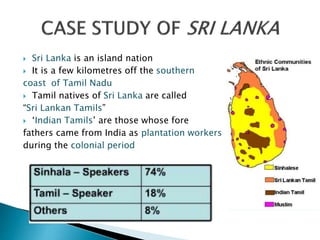
 Sri Lanka is an island nation
 It is a few kilometres off the southern
coast of Tamil Nadu
 Tamil natives of Sri Lanka are called
“Sri Lankan Tamils”
 ‘Indian Tamils’ are those whose fore
fathers came from India as plantation workers
during the colonial period
 Sri Lanka emerged as an independent country in
1948
 The democratically elected government adopted a
series of majoritarian measures to adopt a Sinhala
supremacy
 In 1956 an act was passed to declare Sinhala as
official language
 The government recognised Sinhala applicants for
university jobs and governments jobs
 The Belgian leaders recognised the existence of
regional differences and cultural diversities
 They amended their constitution four times
between 1970 and 1993
 Constitution prescribes that the number of Dutch
and French–speaking ministers shall be equal in
the central government
 The state governments are not subordinate to the
central government
 Brussels has a separate government in which both
the communities have equal representation
 Apart for the central and state government there is
a third kind of government elected by people called
as “community government”
 Power sharing is desirable because of prudential and moral
reasons
 Power sharing is good because it helps to reduce conflicts
between social groups
 Imposing the will of majority community undermines the
unity of the nation
 Power sharing is the very spirit of democracy
 A democratic rule involves sharing power with those affected
by its exercise, and those who have to live with its effect
 Khalil lived in the city of Beirut
 Khalil’s father was an orthodox Christian and
mother was a Sunni Muslim
 People from various communities living in Lebanon
came to live in Beirut, its capital
 Lebanon’s leader laid down some basic rules for
power sharing among different communities
 As per these rules, the country’s president must
being to the Maronite sect of Catholic Christians
 The Prime Minister must be a Sunni Muslim
 The Deputy Prime Minister’s post is fixed for the
Orthodox Christians
 The position of the speaker id for the Shi’a
Muslim
 Khalil is not happy with the rules laid down
by the Lebanese leaders
 He is a popular man with a political ambition
 He does not follow any religion, neither his
fathers’ nor his mothers’
 As per Khalil, an election (referendum) should
be held
 Everyone should be allowed to participate
 The one with the maximum votes should be elected
as the President no matter which community
he/she belongs to
 On the other hand, his elders who have seen
bloodshed in the civil war, are happy with the
present system i.e. position reserved for a
particular community only because this system
guarantees for peace
 Power is shared among different organs of
the government:
1. This is known as horizontal distribution of
power
2. This results in a balance of power among
various institutions
3. The system of checks and balances
ensures that none of the organs can
exercise unlimited powers
 Power is shared among governments at
different levels
1. This is known as Federal Government
2. It is a general government for the entire
country
3. Example: In India, we have Central or the
Union Government
 Power is share among different social groups:
1. This is known as ‘Community Government’
2. This type of arrangement is made to give a
place in the government, to the diverse
social groups who feel ignored by the
government
3. This method is used to give fair share in
power to minority communities
 Power shared among political parties, pressure
groups etc.
1. In a democracy, the citizens must have freedom
to choose from the various contenders
2. This takes the form of competition amongst
different parties
3. Such competition ensures that power does not
remain in one hand
4. In a democracy, we find interest groups such as
traders, businessmen, industrialists, farmers and
workers
 Some other types of power sharing are:
1. Referendum
2. Decentralisation
3. Bicameral
 With this chapter, we resume the tour of
democracy that we started last year
 We noted last year that in a democracy all
power does not rest with any one organ of
the government
 An intelligent sharing of power among
legislature, executive and judiciary is very
important to the design of a democracy
 We start with two stories from Belgium and Sri
Lanka. Both these stories are about how
democracies handle demands for power-sharing
 The stories yield some general conclusions about
the need for power-sharing in democracy
 This allows us to discuss various forms of power-
sharing that will be taken up in the following two
chapters
That’s it folks…
Power Sharing Class 10 Complete With Case Study

Power Sharing Class 10 Complete With Case Study

  • 1.
    Made by: SHREYAANS M.NAHATA PODAR INTERNATIONAL SCHOOL, JALGAON [10TH RUBY 29]
  • 2.
     Belgium isa small country in Europe  It share its borders with France, Netherlands, Germany and Luxembourg  The ethnic composition of Belgium is very complex  Brussels is the capital of Belgium
  • 3.
     Sri Lankais an island nation  It is a few kilometres off the southern coast of Tamil Nadu  Tamil natives of Sri Lanka are called “Sri Lankan Tamils”  ‘Indian Tamils’ are those whose fore fathers came from India as plantation workers during the colonial period
  • 4.
     Sri Lankaemerged as an independent country in 1948  The democratically elected government adopted a series of majoritarian measures to adopt a Sinhala supremacy  In 1956 an act was passed to declare Sinhala as official language  The government recognised Sinhala applicants for university jobs and governments jobs
  • 5.
     The Belgianleaders recognised the existence of regional differences and cultural diversities  They amended their constitution four times between 1970 and 1993
  • 6.
     Constitution prescribesthat the number of Dutch and French–speaking ministers shall be equal in the central government  The state governments are not subordinate to the central government  Brussels has a separate government in which both the communities have equal representation  Apart for the central and state government there is a third kind of government elected by people called as “community government”
  • 7.
     Power sharingis desirable because of prudential and moral reasons  Power sharing is good because it helps to reduce conflicts between social groups  Imposing the will of majority community undermines the unity of the nation  Power sharing is the very spirit of democracy  A democratic rule involves sharing power with those affected by its exercise, and those who have to live with its effect
  • 8.
     Khalil livedin the city of Beirut  Khalil’s father was an orthodox Christian and mother was a Sunni Muslim  People from various communities living in Lebanon came to live in Beirut, its capital  Lebanon’s leader laid down some basic rules for power sharing among different communities
  • 9.
     As perthese rules, the country’s president must being to the Maronite sect of Catholic Christians  The Prime Minister must be a Sunni Muslim  The Deputy Prime Minister’s post is fixed for the Orthodox Christians  The position of the speaker id for the Shi’a Muslim
  • 10.
     Khalil isnot happy with the rules laid down by the Lebanese leaders  He is a popular man with a political ambition  He does not follow any religion, neither his fathers’ nor his mothers’  As per Khalil, an election (referendum) should be held
  • 11.
     Everyone shouldbe allowed to participate  The one with the maximum votes should be elected as the President no matter which community he/she belongs to  On the other hand, his elders who have seen bloodshed in the civil war, are happy with the present system i.e. position reserved for a particular community only because this system guarantees for peace
  • 12.
     Power isshared among different organs of the government: 1. This is known as horizontal distribution of power 2. This results in a balance of power among various institutions 3. The system of checks and balances ensures that none of the organs can exercise unlimited powers
  • 13.
     Power isshared among governments at different levels 1. This is known as Federal Government 2. It is a general government for the entire country 3. Example: In India, we have Central or the Union Government
  • 14.
     Power isshare among different social groups: 1. This is known as ‘Community Government’ 2. This type of arrangement is made to give a place in the government, to the diverse social groups who feel ignored by the government 3. This method is used to give fair share in power to minority communities
  • 15.
     Power sharedamong political parties, pressure groups etc. 1. In a democracy, the citizens must have freedom to choose from the various contenders 2. This takes the form of competition amongst different parties 3. Such competition ensures that power does not remain in one hand 4. In a democracy, we find interest groups such as traders, businessmen, industrialists, farmers and workers
  • 16.
     Some othertypes of power sharing are: 1. Referendum 2. Decentralisation 3. Bicameral
  • 17.
     With thischapter, we resume the tour of democracy that we started last year  We noted last year that in a democracy all power does not rest with any one organ of the government  An intelligent sharing of power among legislature, executive and judiciary is very important to the design of a democracy
  • 18.
     We startwith two stories from Belgium and Sri Lanka. Both these stories are about how democracies handle demands for power-sharing  The stories yield some general conclusions about the need for power-sharing in democracy  This allows us to discuss various forms of power- sharing that will be taken up in the following two chapters
  • 19.