CULTURAL DIFFUSIONCULTURAL DIFFUSION
8th
March
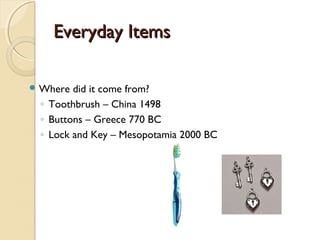
Everyday ItemsEveryday Items
 Where did it come from?
◦ Toothbrush – China 1498
◦ Buttons – Greece 770 BC
◦ Lock and Key – Mesopotamia 2000 BC
Cultural DiffusionCultural Diffusion
A process in which one cultural trait, material
object, idea, or behavior pattern is spread from one
society to another.
Definition: the process by which an idea,
invention, or way of behaving is borrowed
from a foreign source and adopted by the
borrowing people
Can be intentional or unintentional
Can have both positive and negative consequences
Selective BorrowingSelective Borrowing
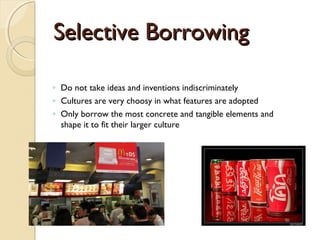
◦ Do not take ideas and inventions indiscriminately
◦ Cultures are very choosy in what features are adopted
◦ Only borrow the most concrete and tangible elements and
shape it to fit their larger culture
The Diffusion ProcessThe Diffusion Process
 How quickly do others in a culture acquire, learn about,
and/or come to use or consume a new idea, behavior, or
invention?
 Three Factors
◦ The extent the borrowing causes people to change their
ways of thinking and behaving
◦ The existence of a media structure that lets people
learn about it.
◦ The social status of the early adopters
Adaptive CultureAdaptive Culture
 Reference to the norms, values, and beliefs of the
borrowing culture play in adjusting to a new product or
innovation.
 Specifically adjusting to the associated changes in society
 What norms, values, and beliefs allowed Americans to
adopt things like the automobile, cell phone, and
computers so easily?
Cultural LagCultural Lag
 Refers to situations where the adaptive culture fails to
adjust in necessary ways to a material innovation and its
disruptive consequences
 Laws banning cell phones, forced increased gas mileage,
regulating disposal of obsolete computers
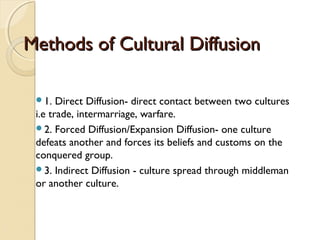
Methods of Cultural DiffusionMethods of Cultural Diffusion
1. Direct Diffusion- direct contact between two cultures
i.e trade, intermarriage, warfare.
2. Forced Diffusion/Expansion Diffusion- one culture
defeats another and forces its beliefs and customs on the
conquered group.
3. Indirect Diffusion - culture spread through middleman
or another culture.
What are some examples ofWhat are some examples of
periods of cultural diffusion?periods of cultural diffusion?
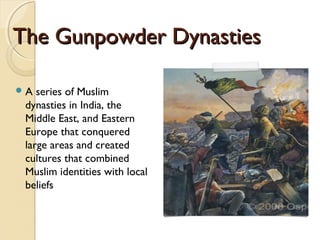
The Gunpowder DynastiesThe Gunpowder Dynasties
A series of Muslim
dynasties in India, the
Middle East, and Eastern
Europe that conquered
large areas and created
cultures that combined
Muslim identities with local
beliefs
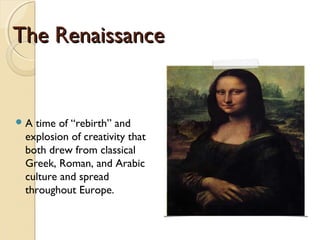
The RenaissanceThe Renaissance
A time of “rebirth” and
explosion of creativity that
both drew from classical
Greek, Roman, and Arabic
culture and spread
throughout Europe.
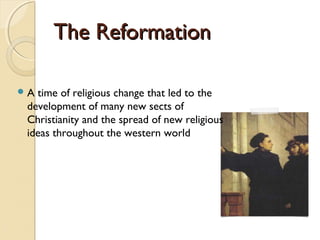
The ReformationThe Reformation
A time of religious change that led to the
development of many new sects of
Christianity and the spread of new religious
ideas throughout the western world
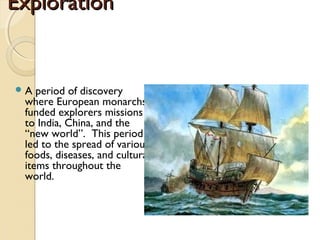
ExplorationExploration
A period of discovery
where European monarchs
funded explorers missions
to India, China, and the
“new world”. This period
led to the spread of various
foods, diseases, and cultural
items throughout the
world.

Cultural diffusion

  • 1.
  • 2.
    Everyday ItemsEveryday Items Where did it come from? ◦ Toothbrush – China 1498 ◦ Buttons – Greece 770 BC ◦ Lock and Key – Mesopotamia 2000 BC
  • 3.
    Cultural DiffusionCultural Diffusion Aprocess in which one cultural trait, material object, idea, or behavior pattern is spread from one society to another. Definition: the process by which an idea, invention, or way of behaving is borrowed from a foreign source and adopted by the borrowing people Can be intentional or unintentional Can have both positive and negative consequences
  • 4.
    Selective BorrowingSelective Borrowing ◦Do not take ideas and inventions indiscriminately ◦ Cultures are very choosy in what features are adopted ◦ Only borrow the most concrete and tangible elements and shape it to fit their larger culture
  • 5.
    The Diffusion ProcessTheDiffusion Process  How quickly do others in a culture acquire, learn about, and/or come to use or consume a new idea, behavior, or invention?  Three Factors ◦ The extent the borrowing causes people to change their ways of thinking and behaving ◦ The existence of a media structure that lets people learn about it. ◦ The social status of the early adopters
  • 6.
    Adaptive CultureAdaptive Culture Reference to the norms, values, and beliefs of the borrowing culture play in adjusting to a new product or innovation.  Specifically adjusting to the associated changes in society  What norms, values, and beliefs allowed Americans to adopt things like the automobile, cell phone, and computers so easily?
  • 7.
    Cultural LagCultural Lag Refers to situations where the adaptive culture fails to adjust in necessary ways to a material innovation and its disruptive consequences  Laws banning cell phones, forced increased gas mileage, regulating disposal of obsolete computers
  • 8.
    Methods of CulturalDiffusionMethods of Cultural Diffusion 1. Direct Diffusion- direct contact between two cultures i.e trade, intermarriage, warfare. 2. Forced Diffusion/Expansion Diffusion- one culture defeats another and forces its beliefs and customs on the conquered group. 3. Indirect Diffusion - culture spread through middleman or another culture.
  • 9.
    What are someexamples ofWhat are some examples of periods of cultural diffusion?periods of cultural diffusion?
  • 10.
    The Gunpowder DynastiesTheGunpowder Dynasties A series of Muslim dynasties in India, the Middle East, and Eastern Europe that conquered large areas and created cultures that combined Muslim identities with local beliefs
  • 11.
    The RenaissanceThe Renaissance Atime of “rebirth” and explosion of creativity that both drew from classical Greek, Roman, and Arabic culture and spread throughout Europe.
  • 12.
    The ReformationThe Reformation Atime of religious change that led to the development of many new sects of Christianity and the spread of new religious ideas throughout the western world
  • 13.
    ExplorationExploration A period ofdiscovery where European monarchs funded explorers missions to India, China, and the “new world”. This period led to the spread of various foods, diseases, and cultural items throughout the world.

Editor's Notes

  • #11 The Islamic Gunpowder Empires: Ottoman, Safavid, Mughal OttomanFounding1289 – Osman BeyIslamSunni Wahhabi (Arabian)OriginAnatolia between Black Sea and MediterraneanLargest ExpanseYugoslavia/Greece, N. Africa, MidEast to Tigris River, Black Sea