Technology Transfer	Direction towards Excellence of NISP!          Presenter : Shakeel AhmedRoll No; STP / 08 / 03Technology & Innovation System
Technology Transfer   Technology Transfer is the application of technology to a new use or user. It is the process by which technology developed for one purpose is employed either in a different application or by new user. The activity practically involves the increased utilization of the existing Science/ technology base in the new areas of application as opposed to its expansion by means of further research and development.
Step 1
Face the Facts
Step 2
Find the Solution
Choice of TechnologyIt is one of the most important aspect in the whole exercise of the transfer of technology. Many of the failures of imported technology are because of the poor choice.Technology should not be out dated.Technology should have present and future demand.More cost effective and productiveTechnology should have the potential for the growth of local skills.It should be used Legally through Licensing, Joint Ventures or through any other legal agreements.
Models of technology transfer   A wide variety of models of technology transfer have been used over the years, The following are some of these models used for application.Licensing
Science park model
Hiring skilled employees
Technology transfer units
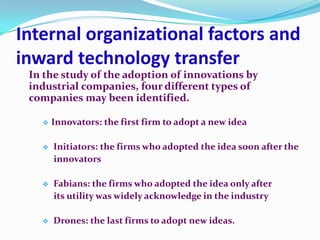
Research clubsInternal organizational factors and inward technology transferIn the study of the adoption of innovations by industrial companies, four different types of companies may been identified.Innovators: the first firm to adopt a new idea
 Initiators: the firms who adopted the idea soon after the      innovators Fabians: the firms who adopted the idea only after      its utility was widely acknowledge in the industry Drones: the last firms to adopt new ideas.Intellectual Property Organization PakistanThe Mission Statement of IPO-Pakistan:	“Integrating and upgrading IP infrastructure for improved service delivery; increased public awareness and enhanced enforcement coordination for achieving the goal of being an IP based nation.”
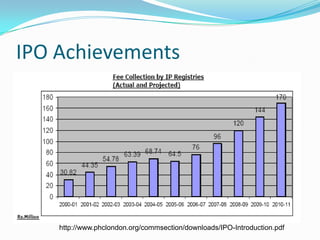
IPO Achievementshttp://www.phclondon.org/commsection/downloads/IPO-Introduction.pdf

Technology Transfer

  • 1.
    Technology Transfer Direction towardsExcellence of NISP!          Presenter : Shakeel AhmedRoll No; STP / 08 / 03Technology & Innovation System
  • 2.
    Technology Transfer Technology Transfer is the application of technology to a new use or user. It is the process by which technology developed for one purpose is employed either in a different application or by new user. The activity practically involves the increased utilization of the existing Science/ technology base in the new areas of application as opposed to its expansion by means of further research and development.
  • 3.
  • 4.
  • 5.
  • 6.
  • 7.
    Choice of TechnologyItis one of the most important aspect in the whole exercise of the transfer of technology. Many of the failures of imported technology are because of the poor choice.Technology should not be out dated.Technology should have present and future demand.More cost effective and productiveTechnology should have the potential for the growth of local skills.It should be used Legally through Licensing, Joint Ventures or through any other legal agreements.
  • 8.
    Models of technologytransfer A wide variety of models of technology transfer have been used over the years, The following are some of these models used for application.Licensing
  • 9.
  • 10.
  • 11.
  • 12.
    Research clubsInternal organizationalfactors and inward technology transferIn the study of the adoption of innovations by industrial companies, four different types of companies may been identified.Innovators: the first firm to adopt a new idea
  • 13.
    Initiators: thefirms who adopted the idea soon after the innovators Fabians: the firms who adopted the idea only after its utility was widely acknowledge in the industry Drones: the last firms to adopt new ideas.Intellectual Property Organization PakistanThe Mission Statement of IPO-Pakistan: “Integrating and upgrading IP infrastructure for improved service delivery; increased public awareness and enhanced enforcement coordination for achieving the goal of being an IP based nation.”
  • 14.