Introducing the IVM
Intravital Microscope
All-in-One Intravital Confocal/
Two-Photon Microscopy System
WWW.SCINTICA.COM 2
Topics of Discussion
• Intravital Microscopy
• IVM Systems Overview
• Key Research Applications
WWW.SCINTICA.COM 3
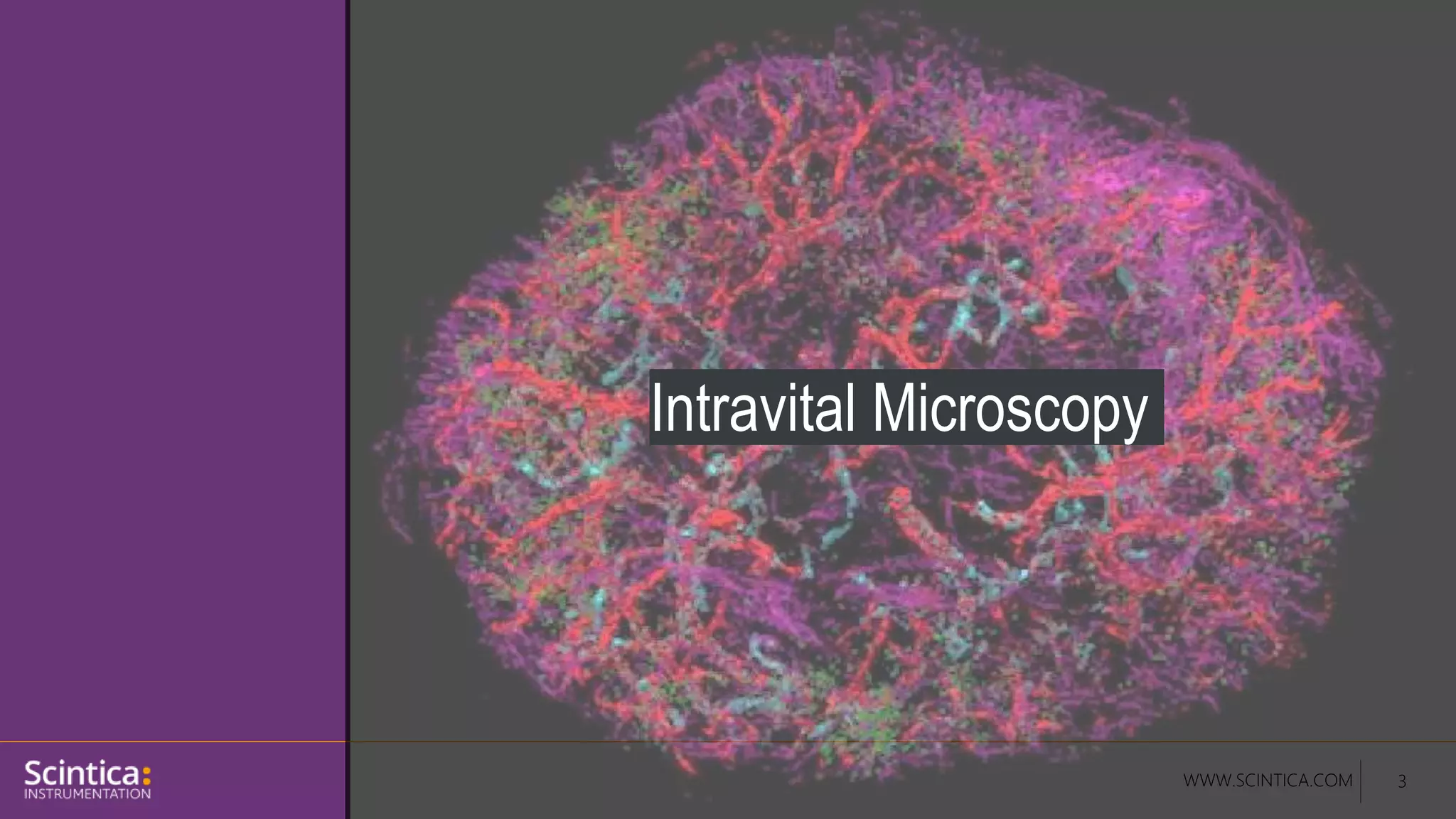
Intravital Microscopy
WWW.SCINTICA.COM
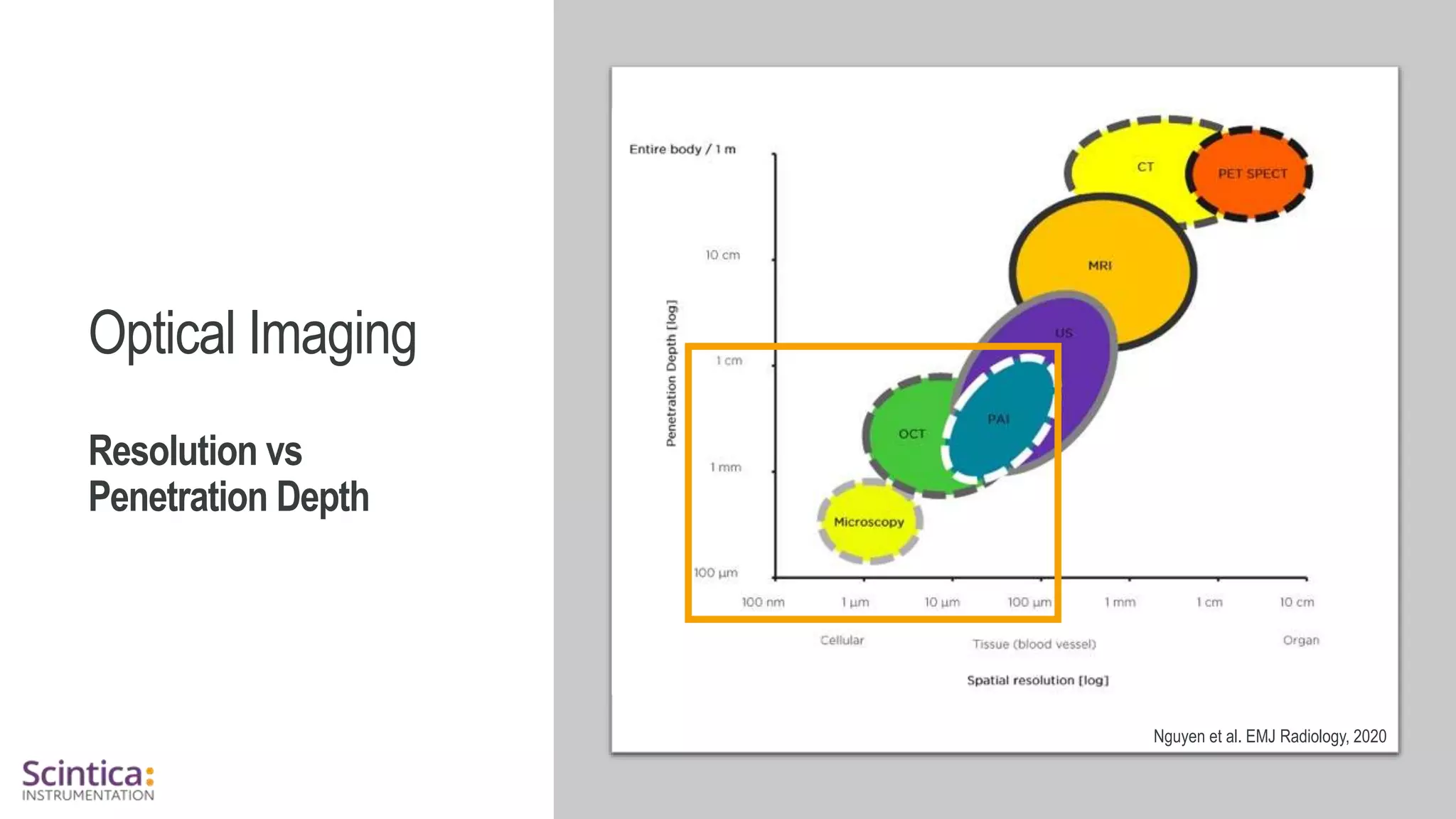
Optical Imaging
Resolution vs
Penetration Depth
Nguyen et al. EMJ Radiology, 2020
WWW.SCINTICA.COM
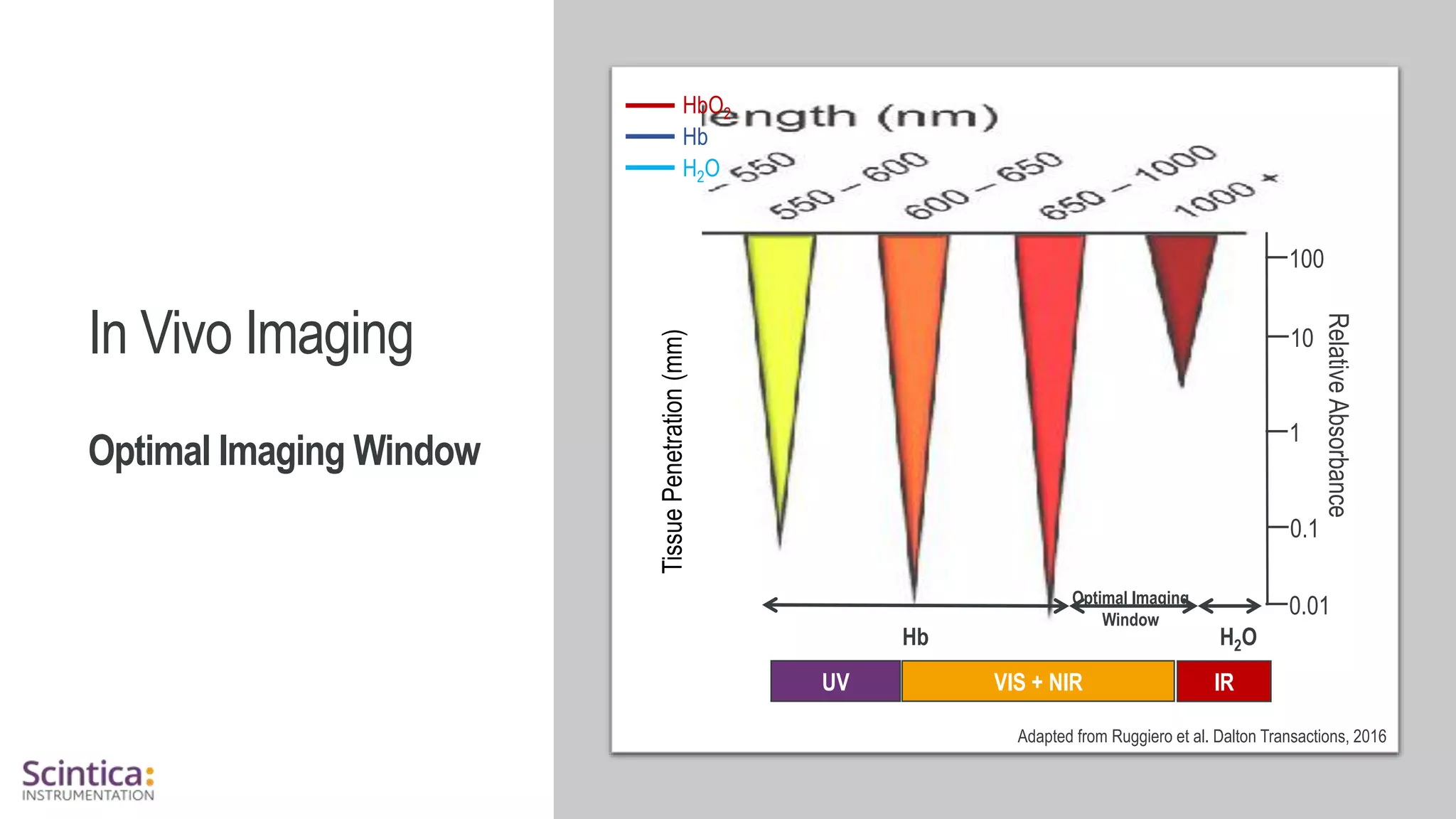
In Vivo Imaging
Optimal Imaging Window
Adapted from Ruggiero et al. Dalton Transactions, 2016
Optimal Imaging
Window
Tissue
Penetration
(mm) UV IR
VIS + NIR
H2O
H2O
Relative
Absorbance
100
10
1
0.1
0.01
Hb
HbO2
Hb
WWW.SCINTICA.COM
Fluorescence
Imaging
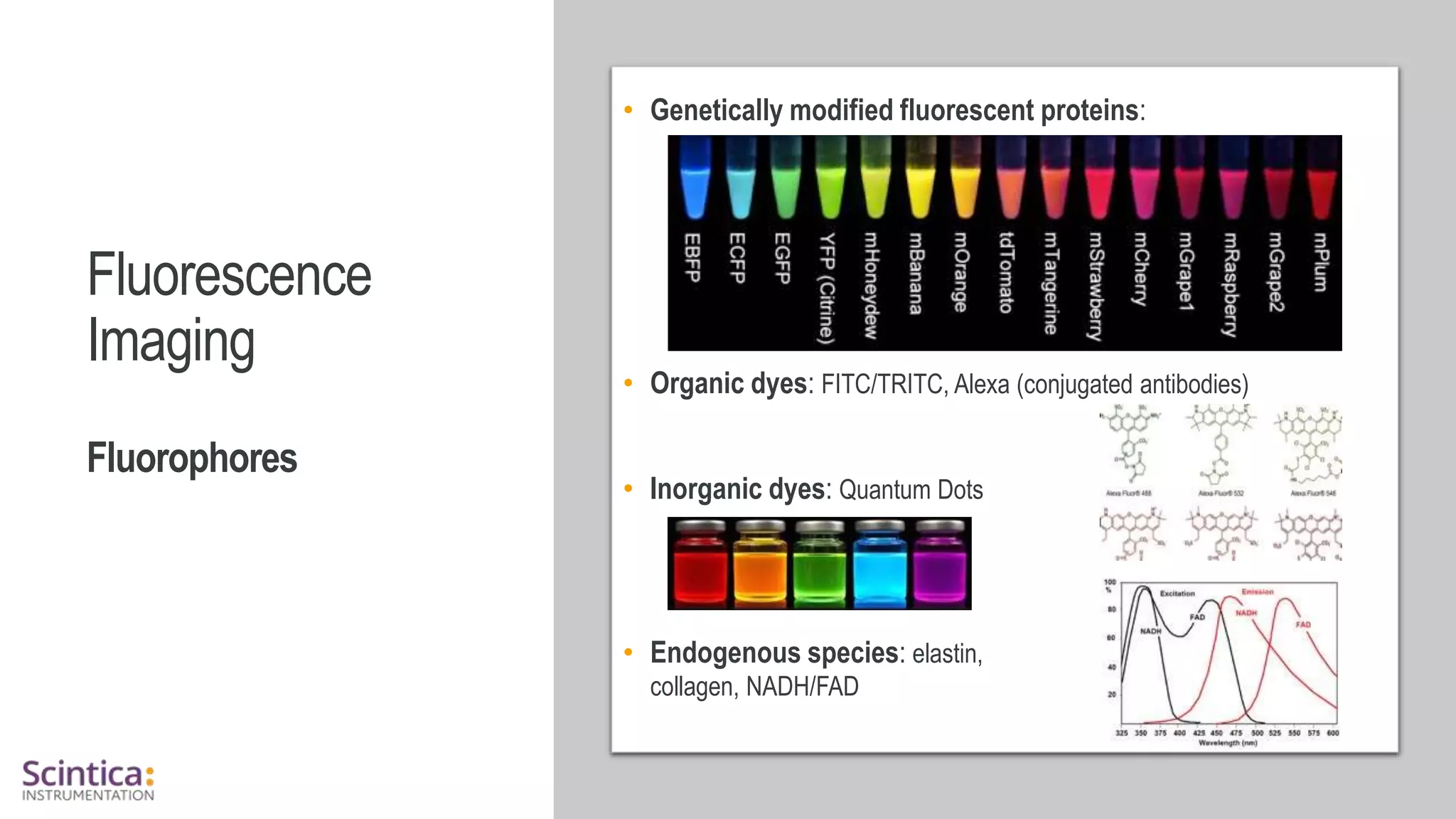
Fluorophores
• Genetically modified fluorescent proteins:
• Organic dyes: FITC/TRITC, Alexa (conjugated antibodies)
• Inorganic dyes: Quantum Dots
• Endogenous species: elastin,
collagen, NADH/FAD
WWW.SCINTICA.COM
https://www.fpbase.org/spectra/
Fluorescence
Imaging
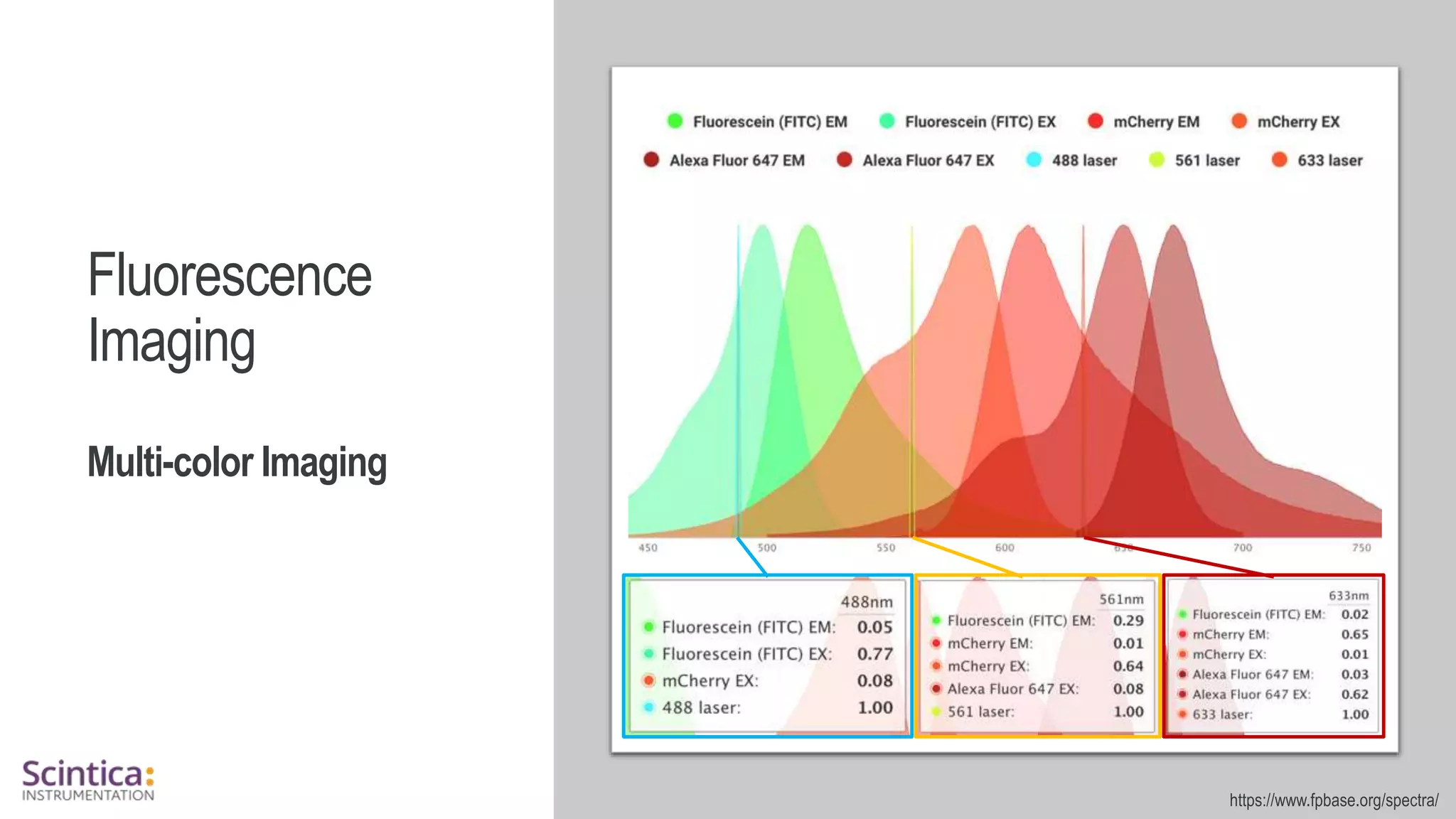
Multi-color Imaging
WWW.SCINTICA.COM
Confocal/
Two-Photon
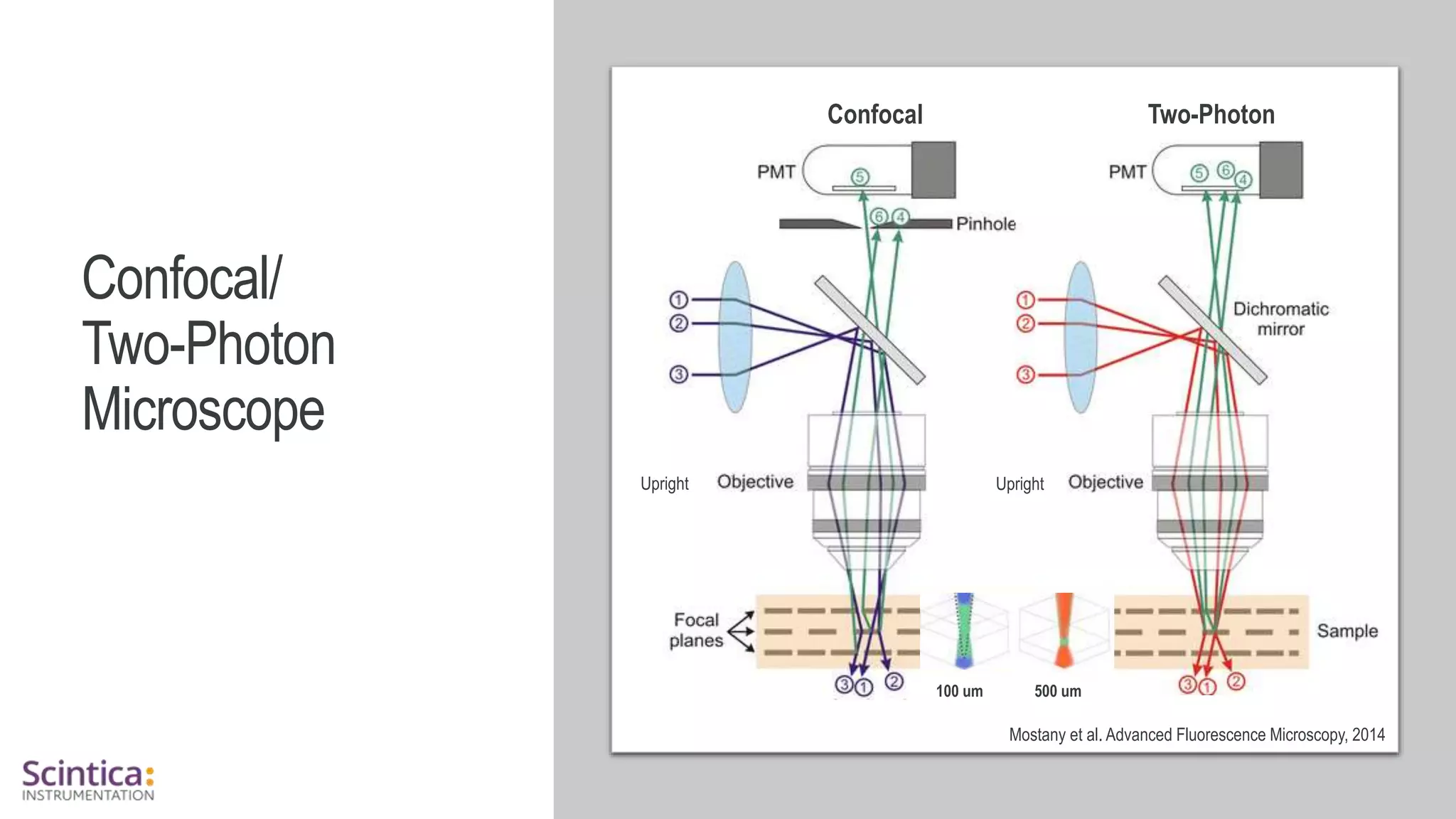
Microscope
Mostany et al. Advanced Fluorescence Microscopy, 2014
Upright
100 um 500 um
Upright
Confocal Two-Photon
WWW.SCINTICA.COM
Confocal/
Two-Photon
Microscope
Mostany et al. Advanced Fluorescence Microscopy, 2014
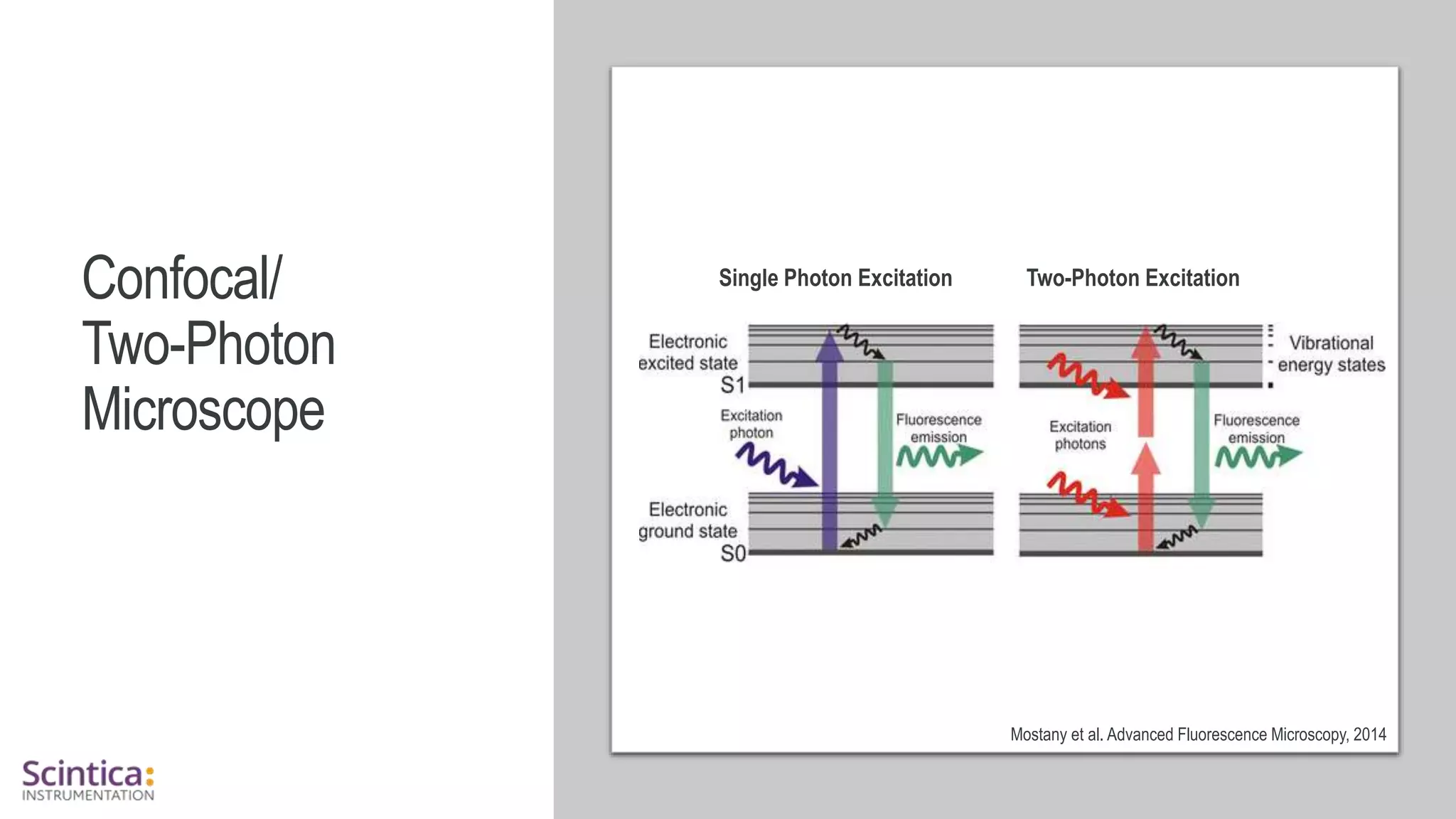
Single Photon Excitation Two-Photon Excitation
WWW.SCINTICA.COM 10
Conclusions
 Optical imaging has excellent resolution but poor penetration
depth
 Propagation of light through biological tissue is affected by
hemoglobin and water
 The optimal window for in vivo optical imaging lies between 600 and
1000 nm
 Fluorescence is the commonly used optical technique for in vivo
imaging
 Up to 4 fluorophores can be imaged simultaneously when chosen
carefully to avoid spectral overlap
WWW.SCINTICA.COM
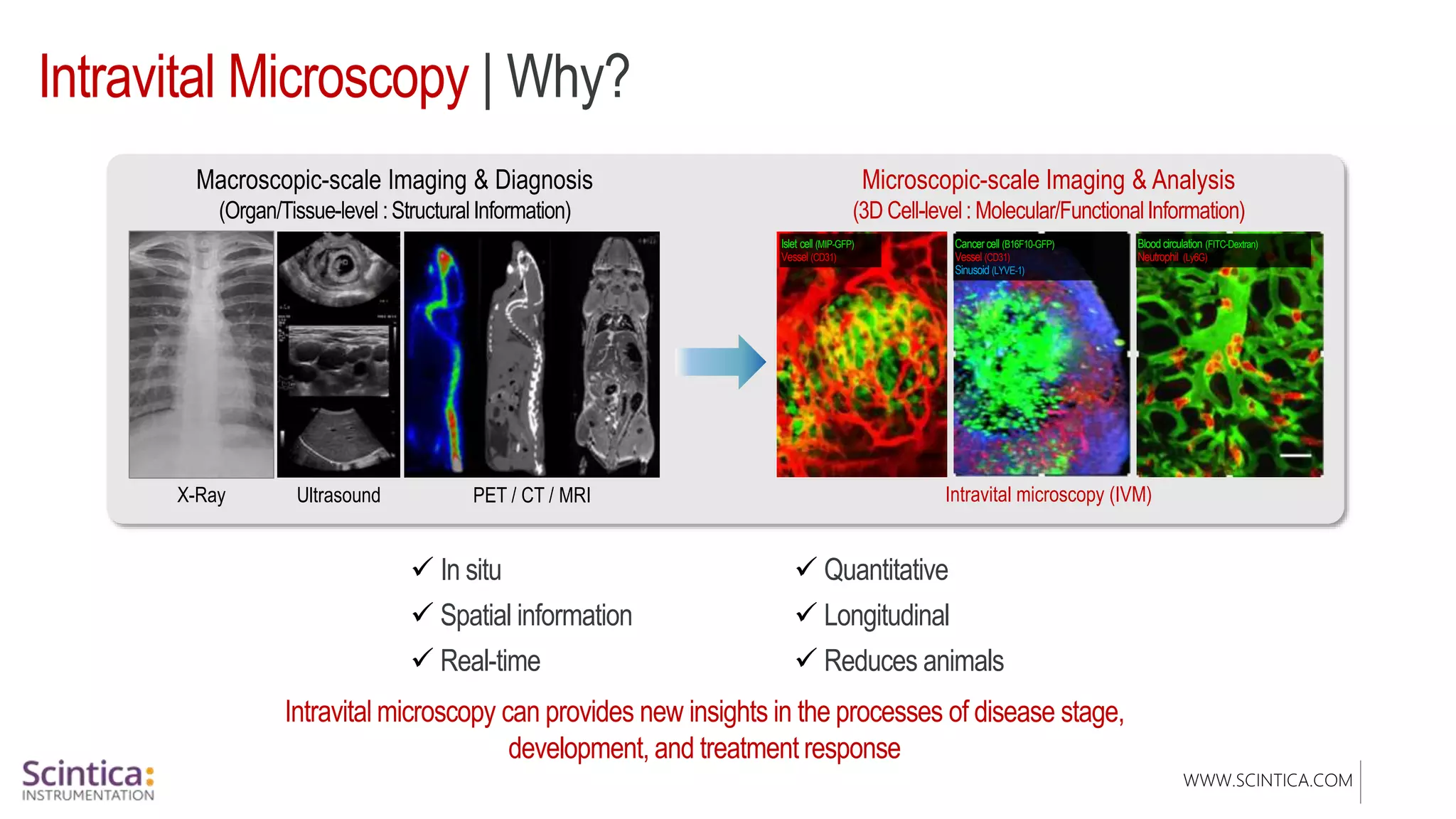
Intravital Microscopy | Why?
Macroscopic-scale Imaging & Diagnosis
(Organ/Tissue-level :StructuralInformation)
Microscopic-scale Imaging & Analysis
(3D Cell-level: Molecular/FunctionalInformation)
Intravital microscopy (IVM)
Islet cell (MIP-GFP)
Vessel (CD31)
PET / CT / MRI
X-Ray Ultrasound
Cancercell (B16F10-GFP)
Vessel (CD31)
Sinusoid (LYVE-1)
Blood circulation (FITC-Dextran)
Neutrophil (Ly6G)
disease stage,
development, and treatment response
 In situ
 Spatial information
 Real-time
 Quantitative
 Longitudinal
 Reduces animals
WWW.SCINTICA.COM
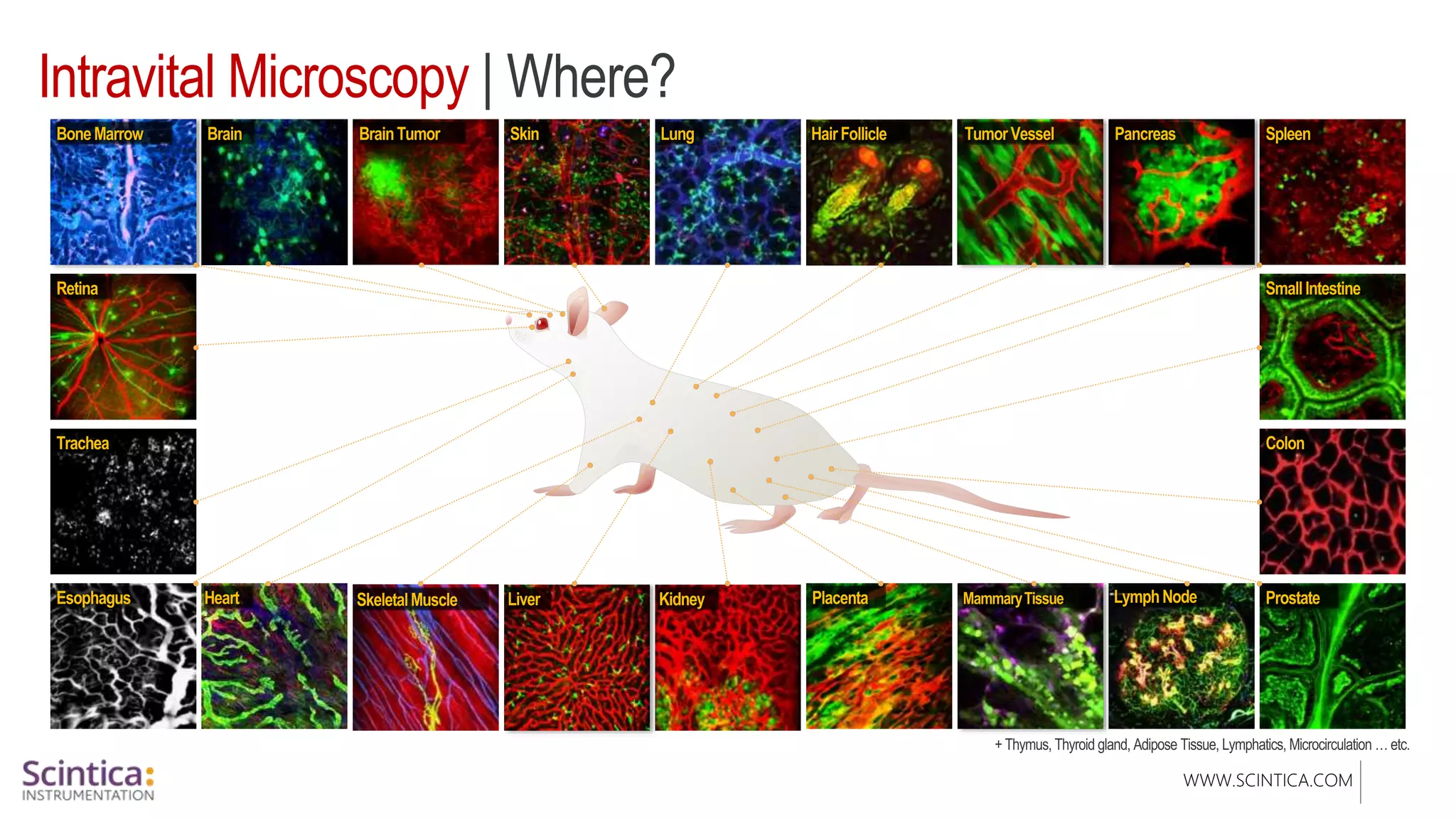
Intravital Microscopy | Where?
WWW.SCINTICA.COM
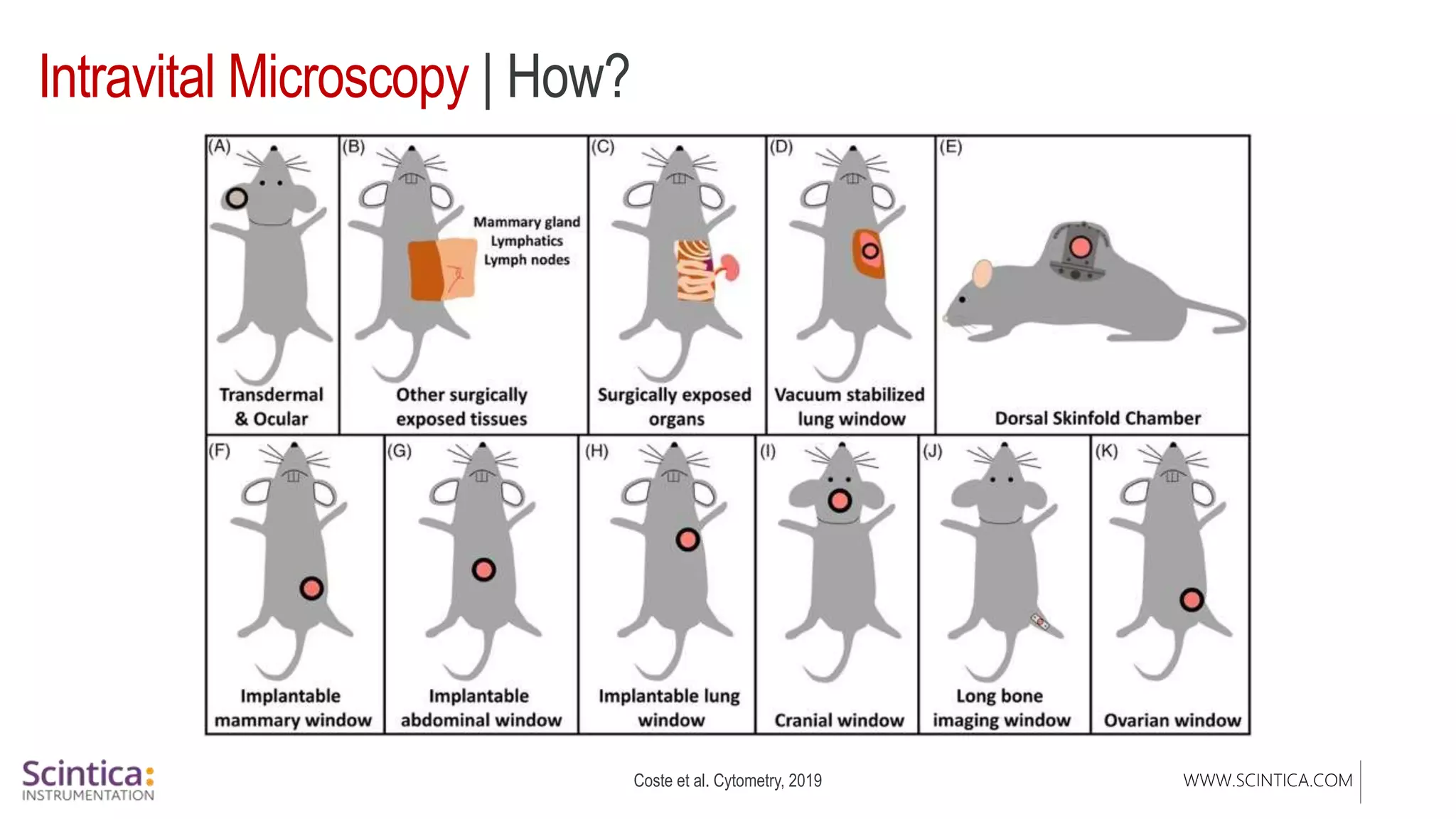
Intravital Microscopy | How?
Coste et al. Cytometry, 2019
WWW.SCINTICA.COM
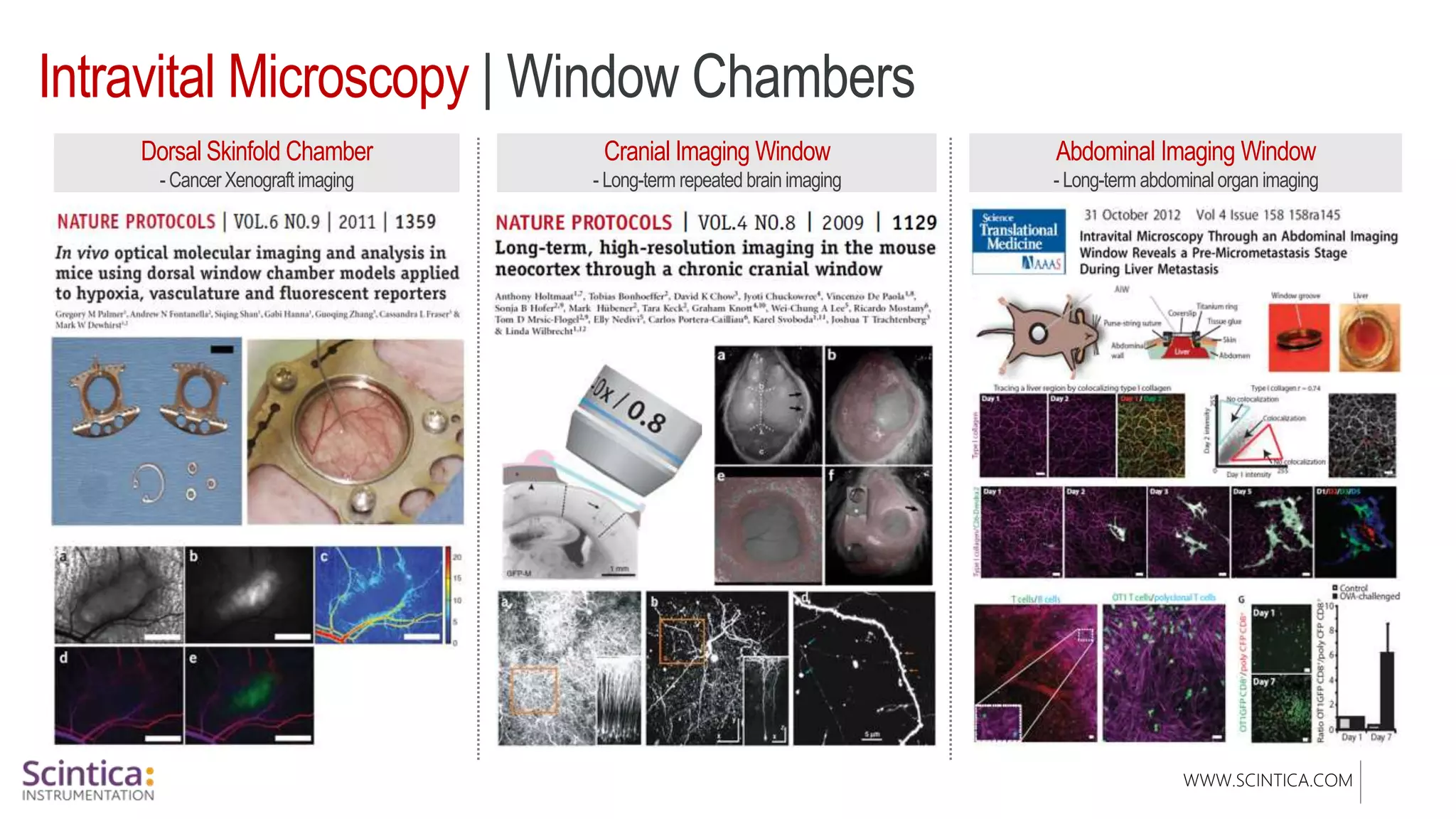
Intravital Microscopy | Window Chambers
Dorsal Skinfold Chamber
- Cancer Xenograft imaging
Cranial Imaging Window
- Long-term repeated brain imaging
Abdominal Imaging Window
- Long-term abdominal organ imaging
WWW.SCINTICA.COM
Intravital Microscopy | What?
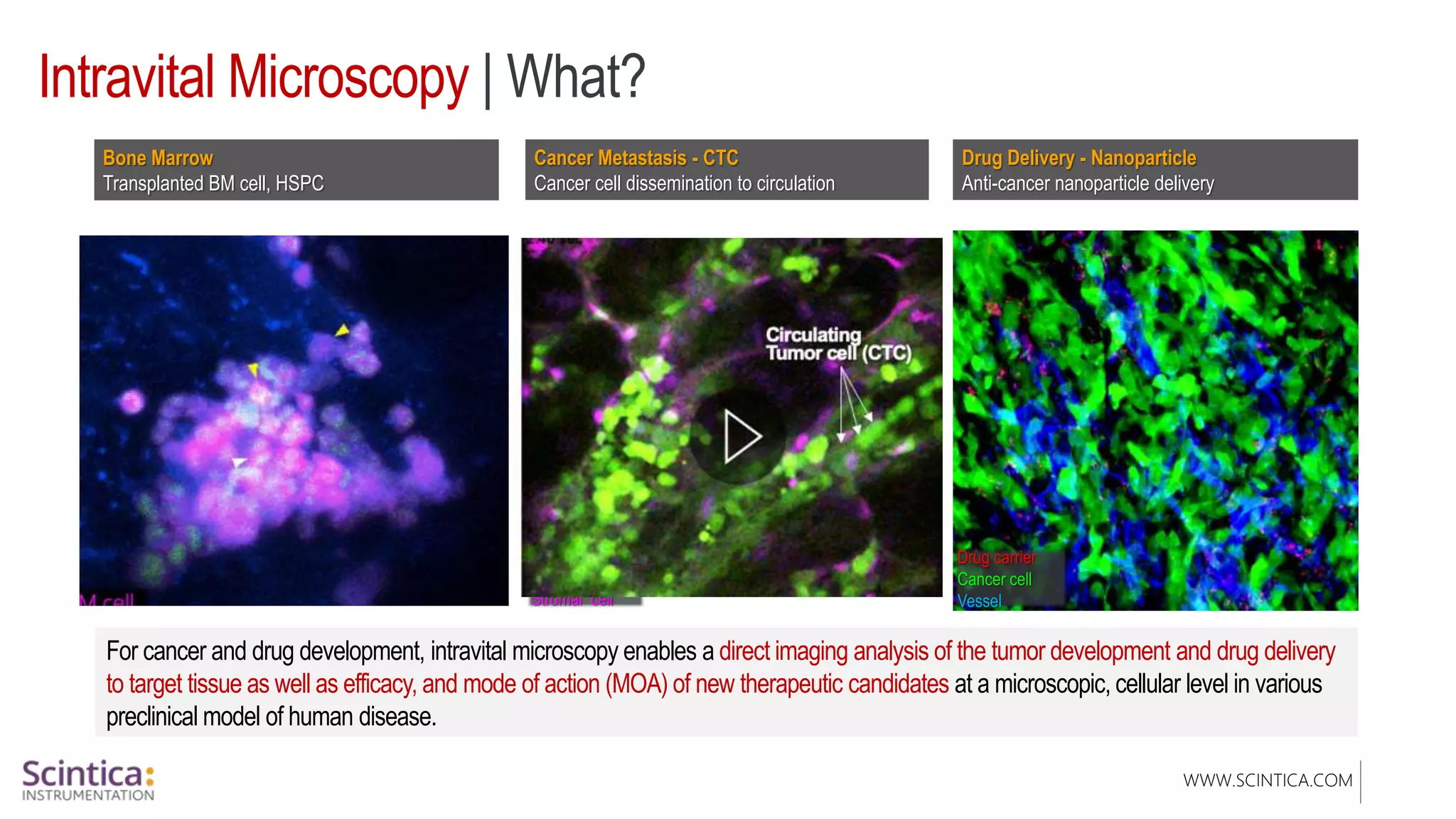
For cancer and drug development, intravital microscopy enables a direct imaging analysis of the tumor development and drug delivery
to target tissue as well as efficacy, and mode of action (MOA) of new therapeutic candidates at a microscopic, cellular level in various
preclinical model of human disease.
Cancer Metastasis - CTC
Cancer cell dissemination to circulation
Drug Delivery - Nanoparticle
Anti-cancer nanoparticle delivery
Circulating
Tumor cell (CTC)
Cancer ll
Stromal cell
Drug carrier
Cancer cell
Vessel
Bone Marrow
Transplanted BM cell, HSPC
cell
H2B
Sinus
WWW.SCINTICA.COM
Skin
Inflammatory response
KARS
Granulocyte
Intravital Microscopy | What?
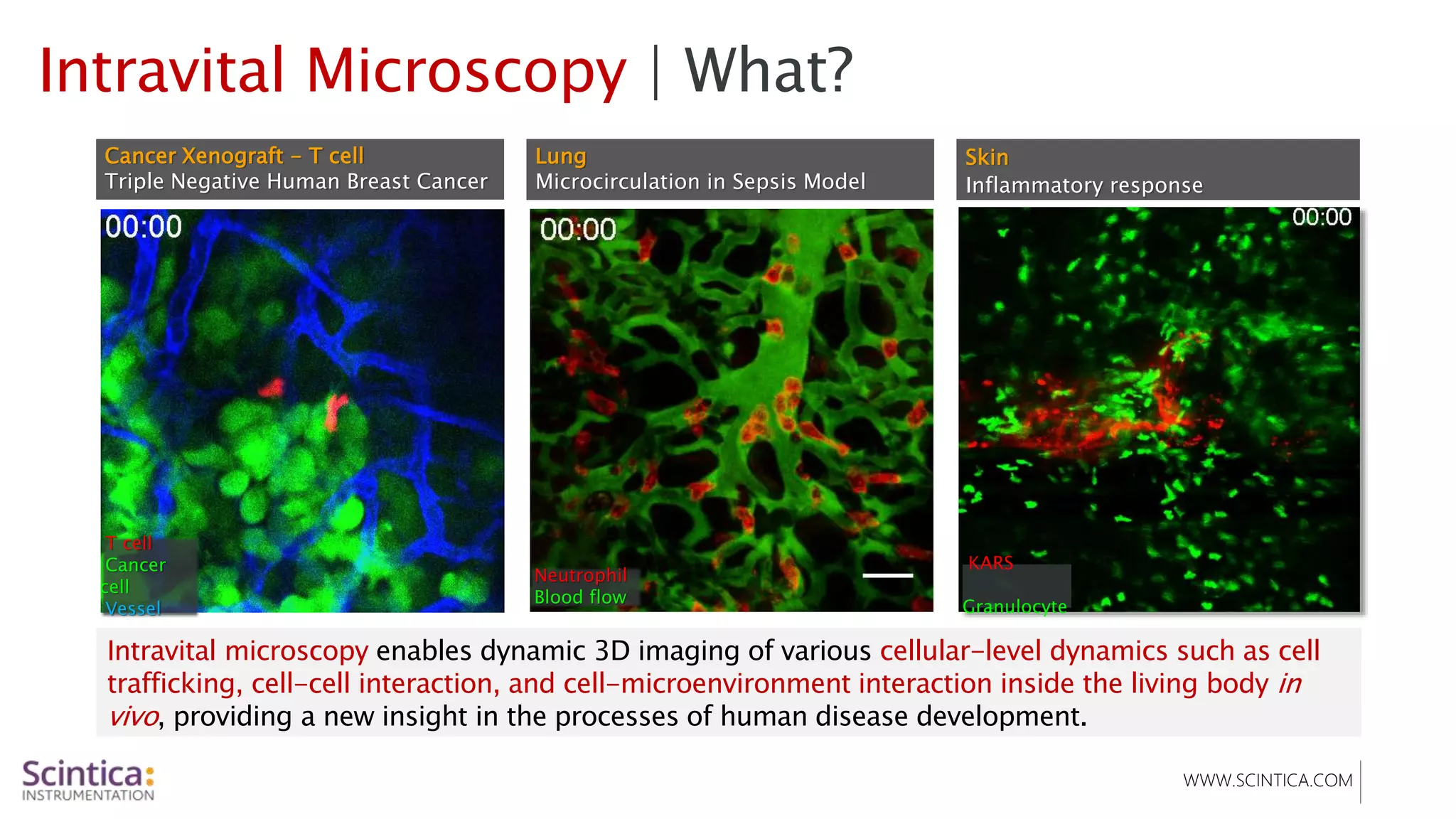
Intravital microscopy enables dynamic 3D imaging of various cellular-level dynamics such as cell
trafficking, cell-cell interaction, and cell-microenvironment interaction inside the living body in
vivo, providing a new insight in the processes of human disease development.
Cancer Xenograft - T cell
Triple Negative Human Breast Cancer
T cell
Cancer
cell
Vessel
Lung
Microcirculation in Sepsis Model
Neutrophil
Blood flow
WWW.SCINTICA.COM
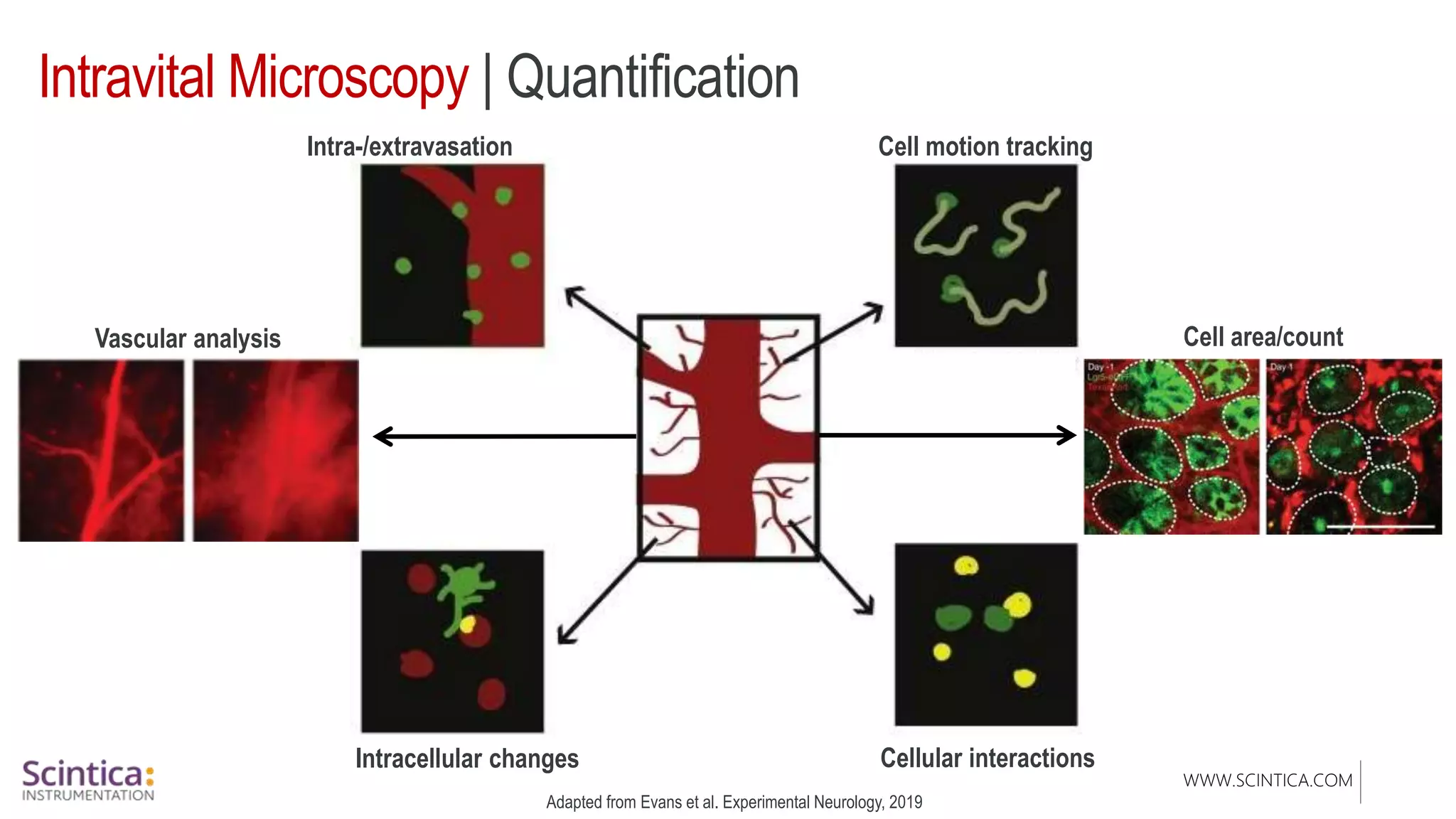
Intravital Microscopy | Quantification
Intra-/extravasation Cell motion tracking
Cellular interactions
Intracellular changes
Cell area/count
Vascular analysis
Adapted from Evans et al. Experimental Neurology, 2019
WWW.SCINTICA.COM
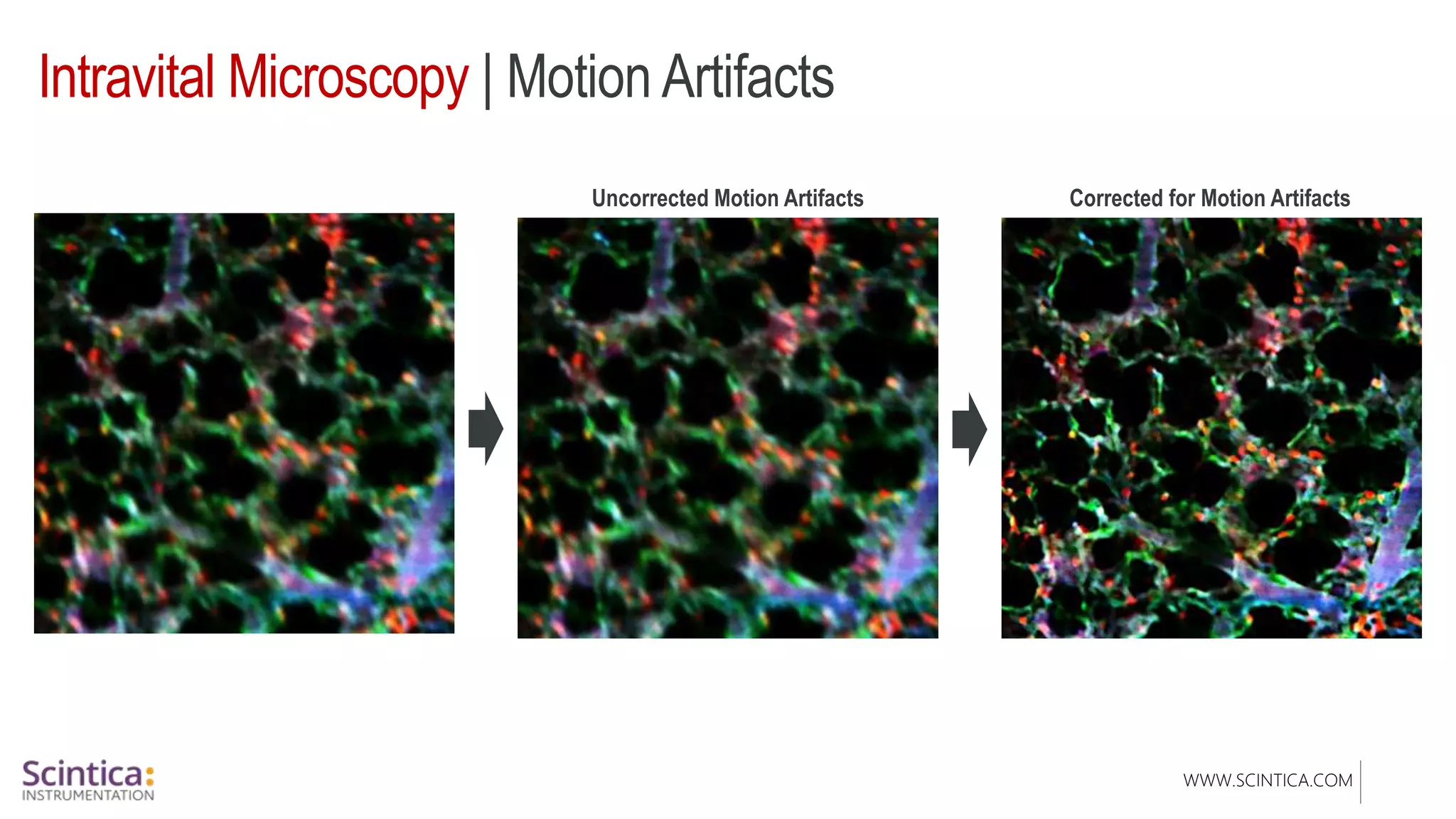
Intravital Microscopy | Motion Artifacts
Uncorrected Motion Artifacts Corrected for Motion Artifacts
WWW.SCINTICA.COM 19
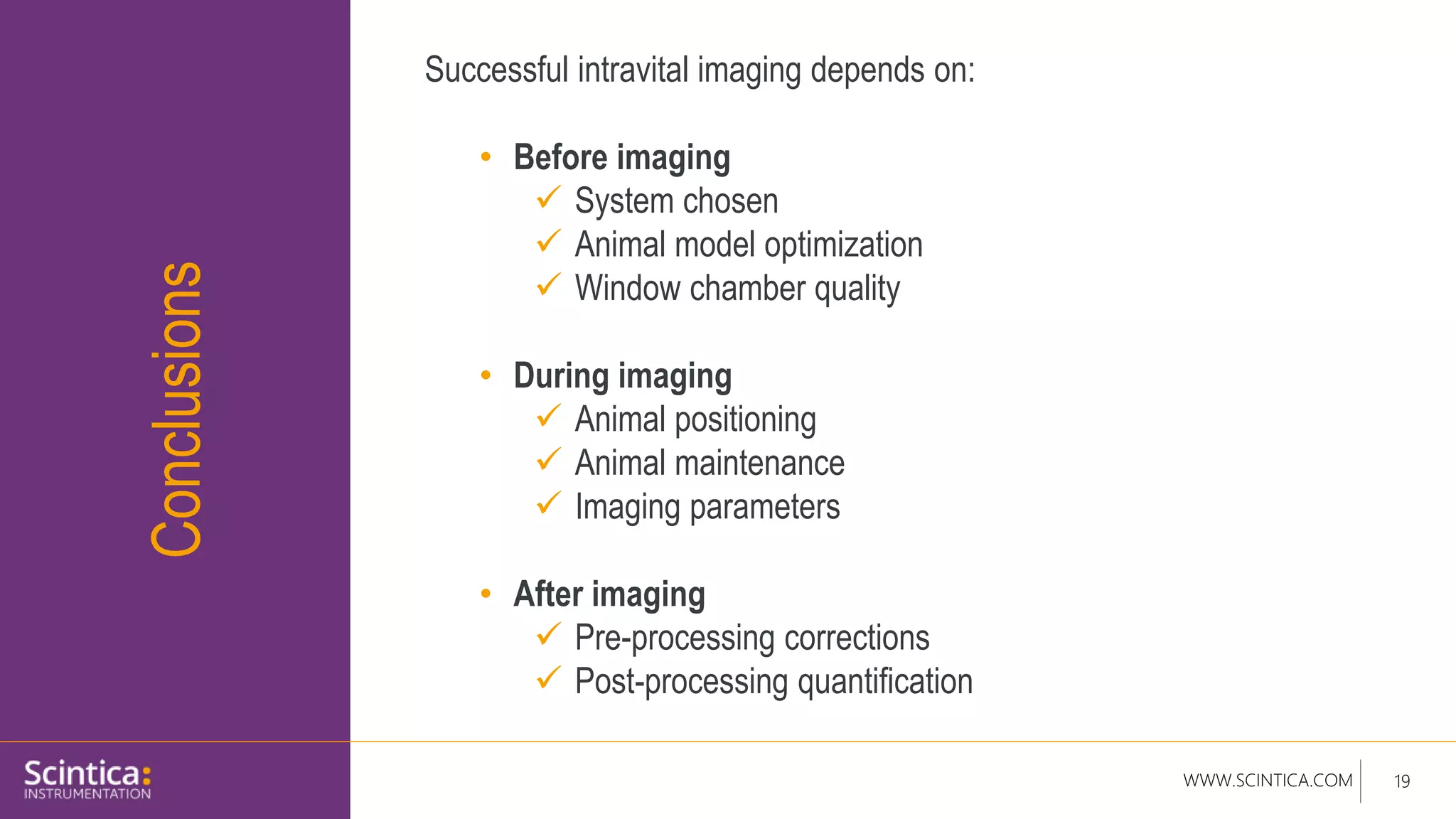
Conclusions
Successful intravital imaging depends on:
• Before imaging
 System chosen
 Animal model optimization
 Window chamber quality
• During imaging
 Animal positioning
 Animal maintenance
 Imaging parameters
• After imaging
 Pre-processing corrections
 Post-processing quantification
WWW.SCINTICA.COM 20
WWW.SCINTICA.COM 21
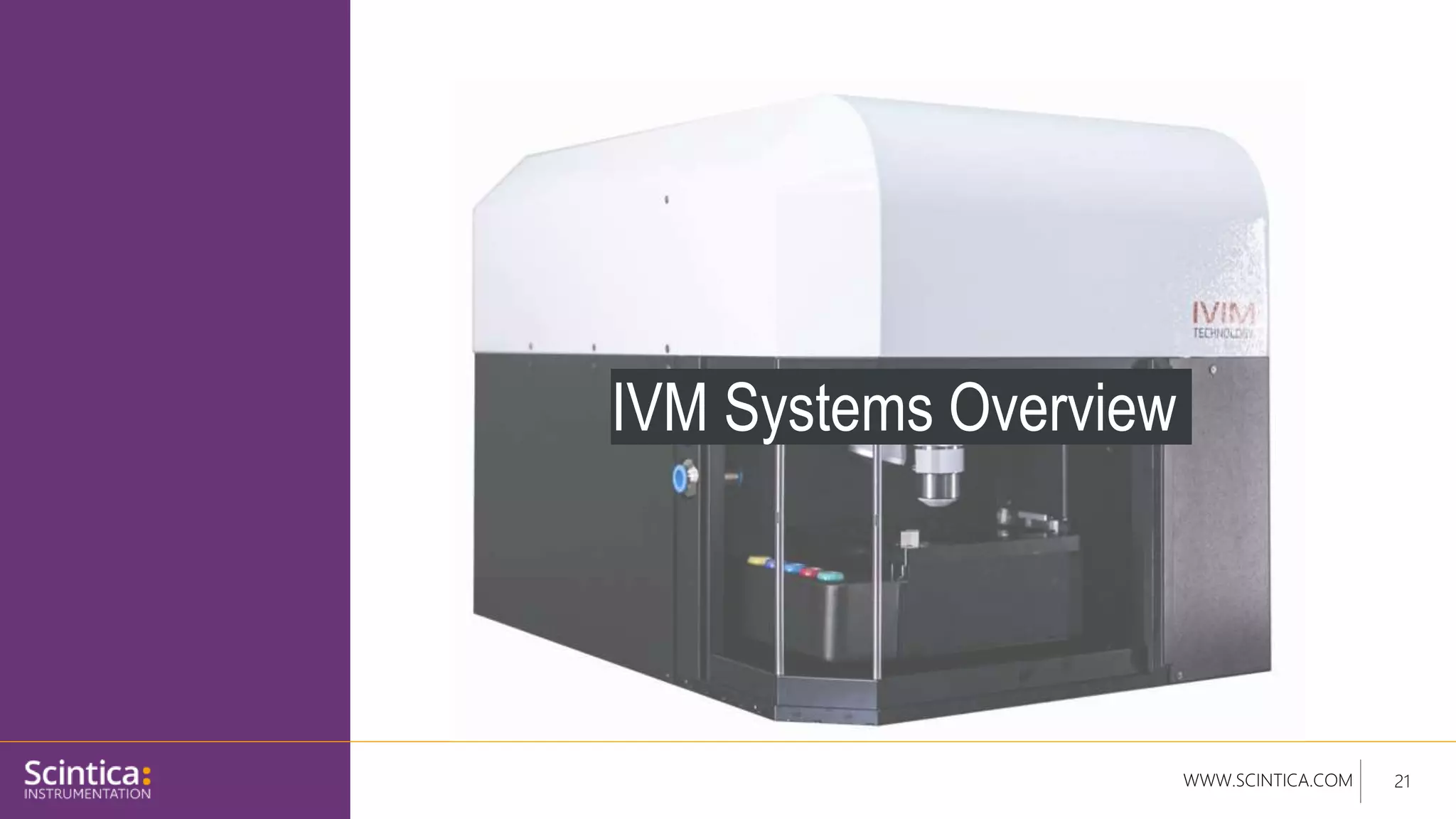
IVM Systems Overview
WWW.SCINTICA.COM
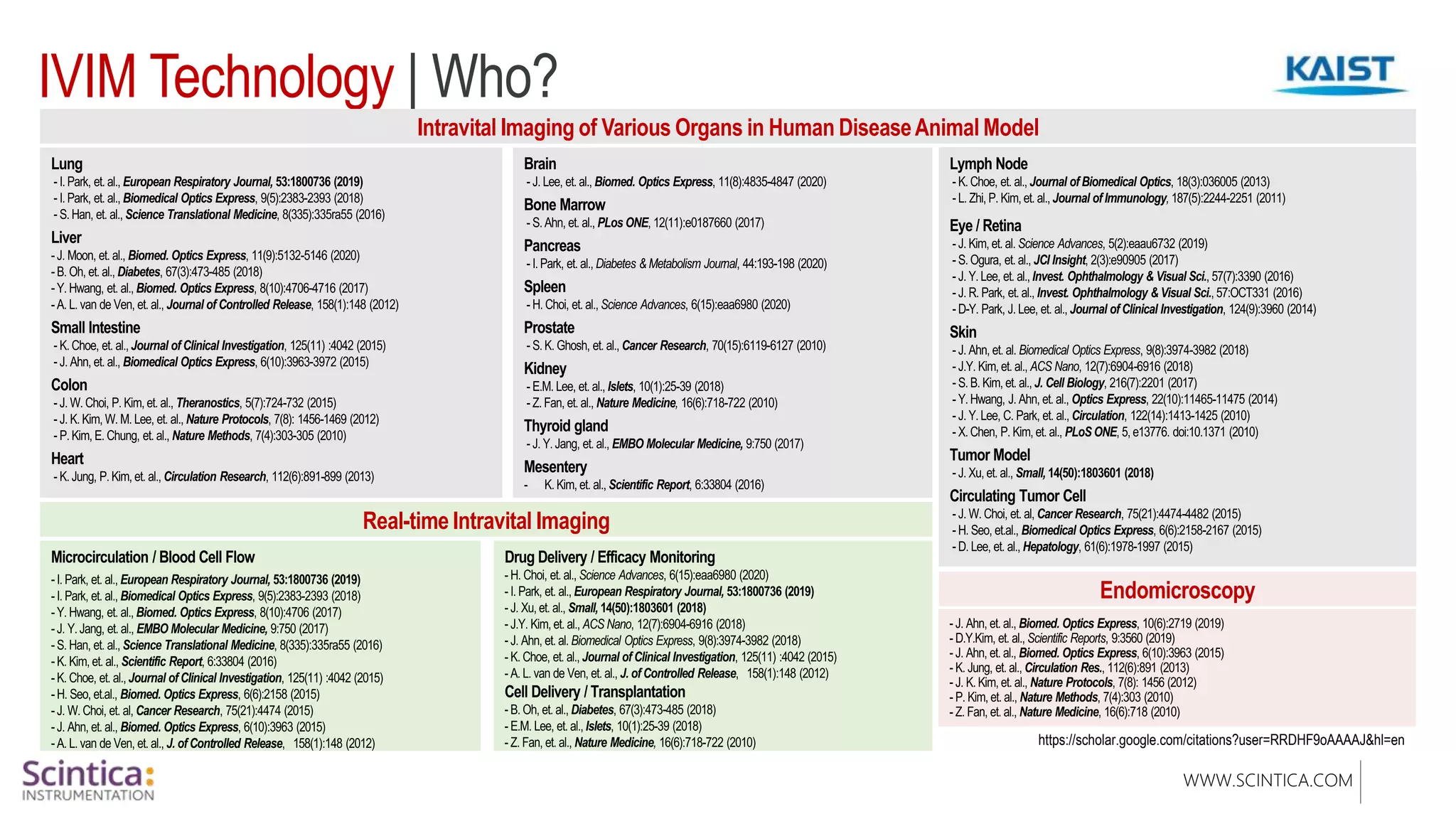
IVIM Technology | Who?
Intravital Imaging of Various Organs in Human DiseaseAnimal Model
Real-time Intravital Imaging
Endomicroscopy
https://scholar.google.com/citations?user=RRDHF9oAAAAJ&hl=en
WWW.SCINTICA.COM
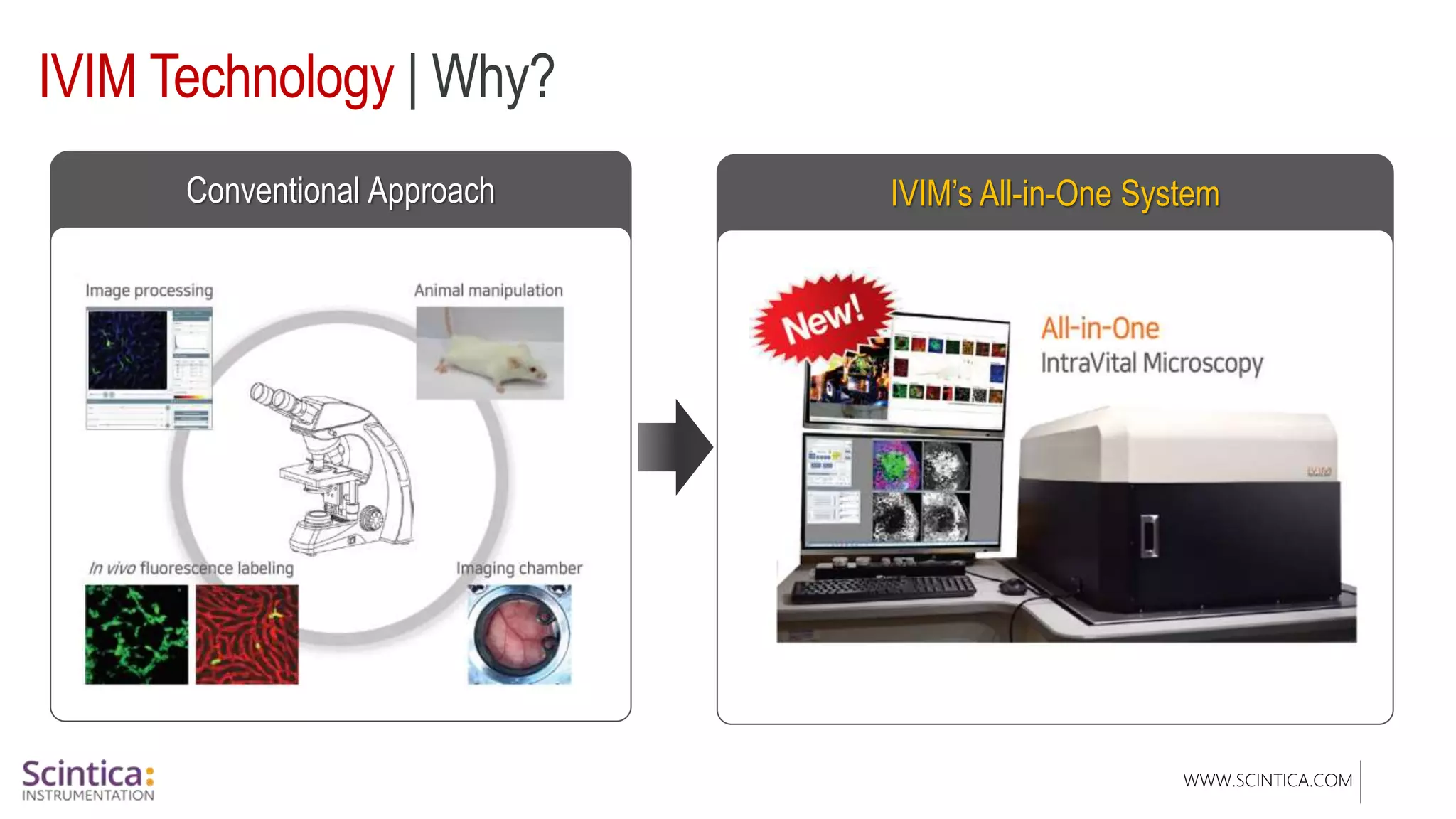
IVIM’s All-in-One System
Conventional Approach
IVIM Technology | Why?
WWW.SCINTICA.COM
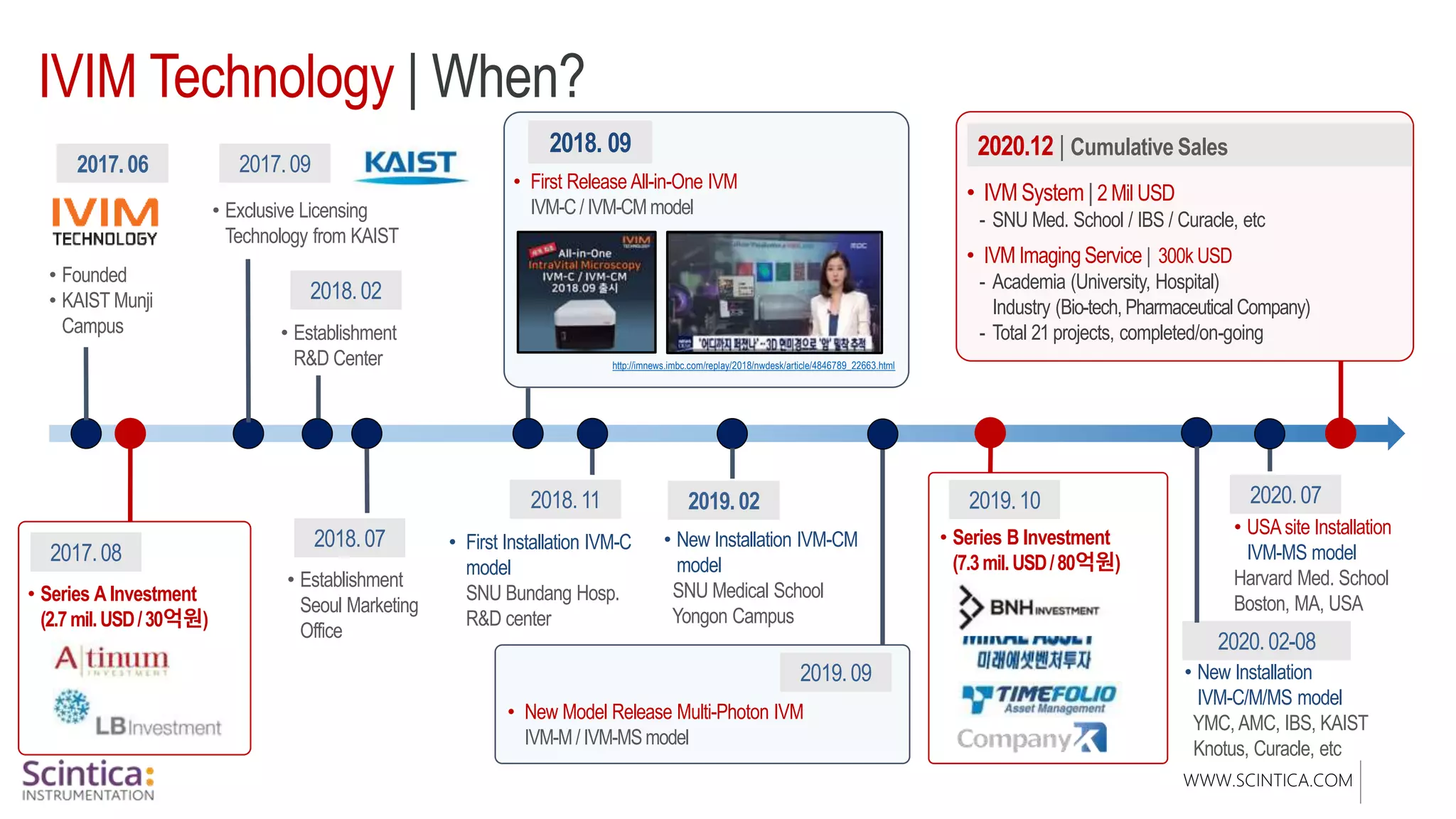
IVIM Technology | When?
2017.06
• Founded
• KAIST Munji
Campus
2017.08
• Series A Investment
(2.7mil.USD/30억원)
2017.09
• Exclusive Licensing
Technology from KAIST
2018.07
2018.02
• Establishment
Seoul Marketing
Office
2018. 09
• First Release All-in-One IVM
IVM-C/IVM-CMmodel
2018.11
• First Installation IVM-C
model
SNU Bundang Hosp.
R&D center
2020.12 | Cumulative Sales
• IVM System | 2 Mil USD
- SNU Med. School / IBS / Curacle, etc
• IVM Imaging Service | 300k USD
- Academia (University, Hospital)
Industry (Bio-tech, Pharmaceutical Company)
- Total 21 projects, completed/on-going
2019.09
2019.02 2019.10
2020.02-08
2020.07
http://imnews.imbc.com/replay/2018/nwdesk/article/4846789_22663.html
• Establishment
R&D Center
• New Model Release Multi-Photon IVM
IVM-M/ IVM-MSmodel
• New Installation IVM-CM
model
SNU Medical School
Yongon Campus
• Series B Investment
(7.3mil.USD/80억원)
• New Installation
IVM-C/M/MS model
YMC, AMC, IBS, KAIST
Knotus, Curacle, etc
• USAsite Installation
IVM-MS model
Harvard Med. School
Boston, MA, USA
WWW.SCINTICA.COM
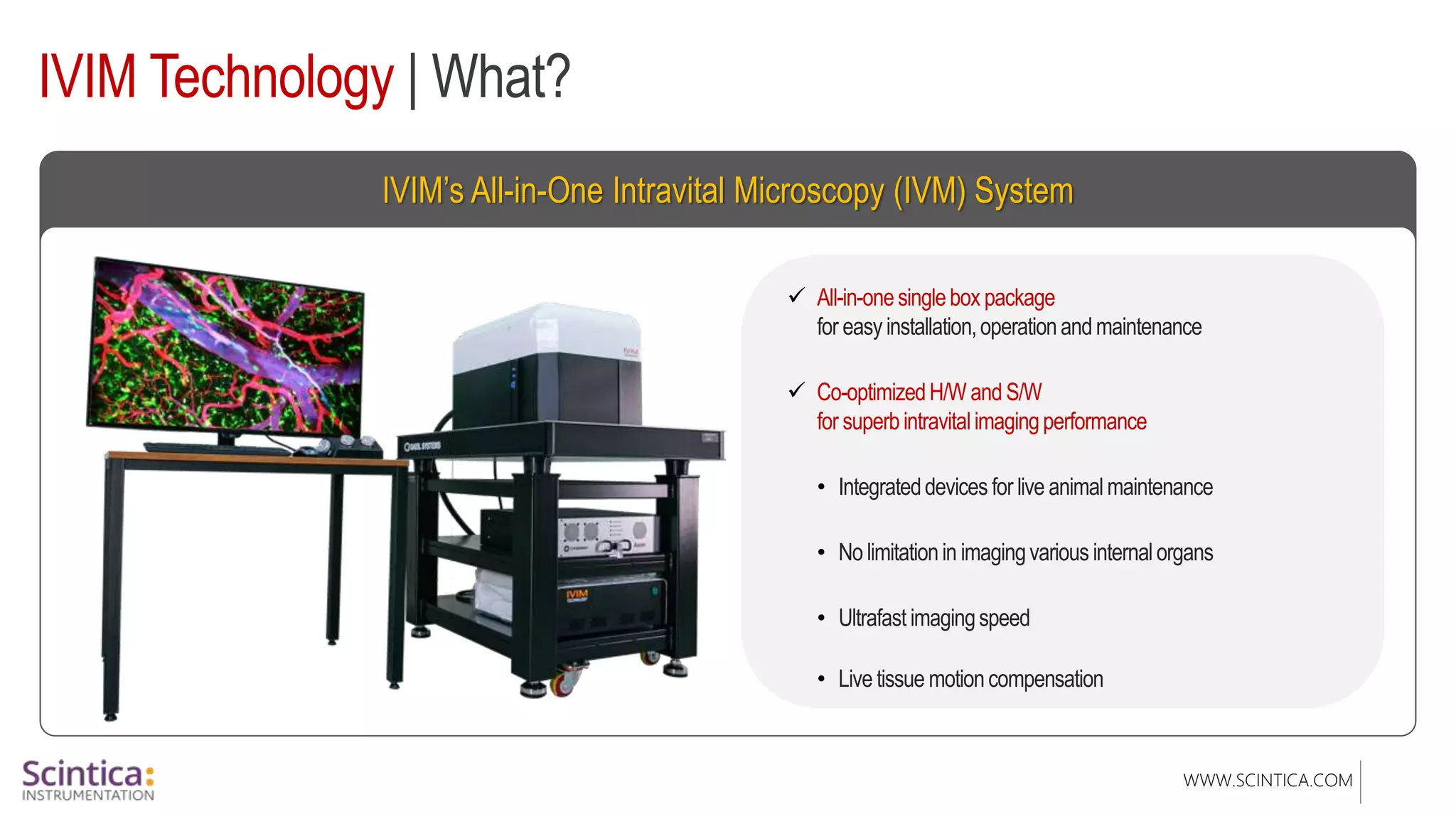
IVIM’s All-in-One Intravital Microscopy (IVM) System
IVIM Technology | What?
 All-in-onesinglebox package
for easy installation,operationandmaintenance
 Co-optimizedH/W and S/W
for superbintravitalimagingperformance
• Integrateddevices for live animalmaintenance
• No limitationin imagingvarious internalorgans
• Ultrafast imagingspeed
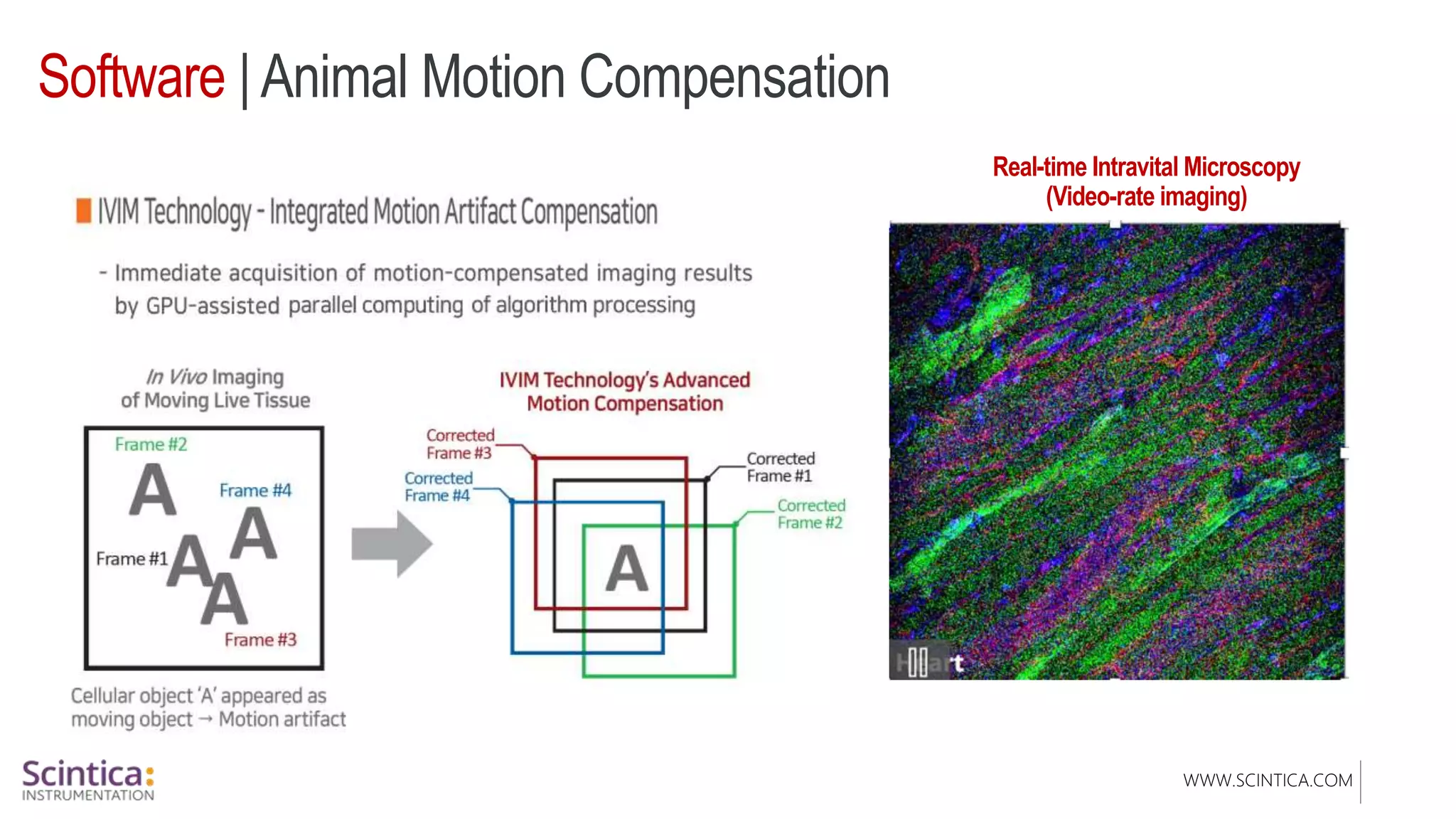
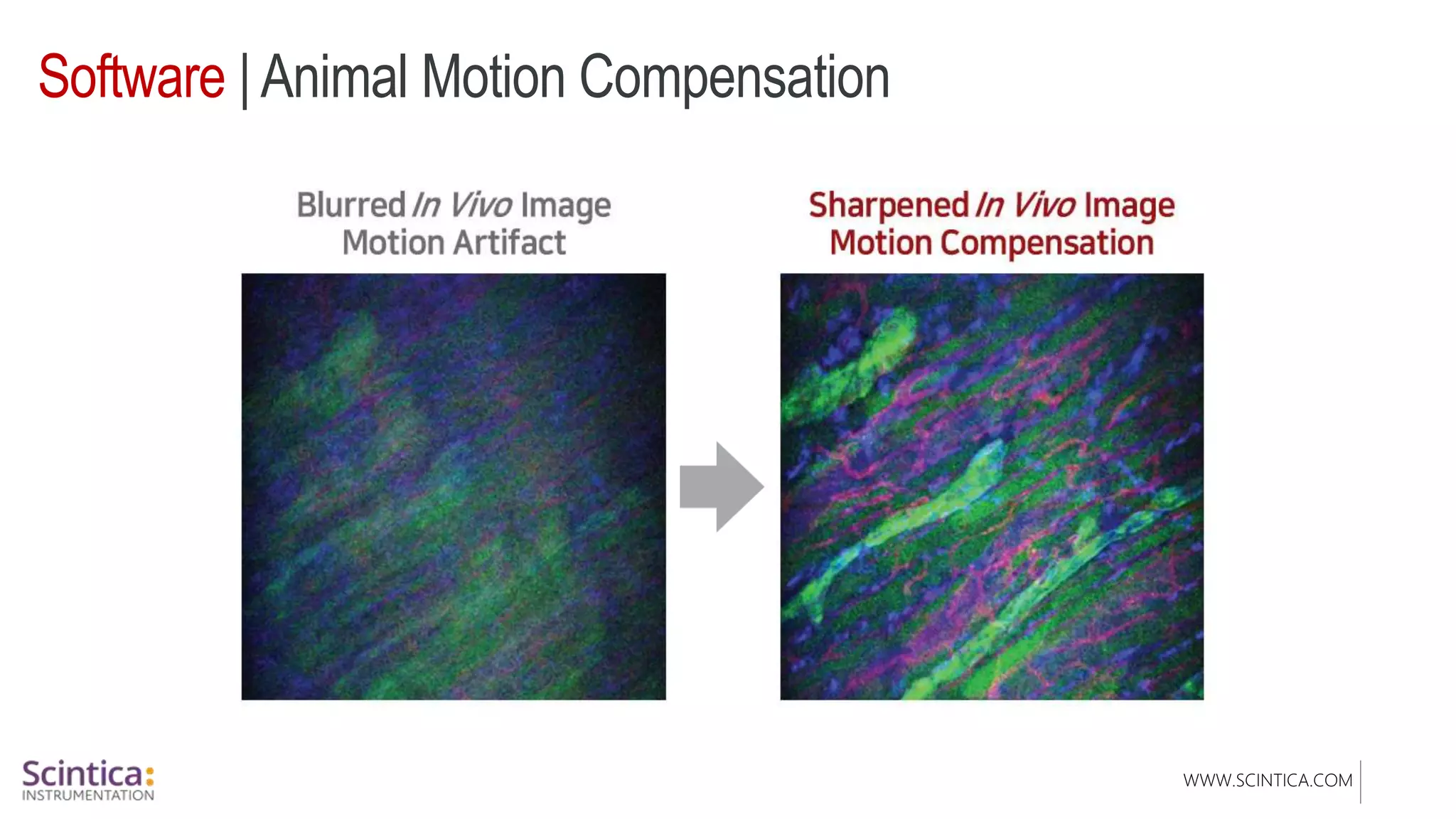
• Live tissue motioncompensation
WWW.SCINTICA.COM
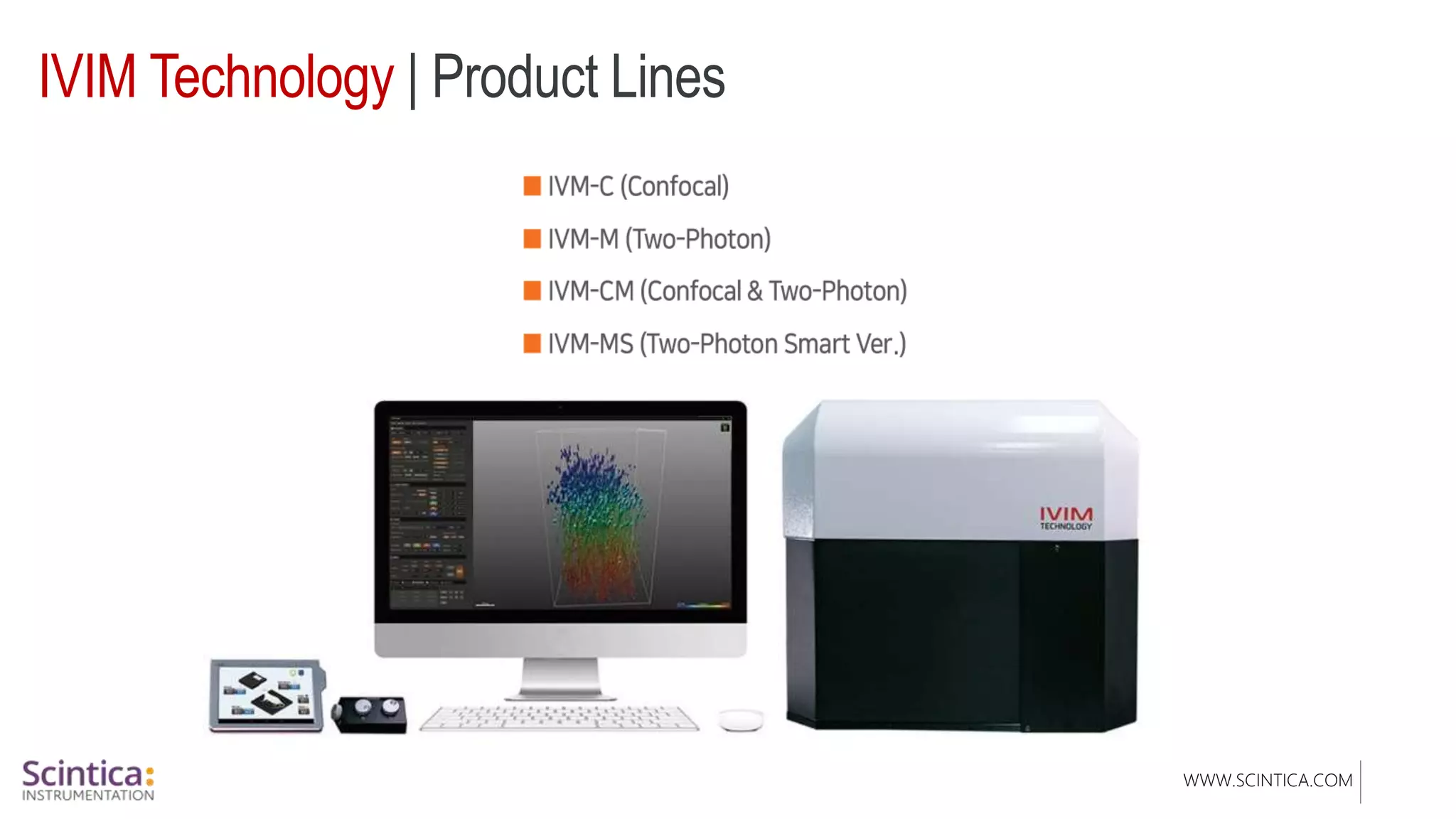
IVIM Technology | Product Lines
WWW.SCINTICA.COM
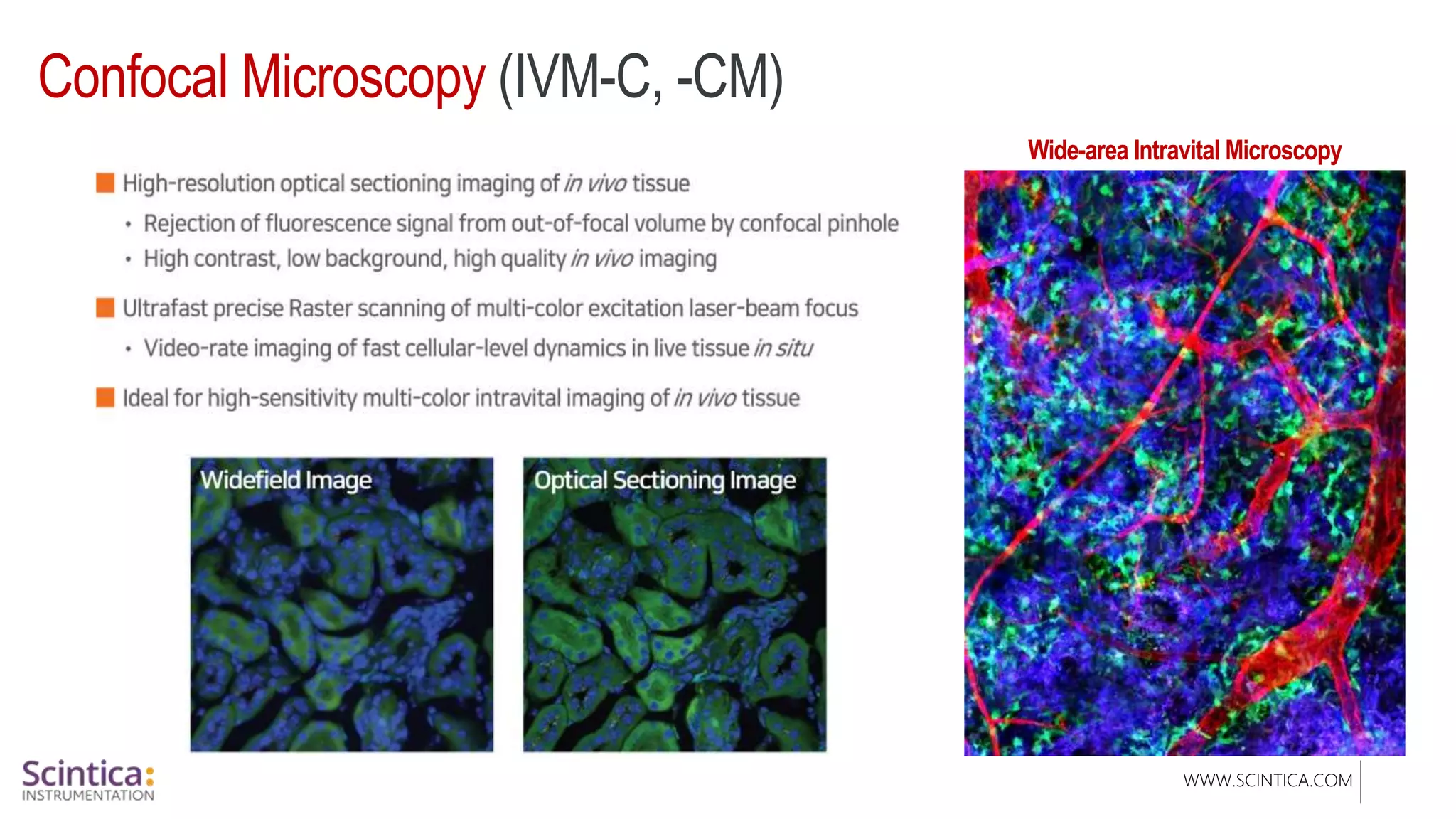
Confocal Microscopy (IVM-C, -CM)
Wide-area Intravital Microscopy
WWW.SCINTICA.COM
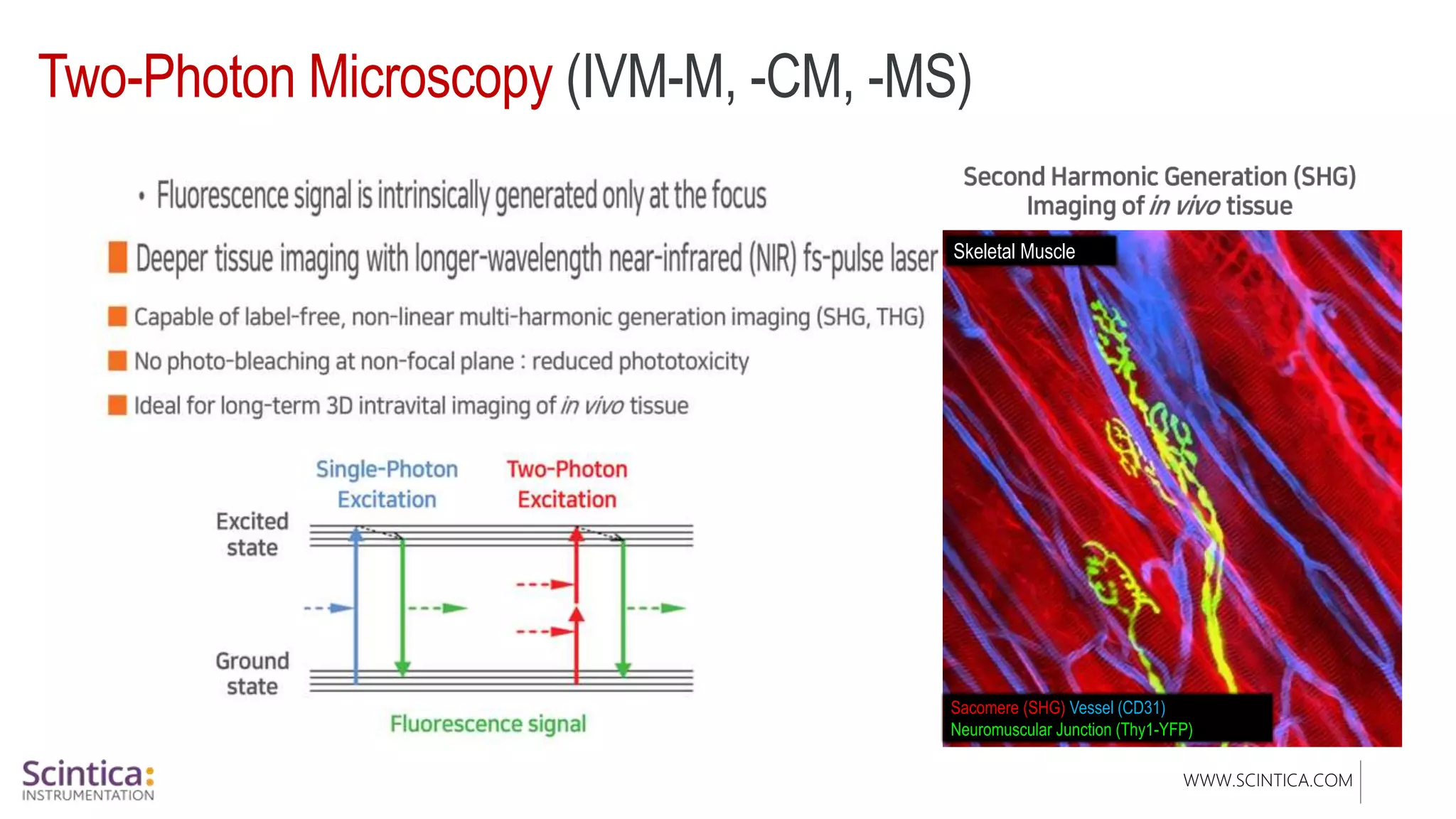
Two-Photon Microscopy (IVM-M, -CM, -MS)
Sacomere (SHG) Vessel (CD31)
Neuromuscular Junction (Thy1-YFP)
Skeletal Muscle
WWW.SCINTICA.COM
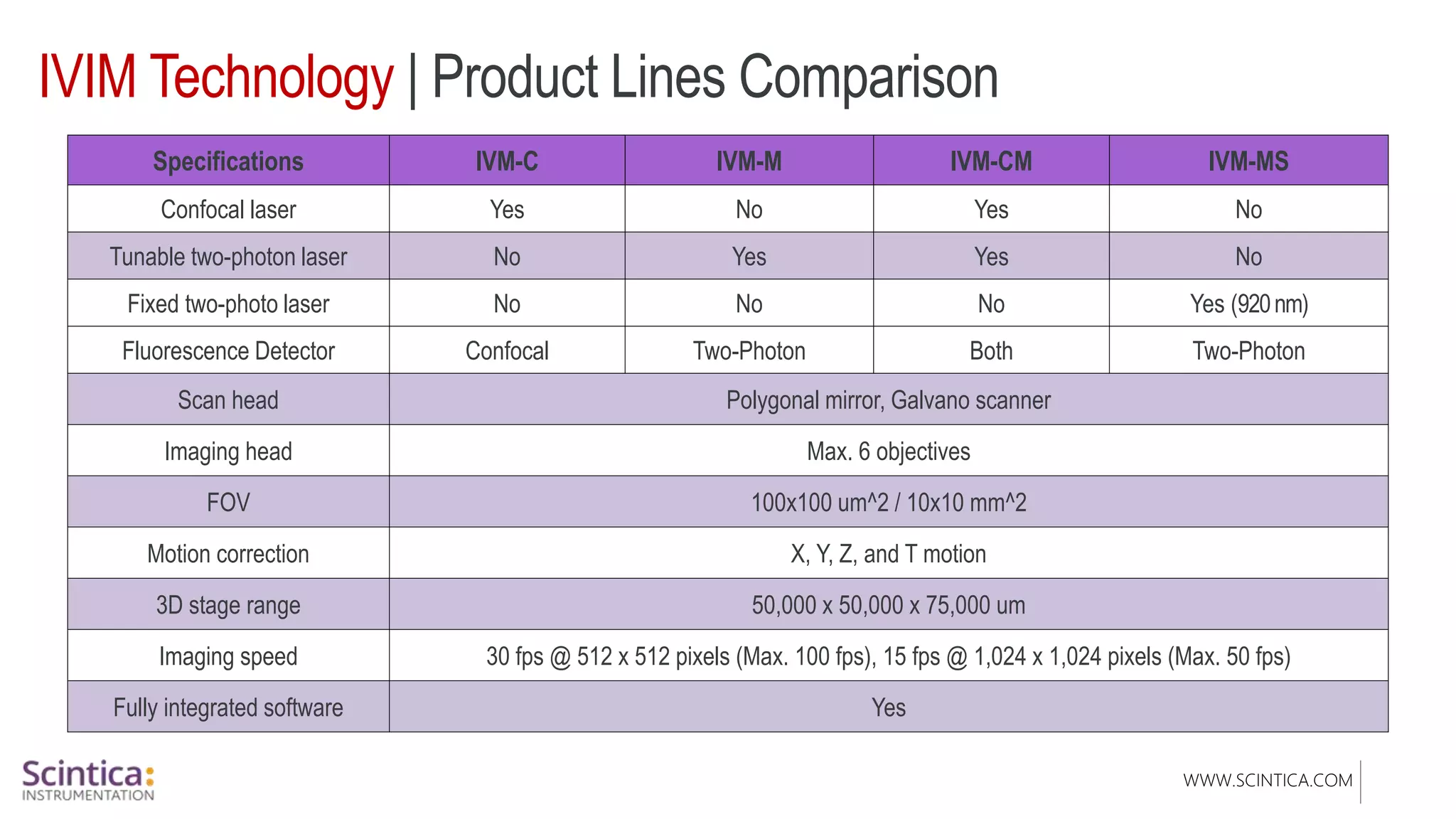
IVIM Technology | Product Lines Comparison
Specifications IVM-C IVM-M IVM-CM IVM-MS
Confocal laser Yes No Yes No
Tunable two-photon laser No Yes Yes No
Fixed two-photo laser No No No Yes (920nm)
Fluorescence Detector Confocal Two-Photon Both Two-Photon
Scan head Polygonal mirror, Galvano scanner
Imaging head Max. 6 objectives
FOV 100x100 um^2 / 10x10 mm^2
Motion correction X, Y, Z, and T motion
3D stage range 50,000 x 50,000 x 75,000 um
Imaging speed 30 fps @ 512 x 512 pixels (Max. 100 fps), 15 fps @ 1,024 x 1,024 pixels (Max. 50 fps)
Fully integrated software Yes
WWW.SCINTICA.COM
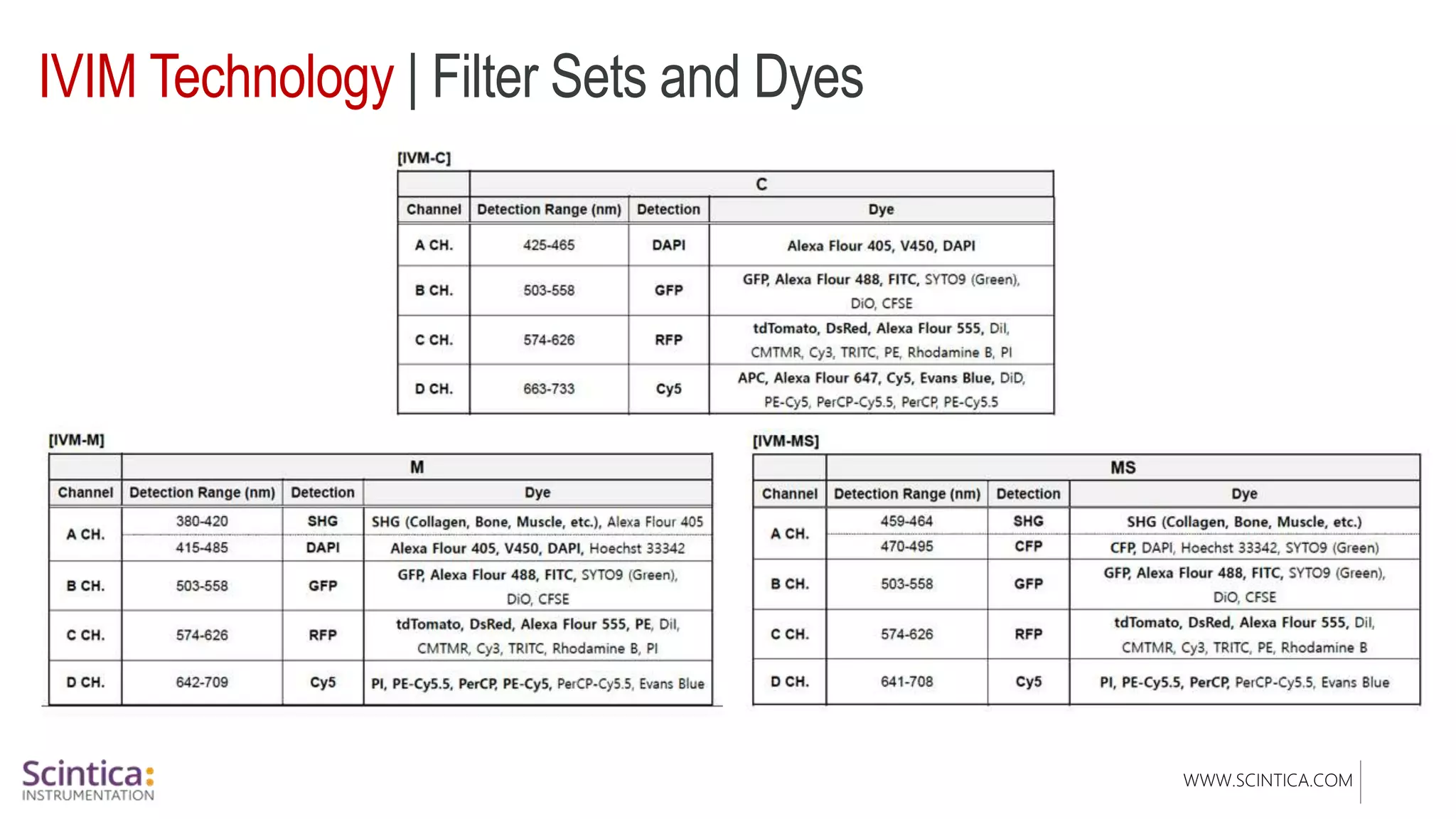
IVIM Technology | Filter Sets and Dyes
WWW.SCINTICA.COM
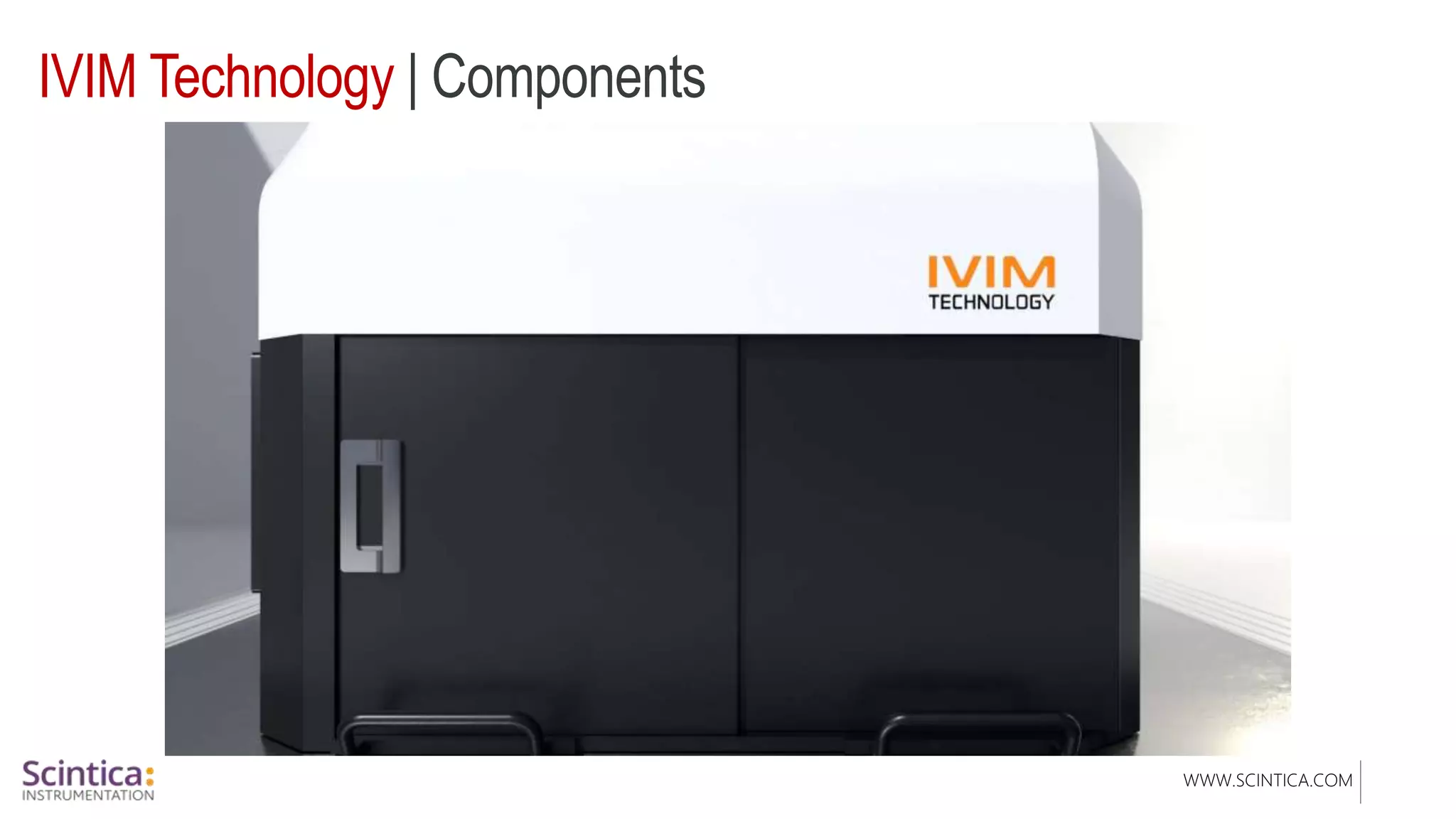
IVIM Technology | Components
WWW.SCINTICA.COM
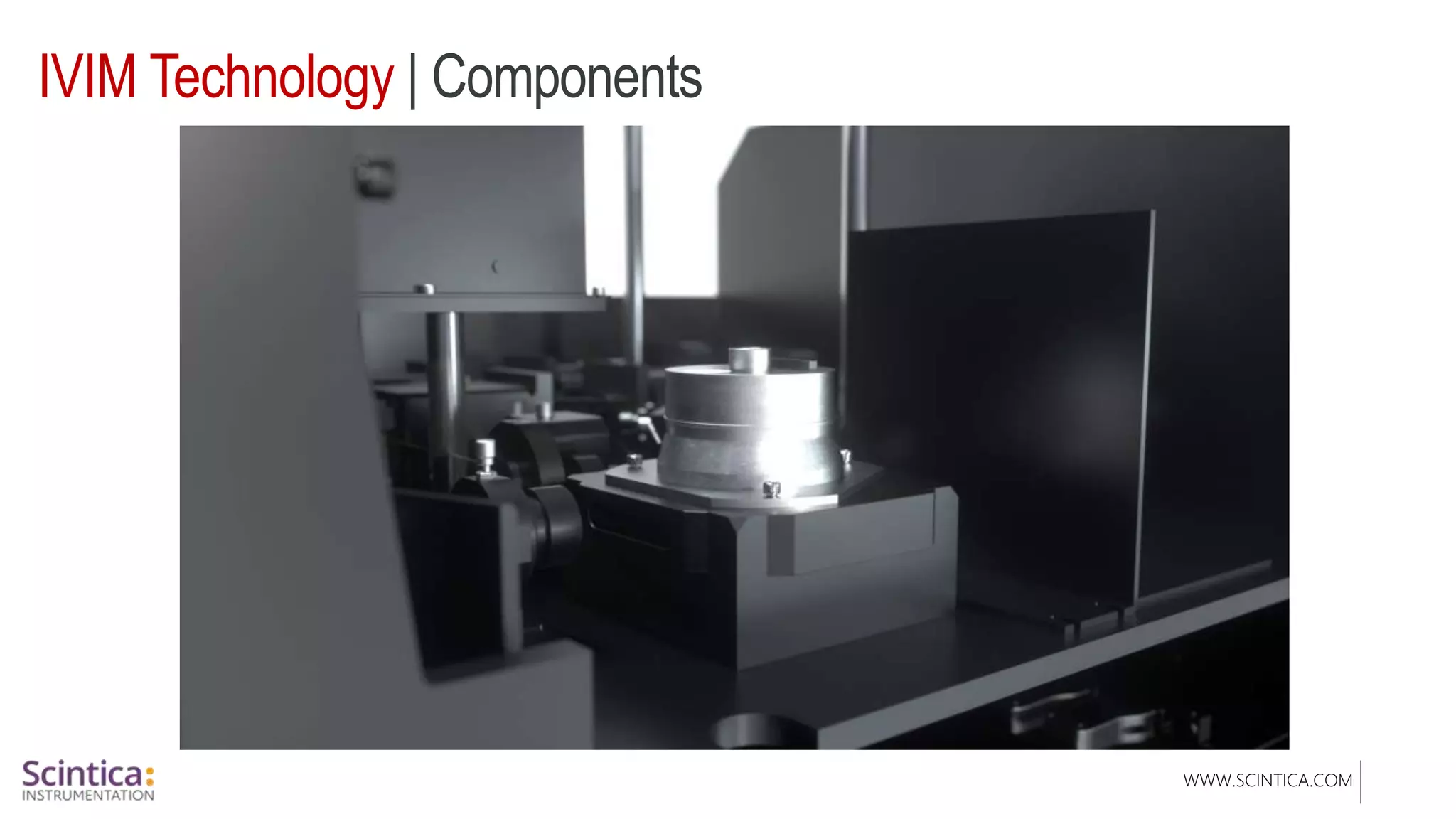
IVIM Technology | Components
WWW.SCINTICA.COM
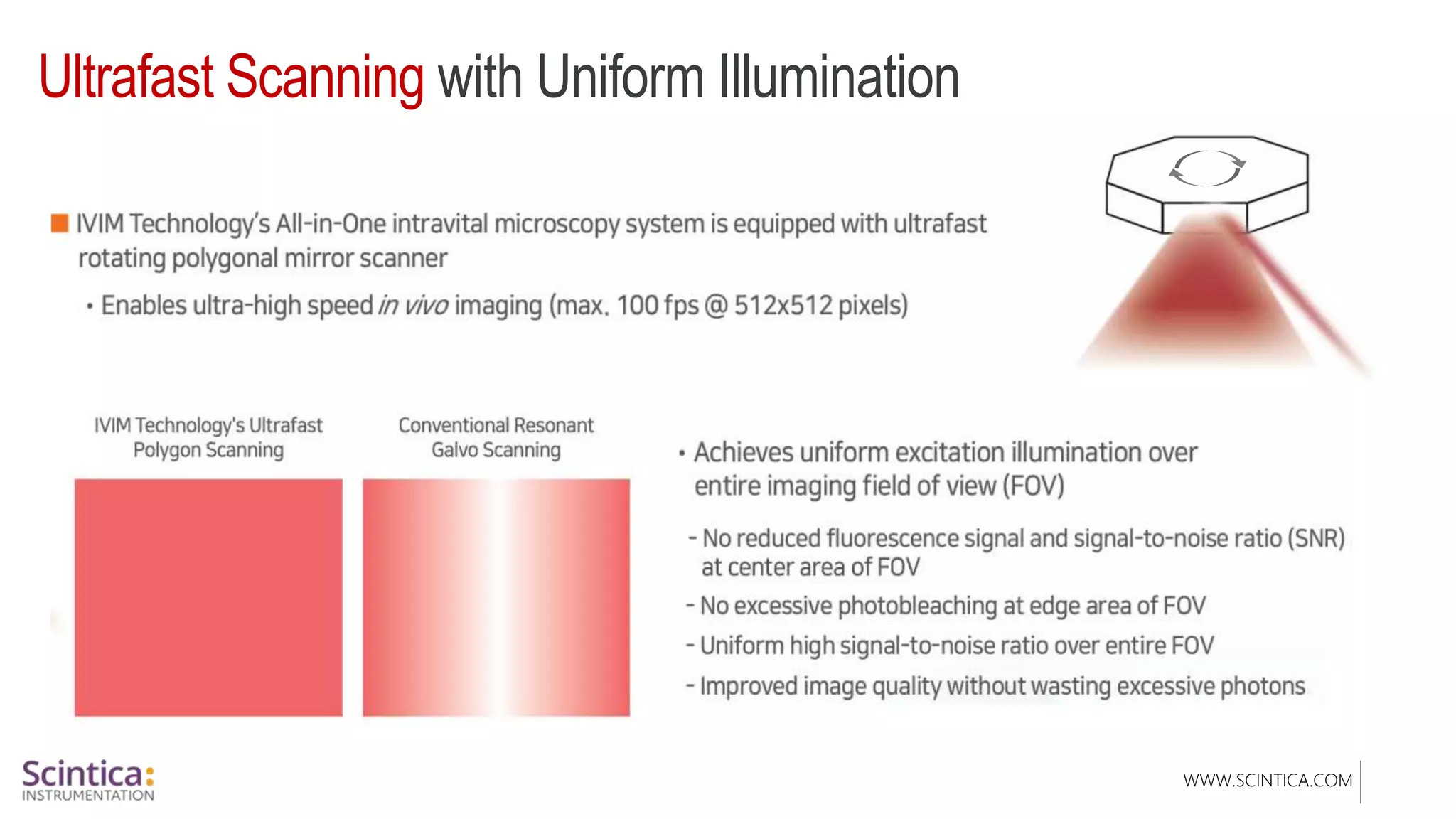
Ultrafast Scanning with Uniform Illumination
WWW.SCINTICA.COM
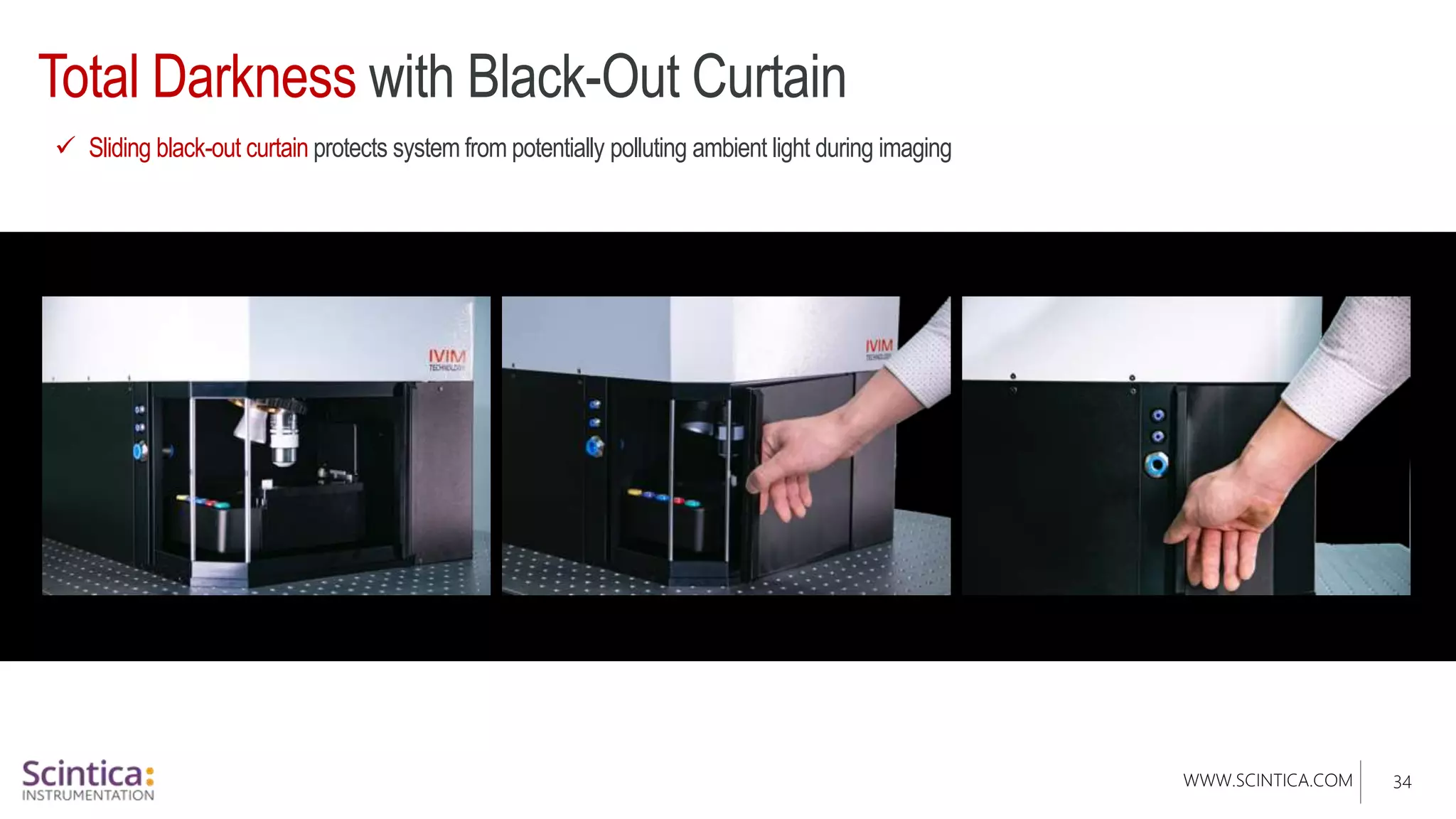
Total Darkness with Black-Out Curtain
34
 Sliding black-out curtain protects system from potentially polluting ambient light during imaging
WWW.SCINTICA.COM
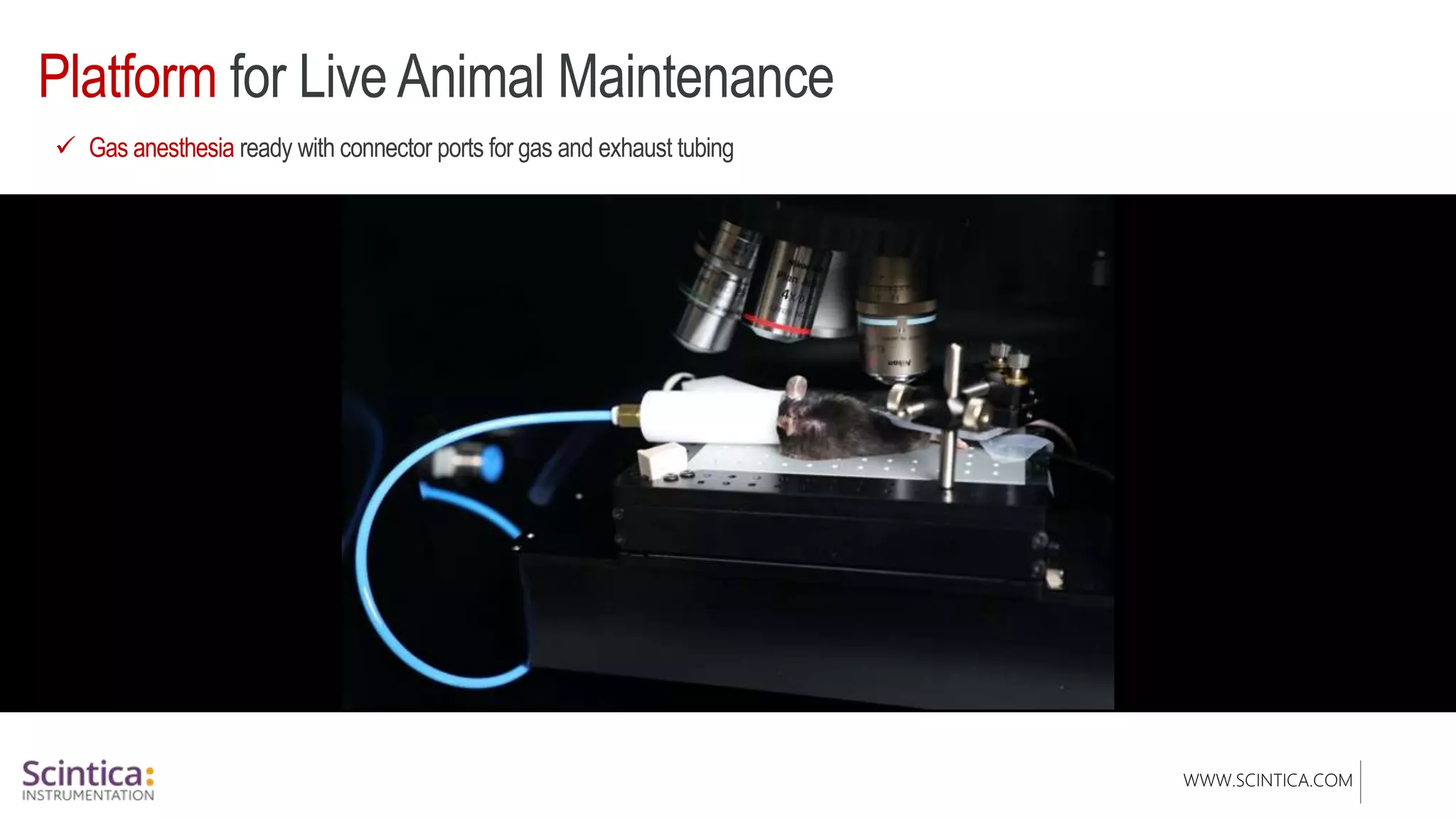
Platform for Live Animal Maintenance
 Body Temperature Monitoring & Feedback Heater Control: Rectal Probe & Body Plate Heater
 Imaging Tissue Temperature Monitoring & Heater Control: 2 Indicators & Cover Glass Heater
WWW.SCINTICA.COM
Platform for Live Animal Maintenance
 Gas anesthesia ready with connector ports for gas and exhaust tubing
WWW.SCINTICA.COM
Platform for Live Animal Maintenance
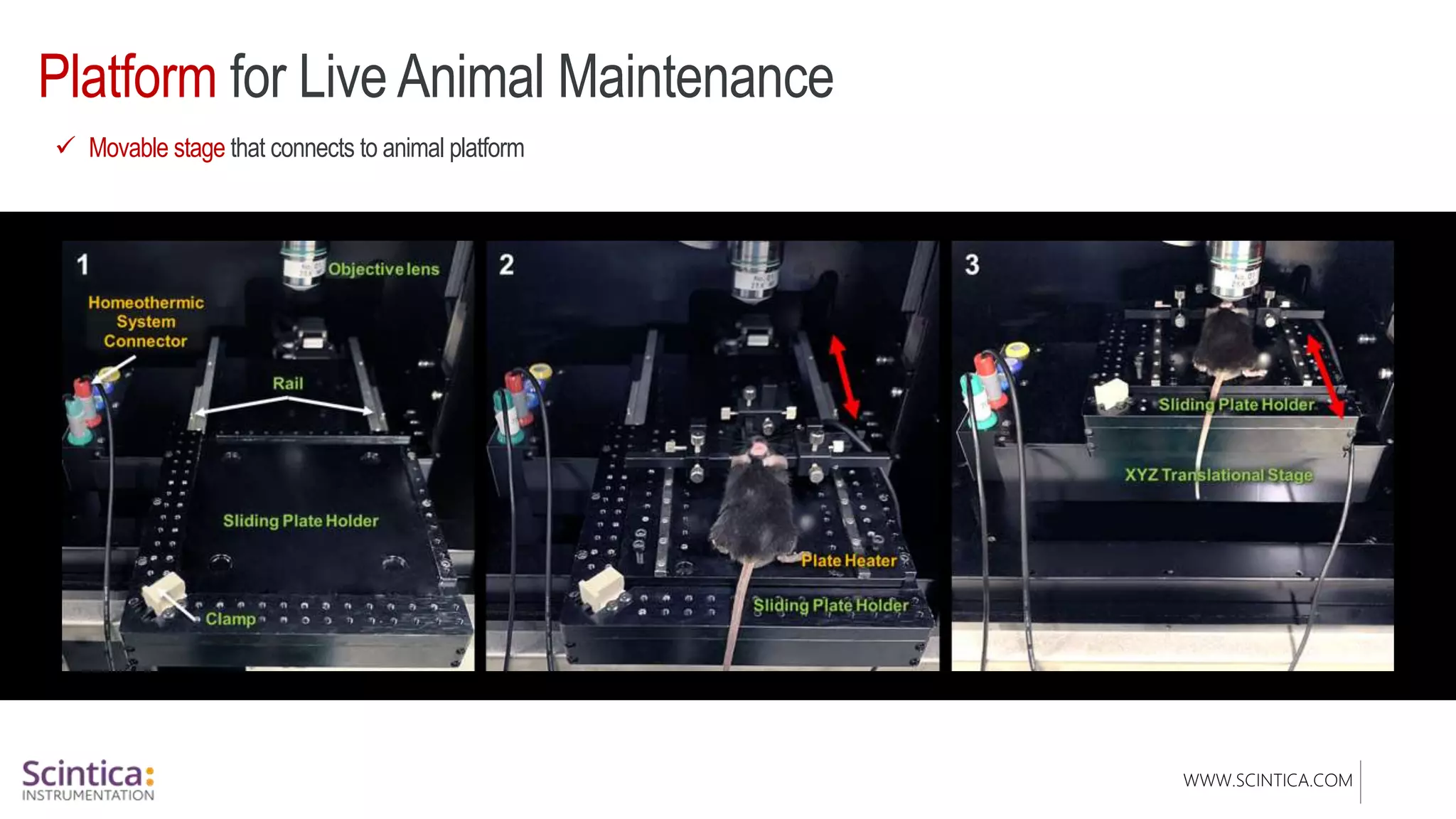
 Movable stage that connects to animal platform
WWW.SCINTICA.COM
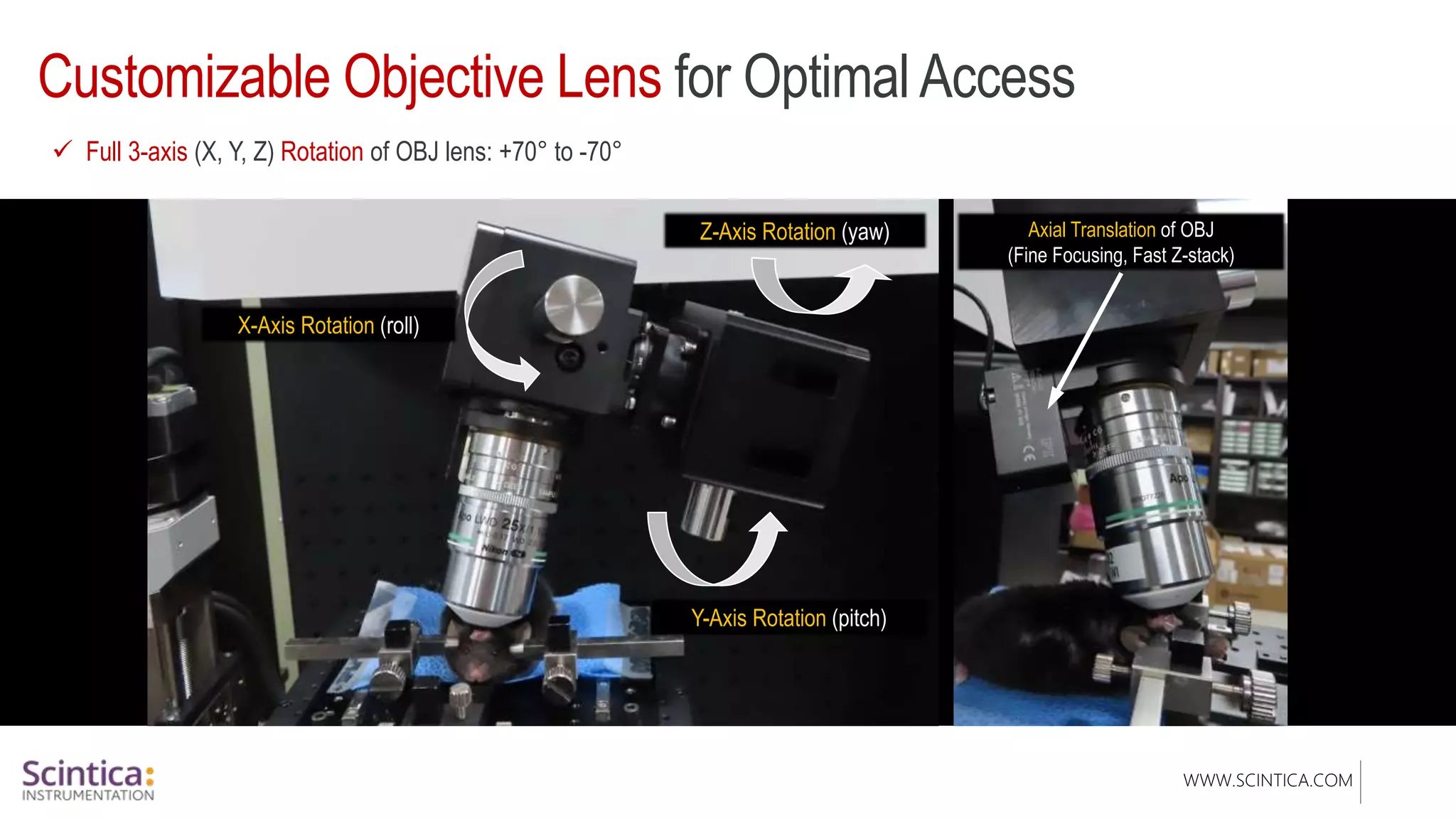
Customizable Objective Lens for Optimal Access
 Full 3-axis (X, Y, Z) Rotation of OBJ lens: +70° to -70°
X-Axis Rotation (roll)
Y-Axis Rotation (pitch)
Z-Axis Rotation (yaw) Axial Translation of OBJ
(Fine Focusing, Fast Z-stack)
WWW.SCINTICA.COM
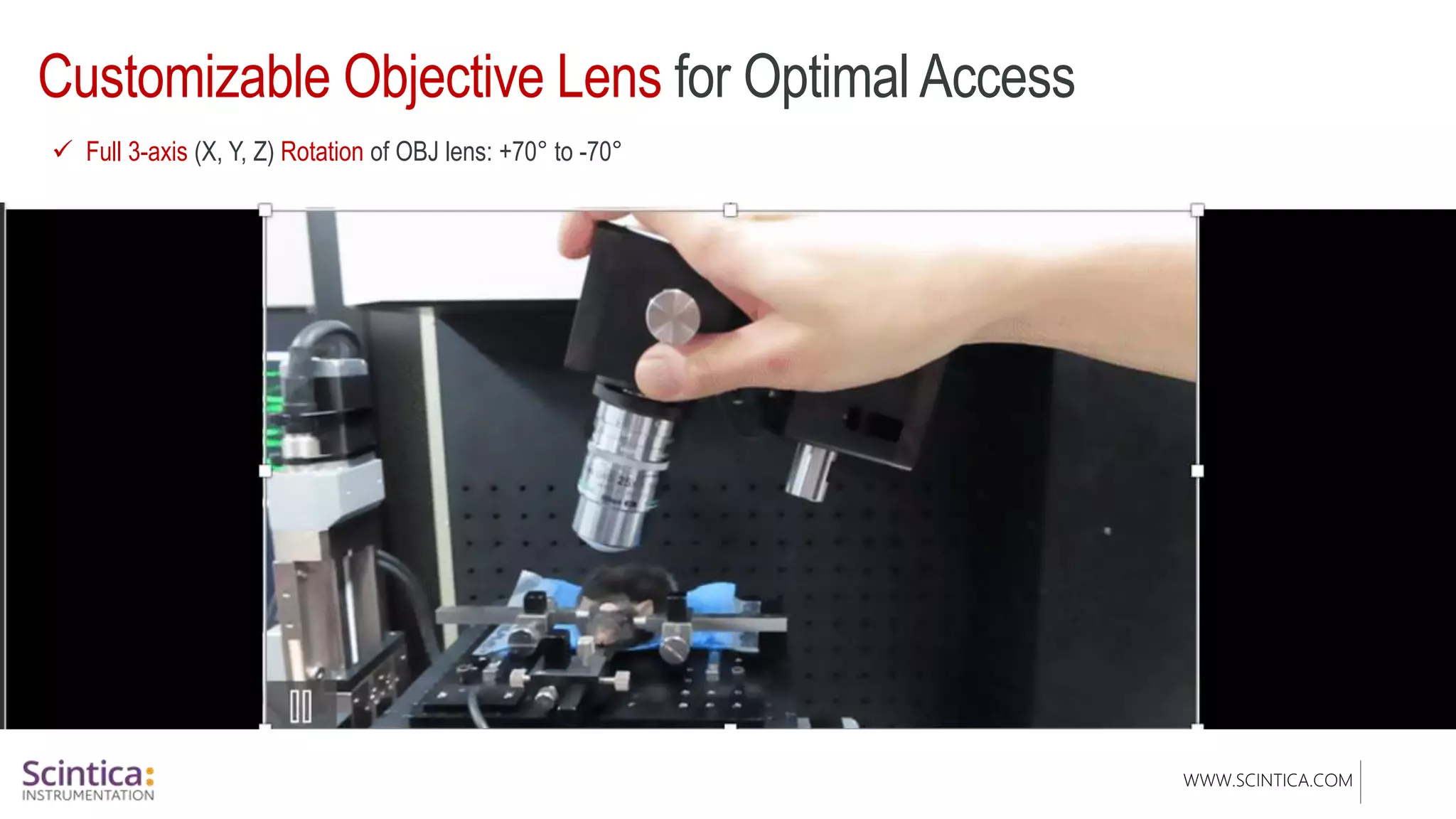
Customizable Objective Lens for Optimal Access
 Full 3-axis (X, Y, Z) Rotation of OBJ lens: +70° to -70°
WWW.SCINTICA.COM
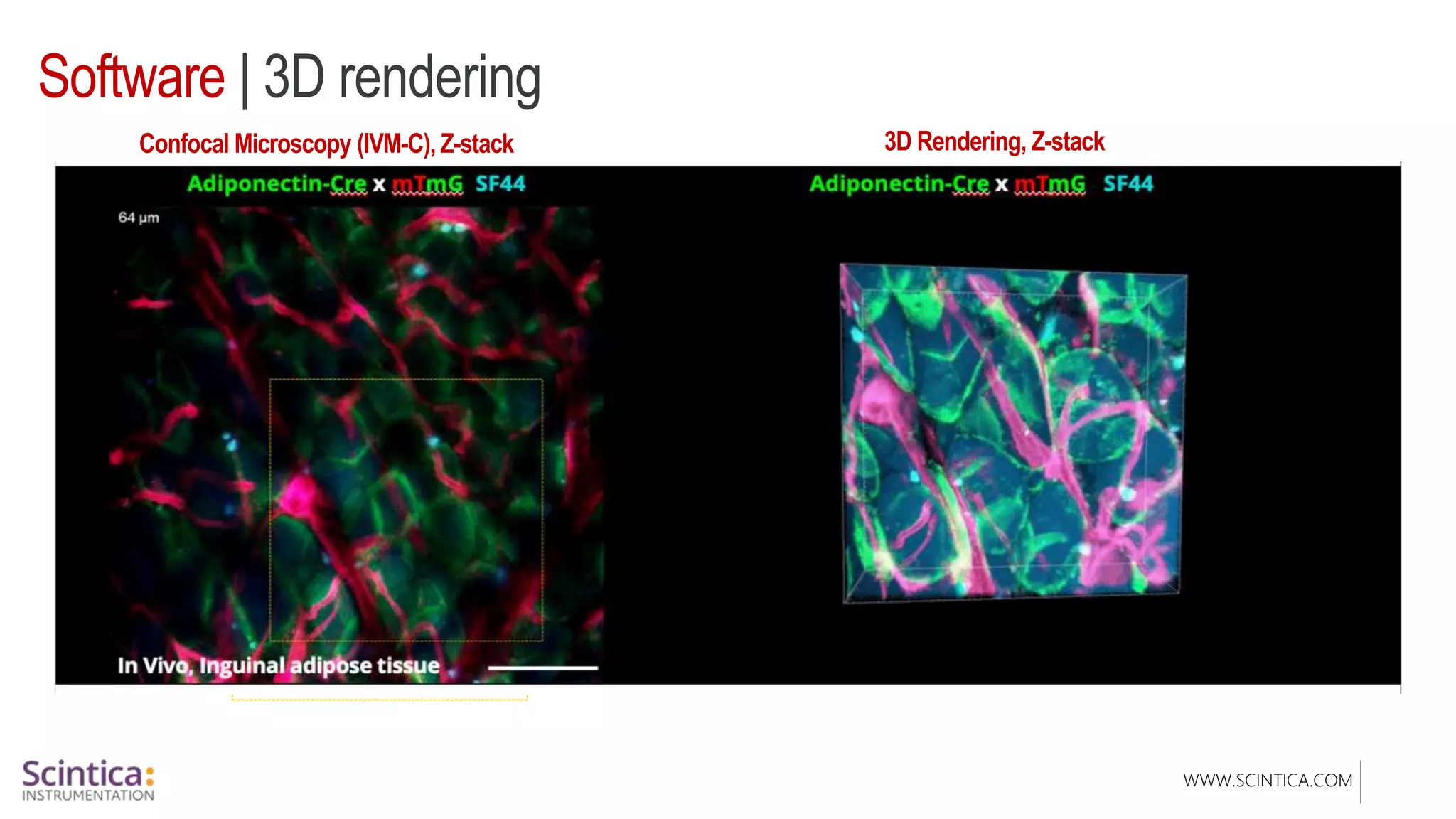
Software | 3D rendering
Confocal Microscopy (IVM-C), Z-stack
Adiponectin-Cre x mTmG SF44 Adiponectin-Cre x mTmG SF44
3D Rendering, Z-stack
In Vivo,Inguinaladiposetissue
WWW.SCINTICA.COM
Software | Animal Motion Compensation
Real-time Intravital Microscopy
(Video-rate imaging)
Heart
WWW.SCINTICA.COM
Software | Animal Motion Compensation
WWW.SCINTICA.COM
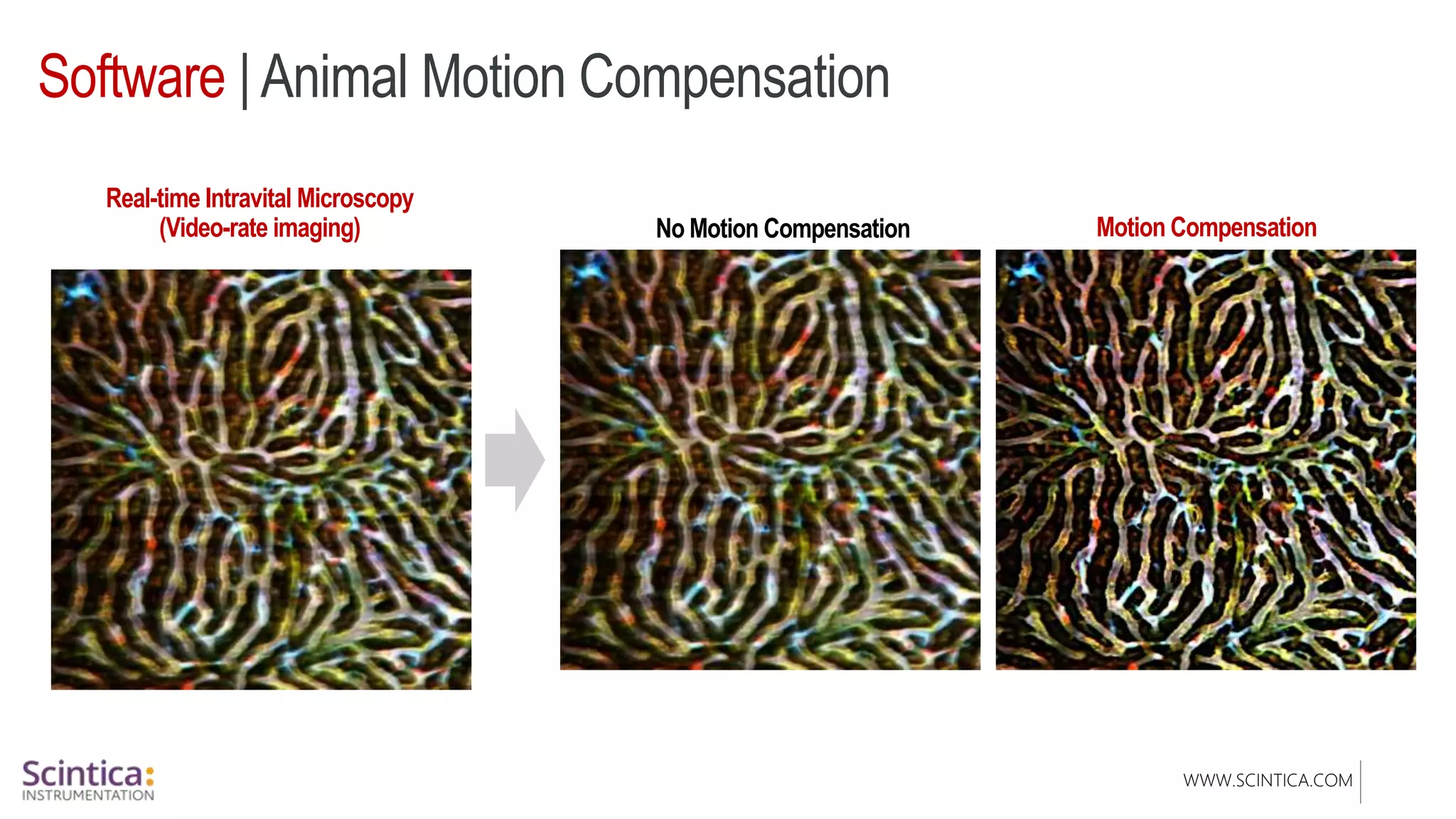
Software | Animal Motion Compensation
Real-time Intravital Microscopy
(Video-rate imaging) No Motion Compensation Motion Compensation
Liver
WWW.SCINTICA.COM
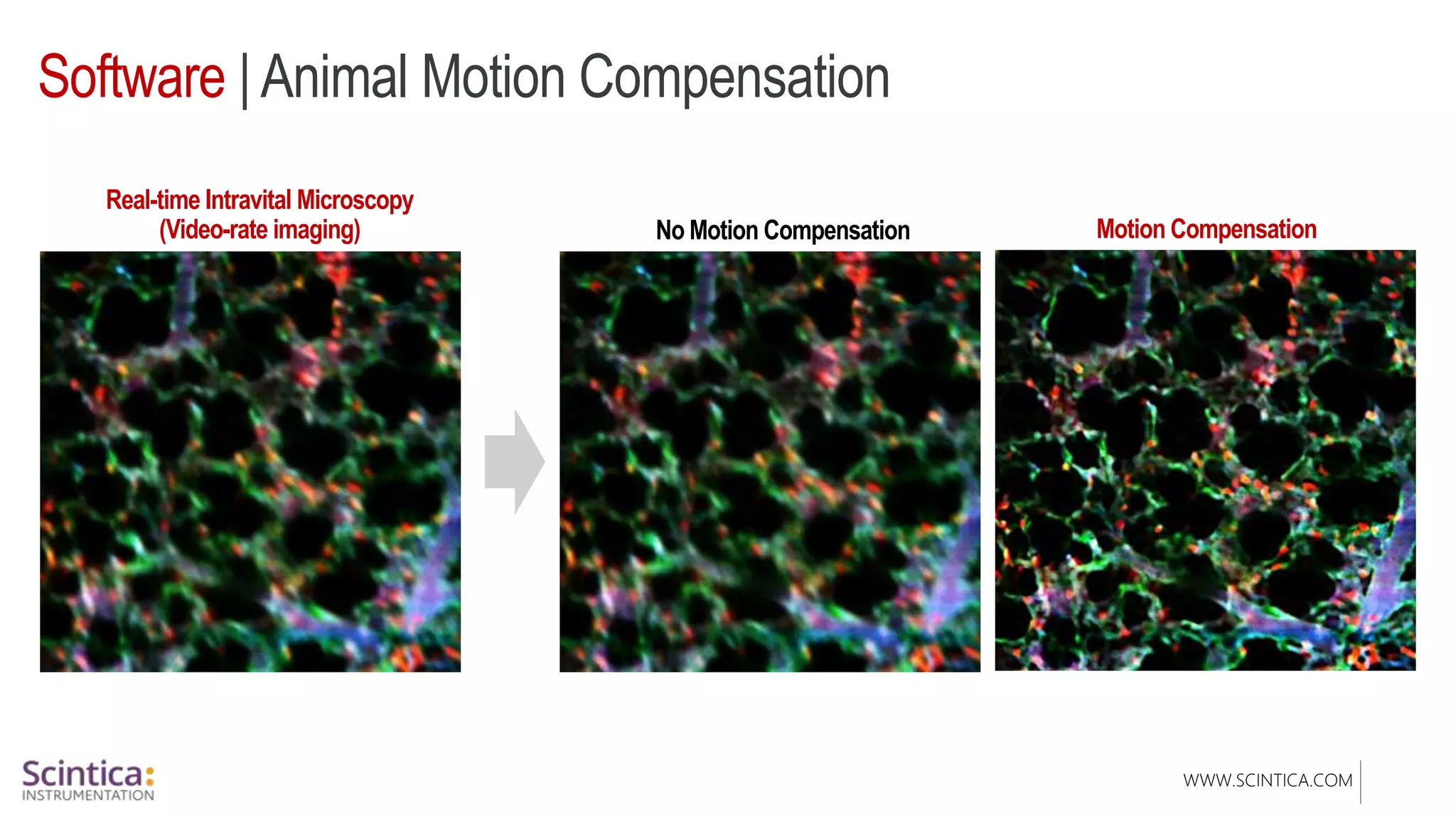
Software | Animal Motion Compensation
Real-time Intravital Microscopy
(Video-rate imaging) No Motion Compensation Motion Compensation
Lung
WWW.SCINTICA.COM
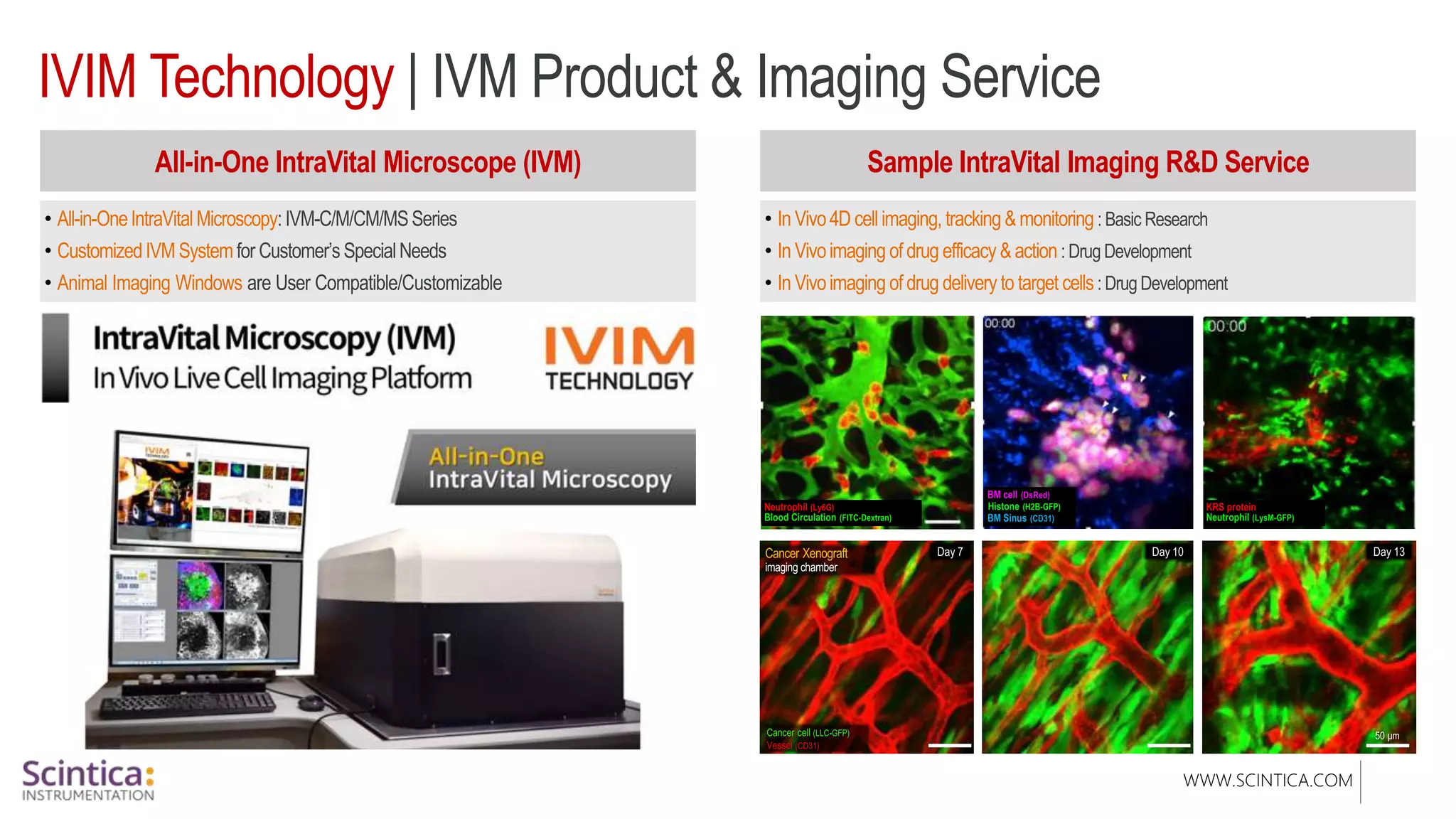
IVIM Technology | IVM Product & Imaging Service
All-in-One IntraVital Microscope (IVM) Sample IntraVital Imaging R&D Service
BM cell (DsRed)
Histone (H2B-GFP)
BM Sinus (CD31)
KRS protein
Neutrophil (LysM-GFP)
Neutrophil (Ly6G)
Blood Circulation (FITC-Dextran)
WWW.SCINTICA.COM 46
Conclusions
 First all-in-one confocal and/or two-photon microscopes optimized for
in vivo imaging
 Very small footprint with easy installation and integration into any lab
space
 Equipped with a superb live animal maintenance platform and
ultrafast scanner
 Optimized to image a great variety of internal organs
 Capable of real-time motion compensation
WWW.SCINTICA.COM 47
Key Research Applications
Oncology
WWW.SCINTICA.COM
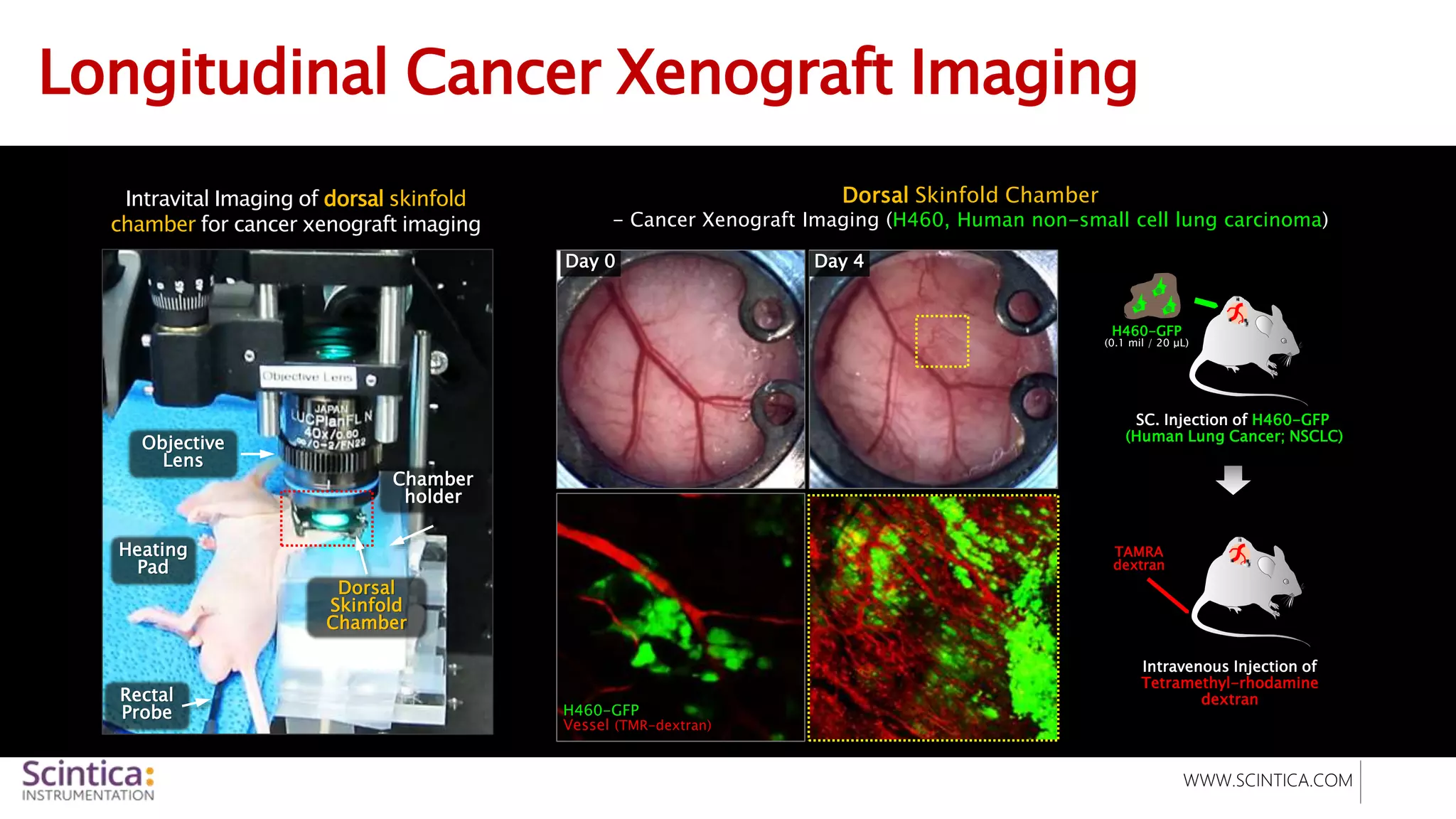
Longitudinal Cancer Xenograft Imaging
Intravital Imaging of dorsal skinfold
chamber for cancer xenograft imaging
Objective
Lens
Heating
Pad
Rectal
Probe
Chamber
holder
Dorsal
Skinfold
Chamber
Dorsal Skinfold Chamber
- Cancer Xenograft Imaging (H460, Human non-small cell lung carcinoma)
Day 0 Day 4
SC. Injection of H460-GFP
(Human Lung Cancer; NSCLC)
H460-GFP
(0.1 mil / 20 μL)
Intravenous Injection of
Tetramethyl-rhodamine
dextran
TAMRA
dextran
H460-GFP
Vessel (TMR-dextran)
WWW.SCINTICA.COM
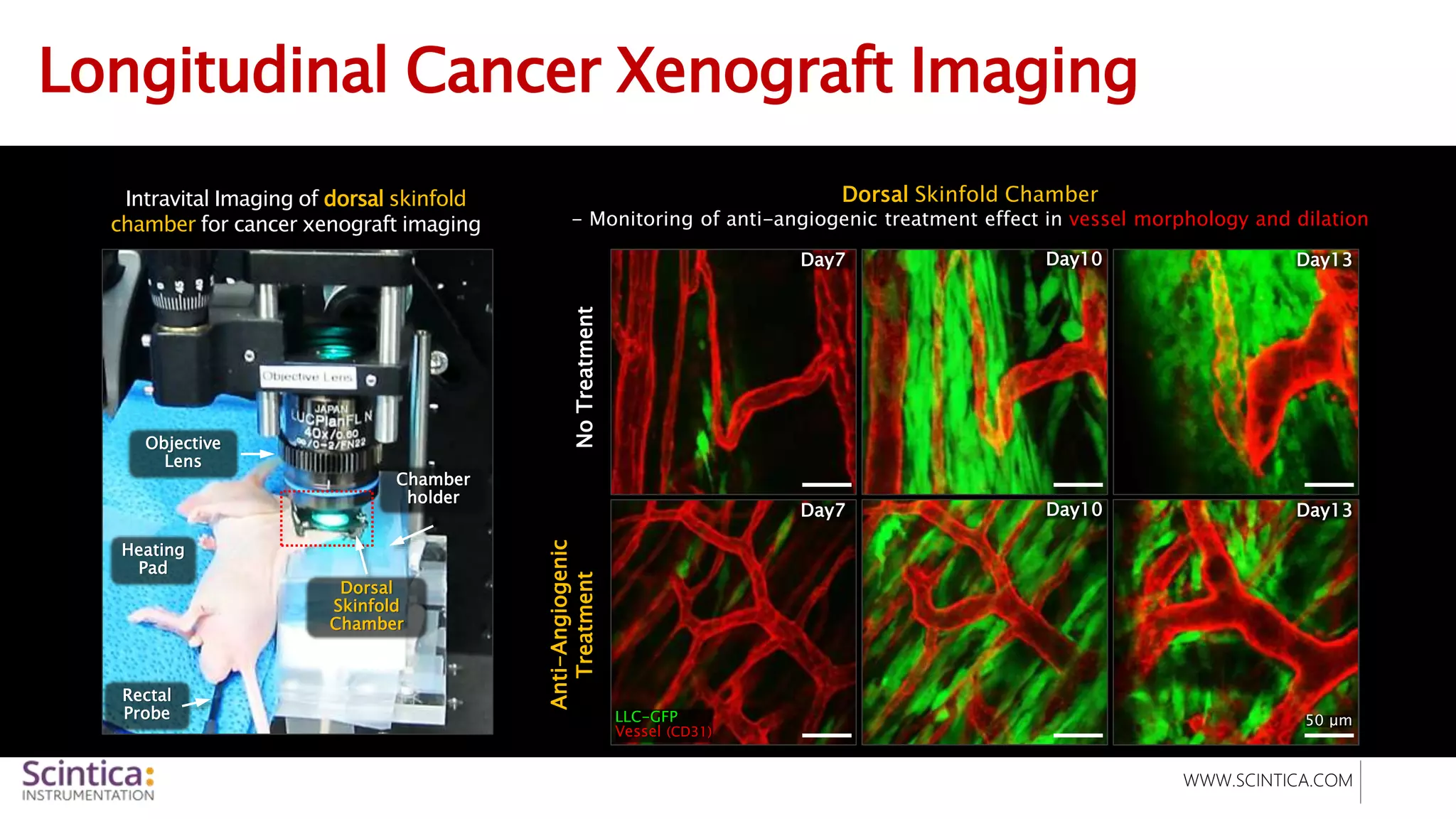
Longitudinal Cancer Xenograft Imaging
Intravital Imaging of dorsal skinfold
chamber for cancer xenograft imaging
No
Treatment
Anti-Angiogenic
Treatment
Day7 Day10 Day13
Day10 Day13
Day7
LLC-GFP
Vessel (CD31)
50 μm
Objective
Lens
Heating
Pad
Rectal
Probe
Chamber
holder
Dorsal
Skinfold
Chamber
Dorsal Skinfold Chamber
- Monitoring of anti-angiogenic treatment effect in vessel morphology and dilation
WWW.SCINTICA.COM
Longitudinal Cancer Xenograft Imaging
Intravital Imaging of dorsal skinfold
chamber for cancer xenograft imaging
Dorsal Skinfold Chamber
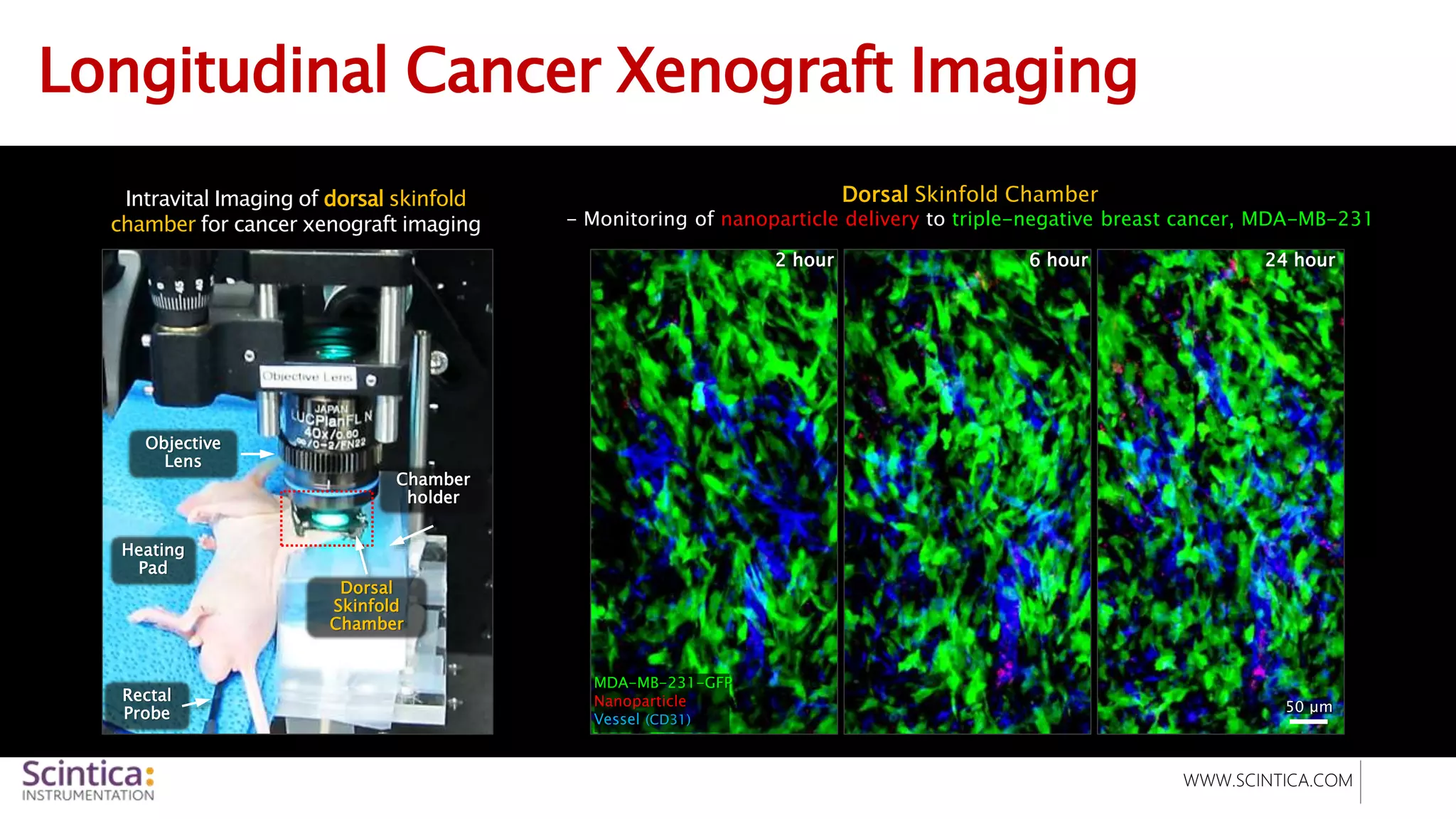
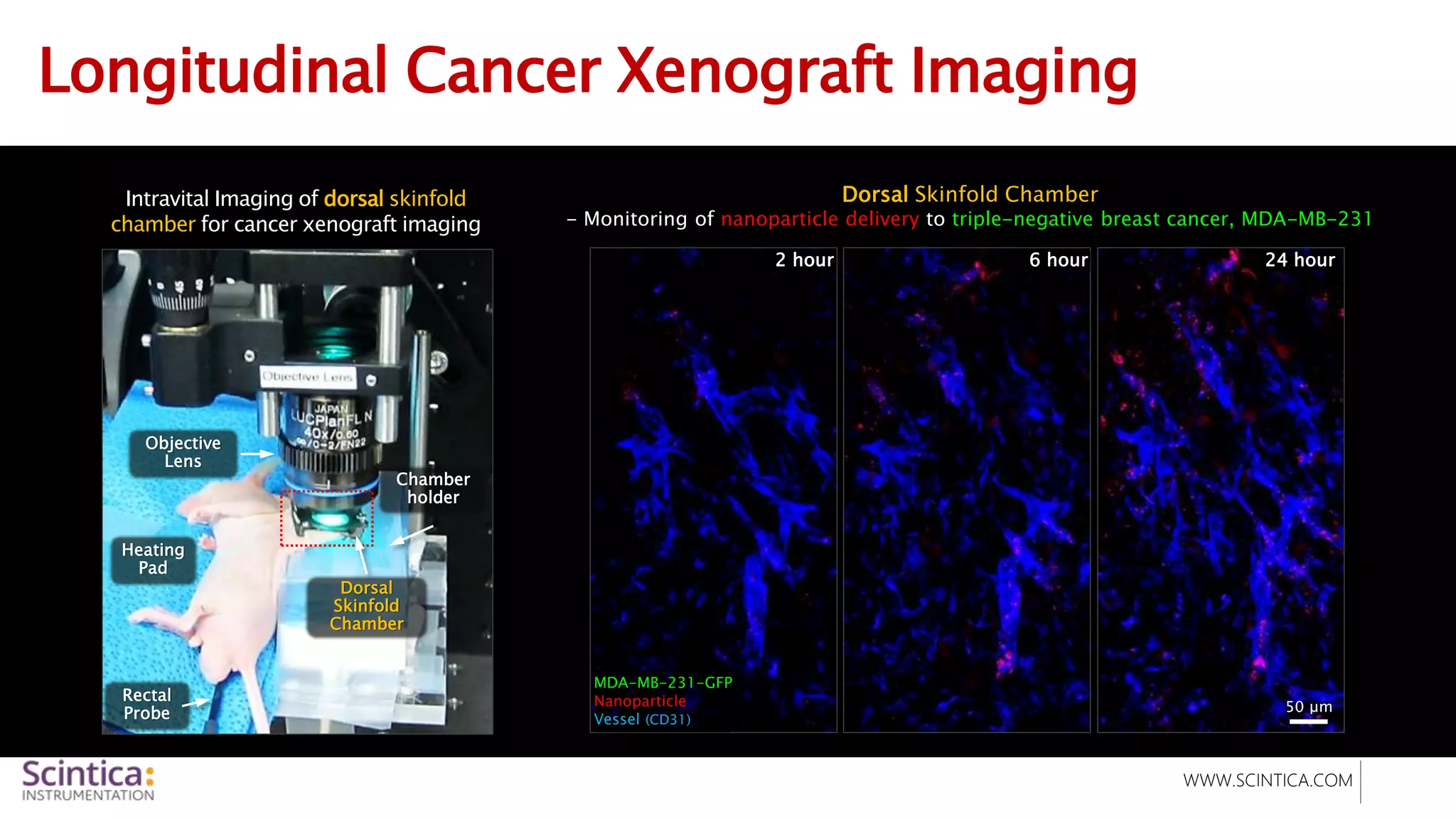
- Monitoring of nanoparticle delivery to triple-negative breast cancer, MDA-MB-231
50 μm
2 hour 6 hour 24 hour
MDA-MB-231-GFP
Nanoparticle
Vessel (CD31)
Objective
Lens
Heating
Pad
Rectal
Probe
Chamber
holder
Dorsal
Skinfold
Chamber
WWW.SCINTICA.COM
Longitudinal Cancer Xenograft Imaging
Intravital Imaging of dorsal skinfold
chamber for cancer xenograft imaging
Dorsal Skinfold Chamber
- Monitoring of nanoparticle delivery to triple-negative breast cancer, MDA-MB-231
50 μm
2 hour 6 hour 24 hour
MDA-MB-231-GFP
Nanoparticle
Vessel (CD31)
Objective
Lens
Heating
Pad
Rectal
Probe
Chamber
holder
Dorsal
Skinfold
Chamber
Disease & Drug Development
WWW.SCINTICA.COM
Real-time Abdominal Imaging
Abdominal Window Chamber
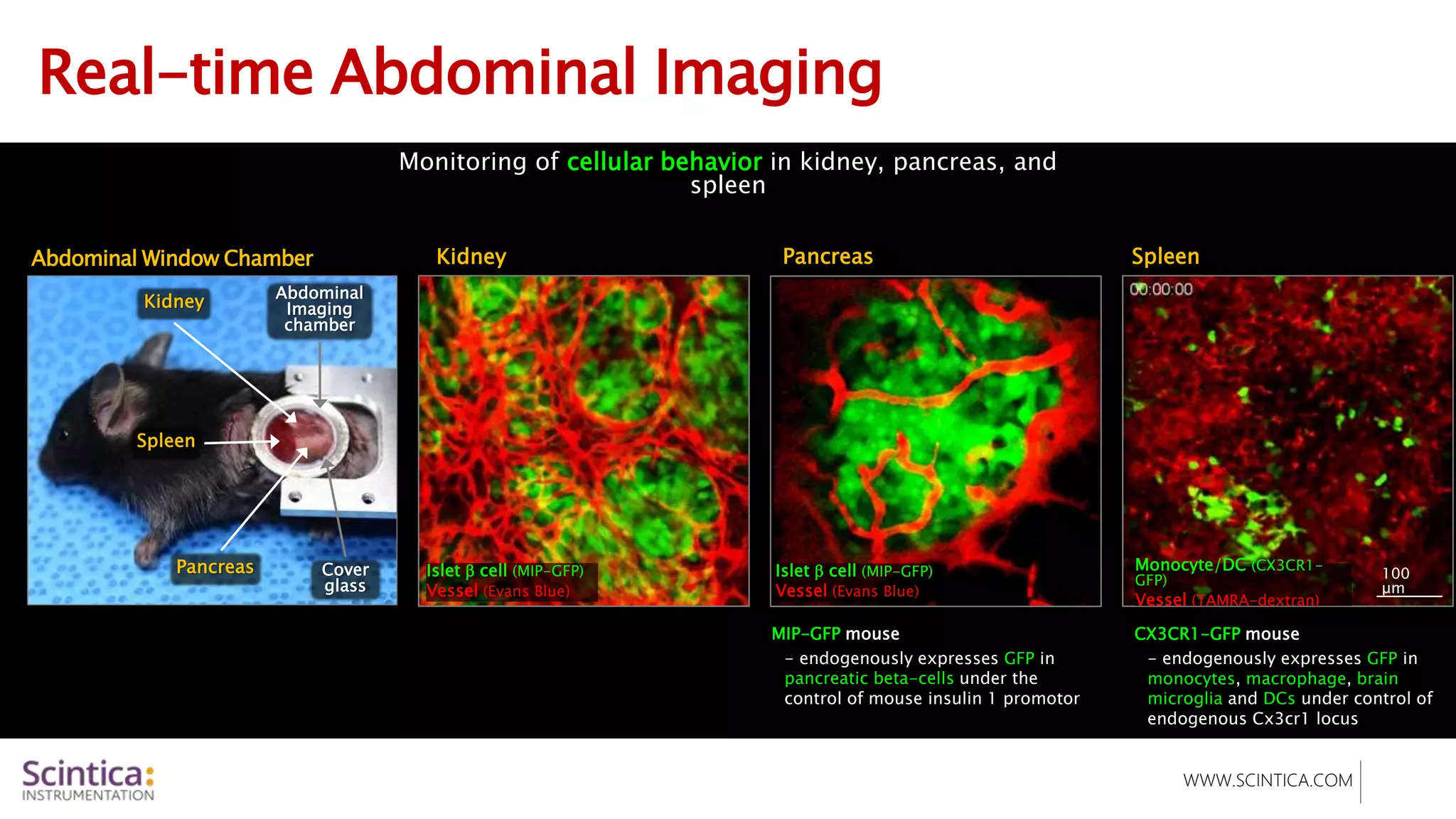
Monitoring of cellular behavior in kidney, pancreas, and
spleen
Cover
glass
Kidney
Spleen
Abdominal
Imaging
chamber
Pancreas Islet  cell (MIP-GFP)
Vessel (Evans Blue)
MIP-GFP mouse
- endogenously expresses GFP in
pancreatic beta-cells under the
control of mouse insulin 1 promotor
Monocyte/DC (CX3CR1-
GFP)
Vessel (TAMRA-dextran)
CX3CR1-GFP mouse
- endogenously expresses GFP in
monocytes, macrophage, brain
microglia and DCs under control of
endogenous Cx3cr1 locus
Pancreas Spleen
100
μm
Kidney
Islet  cell (MIP-GFP)
Vessel (Evans Blue)
WWW.SCINTICA.COM
Real-time Gastric Imaging
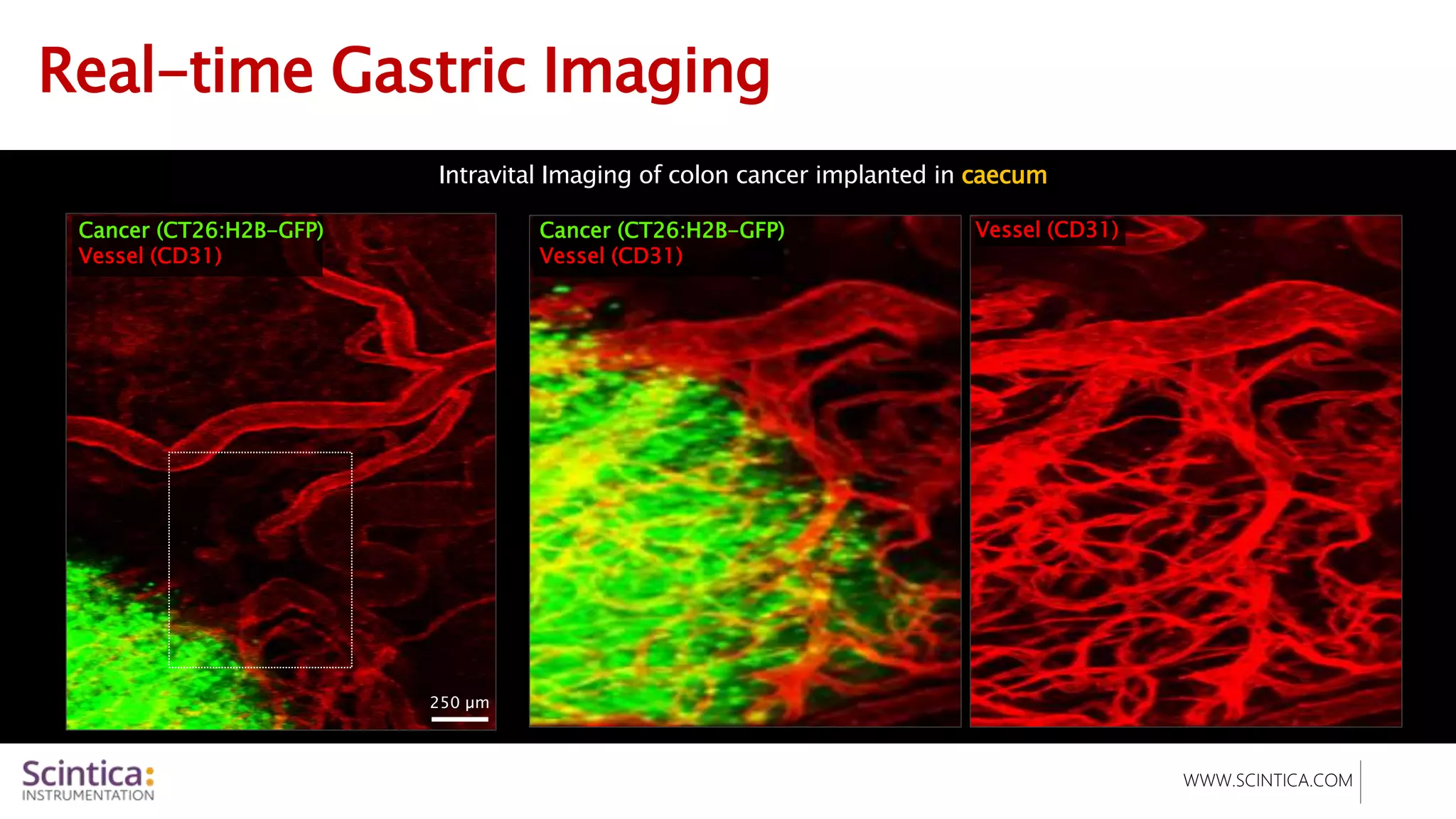
Intravital Imaging of colon cancer implanted in caecum
250 µm
Cancer (CT26:H2B-GFP)
Vessel (CD31)
Cancer (CT26:H2B-GFP)
Vessel (CD31)
Vessel (CD31)
WWW.SCINTICA.COM
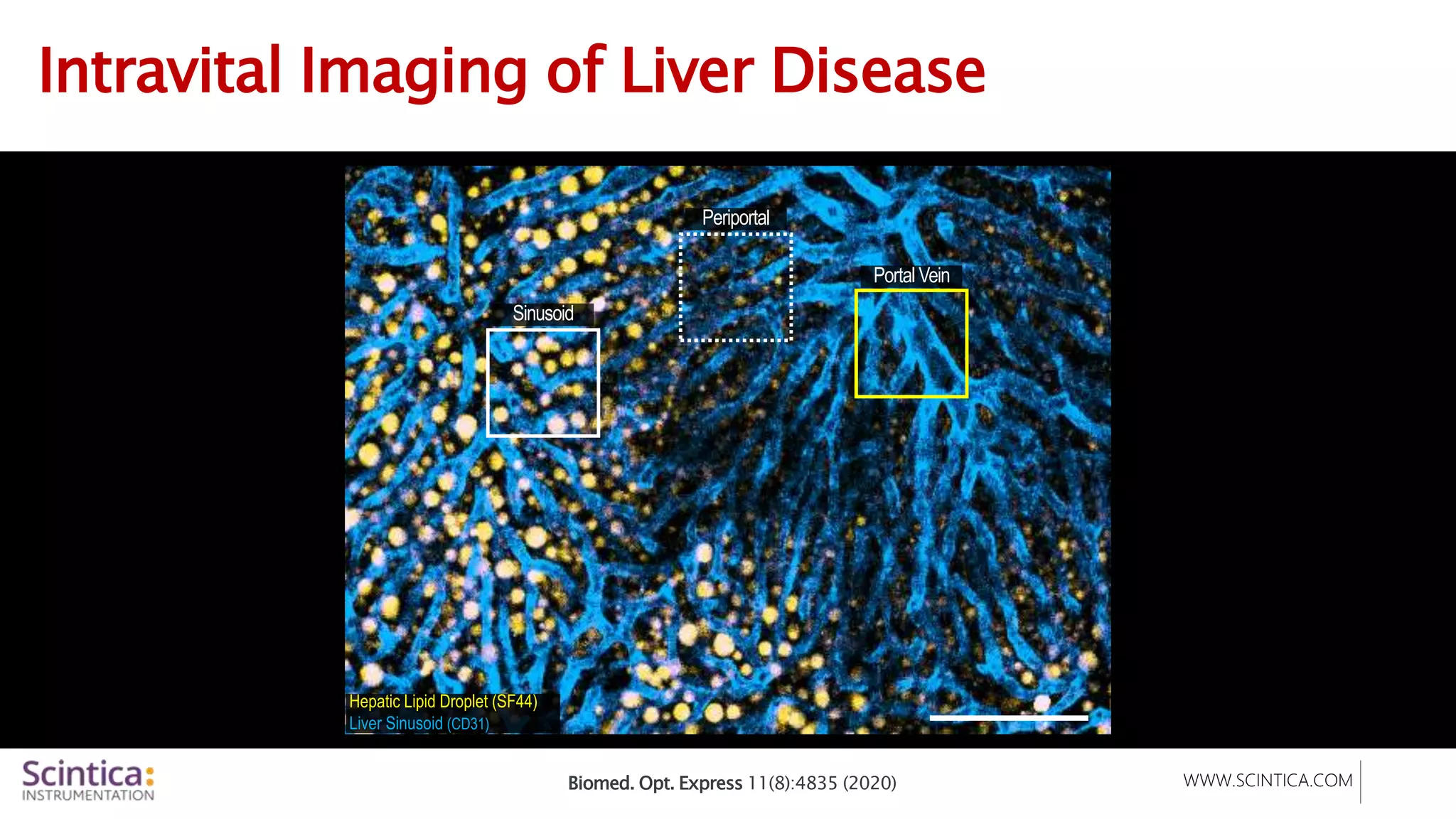
Intravital Imaging of Liver Disease
Biomed. Opt. Express 11(8):4835 (2020)
Hepatic Lipid Droplet (SF44)
Liver Sinusoid (CD31)
Portal Vein
Periportal
Sinusoid
WWW.SCINTICA.COM
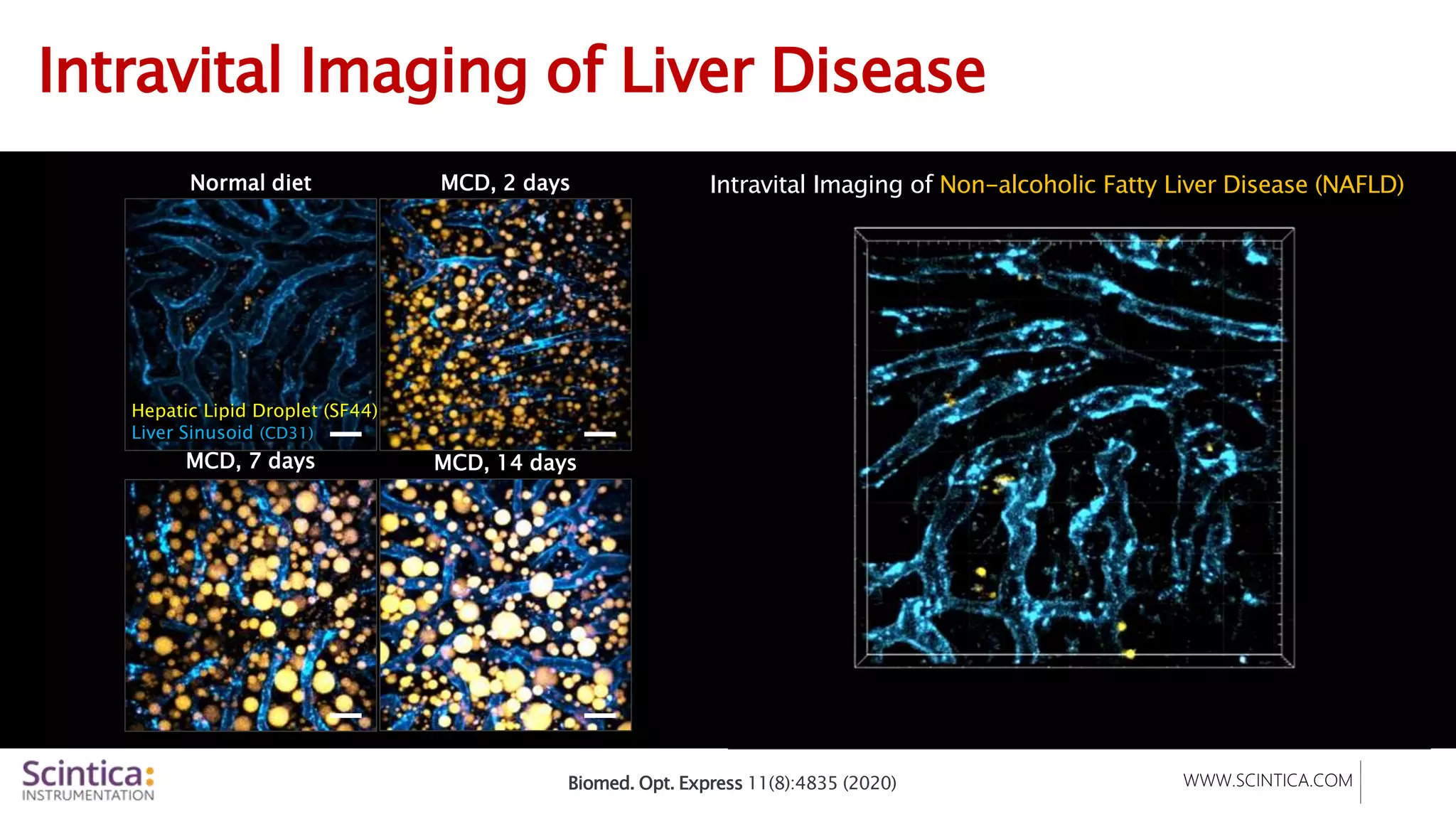
Intravital Imaging of Liver Disease
Normal diet MCD, 2 days
MCD, 7 days MCD, 14 days
Hepatic Lipid Droplet (SF44)
Liver Sinusoid (CD31)
Intravital Imaging of Non-alcoholic Fatty Liver Disease (NAFLD)
Biomed. Opt. Express 11(8):4835 (2020)
Immunology
WWW.SCINTICA.COM
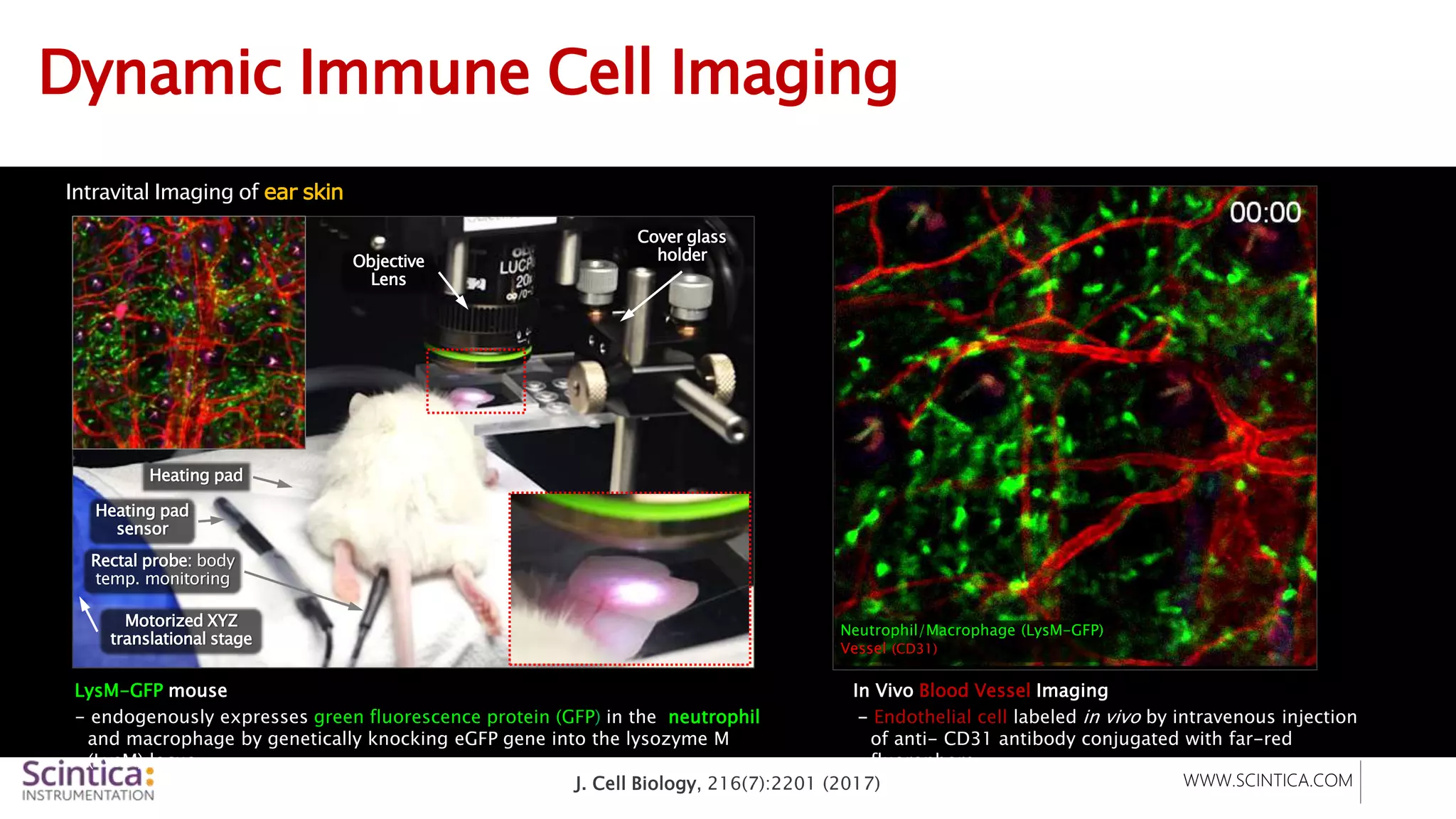
Heating pad
Objective
Lens
Motorized XYZ
translational stage
Heating pad
sensor
Rectal probe: body
temp. monitoring
Cover glass
holder
Dynamic Immune Cell Imaging
In Vivo Blood Vessel Imaging
- Endothelial cell labeled in vivo by intravenous injection
of anti- CD31 antibody conjugated with far-red
fluorophore
LysM-GFP mouse
- endogenously expresses green fluorescence protein (GFP) in the neutrophil
and macrophage by genetically knocking eGFP gene into the lysozyme M
(LysM) locus
Intravital Imaging of ear skin
Neutrophil/Macrophage (LysM-GFP)
Vessel (CD31)
J. Cell Biology, 216(7):2201 (2017)
WWW.SCINTICA.COM
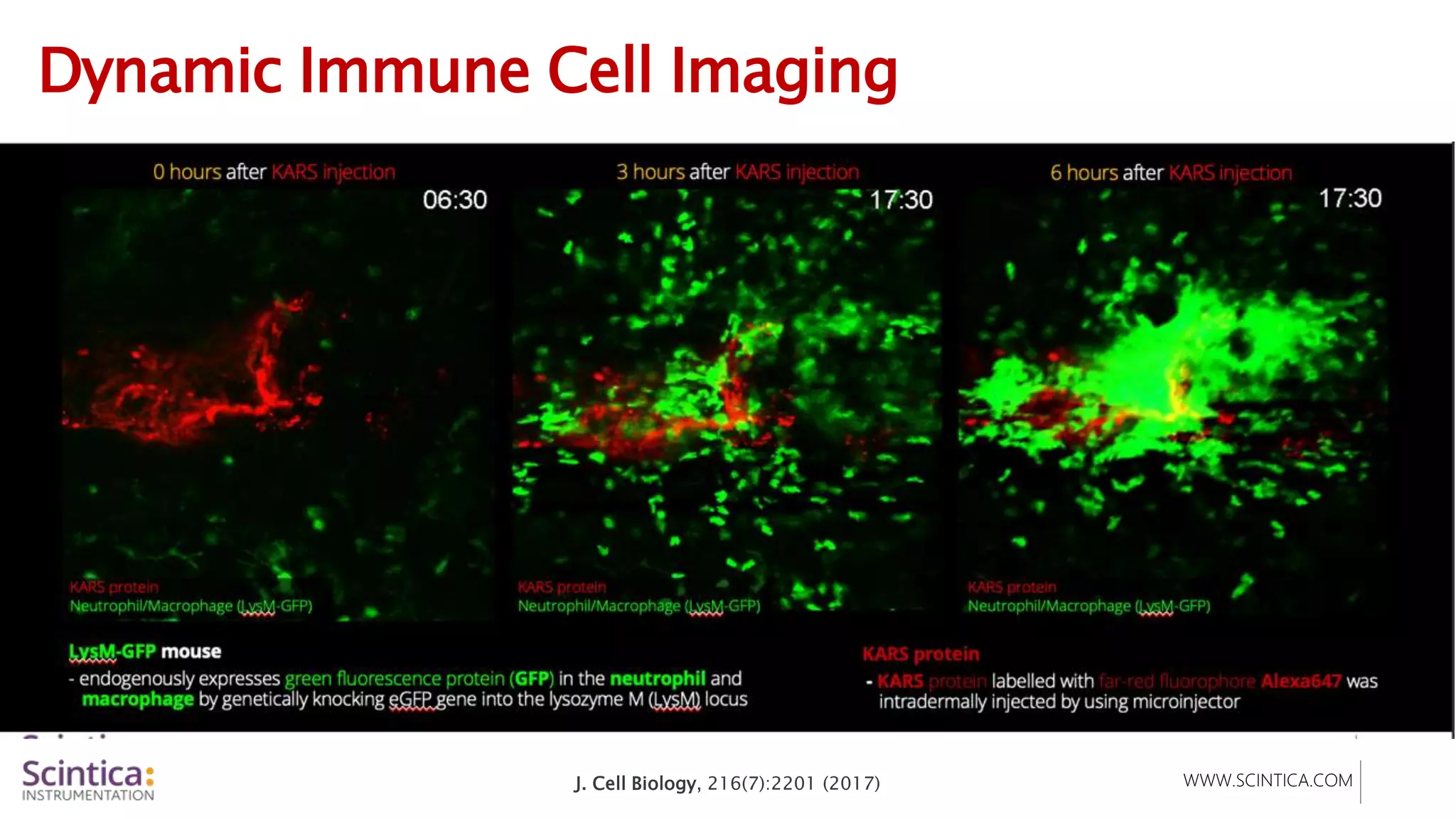
Dynamic Immune Cell Imaging
KARS protein
- KARS protein labelled with far-red fluorophore
Alexa647 was intradermally injected by using
microinjector
3 hurs after KARS injection 6 hours after KARS injection
J. Cell Biology, 216(7):2201 (2017)
KARS protein
Neutrophil/Macrophage (LysM-GFP)
LysM-GFP mouse
- endogenously expresses green fluorescence protein (GFP) in the neutrophil
and macrophage by genetically knocking eGFP gene into the lysozyme M
(LysM) locus
WWW.SCINTICA.COM
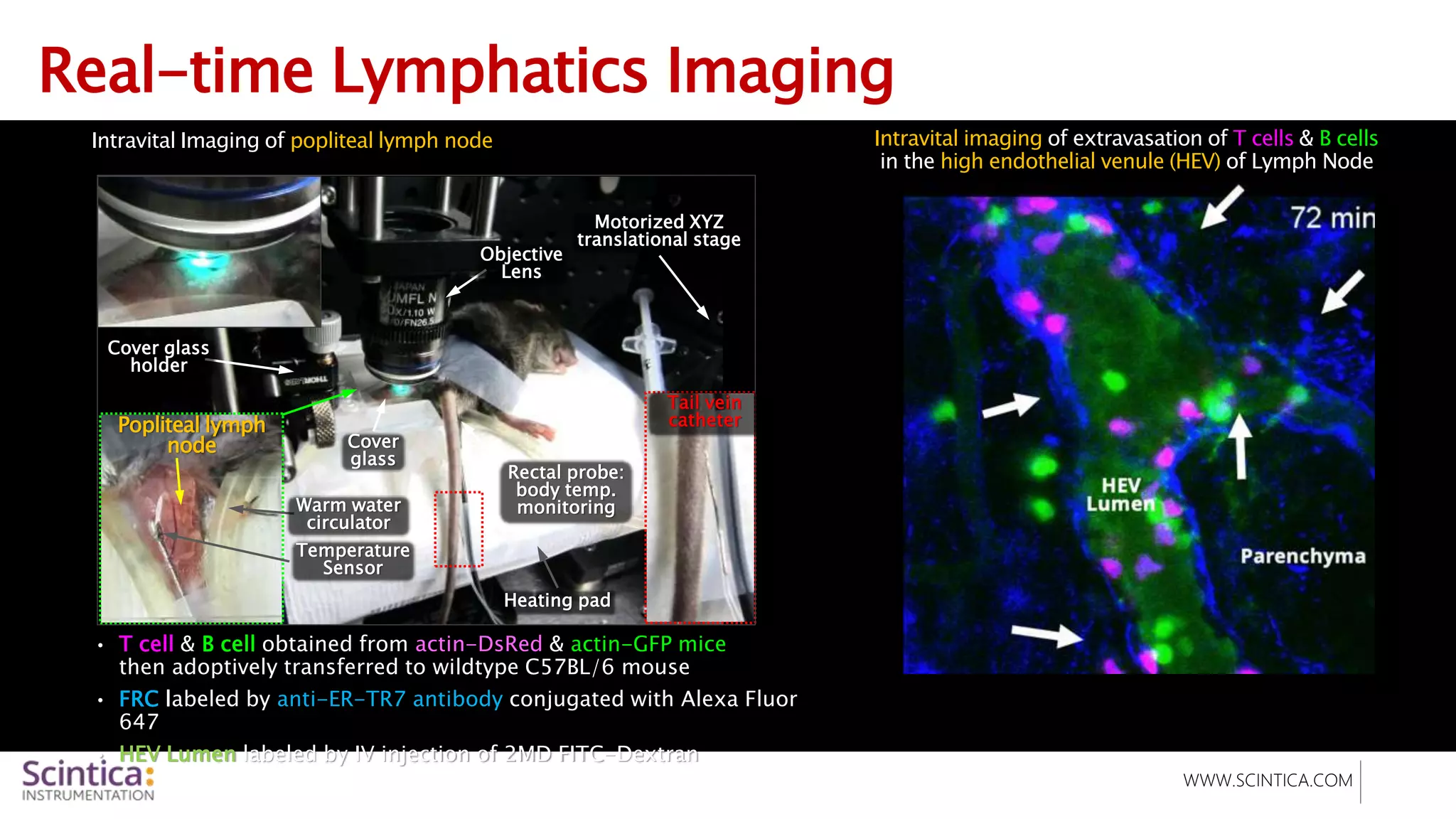
Real-time Lymphatics Imaging
Heating pad
Popliteal lymph
node Cover
glass
Warm water
circulator
Rectal probe:
body temp.
monitoring
Temperature
Sensor
Objective
Lens
Cover glass
holder
Motorized XYZ
translational stage
Tail vein
catheter
Intravital Imaging of popliteal lymph node
Parenchyma
HEV
Lumen
Intravital imaging of extravasation of T cells & B cells
in the high endothelial venule (HEV) of Lymph Node
• T cell & B cell obtained from actin-DsRed & actin-GFP mice
then adoptively transferred to wildtype C57BL/6 mouse
• FRC labeled by anti-ER-TR7 antibody conjugated with Alexa Fluor
647
• HEV Lumen labeled by IV injection of 2MD FITC-Dextran
Stem Cell Biology
WWW.SCINTICA.COM
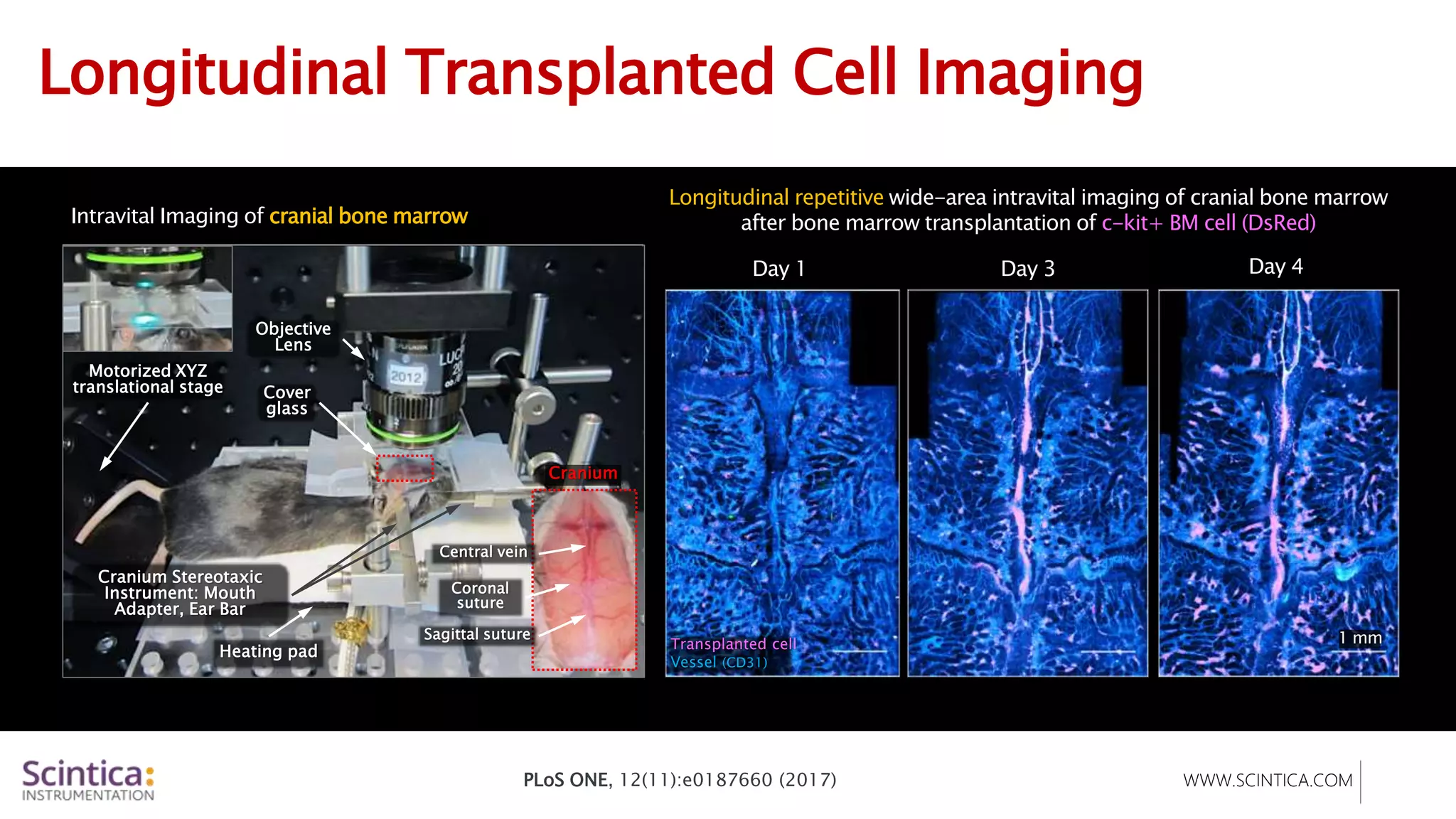
Longitudinal Transplanted Cell Imaging
Day 1 Day 3 Day 4
1 mm
Heating pad
Cover
glass
Cranium Stereotaxic
Instrument: Mouth
Adapter, Ear Bar
Objective
Lens
Motorized XYZ
translational stage
Coronal
suture
Central vein
Sagittal suture
Cranium
Transplanted cell
Vessel (CD31)
Longitudinal repetitive wide-area intravital imaging of cranial bone marrow
after bone marrow transplantation of c-kit+ BM cell (DsRed)
Intravital Imaging of cranial bone marrow
PLoS ONE, 12(11):e0187660 (2017)
WWW.SCINTICA.COM
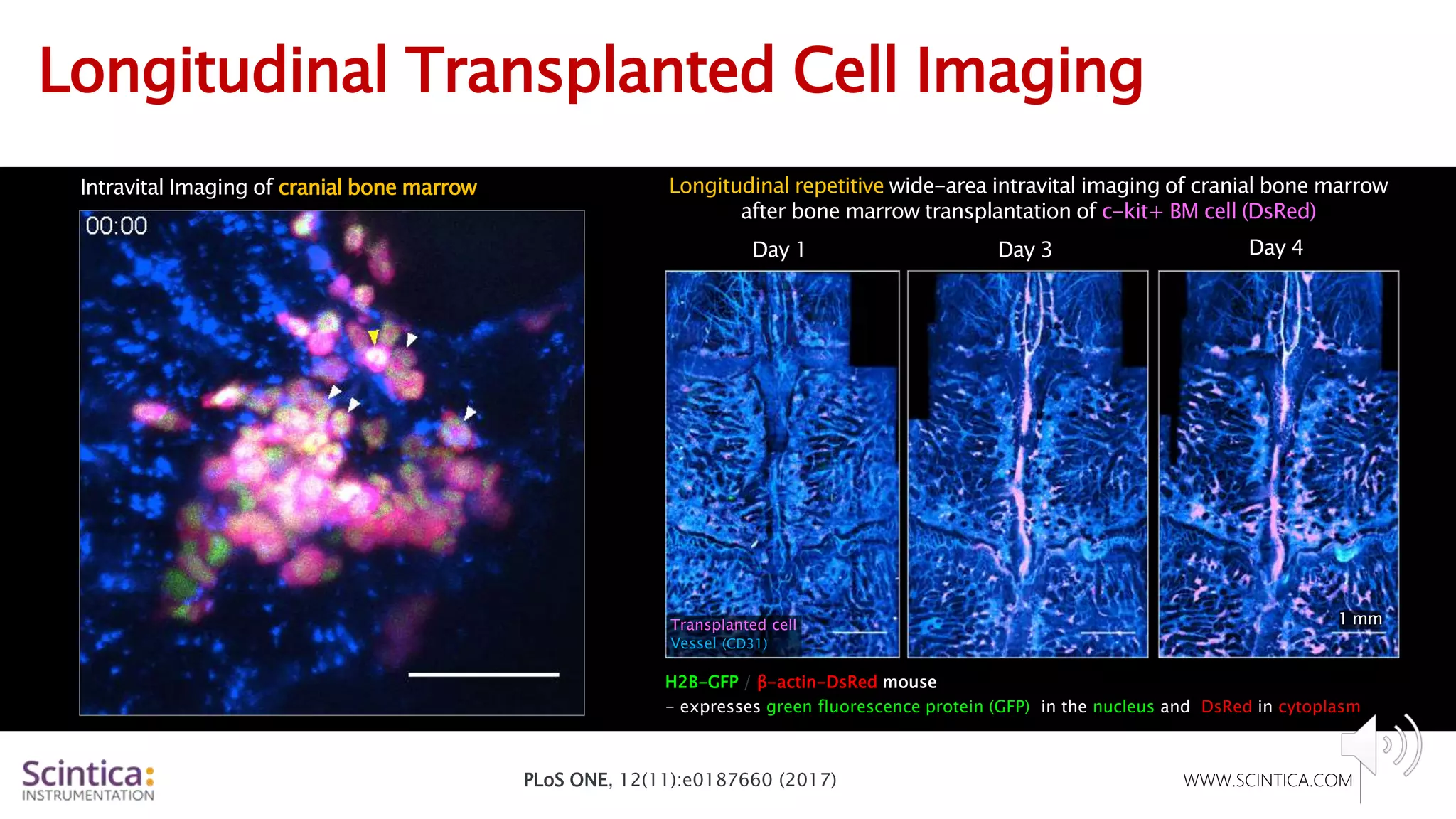
Longitudinal Transplanted Cell Imaging
H2B-GFP / β-actin-DsRed mouse
- expresses green fluorescence protein (GFP) in the nucleus and DsRed in cytoplasm
Longitudinal repetitive wide-area intravital imaging of cranial bone marrow
after bone marrow transplantation of c-kit+ BM cell (DsRed)
Day 1
Intravital Imaging of cranial bone marrow
Day 3 Day 4
1 mm
Transplanted cell
Vessel (CD31)
PLoS ONE, 12(11):e0187660 (2017)
Infection
WWW.SCINTICA.COM
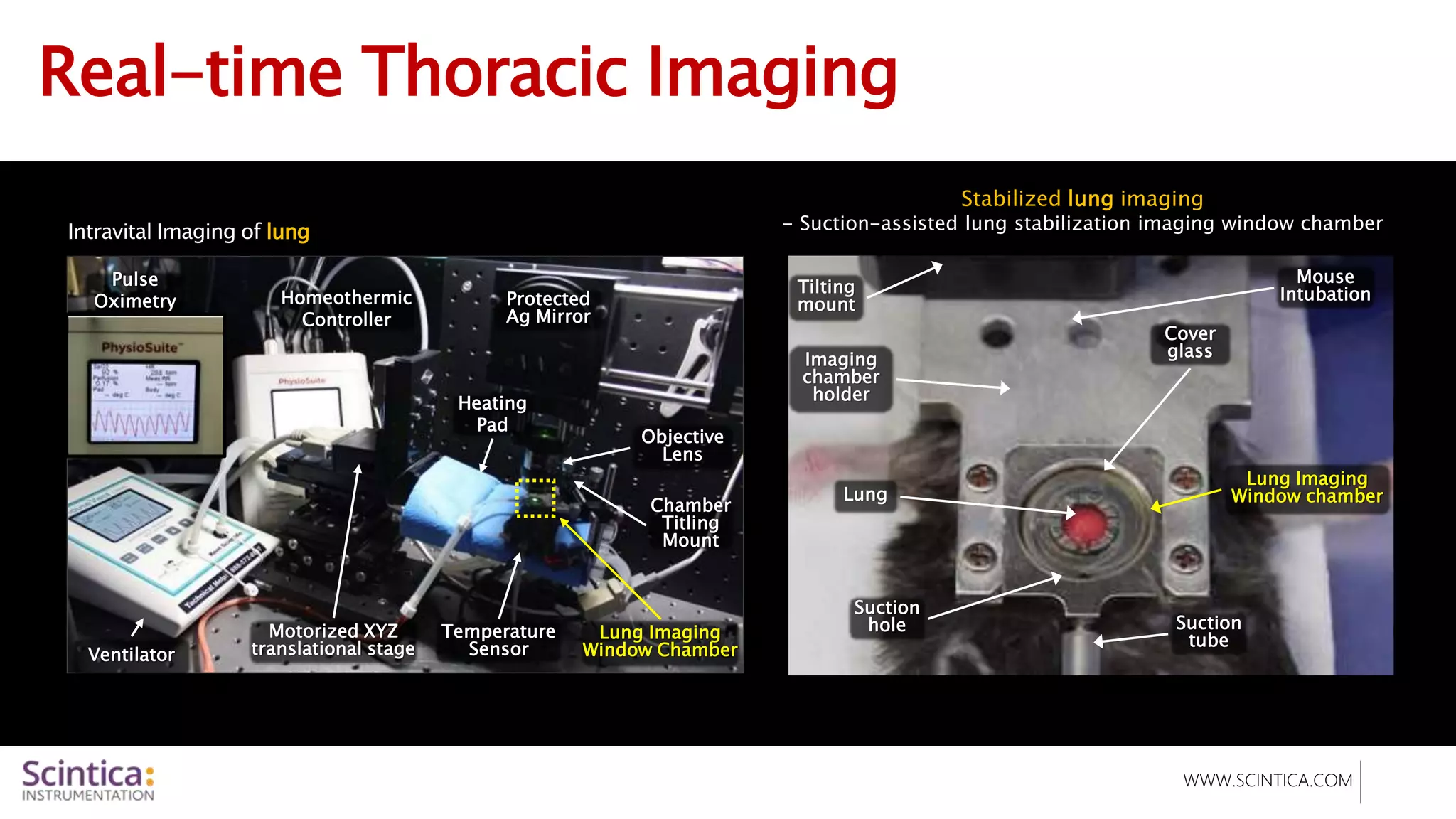
Real-time Thoracic Imaging
Intravital Imaging of lung
Stabilized lung imaging
- Suction-assisted lung stabilization imaging window chamber
Illuminating
fiber
Ventilator
Lung Imaging
Window Chamber
Heating
Pad
Motorized XYZ
translational stage
Pulse
Oximetry
Objective
Lens
Homeothermic
Controller
Temperature
Sensor
Chamber
Titling
Mount
Protected
Ag Mirror
Cover
glass
Mouse
Intubation
Imaging
chamber
holder
Tilting
mount
Lung
Lung Imaging
Window chamber
Suction
tube
Suction
hole
WWW.SCINTICA.COM 67
Globally linking scientists with
precision tools for research
through expertise in science,
engineering and support
INFO@SCINTICA.COM
WWW.SCINTICA.COM

Introducing the IVM Intravital Microscope

  • 1.
    Introducing the IVM IntravitalMicroscope All-in-One Intravital Confocal/ Two-Photon Microscopy System
  • 2.
    WWW.SCINTICA.COM 2 Topics ofDiscussion • Intravital Microscopy • IVM Systems Overview • Key Research Applications
  • 3.
  • 4.
    WWW.SCINTICA.COM Optical Imaging Resolution vs PenetrationDepth Nguyen et al. EMJ Radiology, 2020
  • 5.
    WWW.SCINTICA.COM In Vivo Imaging OptimalImaging Window Adapted from Ruggiero et al. Dalton Transactions, 2016 Optimal Imaging Window Tissue Penetration (mm) UV IR VIS + NIR H2O H2O Relative Absorbance 100 10 1 0.1 0.01 Hb HbO2 Hb
  • 6.
    WWW.SCINTICA.COM Fluorescence Imaging Fluorophores • Genetically modifiedfluorescent proteins: • Organic dyes: FITC/TRITC, Alexa (conjugated antibodies) • Inorganic dyes: Quantum Dots • Endogenous species: elastin, collagen, NADH/FAD
  • 7.
  • 8.
    WWW.SCINTICA.COM Confocal/ Two-Photon Microscope Mostany et al.Advanced Fluorescence Microscopy, 2014 Upright 100 um 500 um Upright Confocal Two-Photon
  • 9.
    WWW.SCINTICA.COM Confocal/ Two-Photon Microscope Mostany et al.Advanced Fluorescence Microscopy, 2014 Single Photon Excitation Two-Photon Excitation
  • 10.
    WWW.SCINTICA.COM 10 Conclusions  Opticalimaging has excellent resolution but poor penetration depth  Propagation of light through biological tissue is affected by hemoglobin and water  The optimal window for in vivo optical imaging lies between 600 and 1000 nm  Fluorescence is the commonly used optical technique for in vivo imaging  Up to 4 fluorophores can be imaged simultaneously when chosen carefully to avoid spectral overlap
  • 11.
    WWW.SCINTICA.COM Intravital Microscopy |Why? Macroscopic-scale Imaging & Diagnosis (Organ/Tissue-level :StructuralInformation) Microscopic-scale Imaging & Analysis (3D Cell-level: Molecular/FunctionalInformation) Intravital microscopy (IVM) Islet cell (MIP-GFP) Vessel (CD31) PET / CT / MRI X-Ray Ultrasound Cancercell (B16F10-GFP) Vessel (CD31) Sinusoid (LYVE-1) Blood circulation (FITC-Dextran) Neutrophil (Ly6G) disease stage, development, and treatment response  In situ  Spatial information  Real-time  Quantitative  Longitudinal  Reduces animals
  • 12.
  • 13.
    WWW.SCINTICA.COM Intravital Microscopy |How? Coste et al. Cytometry, 2019
  • 14.
    WWW.SCINTICA.COM Intravital Microscopy |Window Chambers Dorsal Skinfold Chamber - Cancer Xenograft imaging Cranial Imaging Window - Long-term repeated brain imaging Abdominal Imaging Window - Long-term abdominal organ imaging
  • 15.
    WWW.SCINTICA.COM Intravital Microscopy |What? For cancer and drug development, intravital microscopy enables a direct imaging analysis of the tumor development and drug delivery to target tissue as well as efficacy, and mode of action (MOA) of new therapeutic candidates at a microscopic, cellular level in various preclinical model of human disease. Cancer Metastasis - CTC Cancer cell dissemination to circulation Drug Delivery - Nanoparticle Anti-cancer nanoparticle delivery Circulating Tumor cell (CTC) Cancer ll Stromal cell Drug carrier Cancer cell Vessel Bone Marrow Transplanted BM cell, HSPC cell H2B Sinus
  • 16.
    WWW.SCINTICA.COM Skin Inflammatory response KARS Granulocyte Intravital Microscopy| What? Intravital microscopy enables dynamic 3D imaging of various cellular-level dynamics such as cell trafficking, cell-cell interaction, and cell-microenvironment interaction inside the living body in vivo, providing a new insight in the processes of human disease development. Cancer Xenograft - T cell Triple Negative Human Breast Cancer T cell Cancer cell Vessel Lung Microcirculation in Sepsis Model Neutrophil Blood flow
  • 17.
    WWW.SCINTICA.COM Intravital Microscopy |Quantification Intra-/extravasation Cell motion tracking Cellular interactions Intracellular changes Cell area/count Vascular analysis Adapted from Evans et al. Experimental Neurology, 2019
  • 18.
    WWW.SCINTICA.COM Intravital Microscopy |Motion Artifacts Uncorrected Motion Artifacts Corrected for Motion Artifacts
  • 19.
    WWW.SCINTICA.COM 19 Conclusions Successful intravitalimaging depends on: • Before imaging  System chosen  Animal model optimization  Window chamber quality • During imaging  Animal positioning  Animal maintenance  Imaging parameters • After imaging  Pre-processing corrections  Post-processing quantification
  • 20.
  • 21.
  • 22.
    WWW.SCINTICA.COM IVIM Technology |Who? Intravital Imaging of Various Organs in Human DiseaseAnimal Model Real-time Intravital Imaging Endomicroscopy https://scholar.google.com/citations?user=RRDHF9oAAAAJ&hl=en
  • 23.
  • 24.
    WWW.SCINTICA.COM IVIM Technology |When? 2017.06 • Founded • KAIST Munji Campus 2017.08 • Series A Investment (2.7mil.USD/30억원) 2017.09 • Exclusive Licensing Technology from KAIST 2018.07 2018.02 • Establishment Seoul Marketing Office 2018. 09 • First Release All-in-One IVM IVM-C/IVM-CMmodel 2018.11 • First Installation IVM-C model SNU Bundang Hosp. R&D center 2020.12 | Cumulative Sales • IVM System | 2 Mil USD - SNU Med. School / IBS / Curacle, etc • IVM Imaging Service | 300k USD - Academia (University, Hospital) Industry (Bio-tech, Pharmaceutical Company) - Total 21 projects, completed/on-going 2019.09 2019.02 2019.10 2020.02-08 2020.07 http://imnews.imbc.com/replay/2018/nwdesk/article/4846789_22663.html • Establishment R&D Center • New Model Release Multi-Photon IVM IVM-M/ IVM-MSmodel • New Installation IVM-CM model SNU Medical School Yongon Campus • Series B Investment (7.3mil.USD/80억원) • New Installation IVM-C/M/MS model YMC, AMC, IBS, KAIST Knotus, Curacle, etc • USAsite Installation IVM-MS model Harvard Med. School Boston, MA, USA
  • 25.
    WWW.SCINTICA.COM IVIM’s All-in-One IntravitalMicroscopy (IVM) System IVIM Technology | What?  All-in-onesinglebox package for easy installation,operationandmaintenance  Co-optimizedH/W and S/W for superbintravitalimagingperformance • Integrateddevices for live animalmaintenance • No limitationin imagingvarious internalorgans • Ultrafast imagingspeed • Live tissue motioncompensation
  • 26.
  • 27.
    WWW.SCINTICA.COM Confocal Microscopy (IVM-C,-CM) Wide-area Intravital Microscopy
  • 28.
    WWW.SCINTICA.COM Two-Photon Microscopy (IVM-M,-CM, -MS) Sacomere (SHG) Vessel (CD31) Neuromuscular Junction (Thy1-YFP) Skeletal Muscle
  • 29.
    WWW.SCINTICA.COM IVIM Technology |Product Lines Comparison Specifications IVM-C IVM-M IVM-CM IVM-MS Confocal laser Yes No Yes No Tunable two-photon laser No Yes Yes No Fixed two-photo laser No No No Yes (920nm) Fluorescence Detector Confocal Two-Photon Both Two-Photon Scan head Polygonal mirror, Galvano scanner Imaging head Max. 6 objectives FOV 100x100 um^2 / 10x10 mm^2 Motion correction X, Y, Z, and T motion 3D stage range 50,000 x 50,000 x 75,000 um Imaging speed 30 fps @ 512 x 512 pixels (Max. 100 fps), 15 fps @ 1,024 x 1,024 pixels (Max. 50 fps) Fully integrated software Yes
  • 30.
  • 31.
  • 32.
  • 33.
  • 34.
    WWW.SCINTICA.COM Total Darkness withBlack-Out Curtain 34  Sliding black-out curtain protects system from potentially polluting ambient light during imaging
  • 35.
    WWW.SCINTICA.COM Platform for LiveAnimal Maintenance  Body Temperature Monitoring & Feedback Heater Control: Rectal Probe & Body Plate Heater  Imaging Tissue Temperature Monitoring & Heater Control: 2 Indicators & Cover Glass Heater
  • 36.
    WWW.SCINTICA.COM Platform for LiveAnimal Maintenance  Gas anesthesia ready with connector ports for gas and exhaust tubing
  • 37.
    WWW.SCINTICA.COM Platform for LiveAnimal Maintenance  Movable stage that connects to animal platform
  • 38.
    WWW.SCINTICA.COM Customizable Objective Lensfor Optimal Access  Full 3-axis (X, Y, Z) Rotation of OBJ lens: +70° to -70° X-Axis Rotation (roll) Y-Axis Rotation (pitch) Z-Axis Rotation (yaw) Axial Translation of OBJ (Fine Focusing, Fast Z-stack)
  • 39.
    WWW.SCINTICA.COM Customizable Objective Lensfor Optimal Access  Full 3-axis (X, Y, Z) Rotation of OBJ lens: +70° to -70°
  • 40.
    WWW.SCINTICA.COM Software | 3Drendering Confocal Microscopy (IVM-C), Z-stack Adiponectin-Cre x mTmG SF44 Adiponectin-Cre x mTmG SF44 3D Rendering, Z-stack In Vivo,Inguinaladiposetissue
  • 41.
    WWW.SCINTICA.COM Software | AnimalMotion Compensation Real-time Intravital Microscopy (Video-rate imaging) Heart
  • 42.
  • 43.
    WWW.SCINTICA.COM Software | AnimalMotion Compensation Real-time Intravital Microscopy (Video-rate imaging) No Motion Compensation Motion Compensation Liver
  • 44.
    WWW.SCINTICA.COM Software | AnimalMotion Compensation Real-time Intravital Microscopy (Video-rate imaging) No Motion Compensation Motion Compensation Lung
  • 45.
    WWW.SCINTICA.COM IVIM Technology |IVM Product & Imaging Service All-in-One IntraVital Microscope (IVM) Sample IntraVital Imaging R&D Service BM cell (DsRed) Histone (H2B-GFP) BM Sinus (CD31) KRS protein Neutrophil (LysM-GFP) Neutrophil (Ly6G) Blood Circulation (FITC-Dextran)
  • 46.
    WWW.SCINTICA.COM 46 Conclusions  Firstall-in-one confocal and/or two-photon microscopes optimized for in vivo imaging  Very small footprint with easy installation and integration into any lab space  Equipped with a superb live animal maintenance platform and ultrafast scanner  Optimized to image a great variety of internal organs  Capable of real-time motion compensation
  • 47.
  • 48.
  • 49.
    WWW.SCINTICA.COM Longitudinal Cancer XenograftImaging Intravital Imaging of dorsal skinfold chamber for cancer xenograft imaging Objective Lens Heating Pad Rectal Probe Chamber holder Dorsal Skinfold Chamber Dorsal Skinfold Chamber - Cancer Xenograft Imaging (H460, Human non-small cell lung carcinoma) Day 0 Day 4 SC. Injection of H460-GFP (Human Lung Cancer; NSCLC) H460-GFP (0.1 mil / 20 μL) Intravenous Injection of Tetramethyl-rhodamine dextran TAMRA dextran H460-GFP Vessel (TMR-dextran)
  • 50.
    WWW.SCINTICA.COM Longitudinal Cancer XenograftImaging Intravital Imaging of dorsal skinfold chamber for cancer xenograft imaging No Treatment Anti-Angiogenic Treatment Day7 Day10 Day13 Day10 Day13 Day7 LLC-GFP Vessel (CD31) 50 μm Objective Lens Heating Pad Rectal Probe Chamber holder Dorsal Skinfold Chamber Dorsal Skinfold Chamber - Monitoring of anti-angiogenic treatment effect in vessel morphology and dilation
  • 51.
    WWW.SCINTICA.COM Longitudinal Cancer XenograftImaging Intravital Imaging of dorsal skinfold chamber for cancer xenograft imaging Dorsal Skinfold Chamber - Monitoring of nanoparticle delivery to triple-negative breast cancer, MDA-MB-231 50 μm 2 hour 6 hour 24 hour MDA-MB-231-GFP Nanoparticle Vessel (CD31) Objective Lens Heating Pad Rectal Probe Chamber holder Dorsal Skinfold Chamber
  • 52.
    WWW.SCINTICA.COM Longitudinal Cancer XenograftImaging Intravital Imaging of dorsal skinfold chamber for cancer xenograft imaging Dorsal Skinfold Chamber - Monitoring of nanoparticle delivery to triple-negative breast cancer, MDA-MB-231 50 μm 2 hour 6 hour 24 hour MDA-MB-231-GFP Nanoparticle Vessel (CD31) Objective Lens Heating Pad Rectal Probe Chamber holder Dorsal Skinfold Chamber
  • 53.
    Disease & DrugDevelopment
  • 54.
    WWW.SCINTICA.COM Real-time Abdominal Imaging AbdominalWindow Chamber Monitoring of cellular behavior in kidney, pancreas, and spleen Cover glass Kidney Spleen Abdominal Imaging chamber Pancreas Islet  cell (MIP-GFP) Vessel (Evans Blue) MIP-GFP mouse - endogenously expresses GFP in pancreatic beta-cells under the control of mouse insulin 1 promotor Monocyte/DC (CX3CR1- GFP) Vessel (TAMRA-dextran) CX3CR1-GFP mouse - endogenously expresses GFP in monocytes, macrophage, brain microglia and DCs under control of endogenous Cx3cr1 locus Pancreas Spleen 100 μm Kidney Islet  cell (MIP-GFP) Vessel (Evans Blue)
  • 55.
    WWW.SCINTICA.COM Real-time Gastric Imaging IntravitalImaging of colon cancer implanted in caecum 250 µm Cancer (CT26:H2B-GFP) Vessel (CD31) Cancer (CT26:H2B-GFP) Vessel (CD31) Vessel (CD31)
  • 56.
    WWW.SCINTICA.COM Intravital Imaging ofLiver Disease Biomed. Opt. Express 11(8):4835 (2020) Hepatic Lipid Droplet (SF44) Liver Sinusoid (CD31) Portal Vein Periportal Sinusoid
  • 57.
    WWW.SCINTICA.COM Intravital Imaging ofLiver Disease Normal diet MCD, 2 days MCD, 7 days MCD, 14 days Hepatic Lipid Droplet (SF44) Liver Sinusoid (CD31) Intravital Imaging of Non-alcoholic Fatty Liver Disease (NAFLD) Biomed. Opt. Express 11(8):4835 (2020)
  • 58.
  • 59.
    WWW.SCINTICA.COM Heating pad Objective Lens Motorized XYZ translationalstage Heating pad sensor Rectal probe: body temp. monitoring Cover glass holder Dynamic Immune Cell Imaging In Vivo Blood Vessel Imaging - Endothelial cell labeled in vivo by intravenous injection of anti- CD31 antibody conjugated with far-red fluorophore LysM-GFP mouse - endogenously expresses green fluorescence protein (GFP) in the neutrophil and macrophage by genetically knocking eGFP gene into the lysozyme M (LysM) locus Intravital Imaging of ear skin Neutrophil/Macrophage (LysM-GFP) Vessel (CD31) J. Cell Biology, 216(7):2201 (2017)
  • 60.
    WWW.SCINTICA.COM Dynamic Immune CellImaging KARS protein - KARS protein labelled with far-red fluorophore Alexa647 was intradermally injected by using microinjector 3 hurs after KARS injection 6 hours after KARS injection J. Cell Biology, 216(7):2201 (2017) KARS protein Neutrophil/Macrophage (LysM-GFP) LysM-GFP mouse - endogenously expresses green fluorescence protein (GFP) in the neutrophil and macrophage by genetically knocking eGFP gene into the lysozyme M (LysM) locus
  • 61.
    WWW.SCINTICA.COM Real-time Lymphatics Imaging Heatingpad Popliteal lymph node Cover glass Warm water circulator Rectal probe: body temp. monitoring Temperature Sensor Objective Lens Cover glass holder Motorized XYZ translational stage Tail vein catheter Intravital Imaging of popliteal lymph node Parenchyma HEV Lumen Intravital imaging of extravasation of T cells & B cells in the high endothelial venule (HEV) of Lymph Node • T cell & B cell obtained from actin-DsRed & actin-GFP mice then adoptively transferred to wildtype C57BL/6 mouse • FRC labeled by anti-ER-TR7 antibody conjugated with Alexa Fluor 647 • HEV Lumen labeled by IV injection of 2MD FITC-Dextran
  • 62.
  • 63.
    WWW.SCINTICA.COM Longitudinal Transplanted CellImaging Day 1 Day 3 Day 4 1 mm Heating pad Cover glass Cranium Stereotaxic Instrument: Mouth Adapter, Ear Bar Objective Lens Motorized XYZ translational stage Coronal suture Central vein Sagittal suture Cranium Transplanted cell Vessel (CD31) Longitudinal repetitive wide-area intravital imaging of cranial bone marrow after bone marrow transplantation of c-kit+ BM cell (DsRed) Intravital Imaging of cranial bone marrow PLoS ONE, 12(11):e0187660 (2017)
  • 64.
    WWW.SCINTICA.COM Longitudinal Transplanted CellImaging H2B-GFP / β-actin-DsRed mouse - expresses green fluorescence protein (GFP) in the nucleus and DsRed in cytoplasm Longitudinal repetitive wide-area intravital imaging of cranial bone marrow after bone marrow transplantation of c-kit+ BM cell (DsRed) Day 1 Intravital Imaging of cranial bone marrow Day 3 Day 4 1 mm Transplanted cell Vessel (CD31) PLoS ONE, 12(11):e0187660 (2017)
  • 65.
  • 66.
    WWW.SCINTICA.COM Real-time Thoracic Imaging IntravitalImaging of lung Stabilized lung imaging - Suction-assisted lung stabilization imaging window chamber Illuminating fiber Ventilator Lung Imaging Window Chamber Heating Pad Motorized XYZ translational stage Pulse Oximetry Objective Lens Homeothermic Controller Temperature Sensor Chamber Titling Mount Protected Ag Mirror Cover glass Mouse Intubation Imaging chamber holder Tilting mount Lung Lung Imaging Window chamber Suction tube Suction hole
  • 67.
  • 68.
    Globally linking scientistswith precision tools for research through expertise in science, engineering and support INFO@SCINTICA.COM WWW.SCINTICA.COM

Editor's Notes

  • #2 IVIM Technology’s All-in-One intravital confocal/two-photon microscopy system (IVM-C/M/CM/MS) is extensively optimized and carefully engineered to provide superb performance in the intravital imaging of live animal models in vivo
  • #5 Considerations for Optical Imaging: Better resolution at the cellular level than traditional in vivo methods (ex: MRI, CT) Other imaging techniques provide better information at the level of the organ (larger scale) General rule of thumb (any form of imaging): maximum depth ~ 10-100 x spatial resolution 
  • #6 This slide shows the tissue penetration of the different colors in the spectrum ranging from UV to IR light, and shows that Hb absorbs light maximally in the blue-green-yellow wavelengths, while water absorbs maximally in IR wavelengths, which means the optimal imaging window for in vivo is for light in the orange/red wavelengths of the visible spectrum and NIR wavelengths, meaning between 600 and 1000 nm. This is important to know when selecting fluorophores in fluorescence imaging since fluorophores have to be excited by distinct wavelengths and will emit at a distinct wavelength as well.
  • #7 Use of fluorophores makes fluorescence imaging Specific Sensitive Dynamic processes Multiplexing Fluorescent proteins can be incorporated into model or introduced externally Endogenous species = autofluorescence!
  • #8 To excite your chosen fluorophore specifically, you need to use the right wavelength that has the right amount of enegry to bring the electron from ground state to excited state. Calculates for you how much the excitation wavelength for one fluorophore potentially also excites a different fluorophore if they are too close to each other in the spectrum
  • #9 So you have chosen your fluorophores that you know can be distinguished from one another, but how will you actually achieve separating and imaging them? That is where fluorescence microscopes come into play and they exist of specific components to make that happen: a dichroic mirror and filter sets. 2 specialized fluorescence microscopes most commonly used in intravital imaging are the confocal and the two-photon microscope. They distinguish themselves from basic fluorescence microscopes such as the one in the previous slide by focusing a laser beam into the sample and scanning there point by point rather than illuminating the whole sample at once, thus increasing spatial resolution drastically. In order to collect the emitted light from the illuminated scanned area, the confocal microscope makes use of a pinhole before the detector. This pinhole rejects all photons emitted from outside the focus, as well as those that come from the focus but are scattered on their way to the detector. This way, only unscattered photons coming from the focal plane are able to pass through the pinhole (e.g., photon #5) and contribute to the signal. This inefficiency demands a high laser power for imaging though, which could create unwanted photodamage (such as photobleaching and phototoxicity) and limits imaging depth to a max of 100 μm. In contrast, a 2-photon microscope does not require a pinhole since all emitted photons contributing to the signal come only from the focal point of the excitation spot (e.g., photon #5), regardless of how much they scatter on their path to the detector. Greater tissue penetration up to 500 um is reached with 2-photon microscopy and fewer excitation events are required to achieve the same signal due to the improved collection efficiency, limiting potential photodamage. Confocal: fluorescence from out of focus planes Two-photon: fluorescence from focal spot only
  • #10 To understand why the signal in two-photon microscopy comes only from the focal point of the excitation spot, we need to have a look at the principles of two-photon microscopy, which differ from single-photon. Single photon excitation requires the absorption of a high energy photon to excite an electron of a fluorophore to an excited state. When this electron relaxes to its ground state, it emits a photon of light of a different wavelength than the excitation photon. In two-photon microscopy, reaching the excited state of an electron is achieved by the simultaneous absorption of two photons. The likelihood for this simultaneous absorption is basically only reachable in the focal point of the laser beam, which is why there is no out of focus fluorescence from scattered photons, eliminating the need for a pinhole. Since 2 low energy photons with a long wavelength are used to create the energy needed to excite the fluorophore, the penetration depth will be higher.
  • #12 IntraVital Microscopy (IVM) enables dynamic 3D imaging of various cellular-level dynamics such as cell trafficking, cell-cell interaction and cell-microenvironment interaction inside the living body in vivo, providing a new insight in the processes of human disease development In situ Spatial information Real time Longitudinal Quantitative Reduce animals
  • #14 Endoscopy!
  • #15 coverslip thickness of #1.5 is usually required
  • #16 applications stem cell biology oncology drug development
  • #17 applications immunology infection inflammation
  • #18 Motion Analysis (Speed, Acceleration, Track length) Cells (Volume, Vesicles per Cell, Distance to Membrane, Vesicles per Nucleus, Distance to Cell Center) Spots (Number (count), Position (x, y, z), Distance between Spots, Distance to Surface object) Surfaces (Area, Volume, Intensity, Elipcity, Sphericity) Vessels (Area, Density, Number of branches, Number of terminal points, Length, Volume) Neuro (Dendrites (length, branch angle, density), Filaments (branch points, terminal points), Spines (length, volume, diameter) Imaris/Image J/Fiji/In house software
  • #19 Lung
  • #23 gaining more and more experience in microscopy, animal models, window chambers and applying this in various appications
  • #24 Conventionally, users have to prepare the each required functions by themselves. It was very difficult and non-optimal solution with low performance. IVIM is the world’s first and only company providing new All-in-One system providing the best intravital imaging performance. Conventional: technically challenging for non-expert users, not optimized for in vivo imaging, hard to standardize, limited reproducibility Limitations:  Imaging depth  Motion artifacts  Anesthetics and temperature control  IVIM: IVIM Technology’s All-in-One intravital confocal/two-photon microscopy system) is extensively optimized and carefully engineered to provide superb performance in the intravital imaging of live animal models in vivo
  • #25 Korea Advanced Institute of Science and Technology CEO/CTO/Co-Founder Pilhan Kim Education 2000,  B.S. Electrical Engineering, Seoul National University 2005,  M.S./ Ph.D. Electrical Engineering, Seoul National University Research Experience 2005 – 2010,   Research Harvard Medical School, Boston, USA                     Fellow   Massachusetts General Hospital (MGH), Boston, USA                                    Wellman Center for Photomedicine Work Experience 2010 – pres., Associate Prof. KAIST (Korea Advanced Institute of Science & Technology) Graduate School of Medical Science & Engineering 2017 – pres., CEO/CTO IVIM Technology
  • #26 All-in-one single box package enables easy installation, operation and maintenance. It has co-optimized hardware and software for superb intravital imaging performance with ultrafast imaging speed and no limitation in imaging various internal organs. IVM: fully integrates key functionalities for in vivo imaging, consists of an animal stage that can accommodate a wide variety of imaging windows, user friendly design sub-micrometer imaging resolution Ultra high speed imaging Up to 4 simultaneous color channels Integrated motion artifact compensation
  • #30 IVM-MS: fully integrated 920nm 2-photon laser
  • #31 IVM-MS: fully integrated 920nm 2-photon laser
  • #34 IVIM’s unique selling point 1
  • #42 Graphics processing unit, a specialized processor originally designed to accelerate graphics rendering. GPUs can process many pieces of data simultaneously, making them useful for machine learning, video editing, and gaming applications.
  • #44 LIver
  • #45 Lung
  • #57 Nonalcoholic fatty liver disease (NAFLD) is a rapidly increasing chronic liver disorder worldwide. effective treatment strategy for NAFLD has not yet been established, which has been hampered by the limited understanding of the pathophysiological drivers for NAFLD. IVM observation of hepatic microenvironments over extended periods of time In this work, novel fluorescent lipid droplet labeling dye, Seoul-Fluor 44 (SF44) to visualize individual lipid droplets and anti-CD31 antibody conjugated with Alexa Fluor 647 to visualize microvasculature simultaneously. longitudinally visualized and quantitatively analyzed the gradual accumulation of hepatic LDs and their changes with the liver sinusoid simultaneously during the progression of hepatic steatosis in a cellular resolution up to 21 days in vivo. Spatial distribution of hepatic lipid droplet in MCD diet-induced NASH mouse model. 
  • #58 Longitudinal intravital imaging of hepatic lipid droplet accumulation in MCD-diet induced NASH mouse model. (a) Representative maximum intensity projection (MIP) images of hepatic LD (yellow, SF44) and sinusoid (cyan, CD31) in the liver of mice fed normal diet or MCD diet. Scale bars, 20 µm.
  • #60 LysM-GFP model which possess the enhanced green fluorescent protein (EGFP) inserted in the Lysozyme M (LysM) promoter region (expressed primarily by neutrophils), when used in conjunction with in vivo fluorescence imaging (FLI) provide a means of quantifying neutrophil emigration noninvasively and longitudinally into wounded skin.
  • #61 lysyl-tRNA synthetase (KRS), was previously shown to be secreted from cancer cells to induce inflammatory responses In this study, we present the results of our investigation into how KRS is secreted to extracellular space and whether any posttranslational modifications are involved in this process. Time-lapse intravital microscopy showing the recruitment of macrophages/monocytes (green) to the injected naked KRS stained with Alexa Fluor 647 as described in the Intravital imaging section of Materials and methods.  This study suggests a novel functional connection between caspase-mediated signaling and a key enzyme for protein synthesis, KRS, which is also active in immune stimulation when secreted into the extracellular space.
  • #64 Bone marrow transplantation (BMT) has been widely performed in patients with blood disorders and cancers. However, the cellular-level behaviors of the transplanted bone marrow cells over wide-areas of the host bone marrow after the BMT are not fully understood yet. longitudinal wide-area cellular-level observation of the calvarial bone marrow after the BMT in vivo. Using a H2B-GFP/β-actin-DsRed double-transgenic mouse model as a donor, a subcellular-level nuclear-cytoplasmic visualization of the transplanted bone marrow cells was achieved, which enabled a direct in vivo dynamic monitoring of the distribution and proliferation of the transplanted bone marrow cells.
  • #65 Proliferation events observed during the 5 hour time-lapse imaging (S1 and S2 Movies). (B, C) Representative time-lapse image sequences showing (B) proliferation (S3 and S4 Movies) or (C) migration of the transplanted BM cell (S5 Movie).  From day 1 to day 4 after the BMT, the transplanted BM cells greatly increased in number and distributed widely where they formed clusters which also increased over time