PIPE & WALL THICKNESS
CALCULATION
Submitted by:-
SANDEEP KRISHNAN
•Introduction to Pipes
•Pipe wall thickness calculation
Introduction
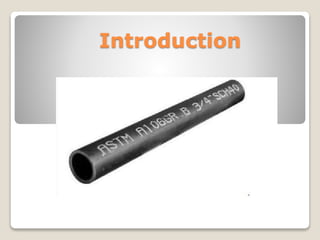
•Pipes are thin cylindrical shells which is used for
transportation of fluids.
•ASME B 36.10 is the dimensional standard for
Welded and Seamless Wrought Steel Pipe (CS,
LTCS, and LAS).
•ASME B 36.19 is the dimensional standard for
Austenitic / Stainless Steel Pipes.
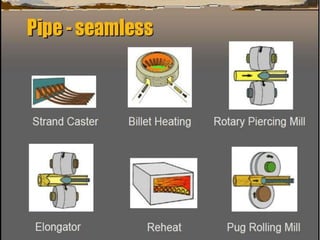
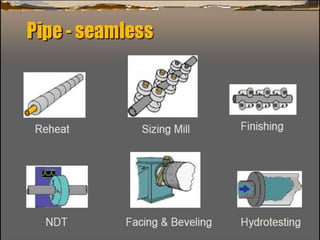
•Pipes based on the process of manufacturing are classified into –
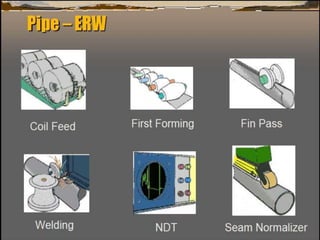
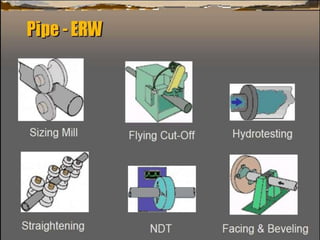
Seamless Pipe, Electric Fusion Welded Pipe (EFW), Electric Resistance
Welded Pipe (ERW). There are also other types such a Spiral Welded
pipe, Centrifugal Cast pipe etc., but is not suitable for pressure
applications.
•Pipes based on types of materials are classified into Carbon Steel pipe,
Low Temperature Carbon Steel Pipe, Low Alloy Steel Pipe, Stainless Steel
Pipe are the materials used in major piping design.
•Pipes are made of standard sizes having several range of wall thickness
or weight.
•Pipes are known by Nominal Pipe Size NPS (in inches) and Diameter
Nominal DN (in mm).
•Upto 12" NPS the Nominal diameter is approximately equal to inside
diameter of pipe.
•Above 12" NPS the Nominal diameter is equal to the outer diameter of
the pipe.
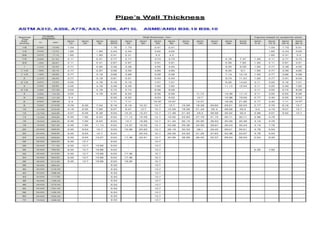
•Pipe wall thickness is designated based on weight and schedule.
•The older system designates pipe as Standard (S), Extra Strong (XS) and
Double Extra Strong (XXS) which is based on pipe weight.
•The newer system designates wall thickness by Schedules; such as Sch
10,20,30,40,60,80,100,120,140,160 for Wrought steel pipe & Sch 5S, 10S,
40S, 80S for Stainless Steel Pipe.
•Normally for all pipe sizes Sch40 corresponds to Standard (S) and Sch80
corresponds to Extra Strong (XS).
• Commercial pipes are normally available in 6m, 12m length.
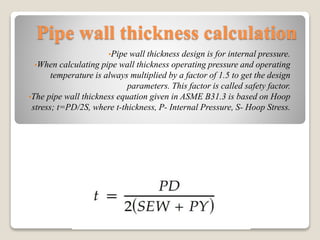
•Pipes are connected through flanges, welding (both butt and socket
welding), threaded.
•Dimensional standard for flanges is ASME B16.5 upto 24" NPS, ASME
B16.47 Series B above 24" upto 60”NPS, above that AWWA C-207 which
ranges from 4” NPS to 144” NPS.
•Dimensional Standard for Butt-welding end pipe is ASME B16.9, and for
Socket welded and threaded pipe ASME B16.11.
Pipe wall thickness calculation
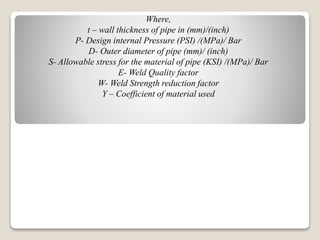
•Pipe wall thickness design is for internal pressure.
•When calculating pipe wall thickness operating pressure and operating
temperature is always multiplied by a factor of 1.5 to get the design
parameters. This factor is called safety factor.
•The pipe wall thickness equation given in ASME B31.3 is based on Hoop
stress; t=PD/2S, where t-thickness, P- Internal Pressure, S- Hoop Stress.
Where,
t – wall thickness of pipe in (mm)/(inch)
P- Design internal Pressure (PSI) /(MPa)/ Bar
D- Outer diameter of pipe (mm)/ (inch)
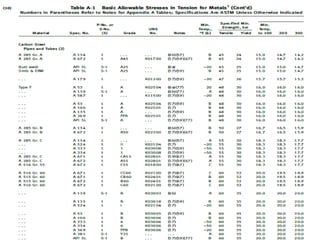
S- Allowable stress for the material of pipe (KSI) /(MPa)/ Bar
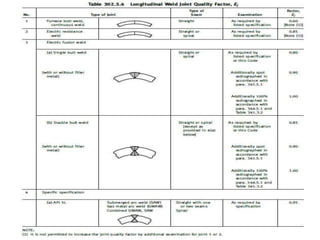
E- Weld Quality factor
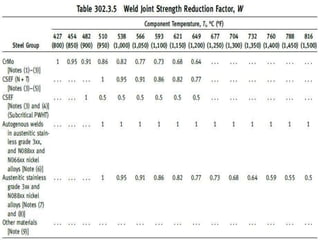
W- Weld Strength reduction factor
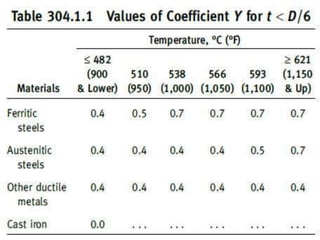
Y – Coefficient of material used
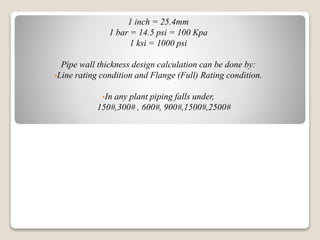
1 inch = 25.4mm
1 bar = 14.5 psi = 100 Kpa
1 ksi = 1000 psi
Pipe wall thickness design calculation can be done by:
•Line rating condition and Flange (Full) Rating condition.
•In any plant piping falls under,
150#,300# , 600#, 900#,1500#,2500#
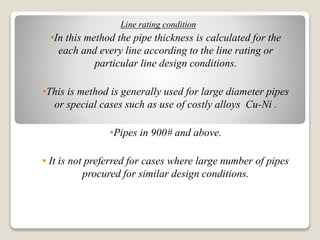
Line rating condition
•In this method the pipe thickness is calculated for the
each and every line according to the line rating or
particular line design conditions.
•This is method is generally used for large diameter pipes
or special cases such as use of costly alloys Cu-Ni .
•Pipes in 900# and above.
• It is not preferred for cases where large number of pipes
procured for similar design conditions.
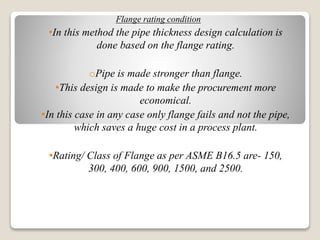
Flange rating condition
•In this method the pipe thickness design calculation is
done based on the flange rating.
oPipe is made stronger than flange.
•This design is made to make the procurement more
economical.
•In this case in any case only flange fails and not the pipe,
which saves a huge cost in a process plant.
•Rating/ Class of Flange as per ASME B16.5 are- 150,
300, 400, 600, 900, 1500, and 2500.
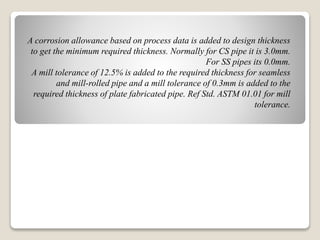
A corrosion allowance based on process data is added to design thickness
to get the minimum required thickness. Normally for CS pipe it is 3.0mm.
For SS pipes its 0.0mm.
A mill tolerance of 12.5% is added to the required thickness for seamless
and mill-rolled pipe and a mill tolerance of 0.3mm is added to the
required thickness of plate fabricated pipe. Ref Std. ASTM 01.01 for mill
tolerance.
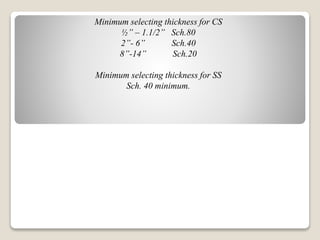
Minimum selecting thickness for CS
½” – 1.1/2” Sch.80
2”- 6” Sch.40
8”-14” Sch.20
Minimum selecting thickness for SS
Sch. 40 minimum.
Pipe & its wall thickness calculation

Pipe & its wall thickness calculation

  • 1.
    PIPE & WALLTHICKNESS CALCULATION Submitted by:- SANDEEP KRISHNAN
  • 2.
    •Introduction to Pipes •Pipewall thickness calculation
  • 3.
  • 4.
    •Pipes are thincylindrical shells which is used for transportation of fluids. •ASME B 36.10 is the dimensional standard for Welded and Seamless Wrought Steel Pipe (CS, LTCS, and LAS). •ASME B 36.19 is the dimensional standard for Austenitic / Stainless Steel Pipes.
  • 5.
    •Pipes based onthe process of manufacturing are classified into – Seamless Pipe, Electric Fusion Welded Pipe (EFW), Electric Resistance Welded Pipe (ERW). There are also other types such a Spiral Welded pipe, Centrifugal Cast pipe etc., but is not suitable for pressure applications. •Pipes based on types of materials are classified into Carbon Steel pipe, Low Temperature Carbon Steel Pipe, Low Alloy Steel Pipe, Stainless Steel Pipe are the materials used in major piping design.
  • 10.
    •Pipes are madeof standard sizes having several range of wall thickness or weight. •Pipes are known by Nominal Pipe Size NPS (in inches) and Diameter Nominal DN (in mm). •Upto 12" NPS the Nominal diameter is approximately equal to inside diameter of pipe. •Above 12" NPS the Nominal diameter is equal to the outer diameter of the pipe.
  • 11.
    •Pipe wall thicknessis designated based on weight and schedule. •The older system designates pipe as Standard (S), Extra Strong (XS) and Double Extra Strong (XXS) which is based on pipe weight. •The newer system designates wall thickness by Schedules; such as Sch 10,20,30,40,60,80,100,120,140,160 for Wrought steel pipe & Sch 5S, 10S, 40S, 80S for Stainless Steel Pipe.
  • 12.
    •Normally for allpipe sizes Sch40 corresponds to Standard (S) and Sch80 corresponds to Extra Strong (XS). • Commercial pipes are normally available in 6m, 12m length. •Pipes are connected through flanges, welding (both butt and socket welding), threaded. •Dimensional standard for flanges is ASME B16.5 upto 24" NPS, ASME B16.47 Series B above 24" upto 60”NPS, above that AWWA C-207 which ranges from 4” NPS to 144” NPS. •Dimensional Standard for Butt-welding end pipe is ASME B16.9, and for Socket welded and threaded pipe ASME B16.11.
  • 14.
    Pipe wall thicknesscalculation •Pipe wall thickness design is for internal pressure. •When calculating pipe wall thickness operating pressure and operating temperature is always multiplied by a factor of 1.5 to get the design parameters. This factor is called safety factor. •The pipe wall thickness equation given in ASME B31.3 is based on Hoop stress; t=PD/2S, where t-thickness, P- Internal Pressure, S- Hoop Stress.
  • 15.
    Where, t – wallthickness of pipe in (mm)/(inch) P- Design internal Pressure (PSI) /(MPa)/ Bar D- Outer diameter of pipe (mm)/ (inch) S- Allowable stress for the material of pipe (KSI) /(MPa)/ Bar E- Weld Quality factor W- Weld Strength reduction factor Y – Coefficient of material used
  • 20.
    1 inch =25.4mm 1 bar = 14.5 psi = 100 Kpa 1 ksi = 1000 psi Pipe wall thickness design calculation can be done by: •Line rating condition and Flange (Full) Rating condition. •In any plant piping falls under, 150#,300# , 600#, 900#,1500#,2500#
  • 21.
    Line rating condition •Inthis method the pipe thickness is calculated for the each and every line according to the line rating or particular line design conditions. •This is method is generally used for large diameter pipes or special cases such as use of costly alloys Cu-Ni . •Pipes in 900# and above. • It is not preferred for cases where large number of pipes procured for similar design conditions.
  • 22.
    Flange rating condition •Inthis method the pipe thickness design calculation is done based on the flange rating. oPipe is made stronger than flange. •This design is made to make the procurement more economical. •In this case in any case only flange fails and not the pipe, which saves a huge cost in a process plant. •Rating/ Class of Flange as per ASME B16.5 are- 150, 300, 400, 600, 900, 1500, and 2500.
  • 23.
    A corrosion allowancebased on process data is added to design thickness to get the minimum required thickness. Normally for CS pipe it is 3.0mm. For SS pipes its 0.0mm. A mill tolerance of 12.5% is added to the required thickness for seamless and mill-rolled pipe and a mill tolerance of 0.3mm is added to the required thickness of plate fabricated pipe. Ref Std. ASTM 01.01 for mill tolerance.
  • 24.
    Minimum selecting thicknessfor CS ½” – 1.1/2” Sch.80 2”- 6” Sch.40 8”-14” Sch.20 Minimum selecting thickness for SS Sch. 40 minimum.