What are Immunomodulators?
Characteristics
Immunostimulants
Uses
Classification
Drugs
Immunomodulator are drugs that either suppress or stimulate the
immune system.
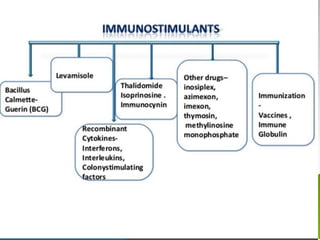
Immunostimulants
that stimulates the immune system.
Immunosuppressants
that suppress the immune system.
Immunomodulators have been in use for more than 50 years.
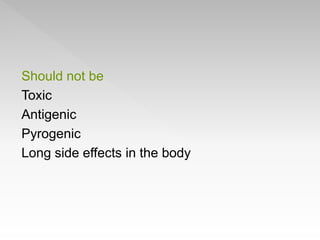
Should be
Stimulate both specific and non specific immune
response
Act as an adjuvant along with vaccine
Active through oral route
Compatible with other drugs
Short withdrawal period with low tissue residues
Defined chemical composition and biological activity
Inexpensive
Should not be
Toxic
Antigenic
Pyrogenic
Long side effects in the body
Immunostimulants are substances that stimulate the
immune system by inducing activation and increasing
activity of any of its components.
They are used in disorders includes immunodeficiency
diseases, cancer, viral, fungal and certain autoimmune
disorders
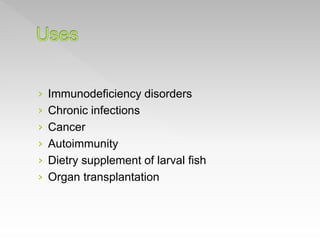
› Immunodeficiency disorders
› Chronic infections
› Cancer
› Autoimmunity
› Dietry supplement of larval fish
› Organ transplantation
Live, attenuated culture of BCG strain of Mycobacterium Bovis
Mechanism of action:
Induces granulomatous reaction at the site of administration. It
causes activation of macrophages to make them more effective
killer cells.
Tried as an adjuvants
Therapeutic uses:
Treatment and prophylaxis of Bladder Carcinoma
Adverse Reactions:
Hypersensitivity
shock
chills
Levamisole was synthesized originally as an
anthelmintic.
It stores the depressed immune function of B
lymphocytes, T lymphocytes, Monocytes and
Macrophages. It targets at stimulation of
phagocytosis and stimulation of regulatory T
cells to restore homeostasis in a perturbed
immune system.
Therapeutic uses:
Adjuvant therapy with 5- fluorouracil colon
cancer, agranulocytosis. Used to treat
immunodeficiency associated with Hodgkin
disease.
Adverse Reactions:
Flu like symptoms, allergic manifestation,
nausea and muscle pain.
These are now use by rDNA technology
Application in treatment of viral infection, autoimmune and neoplastic
diseases.
INTERFERONS
Antiviral
Anti neoplastic
Immunomodulatory activity
Bind to cell surface receptors and initiates intracellular events
Enzyme induction
Inhibition of cell proliferation
Enhancement of immune activities
Increased phagocytosis
Mechanism of action:
Interferon alfa-2b inhibits virus replication in virus-infected cells and
suppresses cell proliferation; although the exact mechanism of
action of ribavirin is not known, it has antiviral inhibitory activity
against respiratory syncytial virus, influenza virus, and herpes
simplex virus.
Therapeutic uses
Hairy cell leukemia
Malignant melanoma
Hepatitis B
Adverse Rections:
Flu like symptoms – Fever, chills, headache
CVS – Hypotension, Arrhythmia
CNS- Depression, Confusion
It is a protein that regulates the activities of white blood cells (leukocytes,
often lymphocytes) that are responsible for immunity. IL-2 is part of the
body's natural response to microbial infection, and in discriminating
between foreign ("non-self") and "self". IL-2 mediates its effects by
binding to IL-2 receptors, which are expressed by lymphocytes.
Therapeutic uses:
Metastatic renal cell carcinoma
Melanoma
Toxicity
Hypotension
Birth defect.
Contraindicated in women having child bearing
potential.
Enhanced T cell production of cytokines IL-2, IFN-
𝝲 .
Increases TNF𝝰 in patients who are HIV
seropositive.
Therapeutic uses:
Multiple Myeloma
Leads the production of cytokines such as IL-1, IL-
2, and IFN- 𝝲, increase proliferation of
lymphocytes in response to mitogenic or antigenic
stimuli
Therapeutic uses:
Herpes simplex infection, Measles viruses
Adverse reactions:
Rise in uric acid in serum and urine, Nausea
Active
- Stimulatation with an antigen
Passive
- Preformed antibody
Vaccines
 Administration of antigen as a whole, killed
organism, or a specific protein or peptide
constituent of an organism
 Booster doses
 Anticancer vaccines
Indications:
Individual is deficient in antibodies- immunodeficiency
Individual is exposed to an agent, inadequate time for
active immunization
-Rabies
-Hepatitis
 Lipponcot textbook of immunology
 Goodman and Gilman’s “The
Pharmacological basis of therapeutic” 10th
edition
 H.P. Rang and M.M. Dale Pharmacology 5th
edition
 Google
Immunomodulators

Immunomodulators

  • 2.
  • 3.
    Immunomodulator are drugsthat either suppress or stimulate the immune system. Immunostimulants that stimulates the immune system. Immunosuppressants that suppress the immune system. Immunomodulators have been in use for more than 50 years.
  • 4.
    Should be Stimulate bothspecific and non specific immune response Act as an adjuvant along with vaccine Active through oral route Compatible with other drugs Short withdrawal period with low tissue residues Defined chemical composition and biological activity Inexpensive
  • 5.
  • 6.
    Immunostimulants are substancesthat stimulate the immune system by inducing activation and increasing activity of any of its components. They are used in disorders includes immunodeficiency diseases, cancer, viral, fungal and certain autoimmune disorders
  • 7.
    › Immunodeficiency disorders ›Chronic infections › Cancer › Autoimmunity › Dietry supplement of larval fish › Organ transplantation
  • 9.
    Live, attenuated cultureof BCG strain of Mycobacterium Bovis Mechanism of action: Induces granulomatous reaction at the site of administration. It causes activation of macrophages to make them more effective killer cells. Tried as an adjuvants Therapeutic uses: Treatment and prophylaxis of Bladder Carcinoma Adverse Reactions: Hypersensitivity shock chills
  • 10.
    Levamisole was synthesizedoriginally as an anthelmintic. It stores the depressed immune function of B lymphocytes, T lymphocytes, Monocytes and Macrophages. It targets at stimulation of phagocytosis and stimulation of regulatory T cells to restore homeostasis in a perturbed immune system. Therapeutic uses: Adjuvant therapy with 5- fluorouracil colon cancer, agranulocytosis. Used to treat immunodeficiency associated with Hodgkin disease. Adverse Reactions: Flu like symptoms, allergic manifestation, nausea and muscle pain.
  • 11.
    These are nowuse by rDNA technology Application in treatment of viral infection, autoimmune and neoplastic diseases. INTERFERONS Antiviral Anti neoplastic Immunomodulatory activity Bind to cell surface receptors and initiates intracellular events Enzyme induction Inhibition of cell proliferation Enhancement of immune activities Increased phagocytosis
  • 12.
    Mechanism of action: Interferonalfa-2b inhibits virus replication in virus-infected cells and suppresses cell proliferation; although the exact mechanism of action of ribavirin is not known, it has antiviral inhibitory activity against respiratory syncytial virus, influenza virus, and herpes simplex virus. Therapeutic uses Hairy cell leukemia Malignant melanoma Hepatitis B Adverse Rections: Flu like symptoms – Fever, chills, headache CVS – Hypotension, Arrhythmia CNS- Depression, Confusion
  • 13.
    It is aprotein that regulates the activities of white blood cells (leukocytes, often lymphocytes) that are responsible for immunity. IL-2 is part of the body's natural response to microbial infection, and in discriminating between foreign ("non-self") and "self". IL-2 mediates its effects by binding to IL-2 receptors, which are expressed by lymphocytes. Therapeutic uses: Metastatic renal cell carcinoma Melanoma Toxicity Hypotension
  • 14.
    Birth defect. Contraindicated inwomen having child bearing potential. Enhanced T cell production of cytokines IL-2, IFN- 𝝲 . Increases TNF𝝰 in patients who are HIV seropositive. Therapeutic uses: Multiple Myeloma
  • 15.
    Leads the productionof cytokines such as IL-1, IL- 2, and IFN- 𝝲, increase proliferation of lymphocytes in response to mitogenic or antigenic stimuli Therapeutic uses: Herpes simplex infection, Measles viruses Adverse reactions: Rise in uric acid in serum and urine, Nausea
  • 16.
    Active - Stimulatation withan antigen Passive - Preformed antibody
  • 17.
    Vaccines  Administration ofantigen as a whole, killed organism, or a specific protein or peptide constituent of an organism  Booster doses  Anticancer vaccines
  • 18.
    Indications: Individual is deficientin antibodies- immunodeficiency Individual is exposed to an agent, inadequate time for active immunization -Rabies -Hepatitis
  • 19.
     Lipponcot textbookof immunology  Goodman and Gilman’s “The Pharmacological basis of therapeutic” 10th edition  H.P. Rang and M.M. Dale Pharmacology 5th edition  Google

Editor's Notes

  • #4 Opiods such as heroin and morphine exert their effects by mimicking naturally occurring substances, called endogenous opioid peptides or endorphins
  • #11 Other opioids of abuse do not form 6-MAM. Other opioids being fentanyl, hydromorphone, oxycodone and pethidine/meperidine