“a cascade of water falling from a height, formed
when a river or stream flows over a precipice or steep
incline”
Upper course
Caused by erosion

Vary in size
A waterfall is a steep drop along the course of a

river.
It has a ledge with water cascading into a
characteristic plunge pool at the base.
The rocks at the top of the waterfall are often hard
and resistant, forming a cap rock, and softer rocks
below are undercut.
The waterfall may lie within a gorge and are often
cause of gorges.
Waterfalls often form when a band of resistant rock
lies over softer, less resistant rocks.
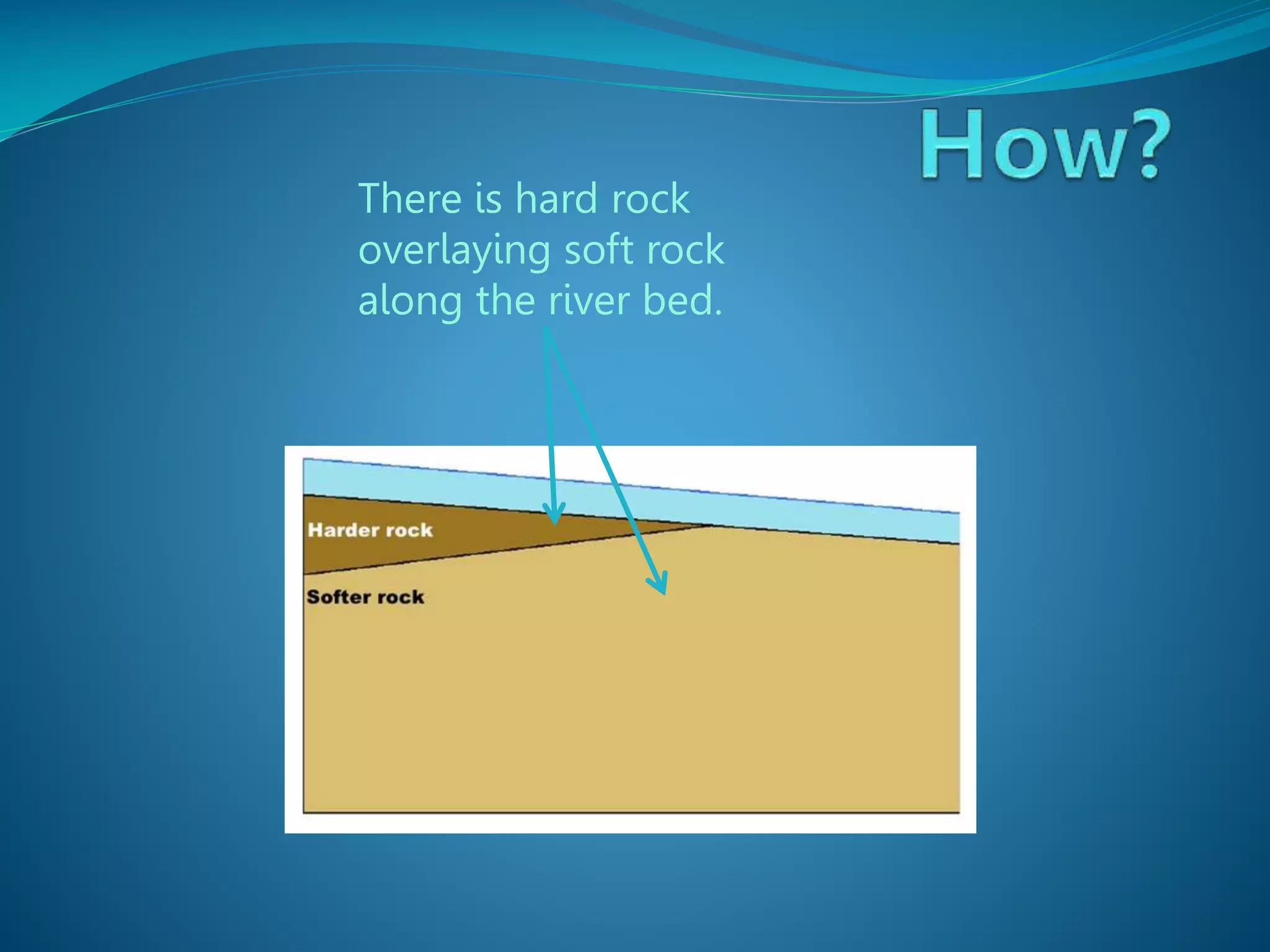
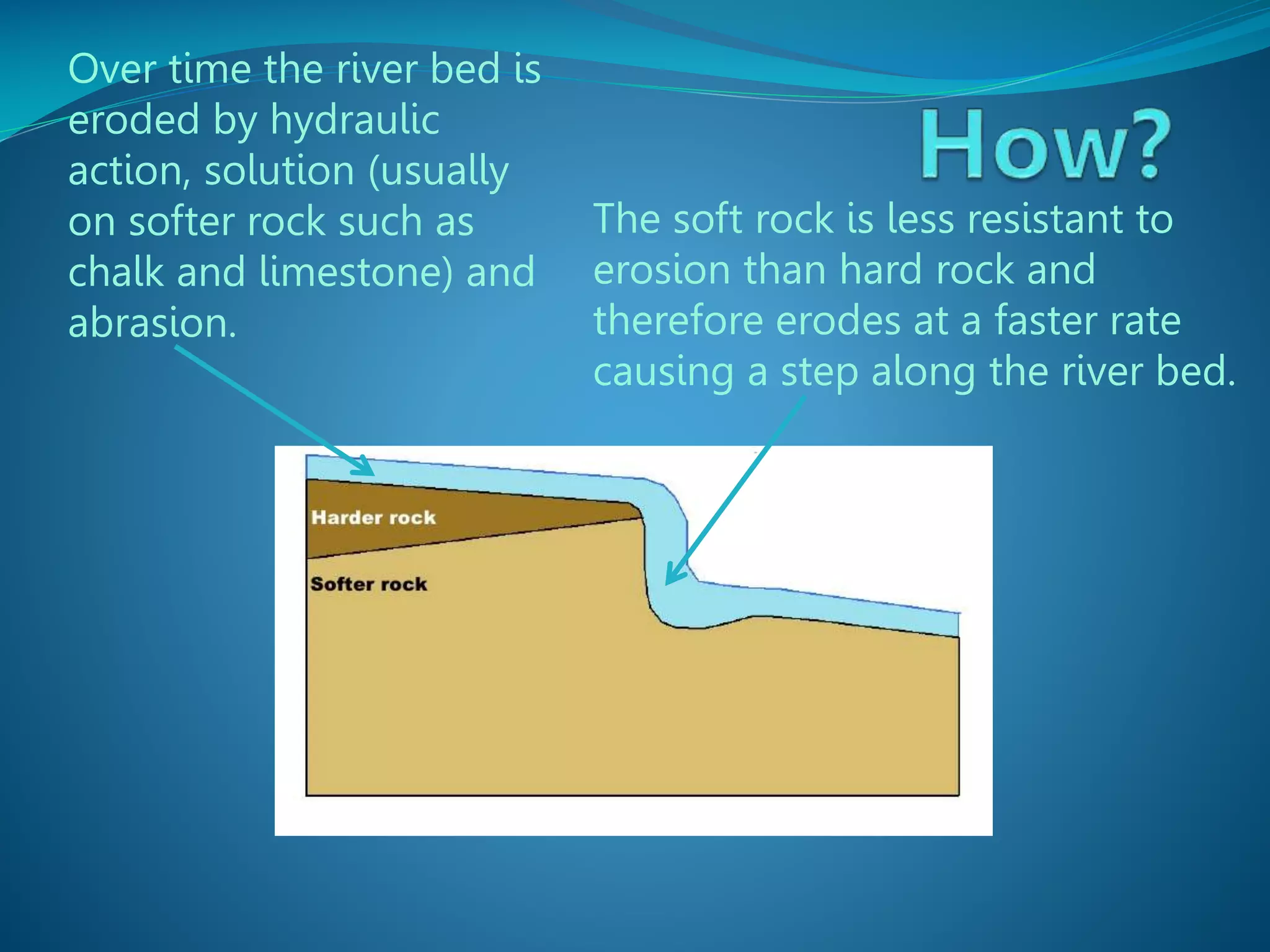
There is hard rock
overlaying soft rock
along the river bed.
Over time the river bed is
eroded by hydraulic
action, solution (usually
on softer rock such as
chalk and limestone) and
abrasion.

The soft rock is less resistant to
erosion than hard rock and
therefore erodes at a faster rate
causing a step along the river bed.
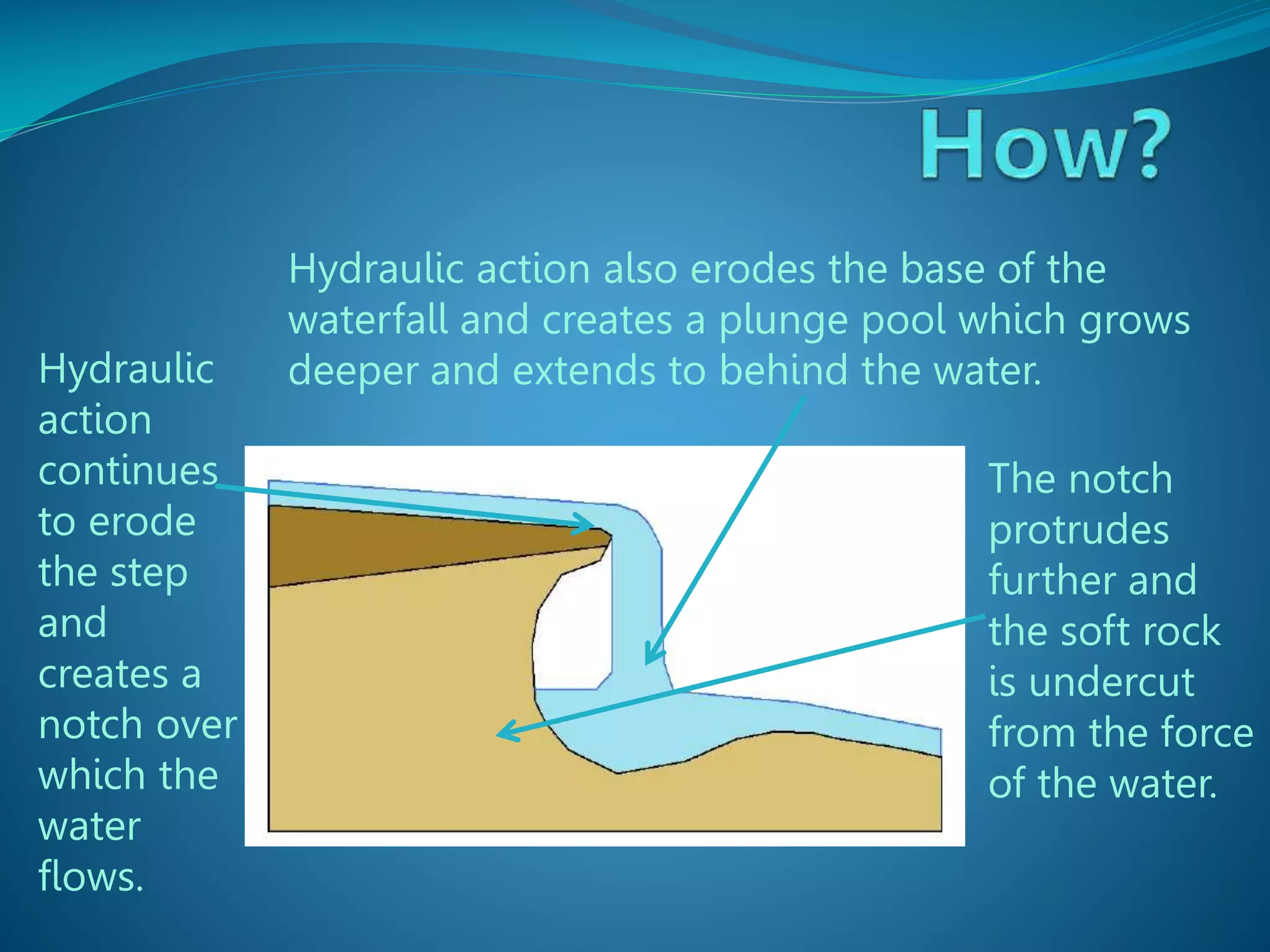
Hydraulic
action
continues
to erode
the step
and
creates a
notch over
which the
water
flows.

Hydraulic action also erodes the base of the
waterfall and creates a plunge pool which grows
deeper and extends to behind the water.
The notch
protrudes
further and
the soft rock
is undercut
from the force
of the water.
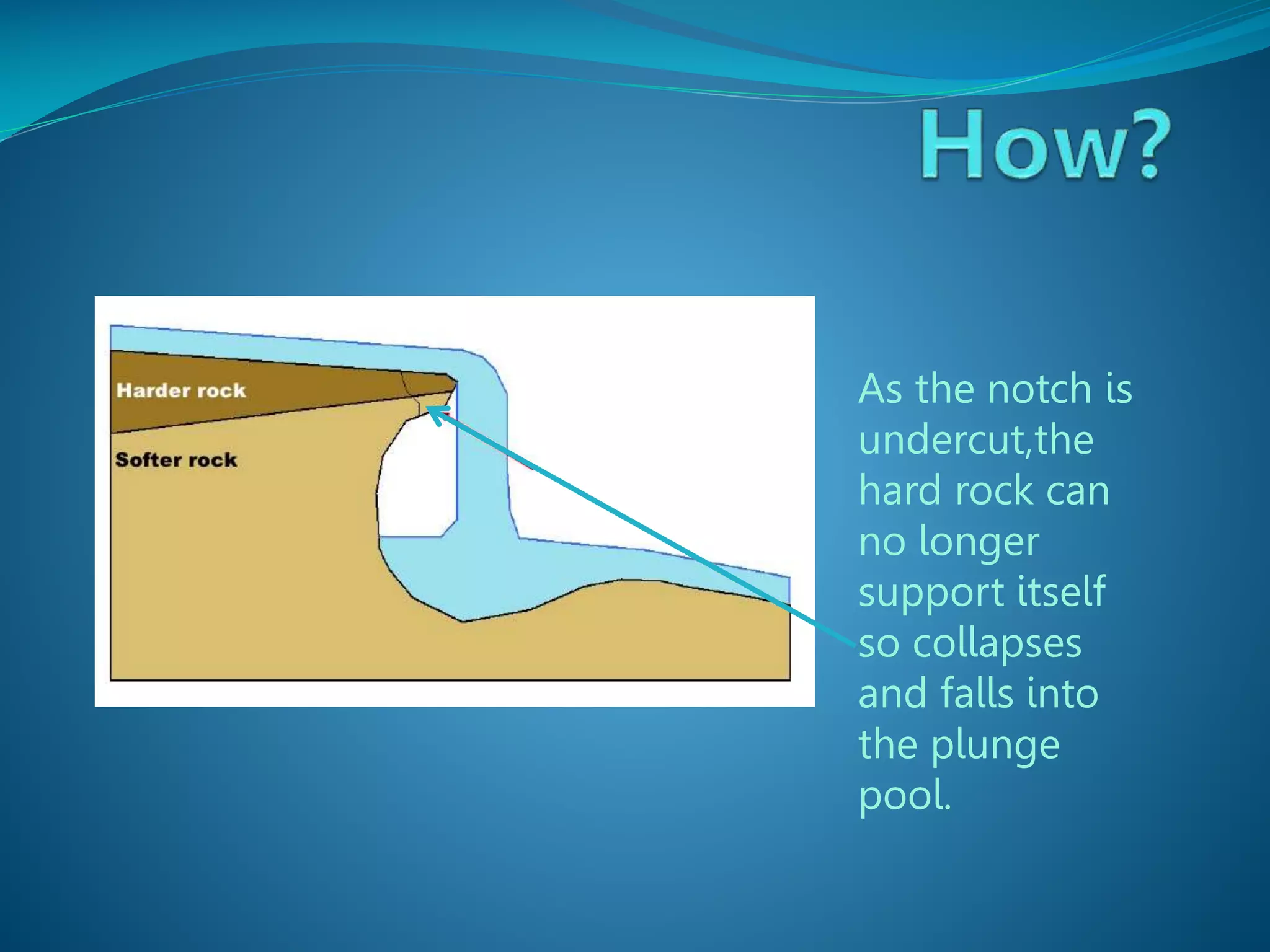
As the notch is
undercut,the
hard rock can
no longer
support itself
so collapses
and falls into
the plunge
pool.
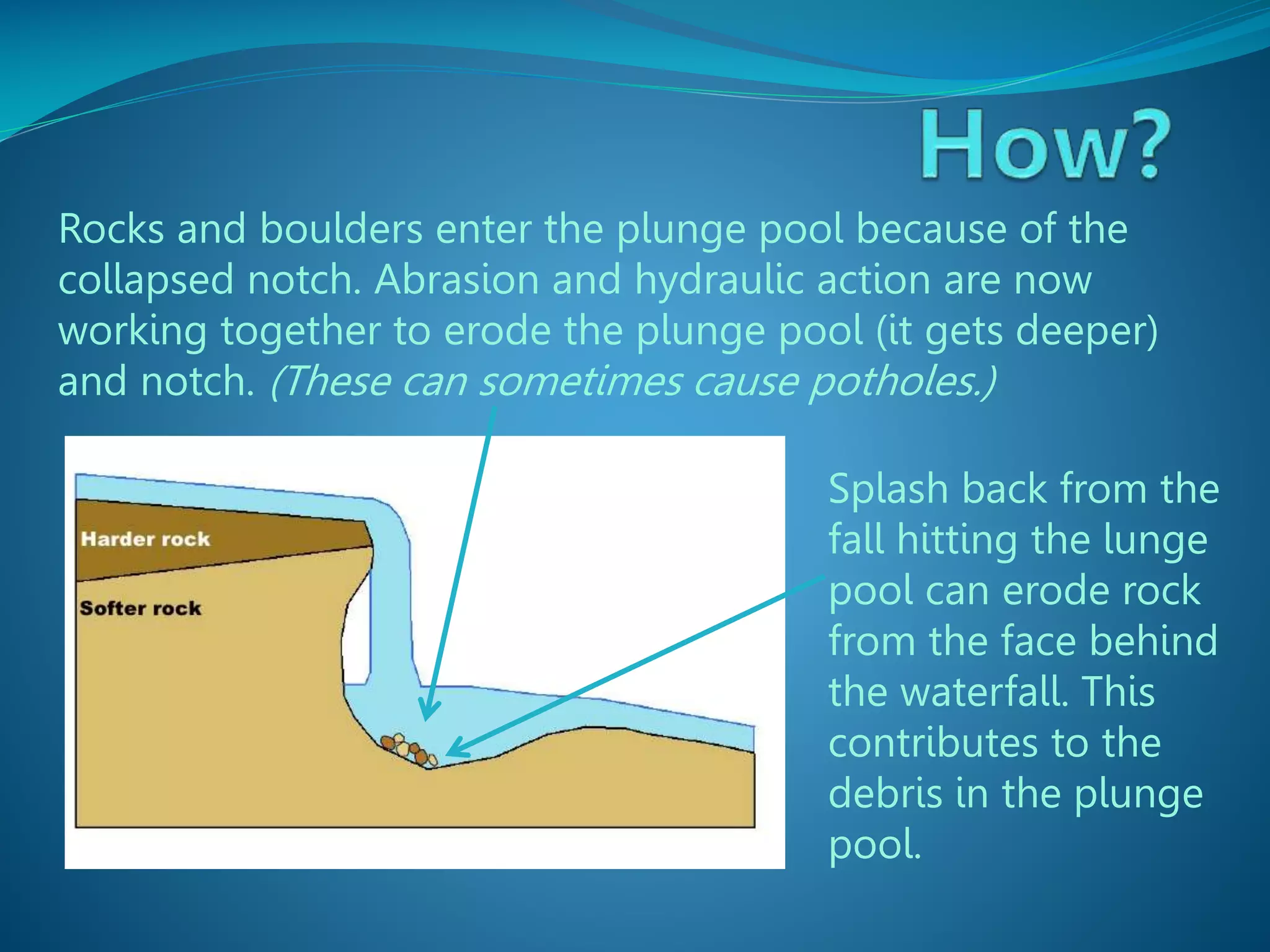
Rocks and boulders enter the plunge pool because of the
collapsed notch. Abrasion and hydraulic action are now
working together to erode the plunge pool (it gets deeper)
and notch. (These can sometimes cause potholes.)
Splash back from the
fall hitting the lunge
pool can erode rock
from the face behind
the waterfall. This
contributes to the
debris in the plunge
pool.
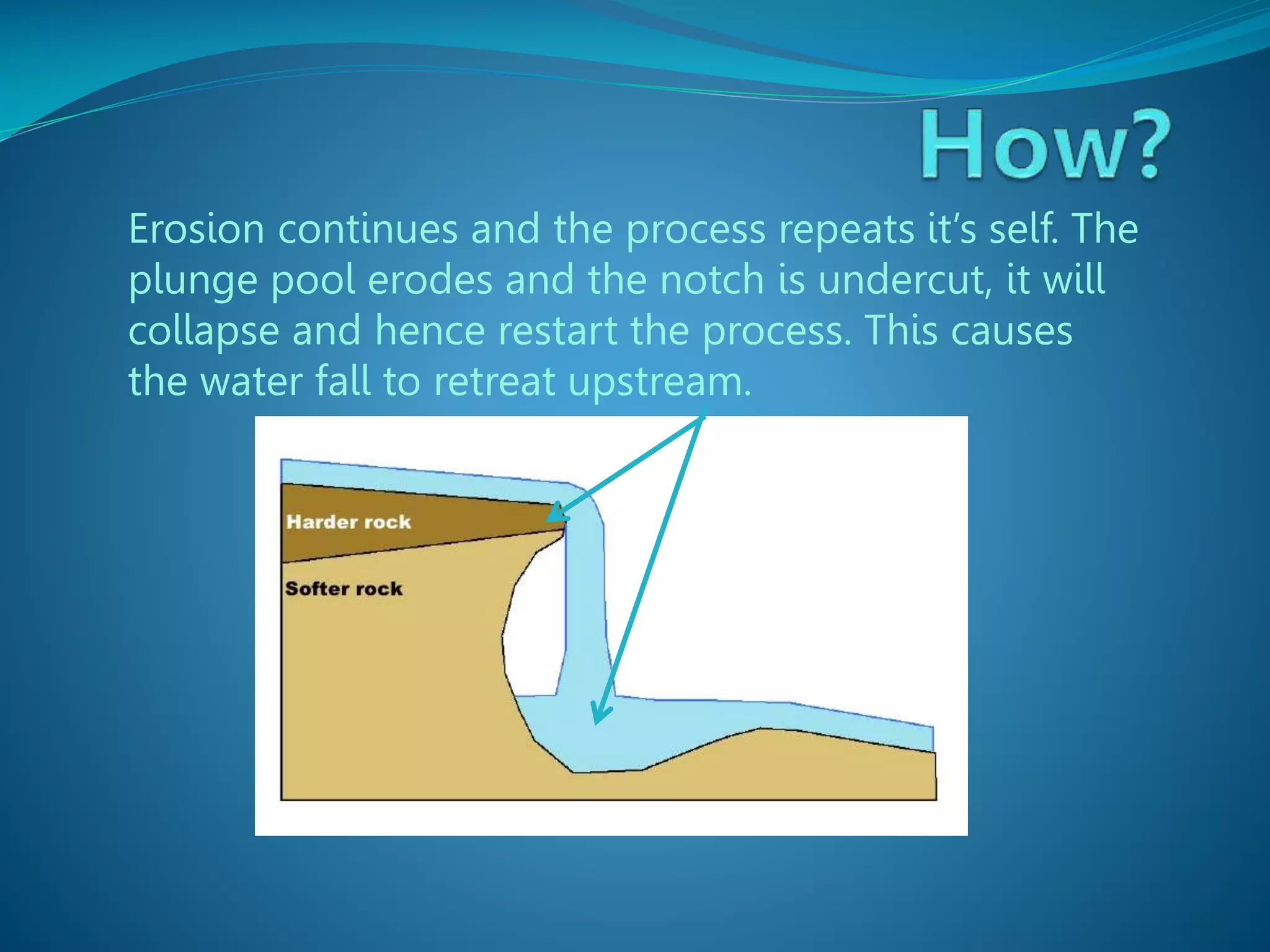
Erosion continues and the process repeats it’s self. The
plunge pool erodes and the notch is undercut, it will
collapse and hence restart the process. This causes
the water fall to retreat upstream.
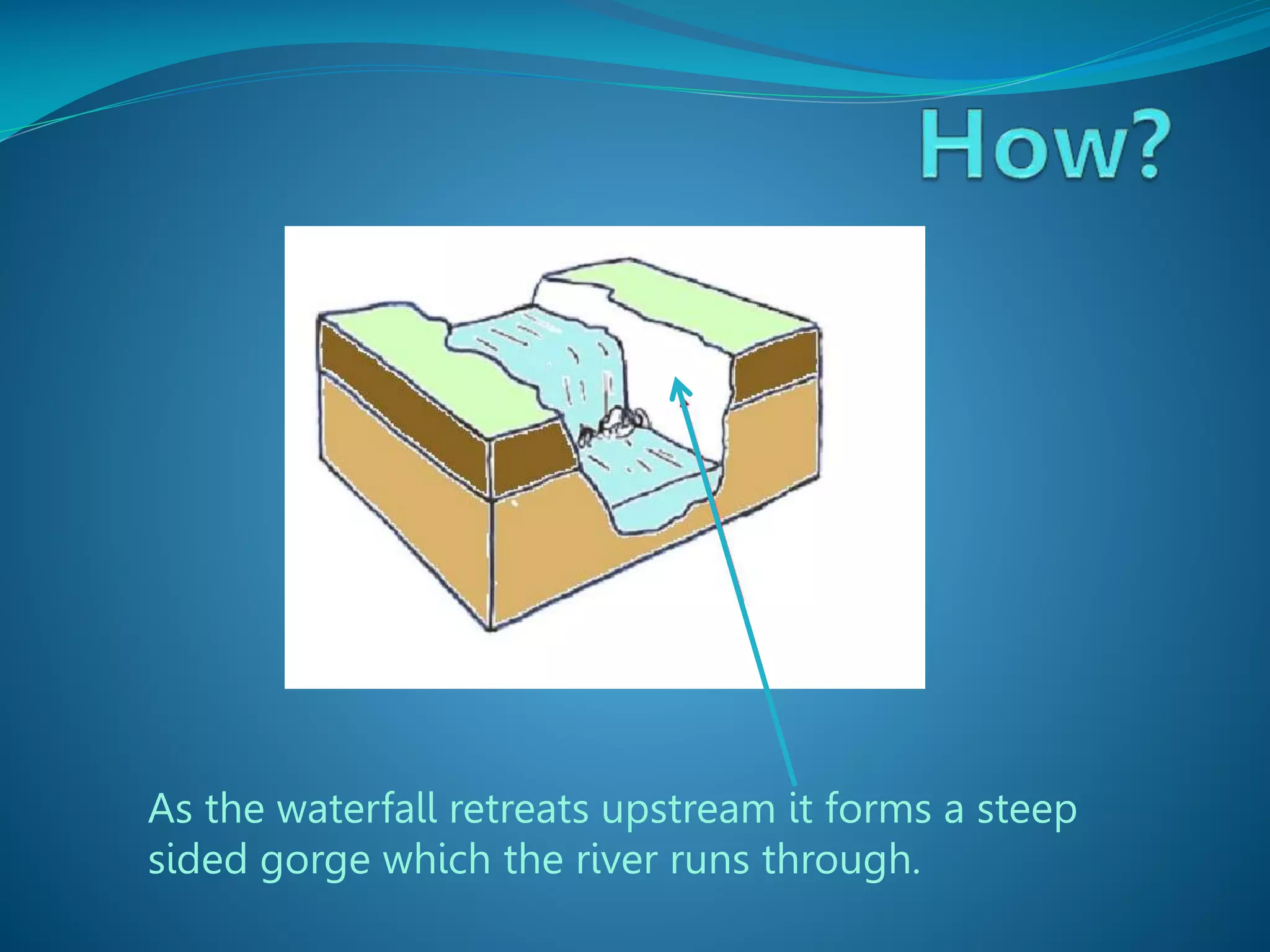
As the waterfall retreats upstream it forms a steep
sided gorge which the river runs through.
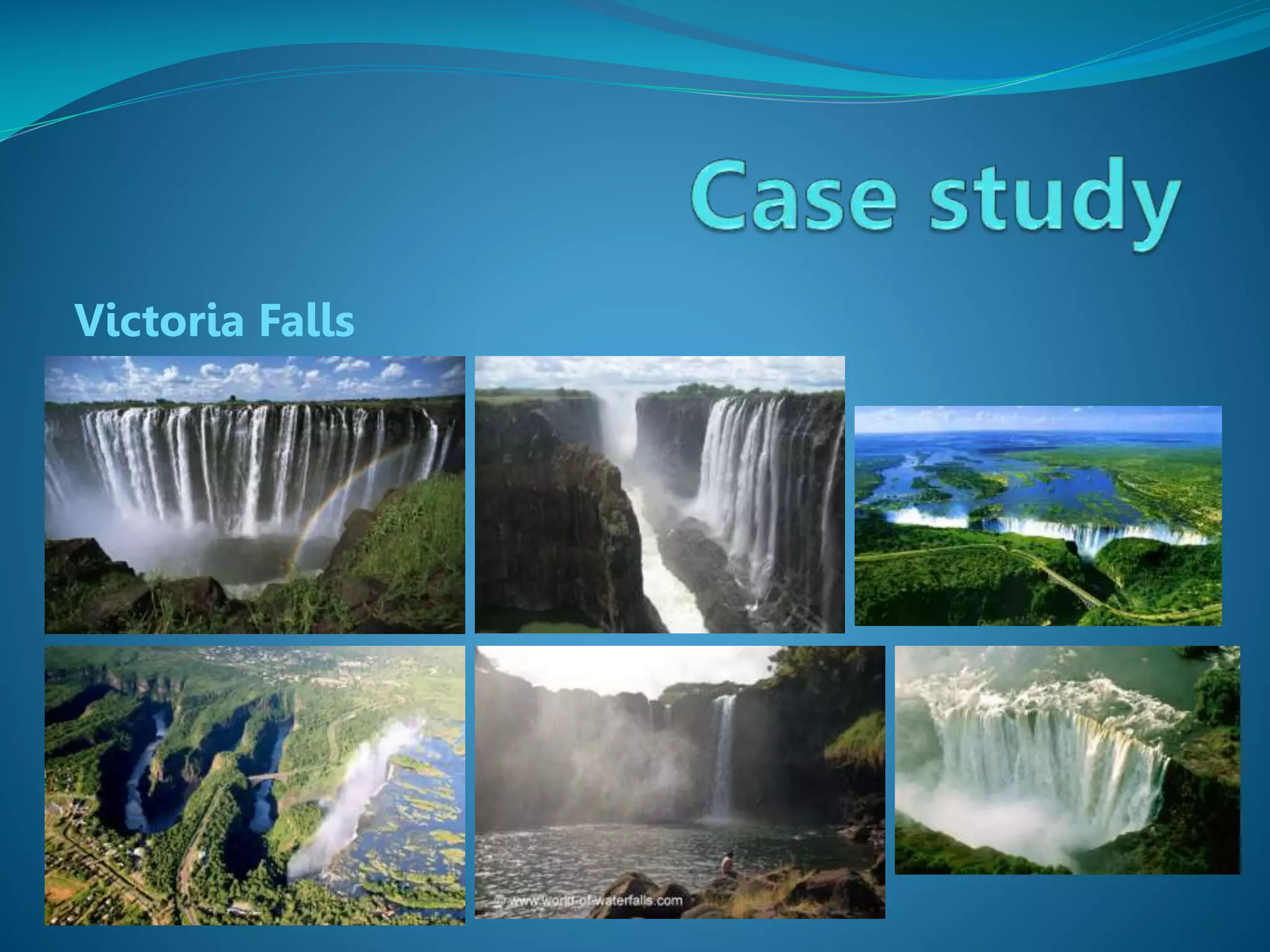
Victoria Falls
Zambzi River
Border of Zimbabwe and Zambia

REMEMBER Zs

Not the highest or widest.
It is twice the height of Niagra Falls and twice the width

of Horshoe Falls.
THE LARGEST SHEET OF FALLING WATER IN THE
WORLD.
HEIGHT: 1,708 metres
WIDTH: 108 metres
Victoria Falls

Six main gorges:
First Gorge (the one the river falls into at Victoria

Falls)
Second Gorge
Third Gorge (contains Victoria Falls Power Station)
Fourth Gorge
Fifth Gorge
Songwe Gorge
Victoria Falls

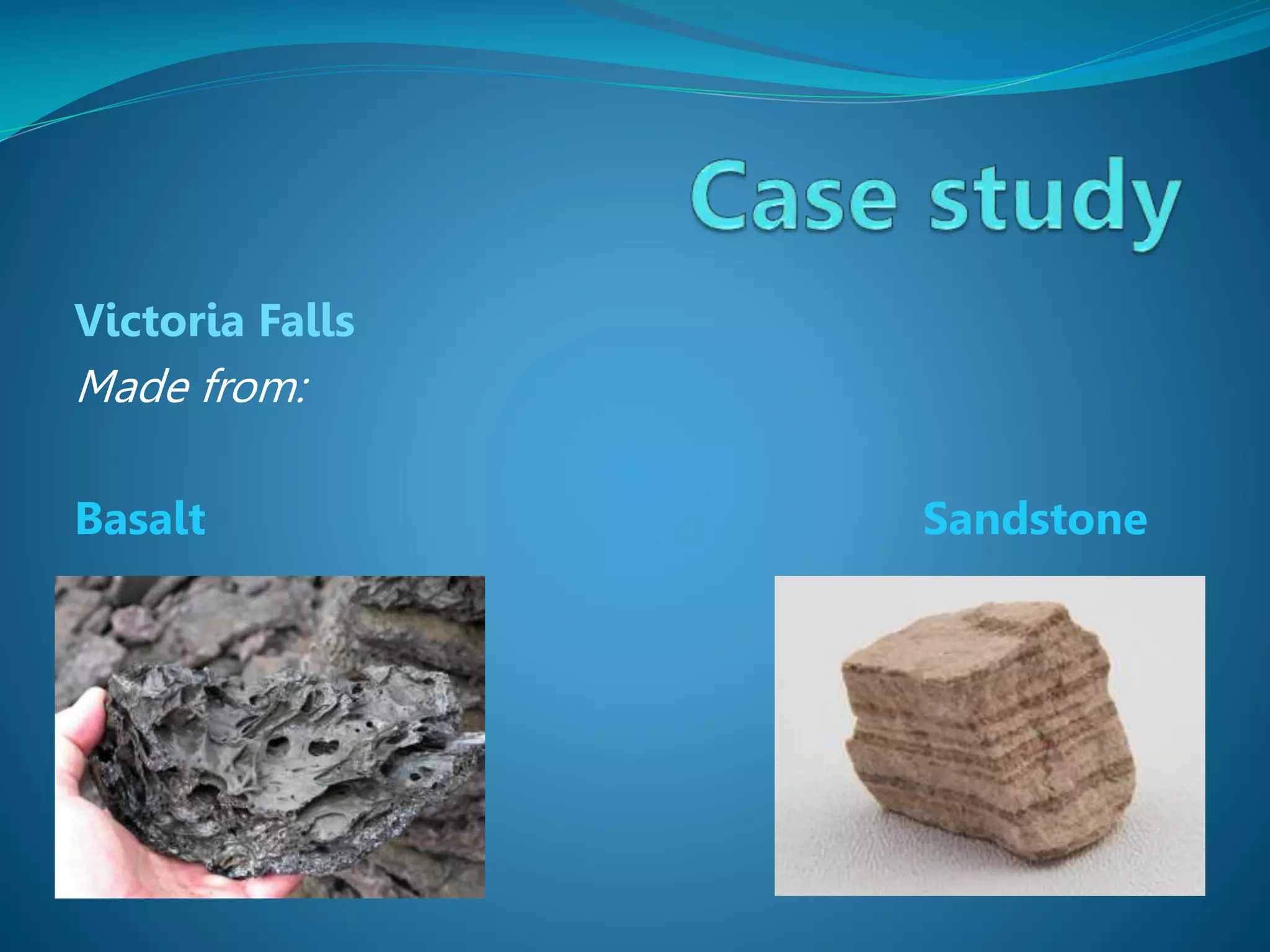
Made from:
Basalt

Sandstone
Victoria Falls

The Formation Of A Waterfall

  • 2.
    “a cascade ofwater falling from a height, formed when a river or stream flows over a precipice or steep incline” Upper course Caused by erosion Vary in size
  • 3.
    A waterfall isa steep drop along the course of a river. It has a ledge with water cascading into a characteristic plunge pool at the base. The rocks at the top of the waterfall are often hard and resistant, forming a cap rock, and softer rocks below are undercut. The waterfall may lie within a gorge and are often cause of gorges. Waterfalls often form when a band of resistant rock lies over softer, less resistant rocks.
  • 4.
    There is hardrock overlaying soft rock along the river bed.
  • 5.
    Over time theriver bed is eroded by hydraulic action, solution (usually on softer rock such as chalk and limestone) and abrasion. The soft rock is less resistant to erosion than hard rock and therefore erodes at a faster rate causing a step along the river bed.
  • 6.
    Hydraulic action continues to erode the step and createsa notch over which the water flows. Hydraulic action also erodes the base of the waterfall and creates a plunge pool which grows deeper and extends to behind the water. The notch protrudes further and the soft rock is undercut from the force of the water.
  • 7.
    As the notchis undercut,the hard rock can no longer support itself so collapses and falls into the plunge pool.
  • 8.
    Rocks and bouldersenter the plunge pool because of the collapsed notch. Abrasion and hydraulic action are now working together to erode the plunge pool (it gets deeper) and notch. (These can sometimes cause potholes.) Splash back from the fall hitting the lunge pool can erode rock from the face behind the waterfall. This contributes to the debris in the plunge pool.
  • 9.
    Erosion continues andthe process repeats it’s self. The plunge pool erodes and the notch is undercut, it will collapse and hence restart the process. This causes the water fall to retreat upstream.
  • 10.
    As the waterfallretreats upstream it forms a steep sided gorge which the river runs through.
  • 11.
    Victoria Falls Zambzi River Borderof Zimbabwe and Zambia REMEMBER Zs Not the highest or widest. It is twice the height of Niagra Falls and twice the width of Horshoe Falls. THE LARGEST SHEET OF FALLING WATER IN THE WORLD. HEIGHT: 1,708 metres WIDTH: 108 metres
  • 12.
    Victoria Falls Six maingorges: First Gorge (the one the river falls into at Victoria Falls) Second Gorge Third Gorge (contains Victoria Falls Power Station) Fourth Gorge Fifth Gorge Songwe Gorge
  • 13.
  • 14.