

Metabolic consequences
of obesity
By dr reena singh,jr 1
WHAT IS APPETITE??
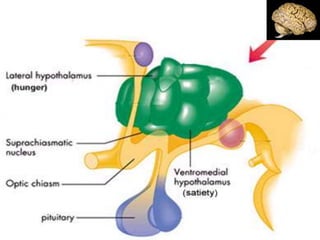
• Appetite is a complex process that results
from the integration of multiple signals at
the hypothalamus. The hypothalamus
receives neural signals, hormonal signals
such as leptin, cholecystokinin (CCK) and
ghrelin and nutrient signals such as
glucose, free fatty acids, amino acids and
volatile fatty acids
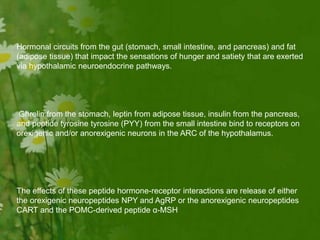
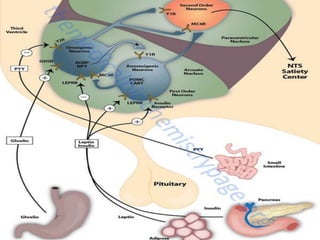
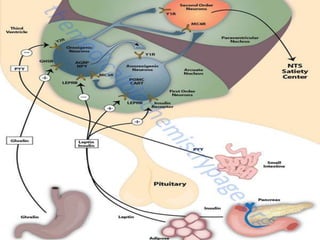
Hormonal circuits from the gut (stomach, small intestine, and pancreas) and fat
(adipose tissue) that impact the sensations of hunger and satiety that are exerted
via hypothalamic neuroendocrine pathways.
Ghrelin from the stomach, leptin from adipose tissue, insulin from the pancreas,
and peptide tyrosine tyrosine (PYY) from the small intestine bind to receptors on
orexigenic and/or anorexigenic neurons in the ARC of the hypothalamus.
The effects of these peptide hormone-receptor interactions are release of either
the orexigenic neuropeptides NPY and AgRP or the anorexigenic neuropeptides
CART and the POMC-derived peptide α-MSH
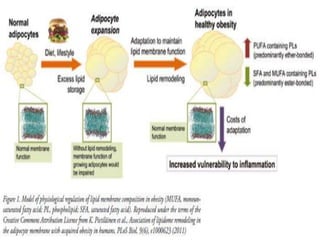
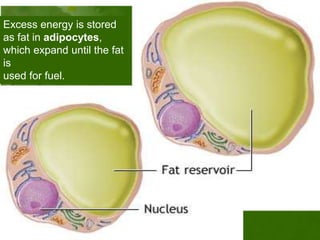
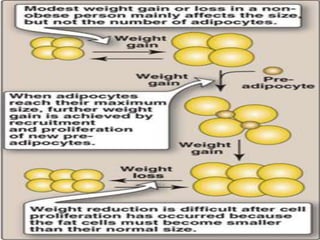
Excess energy is stored
as fat in adipocytes,
which expand until the fat
is
used for fuel.
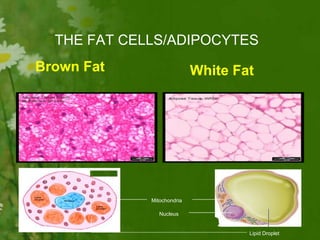
THE FAT CELLS/ADIPOCYTES
Lipid Droplet
Nucleus
Mitochondria
Brown Fat White Fat
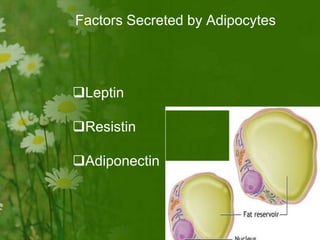
Factors Secreted by Adipocytes
Leptin
Resistin
Adiponectin
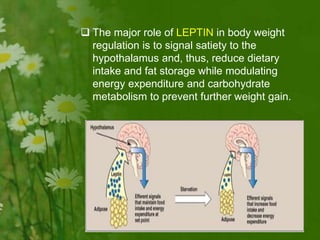
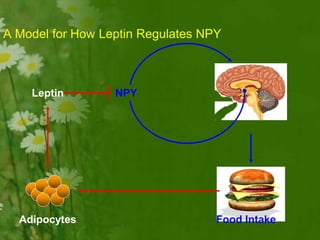
 The major role of LEPTIN in body weight
regulation is to signal satiety to the
hypothalamus and, thus, reduce dietary
intake and fat storage while modulating
energy expenditure and carbohydrate
metabolism to prevent further weight gain.
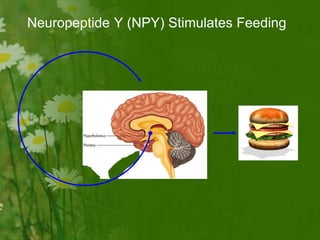
Neuropeptide Y (NPY) Stimulates Feeding
Food Intake
NPYLeptin
Adipocytes
A Model for How Leptin Regulates NPY
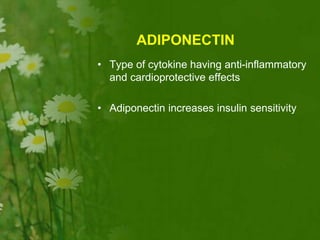
ADIPONECTIN
• Type of cytokine having anti-inflammatory
and cardioprotective effects
• Adiponectin increases insulin sensitivity
RESISTIN
• INCREASES LAVEL OF LDL.
• BAD EFFECTS
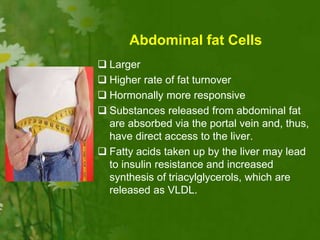
 Larger
 Higher rate of fat turnover
 Hormonally more responsive
 Substances released from abdominal fat
are absorbed via the portal vein and, thus,
have direct access to the liver.
 Fatty acids taken up by the liver may lead
to insulin resistance and increased
synthesis of triacylglycerols, which are
released as VLDL.
Abdominal fat Cells
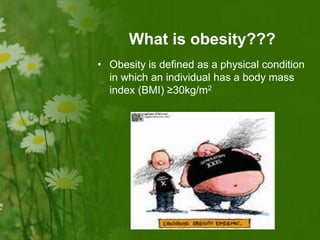
What is obesity???
• Obesity is defined as a physical condition
in which an individual has a body mass
index (BMI) ≥30kg/m2
ASSESSMENT OF OBESITY
BMI = (weight [kg]) / (height
[m])2.
Body mass index (BMI)
or Quetelet index
Body mass index (BMI)
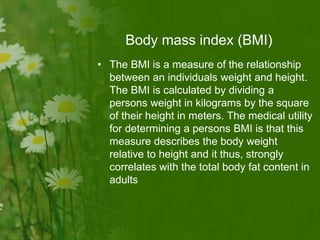
• The BMI is a measure of the relationship
between an individuals weight and height.
The BMI is calculated by dividing a
persons weight in kilograms by the square
of their height in meters. The medical utility
for determining a persons BMI is that this
measure describes the body weight
relative to height and it thus, strongly
correlates with the total body fat content in
adults
BMI
(kg/m2)
19 20 21 22 23 24 25 26 27 28 29 30 35 40
Height
(in)
Weight (lb)
58 91 96 100 105 110 115 119 124 129 134 138 143 167 191
59 94 99 104 109 114 119 124 128 133 138 143 148 173 198
60 97 102 107 112 118 123 128 133 138 143 148 153 179 204
61 100 106 111 116 122 127 132 137 143 148 153 158 185 211
62 104 109 115 120 126 131 136 142 147 153 158 164 191 218
63 107 113 118 124 130 135 141 146 152 158 163 169 197 225
64 110 116 122 128 134 140 145 151 157 163 169 174 204 232
65 114 120 126 132 138 144 150 156 162 168 174 180 210 240
66 118 124 130 136 142 148 155 161 167 173 179 186 216 247
67 121 127 134 140 146 153 159 166 172 178 185 191 223 255
68 125 131 138 144 151 158 164 171 177 184 190 197 230 262
69 128 135 142 149 155 162 169 176 182 189 196 203 236 270
70 132 139 146 153 160 167 174 181 188 195 202 207 243 278
71 136 143 150 157 165 172 179 186 193 200 208 215 250 286
72 140 147 154 162 169 177 184 191 199 206 213 221 258 294
73 144 151 159 166 174 182 189 197 204 212 219 227 265 302
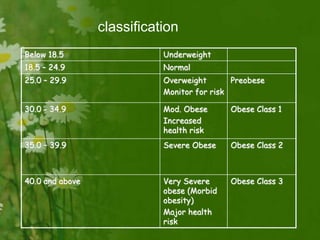
Below 18.5 Underweight
18.5 – 24.9 Normal
25.0 – 29.9 Overweight
Monitor for risk
Preobese
30.0 - 34.9 Mod. Obese
Increased
health risk
Obese Class 1
35.0 – 39.9 Severe Obese Obese Class 2
40.0 and above Very Severe
obese (Morbid
obesity)
Major health
risk
Obese Class 3
classification
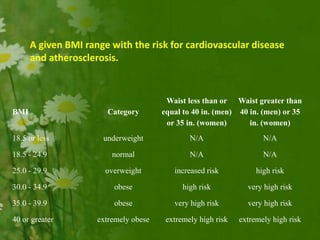
BMI Category
Waist less than or
equal to 40 in. (men)
or 35 in. (women)
Waist greater than
40 in. (men) or 35
in. (women)
18.5 or less underweight N/A N/A
18.5 - 24.9 normal N/A N/A
25.0 - 29.9 overweight increased risk high risk
30.0 - 34.9 obese high risk very high risk
35.0 - 39.9 obese very high risk very high risk
40 or greater extremely obese extremely high risk extremely high risk
A given BMI range with the risk for cardiovascular disease
and atherosclerosis.
VARIOUS OTHER INDICES
 Anthropometry (skin-fold thickness)
 W/H Ratio & waist circumf.
 Densitometry (underwater weighing)
 CT
 MRI
 Electrical Impedence
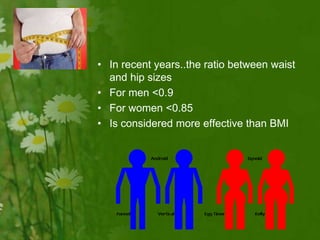
• In recent years..the ratio between waist
and hip sizes
• For men <0.9
• For women <0.85
• Is considered more effective than BMI
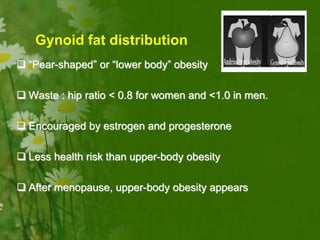
Gynoid fat distribution
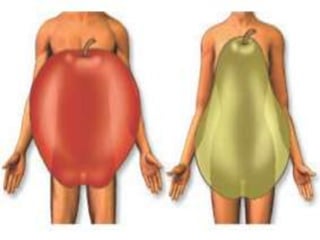
 “Pear-shaped” or “lower body” obesity
 Waste : hip ratio < 0.8 for women and <1.0 in men.
 Encouraged by estrogen and progesterone
 Less health risk than upper-body obesity
 After menopause, upper-body obesity appears
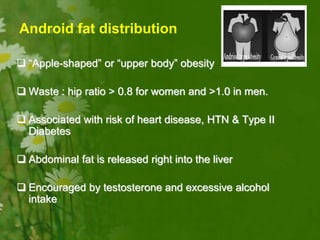
 “Apple-shaped” or “upper body” obesity
 Waste : hip ratio > 0.8 for women and >1.0 in men.
 Associated with risk of heart disease, HTN & Type II
Diabetes
 Abdominal fat is released right into the liver
 Encouraged by testosterone and excessive alcohol
intake
Android fat distribution
TOTAL CHOLESTEROL
<200 mg/dl
• 200-239mg/dl
• >/-240mg/dl
• Desirable
• Borderline high
• high
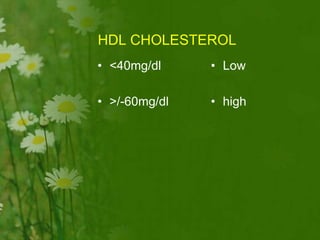
HDL CHOLESTEROL
• <40mg/dl
• >/-60mg/dl
• Low
• high
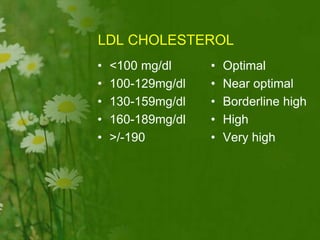
LDL CHOLESTEROL
• <100 mg/dl
• 100-129mg/dl
• 130-159mg/dl
• 160-189mg/dl
• >/-190
• Optimal
• Near optimal
• Borderline high
• High
• Very high
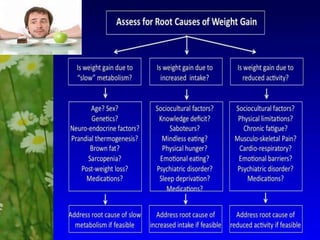
Etiology of Obesity
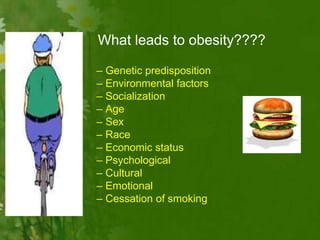
What leads to obesity????
– Genetic predisposition
– Environmental factors
– Socialization
– Age
– Sex
– Race
– Economic status
– Psychological
– Cultural
– Emotional
– Cessation of smoking
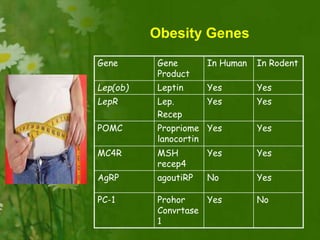
Obesity Genes
Gene Gene
Product
In Human In Rodent
Lep(ob) Leptin Yes Yes

LepR Lep.
Recep
Yes Yes
POMC Propriome
lanocortin
Yes Yes
MC4R MSH
recep4
Yes Yes
AgRP agoutiRP No Yes
PC-1 Prohor
Convrtase
1
Yes No
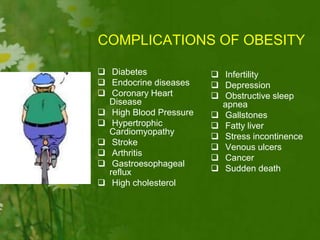
COMPLICATIONS OF OBESITY
 Infertility
 Depression
 Obstructive sleep
apnea
 Gallstones
 Fatty liver
 Stress incontinence
 Venous ulcers
 Cancer
 Sudden death
 Diabetes
 Endocrine diseases
 Coronary Heart
Disease
 High Blood Pressure
 Hypertrophic
Cardiomyopathy
 Stroke
 Arthritis
 Gastroesophageal
reflux
 High cholesterol
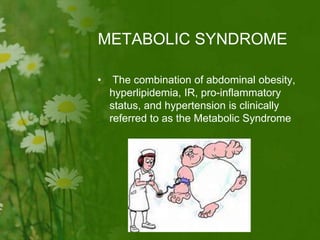
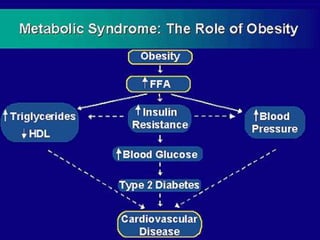
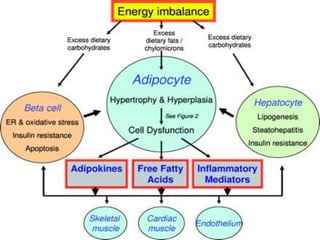
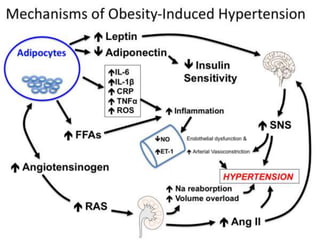
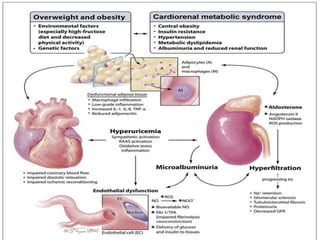
METABOLIC SYNDROME
• The combination of abdominal obesity,
hyperlipidemia, IR, pro-inflammatory
status, and hypertension is clinically
referred to as the Metabolic Syndrome
Obesity and Development of
the Metabolic Syndrome
• A little more than 20 years ago Dr. Gerald
M. Reaven put forth the concept that the
insulin resistance syndrome was the root
cause of glucose intolerance, elevated
LDL along with reduced HDL, and
hypertension.
• This clinical concept has evolved into
what is now referred to as the metabolic
syndrome
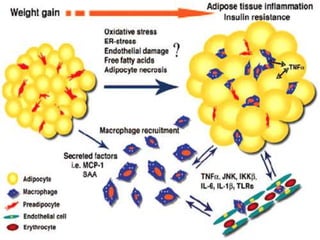
• Although obesity, ectopic fat accumulation, and an
inflammatory status are central to the pathology of
MetS, not all obese individuals develop MetS and
not all individuals with MetS are obese.
•
• MetS has a multi-factorial etiology that involves a
series of complex interactions between a particular
individuals dietary habits, hormonal status, and
genetic background.
• The metabolic syndrome, MetS (also once referred
to as Syndrome X), is a disorder that defines a
combination of metabolic and cardiovascular risk
determinants.
• These risk factors include insulin resistance,
hyperinsulinemia, central adiposity (obesity
associated with excess fat deposits around the
waist), dyslipidemia, glucose intolerance,
hypertension, pro-inflammatory status, and
microalbuminemia.
• The hallmark feature of MetS is indeed insulin
resistance.
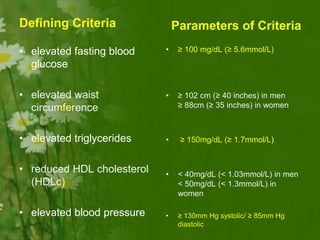
Criteria set forth by the American
Heart Association and the
National Heart, Lung and Blood
Institute as defining the metabolic
syndrome.
• elevated fasting blood
glucose
• elevated waist
circumference
• elevated triglycerides
• reduced HDL cholesterol
(HDLc)
• elevated blood pressure
• ≥ 100 mg/dL (≥ 5.6mmol/L)
• ≥ 102 cm (≥ 40 inches) in men
≥ 88cm (≥ 35 inches) in women
• ≥ 150mg/dL (≥ 1.7mmol/L)
• < 40mg/dL (< 1.03mmol/L) in men
< 50mg/dL (< 1.3mmol/L) in
women
• ≥ 130mm Hg systolic/ ≥ 85mm Hg
diastolic
Defining Criteria Parameters of Criteria
Other clinical abnormalities
associated with metabolic
syndrome
• Non-alcoholic fatty liver disease (NAFLD)
• atherosclerosis
• oxidative stress
• polycystic ovary syndrome (PCOS).
•
A clustering of atherosclerotic cardiovascular
disease risk factors that include visceral
adiposity (obesity), insulin resistance, low
levels of HDLs and a systemic
proinflammatory state.
There are key components to the metabolic
syndrome which include in addition to insulin
resistance (the hallmark feature of the
syndrome), hypertension, dyslipidemia,
chronic inflammation, impaired fibrinolysis,
procoagulation and most telling central
obesity
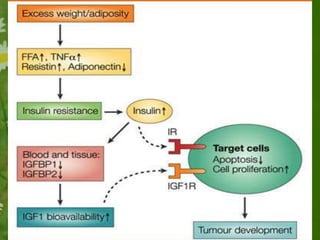
Insulin resistance underlies the cardiovascular pathologies of
the metabolic syndrome.
One primary reason for this is the role of insulin in fat
homeostasis.
The major role of insulin is to induce the storage of fuel. This
can be as fat (triacylglycerides, TGs) in adipose tissue or as
carbohydrate in the form of glycogen in liver and skeletal
muscle.
• The effect of insulin resistance at the level
of fat homeostasis is an increase in
circulating TGs, referred to as
dyslipidemia.
• Due to insulin resistance there is an
increase in the delivery of peripheral fatty
acids to the liver which in turn drives
hepatic TG synthesis.
• These TGs are then packaged into
lipoprotein particles termed VLDLs (very
low density lipoproteins) which are
returned to the circulation
• . In platelets, insulin action leads to an increase in
endothelial nitric oxide synthase (eNOS) activity
that is due to its phosphorylation by AMPK.
• Activation of NO production in platelets leads to a
decrease in thrombin-induced aggregation,
thereby, limiting the pro-coagulant effects of
platelet activation.
• This response of platelets to insulin function clearly
indicates why disruption in insulin action is a major
contributing factor in the development of the
metabolic syndrome
• Although MetS is not exclusively
associated with type 2 diabetes and the
associated insulin resistance, the
increasing prevalence of obesity and
associated development of type 2 diabetes
places insulin resistance as a major
contributor to the syndrome.
GENETIC FACTORS IN
METABOLIC SYNDROME
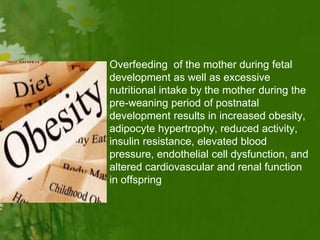
• Overfeeding of the mother during fetal
development as well as excessive
nutritional intake by the mother during the
pre-weaning period of postnatal
development results in increased obesity,
adipocyte hypertrophy, reduced activity,
insulin resistance, elevated blood
pressure, endothelial cell dysfunction, and
altered cardiovascular and renal function
in offspring
• . When mothers are obese and fed high-fat
diets during fetal development their adult
offspring exhibit impaired glucose
tolerance, hyperinsulinemia, dyslipidemia,
hypertension, resistance to the anorexic
actions of the leptin on the hypothalamus,
and develop NAFLD.
Treatment and prevention
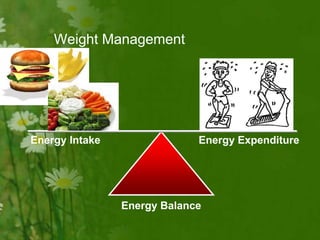
Weight Management
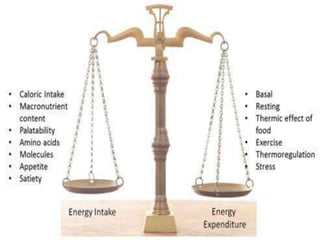
Energy Balance
Energy Intake Energy Expenditure
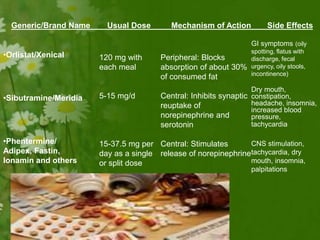
Generic/Brand Name Usual Dose Mechanism of Action Side Effects
•Orlistat/Xenical
•Sibutramine/Meridia
•Phentermine/
Adipex, Fastin,
Ionamin and others
120 mg with
each meal
5-15 mg/d
15-37.5 mg per
day as a single
or split dose
Peripheral: Blocks
absorption of about 30%
of consumed fat
Central: Inhibits synaptic
reuptake of
norepinephrine and
serotonin
Central: Stimulates
release of norepinephrine
GI symptoms (oily
spotting, flatus with
discharge, fecal
urgency, oily stools,
incontinence)
Dry mouth,
constipation,
headache, insomnia,
increased blood
pressure,
tachycardia
CNS stimulation,
tachycardia, dry
mouth, insomnia,
palpitations
CAUTION//CONTRAINDICATION
 Pregnancy or lactation
 Unstable cardiac disease
 Uncontrolled hypertension (SBP >180, DBP > 110
mmHg)
 Unstable severe systemic illness
 Unstable psychiatric disorder or history of anorexia
 Other drug therapy, if incompatible (eg MAO
inhibitors, migraine drugs, adrenergic agents,
arrhythmic potential)
 Closed angle glaucoma (caution)
Initial human trials with recombinant leptin were modestly successful.
Most subjects in the initial trial developed local reactions at the injection site
.
Weight loss was relatively modest.
However, the hormone needs to be given subcutaneously and has a short
half-life.
A modified recombinant human leptin (m-leptin) was created that has a longer
half-life.
Leptin
SURGERY
 Bariatric surgery – weight loss surgery
 for severely obese people (BMI > 40)
 2 most common approaches
o reducing the volume of the stomach
(e.g. by adjustable gastric
banding and vertical banded
gastroplasty), which produces an earlier
sense of satiation.
o reducing the length of bowel that comes
into contact with food (gastric bypass
surgery), which directly reduces
absorption.
THANK YOU

Metabolic consequences of obesity

  • 1.
  • 3.
    WHAT IS APPETITE?? •Appetite is a complex process that results from the integration of multiple signals at the hypothalamus. The hypothalamus receives neural signals, hormonal signals such as leptin, cholecystokinin (CCK) and ghrelin and nutrient signals such as glucose, free fatty acids, amino acids and volatile fatty acids
  • 4.
    Hormonal circuits fromthe gut (stomach, small intestine, and pancreas) and fat (adipose tissue) that impact the sensations of hunger and satiety that are exerted via hypothalamic neuroendocrine pathways. Ghrelin from the stomach, leptin from adipose tissue, insulin from the pancreas, and peptide tyrosine tyrosine (PYY) from the small intestine bind to receptors on orexigenic and/or anorexigenic neurons in the ARC of the hypothalamus. The effects of these peptide hormone-receptor interactions are release of either the orexigenic neuropeptides NPY and AgRP or the anorexigenic neuropeptides CART and the POMC-derived peptide α-MSH
  • 6.
    Excess energy isstored as fat in adipocytes, which expand until the fat is used for fuel.
  • 7.
    THE FAT CELLS/ADIPOCYTES LipidDroplet Nucleus Mitochondria Brown Fat White Fat
  • 9.
    Factors Secreted byAdipocytes Leptin Resistin Adiponectin
  • 10.
     The majorrole of LEPTIN in body weight regulation is to signal satiety to the hypothalamus and, thus, reduce dietary intake and fat storage while modulating energy expenditure and carbohydrate metabolism to prevent further weight gain.
  • 11.
    Neuropeptide Y (NPY)Stimulates Feeding
  • 12.
    Food Intake NPYLeptin Adipocytes A Modelfor How Leptin Regulates NPY
  • 14.
    ADIPONECTIN • Type ofcytokine having anti-inflammatory and cardioprotective effects • Adiponectin increases insulin sensitivity
  • 15.
    RESISTIN • INCREASES LAVELOF LDL. • BAD EFFECTS
  • 16.
     Larger  Higherrate of fat turnover  Hormonally more responsive  Substances released from abdominal fat are absorbed via the portal vein and, thus, have direct access to the liver.  Fatty acids taken up by the liver may lead to insulin resistance and increased synthesis of triacylglycerols, which are released as VLDL. Abdominal fat Cells
  • 17.
    What is obesity??? •Obesity is defined as a physical condition in which an individual has a body mass index (BMI) ≥30kg/m2
  • 18.
  • 19.
    BMI = (weight[kg]) / (height [m])2. Body mass index (BMI) or Quetelet index
  • 20.
    Body mass index(BMI) • The BMI is a measure of the relationship between an individuals weight and height. The BMI is calculated by dividing a persons weight in kilograms by the square of their height in meters. The medical utility for determining a persons BMI is that this measure describes the body weight relative to height and it thus, strongly correlates with the total body fat content in adults
  • 21.
    BMI (kg/m2) 19 20 2122 23 24 25 26 27 28 29 30 35 40 Height (in) Weight (lb) 58 91 96 100 105 110 115 119 124 129 134 138 143 167 191 59 94 99 104 109 114 119 124 128 133 138 143 148 173 198 60 97 102 107 112 118 123 128 133 138 143 148 153 179 204 61 100 106 111 116 122 127 132 137 143 148 153 158 185 211 62 104 109 115 120 126 131 136 142 147 153 158 164 191 218 63 107 113 118 124 130 135 141 146 152 158 163 169 197 225 64 110 116 122 128 134 140 145 151 157 163 169 174 204 232 65 114 120 126 132 138 144 150 156 162 168 174 180 210 240 66 118 124 130 136 142 148 155 161 167 173 179 186 216 247 67 121 127 134 140 146 153 159 166 172 178 185 191 223 255 68 125 131 138 144 151 158 164 171 177 184 190 197 230 262 69 128 135 142 149 155 162 169 176 182 189 196 203 236 270 70 132 139 146 153 160 167 174 181 188 195 202 207 243 278 71 136 143 150 157 165 172 179 186 193 200 208 215 250 286 72 140 147 154 162 169 177 184 191 199 206 213 221 258 294 73 144 151 159 166 174 182 189 197 204 212 219 227 265 302
  • 22.
    Below 18.5 Underweight 18.5– 24.9 Normal 25.0 – 29.9 Overweight Monitor for risk Preobese 30.0 - 34.9 Mod. Obese Increased health risk Obese Class 1 35.0 – 39.9 Severe Obese Obese Class 2 40.0 and above Very Severe obese (Morbid obesity) Major health risk Obese Class 3 classification
  • 23.
    BMI Category Waist lessthan or equal to 40 in. (men) or 35 in. (women) Waist greater than 40 in. (men) or 35 in. (women) 18.5 or less underweight N/A N/A 18.5 - 24.9 normal N/A N/A 25.0 - 29.9 overweight increased risk high risk 30.0 - 34.9 obese high risk very high risk 35.0 - 39.9 obese very high risk very high risk 40 or greater extremely obese extremely high risk extremely high risk A given BMI range with the risk for cardiovascular disease and atherosclerosis.
  • 24.
    VARIOUS OTHER INDICES Anthropometry (skin-fold thickness)  W/H Ratio & waist circumf.  Densitometry (underwater weighing)  CT  MRI  Electrical Impedence
  • 25.
    • In recentyears..the ratio between waist and hip sizes • For men <0.9 • For women <0.85 • Is considered more effective than BMI
  • 26.
    Gynoid fat distribution “Pear-shaped” or “lower body” obesity  Waste : hip ratio < 0.8 for women and <1.0 in men.  Encouraged by estrogen and progesterone  Less health risk than upper-body obesity  After menopause, upper-body obesity appears
  • 27.
     “Apple-shaped” or“upper body” obesity  Waste : hip ratio > 0.8 for women and >1.0 in men.  Associated with risk of heart disease, HTN & Type II Diabetes  Abdominal fat is released right into the liver  Encouraged by testosterone and excessive alcohol intake Android fat distribution
  • 29.
    TOTAL CHOLESTEROL <200 mg/dl •200-239mg/dl • >/-240mg/dl • Desirable • Borderline high • high
  • 30.
    HDL CHOLESTEROL • <40mg/dl •>/-60mg/dl • Low • high
  • 31.
    LDL CHOLESTEROL • <100mg/dl • 100-129mg/dl • 130-159mg/dl • 160-189mg/dl • >/-190 • Optimal • Near optimal • Borderline high • High • Very high
  • 32.
  • 33.
    What leads toobesity???? – Genetic predisposition – Environmental factors – Socialization – Age – Sex – Race – Economic status – Psychological – Cultural – Emotional – Cessation of smoking
  • 35.
    Obesity Genes Gene Gene Product InHuman In Rodent Lep(ob) Leptin Yes Yes LepR Lep. Recep Yes Yes POMC Propriome lanocortin Yes Yes MC4R MSH recep4 Yes Yes AgRP agoutiRP No Yes PC-1 Prohor Convrtase 1 Yes No
  • 37.
    COMPLICATIONS OF OBESITY Infertility  Depression  Obstructive sleep apnea  Gallstones  Fatty liver  Stress incontinence  Venous ulcers  Cancer  Sudden death  Diabetes  Endocrine diseases  Coronary Heart Disease  High Blood Pressure  Hypertrophic Cardiomyopathy  Stroke  Arthritis  Gastroesophageal reflux  High cholesterol
  • 38.
    METABOLIC SYNDROME • Thecombination of abdominal obesity, hyperlipidemia, IR, pro-inflammatory status, and hypertension is clinically referred to as the Metabolic Syndrome
  • 39.
    Obesity and Developmentof the Metabolic Syndrome • A little more than 20 years ago Dr. Gerald M. Reaven put forth the concept that the insulin resistance syndrome was the root cause of glucose intolerance, elevated LDL along with reduced HDL, and hypertension. • This clinical concept has evolved into what is now referred to as the metabolic syndrome
  • 40.
    • Although obesity,ectopic fat accumulation, and an inflammatory status are central to the pathology of MetS, not all obese individuals develop MetS and not all individuals with MetS are obese. • • MetS has a multi-factorial etiology that involves a series of complex interactions between a particular individuals dietary habits, hormonal status, and genetic background.
  • 41.
    • The metabolicsyndrome, MetS (also once referred to as Syndrome X), is a disorder that defines a combination of metabolic and cardiovascular risk determinants. • These risk factors include insulin resistance, hyperinsulinemia, central adiposity (obesity associated with excess fat deposits around the waist), dyslipidemia, glucose intolerance, hypertension, pro-inflammatory status, and microalbuminemia. • The hallmark feature of MetS is indeed insulin resistance.
  • 42.
    Criteria set forthby the American Heart Association and the National Heart, Lung and Blood Institute as defining the metabolic syndrome.
  • 43.
    • elevated fastingblood glucose • elevated waist circumference • elevated triglycerides • reduced HDL cholesterol (HDLc) • elevated blood pressure • ≥ 100 mg/dL (≥ 5.6mmol/L) • ≥ 102 cm (≥ 40 inches) in men ≥ 88cm (≥ 35 inches) in women • ≥ 150mg/dL (≥ 1.7mmol/L) • < 40mg/dL (< 1.03mmol/L) in men < 50mg/dL (< 1.3mmol/L) in women • ≥ 130mm Hg systolic/ ≥ 85mm Hg diastolic Defining Criteria Parameters of Criteria
  • 44.
    Other clinical abnormalities associatedwith metabolic syndrome • Non-alcoholic fatty liver disease (NAFLD) • atherosclerosis • oxidative stress • polycystic ovary syndrome (PCOS). •
  • 46.
    A clustering ofatherosclerotic cardiovascular disease risk factors that include visceral adiposity (obesity), insulin resistance, low levels of HDLs and a systemic proinflammatory state. There are key components to the metabolic syndrome which include in addition to insulin resistance (the hallmark feature of the syndrome), hypertension, dyslipidemia, chronic inflammation, impaired fibrinolysis, procoagulation and most telling central obesity
  • 49.
    Insulin resistance underliesthe cardiovascular pathologies of the metabolic syndrome. One primary reason for this is the role of insulin in fat homeostasis. The major role of insulin is to induce the storage of fuel. This can be as fat (triacylglycerides, TGs) in adipose tissue or as carbohydrate in the form of glycogen in liver and skeletal muscle.
  • 50.
    • The effectof insulin resistance at the level of fat homeostasis is an increase in circulating TGs, referred to as dyslipidemia. • Due to insulin resistance there is an increase in the delivery of peripheral fatty acids to the liver which in turn drives hepatic TG synthesis. • These TGs are then packaged into lipoprotein particles termed VLDLs (very low density lipoproteins) which are returned to the circulation
  • 51.
    • . Inplatelets, insulin action leads to an increase in endothelial nitric oxide synthase (eNOS) activity that is due to its phosphorylation by AMPK. • Activation of NO production in platelets leads to a decrease in thrombin-induced aggregation, thereby, limiting the pro-coagulant effects of platelet activation. • This response of platelets to insulin function clearly indicates why disruption in insulin action is a major contributing factor in the development of the metabolic syndrome
  • 52.
    • Although MetSis not exclusively associated with type 2 diabetes and the associated insulin resistance, the increasing prevalence of obesity and associated development of type 2 diabetes places insulin resistance as a major contributor to the syndrome.
  • 56.
  • 57.
    • Overfeeding ofthe mother during fetal development as well as excessive nutritional intake by the mother during the pre-weaning period of postnatal development results in increased obesity, adipocyte hypertrophy, reduced activity, insulin resistance, elevated blood pressure, endothelial cell dysfunction, and altered cardiovascular and renal function in offspring
  • 58.
    • . Whenmothers are obese and fed high-fat diets during fetal development their adult offspring exhibit impaired glucose tolerance, hyperinsulinemia, dyslipidemia, hypertension, resistance to the anorexic actions of the leptin on the hypothalamus, and develop NAFLD.
  • 60.
  • 61.
    Weight Management Energy Balance EnergyIntake Energy Expenditure
  • 62.
    Generic/Brand Name UsualDose Mechanism of Action Side Effects •Orlistat/Xenical •Sibutramine/Meridia •Phentermine/ Adipex, Fastin, Ionamin and others 120 mg with each meal 5-15 mg/d 15-37.5 mg per day as a single or split dose Peripheral: Blocks absorption of about 30% of consumed fat Central: Inhibits synaptic reuptake of norepinephrine and serotonin Central: Stimulates release of norepinephrine GI symptoms (oily spotting, flatus with discharge, fecal urgency, oily stools, incontinence) Dry mouth, constipation, headache, insomnia, increased blood pressure, tachycardia CNS stimulation, tachycardia, dry mouth, insomnia, palpitations
  • 63.
    CAUTION//CONTRAINDICATION  Pregnancy orlactation  Unstable cardiac disease  Uncontrolled hypertension (SBP >180, DBP > 110 mmHg)  Unstable severe systemic illness  Unstable psychiatric disorder or history of anorexia  Other drug therapy, if incompatible (eg MAO inhibitors, migraine drugs, adrenergic agents, arrhythmic potential)  Closed angle glaucoma (caution)
  • 64.
    Initial human trialswith recombinant leptin were modestly successful. Most subjects in the initial trial developed local reactions at the injection site . Weight loss was relatively modest. However, the hormone needs to be given subcutaneously and has a short half-life. A modified recombinant human leptin (m-leptin) was created that has a longer half-life. Leptin
  • 65.
    SURGERY  Bariatric surgery– weight loss surgery  for severely obese people (BMI > 40)  2 most common approaches o reducing the volume of the stomach (e.g. by adjustable gastric banding and vertical banded gastroplasty), which produces an earlier sense of satiation. o reducing the length of bowel that comes into contact with food (gastric bypass surgery), which directly reduces absorption.
  • 66.