Ethical and Social Considerations in
Strategy Development
Ethical Consideration
• It means considering the morals or the principles of goodness,
the right and wrong of an action, prior to acting.
• Considering whether or not it is within the rules or standards
of right conduct or practice, especially the standards of a
profession.
Ethical considerations
• Informed consent
• Do no harm
• Confidentiality
• Secrecy
• Only assess relevant components.
Social Consideration
• Social considerations, by which is meant factors concerned
with the interests of individuals, groups, communities and
society as a whole, and which generally involve interventions
into inherent economic mechanisms.
• Social issues are about trends, situations and conflicts in
society. Often they do not have a single right or wrong answer.
• Incorporating ethical considerations means using
society’s standards of what constitutes right or wrong
behavior as the basis for your business’ plans and
policies.
• Ethics shape the decisions and actions of each individual
in a small business, from the owner on down.
• The owner’s behavior toward customers, employees, the
company’s investors, vendors and the community affect
the behavior of his employees, who look to him to set the
standard.
• Observing high ethical standards is sound business
strategy -- resulting in customer loyalty, higher employee
retention and a positive image in the industry and within
the community.
key ethical considerations in strategic planning
include:
• Stakeholder participation
• Organizational values
• Individual values
• Managing change
• When undertaking the process of strategy development This
often results in the process in which Board being given the
mandate of developing a plan and submitting it to the Board
for review and approval.
• Having said, that you can improve your chances of getting
the "appropriate strategy" by involving stakeholders.
• All of these help improve the chance that your organization's
strategy is developed with the information necessary to make
decisions.
• Stakeholder participation is the first acid test.
Stakeholder Participation
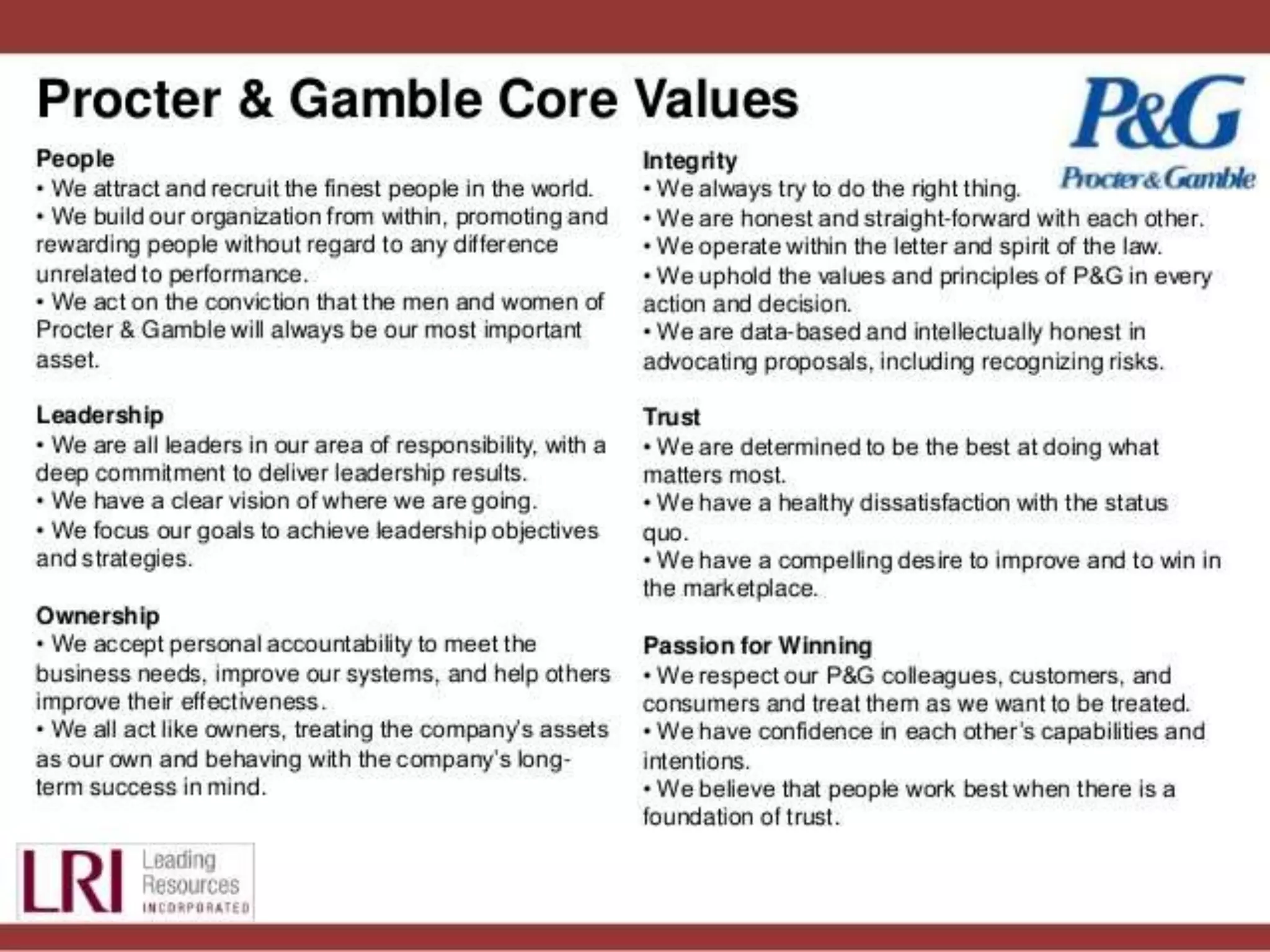
Organizational Values
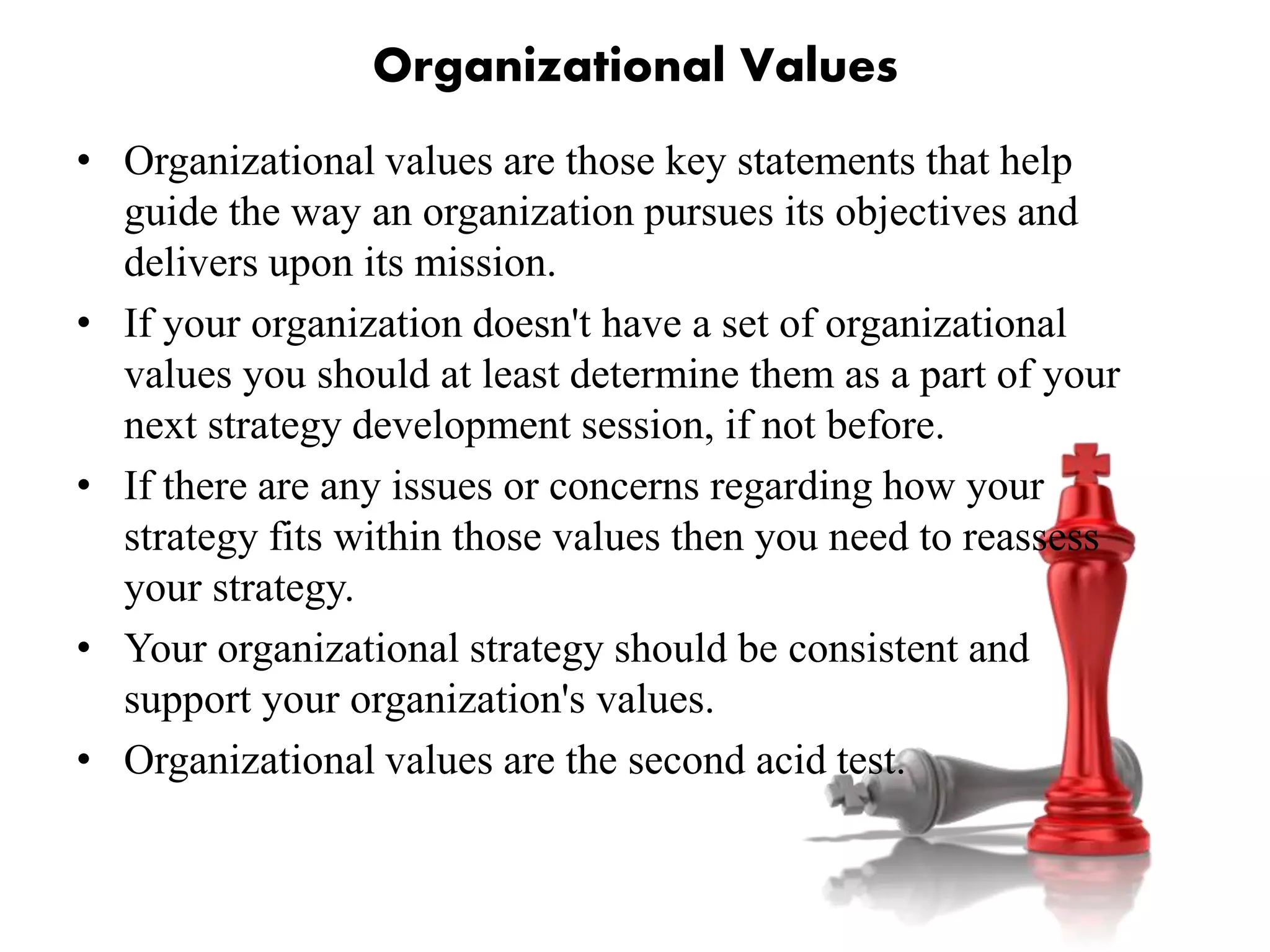
• Organizational values are those key statements that help
guide the way an organization pursues its objectives and
delivers upon its mission.
• If your organization doesn't have a set of organizational
values you should at least determine them as a part of your
next strategy development session, if not before.
• If there are any issues or concerns regarding how your
strategy fits within those values then you need to reassess
your strategy.
• Your organizational strategy should be consistent and
support your organization's values.
• Organizational values are the second acid test.
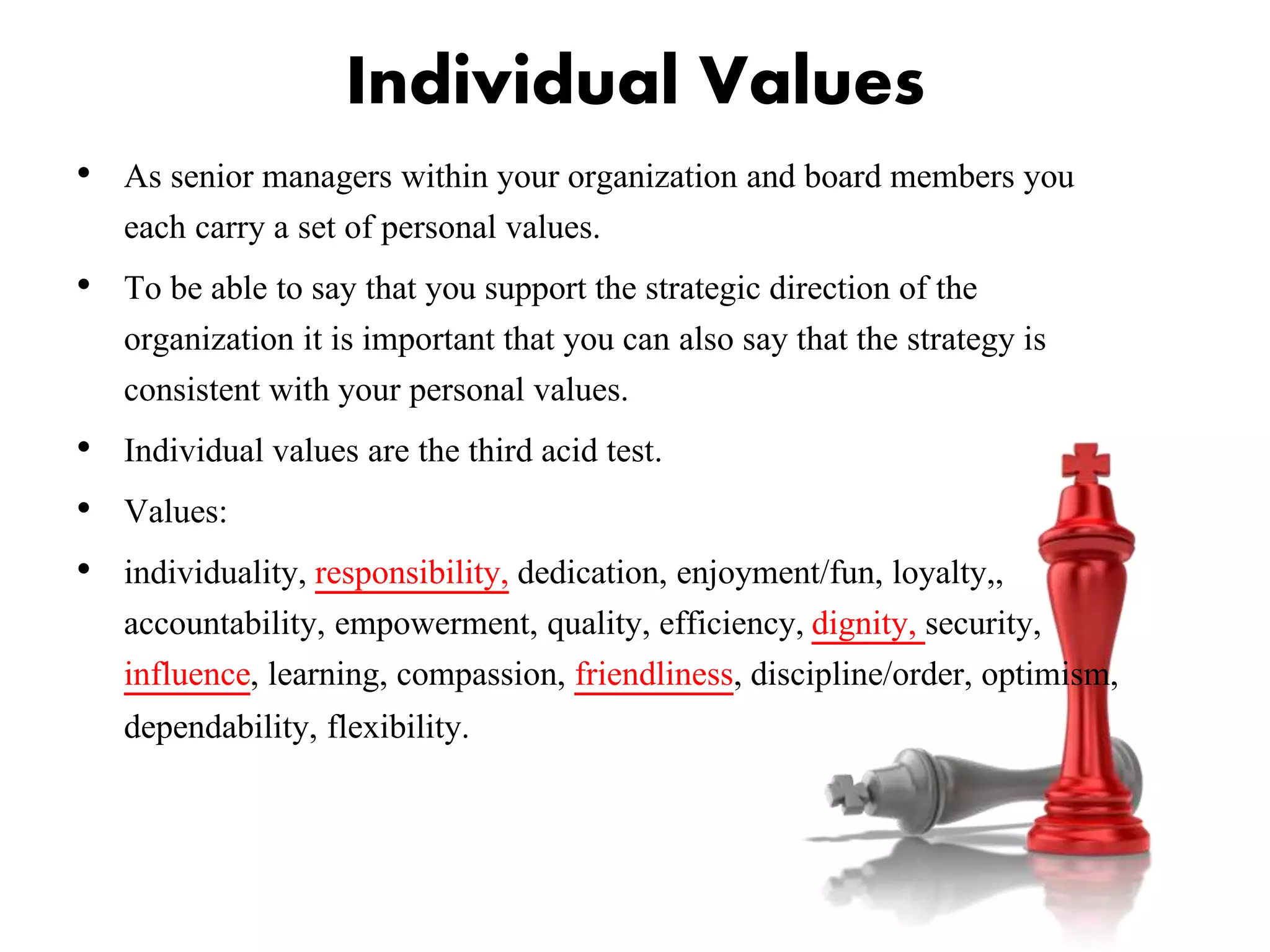
Individual Values
• As senior managers within your organization and board members you
each carry a set of personal values.
• To be able to say that you support the strategic direction of the
organization it is important that you can also say that the strategy is
consistent with your personal values.
• Individual values are the third acid test.
• Values:
• individuality, responsibility, dedication, enjoyment/fun, loyalty,,
accountability, empowerment, quality, efficiency, dignity, security,
influence, learning, compassion, friendliness, discipline/order, optimism,
dependability, flexibility.
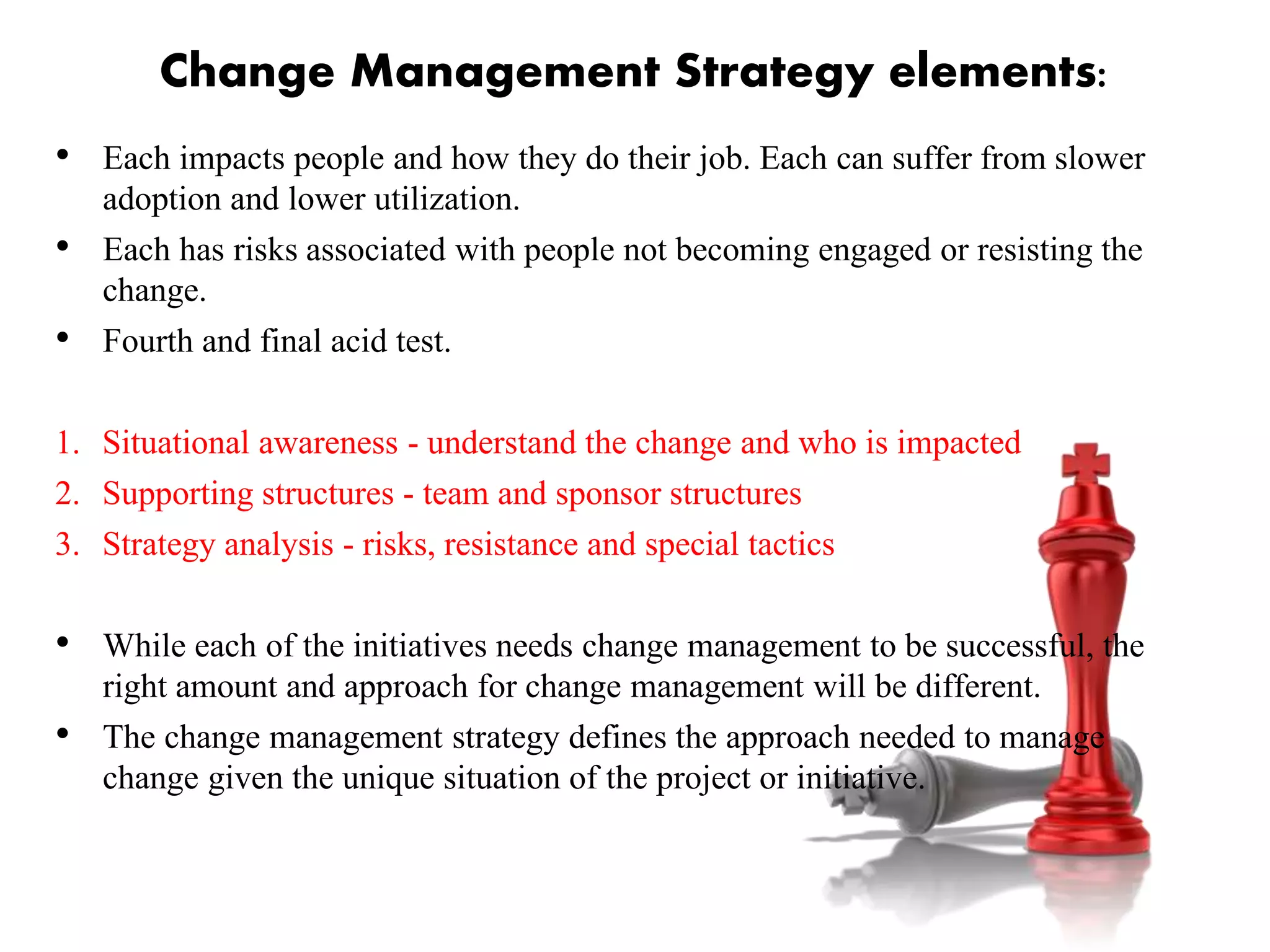
Change Management Strategy elements:
• Each impacts people and how they do their job. Each can suffer from slower
adoption and lower utilization.
• Each has risks associated with people not becoming engaged or resisting the
change.
• Fourth and final acid test.
1. Situational awareness - understand the change and who is impacted
2. Supporting structures - team and sponsor structures
3. Strategy analysis - risks, resistance and special tactics
• While each of the initiatives needs change management to be successful, the
right amount and approach for change management will be different.
• The change management strategy defines the approach needed to manage
change given the unique situation of the project or initiative.

8 ethical and social considerations in strategy development

  • 1.
    Ethical and SocialConsiderations in Strategy Development
  • 2.
    Ethical Consideration • Itmeans considering the morals or the principles of goodness, the right and wrong of an action, prior to acting. • Considering whether or not it is within the rules or standards of right conduct or practice, especially the standards of a profession.
  • 3.
    Ethical considerations • Informedconsent • Do no harm • Confidentiality • Secrecy • Only assess relevant components.
  • 4.
    Social Consideration • Socialconsiderations, by which is meant factors concerned with the interests of individuals, groups, communities and society as a whole, and which generally involve interventions into inherent economic mechanisms. • Social issues are about trends, situations and conflicts in society. Often they do not have a single right or wrong answer.
  • 5.
    • Incorporating ethicalconsiderations means using society’s standards of what constitutes right or wrong behavior as the basis for your business’ plans and policies. • Ethics shape the decisions and actions of each individual in a small business, from the owner on down. • The owner’s behavior toward customers, employees, the company’s investors, vendors and the community affect the behavior of his employees, who look to him to set the standard. • Observing high ethical standards is sound business strategy -- resulting in customer loyalty, higher employee retention and a positive image in the industry and within the community.
  • 7.
    key ethical considerationsin strategic planning include: • Stakeholder participation • Organizational values • Individual values • Managing change
  • 8.
    • When undertakingthe process of strategy development This often results in the process in which Board being given the mandate of developing a plan and submitting it to the Board for review and approval. • Having said, that you can improve your chances of getting the "appropriate strategy" by involving stakeholders. • All of these help improve the chance that your organization's strategy is developed with the information necessary to make decisions. • Stakeholder participation is the first acid test. Stakeholder Participation
  • 9.
    Organizational Values • Organizationalvalues are those key statements that help guide the way an organization pursues its objectives and delivers upon its mission. • If your organization doesn't have a set of organizational values you should at least determine them as a part of your next strategy development session, if not before. • If there are any issues or concerns regarding how your strategy fits within those values then you need to reassess your strategy. • Your organizational strategy should be consistent and support your organization's values. • Organizational values are the second acid test.
  • 11.
    Individual Values • Assenior managers within your organization and board members you each carry a set of personal values. • To be able to say that you support the strategic direction of the organization it is important that you can also say that the strategy is consistent with your personal values. • Individual values are the third acid test. • Values: • individuality, responsibility, dedication, enjoyment/fun, loyalty,, accountability, empowerment, quality, efficiency, dignity, security, influence, learning, compassion, friendliness, discipline/order, optimism, dependability, flexibility.
  • 12.
    Change Management Strategyelements: • Each impacts people and how they do their job. Each can suffer from slower adoption and lower utilization. • Each has risks associated with people not becoming engaged or resisting the change. • Fourth and final acid test. 1. Situational awareness - understand the change and who is impacted 2. Supporting structures - team and sponsor structures 3. Strategy analysis - risks, resistance and special tactics • While each of the initiatives needs change management to be successful, the right amount and approach for change management will be different. • The change management strategy defines the approach needed to manage change given the unique situation of the project or initiative.