making film openings
www.petesmediablog.blogspot.com
@petesmediablog
“ I t ’s i m p o r t a n t t o u n d e r s t a n d t h e
‘aggregation of marginal gains’.
Put
simply….how small improvements in a
number of different aspects of what we do
can have a huge impact to the overall
performance.”
Dave Brailsford, UK Cycling coach
lots of small things add up
to get you better marks
9 Steps to best results!
Strengths and Weaknesses?
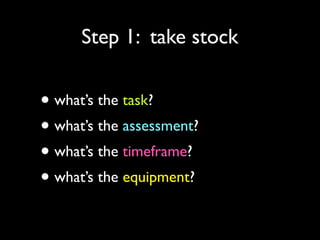
Step 1: take stock

• what’s the task?
• what’s the assessment?
• what’s the timeframe?
• what’s the equipment?
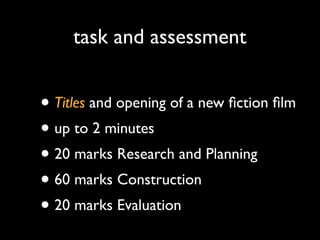
task and assessment

• Titles and opening of a new fiction film
• up to 2 minutes
• 20 marks Research and Planning
• 60 marks Construction
• 20 marks Evaluation
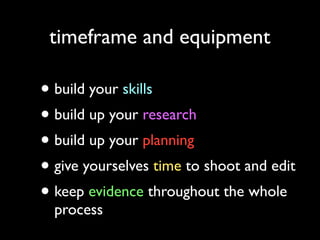
timeframe and equipment

• build your skills
• build up your research
• build up your planning
• give yourselves time to shoot and edit
• keep evidence throughout the whole
process
Step 2: set up a blog

• and keep evidence of everything you do!
Step 3: build up skills

• sound
• camerawork
• editing
foley
preliminary task
re-make
ident
Step 4: investigate

• what do film openings actually look like?
• what does other student work look like?
• what do you need to know about titles?
• how are you going to do something that
stands out?
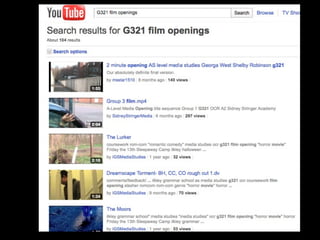
search for student film
openings on youtube
and vimeo (G321)
Step 5: brainstorm ideas

• possible scenarios for pitches/treatments
• 25 word pitch
• moodboard treatment
• peer and teacher feedback
• realistic expectations- keep it simple
Step 6: planning

• experimenting with camera and editing
• recce shots of locations
• examples of shots, costumes, props, etc onto
blog

• post-it storyboard, animatic, moodboard
• logistics planning- including risk assessment
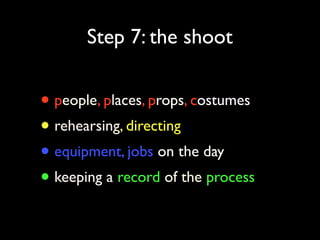
Step 7: the shoot

• people, places, props, costumes
• rehearsing, directing
• equipment, jobs on the day
• keeping a record of the process
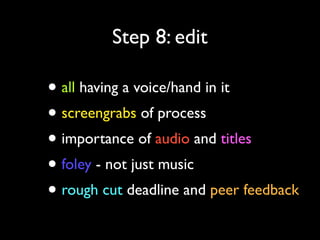
Step 8: edit

• all having a voice/hand in it
• screengrabs of process
• importance of audio and titles
• foley - not just music
• rough cut deadline and peer feedback
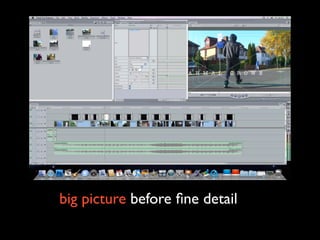
big picture before fine detail
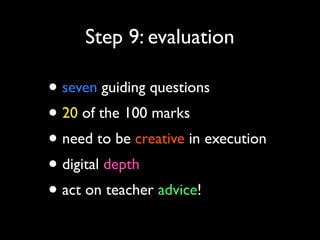
Step 9: evaluation

• seven guiding questions
• 20 of the 100 marks
• need to be creative in execution
• digital depth
• act on teacher advice!
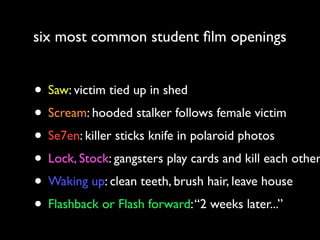
six most common student film openings

• Saw: victim tied up in shed
• Scream: hooded stalker follows female victim
• Se7en: killer sticks knife in polaroid photos
• Lock, Stock: gangsters play cards and kill each other
• Waking up: clean teeth, brush hair, leave house
• Flashback or Flash forward: “2 weeks later...”
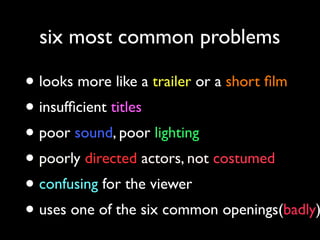
six most common problems

• looks more like a trailer or a short film
• insufficient titles
• poor sound, poor lighting
• poorly directed actors, not costumed
• confusing for the viewer
• uses one of the six common openings(badly)
you are the ref- what score and why?
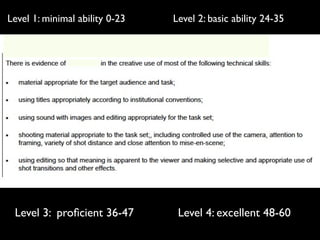
Level 1: minimal ability 0-23

Level 3: proficient 36-47

Level 2: basic ability 24-35

Level 4: excellent 48-60
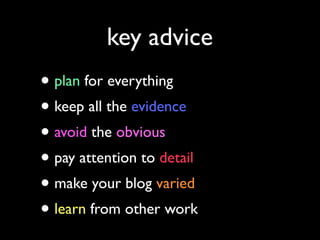
key advice

• plan for everything
• keep all the evidence
• avoid the obvious
• pay attention to detail
• make your blog varied
• learn from other work
www.petesmediablog.blogspot.com
@petesmediablog

Film openings 2

  • 1.
  • 2.
  • 3.
    “ I t’s i m p o r t a n t t o u n d e r s t a n d t h e ‘aggregation of marginal gains’. Put simply….how small improvements in a number of different aspects of what we do can have a huge impact to the overall performance.” Dave Brailsford, UK Cycling coach
  • 4.
    lots of smallthings add up to get you better marks
  • 5.
    9 Steps tobest results!
  • 6.
  • 7.
  • 8.
    Step 1: takestock • what’s the task? • what’s the assessment? • what’s the timeframe? • what’s the equipment?
  • 9.
    task and assessment •Titles and opening of a new fiction film • up to 2 minutes • 20 marks Research and Planning • 60 marks Construction • 20 marks Evaluation
  • 10.
    timeframe and equipment •build your skills • build up your research • build up your planning • give yourselves time to shoot and edit • keep evidence throughout the whole process
  • 11.
    Step 2: setup a blog • and keep evidence of everything you do!
  • 12.
    Step 3: buildup skills • sound • camerawork • editing
  • 13.
  • 14.
  • 15.
  • 16.
  • 17.
    Step 4: investigate •what do film openings actually look like? • what does other student work look like? • what do you need to know about titles? • how are you going to do something that stands out?
  • 18.
    search for studentfilm openings on youtube and vimeo (G321)
  • 20.
    Step 5: brainstormideas • possible scenarios for pitches/treatments • 25 word pitch • moodboard treatment • peer and teacher feedback • realistic expectations- keep it simple
  • 21.
    Step 6: planning •experimenting with camera and editing • recce shots of locations • examples of shots, costumes, props, etc onto blog • post-it storyboard, animatic, moodboard • logistics planning- including risk assessment
  • 22.
    Step 7: theshoot • people, places, props, costumes • rehearsing, directing • equipment, jobs on the day • keeping a record of the process
  • 23.
    Step 8: edit •all having a voice/hand in it • screengrabs of process • importance of audio and titles • foley - not just music • rough cut deadline and peer feedback
  • 24.
    big picture beforefine detail
  • 25.
    Step 9: evaluation •seven guiding questions • 20 of the 100 marks • need to be creative in execution • digital depth • act on teacher advice!
  • 26.
    six most commonstudent film openings • Saw: victim tied up in shed • Scream: hooded stalker follows female victim • Se7en: killer sticks knife in polaroid photos • Lock, Stock: gangsters play cards and kill each other • Waking up: clean teeth, brush hair, leave house • Flashback or Flash forward: “2 weeks later...”
  • 27.
    six most commonproblems • looks more like a trailer or a short film • insufficient titles • poor sound, poor lighting • poorly directed actors, not costumed • confusing for the viewer • uses one of the six common openings(badly)
  • 28.
    you are theref- what score and why?
  • 29.
    Level 1: minimalability 0-23 Level 3: proficient 36-47 Level 2: basic ability 24-35 Level 4: excellent 48-60
  • 30.
    key advice • planfor everything • keep all the evidence • avoid the obvious • pay attention to detail • make your blog varied • learn from other work
  • 31.